
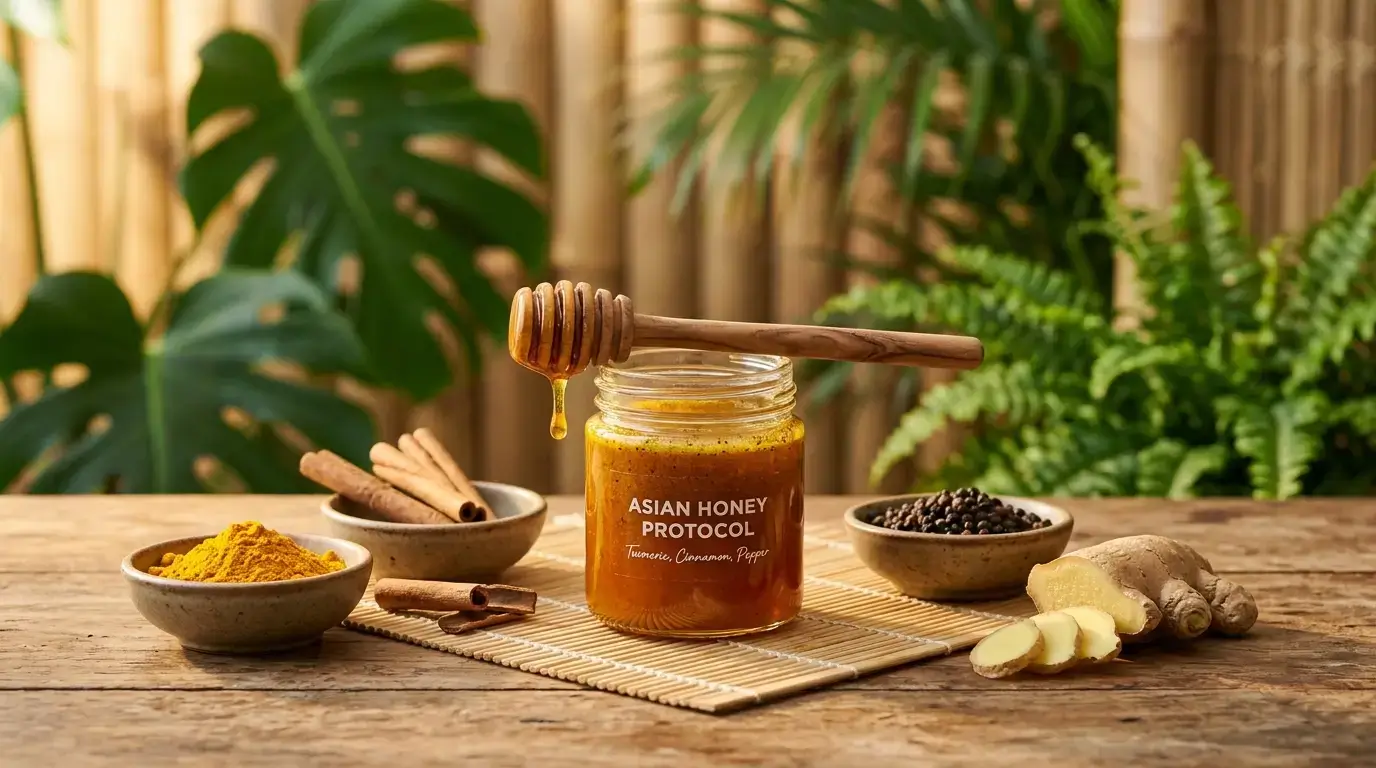
📌 Last Updated: April 2026 — This guide explains exactly what the Asian honey protocol recipe is, the science behind each ingredient, 3 variations (including a tualang honey upgrade), an honest look at what it can and can’t do, and a step-by-step recipe you can make in 2 minutes.
The Asian honey protocol recipe has become one of the most searched wellness trends of early 2026. Fueled by growing interest in natural brain health support, viral honey rituals, and the broader conversation around memory and cognitive aging, this simple 5-ingredient blend has captured the attention of people looking for something they can do every morning — something real, simple, and backed by at least some science.
At its core, the Asian honey protocol is a daily mixture of raw honey, turmeric, cinnamon, black pepper, and lemon juice. Each ingredient has documented antioxidant or anti-inflammatory properties, and when combined, they create a blend rooted in traditional Southeast Asian wellness practices that modern research is beginning to validate.
But this recipe comes with baggage. It’s been tangled up with viral deepfake ads, misleading celebrity endorsements, and overblown claims about reversing dementia. None of that is true, and this guide won’t repeat those promises.
What this guide will give you is the real recipe, the real science, realistic expectations, and a version you can make in your kitchen for under $2 that lasts a month. That’s it — no hype, no miracle claims, just a genuinely useful morning habit.
What Is the Asian Honey Protocol?
The Asian honey protocol is a structured daily wellness ritual built around raw honey as a base, combined with spices and compounds traditionally used in Southeast Asian, Ayurvedic, and Chinese medicine for cognitive support and general wellbeing.
The word “protocol” distinguishes it from casually eating honey. This is intentional: specific ingredients, specific amounts, specific timing, repeated daily. The idea is that consistency over weeks and months — not a single spoonful — is what makes the practice meaningful.
Where It Comes From
Honey-based wellness tonics have been used across Asia for centuries. In traditional Malay medicine, tualang honey — a wild rainforest honey with the highest documented antioxidant content of any honey variety — has been used as a health supplement for generations. In Ayurvedic practice, honey combined with turmeric (known as “golden paste”) is one of the oldest recorded wellness remedies. Chinese medicine has used honey as a vehicle for herbal compounds for over 2,000 years.
The modern “Asian honey protocol recipe” that’s trending online is essentially a simplified, westernized version of these traditions — distilled into a 5-ingredient blend that anyone can make at home.
The Viral Connection
The protocol gained massive search volume in early 2026 alongside two related trends: the “honey trick for memory loss” and the so-called “Ben Carson honey recipe.” Both trends involve similar ingredients but are often wrapped in misleading marketing.
To be clear: there is no verified connection between Dr. Ben Carson and this recipe. The celebrity endorsements are fabricated using deepfake technology. The Asian honey protocol recipe itself, however, is a legitimate traditional blend with real ingredients that have been studied in peer-reviewed research. We can discuss the recipe honestly without endorsing the fake marketing around it.
The Science Behind Each Ingredient
Every ingredient in the Asian honey protocol recipe has published research supporting its use. None of them cure disease, but together they create a daily antioxidant and anti-inflammatory habit with genuine nutritional value.
1. Raw Honey (The Base)
Raw, unprocessed honey contains natural sugars, enzymes, phenolic acids, and flavonoids including catechin, kaempferol, and apigenin. These compounds function as antioxidants and anti-inflammatory agents.
A 2023 review published in PubMed Central identified four main brain health benefits of honey: memory enhancement, neuroprotective effects, anti-stress properties, and pain-reducing potential. The key requirement is that the honey must be raw and unfiltered — pasteurized commercial honey loses most of these bioactive compounds.
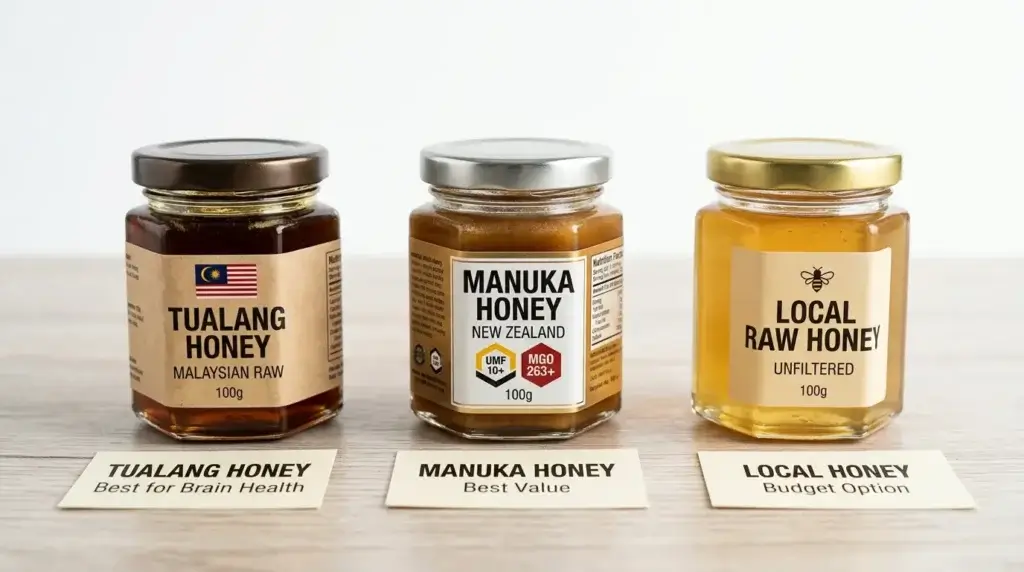
For maximum benefit, tualang honey has the highest documented phenolic and flavonoid content of any honey variety, with 28 published studies specifically on its neurological effects. Manuka honey (UMF 10+) is the next best option, followed by quality raw local wildflower honey.
2. Turmeric (Curcumin)
Turmeric contains curcumin, one of the most studied natural anti-inflammatory compounds. A UCLA clinical trial found that curcumin supplementation improved memory and attention in adults with mild, age-related memory complaints over 18 months.
Curcumin also crosses the blood-brain barrier, which means it can directly interact with brain tissue — a property that most dietary antioxidants don’t share.
The challenge: curcumin has very low bioavailability on its own. Your body absorbs only about 1-2% of the curcumin you consume. That’s why the next ingredient is essential.
3. Black Pepper (Piperine)
Black pepper contains piperine, a compound that increases curcumin absorption by approximately 2,000%. This is one of the most well-documented nutrient interactions in nutritional science.
Without black pepper, most of the turmeric in the recipe passes through your system unused. With it, your body can actually utilize the curcumin. Even a tiny pinch makes a significant difference.
4. Ceylon Cinnamon (Blood Sugar & Brain Circulation)
Cinnamon has been studied for its effects on blood sugar regulation and cerebral blood flow. Stable blood sugar prevents the energy crashes that affect mental clarity, while improved blood flow ensures your brain receives adequate oxygen and nutrients.
An important distinction: use Ceylon cinnamon, not cassia cinnamon. Cassia contains high levels of coumarin, a compound that can be harmful to the liver in large daily doses. Ceylon cinnamon has negligible coumarin levels and is safe for daily consumption.
5. Fresh Lemon Juice (Vitamin C & Enzymatic Activation)
Lemon juice adds vitamin C, a water-soluble antioxidant that supports immune function and may enhance the absorption of certain plant compounds. The acidity also helps preserve the blend and adds a bright flavor that makes the ritual more enjoyable.
Always use fresh-squeezed lemon juice. Bottled lemon juice has a flat, oxidized flavor and contains fewer active compounds.
Asian Honey Protocol Recipe (Full Version)
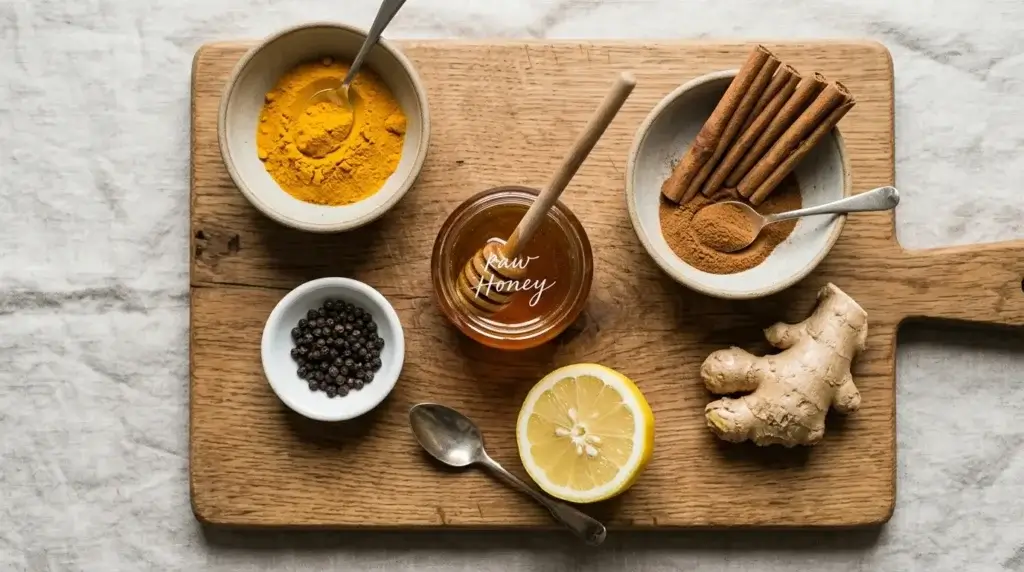
This recipe makes enough for approximately 30 days of daily use. Store it in a glass jar at room temperature and take one teaspoon every morning.
PrintAsian Honey Protocol Recipe: The 5-Ingredient Brain Health Ritual Backed by Real Science
- Total Time: 2 min
- Yield: 30 servings 1x
- Diet: Vegan
Description
The Asian honey protocol recipe — a traditional 5-ingredient brain health blend made with raw honey, turmeric, Ceylon cinnamon, black pepper, and ginger. Takes 2 minutes, lasts a month, costs under $2.
Ingredients
- 1 cup (250g) raw honey (tualang, Manuka UMF 10+, or quality raw local honey)
- 1 tablespoon ground turmeric
- 1 tablespoon ground Ceylon cinnamon
- ½ teaspoon ground black pepper
- ½ teaspoon ground ginger (optional)
Instructions
- Combine all dry spices in a small clean bowl: turmeric, Ceylon cinnamon, black pepper, and ginger. Mix with a dry spoon until evenly blended.
- Pour the raw honey into a clean glass jar.
- Add the spice mixture to the honey and fold gently for 60 seconds until no dry powder pockets remain. The blend will turn deep golden-orange.
- Seal the jar tightly. Store at room temperature away from direct sunlight. Do not refrigerate.
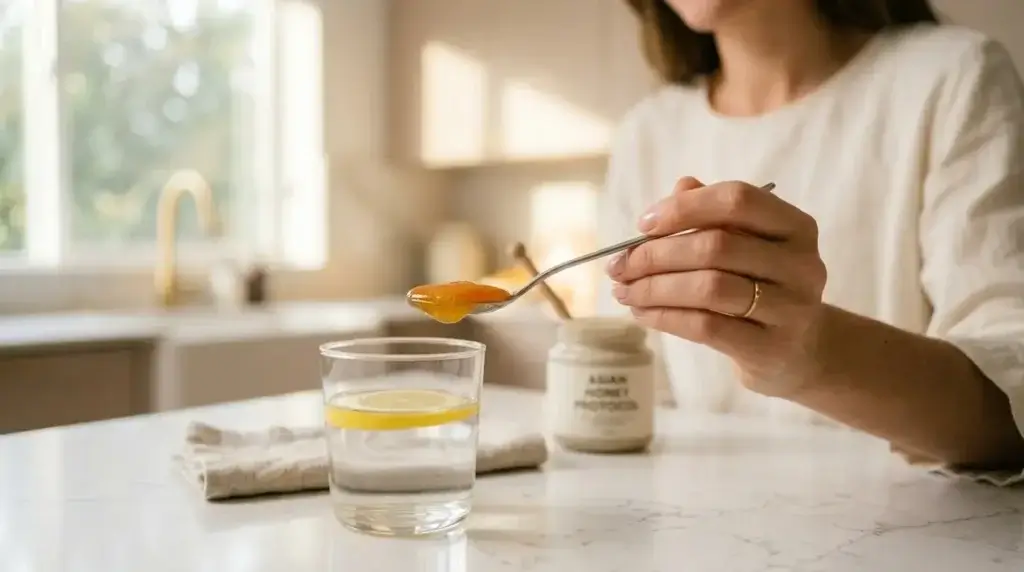
- Each morning, take 1 teaspoon directly or dissolve in a cup of warm (not boiling) water or herbal tea.
Notes
Use Ceylon cinnamon, not cassia — cassia contains coumarin which can be harmful in daily doses. Black pepper is essential — it increases turmeric absorption by approximately 2,000%. Do not use boiling water — temperatures above 140°F (60°C) destroy some of honey’s beneficial enzymes. Store at room temperature for up to 2 months. If crystallization occurs, place the sealed jar in warm water to soften. Never microwave. For maximum brain health benefits, use tualang honey or Manuka honey UMF 10+ as the base.
- Prep Time: 2 min
- Cook Time: 0 min
- Category: Wellness Drink
- Method: No-Cook
- Cuisine: Southeast Asian-Inspired
Nutrition
- Serving Size: 1 teaspoon (~8g)
- Calories: 22
- Sugar: 5g
- Sodium: 0mg
- Fat: 0g
- Carbohydrates: 6g
- Fiber: 0g
- Protein: 0g
Keywords: asian honey protocol recipe, asian honey protocol, honey trick recipe, honey for brain health, golden honey blend, tualang honey recipe, honey trick for memory, neuro honey blend
Ingredients
- 1 cup (250g) raw honey (tualang, Manuka UMF 10+, or quality raw local honey)
- 1 tablespoon ground turmeric
- 1 tablespoon ground Ceylon cinnamon
- ½ teaspoon ground black pepper
- ½ teaspoon ground ginger (optional, adds warmth and digestive support)
Instructions
- Combine dry spices: In a small clean bowl, mix together turmeric, cinnamon, black pepper, and ginger. Stir with a dry spoon until evenly blended.
- Add honey: Pour raw honey into a clean glass jar. Add the spice mixture.
- Fold gently: Using a dry spoon or wooden stick, fold the spices into the honey slowly for 60 seconds until no dry powder pockets remain. The mixture will turn a deep golden-orange color.
- Seal and store: Close the jar tightly. Store at room temperature, away from direct sunlight. Do not refrigerate — cold temperatures accelerate crystallization.
- Daily use: Each morning, take 1 teaspoon of the blend. You can eat it directly off the spoon, dissolve it in a cup of warm (not boiling) water, or stir it into herbal tea.
The 7-Second Ritual (Optional)
Some versions suggest holding the honey under your tongue for 7 seconds before swallowing. This doesn’t unlock any hidden compound — but it does create a brief moment of mindfulness that many people find grounding as a morning practice. The pause itself may be more valuable than any specific absorption mechanism.
Nutrition (per 1 teaspoon serving)
- Calories: ~22 kcal
- Sugar: ~5g (natural from honey)
- Protein: 0g
- Fat: 0g
Cost
- Approximately $5–8 for a full month’s supply using Manuka honey
- Approximately $15–20 using tualang honey
- Less than $3 using quality raw local honey
3 Variations of the Asian Honey Protocol
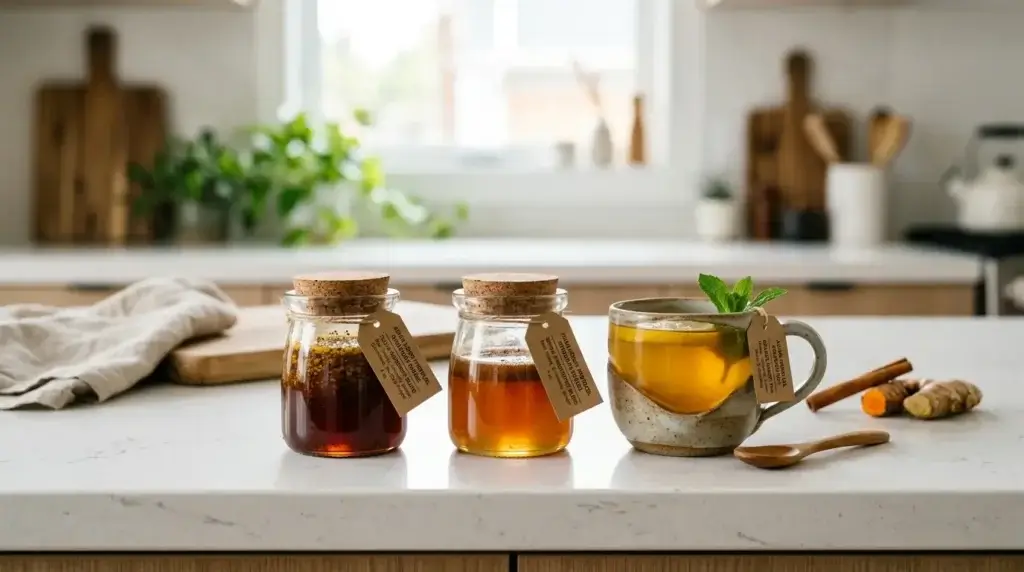
Variation 1: Tualang Honey Premium Version
Replace regular honey with authentic tualang honey. Tualang has the highest documented antioxidant content of any honey variety and over 28 published studies on brain health specifically. This is the most research-backed version of the protocol, but also the most expensive.
Variation 2: Simple 3-Ingredient Version (Beginner)
If the full 5-ingredient recipe feels like too much, start with the basics: raw honey + Ceylon cinnamon + fresh lemon juice. Skip the turmeric and black pepper for now. This version is milder, easier to enjoy, and still delivers antioxidant benefits from the honey and cinnamon. Upgrade to the full version after 1-2 weeks.
Variation 3: Golden Honey Tea (Drink Version)
Dissolve 1 teaspoon of the Asian honey protocol blend into a cup of warm clove tea or green tea. The warm liquid enhances flavor and makes the ritual feel more like a comforting drink than a supplement. The clove tea adds eugenol, another powerful antioxidant, creating a combined effect.
What the Asian Honey Protocol Can and Can’t Do
What It CAN Do
Provide daily antioxidant support. The combination of raw honey, turmeric, and cinnamon delivers a meaningful dose of phenolic compounds and flavonoids that combat oxidative stress in the body, including the brain.
Create a consistent morning routine. Research on habit formation shows that small, repeatable daily rituals build consistency. The Asian honey protocol is simple enough to maintain every day, which matters more than any single ingredient.
Support blood sugar stability. Ceylon cinnamon and raw honey together may help moderate blood sugar responses, preventing the energy crashes that affect mental clarity throughout the day.
Replace processed morning sugars. If your current morning routine includes sugary coffee drinks, sweetened cereal, or processed breakfast bars, replacing even one of those with a teaspoon of the honey protocol is a meaningful improvement.
What It CAN’T Do
Cure or reverse dementia or Alzheimer’s. No food does this. Anyone claiming otherwise is misleading you. The Asian honey protocol may support brain health as part of a balanced lifestyle, but it is not a treatment for any neurological condition.
Replace medication. If you are taking prescribed medication for cognitive health, blood sugar, or any other condition, the honey protocol is not a substitute. It can complement medical care, not replace it.
Produce overnight results. This is a long-term habit, not a quick fix. Most studies on honey and cognitive health examine effects over 8–16 weeks of consistent use. One spoonful will not change anything.
Asian Honey Protocol vs Other Honey Trends
| Trend | Ingredients | Purpose | Science Level |
|---|---|---|---|
| Asian Honey Protocol | Honey + turmeric + cinnamon + black pepper + lemon | Brain health + antioxidant | Moderate (ingredient-level studies) |
| Ben Carson Honey Recipe | Honey + cinnamon + lemon | General wellness | Low (marketing-driven, no real endorsement) |
| Honey Trick for Memory | Honey + various spices | Memory support | Low-moderate |
| Tualang Honey (plain) | Tualang honey alone | Brain health + antioxidant | Strong (28+ neurological studies) |
| Gelatin Trick Recipe | Gelatin + water | Appetite control | Moderate (protein satiety research) |
The Asian honey protocol stands out because it combines multiple researched ingredients into a single daily ritual, while most other honey trends rely on honey alone.
Who Should Try the Asian Honey Protocol
Good fit for:
- Adults over 40 who want to be proactive about brain health
- People looking for a simple, affordable daily wellness habit
- Caregivers exploring food-based support for aging family members
- Anyone wanting to replace processed morning sugars with something nutritionally valuable
- People who enjoy honey and want a structured way to use it daily
Not recommended for:
- Children under 1 year (honey is unsafe for infants)
- People with diabetes or blood sugar conditions (without medical guidance)
- Anyone allergic to bee products
- People expecting a cure for dementia or memory loss
- Anyone on blood thinners (turmeric and cinnamon can interact)
Frequently Asked Questions
What is the Asian honey protocol recipe?
The Asian honey protocol recipe is a daily wellness blend made from raw honey, turmeric, Ceylon cinnamon, black pepper, and fresh lemon juice. It’s rooted in traditional Southeast Asian and Ayurvedic medicine and is used as a morning ritual to support brain health and antioxidant intake. It takes 2 minutes to prepare and costs less than $0.20 per day.
Does the Asian honey protocol actually help with memory?
The individual ingredients — particularly raw honey, turmeric (curcumin), and cinnamon — have published research supporting their antioxidant and neuroprotective properties. A UCLA trial found curcumin improved memory in adults with mild cognitive complaints. However, no study has tested the complete Asian honey protocol as a finished blend. Results come from long-term, consistent use as part of a healthy lifestyle, not from a single dose.
Is the Asian honey protocol the same as the Ben Carson honey recipe?
They share similar ingredients, but the Asian honey protocol is a 5-ingredient blend (including turmeric and black pepper) while the Ben Carson version is typically 3 ingredients (honey, cinnamon, lemon). More importantly, the "Ben Carson honey recipe" is a marketing name — Dr. Carson has publicly denied any connection to the product. The Asian honey protocol is a broader traditional concept, not tied to any celebrity.
What is the best honey for the Asian honey protocol?
Tualang honey has the highest documented antioxidant content and the most brain health research. Manuka honey (UMF 10+ / MGO 250+) is the next best option and more widely available. Quality raw local wildflower honey is a good budget choice. Avoid processed, pasteurized commercial honey — it lacks the bioactive compounds that make this protocol meaningful.
How long before I notice results?
Most people report feeling more mentally "clear" or "grounded" within 1–2 weeks of daily use, though this may be partly attributable to the consistency of the morning routine itself. Published studies on honey and cognitive health typically measure effects over 8–16 weeks. Give it at least 4 weeks of daily use before evaluating.
Can I take the Asian honey protocol at night?
Yes. Some people prefer taking it before bed because honey’s natural sugars provide the brain with a small glucose supply during sleep, and the glycine in honey may support sleep quality. The ritual works at any consistent time — morning or evening.
Are there side effects?
For most healthy adults, the Asian honey protocol is very safe. Possible mild effects include initial digestive warmth from the turmeric and ginger, or a slight energy boost from the natural sugars. If you take blood thinners, diabetes medication, or have liver conditions, consult your doctor first — turmeric and cinnamon can interact with certain medications.
How should I store the Asian honey protocol blend?
Store in a sealed glass jar at room temperature, away from direct sunlight. Do not refrigerate — cold temperatures cause crystallization. The blend lasts 1–2 months. If crystallization occurs, place the sealed jar in warm water to soften. Never microwave honey.
Final Verdict
The Asian honey protocol recipe is a genuinely useful morning habit built on ingredients with real research behind them. It’s not a cure for anything, and anyone telling you otherwise is selling something. But as a daily antioxidant and anti-inflammatory ritual that takes 2 minutes, costs pennies, and uses ingredients your body actually benefits from — it earns its place in a thoughtful wellness routine.
Start with the simple 3-ingredient version if you’re new to this. Upgrade to the full 5-ingredient protocol after a week. And if you can afford it, use tualang or Manuka honey for the strongest antioxidant base.
The science is real but modest. The tradition is ancient and consistent. The ritual is simple and sustainable. Sometimes that’s enough.
Disclaimer: This article is for informational and educational purposes only. It is not medical advice. The Asian honey protocol recipe is a food-based wellness habit, not a treatment for any disease. It does not cure, prevent, or reverse dementia, Alzheimer’s, or any neurological condition. Always consult a qualified healthcare provider before making dietary changes, especially if you take medications or have health conditions. Individual results may vary.