
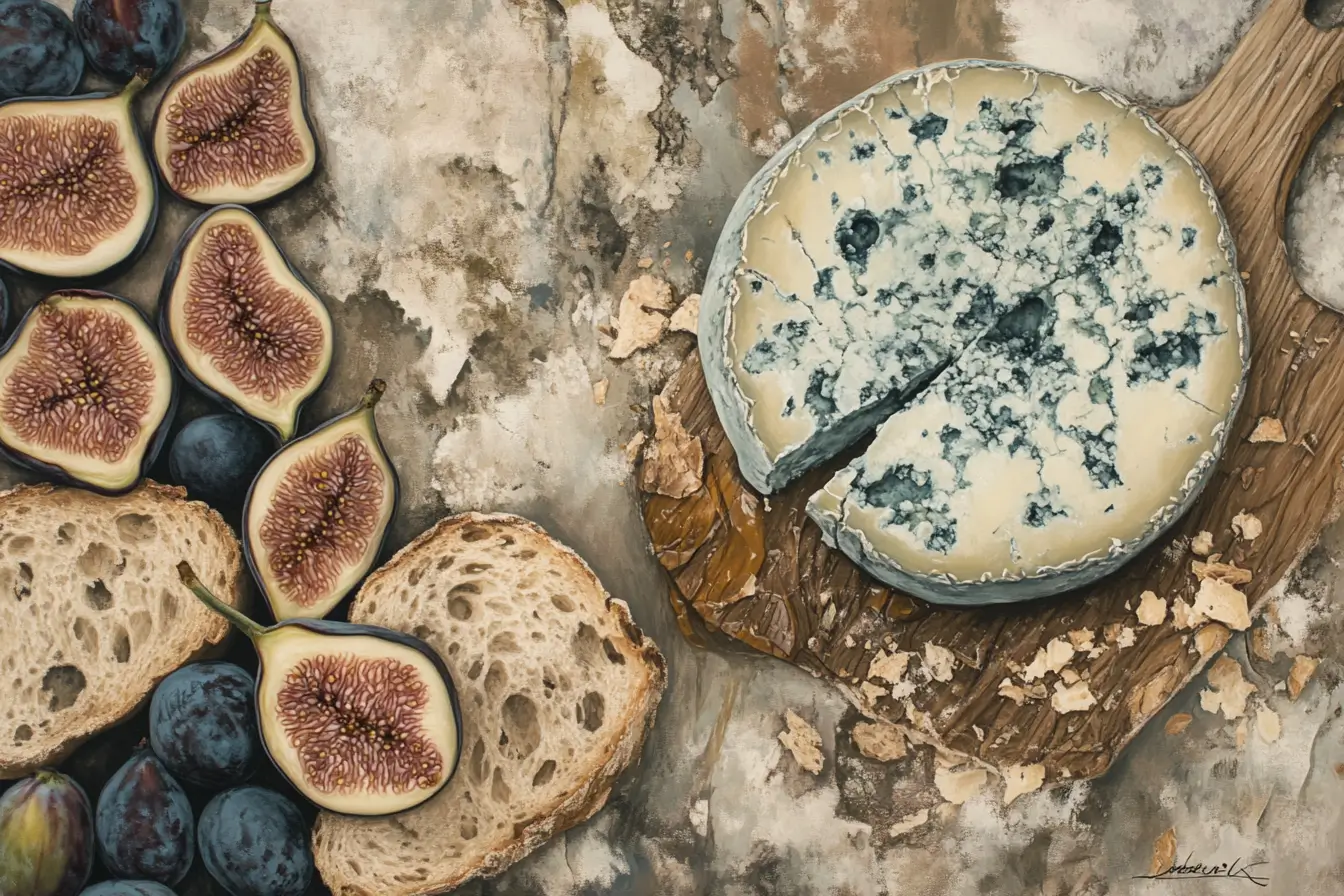
Blue cheese, with its iconic blue-green veins and tangy flavor, has been a staple in global cuisine for centuries. This blue-veined cheese, made from cow’s, sheep’s, or goat’s milk, owes its distinct appearance and taste to the careful use of Penicillium roqueforti mold during production. Its unique characteristics make it stand out among other cheeses, offering a sensory experience that is both bold and versatile.
Loved for its strong aroma and crumbly or creamy texture, it has a place on cheese boards, in gourmet recipes, and even as a simple snack. Its flavors range from mild and sweet to sharp and pungent, depending on the variety. Understanding blue cheese’s history, types, and pairing possibilities can help anyone appreciate its culinary value even more. Whether you’re an experienced foodie or just curious about mold cheese, this guide will provide everything you need to know about this cheese and how to enjoy it.
What is Blue Cheese?
It is a semi-soft, blue-veined cheese characterized by its bold flavors, rich textures, and distinctive appearance. The hallmark of this cheese is the presence of blue mold veins, which develop during the aging process when air interacts with the mold cultures introduced into the cheese. These veins not only give cheese its striking look but also contribute to its sharp flavor and tangy aroma.
Often referred to as bleu cheese, this type of cheese can be made from various kinds of milk, including cow’s, sheep’s, and goat’s milk. Depending on the variety, the texture can range from crumbly and firm to creamy and smooth. The combination of pasteurized milk, cheese rennet, and mold cultures ensures the cheese develops its signature flavor profile, which is both savory and slightly salty. Transitioning into its use, it has earned its place in countless dishes, from salads and sauces to hearty entrees.
Did You Know? You can pair blue cheese with other bold flavors like smoked meats or roasted nuts. For inspiration, check out these smoked queso recipes for a flavor-packed appetizer.
A Brief History of Blue Cheese
It has a fascinating history that dates back thousands of years. Its origins are closely tied to the natural caves of Europe, where early cheesemakers discovered that mold could enhance both the flavor and preservation of cheese. One of the earliest known blue cheeses is Roquefort, a French blue cheese that has been produced in the limestone caves of Roquefort-sur-Soulzon for centuries. Legend has it that a shepherd accidentally left his cheese in a cave, only to return weeks later to find it transformed by blue mold.
Similarly, Gorgonzola, an Italian cheese, has its roots in the Lombardy region of Italy. English cheese, particularly Stilton, gained popularity in the 18th century, becoming a symbol of English cheese culture. These varieties, each with their unique characteristics, highlight the evolution of blue-veined cheese from a regional specialty to a global phenomenon. As blue cheese spread across the world, it became a symbol of artisanal cheesemaking and culinary creativity.
For a taste of Mediterranean-inspired cuisine that complements blue cheese, explore this Greek-style roasted Branzino recipe.
How Blue Cheese is Made
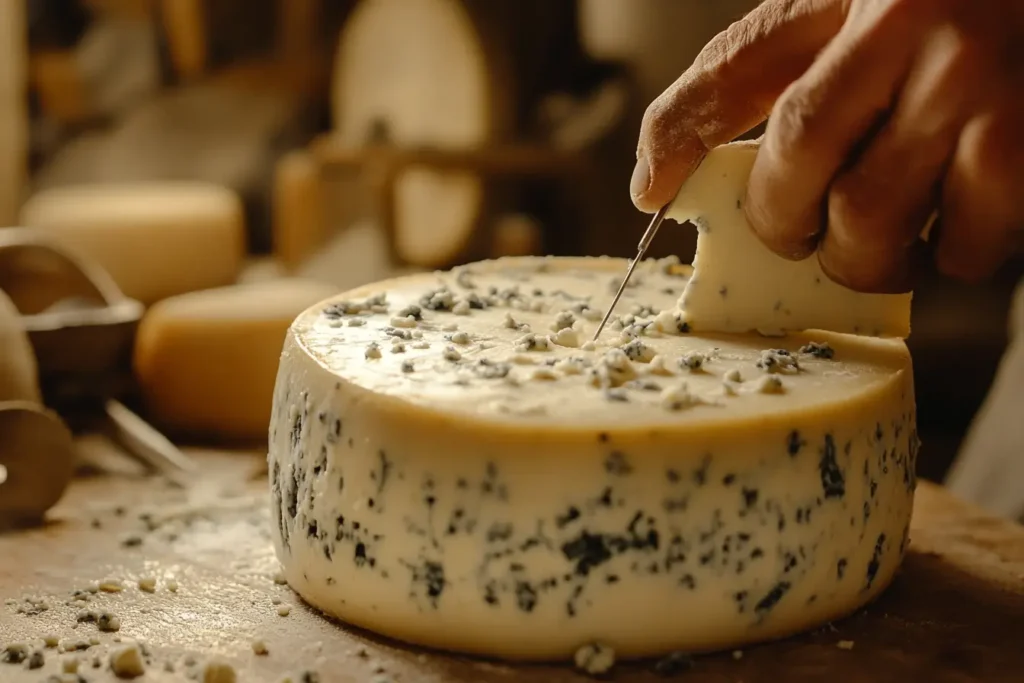
The process of making this cheese involves a blend of traditional techniques and modern innovations, resulting in the tangy cheese we know and love today. It all starts with milk, which can come from cows, sheep, or goats. After pasteurization, cheese cultures and rennet are added to the milk to form curds. At this stage, Penicillium roqueforti mold is introduced, setting the stage for the blue mold veins to develop.
The curds are then shaped and salted, with the salt playing a crucial role in flavor development and preservation. After this, the cheese undergoes a unique step—stainless steel needles are used to pierce the cheese, allowing air to enter and interact with the mold cultures. This process, known as spiking, is what creates the iconic blue-green spots throughout the cheese.
Once pierced, the cheese is aged in cool, humid environments, often for several months. During this maturation period, the flavors intensify, and the texture evolves. The result is a blue cheese that combines creamy textures, tangy flavors, and a pungent aroma, making it a beloved choice for both casual snacking and gourmet cooking.
Types of Blue Cheese Around the World
It is incredibly diverse, with each variety offering its unique characteristics in terms of flavor, texture, and origin.
Roquefort (France)
Roquefort, made from sheep’s milk, is often referred to as the “King of Cheeses.” It boasts a creamy texture and a sharp, tangy flavor that is both salty and rich. Protected by European Union regulations, Roquefort must be produced in the caves of Roquefort-sur-Soulzon, where the conditions are ideal for its maturation.
Gorgonzola (Italy)
Gorgonzola, an Italian blue cheese, comes in two main varieties: Gorgonzola Dolce, which is milder and creamier, and Gorgonzola Piccante, known for its crumbly texture and sharper taste. Made from cow’s milk, it pairs beautifully with pasta, risotto, and even pizza.
Stilton (England)
Known as the “British Blue,” Stilton is made from cow’s milk and aged to perfection. Its crumbly texture and earthy undertones make it a favorite for cheese boards and soups. Stilton is also protected by geographical indication laws, ensuring its authenticity.
Danish Blue (Denmark)
Danish Blue, or Danablu, is a softer, milder blue cheese made from cow’s milk. Its creamy texture and slightly sweet flavor make it accessible to those new to this cheese.
Cabrales (Spain)
Cabrales, a Spanish blue cheese, is known for its intense, tangy flavor. Made from a blend of cow’s, sheep’s, and goat’s milk, it is traditionally aged in caves, resulting in a strong aroma and bold taste.
These varieties demonstrate the incredible range of blue cheese, ensuring there’s something for every palate.
Sensory Experience: How Blue Cheese Tastes and Feels
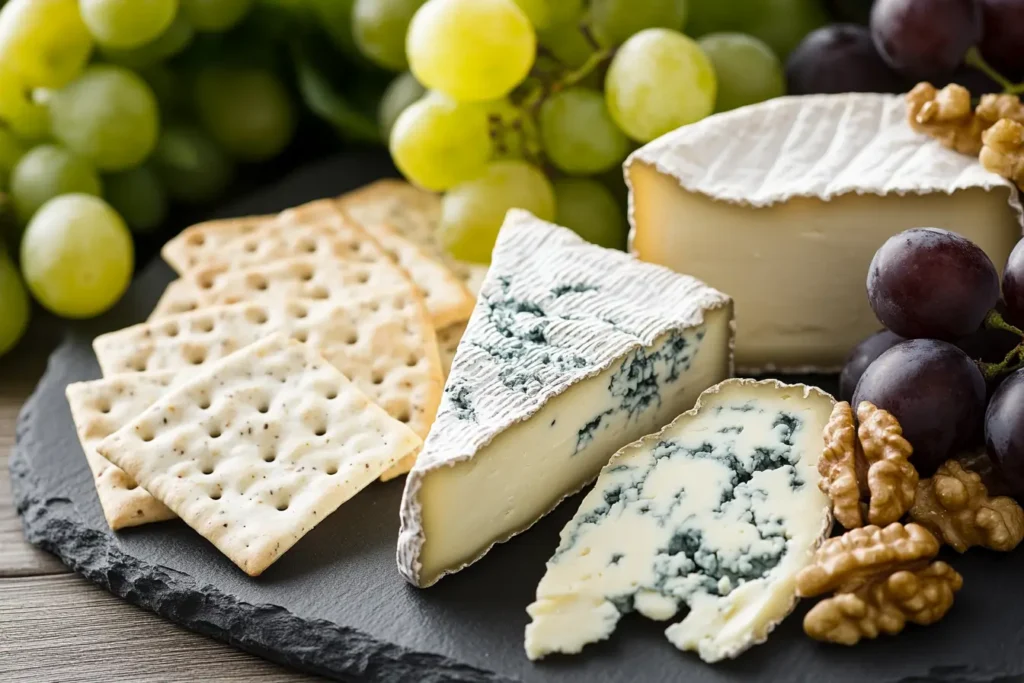
The sensory experience of this cheese is nothing short of extraordinary. Its crumbly or creamy texture provides a satisfying mouthfeel, while its tangy and salty flavor adds depth to any dish. The sharpness of blue cheese, complemented by its earthy undertones, makes it a standout ingredient in both sweet and savory pairings.
The aroma of blue cheese, while strong, is part of its charm. It hints at the robust flavors within, creating an anticipation that enhances the overall tasting experience. Additionally, the vibrant blue-green veins running through the cheese make it visually appealing, especially when served on cheese boards.
The vibrant color of some foods, including certain seafood pairings served alongside cheese, comes from natural pigments like astaxanthin found in foods.
Pairing Blue Cheese with Food and Drinks
Pairing this cheese with complementary foods and beverages can enhance its flavor even further.
Food Pairings
- Fruits: Sweet fruits like pears, apples, and figs provide a natural counterbalance to the tanginess of blue cheese.
- Nuts: Walnuts, almonds, and pecans add a crunchy texture that complements the creaminess of the cheese.
- Bread and Crackers: Serve this cheese with crusty bread or neutral crackers to let its bold flavors shine.
- Vegetables: Caramelized onions and roasted beets pair beautifully with this cheese, enhancing its earthy undertones.
Cooking with Blue Cheese: Tips and Ideas
Blue cheese’s versatility makes it a favorite in the kitchen. Here are some ways to incorporate it into your cooking:
- Salads: Crumble this cheese over fresh greens and add candied nuts or dried fruits for a gourmet touch.
- Sauces and Dressings: Whisk this cheese into cream-based sauces or vinaigrettes to elevate their flavor.
- Soups: Stir this cheese into creamy soups like broccoli or potato for added richness.
- Toppings: Use this cheese as a topping for burgers, baked potatoes, or roasted vegetables.
- Baking: Incorporate this cheese into savory pastries or quiches for a bold flavor twist.
To get the best results, balance blue cheese’s intensity with milder ingredients to create harmonious dishes.
Want to learn more about flavor pairings? Check out this guide on what gives soup the best flavor for additional culinary tips.
How to Store and Handle this Cheese
Proper storage is essential to maintain blue cheese’s quality and flavor. Wrap it in parchment paper or cheese paper to allow it to breathe, then place it in an airtight container before refrigerating. Store this cheese in the cheese drawer or the coldest part of your fridge, and consume it within one to two weeks of opening.
If this cheese develops a slimy texture or an overly strong ammonia smell, it’s time to discard it.
Wondering how to prolong the freshness of other ingredients? Read this guide on how to make soup thick and creamy for practical kitchen hacks.
Popular Blue Cheese Recipes
- Dressing: Combine this cheese, mayonnaise, sour cream, and vinegar for a creamy dressing.
- Blue Cheese-Stuffed Burgers: Add a gourmet twist to burgers by stuffing them with blue cheese.
- Roasted Pear and Blue Cheese Salad: Toss roasted pears with mixed greens, walnuts, and this cheese for a sweet and savory delight.
Conclusion
This cheese is a remarkable ingredient that brings bold flavors, rich textures, and culinary versatility to the table. Whether enjoyed on its own, paired with complementary foods, or incorporated into recipes, this tangy cheese is a must-try for anyone who loves unique flavors. From creamy Gorgonzola to sharp Roquefort, it offers something for every palate.
FAQs
What does blue cheese taste like?
Blue cheese has a bold and complex flavor that can range from mild and creamy to sharp and tangy, depending on the variety. Some blue cheeses taste slightly salty and earthy, while others have a stronger, more pungent profile. The texture can also influence flavor perception, with creamier blues tasting smoother and crumbly ones feeling more intense.
What foods pair best with blue cheese?
Blue cheese pairs well with foods that balance its strong flavor. Sweet fruits like pears, figs, and apples contrast nicely with its tanginess, while nuts such as walnuts and pecans add crunch. It also works well with crusty bread, crackers, roasted vegetables, and even grilled meats for a bold flavor combination.
How should blue cheese be served for the best flavor?
Blue cheese is best served at room temperature to allow its flavors and aromas to fully develop. Remove it from the refrigerator about 30 minutes before serving. It can be crumbled over salads, sliced for cheese boards, or gently melted into sauces and soups for added richness.
How long does blue cheese last once opened?
Once opened, blue cheese typically lasts one to two weeks when stored properly in the refrigerator. It should be wrapped in parchment or cheese paper and placed in an airtight container to prevent it from drying out or absorbing other odors. If the cheese develops an unpleasant ammonia smell or slimy texture, it’s best to discard it.