
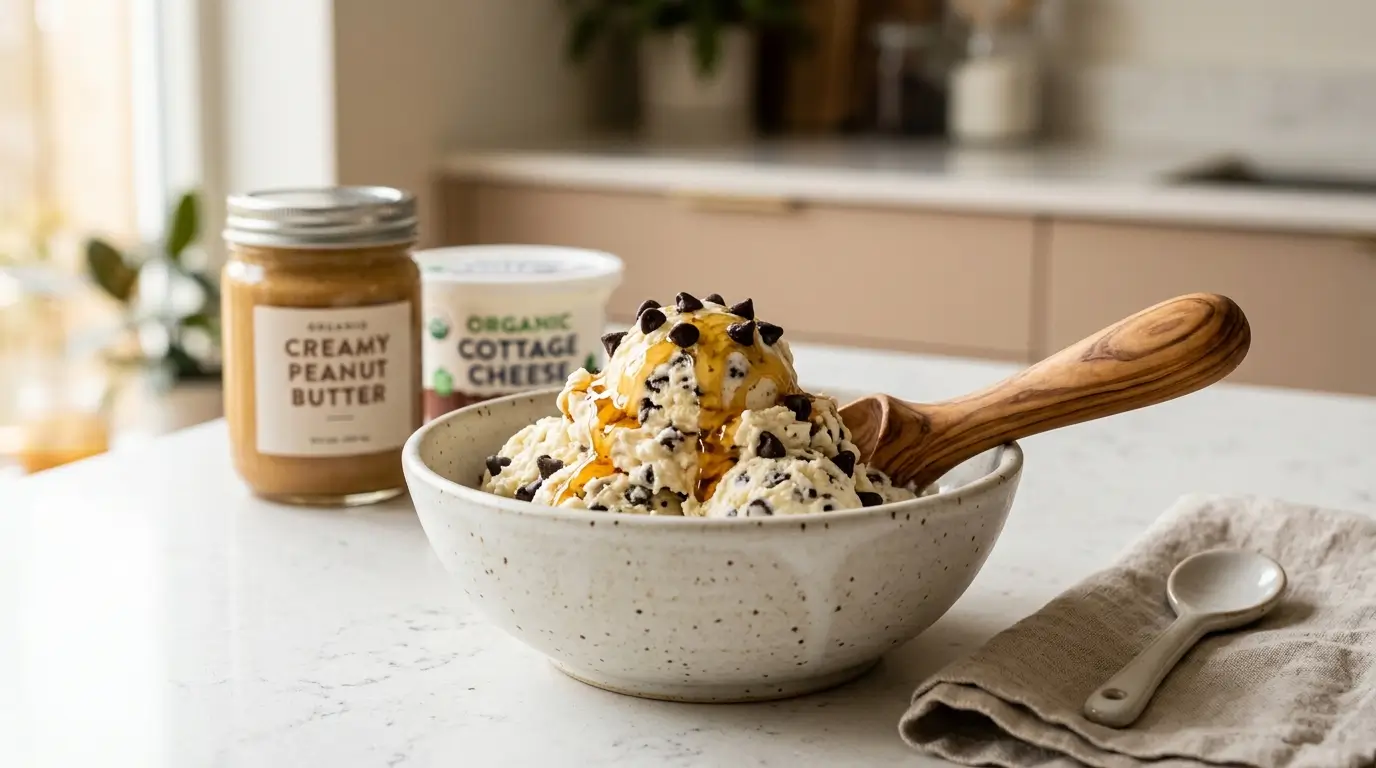
📌 Last Updated: March 2026 — This guide includes the original viral recipe, 6 flavor variations, a keto version, tips for the creamiest texture, and an honest breakdown of whether this is really as good as real ice cream.
Cottage cheese ice cream is the dessert hack that broke TikTok in the best way possible. What started as a quirky experiment by food creator Lainie Cooks has turned into one of the most replicated healthy dessert recipes of the past two years — and it shows no signs of slowing down in 2026.
The concept is almost too simple: blend cottage cheese with a sweetener, freeze it, and somehow end up with something that tastes shockingly close to actual ice cream. No ice cream maker. No churning. No heavy cream. And with over 20 grams of protein per serving, it’s become a go-to for gym-goers, macro counters, and anyone trying to satisfy a sweet tooth without derailing their nutrition goals.
But does it really taste like ice cream? Is the texture actually good? And which flavor combinations work best?
In this guide, you’ll get the exact recipe, 6 tested flavor variations, tips for avoiding the most common mistakes, and an honest review of what to expect. If you’ve been curious but skeptical, this is the article that’ll help you decide.
Why Cottage Cheese Ice Cream Went Viral
Cottage cheese has been having a major comeback. After decades as the forgotten diet food of the 1980s, it’s suddenly everywhere — in pancakes, dips, flatbreads, and now ice cream. The cottage cheese ice cream trend took off for three reasons that hit at exactly the right time.
The Protein Obsession
High-protein everything dominates food culture in 2026. From protein coffee to protein pasta, people are looking for ways to increase their daily protein without eating another chicken breast. Cottage cheese ice cream delivers 20–28g of protein per serving, which is more than most protein bars and infinitely more enjoyable.
The Simplicity Factor
Traditional ice cream requires heavy cream, eggs, sugar, and usually an ice cream machine. Cottage cheese ice cream requires a blender, 4 ingredients, and a freezer. The barrier to entry is essentially zero, which means anyone can try it on a random Tuesday night and post the results by Wednesday morning.
The Taste Surprise
The biggest reason this trend stuck is that it actually works. When blended properly, cottage cheese becomes remarkably smooth and creamy. The slightly tangy flavor disappears almost entirely behind whatever sweetener and mix-ins you use. Most people who try it for the first time are genuinely surprised — and that surprise is what makes people share it.
Cottage Cheese Ice Cream Recipe (Original Viral Version)
This is the base recipe that started it all. It’s the peanut butter and honey version that Lainie Cooks popularized on TikTok. Simple, delicious, and takes about 5 minutes of active work.
Print
Cottage Cheese Ice Cream: The Viral 4-Ingredient High-Protein Dessert Everyone’s Making
- Total Time: 5 min (+ 4 hours freeze)
- Yield: 3 servings 1x
Description
The viral cottage cheese ice cream recipe from TikTok. Just 4 ingredients, 22g protein per serving, no ice cream maker needed. Peanut butter chocolate chip flavor.
Ingredients
- 16 oz (2 cups) full-fat cottage cheese
- ¼ cup honey or maple syrup
- ¼ cup natural peanut butter
- ¼ cup dark chocolate chips
Instructions
- Add cottage cheese, honey, and peanut butter to a food processor or high-speed blender.
- Process for 2-3 minutes until completely smooth with no visible lumps.
- Fold in dark chocolate chips by hand with a spatula.
- Transfer the mixture to a loaf pan or airtight container. Cover tightly.
- Freeze for at least 4 hours for scoopable ice cream, or 1-2 hours for soft-serve consistency.
- Remove from freezer and let sit at room temperature for 5-10 minutes before scooping.
- Scoop into bowls or cones and enjoy!
Notes
Use full-fat cottage cheese for the creamiest texture — low-fat versions become icy and grainy. Blend longer than you think — no visible curds should remain. For the best texture without an ice cream maker, stir the mixture every 30 minutes during the first 2 hours of freezing. For keto, replace honey with liquid allulose and use sugar-free chocolate chips. Store in the freezer for up to 2-3 weeks. Good Culture and Daisy are recommended cottage cheese brands.
- Prep Time: 5 min
- Cook Time: 0 min
- Category: Dessert
- Method: No-Cook
- Cuisine: American
Nutrition
- Serving Size: 1 serving (⅓ batch)
- Calories: 284
- Sugar: 27g
- Sodium: 483mg
- Fat: 12g
- Saturated Fat: 4g
- Unsaturated Fat: 8g
- Trans Fat: 0g
- Carbohydrates: 35g
- Fiber: 4g
- Protein: 22g
- Cholesterol: 20mg
Keywords: cottage cheese ice cream, cottage cheese ice cream recipe, viral cottage cheese ice cream, high protein ice cream, healthy ice cream, TikTok ice cream recipe, protein dessert
Ingredients
- 16 oz (2 cups) full-fat cottage cheese
- ¼ cup honey or maple syrup
- ¼ cup natural peanut butter
- ¼ cup dark chocolate chips
Instructions
- Blend: Add cottage cheese, honey, and peanut butter to a food processor or high-speed blender. Process for 2–3 minutes until completely smooth. No lumps should remain.
- Mix in: Fold in the chocolate chips by hand with a spatula.
- Freeze: Transfer the mixture to a loaf pan, shallow container, or the original cottage cheese container. Cover tightly.
- Wait: Freeze for at least 4 hours. For soft-serve consistency, check at 1–2 hours. For scoopable ice cream, freeze 4–6 hours.
- Thaw and serve: Remove from freezer and let sit at room temperature for 5–10 minutes before scooping. This step is important — it goes from rock-hard to scoopable quickly.
Nutrition (per serving — makes 3 servings)
- Calories: 284 kcal
- Protein: 22g
- Carbs: 35g
- Fat: 12g
- Fiber: 4g (with dark chocolate chips)
- Sugar: 27g
6 Cottage Cheese Ice Cream Flavors
The beauty of this recipe is that the base (cottage cheese + sweetener) stays the same and you just swap the add-ins. Here are 6 tested variations:
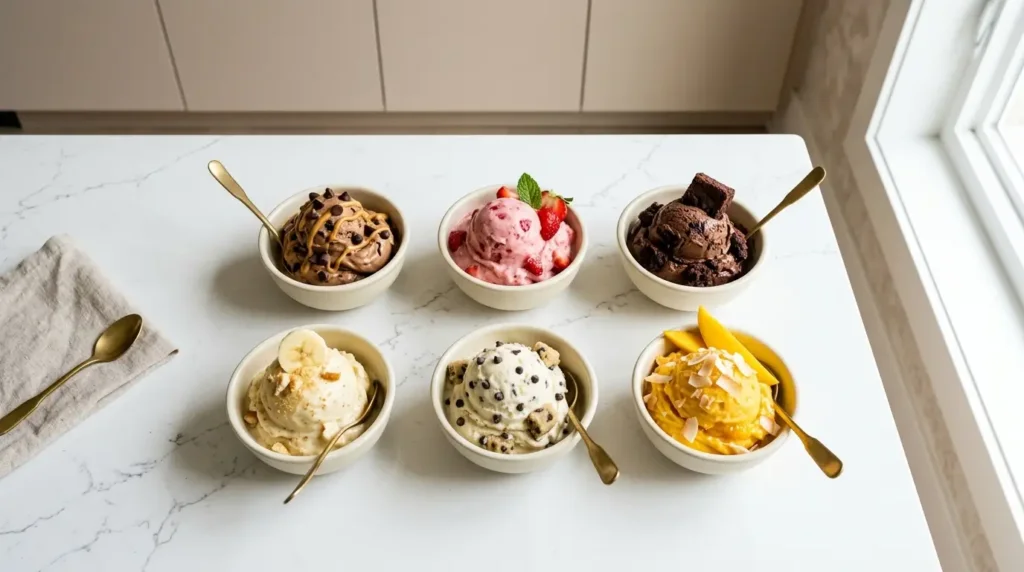
1. Peanut Butter Chocolate Chip (The Original)
The classic viral version. Use ¼ cup peanut butter + ¼ cup dark chocolate chips + ¼ cup honey. Tastes like a Reese’s cup in ice cream form.
2. Strawberry Cheesecake
Blend 1 cup frozen strawberries into the base with ¼ cup honey. Fold in crushed graham crackers after blending. Creamy, pink, and tastes like frozen cheesecake.
3. Chocolate Brownie
Add 2 tablespoons unsweetened cocoa powder + ¼ cup maple syrup to the base. Fold in brownie chunks or chocolate chips after blending. Rich and fudgy.
4. Banana Cream Pie
Blend 1 ripe frozen banana into the base with ¼ cup honey. The banana adds natural creaminess and sweetness. Fold in crushed vanilla wafers for the “pie” element.
5. Cookie Dough
Blend the base with ¼ cup maple syrup + 1 teaspoon vanilla extract. Fold in mini chocolate chips and small pieces of edible cookie dough. The sweet-salty combo is addictive.
6. Mango Coconut (Tropical)
Blend 1 cup frozen mango chunks into the base with 2 tablespoons coconut cream and ¼ cup honey. Top with toasted coconut flakes. Bright, tropical, and refreshing.
Keto Cottage Cheese Ice Cream (Sugar-Free)
For low-carb dieters, the cottage cheese ice cream base works perfectly with sugar-free sweeteners.
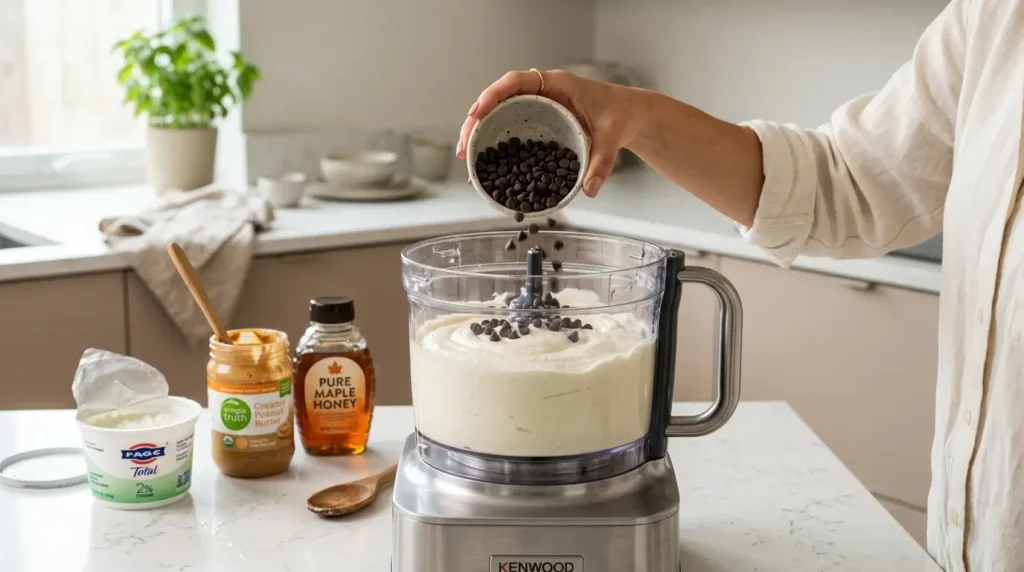
Ingredients
- 16 oz full-fat cottage cheese
- ¼ cup natural peanut butter or almond butter
- 2–3 tablespoons liquid allulose (best for creamy texture)
- 2 tablespoons sugar-free chocolate chips
Why Allulose?
Allulose prevents the ice cream from freezing rock-hard. Regular sweeteners like stevia or erythritol can make frozen desserts icy and difficult to scoop. Allulose keeps the texture soft and creamy even after overnight freezing. If you can’t find allulose, monk fruit syrup is the next best option.
Keto Nutrition (per serving — makes 3 servings)
- Calories: ~220 kcal
- Protein: 20g
- Net carbs: ~6g
- Fat: 14g
Tips for the Creamiest Cottage Cheese Ice Cream
The difference between “this is amazing” and “this tastes like frozen cottage cheese” comes down to technique. Follow these tips:
Use full-fat cottage cheese. This is the single most important factor. Low-fat or fat-free versions produce an icy, grainy texture. Full-fat creates creaminess. Good brands include Good Culture, Daisy, or any brand with minimal ingredients.
Blend longer than you think. Most people don’t blend enough. You need 2–3 full minutes in a food processor or high-speed blender until the mixture is completely smooth with zero visible curds. If you can still see lumps, keep blending.
Use a food processor over a blender. A food processor handles the thick cottage cheese better than most standard blenders. If using a blender, use a Vitamix or similar high-speed model. Regular blenders may struggle and leave lumps.
Add frozen fruit for creaminess. Frozen banana or frozen berries add natural creaminess and help the mixture freeze with a smoother texture. This is the easiest upgrade if your first batch was too icy.
Don’t over-freeze. Check your ice cream at 1 hour for soft serve, 3–4 hours for scoopable, and avoid leaving it overnight on your first try. If it does freeze solid overnight, let it sit on the counter for 10–15 minutes before scooping.
Stir during freezing. For the best texture without an ice cream maker, stir the mixture with a fork every 30 minutes for the first 2 hours. This breaks up ice crystals and creates a smoother result.
Cottage Cheese Ice Cream vs Real Ice Cream
Let’s be real about what this is and what it isn’t.
| Factor | Cottage Cheese Ice Cream | Traditional Ice Cream |
|---|---|---|
| Calories | ~280 per serving | ~270 per serving (Ben & Jerry’s: 300+) |
| Protein | 20–28g | 3–5g |
| Fat | 10–14g | 15–20g |
| Sugar | 15–27g (customizable) | 20–30g (fixed) |
| Texture | Smooth when well-blended, slightly denser | Ultra-creamy, lighter |
| Taste | Mild tang, flavor depends on mix-ins | Rich, pure dairy flavor |
| Ice cream maker needed? | No | Usually yes for best results |
| Cost per serving | ~$1.00–1.50 | ~$1.50–3.00 |
The Honest Truth
Cottage cheese ice cream is not real ice cream. If you freeze it expecting Ben & Jerry’s, you’ll be disappointed. But if you approach it as a high-protein frozen dessert that satisfies a sweet craving without the guilt, it delivers. The people who love it are the ones who adjusted their expectations — and then got pleasantly surprised.
The texture is denser and slightly less smooth than churned ice cream. The flavor is milder. But with 22g of protein per serving versus 4g in regular ice cream, it’s a fundamentally different product serving a different purpose. Compare it to protein bars, not gelato, and it suddenly looks incredible.
Common Mistakes to Avoid
Using low-fat cottage cheese. This produces icy, watery ice cream. Always use full-fat.
Not blending enough. If you can see curds, blend more. Visible lumps = grainy frozen dessert.
Freezing too long without stirring. Without an ice cream maker, the mixture forms large ice crystals if left untouched. Stir every 30 minutes during the first 2 hours.
Adding too much liquid sweetener. Excess honey or maple syrup can make the mixture too thin and icy. Stick to ¼ cup for 16 oz of cottage cheese.
Expecting it to taste exactly like ice cream. It won’t. It’s a high-protein frozen dessert that’s better than it has any right to be, but it’s not Häagen-Dazs. Set your expectations at “impressively good for what it is” and you’ll love it.
Who Is Cottage Cheese Ice Cream Best For?
Great for:
- Anyone tracking protein macros (20g+ per serving)
- People who want a healthier dessert swap
- Gym-goers looking for a post-workout treat
- Parents who want a higher-protein snack for kids
- Anyone trying to reduce sugar without giving up dessert
If you’re looking for more high-protein, high-fiber meal ideas beyond dessert, check out our fibermaxxing recipes guide.
Not ideal for:
- People who strongly dislike cottage cheese (the tang is minimal but present)
- Anyone expecting traditional ice cream quality
- Strict vegans (cottage cheese is dairy)
- People with lactose intolerance (unless using lactose-free cottage cheese)
Frequently Asked Questions
Does cottage cheese ice cream really taste like ice cream?
Not exactly, but it’s surprisingly close. When blended until smooth and combined with peanut butter, honey, and chocolate chips, it tastes like a rich, creamy frozen dessert. The cottage cheese flavor mostly disappears behind the mix-ins. Most people describe it as “better than expected” rather than “identical to ice cream.”
What’s the best cottage cheese for making ice cream?
Full-fat cottage cheese is essential for creaminess. Good Culture and Daisy are popular choices because they’re smooth and not overly salty. Avoid low-fat or fat-free versions — they produce an icy, grainy texture that’s much less enjoyable.
Do I need an ice cream maker?
No. The standard method is to blend, pour into a container, and freeze. For the smoothest texture without a machine, stir the mixture every 30 minutes during the first 2 hours of freezing. If you do have an ice cream maker or a Ninja Creami, using it will significantly improve the texture.
How many calories are in cottage cheese ice cream?
The original peanut butter chocolate chip version has approximately 284 calories per serving (⅓ of the batch). That’s comparable to regular ice cream in calories, but with 22g of protein versus 3–5g. The keto version drops to about 220 calories with only 6g net carbs.
Can I use Greek yogurt instead of cottage cheese?
You can, but the texture and protein content will be different. Greek yogurt produces a more tart, frozen-yogurt-like result. Cottage cheese creates a creamier, denser texture that’s closer to actual ice cream. For a yogurt-based dessert, try our viral Japanese yogurt cheesecake instead.
How long does cottage cheese ice cream last in the freezer?
Up to 2–3 weeks in an airtight container. However, the texture is best within the first 3–5 days. After that, it can become very hard and icy. Let it thaw on the counter for 10–15 minutes before scooping if it’s been frozen for more than a day.
Is cottage cheese ice cream actually healthy?
It’s a healthier option than traditional ice cream thanks to its high protein content and customizable sugar levels. However, it’s still a dessert — the calories, sugar (from honey), and fat are real. The keto version is lower in carbs and sugar. As with any food, portion size matters.
Can I make it without peanut butter?
Yes. Replace peanut butter with almond butter, cashew butter, or skip it entirely. Without nut butter, the base is just cottage cheese + sweetener. Add frozen fruit (banana, strawberries, mango) for creaminess and flavor. The protein will be slightly lower without the nut butter.
Final Verdict
Cottage cheese ice cream is one of those rare viral food trends that actually delivers. It’s not perfect ice cream — but it was never trying to be. What it is: a 5-minute, 4-ingredient, high-protein frozen dessert that tastes way better than it should and fills a real gap for people who want something sweet without the nutritional guilt.
Start with the peanut butter chocolate chip version — it’s the most forgiving and the best tasting for first-timers. If you’re hooked, work through the 6 flavor variations. And if you’re counting macros, the keto version with allulose might become your new nightly ritual.
The best part? A batch costs about $3 and takes 5 minutes of active work. That’s hard to beat.
Pair cottage cheese ice cream as a post-meal dessert with the gelatin trick recipe before meals for a complete appetite-control routine.
Disclaimer: This article is for informational and educational purposes only. It is not medical advice. Always consult a qualified healthcare provider before making significant dietary changes. Individual results may vary.