
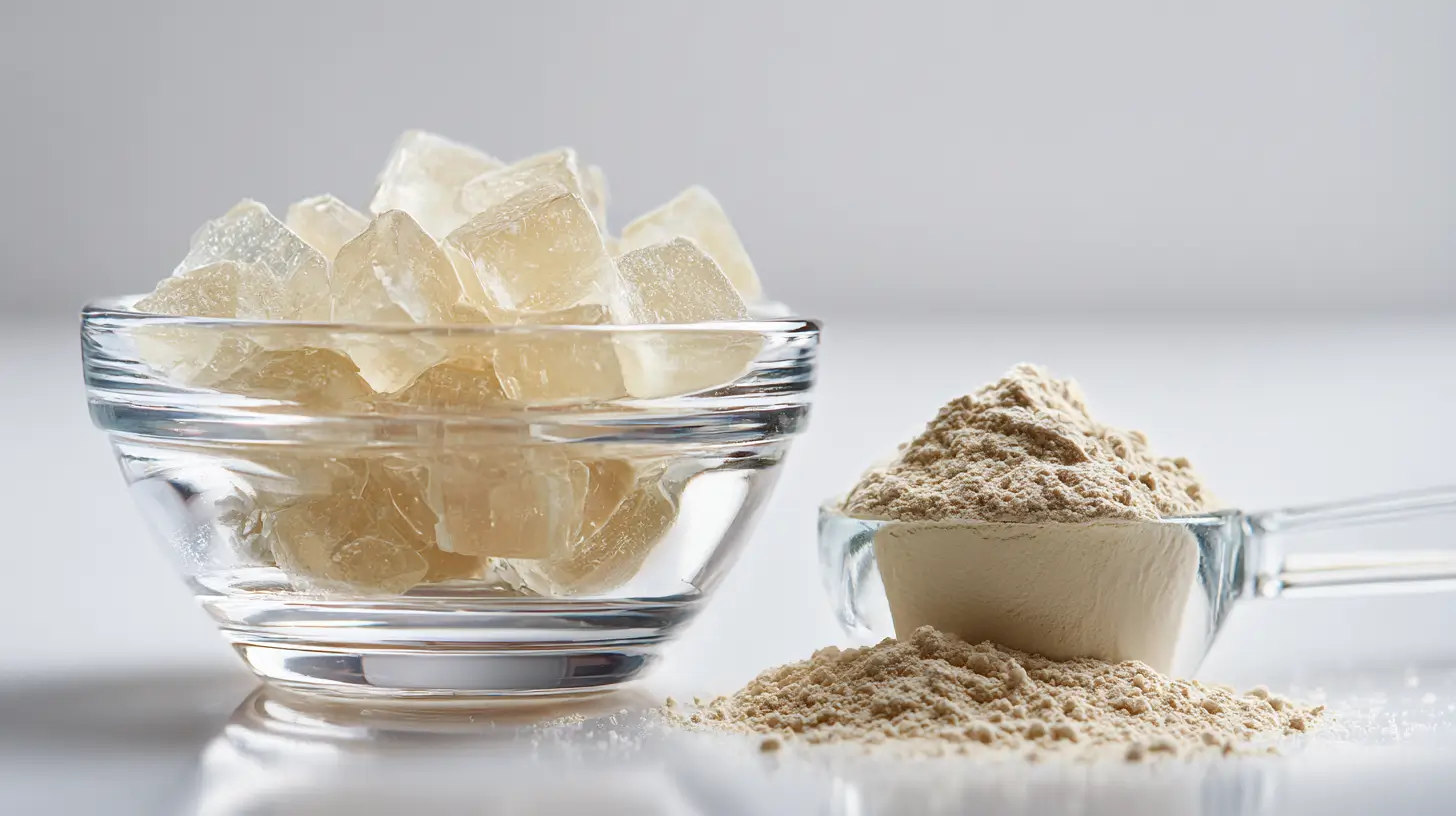
If you’ve been trying to lose weight using protein-based routines, you’ve probably seen both gelatin and collagen recommended everywhere. From doctor-inspired weight loss plans to viral wellness drinks, these two ingredients are often presented as interchangeable — but they are not.
While collagen powders are praised for skin and joints, gelatin keeps appearing in structured appetite-control routines, especially in bariatric-style diets and GLP-1–focused approaches. This has led many people to ask a simple but important question: which one actually helps with weight loss?
The answer isn’t about trends or marketing claims. It comes down to how each protein behaves in the body — how it digests, how it affects fullness, and how it fits into real-life routines. In this guide, we break down the differences between gelatin and collagen in practical terms, including doctor perspectives, appetite control, safety, and when each option makes sense depending on your goals.
If you’re trying to reduce cravings, build a sustainable routine, or understand why gelatin keeps showing up in weight-loss discussions, this comparison will help you choose wisely.
What Is Gelatin?

How Gelatin Is Made
Gelatin is a protein derived from collagen-rich animal tissues, mainly bones, skin, and connective tissue. These parts are slowly simmered or processed to extract collagen, which then breaks down into gelatin once heated and cooled. That’s why traditional bone broth gels in the fridge—natural gelatin forms as it cools.
Unlike collagen supplements, gelatin is minimally processed. There’s no enzymatic “pre-digestion,” no flavoring, and no added fillers when you choose plain, unflavored gelatin. What you get is a dense, functional protein that behaves very differently in the stomach compared to powders.
Because it sets into a gel when cooled, gelatin can be prepared as warm drinks, soft gels, or firm portions—making it easy to control texture and volume depending on your needs. Many people start with a simple unflavored gelatin preparation to test tolerance and appetite response before using it regularly.
Protein Structure and Digestion
Although gelatin and collagen come from the same source, their protein structure is not identical. Gelatin contains long-chain amino acids that thicken when mixed with liquid. This structure slows digestion, which is a key reason gelatin is often associated with fullness.
When you eat gelatin, it absorbs water and expands slightly in the stomach. As a result, digestion takes longer, and amino acids are released more gradually. This slower breakdown can help extend the feeling of satiety between meals—especially when gelatin is consumed before or between meals.
Another important point is insulin response. Gelatin is nearly carb-free and fat-free, which means it typically has little to no impact on blood sugar. For people trying to reduce cravings or avoid energy crashes, this can be a meaningful advantage.
Why Gelatin Is Used in Weight-Loss Routines
Gelatin shows up in weight-loss routines for one main reason: appetite control. Its volume, texture, and digestion speed work together to promote fullness without adding many calories.
Here’s why it’s often favored over collagen for weight loss:
- It creates physical volume in the stomach
- It digests more slowly than collagen peptides
- It pairs well with low-calorie, structured eating plans
- It’s easy to portion and track
Gelatin is also popular in bariatric and post-surgery diets because it’s gentle, soft, and easy to tolerate while still providing protein. Unlike shakes or powders that are easy to overconsume, gelatin naturally limits intake due to its texture.
What Is Collagen?
Collagen Peptides Explained
Collagen supplements are usually sold as collagen peptides (also called hydrolyzed collagen). These peptides come from the same raw material as gelatin—animal bones, skin, and connective tissue—but they go through additional processing.
During hydrolysis, collagen is broken down into very small protein fragments. This makes collagen peptides dissolve easily in hot or cold liquids and prevents them from forming a gel. From a convenience standpoint, that’s a big selling point. You can stir collagen into coffee, smoothies, or water without changing texture.
However, that convenience also changes how collagen behaves in the body. Because the peptides are already broken down, they pass through the stomach quickly. This fast digestion is helpful for absorption, but it also means collagen does not create volume or thickness in the stomach—two factors that matter a lot for appetite control.
Absorption and Marketing Claims
Collagen is often marketed as a “highly absorbable” protein, and that claim is mostly true. The small peptide size allows collagen to be digested and absorbed rapidly, delivering amino acids like glycine, proline, and hydroxyproline into the bloodstream.
Where marketing can become misleading is in how this absorption is framed for weight loss. Fast absorption does not automatically mean better fat loss or appetite control. In fact, proteins that digest too quickly may have a weaker effect on satiety compared to slower, bulk-forming proteins.
Another point often overlooked is dose perception. Because collagen dissolves completely and adds no texture, it’s easy to consume larger amounts without feeling full. From a weight-loss perspective, this can work against portion awareness, especially if collagen is added on top of meals instead of replacing food.
Common Uses of Collagen Supplements
Collagen is widely used for reasons that have little to do with weight loss. Its most common applications include:
- Joint and connective tissue support
- Skin elasticity and appearance
- Hair and nail strength
- Low-volume protein supplementation
For people who struggle to eat enough protein, collagen can be useful. It adds amino acids without bulk, chewing, or heaviness. This is why collagen is sometimes recommended for older adults or those with low appetite.
However, when the goal is reducing hunger, delaying the next meal, or controlling portions, collagen’s strengths can become limitations. It supports the body structurally, but it does not strongly signal fullness on its own.
Gelatin vs Collagen: Key Differences for Weight Loss
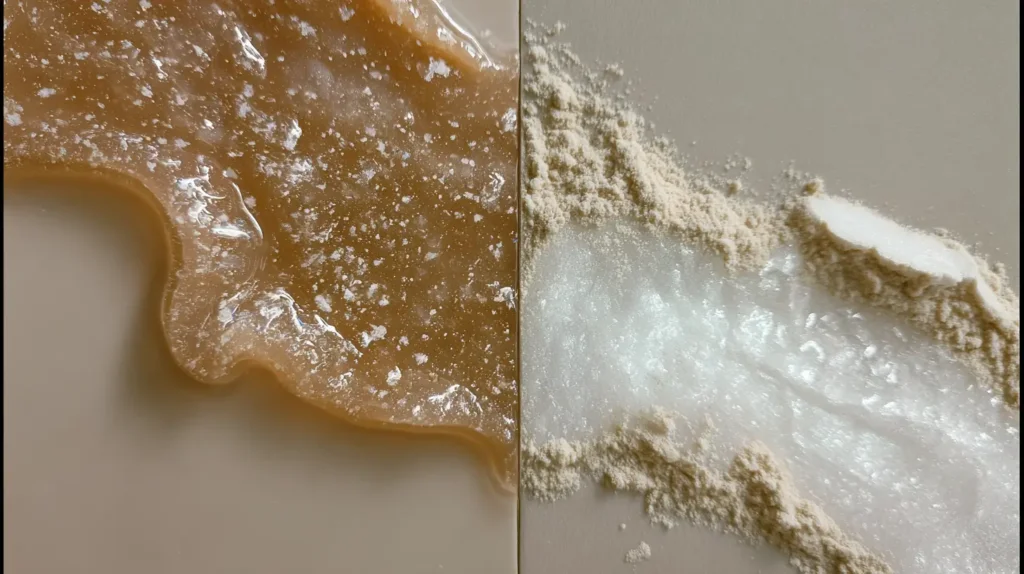
When comparing gelatin vs collagen for weight loss, the real differences show up in how they affect hunger, fullness, and eating behavior—not in where they come from. Although both are protein-based, they behave very differently once consumed.
This comparison is often explored by readers interested in bariatric gelatin-style food preparations.
You can find a complete explanation of bariatric gelatin here.
Appetite Control and Satiety
Satiety is one of the most important factors in sustainable weight loss. Gelatin tends to outperform collagen here because of its physical structure. Once mixed with liquid and cooled (or partially cooled), gelatin thickens and creates bulk. That bulk takes up space in the stomach and slows digestion.
Collagen peptides, on the other hand, digest quickly. They deliver amino acids fast, but they don’t stay in the stomach long enough to strongly activate fullness signals. As a result, collagen may add protein without noticeably reducing hunger.
In simple terms:
- Gelatin helps you feel full
- Collagen helps you meet protein needs
For appetite-focused weight loss, that difference matters.
Texture, Volume, and Fullness
Texture plays a surprisingly large role in how satisfied we feel after eating. Gelatin’s gel-like consistency creates volume without many calories, which can psychologically and physically support portion control.
Collagen has no texture at all once dissolved. While that makes it convenient, it also means it doesn’t contribute to the sensation of eating. You can drink collagen and still feel like you haven’t eaten anything.
This is why gelatin is often used:
- Between meals to reduce snacking
- Before meals to limit portions
- In structured diets where fullness is key
Collagen is better suited for situations where volume is not desired.
Blood Sugar Impact and Cravings
Both gelatin and collagen are low in carbohydrates and generally have minimal impact on blood sugar. However, gelatin’s slower digestion may help stabilize energy levels for longer periods, which can indirectly reduce cravings.
Because collagen digests quickly, hunger may return sooner—especially if it’s consumed alone. This doesn’t make collagen ineffective, but it does limit its usefulness for appetite suppression.
Gelatin vs Collagen for Weight Loss — Comparison Table
| Criteria | Gelatin | Collagen |
|---|---|---|
| Source | Derived from cooked collagen (animal connective tissue) | Extracted collagen peptides from animal sources |
| Texture in water | Thickens and sets into a gel | Fully dissolves with no texture |
| Satiety effect | High — creates volume in the stomach | Low — no physical fullness |
| Appetite control | Strong — helps reduce cravings | Minimal — indirect support only |
| Best for weight loss | Yes, especially for appetite awareness | Limited effectiveness |
| Best for bariatric diets | Yes — soft texture, easy digestion | Secondary option |
| Effect on GLP-1 | May support natural fullness signals | No direct impact |
| Calorie density | Very low | Low |
| Ease of daily use | Requires preparation | Very easy (powder) |
| Common use case | Appetite control, structured routines | Joint, skin, hair support |
| Risk of overuse | Low when used once daily | Low but unnecessary excess possible |
| Doctor preference (general) | Often favored for satiety | Used mainly for supplementation |
This comparison makes one thing clear: gelatin and collagen are not interchangeable for weight loss goals. They serve different purposes, and choosing the right one depends on whether appetite control or convenience is the priority.
How Gelatin Supports Appetite Hormones
One of the biggest reasons gelatin is discussed in weight-loss circles has nothing to do with calories—and everything to do with how it interacts with appetite hormones. This is where the difference between gelatin and collagen becomes even clearer.
GLP-1 and Fullness Signals
GLP-1 (glucagon-like peptide-1) is a hormone involved in satiety, digestion speed, and appetite regulation. When GLP-1 levels rise, food moves more slowly through the stomach, and the brain receives stronger “I’m full” signals.
Gelatin appears to support this process indirectly through slow digestion and stomach distension. Because gelatin thickens and occupies space, it stays in the stomach longer than fast-digesting proteins. This extended presence helps trigger gut signals associated with fullness, including GLP-1 release.
That’s why gelatin is often used:
- Before meals to reduce intake
- Between meals to delay hunger
- In low-calorie routines where fullness matters more than macros
For a deeper explanation of this mechanism, see how gelatin interacts with satiety hormones in this guide on how gelatin supports GLP-1 naturally.
Protein Digestion Speed and Satiety Duration
Not all proteins affect hunger the same way. Digestion speed plays a critical role in how long satiety lasts after eating.
Gelatin digests more slowly because:
- It forms a semi-solid mass
- It absorbs liquid
- It breaks down gradually in the gut
This slow breakdown leads to a longer satiety window, which can reduce the urge to snack or overeat later in the day.
Collagen peptides digest quickly and exit the stomach faster. While they deliver amino acids efficiently, they don’t maintain prolonged fullness. This makes collagen less effective when appetite suppression is the goal.
In weight-loss routines, this difference often shows up as:
- Gelatin → fewer hunger spikes
- Collagen → quicker return of appetite
The takeaway is simple but important: gelatin supports appetite control by working with the body’s natural fullness signals, not by stimulating metabolism or burning fat. That makes it especially useful for people whose main struggle is hunger—not willpower.
For those looking for a simple, beginner-friendly way to use gelatin in daily routines, this vanilla gelatin weight loss recipe is a gentle option that focuses on satiety and consistency rather than extreme restriction.
Which One Is Better for Bariatric Diets?

For bariatric patients, weight loss isn’t just about calories—it’s about tolerance, texture, and portion control. This is where the gelatin vs collagen discussion becomes especially relevant.
Texture Tolerance After Surgery
After bariatric surgery, the stomach is smaller and more sensitive. Foods that are too heavy, too dry, or too fast-moving can cause discomfort. Gelatin is often better tolerated because it’s soft, smooth, and easy to digest.
Gelatin can be prepared in different consistencies, from loose and spoonable to firm but gentle. This flexibility makes it easier to adapt to various post-op stages. It also slows gastric emptying, which helps prevent discomfort caused by food moving too quickly through the stomach.
Collagen, while light and easy to drink, passes through rapidly. For some bariatric patients, this can lead to hunger returning too soon, making it harder to space meals appropriately.
Portion Control and Volume Eating
Portion control is critical after bariatric surgery. Gelatin naturally supports this because it provides volume without heaviness. A small portion can feel satisfying without stretching the stomach or adding excess calories.
Because collagen dissolves completely, it doesn’t contribute to volume. This makes it easier to unintentionally overconsume, especially if it’s added to multiple drinks throughout the day.
For bariatric routines, gelatin is often used:
- As a structured snack
- Between meals to reduce grazing
- To reinforce fullness cues
This structured use aligns well with post-surgery eating guidelines.
Doctor-Inspired Bariatric Routines
Many bariatric-friendly routines favor gelatin over collagen because of its predictable effect on satiety. Gelatin-based snacks are easier to portion, easier to track, and easier to tolerate during recovery.
If you’re looking for practical ways to include gelatin in a post-op plan, this bariatric gelatin recipe shows how gelatin is commonly prepared and used in bariatric-focused diets.
Overall, gelatin tends to be the better option for bariatric diets when the goal is managing hunger and portions safely. Collagen may still have a role for meeting protein needs, but it usually works best alongside—not instead of—foods that promote fullness.
Doctor Perspectives on Gelatin vs Collagen
Medical opinions on gelatin vs collagen for weight loss tend to focus less on marketing claims and more on how each one behaves in real eating patterns. When doctors discuss these two proteins, appetite control and practicality usually take center stage.
Why Some Doctors Prefer Gelatin for Appetite
Some doctors and nutrition-focused practitioners favor gelatin because it aligns better with behavioral and physiological aspects of weight loss. The key reason is simple: gelatin helps people feel full with fewer calories.
From a clinical point of view, gelatin:
- Slows gastric emptying
- Reinforces natural fullness cues
- Reduces the urge to snack between meals
Because gelatin forms a gel, it creates a physical sensation of having eaten. This makes it easier for patients to stop eating without feeling deprived. Doctors working with patients who struggle with constant hunger, emotional eating, or portion control often see better adherence when gelatin is used strategically.
Certain practitioners also emphasize gelatin’s simplicity. It’s a single-ingredient food with a long history of use, which fits well into conservative, food-first approaches rather than supplement-heavy plans.
For an example of how one doctor incorporates gelatin into routine dietary guidance, see Dr. Eric Berg’s gelatin approach, which highlights satiety and structure over supplementation.
When Collagen May Still Be Useful
That said, most doctors do not view collagen as useless—just misaligned with appetite-focused goals. Collagen can still be helpful in specific situations, especially when weight loss is not the primary concern.
Collagen may be appropriate when:
- Joint or connective tissue support is needed
- Skin or hair health is a priority
- Protein intake is low and volume must be minimal
Some clinicians recommend collagen for patients who cannot tolerate thicker textures or who struggle to consume enough protein overall. In these cases, collagen is used as a supportive tool, not as an appetite regulator.
Doctors who take a balanced approach often frame it this way:
- Gelatin helps manage how much you eat
- Collagen helps support what your body is made of
Understanding that distinction helps set realistic expectations and prevents frustration when collagen doesn’t deliver the appetite control people expect.
When Collagen Might Be a Better Choice
While gelatin often has the edge for appetite control, there are situations where collagen is the more practical option. Understanding these cases helps avoid an all-or-nothing mindset and keeps expectations realistic.
Joint and Connective Tissue Support
Collagen is widely used to support joints, tendons, ligaments, and connective tissue. Because collagen peptides are broken down into small amino acid chains, they’re absorbed quickly and can be used by the body as building blocks.
For people who:
- Exercise regularly
- Have joint discomfort
- Are recovering from injury
collagen may be useful as a daily supplement. In these cases, the goal isn’t fullness or hunger management, but structural support. Gelatin can also provide similar amino acids, but collagen is often chosen for convenience and consistency.
Skin, Hair, and Nail Health
Another reason collagen is popular is its association with skin elasticity and appearance. While results vary and claims are often overstated, some people choose collagen for cosmetic reasons rather than weight loss.
Because collagen dissolves easily and has little taste, it’s easy to take daily without altering meals. For individuals who want to maintain a routine without changing food texture or volume, collagen fits better than gelatin.
Low-Volume Protein Needs
In some cases, eating larger portions—or even soft gels—may not be ideal. People with:
- Very low appetite
- Digestive sensitivity to thicker textures
- Strict fluid-based meal plans
may benefit from collagen’s low-volume protein delivery. It adds amino acids without making someone feel overly full or uncomfortable.
From a weight-loss perspective, this can be helpful when protein intake is the priority and appetite is already well controlled.
In short, collagen isn’t “worse” than gelatin—it’s just designed for a different job. When the goal is appetite suppression and portion control, gelatin tends to be more effective. When the goal is structural support or minimal volume, collagen can make more sense.
Safety, Frequency, and Expectations
Whether you choose gelatin, collagen, or both, it’s important to set realistic expectations and understand how to use them safely. Neither is a fat-burning product, and neither replaces balanced eating habits.
Can You Use Gelatin and Collagen Together?
Yes, gelatin and collagen can be used together—but they usually work best at different times and for different purposes.
A common approach is:
- Gelatin for appetite control (between meals or before eating)
- Collagen for structural support (once daily, often in a drink)
Because they come from the same source, there’s no inherent conflict between the two. The key is not expecting collagen to do gelatin’s job, or vice versa.
Using both can make sense when:
- Hunger management is needed
- Protein intake is low
- Joint or skin support is also a goal
How Often Is Too Often?
Moderation matters, even with simple proteins. For most people:
- Gelatin is used 1–2 times per day
- Collagen is used once daily
Consuming excessive amounts of either won’t speed up weight loss and may lead to digestive discomfort, such as bloating or fullness that feels unpleasant rather than helpful.
Listening to hunger cues is more important than hitting a specific number of servings.
What This Comparison Does Not Promise
It’s important to be clear about what gelatin and collagen do not do:
- They do not burn fat directly
- They do not replace a calorie deficit
- They do not override poor eating habits
What gelatin can do is make it easier to eat less by helping you feel satisfied. What collagen can do is support connective tissues and protein intake without adding bulk.
Weight loss still depends on overall habits, food choices, and consistency.
By keeping expectations grounded, gelatin and collagen can be useful tools rather than sources of disappointment.
Next, we’ll wrap up with a clear summary and final guidance, helping you decide which option fits your goal—and where to go next if gelatin-based routines interest you.
FAQs (People Also Ask)
Is gelatin or collagen better for weight loss?
Gelatin is generally more effective for weight loss because it forms volume in the stomach, which helps increase fullness and control appetite. Collagen is easier to consume but does not provide the same satiety effect.
Does gelatin help control appetite better than collagen?
Yes. Gelatin thickens when prepared with water, creating a physical feeling of fullness. This can help reduce cravings and support appetite control more effectively than collagen peptides, which dissolve completely.
Can collagen help with weight loss at all?
Collagen may indirectly support weight loss by helping preserve lean muscle mass and supporting joints during activity. However, it does not significantly reduce hunger on its own.
Is gelatin or collagen better for bariatric diets?
Gelatin is often preferred in bariatric-style diets because of its soft texture, ease of digestion, and ability to promote satiety with small portions. Collagen may be useful later for protein supplementation but is less filling.
Can you use both gelatin and collagen together?
Yes. Some people use gelatin for appetite control and collagen for joint or skin support. They should be consumed at different times and not relied on as meal replacements.
How often should gelatin or collagen be consumed for weight loss?
Gelatin is usually consumed once per day as part of a structured routine. Collagen can be taken daily in small amounts, but frequency should depend on overall protein intake and digestion tolerance.
Are there any side effects of gelatin or collagen?
Both are generally safe in moderate amounts. Excessive intake may cause digestive discomfort, bloating, or imbalance if used as a replacement for proper meals.
Conclusion
When it comes to gelatin vs collagen for weight loss, the difference isn’t subtle—it’s practical. Both come from the same source, but they serve very different purposes once they’re on your plate or in your cup.
Gelatin stands out for appetite control. Its texture, volume, and slower digestion help reinforce fullness, making it easier to reduce portions and avoid constant snacking. That’s why gelatin is often favored in structured weight-loss routines and bariatric diets where hunger management is critical.
Collagen, on the other hand, shines as a support protein. It’s easy to consume, low in volume, and commonly used for joint, skin, and connective tissue support. While it can help meet protein needs, it doesn’t strongly influence satiety or eating behavior on its own.
The takeaway is simple:
- Choose gelatin if your main goal is appetite and portion control
- Choose collagen if your priority is structural support or low-volume protein
- Use both strategically if your goals overlap
By matching the tool to the goal, you avoid hype and set yourself up for realistic, sustainable progress. If appetite-focused strategies interest you, gelatin-based routines can be a natural next step to explore.