
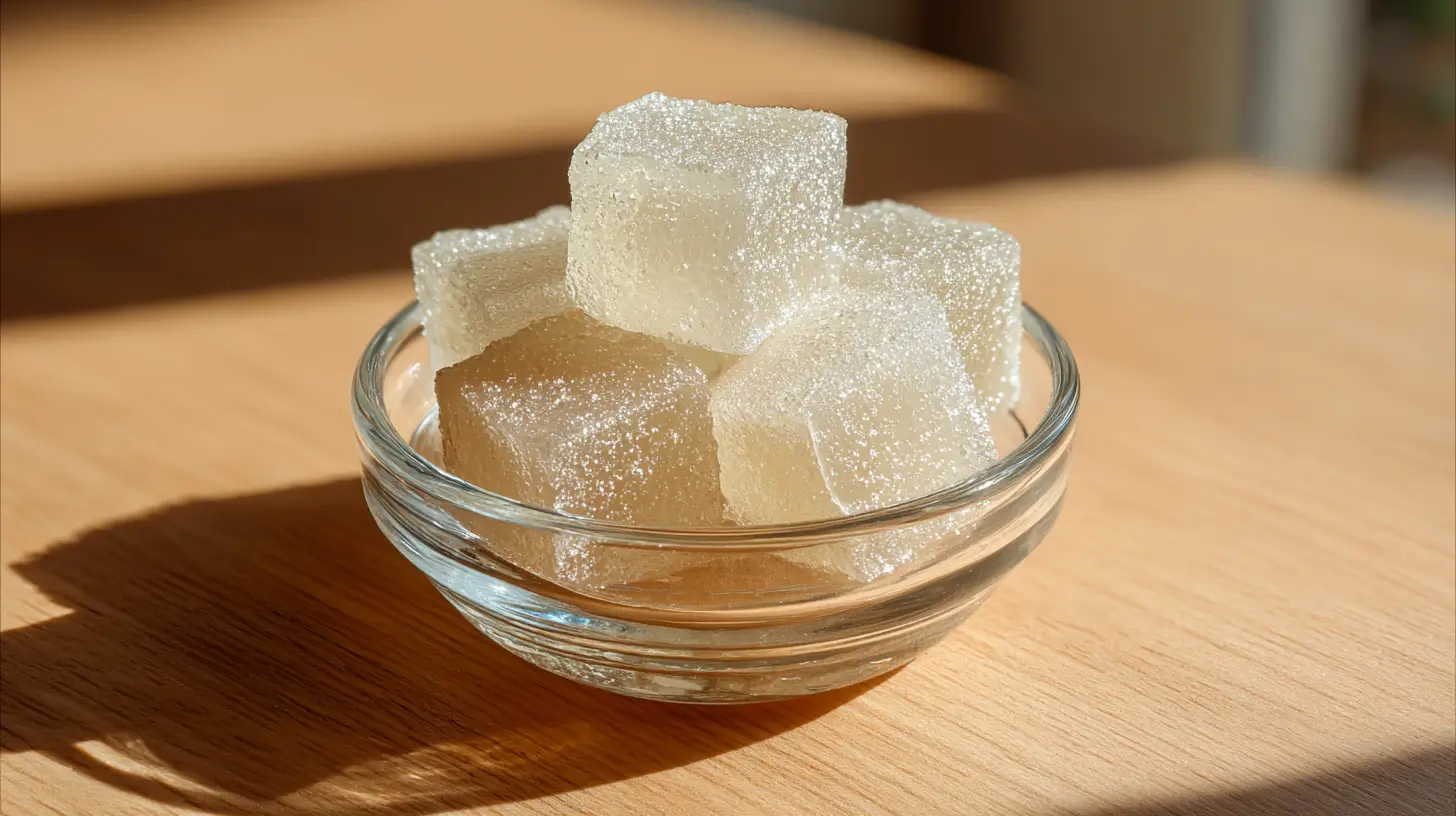
Konjac jelly for weight loss recipe searches have surged in the U.S. as more people look for light, simple recipes that fit into everyday routines without strict rules or bold promises. This curiosity isn’t about shortcuts. Instead, it’s driven by texture, portion awareness, and the appeal of easy homemade options that feel refreshing rather than heavy.
Unlike traditional desserts, konjac jelly stands out for its neutral taste and unique, slightly bouncy texture. That’s why it often appears in conversations around light eating habits and casual routines, alongside other popular ideas like appetite-suppressing drinks that people enjoy between meals or as part of a relaxed lifestyle reset.
In this article, we’ll focus on the recipe itself—how konjac jelly is made, how it’s commonly flavored, and why many people enjoy it in controlled portions. We’ll also explore drinkable versions, compare it to other jellies, and answer common questions, all without medical claims or exaggerated benefits. The goal is simple: a clear, beginner-friendly guide to making and enjoying konjac jelly in a practical, everyday way.
What Is Konjac Jelly?
Before making any konjac jelly for weight loss recipe, it helps to understand what this ingredient actually is and why it looks and feels so different from regular gelatin-based desserts. Konjac jelly is known for its distinct texture, neutral flavor, and long history in everyday cooking rather than modern diet trends.
Origin and background of konjac jelly
Konjac jelly comes from the konjac plant, traditionally used in East Asian cuisines for generations. The plant’s root is processed into flour, which is then transformed into foods with a firm yet flexible structure. In Japan, this ingredient is commonly associated with konnyaku, a staple used in both savory dishes and lightly sweet preparations.
Over time, konnyaku jelly evolved into softer, jelly-style formats that could be enjoyed chilled, portioned, or even consumed in drinkable form. These variations are now popular globally, especially in recipes that focus on simplicity and texture rather than richness.
Texture, appearance, and taste
One of the first things people notice when learning what is konjac jelly is its texture. It’s springy, smooth, and slightly elastic—very different from gelatin or agar-based jellies. The flavor is extremely mild, which makes it ideal for pairing with citrus, teas, or subtle fruit notes without overpowering them.
Because it doesn’t carry a strong taste on its own, konjac jelly works well in unsweetened or lightly flavored recipes where balance matters more than sweetness.
Culinary use and basic composition
In home kitchens, konjac jelly is usually prepared by mixing konjac powder with liquid and gently heating it until it sets. The key structural component comes from glucomannan, a natural fiber found in the konjac root, which is responsible for the jelly’s characteristic consistency.
Culinarily, konjac jelly is used in:
- Light desserts served cold
- Small portion snacks
- Drinkable jelly-style beverages
- Simple, low-key recipes that focus on texture
Understanding these basics makes it much easier to approach the recipe itself with confidence, especially if you’re new to working with konnyaku jelly at home.
Why Konjac Jelly Is Used in Light Recipes
Konjac jelly often appears in light, minimalist recipes not because of bold claims, but because of how it fits into simple food routines. When people search for konjac jelly weight loss ideas, they’re usually looking for something easy to prepare, mild in flavor, and naturally portioned, rather than a rich or heavy dish.
Neutral taste that works with many flavors
One reason konjac jelly shows up so often in light recipes is its almost neutral taste. It doesn’t compete with lemon, herbal tea, or fruit extracts. Instead, it acts like a blank base that absorbs gentle flavors well. This makes it easier to keep recipes simple, especially for those who prefer unsweetened or lightly flavored options.
Because of this neutrality, konjac jelly recipe variations can be adjusted without changing the base method—only the flavoring changes, not the structure.
Naturally portioned and easy to serve
Another reason konjac jelly is commonly used in lighter routines is how it’s served. It’s usually cut into small cubes, molded into single portions, or prepared in modest containers. This natural portioning appeals to people who prefer clear serving sizes rather than large desserts that are easy to overdo.
In everyday use, konjac jelly is often enjoyed:
- As a small chilled dessert
- Between meals
- As part of a simple evening routine
- In drinkable form for convenience
Popularity in Asian everyday food culture
Konjac-based foods have been part of Asian home cooking for decades. In many households, konnyaku jelly isn’t viewed as a “diet” food at all—it’s just a familiar ingredient used in regular meals and snacks. That cultural background explains why konjac jelly is often associated with simplicity, moderation, and routine rather than indulgence.
Fits modern minimalist food habits
In the U.S., interest in konjac jelly has grown alongside trends that favor short ingredient lists and uncomplicated preparation. People looking for light recipes often want:
- Few ingredients
- Minimal cooking time
- Flexible flavor options
- Easy cleanup
Konjac jelly fits naturally into this approach, which explains why it frequently appears in conversations about lighter recipe ideas without relying on exaggerated benefits or strict rules.
Konjac Jelly for Weight Loss Recipe
Print
Konjac Jelly for Weight Loss Recipe: Simple, Light, and Easy to Make
- Total Time: 15 minutes
- Yield: 2 small servings 1x
Description
A simple homemade konjac jelly recipe with a clean texture and neutral flavor. This light recipe focuses on easy preparation, controlled portions, and everyday enjoyment without unnecessary ingredients.
Ingredients
- 2 cups water
- 1 teaspoon konjac powder
- Optional: a small amount of natural, non-caloric sweetener (to taste)
Instructions
- In a small bowl, mix the konjac powder with a few tablespoons of cold water until smooth and lump-free.
- Pour the remaining water into a saucepan and add the konjac mixture.
- Heat gently over low to medium heat, stirring continuously.
- Once the liquid becomes slightly translucent and thickened, let it simmer briefly while stirring.
- Remove from heat and carefully pour into molds, small cups, or a shallow dish.
- Let cool at room temperature, then refrigerate until fully set.
- Cut into cubes or serve directly from individual containers.
Notes
Enjoy in small portions to appreciate the texture comfortably. This recipe is best used occasionally as part of simple routines, not as a meal replacement. Store in the refrigerator and consume within a short time for best texture. For a drinkable version, slightly increase the water and reduce setting time.
- Prep Time: 5 minutes
- Cook Time: 10 minutes
- Category: Light Dessert / Simple Recipes
- Method: Stovetop
- Cuisine: Asian-inspired
Nutrition
- Serving Size: 1 small portion
- Calories: 10 kcal
- Sugar: 0 g
- Sodium: 5 mg
- Fat: 0 g
- Saturated Fat: 0 g
- Unsaturated Fat: 0 g
- Trans Fat: 0 g
- Carbohydrates: 3 g
- Fiber: 2 g
- Protein: 0 g
- Cholesterol: 0 mg
Keywords: konjac jelly for weight loss recipe, konjac jelly recipe, drinkable konjac jelly, konnyaku jelly
This konjac jelly for weight loss recipe focuses on simplicity, texture, and controlled portions, not complexity or bold claims. It’s designed for beginners and works well as a light dessert or occasional snack when you want something refreshing and easy to prepare at home.
Ingredients
This basic konjac jelly recipe uses minimal ingredients and can be adapted later with natural flavor options.
- Water
- Konjac powder
- Optional: a small amount of natural, non-caloric sweetener (optional and adjustable)
That’s it. Keeping the ingredient list short helps maintain the clean texture konjac jelly is known for.
️
Instructions
- Mix the powder
In a bowl or saucepan, combine the konjac powder with a small portion of cold water. Stir well to prevent clumps and ensure an even texture. - Heat gently
Add the remaining water and heat the mixture over low to medium heat, stirring continuously. Avoid rushing this step—slow heating helps the jelly set evenly. - Simmer and dissolve
Once the liquid becomes slightly thicker and translucent, let it simmer briefly while stirring. This activates the setting process. - Pour and set
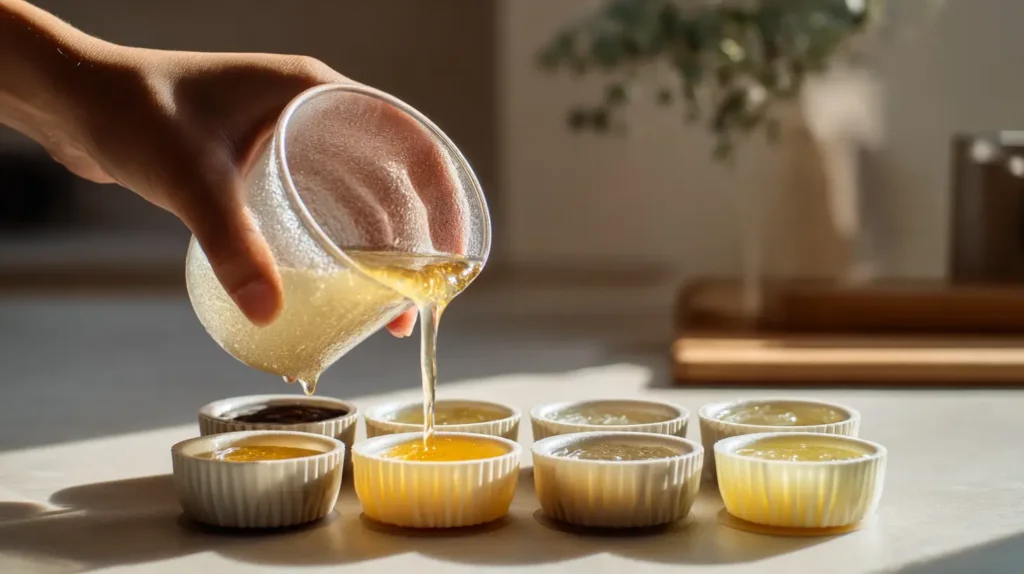
Carefully pour the mixture into molds, small cups, or a shallow dish. Let it cool at room temperature, then refrigerate until fully set. - Cut or serve
Once firm, cut into cubes or serve directly from individual containers.
Notes on portions and usage
This recipe is best enjoyed in small, controlled portions. Konjac jelly is typically used as an occasional addition to simple routines rather than a daily staple. Because of its dense texture, starting with modest servings helps you understand how it fits into your preferences.
Helpful tips:
- Chill thoroughly for the best texture
- Avoid over-sweetening
- Store leftovers in the refrigerator and consume within a short time
This foundational recipe also serves as the base for drinkable versions and naturally flavored variations, which we’ll cover next.
Drinkable Konjac Jelly Option

A drinkable konjac jelly version offers a softer, more fluid texture while keeping the same simple preparation style. This option is especially popular for those who prefer sipping rather than cutting jelly into cubes, and it’s commonly seen in everyday routines across Asia.
What makes drinkable konjac jelly different
The main difference between standard and drinkable konjac jelly is liquid ratio and texture. By slightly increasing the amount of water and reducing the setting time, the mixture stays smooth and spoonable—or thin enough to drink through a wide straw.
Instead of a firm, bouncy set, drinkable konjac jelly has a gentle thickness that flows easily while still holding some structure.
How drinkable versions are commonly prepared
The preparation process is very similar to the base konjac jelly recipe, with a few adjustments:
- Use more water than the standard recipe
- Heat slowly and stir continuously
- Stop cooking earlier, before the mixture fully thickens
Once cooled, the jelly remains lightly set rather than firm. It’s usually stored in bottles or jars and served chilled.
When people usually choose the drinkable option
Drinkable konjac jelly is often enjoyed:
- Between meals
- As a light afternoon refreshment
- In warm weather
- When solid textures feel too heavy
Many people prefer this version because it’s convenient and easy to portion, especially when prepared in small containers.
Texture and flavor considerations
Because drinkable konjac jelly is less firm, flavors come through more clearly. Subtle additions like citrus or lightly brewed tea work particularly well here, creating a refreshing finish without overpowering the base.
This softer format also makes it easier to experiment before committing to firmer jelly molds, especially if you’re new to working with konnyaku jelly at home.
How to Flavor Konjac Jelly Naturally
One of the easiest ways to personalize a konjac jelly for weight loss recipe is through natural flavoring. Since konjac jelly has almost no taste of its own, small additions can make a big difference without changing the texture or simplicity of the recipe.
Lemon and citrus infusions
Lemon is one of the most common flavor choices for konjac jelly. A small amount of fresh lemon juice or zest adds brightness and works well with both firm and drinkable versions. Other citrus options, such as lime or grapefruit, can also be used in very small quantities to avoid overpowering the jelly.
Citrus flavors are especially popular because they keep the jelly tasting clean and refreshing rather than sweet.
Herbal tea as a base liquid
Another natural option is replacing plain water with lightly brewed herbal tea. Teas such as chamomile, mint, or green tea can be cooled and used as the liquid base before adding konjac powder. This method adds aroma and subtle flavor without extra ingredients.
For best results:
- Brew the tea lightly
- Let it cool slightly before mixing
- Avoid strong or bitter infusions
Fruit extracts and essences
A few drops of natural fruit extract—such as vanilla, berry, or peach—can gently flavor konjac jelly without changing its consistency. These extracts work well when you want a consistent flavor throughout the jelly rather than small bursts.
Because konjac jelly absorbs flavor evenly, even minimal amounts are usually enough.
Unsweetened and lightly flavored versions
Many people prefer konjac jelly completely unsweetened, especially when pairing it with tea or citrus. Others choose to add a very small amount of sweetener, just enough to soften the flavor.
Keeping sweetness low allows the texture to remain the main focus and helps the recipe stay flexible for different preferences.
Konjac Jelly vs Other Jellies
Understanding how konjac jelly compares to other popular jellies helps clarify why it’s often chosen for light, texture-focused recipes. While they may look similar at first glance, the ingredients, mouthfeel, and common uses are quite different.
Konjac jelly vs gelatin-based jellies
Gelatin jellies are typically made from animal-derived gelatin and tend to have a soft, wobbly texture that melts easily in the mouth. Konjac jelly, by contrast, has a firmer, springier bite and holds its shape longer, even when cut into cubes.
This difference in texture is one reason some people prefer konnyaku jelly in minimalist recipes. For those curious about how traditional gelatin ingredients compare more broadly, exploring topics like gelatin vs collagen for weight loss can provide useful background without changing how this recipe is prepared.
Konjac jelly vs chia jello
Chia-based jellies rely on chia seeds absorbing liquid over time, creating a pudding-like consistency with visible seeds throughout. Konjac jelly, on the other hand, sets smoothly and evenly, with no grainy texture.
People who enjoy experimenting with different light jellies often compare konjac jelly to options like chia jello, especially when deciding between spoonable textures versus firmer, cuttable jellies.
Konjac jelly vs classic jello recipes
Classic boxed jello is usually sweetened, brightly colored, and designed as a dessert-first option. Konjac jelly recipes tend to be more neutral, less sweet, and adaptable to both solid and drinkable formats.
Those familiar with classic jello weight loss recipes often notice that konjac jelly feels more structured and less dessert-like, which is why it’s commonly used in simpler routines rather than celebratory dishes.
A brief note on grass jelly
Grass jelly is another plant-based jelly popular in Asian cuisine. While it shares a similar cultural background with konnyaku jelly, grass jelly has a distinct herbal flavor and a much softer set. It’s typically served sweetened and chilled, making it a different experience altogether.
Each jelly has its place. Konjac jelly stands out mainly for its unique texture and versatility, especially when neutrality and portion-friendly formats matter.
When People Usually Enjoy Konjac Jelly
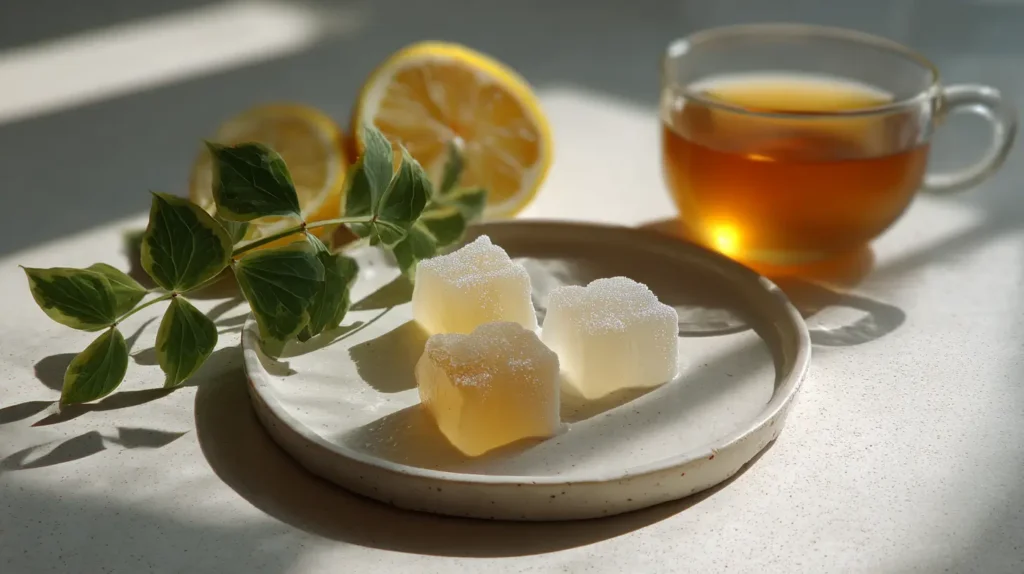
Konjac jelly fits naturally into everyday routines because it doesn’t feel heavy, rich, or overly indulgent. Rather than being tied to a specific diet trend, it’s usually enjoyed based on timing, convenience, and personal preference.
As a light dessert
Many people enjoy konjac jelly as a light dessert after meals. Its firm but refreshing texture makes it feel complete without the richness of traditional sweets. Served chilled, it works well at the end of lunch or dinner when something simple feels more appealing than a baked dessert.
Because it’s often prepared in small portions, it’s easy to enjoy without turning it into a centerpiece of the meal.
Between meals or mid-afternoon
Another common time to enjoy konjac jelly is between meals, especially during the afternoon. The neutral flavor and cooling texture make it a popular choice when people want something mild rather than sugary or crunchy.
Drinkable versions are particularly common here, as they’re quick to prepare, easy to store, and convenient to consume without utensils.
As part of simple routines
Konjac jelly is often included in simple, repeatable routines rather than special occasions. Some people prepare a small batch at the start of the week and enjoy it occasionally, while others make it fresh when they want something chilled and light.
Typical routines include:
- Evening wind-down snacks
- Warm-weather refreshers
- Minimalist meal patterns
- Texture-focused eating habits
Not a replacement, but an addition
Importantly, konjac jelly is usually treated as an addition, not a replacement for meals. It complements regular eating patterns rather than redefining them, which aligns with how it’s traditionally used in everyday food culture.
This flexible approach is one of the reasons konjac jelly continues to appeal to people looking for simple, low-effort recipes that fit into real life.
FAQs About Konjac Jelly
Is konjac jelly a meal replacement?
No. Konjac jelly is not typically used as a meal replacement. It’s usually enjoyed as a light dessert, a small snack, or an occasional addition between meals. In most routines, it complements regular eating habits rather than replacing full meals.
Is konjac jelly good for you in moderation?
When enjoyed in moderation, konjac jelly is commonly used as part of simple, balanced routines. Because of its dense texture, starting with small portions is important. Paying attention to portion awareness and safety, as explained in guides like portion awareness and safety, helps keep usage practical and comfortable.
Can konjac jelly be drinkable?
Yes. Konjac jelly can be prepared in a softer, drinkable form by adjusting the liquid ratio and cooking time. This version is popular for its convenience and is often consumed chilled from bottles or jars, especially during warmer months.
Is this recipe beginner-friendly?
Absolutely. This konjac jelly for weight loss recipe uses very few ingredients and straightforward steps. No special equipment or advanced cooking skills are required, making it accessible even for first-time home cooks.
Conclusion
This konjac jelly for weight loss recipe is all about simplicity, texture, and ease of preparation. With just a few ingredients and minimal steps, it offers a light, refreshing option that fits naturally into everyday routines without strict rules or exaggerated claims.
By understanding what konjac jelly is, how it’s prepared, and the different ways it can be enjoyed—whether firm or drinkable—you can decide how it works best for your preferences. Small portions, gentle flavors, and occasional use keep the experience practical and approachable.
If you enjoy exploring structured yet flexible food ideas, you may also like experimenting with GLP-1 inspired recipes that focus on mindful preparation and simple routines.
Konjac jelly doesn’t need to be complicated. Prepared thoughtfully, it’s just another easy recipe you can keep in your rotation when you want something light, chilled, and uncomplicated.