
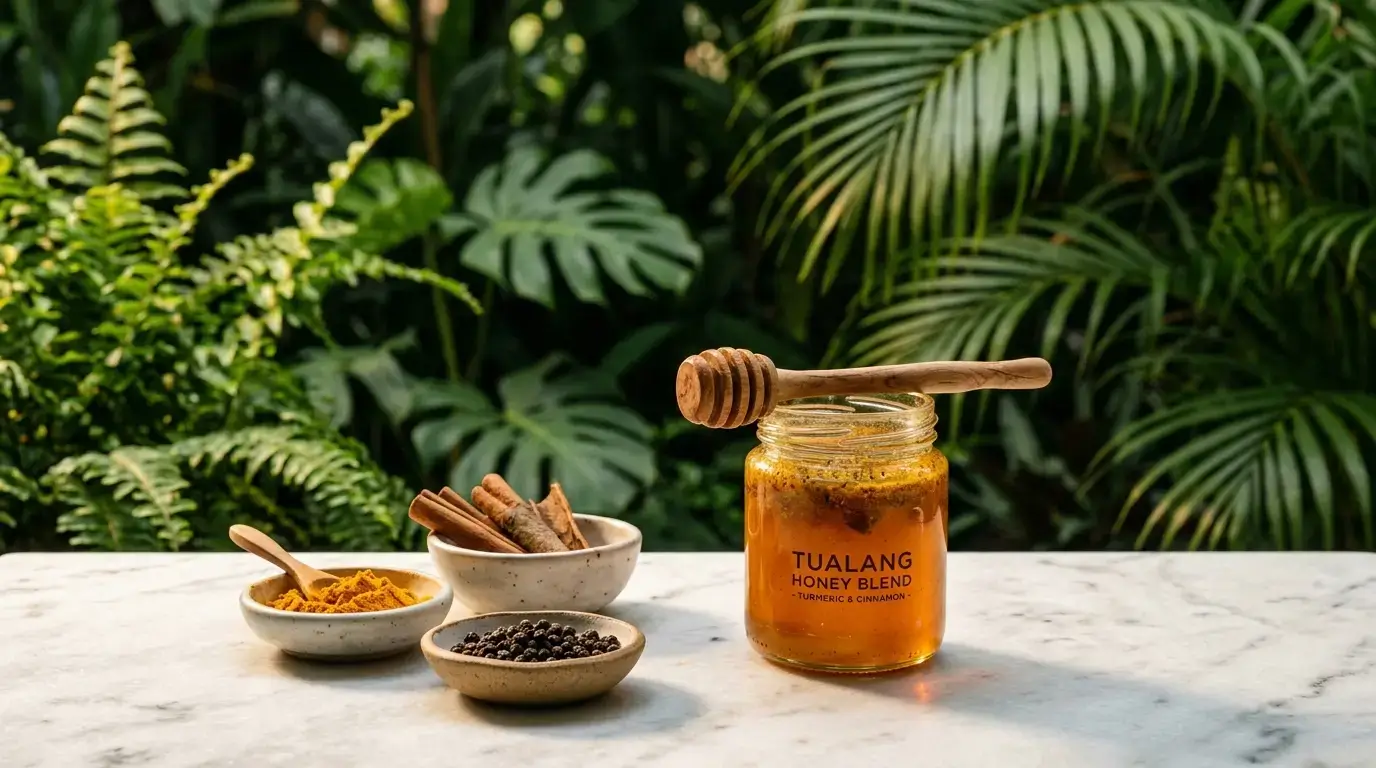
📌 Last Updated: April 2026 — This guide covers what tualang honey is, 10 research-backed benefits, how it compares to Manuka honey, a simple daily wellness recipe, and where to buy authentic tualang honey.
If you follow wellness trends, you’ve probably heard of Manuka honey. But there’s a lesser-known variety quietly gaining attention among researchers and health enthusiasts — and it may actually be more powerful.
Tualang honey is a wild, multifloral honey harvested from giant rainforest trees in Malaysia. Unlike Manuka, which comes from a single plant source, tualang honey is produced by rock bees that forage across diverse tropical flora, resulting in a uniquely complex nutritional profile.
What makes tualang honey remarkable is the science behind it. Over 120 peer-reviewed studies have examined its properties, revealing higher antioxidant content than Manuka, significant neuroprotective effects, and promising results in areas ranging from wound healing to cancer research.
Despite this impressive research, most people outside of Southeast Asia have never heard of tualang honey. That’s changing fast in 2026, as the “honey for brain health” trend — fueled by viral interest in honey-based wellness rituals — brings tualang honey into the spotlight.
In this guide, you’ll learn exactly what tualang honey is, the 10 benefits backed by published research, how it compares to Manuka honey, and how to incorporate it into a simple daily routine.
What Is Tualang Honey?
Tualang honey is a wild honey produced by the Asian giant rock bee (Apis dorsata). These bees build massive honeycombs — sometimes over 6 feet wide — on the branches of the Tualang tree (Koompassia excelsa), one of the tallest trees in Southeast Asian rainforests, reaching heights of over 250 feet.
The honey gets its name from the tree, not the bee. Because the bees forage across dozens of different tropical plant species, tualang honey is classified as polyfloral — meaning it contains nectar from multiple sources. This diversity contributes to its uniquely rich composition of antioxidants, phenolic compounds, and bioactive substances.
Why Tualang Honey Is Rare
Harvesting tualang honey is genuinely dangerous. The honeycombs are located high up in the rainforest canopy, and skilled harvesters must climb the massive trees at night — when the bees are less aggressive — using rope ladders and smoky torches. A single Tualang tree can host over 100 bee nests and yield around 450 kg (1,000 pounds) of honey.
This labor-intensive process, combined with limited geographic availability (primarily the Kedah region of Peninsular Malaysia), makes tualang honey one of the most expensive honeys in the world. Authentic tualang honey can cost over $250 per kilogram — significantly more than Manuka.
How It Tastes
Unlike the consistently sweet flavor of commercial honey, tualang honey varies significantly depending on the batch and season. Flavors range from mildly sweet and floral to slightly bitter or sour, with notes that reflect the diverse tropical plants the bees visit. The color can range from golden to dark brown or even reddish, depending on the nectar sources.
Many people describe the taste as “more complex” than regular honey — less one-dimensional sweetness, more depth. This complexity is a direct result of its polyfloral nature and wild origin.
10 Science-Backed Benefits of Tualang Honey
These benefits are supported by published research in peer-reviewed journals. While more human studies are needed for some areas, the existing evidence base is substantial — over 120 original research articles as of 2024.
1. Higher Antioxidant Content Than Manuka
Multiple comparative studies have found that tualang honey contains significantly higher levels of phenolic compounds, flavonoids, and total antioxidant activity compared to Manuka honey. These antioxidants help combat oxidative stress, which is linked to aging, inflammation, and chronic disease.
One study published in the journal Molecules found that tualang honey’s phenolic acid and flavonoid content exceeded that of Manuka across multiple testing methods. This makes it one of the most antioxidant-rich honeys ever studied.
2. Neuroprotective and Brain Health Benefits
This is where tualang honey stands apart from virtually every other honey variety. A full decade of neurological research — 28 original studies published between 2011 and 2020 — has examined tualang honey’s effects on the brain.
The research identified five main neurological benefits: nootropic (memory-enhancing), antinociceptive (pain-reducing), stress-relieving, antidepressant, and anxiolytic (anxiety-reducing) effects. In human clinical trials, tualang honey supplementation improved immediate memory in postmenopausal women and enhanced learning performance in patients with schizophrenia.
These findings are what’s driving the current surge of interest in honey-based brain health rituals.
3. Antimicrobial Properties
Like Manuka, tualang honey demonstrates significant antibacterial activity. Studies have shown effectiveness against common pathogens including Staphylococcus aureus, E. coli, Salmonella, and Klebsiella pneumoniae. Some research suggests tualang honey is actually more effective than Manuka against certain gram-negative bacterial strains, particularly in burn wound management.
4. Anti-Inflammatory Effects
Chronic inflammation is a root driver of many diseases, from heart disease to diabetes to autoimmune conditions. Tualang honey’s high concentration of anti-inflammatory phenolic compounds has been shown to reduce inflammation markers in both animal and cell culture studies.
5. Wound Healing
Honey has been used for wound healing for thousands of years, and modern research confirms the practice. Tualang honey has been studied for burn wound management and shown superior healing compared to conventional silver-based dressings against certain bacteria. Its antimicrobial and anti-inflammatory properties work together to create an environment that promotes tissue repair.
6. Potential Anti-Cancer Properties
This is one of the most active areas of tualang honey research. Studies have found that bioactive compounds in tualang honey can induce apoptosis (cell death) in certain cancer cell lines, including breast cancer and leukemia cells. One clinical study found that tualang honey supplementation improved cancer-related fatigue and quality of life in head and neck cancer patients after treatment.
These findings are preliminary and do not mean tualang honey treats cancer. But the research is promising enough that multiple studies continue to investigate its potential as a complementary therapy.
7. Cardiovascular Protection
Research has shown that tualang honey supplementation can improve cholesterol profiles and cardiac enzyme levels. Its antioxidant properties may help protect blood vessels from oxidative damage, supporting long-term cardiovascular health.
8. Blood Sugar Regulation
Despite being a natural sugar, tualang honey has a lower glycemic index than most other honey varieties. Studies show that its high fructose-to-glucose ratio means it causes a slower, more moderate blood sugar response compared to regular honey or table sugar. Some research suggests it may actually help improve insulin sensitivity, though diabetics should still consume it cautiously and under medical guidance.
9. Reproductive Health Support
Several studies have examined tualang honey’s effects on reproductive health. In animal models, it has shown protective effects against cadmium toxicity and BPA (bisphenol A) toxicity in ovarian tissue. It has also been studied for its phytoestrogenic properties, which may support hormonal balance in postmenopausal women.
10. UV Protection and Skin Health
One study found that tualang honey can protect skin cells (keratinocytes) from ultraviolet radiation-induced inflammation and DNA damage. This suggests potential applications in skincare and sun damage prevention, though topical formulations haven’t been widely commercialized yet.
Tualang Honey vs Manuka Honey
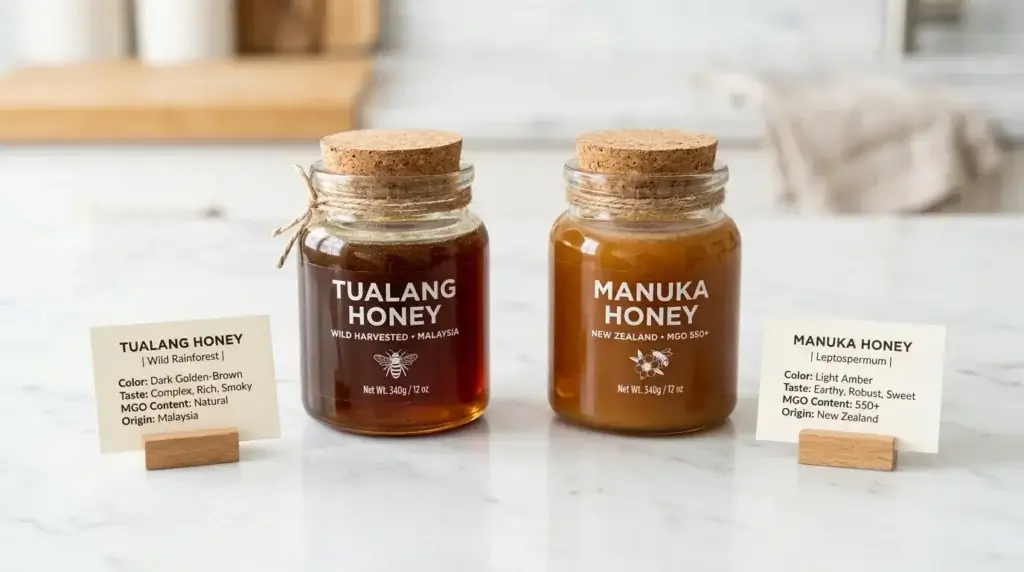
This is the comparison everyone wants to see. Here’s how they stack up based on published research:
| Factor | Tualang Honey | Manuka Honey |
|---|---|---|
| Origin | Malaysia (wild rainforest) | New Zealand/Australia (tea tree) |
| Bee species | Apis dorsata (wild rock bee) | Apis mellifera (domesticated) |
| Floral source | Polyfloral (multiple plants) | Monofloral (Manuka bush only) |
| Antioxidant content | Higher phenolics and flavonoids | High, but lower than Tualang |
| Brain health research | 28+ studies, human clinical trials | Very limited |
| Antibacterial activity | Strong (superior for some strains) | Strong (MGO-based) |
| Anti-cancer research | Active area with promising results | Some studies |
| Wound healing | Proven, especially for burns | Well-established gold standard |
| Taste | Complex, variable (sweet to bitter) | Consistently earthy, slightly medicinal |
| Price | $250+/kg (very expensive) | $30–100/kg |
| Availability | Limited (specialty stores, online) | Widely available |
| Quality certification | No universal standard yet | UMF/MGO rating system |
| Published studies | 120+ | 500+ |
Which Should You Choose?
For general wellness and accessibility, Manuka is the practical choice — it’s widely available, has an established quality rating system, and delivers well-documented benefits.
For brain health specifically, tualang honey has significantly more research supporting cognitive and neuroprotective effects. If that’s your primary interest and budget isn’t a constraint, tualang honey is worth exploring.
For antioxidant power, tualang honey wins on measurable phenolic and flavonoid content. If maximizing antioxidant intake is your goal, tualang honey delivers more per serving.
The honest answer for most people: you’ll get meaningful health benefits from either one. Tualang honey is more powerful on paper, but Manuka is more accessible and affordable. If you can afford tualang honey, use it. If not, Manuka (or even good-quality raw local honey) is still an excellent choice.
Tualang Honey Daily Wellness Recipe
This simple recipe turns tualang honey (or any quality raw honey) into a structured morning wellness ritual. It takes 2 minutes to prepare and can be stored for weeks.
Print
Tualang Honey: 10 Science-Backed Benefits, Manuka Comparison & Daily Recipe
- Total Time: 2 minutes
- Yield: 30 servings 1x
- Diet: Vegan
Description
A simple 5-ingredient golden honey blend for daily brain health and antioxidant support. Made with tualang honey (or Manuka), turmeric, cinnamon, black pepper, and ginger. Takes 2 minutes and lasts a month.
Ingredients
- 1 jar (250g) raw tualang honey (or raw Manuka honey or quality local raw honey)
- 1 tablespoon ground Ceylon cinnamon
- 1 tablespoon ground turmeric
- ½ teaspoon ground black pepper
- ½ teaspoon ground ginger
Instructions
- In a clean glass jar, combine all dry spices: cinnamon, turmeric, black pepper, and ginger. Stir with a dry spoon.
- Add the raw honey and stir thoroughly until all spices are evenly distributed throughout the honey.
- Seal the jar tightly and store at room temperature away from direct sunlight. Do not refrigerate.
- Each morning, take 1 teaspoon of the golden honey blend directly or dissolved in warm water or herbal tea.
- For a warm drink version, dissolve 1 teaspoon in a cup of warm (not boiling) water with a squeeze of fresh lemon juice.
Notes
Do not use boiling water — temperatures above 140°F (60°C) can destroy some of the honey’s beneficial enzymes and compounds. Use warm water instead. If using Manuka honey, choose UMF 10+ or MGO 250+ for best results. Black pepper is essential — it increases turmeric absorption by approximately 2,000%. Use Ceylon cinnamon (not cassia) for daily use — cassia contains higher levels of coumarin which can be harmful in large daily doses. Store at room temperature for up to 2 months. If crystallization occurs, place the sealed jar in warm water to soften.
- Prep Time: 2 minutes
- Cook Time: 0 minutes
- Category: Wellness Drink
- Method: No-Cook
- Cuisine: Malaysian-Inspired
Nutrition
- Serving Size: 1 teaspoon (~8g)
- Calories: 22
- Sugar: 5g
- Sodium: 0mg
- Fat: 0g
- Saturated Fat: 0g
- Carbohydrates: 6g
- Fiber: 0g
- Protein: 0g
Keywords: tualang honey, tualang honey benefits, tualang honey recipe, honey brain health, golden honey blend, tualang honey vs manuka, asian honey protocol, honey wellness ritual
The Golden Honey Blend
Ingredients (makes ~30 servings)
- 1 jar (250g) raw tualang honey (or raw Manuka honey, or quality local raw honey)
- 1 tablespoon ground Ceylon cinnamon
- 1 tablespoon ground turmeric
- ½ teaspoon ground black pepper (enhances turmeric absorption by 2,000%)
- ½ teaspoon ground ginger
Instructions
- Mix: In a clean glass jar, combine all dry spices (cinnamon, turmeric, black pepper, ginger). Stir together with a dry spoon.
- Blend: Add the raw honey and stir thoroughly until all spices are evenly distributed. The mixture will turn a deep golden-orange color.
- Store: Seal the jar tightly and store at room temperature, away from direct sunlight. Do not refrigerate — cold temperatures accelerate crystallization.
- Daily ritual: Each morning, take 1 teaspoon of the golden honey blend. You can eat it directly off the spoon, dissolve it in warm water (not boiling — heat destroys some beneficial compounds), or stir it into warm herbal tea.
Why This Combination Works
Each ingredient serves a specific purpose:
Raw honey provides the antioxidant and neuroprotective base — plus natural sugars that give the brain immediate fuel.
Turmeric contains curcumin, one of the most studied natural anti-inflammatory and cognitive support compounds. A UCLA clinical trial found that curcumin improved memory and attention in adults with mild age-related memory complaints.
Black pepper contains piperine, which increases curcumin absorption by approximately 2,000%. Without it, most of the turmeric passes through your system unused.
Cinnamon supports blood sugar regulation, preventing the spike-and-crash that can follow sugar consumption. Ceylon cinnamon (not cassia) is the preferred variety for daily use.
Ginger supports digestion and adds mild thermogenic (warming) effects.
Nutrition (per 1 teaspoon serving)
- Calories: ~22 kcal
- Sugar: ~5g (natural from honey)
- Protein: 0g
- Fat: 0g
Variations
Lemon version: Dissolve 1 teaspoon of the golden honey blend in warm water + juice of half a lemon. Drink first thing in the morning.
Tea version: Stir 1 teaspoon into a cup of warm green tea or clove tea for a combined antioxidant boost.
Smoothie version: Add 1 tablespoon to any morning smoothie for natural sweetness plus brain-supporting compounds.
Where to Buy Authentic Tualang Honey
Finding genuine tualang honey requires caution — like Manuka, the market has its share of counterfeit or diluted products.
What to Look For
Source verification. Authentic tualang honey comes from Malaysia, specifically the Kedah or Perak regions. Look for products that clearly state the geographic origin.
Wild harvest certification. Tualang honey is by definition wild — the bees are not domesticated. Products that claim “farm-raised” tualang honey are likely not genuine.
Raw and unprocessed. Pasteurization destroys many of the bioactive compounds that make tualang honey special. Always choose raw, unfiltered versions.
Reputable brands. Health Harvest is one of the most established Malaysian tualang honey producers with authentication seals. Look for brands that provide batch testing and quality documentation.
Expected Price Range
Authentic tualang honey typically costs $80–150 for a 250g jar (about 8.8 oz). If you find “tualang honey” for $20–30, it’s likely not genuine or has been diluted with cheaper honey varieties.
Budget Alternative
If tualang honey is beyond your budget, quality raw Manuka honey (UMF 10+ or MGO 250+) provides many similar benefits at a lower price point. Even raw local wildflower honey from a trusted beekeeper contains meaningful antioxidants and can be used in the daily recipe above.
Safety and Who Should Be Careful
Tualang honey is a natural food product that’s safe for most healthy adults. However:
Allergies. If you’re allergic to bee products, avoid all honey varieties including tualang.
Diabetes. While tualang honey has a lower glycemic index than most honeys, it’s still a sugar. Consult your doctor before adding it to your routine. Monitor blood sugar carefully if you proceed.
Children under 1 year. Never give honey of any kind to infants — it can contain Clostridium botulinum spores that are dangerous for undeveloped immune systems.
Pregnancy and breastfeeding. Honey is generally considered safe during pregnancy, but consult your healthcare provider before starting any new daily supplement routine.
Medication interactions. If you take blood thinners, diabetes medications, or immunosuppressants, check with your doctor. Some of tualang honey’s bioactive compounds could theoretically interact with these medications.
Frequently Asked Questions
What is tualang honey?
Tualang honey is a wild, polyfloral honey from Malaysia, produced by giant rock bees (Apis dorsata) that build hives on Tualang trees in tropical rainforests. It contains higher antioxidant levels than Manuka honey and has been studied extensively for brain health, antimicrobial properties, and anti-cancer potential.
Is tualang honey better than Manuka honey?
In terms of measurable antioxidant content and brain health research, tualang honey has stronger evidence. In terms of availability, price, and overall research volume, Manuka is more practical for most people. Both are excellent choices for daily wellness. The best honey is the one you\u0027ll actually use consistently.
What does tualang honey taste like?
The flavor varies by batch and season — from mildly sweet and floral to slightly bitter or sour. It\u0027s more complex than commercial honey and reflects the diverse tropical plants the bees visit. Most people find it pleasant but noticeably different from standard supermarket honey.
How much tualang honey should I take daily?
One teaspoon (about 7–8g) daily is the most common recommendation for general wellness. Some studies used doses of 20g daily (about 1 tablespoon) for therapeutic effects. Start with 1 teaspoon and increase gradually if desired.
Can I use tualang honey for brain health?
Research supports tualang honey\u0027s neuroprotective effects, including improved memory in clinical trials with postmenopausal women and schizophrenia patients. However, these studies used controlled doses over weeks to months. A daily teaspoon as part of a balanced diet may support long-term cognitive health, but it\u0027s not a treatment for any specific neurological condition.
Where can I buy real tualang honey?
Look for authenticated Malaysian brands like Health Harvest. Purchase from specialty health stores or reputable online retailers. Expect to pay $80–150 for a 250g jar. Prices significantly below this range may indicate a diluted or counterfeit product.
Is tualang honey the same as the \u0022Asian honey protocol\u0022?
The \u0022Asian honey protocol\u0022 is a viral wellness trend that uses raw honey combined with turmeric, cinnamon, and other spices. Tualang honey is sometimes referenced as the ideal honey variety for this protocol due to its superior antioxidant and neuroprotective properties. However, the protocol works with any quality raw honey.
Can tualang honey help with weight loss?
Honey is still a sugar and not a weight loss food. However, replacing processed sugars with a small amount of raw honey as part of a balanced diet may support healthier eating habits. For actual appetite control and weight management, food-based approaches like the gelatin trick recipe are more directly effective.
Final Verdict
Tualang honey is one of the most scientifically studied honeys in the world, with over 120 published research articles supporting its antioxidant, neuroprotective, antimicrobial, and anti-inflammatory properties. For brain health specifically, no other honey variety comes close to the volume and quality of evidence behind tualang.
The main barrier is price and availability. At $250+ per kilogram, it’s a premium product that’s out of reach for many people. But for those who can afford it — or who want to use it strategically (one teaspoon daily rather than drizzling it on toast) — it represents a genuinely powerful addition to a wellness routine.
If tualang honey is beyond your budget, don’t worry. Quality raw Manuka honey, or even local raw wildflower honey, combined with the turmeric-cinnamon-pepper blend in our recipe above, still delivers meaningful benefits. The ritual and consistency matter more than the specific honey variety.
The science is real. The benefits are documented. The rest is just about finding the version that works for your kitchen and your budget.
Disclaimer: This article is for informational and educational purposes only. It is not medical advice. Tualang honey is a food product, not a medicine. It does not diagnose, treat, cure, or prevent any disease. Always consult a qualified healthcare provider before making significant dietary changes, especially if you have health conditions or take medications. Individual results may vary.