
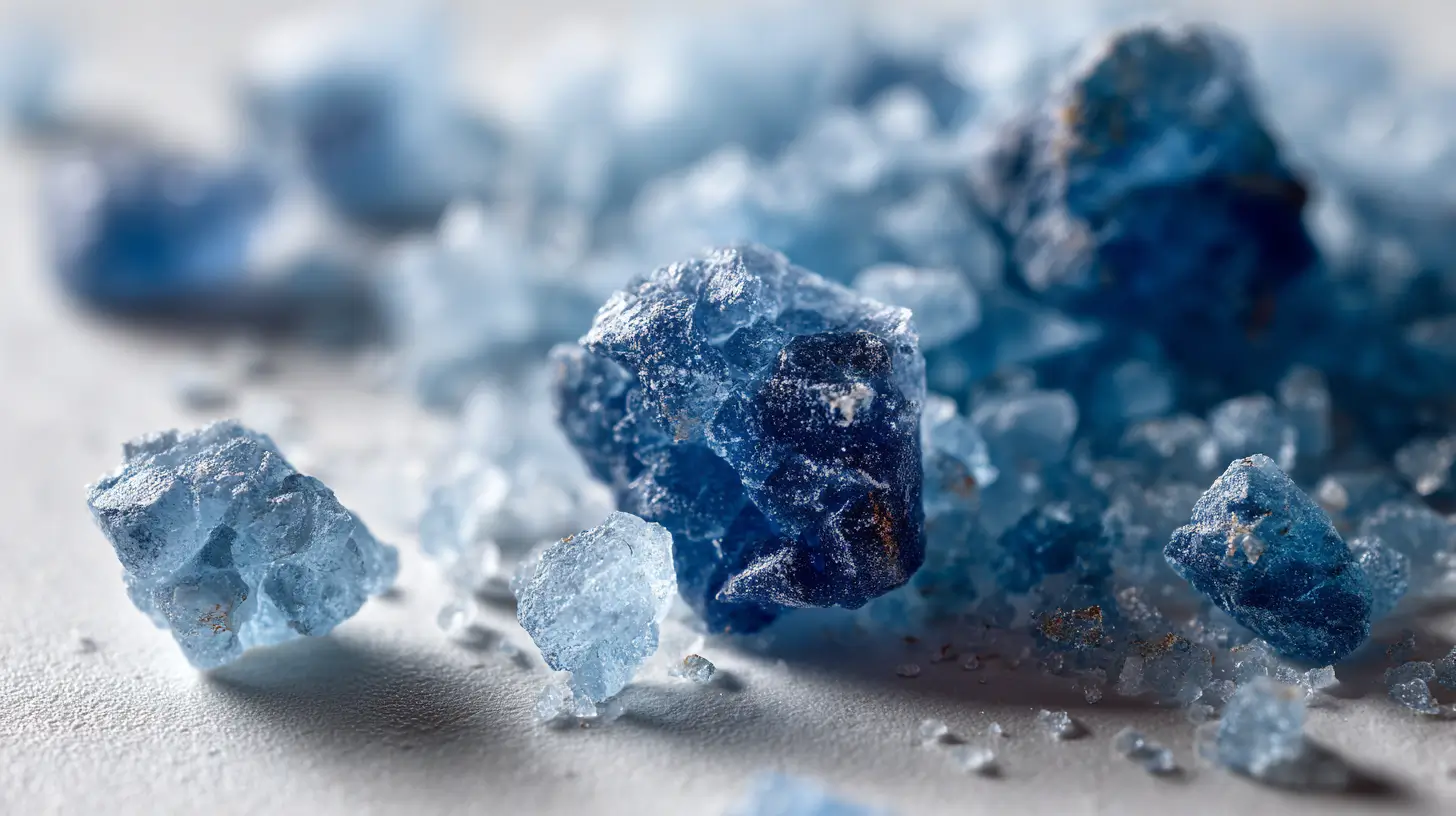
If you’ve been scrolling through wellness TikTok lately, chances are you’ve seen the blue salt recipe pop up more than once. It’s one of those trends that makes you pause and think, “Okay… what is this actually supposed to do?” Whether you’re curious about the benefits, wondering if it really helps with hydration, or you simply love trying fun kitchen hacks, you’re in the right place.
In this guide, we’ll break down what blue salt really is, where it comes from, and why everyone’s suddenly talking about it. Since so many salt-based wellness tricks are trending right now, we’ll also compare the blue salt recipe with other popular hacks. For example, you can learn more about the pink salt trick for weight loss here — a similar trend that’s gone viral for totally different reasons: https://yumarecipes.com/pink-salt-trick-for-weight-loss/.
You’ll also discover how to make your own blue salt recipe at home, what the science says (in simple terms), and whether the benefits you’ve heard about are truly worth your time. No hype, no miracle claims — just friendly, honest info you can actually use in your day-to-day cooking and wellness routine.
Ready to dive in? Let’s explore the world of blue salt together.
What Is Blue Salt?
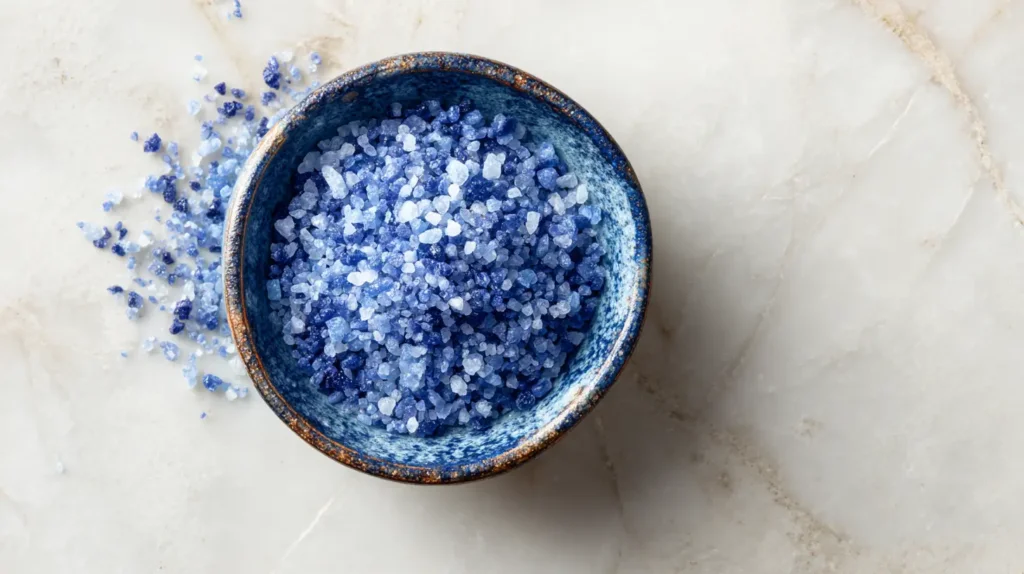
If you’ve never seen blue salt before, it can feel a little magical — those tiny sapphire-like crystals look nothing like the everyday salt most of us keep in our kitchens. But despite its color, blue salt isn’t artificial, dyed, or “enhanced.” It’s actually a rare natural salt that forms deep inside ancient salt caves in Iran, and its color comes from a unique mineral twist.
Origins of Persian Blue Salt
Blue salt is mined from the Hormuz and Semnan regions of Iran, where salt crystals have been forming for thousands of years. These underground deposits create unusual mineral patterns, and every once in a while, the salt forms a blue tint. Because the color develops naturally and only in small amounts, real Persian blue salt is considered one of the world’s rarest culinary salts.
Why Is Blue Salt Naturally Blue?
Here’s the cool part: the blue color comes from potassium chloride.
When these minerals compress under heavy geological pressure, they shift in a way that makes the crystals reflect light differently — almost like a prism. This optical effect creates shades that can range from pale icy blue to deep sapphire streaks.
So the stunning color isn’t a dye or an additive — it’s just nature doing its thing.
Mineral Composition and Key Ingredients in Blue Salt
Persian blue salt contains:
- Sodium (like all salt)
- Potassium
- Trace minerals like calcium and magnesium
- Natural crystal clusters formed under high pressure
These minerals are what give the salt its slightly sharper flavor and crunchy texture. Many people say it tastes “cleaner” or less harsh than table salt, which is why it shows up in some gourmet kitchens.
And speaking of minerals, if you’re curious about how electrolytes work in your body, you can check out this simple guide to salt-based electrolyte drink benefits here:
https://yumarecipes.com/lmnt-salt-electrolyte-drink-benefits/
It’s a helpful way to understand why certain salts — including blue salt — get paired with hydration trends.
How Blue Salt Differs From Regular Table Salt
Here’s a quick breakdown:
| Feature | Blue Salt | Regular Table Salt |
|---|---|---|
| Color | Natural blue mineral streaks | White |
| Origin | Iranian salt caves | Ocean/rock salt + processing |
| Minerals | Higher potassium + trace minerals | Mostly sodium chloride |
| Flavor | Sharp, clean, crisp | Strong and salty |
| Processing | Minimal | Often refined and bleached |
In short, blue salt is more of a specialty ingredient — loved for its texture, color, and unique mineral makeup. But beyond the aesthetics, many people use it for wellness experiments, which is exactly where the blue salt recipe trend started gaining traction.
Blue Salt Recipe – How to Make It at Home

Even though blue salt looks fancy, making a simple blue salt recipe at home is surprisingly easy. Most people try it because they’re curious about the trend, want a more mineral-rich salt option, or they’ve seen the viral “blue salt trick” pop up on social media. Whatever your reason, you can create a beginner-friendly version right in your kitchen — no special tools or complicated steps needed.
Ingredients Needed for a Homemade Blue Salt Recipe
Because true Persian blue salt is rare, most at-home versions use a blend that mimics the mineral benefits without trying to recreate the exact color. Here’s what you’ll need:
- Persian blue salt crystals (a small pinch goes a long way)
- Sea salt or Himalayan salt (your base salt)
- A tiny splash of warm water (for mixing hydration-focused recipes)
- Optional add-ins: lemon zest, dried herbs, or a drop of natural mineral water for flavor
The goal isn’t to turn everything blue — it’s to create a simple, mineral-rich salt blend inspired by the viral recipe.
Step-by-Step Instructions for Making Blue Salt
Here’s an easy approach anyone can try:
- Start with your base salt
Add 1–2 teaspoons of sea salt or Himalayan salt to a small bowl. - Add a pinch of Persian blue salt
Because it’s rare and potent, a little bit is enough for flavor and minerals. - Mix gently
Break up any larger crystals so they blend well with the salt base. - Optionally add a drop of warm water
This is popular in the wellness version of the recipe, especially if you’re trying the hydration hack. Just a touch helps the minerals dissolve and integrate. - Let it sit for a minute
The mix becomes slightly more fragrant and mineral-forward. - Use immediately or store
You can sprinkle it on meals, use it in a drink (following safe amounts), or keep it in a small jar for later.
Safety Notes When Preparing a DIY Blue Salt Recipe
A few friendly pointers:
- Blue salt is strong and mineral-rich — use small amounts.
- Avoid adding large amounts to drinks if you’re sensitive to sodium.
- Always taste-test a little before using it heavily in a dish.
- If you’re using it for hydration experiments, stick to simple, safe amounts of salt.
Blue salt can be fun to try, but it’s not a miracle solution. Think of it like a specialty ingredient that adds a twist to your usual routine.
Shelf Life and Storage Tips
Good news — salt basically doesn’t expire.
Still, a few tips keep your blue salt recipe tasting its best:
- Store it in a dry, airtight container
- Avoid letting moisture get inside
- Keep it away from heat or direct sunlight
- For infused versions (like lemon or herb blends), store in the fridge and use within 2–3 weeks
Your homemade blue salt recipe should stay fresh and flavorful without much effort.
Print
Blue Salt Recipe – What It Is, How It Works, and the Truth Behind the Viral Trend
- Total Time: 2 minutes
- Yield: 1 small jar (about 2–3 servings depending on use) 1x
Description
A simple, mineral-rich blue salt blend inspired by the viral wellness trend. This easy recipe uses a pinch of Persian blue salt mixed with natural sea salt to create a clean, crisp seasoning that can be used for cooking or light hydration-style wellness drinks.
Ingredients
- 2 teaspoons sea salt or Himalayan salt
- A pinch of Persian blue salt
- 1 teaspoon warm water (optional, for hydration-style use)
- Optional: lemon zest or dried herbs for flavor
Instructions
- Add sea salt or Himalayan salt to a small bowl.
- Mix in a tiny pinch of Persian blue salt.
- Gently break apart any larger crystals so the blend is even.
- For hydration-style drinks, add a small splash of warm water and stir.
- Use immediately or store in a small airtight jar.
Notes
Use only a pinch if adding to drinks. Store the salt blend in a dry container away from moisture. For infused versions (lemon, herbs), refrigerate and use within 2–3 weeks. This recipe enhances flavor and hydration, but it’s not a substitute for electrolytes or medical treatments.
- Prep Time: 2 minutes
- Cook Time: 0 minutes
- Category: Wellness · Salt Blends · DIY Seasoning
- Method: Mixed · No-Cook
- Cuisine: Wellness · Natural · Modern
Nutrition
- Serving Size: 1 pinch (approx. ⅛ teaspoon)
- Calories: 0
- Sugar: 0 g
- Sodium: 450–600 mg (varies depending on salt blend)
- Fat: 0 g
- Saturated Fat: 0 g
- Unsaturated Fat: 0 g
- Trans Fat: 0 g
- Carbohydrates: 0 g
- Fiber: 0 g
- Protein: 0 g
- Cholesterol: 0 mg
Keywords: blue salt recipe, Persian blue salt, blue salt trick recipe, wellness salt blend, hydration salt recipe, mineral salt mix
Blue Salt Recipe for Men – Why the Trick Went Viral
If you’ve spent any time on TikTok or Instagram Reels, you’ve probably seen creators talking about the blue salt recipe for men. It’s one of those trends that seemed to explode overnight — not because it’s complicated, but because it taps into the curiosity around “quick wellness tricks” and simple kitchen hacks. The buzz has definitely made people wonder if there’s something special about blue salt specifically for men, or if it’s just another viral moment.
Let’s break it down honestly and simply.
The Rise of the Blue Salt Trick for Men on TikTok
The trend started with short videos showing men trying a “blue salt trick” before workouts, long days at work, or as part of hydration routines. The idea wasn’t based on anything magical — it was mostly about minerals, electrolytes, and that eye-catching blue color that grabs attention on camera.
As more creators jumped on the trend, the recipe took off. Some made jokes, others shared routines, and soon the blue salt trick became one of those hashtags you see everywhere.
A big reason it blew up?
It looks cool, it feels different, and it’s simple enough for anyone to try.
Understanding the Claims Behind Men’s Blue Salt Recipes
Most claims you’ll hear fall into three basic categories:
- Hydration support (thanks to sodium + potassium)
- Electrolyte balance
- “Boosts” before a workout or long day
Here’s the truth: blue salt does contain minerals, especially potassium, and that can make a small difference in how balanced you feel — but only in normal, everyday ways. It’s not a booster, enhancer, or anything dramatic. Just minerals doing what minerals do.
That’s why it’s important to keep expectations grounded and focus on simple, safe use.
Does the Blue Salt Trick Actually Work?
Short answer: It works the same way any naturally mineral-rich salt works.
If someone is low in electrolytes or hasn’t had much sodium that day, a tiny amount of salt can make them feel more hydrated or awake — not because it’s blue, but because of basic mineral balance.
So does it “work”?
Sure — but not for any mysterious or special reason.
If you’re curious about other wellness trends for men, you can also check out the viral horse salt recipe here:
https://yumarecipes.com/horse-salt-recipe-for-men/
It’s another example of how simple salt-based recipes can turn into huge viral moments.
Blue Salt vs. Other “Men’s Salt Tricks”
There are now several viral salt-based hacks floating around:
- blue salt trick
- pink salt trick
- horse salt recipe
- shower salt trick
- morning salt water trend
Here’s the reality: most of them rely on the same concept — using a pinch of mineral-rich salt to help with hydration, taste, or quick morning routines. Blue salt just looks the most dramatic, which makes it perfect for social media.
But from a wellness standpoint?
They’re all variations of the same idea.
Blue Salt Benefits – Hydration, Minerals, and More
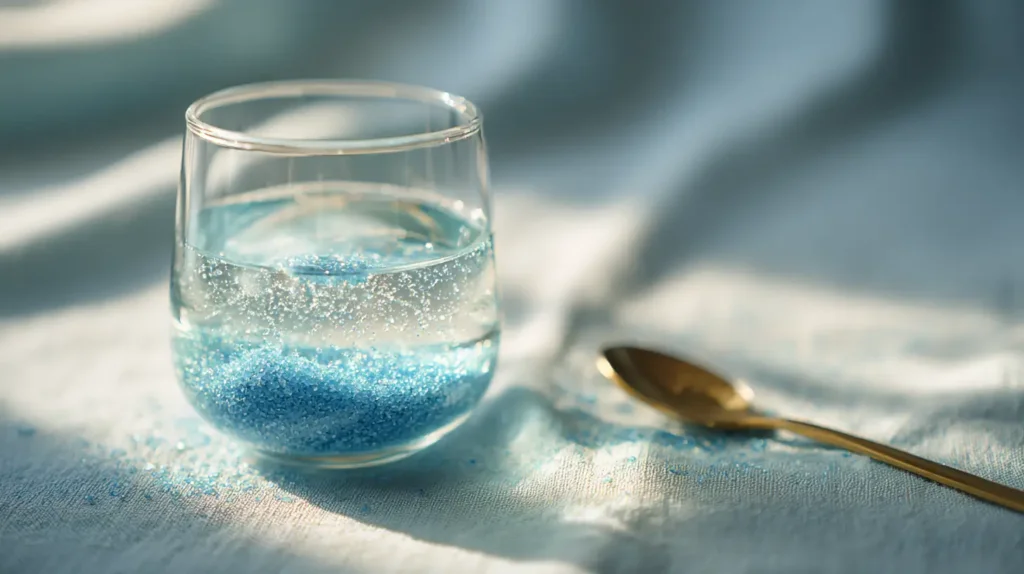
When people hear about the blue salt recipe, they often assume the benefits must be dramatic because the salt looks so unusual. But the truth is much simpler — and honestly, a lot more reassuring. Blue salt isn’t a magic ingredient, but it does offer some natural perks thanks to its mineral makeup. Think of it as a small wellness boost rather than a miracle cure.
Sodium, Potassium, and Magnesium: What the Body Really Needs
Blue salt contains the same basic nutrients you find in many natural salts, just in slightly different amounts. The stars of the show are:
- Sodium — helps with fluid balance and nerve function
- Potassium — supports hydration and muscle activity
- Magnesium — plays a role in relaxation and energy production (in trace amounts)
These minerals support normal body functions, which is why blue salt occasionally pops up in hydration or wellness blends.
If you’re curious about the bigger picture of electrolytes and why they matter, you might like this deeper breakdown of salt-based electrolyte drink benefits:
https://yumarecipes.com/lmnt-salt-electrolyte-drink-benefits/
It’s a great companion read if you’re exploring different salt trends.
The Blue Salt Hydration Trick Explained
The hydration angle is what made blue salt go viral. The idea is simple:
A tiny amount of mineral-rich salt can help your body absorb water more effectively.
Here’s the friendly version of the science: when your body has the right balance of sodium and potassium, it holds onto water just enough to stay hydrated — not bloated, not dehydrated, just balanced.
But it’s important to use very small amounts.
We’re talking a pinch, not a scoop.
Potential Benefits of Persian Blue Salt
Most people who try blue salt say they enjoy it because:
- It has a clean, crisp flavor
- It dissolves easily in warm water
- It adds a fun gourmet twist to meals
- It can make hydration drinks more appealing
- It feels like a “treat yourself” ingredient
These aren’t medical benefits — they’re everyday lifestyle perks that make cooking and wellness routines a little more enjoyable.
Myths vs. Facts About Blue Salt
Let’s keep things honest:
| Myth | Fact |
|---|---|
| Blue salt works like a supplement | It’s just salt with natural minerals |
| It boosts energy dramatically | Minerals can help, but don’t expect magic |
| It’s better than all other salts | It’s simply unique, not superior |
| The blue color improves health | The color comes from minerals, not benefits |
Blue salt is absolutely fun and interesting — but it stays in the “nice wellness ingredient” category, not the “life-changing hack” category.
Blue Salt vs. Pink Salt – Which One Is Better?
Blue salt and pink salt are two of the most eye-catching salts on social media, and it’s no surprise that people compare them. Both show up in wellness drinks, homemade electrolyte mixes, and those quick kitchen hacks that promise to make hydration a little easier. But even though they’re often mentioned in the same breath, they’re very different salts with their own flavors, mineral profiles, and uses.
Let’s take a friendly, honest look at how they compare — no hype, just simple facts you can use in your everyday cooking and wellness routine.
Mineral Differences Between Blue Salt and Himalayan Pink Salt
Here’s where things get interesting.
Blue Salt:
- Higher natural potassium content
- Contains trace minerals formed under extreme pressure
- Rare and minimally processed
Pink Salt:
- Rich in over 80 trace minerals (including iron, which gives it the pink color)
- Milder flavor
- More widely available and affordable
If you’re trying to choose between them for wellness drinks, the difference usually comes down to taste and mineral preferences.
And speaking of minerals, you can explore the pink salt trick for weight loss here if you’re curious how the trend compares to the blue salt hack:
https://yumarecipes.com/pink-salt-trick-for-weight-loss/
Color, Flavor, and Purity Comparison
Color:
- Blue salt has natural blue streaks from potassium chloride.
- Pink salt gets its rosy hue from iron-rich minerals.
Flavor:
- Blue salt tastes crisp and slightly sharp.
- Pink salt has a softer, milder flavor.
Purity:
- Both are natural and typically unrefined, but blue salt is rarer and often harvested in smaller batches.
Which Salt Works Better for Weight Loss Hacks?
Here’s the friendly truth:
Neither salt directly causes weight loss.
What they can do is support normal hydration or help make low-calorie drinks more enjoyable. Some people prefer blue salt for its sharper flavor, while others love pink salt for its smooth taste in water-based recipes.
But in terms of actual fat loss, the choice of salt doesn’t make a difference. What matters more is your overall routine, hydration, and eating patterns.
Price and Availability Comparison
One of the biggest differences is cost.
| Salt Type | Price Range | Availability |
|---|---|---|
| Blue Salt | Higher (rare, imported) | Specialty stores, online |
| Pink Salt | Affordable | Grocery stores, big-box retailers |
Most home cooks use pink salt for daily recipes and save blue salt for special dishes or wellness experiments.
Blue Salt and Weight Loss — Does It Help?
Whenever a wellness ingredient goes viral, the weight-loss questions follow right behind it. Blue salt is no different. You’ll see creators mixing it into morning water, adding it to pre-workout drinks, or using it in “slimming hacks.” But does blue salt actually support weight loss — or is it just another trend that looks good on camera?
Let’s break it down in a calm, realistic way.
Does Blue Salt Support Digestion?
Some people say blue salt helps with digestion, and there’s a bit of reasoning behind that.
Salt (any salt) can:
- Support stomach acid production
- Help break down certain foods
- Encourage proper hydration
But it’s not a digestive enzyme or a metabolism booster. If you notice smoother digestion after using the blue salt recipe, you’re most likely benefitting from better hydration or a small sodium balance — not the blue crystals themselves.
How Sodium Affects Water Retention and Metabolism
Sodium has a reputation for causing bloating, but the truth is a little more nuanced.
A tiny amount of sodium can actually help your body:
- Absorb water properly
- Maintain steady energy during the day
- Reduce dizziness or fatigue
- Stabilize hydration levels
Blue salt happens to contain potassium too, which can help counterbalance sodium. That potassium–sodium combo is one reason people feel “lighter” or “more hydrated” after drinking a small salt-infused wellness mix.
But remember — this isn’t fat burning. It’s simply fluid balance.
Blue Salt in GLP-1 Friendly Meal Plans
If you’re following modern weight-loss trends like GLP-1–based routines (Ozempic-style eating, lower appetite, simple meals), small amounts of mineral salts can actually play a role.
People using GLP-1 medications or GLP-1 food plans often:
- Eat less
- Drink more water
- Have lower sodium intake naturally
That can sometimes lead to mild electrolyte imbalances, which a tiny pinch of salt can help address. Blue salt fits right into that category.
If you’d like some ideas for meals that pair well with hydration-focused routines, you can check out these simple GLP-1 friendly recipes here:
https://yumarecipes.com/glp-1-recipes-for-weight-loss/
They’re great if you want gentle, nutrient-rich meals that support a balanced eating pattern.
Realistic Expectations vs. TikTok Claims
Let’s be honest:
- Blue salt won’t burn fat.
- It won’t speed up your metabolism.
- It won’t transform your body on its own.
What it can do is make your hydration routine more interesting, add minerals to your day, and give you a little flavor boost that encourages you to drink more water — and that can indirectly support healthy habits.
But there’s no magic shortcut hidden in the blue shade of the salt.
Is Blue Salt Safe? Side Effects, Risks, and Dosage
Any time a wellness ingredient goes viral, it’s natural to wonder whether it’s actually safe to use every day. Blue salt may look exotic, but at the end of the day, it’s still just a form of natural salt — and the same general rules apply. Used in small amounts, it’s totally fine for most people. But like any salt, there are a few things to keep in mind.
Let’s walk through them in a friendly, practical way.
How Much Blue Salt Is Safe Per Day
For most adults, a tiny pinch of blue salt is perfectly safe.
Because blue salt is strong and mineral-rich, you don’t need much at all — especially if you’re adding it to drinks.
Here’s a simple guideline:
- A pinch per day (⅛ teaspoon or less) for hydration mixes
- A normal seasoning amount when using blue salt in food
If you stick to those amounts, you’re well within safe limits, and you’ll still get that crisp mineral flavor people love.
Who Should Avoid Blue Salt
Even though blue salt is natural, a few groups should be careful with any salt:
- People with high blood pressure
- Anyone on a sodium-restricted diet
- Those with kidney issues
- Individuals who retain water easily
- People taking certain medications that affect fluid balance
In those cases, adding extra minerals might not be ideal, even in small amounts. If you’re unsure, it’s always smart to check in with a healthcare provider.
Side Effects of Using Too Much Salt
Using too much blue salt can lead to the same issues as other salts:
- Bloating
- Thirst
- Temporary water retention
- Headaches (from electrolyte imbalances)
- Increased blood pressure (if used excessively)
Most of these effects happen only when salt is overused. With the tiny amounts used in the blue salt recipe, the risk is low.
Is Persian Blue Salt Safe for Daily Use?
Yes — when enjoyed in small amounts, Persian blue salt is safe for everyday cooking or wellness routines. It’s natural, unrefined, and mineral-rich, which makes it a nice alternative to table salt.
Just remember:
- A little goes a long way
- It’s not healthier than other natural salts — just unique
- It’s better viewed as a fun addition, not a daily supplement
Used mindfully, it fits easily into a simple, balanced lifestyle.
Alternatives to Blue Salt (When You Can’t Find It)
Because Persian blue salt is rare and sometimes pricey, a lot of people look for easier alternatives that still offer minerals, flavor, or that fun “wellness boost” feeling. The good news? There are plenty of options that work beautifully in recipes and hydration mixes — and most of them are already in your pantry.
Let’s look at a few simple swaps that fit right into everyday cooking and wellness routines.
Pink Salt
Pink Himalayan salt is one of the easiest and most popular alternatives to blue salt. It has a smooth, mild flavor and contains trace minerals like iron, magnesium, and potassium.
People love it because:
- It dissolves easily
- It has a gentle, pleasant flavor in water
- It’s affordable and accessible
- It works well in wellness drinks or morning salt-water mixes
If you enjoy salt-based wellness hacks, the pink version is a simple go-to when blue salt is too expensive or hard to find.
Sea Salt
Sea salt is another great swap if you’re focusing more on function than color. It’s clean, natural, and mineral-rich depending on where it’s sourced.
Why it works:
- Widely available
- Tastes clean and bright
- Works beautifully in homemade hydration drinks
- Easy to use in food without overpowering flavors
Sea salt doesn’t have the same visual appeal as blue salt, but it’s perfect for recipes where flavor matters more than looks.
Electrolyte Salts and Hydration Mixes
If you’re interested in the wellness side of the blue salt recipe more than the culinary side, electrolyte salts can be a smart alternative.
They’re designed to help with things like:
- Hydration
- Energy balance
- Electrolyte support
- Post-workout recovery
A great example is LMNT-style mixes or simple homemade electrolyte blends. You can even pair them with balanced, weight-loss–friendly recipes if that’s part of your routine.
Salt-Based Weight Loss Recipes and Viral Alternatives
If you love exploring new wellness trends, there are other viral recipes that serve similar purposes, especially in hydration, simple routines, or metabolism-friendly meal plans.
Here are two popular alternatives you may want to explore:
- Brazilian Zepbound for weight loss recipe
https://yumarecipes.com/brazilian-zepbound-for-weight-loss-recipe/
(Great for low-effort, simple weight-management routines) - Zepbound trick for weight loss recipe
https://yumarecipes.com/zepbound-trick-for-weight-loss-recipe/
(Another viral-friendly recipe that fits into the same wellness cluster)
These alternatives aren’t meant to “replace” blue salt — they simply offer different ways to support a simple, balanced, wellness-focused lifestyle without relying on rare ingredients.
TikTok Magic Salt Tricks Explained
Blue salt didn’t become a trend by accident — it joined a long line of simple salt-based “magic tricks” that catch fire on social media. These videos are short, easy to copy, and usually promise a quick boost or a cool effect. Even though the word “magic” gets tossed around a lot, the real explanation behind these tricks is much simpler (and honestly, more interesting).
Let’s look at why these salt hacks go viral and what’s really happening behind the scenes.
The Origin of the Salt Magic Trick
Salt tricks have been around for decades. They usually fall into two categories:
- Kitchen science — like how salt melts ice or helps water boil faster.
- Wellness routines — such as hydration mixes, morning salt water, or mineral blends.
TikTok gave these old ideas a new life. When creators started showing off brightly colored salts, aesthetic drinks, or quick kitchen hacks, the magic-salt trend grew—and blue salt slid right into the spotlight.
Some creators even added storytelling or “challenge” elements, which helped the trend spread faster.
How the Blue Salt Trick Works Physically
There’s no sorcery happening — just minerals doing their job.
The “magic” effect comes from a mix of:
- Electrolyte balance
- Fast-dissolving minerals
- That attention-grabbing blue color
- Simple kitchen chemistry
When blue salt hits warm water, it dissolves quickly and releases minerals like sodium and potassium. This can make the drink taste sharper, encourage you to sip more water, or give you a gentle hydration boost.
To the viewer, it looks dramatic.
To the body, it’s just basic mineral support.
Is It Really “Magic” or Just Science?
It’s definitely science — friendly, everyday science.
Here’s what’s really happening:
- Your body uses sodium and potassium to move water into cells.
- A tiny pinch of salt can help your body hold onto water.
- Blue salt has extra minerals that slightly change the taste and look.
- The unusual color makes the process feel more special.
So while the effect might feel like a quick improvement in hydration or energy, it’s not magic — it’s simply your body responding to minerals it already understands.
Why Salt Tricks Spread Fast on TikTok
There are a few good reasons:
- They’re simple (anyone can try them).
- They look cool on camera.
- They promise quick, everyday benefits.
- They fit into the wellness-meets-aesthetics vibe.
- People love trying low-effort kitchen experiments.
And if you’re curious about another salt trend that gained major popularity, you can check out the viral horse salt recipe here:
https://yumarecipes.com/horse-salt-recipe-for-men/
It’s a great example of how these small, quirky trends catch on almost overnight.
Frequently Asked Questions About Blue Salt
Quels sont les “ingrédients” du sel bleu ?
Le sel bleu est un sel minéral naturel extrait en Iran. Ses “ingrédients” sont simplement :
– Chlorure de sodium (comme tout sel)
– Chlorure de potassium (qui lui donne sa couleur bleue)
– Oligo-éléments comme le magnésium et le calcium
Il ne contient aucun colorant, additif ou agent artificiel. Sa couleur provient de la pression minérale naturelle dans les grottes de sel anciennes.
À quoi sert le sel bleu ?
Le sel bleu offre les mêmes bienfaits que les autres sels naturels, avec un peu plus de potassium. En petites quantités, il peut aider à :
– Favoriser l’hydratation
– Apporter des minéraux aux boissons ou plats
– Améliorer la saveur grâce à son goût pur et net
Ce n’est pas un ingrédient miracle : il aide simplement votre corps à maintenir un bon équilibre minéral.
Comment faire son propre “sel magique” ?
Le “sel magique” qu’on voit en ligne est un simple mélange minéral.
Voici une version maison facile :
1. Commencez avec du sel marin ou de l’Himalaya.
2. Ajoutez une petite pincée de sel bleu d’Iran.
3. Mélangez doucement.
4. Optionnel : dissoudre dans de l’eau tiède pour les recettes d’hydratation.
C’est tout ! Aucun ingrédient spécial n’est requis.
Comment fonctionne le tour de magie avec le sel ?
Il n’y a rien de mystique.
L’effet “magique” vient de :
– La dissolution rapide des minéraux dans l’eau tiède
– Le sodium et le potassium qui aident à l’hydratation
– Les cristaux bleus très visuels
Ça ressemble à de la magie, mais c’est juste de la chimie.
Le sel bleu est-il sans danger au quotidien ?
Oui, en petites quantités normales, il est sûr pour la cuisine ou les routines bien-être quotidiennes. Attention toutefois si vous :
– Limitez votre consommation de sodium
– Avez des problèmes de tension
– Suivez un régime lié aux reins
Utilisé avec parcimonie, il reste dans les limites sûres.
Pourquoi le sel bleu fait-il le buzz sur TikTok ?
Parce qu’il remplit tous les critères d’une tendance virale :
– Visuellement spectaculaire
– Facile à tester
– Parfait pour les vidéos bien-être et hydratation
– Superbe dans les boissons esthétiques
Il donne l’impression d’une “astuce” que tout le monde peut reproduire. Et c’est amusant !
Conclusion – Is the Blue Salt Recipe Worth Trying?
If you’re curious about the blue salt recipe, the good news is that it’s a simple, low-pressure trend that’s easy to try at home. Think of it as a fun, mineral-rich twist to your usual wellness routine rather than something that promises dramatic changes. A tiny pinch can enhance hydration, add a crisp flavor to your drinks, or bring a little gourmet flair to your cooking. But like any salt, moderation is key.
Blue salt stands out because it’s beautiful, rare, and interesting — and sometimes that’s reason enough to give a trend a try. It’s one of those little kitchen experiments that feels satisfying without requiring much time or effort. Plus, it blends beautifully into a balanced lifestyle, especially if you enjoy exploring gentle, food-based wellness ideas.
If you’re into light, wellness-friendly recipes, you might also enjoy these simple options that pair well with hydration-focused routines:
- For a refreshing, low-calorie treat, check out this jello weight loss recipe:
https://yumarecipes.com/jello-weight-loss-recipe/ - For a soothing, feel-good drink, explore this Costa Rican tea for weight loss:
https://yumarecipes.com/costa-rican-tea-for-weight-loss/
At the end of the day, blue salt is just one more natural ingredient that can make your meals or morning drinks a bit more fun. Try it, enjoy it, and see how it fits into your own wellness journey — no pressure, no hype, just a friendly little boost from the mineral world.