
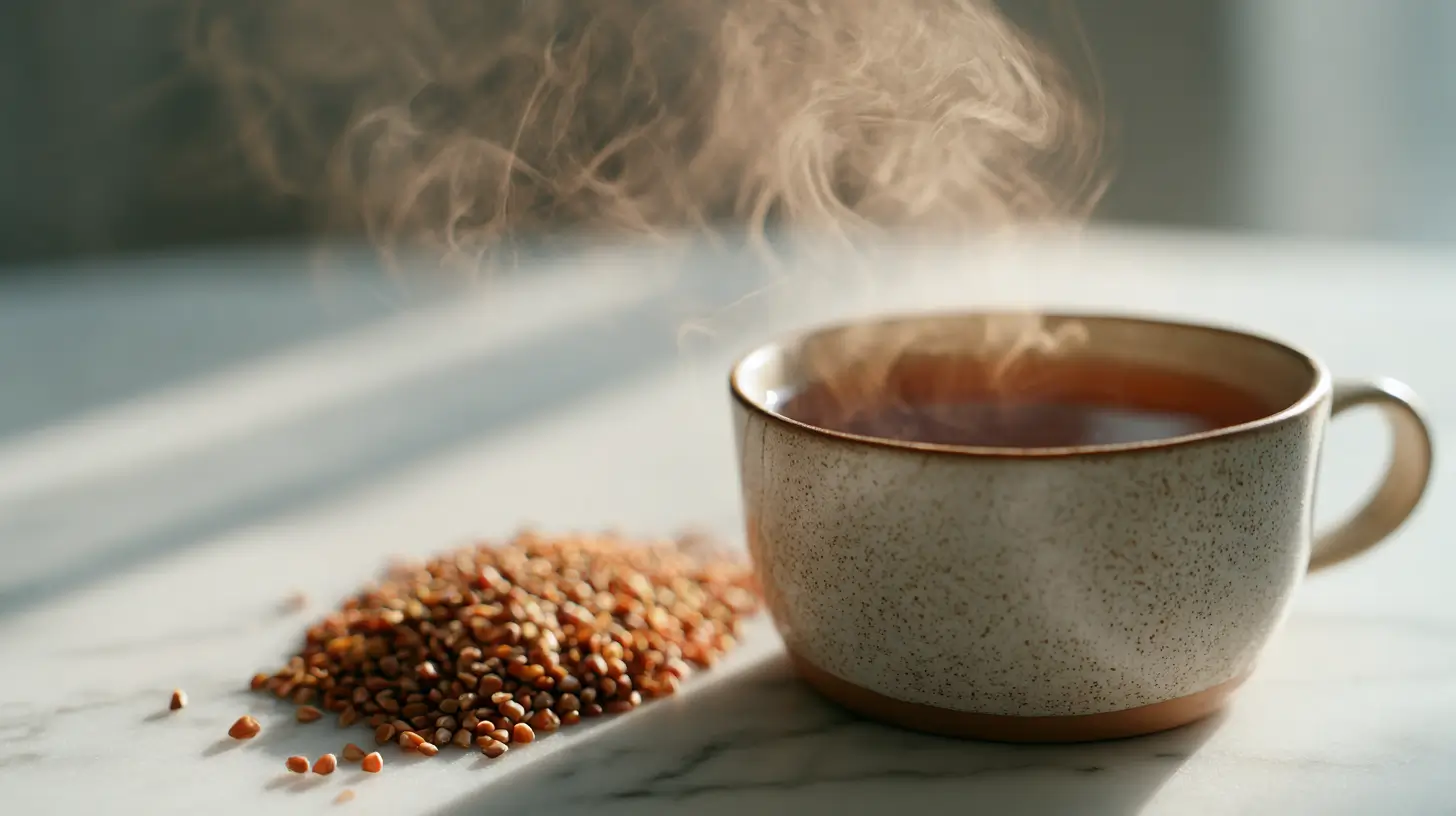
Buckwheat tea is a traditional drink with deep roots in East Asian food culture, yet it’s quietly becoming a modern favorite among people looking for simple, caffeine-free alternatives to classic teas. Often known as sobacha, this roasted infusion is made from buckwheat seeds rather than tea leaves, which already sets it apart in both taste and use.
In Japan, buckwheat tea is commonly known as sobacha, a roasted version made from buckwheat kernels and enjoyed for its mild, nutty flavor. You can explore this traditional preparation in more detail in our sobacha tea guide.
In recent years, interest has grown around different varieties, including tartary buckwheat tea and premium Himalayan sources, as well as comparisons with familiar options like barley tea. Some people enjoy buckwheat tea for its toasty flavor, while others appreciate the fact that it naturally fits into evening routines and wellness-focused lifestyles.
This article explains what buckwheat tea is, how it’s made, and why it’s often described as gentle and approachable. You’ll also learn how it compares to other grain-based teas, whether it contains caffeine or gluten, and how people typically drink it. The goal is simple: clear, practical information—without exaggerated health claims—so you can decide if buckwheat tea deserves a place in your daily routine.
What Is Buckwheat Tea?
Buckwheat tea is an infusion made from roasted buckwheat seeds, not from tea leaves. That distinction matters, because it explains why buckwheat tea tastes different from green or black tea and why it’s often chosen by people looking for a warm drink without caffeine. Despite the name, buckwheat tea isn’t related to wheat and doesn’t come from the Camellia sinensis plant used for traditional teas.
In many cultures, especially in East Asia, buckwheat tea has long been consumed as a daily beverage rather than a specialty drink. Today, it’s being rediscovered by a wider audience who appreciate its simple ingredients, nutty flavor, and versatility.
Is buckwheat a grain or a seed?
Although the word “wheat” is part of its name, buckwheat is not a true grain. Botanically speaking, it’s a seed from a plant related to rhubarb and sorrel. However, because it’s used in similar ways to grains—such as in noodles, porridge, or tea—it’s often grouped with them in everyday language.
This distinction helps explain why buckwheat tea is naturally gluten-free and why it’s commonly included in diets that avoid traditional cereals. When roasted, the seeds develop a warm, slightly toasty aroma that works well in an infusion, even without any added flavorings.
How buckwheat is used for tea
To make buckwheat tea, whole buckwheat seeds are cleaned, roasted, and then steeped in hot water. The roasting step is essential, as it brings out the characteristic nutty and mildly earthy notes associated with buckwheat tea. Once prepared, the seeds can be reused for multiple infusions, which is one reason this drink is often enjoyed throughout the day.
Unlike herbal blends that rely on flowers or leaves, buckwheat tea remains light and smooth, even after longer steeping times. This makes it approachable for people who prefer subtle flavors and a warm beverage that doesn’t overpower meals or evening routines.
Buckwheat Tea Benefits (Explained Simply)
When people talk about buckwheat tea benefits, they’re usually referring to how this drink fits into everyday habits rather than making bold health claims. Buckwheat tea is often described as gentle, warming, and easy to include in daily routines, especially for those who want something simple and comforting.
Instead of being viewed as a remedy, buckwheat tea is best understood as a supportive beverage—one that people enjoy for its taste, composition, and flexibility.
Digestive comfort and warm beverages
Like many warm drinks, buckwheat tea is commonly consumed after meals or in the evening. The warmth alone can feel soothing, which is why people often associate it with digestive comfort. Its roasted flavor is mild and not acidic, making it approachable for those who prefer drinks that don’t feel heavy or sharp.
Because it’s typically consumed plain, without sweeteners or dairy, buckwheat tea fits easily into balanced eating patterns. Many people enjoy it alongside meals or as a gentle alternative to stronger beverages.
Naturally caffeine-free
One of the most practical reasons people choose buckwheat tea is that it’s naturally caffeine-free. Since it’s made from roasted seeds rather than tea leaves, it doesn’t contain caffeine at all. This makes it suitable for late afternoons or evenings, when caffeinated drinks may interfere with sleep.
For those actively searching for a buckwheat caffeine free tea, this characteristic alone is often enough to make it a staple. It provides the experience of a warm, flavorful drink without the stimulating effects associated with coffee or traditional teas.
Why people include it in wellness routines
Buckwheat tea frequently appears in wellness-focused routines because it’s simple, minimal, and easy to prepare. It doesn’t rely on added flavors, sugars, or complex blends, which appeals to people aiming to reduce unnecessary ingredients in their diet.
Some also enjoy rotating buckwheat tea with similar grain-based infusions, especially when comparing options like barley tea. If you’re curious about those differences, you can explore a detailed comparison in this guide on buckwheat tea vs barley tea, which explains how people typically choose between the two.
Overall, buckwheat tea is valued less for dramatic effects and more for how naturally it fits into everyday life—warm, mild, and uncomplicated.
Sobacha vs Soba Cha: Is There a Difference?
As buckwheat tea becomes more popular outside Asia, many people notice different names used to describe what seems like the same drink. The two most common terms—sobacha and soba cha—often raise questions, especially for readers encountering buckwheat tea for the first time.
Understanding these names helps clear up confusion and makes it easier to recognize the product, no matter how it’s labeled.
What sobacha tea means
Sobacha is the Japanese name for buckwheat tea. The word comes from soba (buckwheat) and cha (tea), which together simply mean “buckwheat tea.” In Japan, sobacha is widely consumed in homes and restaurants, often served hot or cold depending on the season.
Traditionally, sobacha is made from roasted buckwheat seeds steeped in hot water, producing a light brown infusion with a toasted, nutty aroma. It’s commonly offered as a daily drink rather than something reserved for special occasions.
Why “soba cha” and “sobacha” are the same
There is no real difference between soba cha and sobacha. The variation comes down to spelling and translation preferences rather than preparation or ingredients. Some brands and writers separate the words to make the meaning clearer for non-Japanese audiences, while others keep them combined.
From a practical point of view, both terms refer to the same type of buckwheat tea. Whether a package says sobacha tea or soba cha tea, the drink itself is prepared and enjoyed in the same way.
If you’d like a deeper look at how sobacha is traditionally prepared and consumed, this dedicated guide on sobacha tea explores its background and everyday use in more detail.
Taste profile and preparation overview
Sobacha has a mild, roasted flavor that’s often described as nutty or slightly earthy. It doesn’t have bitterness, even when steeped longer than recommended, which makes it forgiving for beginners. The aroma tends to be warm and comforting rather than floral or grassy.
Preparation is straightforward: roasted buckwheat seeds are steeped in hot water for a few minutes, then strained or left in the cup depending on preference. Many people reuse the same seeds multiple times, enjoying several cups throughout the day without the flavor becoming overwhelming.
Tartary Buckwheat Tea vs Regular Buckwheat Tea
As interest in buckwheat tea grows, more people are discovering that not all buckwheat is the same. Alongside standard buckwheat tea, you’ll often see tartary buckwheat tea mentioned as a distinct option. While both come from buckwheat seeds, they differ in taste, reputation, and how they’re typically marketed.
Understanding these differences helps explain why tartary buckwheat tea has become a noticeable trend in recent years.
What is tartary buckwheat?
Tartary buckwheat is a specific variety of buckwheat that’s traditionally grown in mountainous regions of Asia and parts of Europe. Compared to common buckwheat, it has a more robust composition and a stronger natural flavor when roasted.
When used for tea, tartary buckwheat seeds are processed in a similar way—cleaned, roasted, and steeped—but the resulting infusion is usually darker and more intense. This distinction is why many labels clearly specify tartary buckwheat rather than simply calling it buckwheat tea.
For a more detailed breakdown of how this variety is produced and consumed, you can explore this in-depth resource on tartary buckwheat tea.
Taste and aroma differences
One of the most noticeable differences between tartary buckwheat tea and regular buckwheat tea is flavor. Tartary buckwheat tea tends to have a deeper, slightly bitter edge alongside its roasted notes, whereas regular buckwheat tea is milder and smoother.
Some people prefer this stronger profile because it feels closer to traditional teas, while others stick with regular buckwheat tea for its softer taste. The choice often comes down to personal preference rather than quality.
Why tartary buckwheat tea is trending
Tartary buckwheat tea has gained popularity largely because it’s perceived as more “authentic” or premium, especially when linked to traditional farming regions. It’s also frequently highlighted in wellness-focused conversations, which has helped drive curiosity and search interest.
At the same time, the trend reflects a broader movement toward exploring traditional ingredients in new ways. For many drinkers, tartary buckwheat tea offers a familiar format with a slightly bolder character, making it an appealing alternative to regular buckwheat tea.
Himalayan Tartary Buckwheat Tea: Why It’s Trending
Among the different types of buckwheat tea, Himalayan tartary buckwheat tea stands out as a more niche and premium option. While it’s still made from tartary buckwheat, its origin and positioning give it a distinct identity that appeals to curious tea drinkers and specialty food shoppers.
This variety is often highlighted not just for taste, but for the story behind where it comes from.
Himalayan origin explained
Himalayan tartary buckwheat is typically grown in high-altitude regions where the climate is cooler and the terrain is more rugged. These growing conditions are frequently emphasized because they suggest slower growth and traditional farming methods, which many consumers associate with quality and authenticity.
In the context of tea, the seeds harvested from these regions are roasted in a similar way to other tartary buckwheat varieties. However, the Himalayan origin is often used to signal a closer connection to traditional practices rather than industrial production.
Why it’s perceived as premium or “special”
The premium image of Himalayan tartary buckwheat tea comes largely from its limited production and geographic specificity. Products labeled as Himalayan are usually marketed in smaller batches and positioned as specialty items, which naturally increases their appeal among people looking for something different from everyday options.
There’s also a perception that high-altitude crops are more carefully cultivated, even though the basic preparation process remains the same. For many consumers, this combination of rarity and origin story makes the tea feel more special, regardless of how often they drink it.
How it differs from standard tartary buckwheat tea
In terms of flavor, Himalayan tartary buckwheat tea is often described as slightly more refined or balanced, though the differences are subtle. The roasted, nutty base remains, but some drinkers notice a smoother finish compared to other tartary buckwheat teas.
Ultimately, the main difference lies in positioning rather than function. Himalayan tartary buckwheat tea offers a premium take on a familiar concept, appealing to those who enjoy exploring variations while staying within the world of buckwheat tea.
Buckwheat Tea vs Barley Tea

When choosing between grain-based infusions, many people naturally compare buckwheat tea with barley tea. Both are popular as everyday drinks, especially in East Asian cultures, and both are valued for being simple and refreshing. Still, they differ in taste, composition, and how people typically use them.
Understanding these differences makes it easier to decide which one fits your preferences and lifestyle.
Taste and aroma comparison
Buckwheat tea has a mild, nutty, and slightly toasted flavor that feels smooth and gentle on the palate. Its aroma is warm and subtle, making it easy to drink on its own or alongside meals without overpowering food.
Barley tea, on the other hand, tends to have a more pronounced roasted grain taste. Some people describe it as deeper or more robust, with a drier finish. Because of this, those who enjoy stronger roasted notes often gravitate toward barley tea, while others prefer the softer profile of buckwheat tea.
Caffeine and gluten comparison
One key difference people look for in a buckwheat tea vs barley tea comparison is how each drink fits into dietary needs. Buckwheat tea is naturally caffeine-free, as it’s made from roasted seeds rather than tea leaves. This makes it suitable for evening consumption or for anyone avoiding stimulants.
Barley tea is also caffeine-free, but it contains gluten because it’s made from barley. This means it’s not suitable for people with gluten sensitivity or celiac disease, whereas buckwheat tea is commonly chosen as a gluten-free alternative.
If you’re interested in a deeper breakdown of how these two drinks compare, including typical use cases and preferences, this detailed guide on buckwheat tea vs barley tea explores the differences in more depth.
When people choose barley tea instead
Despite the gluten consideration, barley tea remains popular for its bold flavor and refreshing quality, especially when served cold. Some people prefer it as a summer drink or as a meal-time beverage because of its strong roasted character.
In the end, the choice often comes down to taste and dietary needs. Buckwheat tea appeals to those seeking a gentle, gluten-free option, while barley tea attracts those who enjoy a richer grain flavor and don’t need to avoid gluten.
Does Buckwheat Tea Contain Caffeine or Gluten?
Questions about caffeine and gluten come up frequently when people first discover buckwheat tea. Because it’s called “tea” and made from something that sounds like wheat, the assumptions are understandable. In reality, buckwheat tea is quite different from traditional teas and common grains.
Clarifying these two points helps many people decide whether buckwheat tea fits their dietary needs.
Is buckwheat tea caffeine-free?
Yes, buckwheat tea is naturally caffeine-free. It’s made from roasted buckwheat seeds, not from tea leaves such as green or black tea. As a result, it doesn’t contain caffeine in any amount.
This is why buckwheat tea is often chosen as an evening drink or as a substitute for coffee and traditional tea later in the day. For anyone actively looking for a buckwheat caffeine free tea, this characteristic is one of its biggest practical advantages.
Is buckwheat tea gluten-free?
Despite its name, buckwheat is not related to wheat and does not contain gluten. Buckwheat tea is therefore considered gluten-free when made from pure buckwheat seeds without cross-contamination.
This makes it a common choice for people who avoid gluten for dietary or lifestyle reasons. Compared to grain-based drinks like barley tea, buckwheat tea offers a similar roasted flavor experience without the presence of gluten, which explains why it’s often included in gluten-free routines.
How to Drink Buckwheat Tea Safely
Buckwheat tea is generally enjoyed as a simple, everyday beverage, but like any food or drink, it’s helpful to understand how people typically consume it and when a bit of caution makes sense. The good news is that buckwheat tea doesn’t require complex rules or special preparation.
For most people, it fits easily into daily routines without much thought.
How often people drink buckwheat tea
Many people drink buckwheat tea daily, sometimes replacing water, coffee, or traditional tea with it during certain parts of the day. Because it’s caffeine-free and mild in flavor, it’s commonly consumed in the afternoon or evening without concern about sleep.
Some prefer to drink it with meals, while others enjoy it on its own as a warm, comforting drink. Since the roasted seeds can often be reused for multiple infusions, it’s not unusual for people to brew several cups from the same batch throughout the day.
Who should be cautious
Although buckwheat tea is widely considered gentle, anyone with a known buckwheat allergy should avoid it. Buckwheat allergies are uncommon but do exist, and reactions can occur if buckwheat is consumed in any form, including tea.
As with any new food or beverage, people with specific medical conditions or dietary restrictions may prefer to introduce buckwheat tea gradually. Paying attention to how your body responds is always a sensible approach.
Simple preparation notes
Preparing buckwheat tea is straightforward. Roasted buckwheat seeds are steeped in hot water for a few minutes, then strained or left in the cup depending on preference. The flavor is forgiving, so steeping slightly longer rarely results in bitterness.
Buckwheat tea can also be enjoyed cold by brewing it hot and letting it cool, or by steeping it in cold water over a longer period. This flexibility is one of the reasons people find it easy to incorporate buckwheat tea into everyday life.
Frequently Asked Questions About Buckwheat Tea
What does buckwheat tea taste like?
Buckwheat tea has a mild, roasted flavor that’s often described as nutty and slightly toasty. It’s smooth rather than bitter, even when steeped longer than recommended. Many people find the taste comforting and easy to drink, especially compared to stronger teas or coffee.
Is buckwheat tea the same as sobacha?
Yes, buckwheat tea and sobacha refer to the same drink. Sobacha is simply the Japanese name for buckwheat tea. The ingredients and preparation are the same, whether the label says sobacha, soba cha, or buckwheat tea.
Can you drink buckwheat tea every day?
Many people drink buckwheat tea daily without any issues. Because it’s caffeine-free and mild, it’s often used as a regular beverage throughout the day or in the evening. As with any food or drink, moderation and personal tolerance are key, especially for those trying it for the first time.
Is buckwheat tea better than barley tea?
Neither drink is objectively better—it depends on personal preference and dietary needs. Buckwheat tea is naturally gluten-free and has a gentler flavor, while barley tea has a stronger roasted taste but contains gluten. If you want a detailed comparison to help you choose, this guide on buckwheat tea vs barley tea explains the differences in more detail.
Conclusion
Buckwheat tea stands out as a simple, traditional drink that fits naturally into modern lifestyles. Made from roasted buckwheat seeds rather than tea leaves, it offers a mild, nutty flavor and a warm, comforting experience without caffeine or gluten. That alone explains why many people reach for it in the afternoon or evening, or when they want a gentle alternative to coffee and classic teas.
Throughout this guide, we’ve looked at what buckwheat tea is, how it differs from similar drinks like barley tea, and why variations such as sobacha and tartary buckwheat tea have gained attention. We’ve also seen how premium options like Himalayan tartary buckwheat tea appeal to those interested in origin and tradition, even when the preparation remains straightforward.
In the end, buckwheat tea isn’t about bold promises or complex rituals. It’s about simplicity, versatility, and taste. Whether you’re curious about grain-based teas, avoiding caffeine, or just looking to try something new, buckwheat tea offers an easy place to start—one cup at a time.