
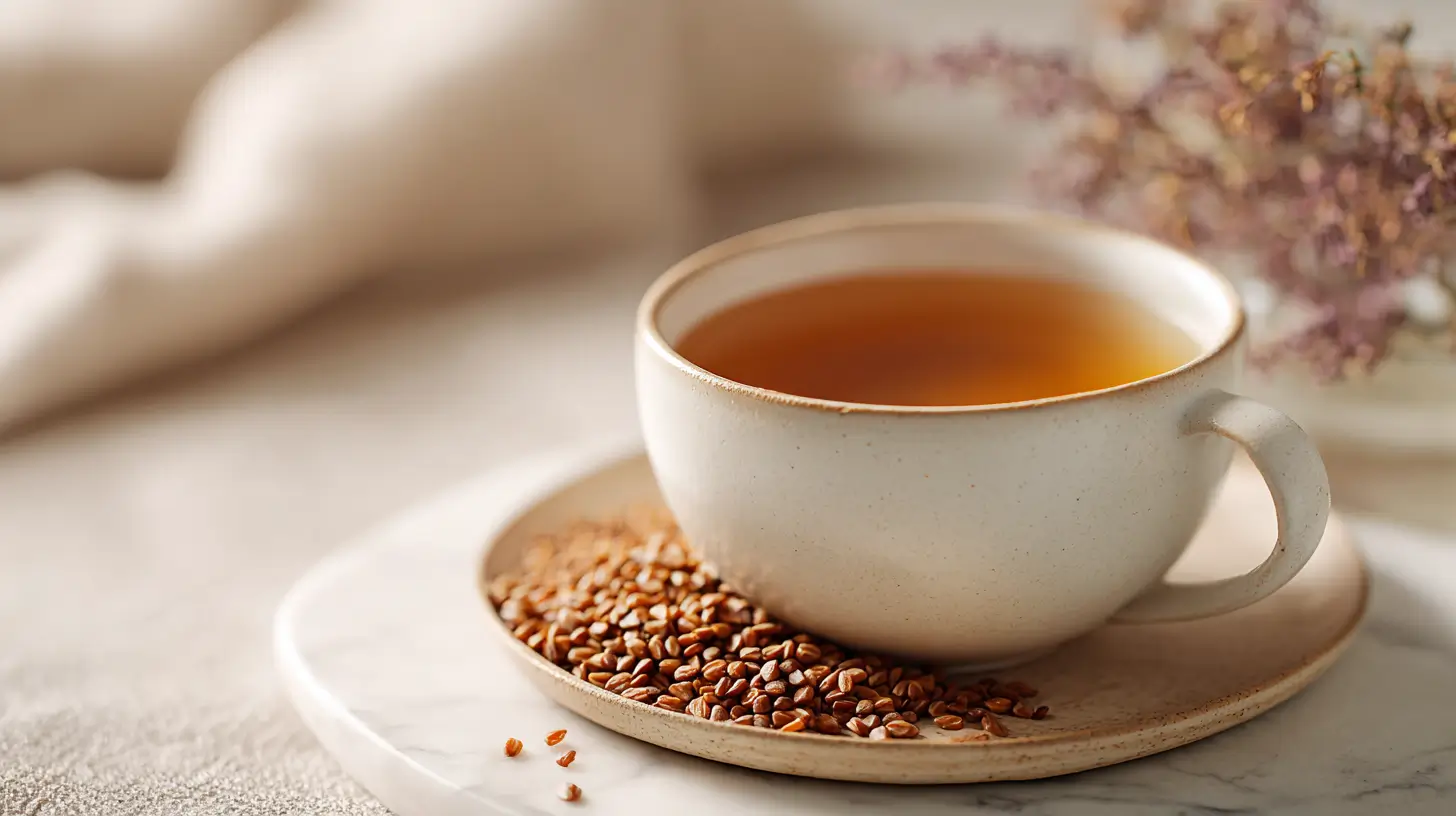
Buckwheat tea often raises two very specific questions: does it contain caffeine, and does it contain gluten? These concerns come up again and again, especially among people who are sensitive to stimulants, follow a gluten-free diet, or simply want a calming drink they can enjoy any time of day.
At first glance, the name can be confusing. Despite the word wheat, buckwheat tea isn’t made from wheat at all, and it doesn’t follow the same rules as traditional teas like green or black tea. That’s exactly why so many people compare it to other caffeine-free infusions and explore options like buckwheat tea as a daily alternative.
In this article, we’ll answer those two key questions clearly and directly—without medical jargon or unnecessary complexity. You’ll learn whether buckwheat tea is truly caffeine-free, whether it’s safe for gluten intolerance or celiac disease, and how it compares to other popular teas. By the end, you’ll know exactly if buckwheat tea fits your lifestyle, your diet, and your daily routine.
Does Buckwheat Tea Contain Caffeine?
One of the most common reasons people look into buckwheat tea caffeine free claims is simple: they want a drink that won’t overstimulate their body. Whether it’s for better sleep, lower anxiety, or cutting back on coffee, caffeine is often the first thing people check.
The good news is straightforward, but the explanation matters.
Is buckwheat tea naturally caffeine-free?
Yes, buckwheat tea is naturally caffeine-free. It’s made from roasted buckwheat seeds, not from tea leaves. Because caffeine is only found in plants like Camellia sinensis—the source of green, black, white, and oolong teas—buckwheat tea contains zero natural caffeine.
This also explains why questions like does buckwheat tea have caffeine come up so often. The word “tea” makes people assume it behaves like traditional teas, but in reality, buckwheat tea is closer to a caffeine free herbal tea than to anything brewed from tea leaves.
As long as the ingredient list contains only buckwheat (and no added tea leaves), there’s no hidden caffeine to worry about.
Why buckwheat tea is often chosen instead of green or black tea
Many people switch to buckwheat tea after realizing that even small amounts of caffeine affect them more than expected. Green and black teas may seem mild, but they still contain enough caffeine to interfere with sleep or trigger jitters in sensitive individuals.
That’s where buckwheat tea stands out. Because it’s completely caffeine-free, it can be enjoyed:
- Late in the evening
- On an empty stomach
- Multiple times a day
It’s also why buckwheat tea is frequently compared with its roasted variation, sobacha. While both are naturally caffeine-free, sobacha has its own taste profile and preparation style, which we’ll explore later alongside sobacha tea.
In short, if your goal is to avoid stimulants entirely, buckwheat tea fits that need without forcing you to give up the ritual of drinking tea.
Is Buckwheat Tea Gluten-Free?

The second big concern tied to buckwheat tea caffeine free searches is gluten. The confusion is understandable. The word buckwheat sounds like it should contain wheat, and for anyone dealing with gluten intolerance or celiac disease, that raises an immediate red flag.
Fortunately, the reality is much simpler—and safer—than the name suggests.
Why buckwheat is not related to wheat
Despite its name, buckwheat is not a type of wheat at all. It’s a seed, not a grain, and it’s completely unrelated to gluten-containing plants like wheat, barley, or rye. Buckwheat belongs to a different botanical family, which is why it naturally contains no gluten.
This is why questions like is buckwheat tea gluten free and buckwheat tea gluten appear so often. The concern comes from the name, not the ingredient itself.
When buckwheat tea is made from pure roasted buckwheat—without additives or blends—it remains fully gluten-free by nature.
Is buckwheat tea safe for gluten intolerance?
For most people with gluten sensitivity, buckwheat tea is considered safe. It’s commonly chosen by those looking for buckwheat tea for gluten intolerance because it provides a warm, comforting drink without the digestive issues triggered by gluten.
However, there’s one important detail to keep in mind: cross-contamination. Some teas are processed in facilities that also handle barley-based teas or other gluten-containing products. This is especially relevant when comparing buckwheat tea with drinks like barley tea, which is not gluten-free.
For people with celiac disease or high sensitivity, choosing a clearly labeled product or one specifically marketed as buckwheat tea safe for celiac can offer extra peace of mind. When sourced and processed correctly, buckwheat tea fits comfortably into a gluten-free lifestyle without compromise.
Buckwheat Tea vs Traditional Teas (Caffeine & Gluten)
Understanding how buckwheat tea compares to traditional teas helps explain why it’s so often recommended for people with dietary sensitivities. When you look closely at caffeine content and gluten exposure, the differences become very clear.
Buckwheat tea vs green tea
Green tea is often praised as a “lighter” option, but it still comes from tea leaves and naturally contains caffeine. Even small amounts can affect people who are sensitive to stimulants, especially when consumed later in the day.
Buckwheat tea, on the other hand, contains no caffeine at all. That makes it a popular choice for anyone specifically searching for a caffeine free herbal tea that still feels like a real tea experience. There’s no energy spike, no crash, and no impact on sleep patterns.
This difference is one of the main reasons people transition from traditional teas to buckwheat-based infusions for everyday drinking.
Buckwheat tea vs barley tea (gluten note)
Barley tea is another roasted infusion often compared to buckwheat tea, but there’s a critical distinction: barley contains gluten. While barley tea is naturally caffeine-free, it’s not suitable for people with gluten intolerance or celiac disease.
Buckwheat tea offers the same roasted, nutty comfort without the gluten risk. That’s why it’s often grouped with other safe alternatives, including tartary buckwheat tea, which shares similar properties but has its own nutritional profile.
Why this comparison matters for sensitive diets
For people managing both caffeine sensitivity and gluten avoidance, the overlap is small. Many drinks remove one issue but not the other. Buckwheat tea stands out because it addresses both concerns at the same time.
Instead of choosing between staying awake or risking digestive discomfort, buckwheat tea allows people to enjoy a warm beverage that aligns with their health needs, their routine, and their long-term dietary goals.
What About Sobacha and Tartary Buckwheat Tea?

As interest in buckwheat tea grows, many people quickly come across related names like sobacha and tartary buckwheat tea. That naturally leads to new questions about caffeine, gluten, and whether these variations behave the same way as standard buckwheat tea.
Is sobacha tea caffeine-free?
Yes, sobacha tea is caffeine-free. Sobacha is simply roasted buckwheat—traditionally enjoyed in Japan—and it does not contain tea leaves of any kind. Because of that, there’s no natural source of caffeine involved in its production.
This explains why searches around sobacha tea caffeine are so common. People often assume that a darker roast or stronger flavor might introduce caffeine, but roasting only changes taste, not caffeine content. Like regular buckwheat tea, sobacha can be enjoyed in the evening or even right before bed.
Is tartary buckwheat tea gluten-free?
Tartary buckwheat tea is also naturally gluten-free, since tartary buckwheat is still buckwheat, not wheat. From a gluten perspective, it follows the same rules as standard buckwheat tea and is generally considered safe for people avoiding gluten.
As with any gluten-free product, the main concern isn’t the plant itself but how it’s processed. When sourced from a dedicated facility, tartary buckwheat tea fits well into gluten-free and celiac-friendly diets.
Are there any differences between them?
The main differences between regular buckwheat tea, sobacha, and tartary buckwheat tea come down to flavor and composition, not caffeine or gluten. Sobacha tends to have a lighter, toasted aroma, while tartary buckwheat tea is often described as more robust and slightly bitter.
From a dietary standpoint, though, all three share the same core advantage: they are naturally caffeine-free and gluten-free, making them suitable for people with sensitive diets who still want variety in their tea choices.
Who Usually Chooses Buckwheat Tea?
Buckwheat tea isn’t just a trend. It’s often chosen intentionally by people who want a drink that fits specific health or lifestyle needs. Because buckwheat tea caffeine free and gluten-related concerns overlap for many individuals, this tea naturally attracts a very particular audience.
People avoiding caffeine
Some people cut out caffeine completely, while others simply want to reduce it. In both cases, buckwheat tea offers a way to keep the habit of drinking tea without the stimulant effects.
It’s especially appealing to those who:
- Feel jittery after small amounts of caffeine
- Experience sleep disruption from afternoon tea
- Want a calm, steady alternative to coffee or green tea
Because buckwheat tea contains no caffeine, there’s no need to limit it to certain hours of the day.
People following gluten-free diets
Anyone managing gluten sensitivity, gluten intolerance, or celiac disease often has to double-check everything they consume. Buckwheat tea is frequently chosen because it answers a common question clearly: is buckwheat tea gluten free?
When sourced and labeled correctly, it provides reassurance without sacrificing flavor. That’s why it’s often included alongside other naturally safe drinks in gluten-free routines.
Evening or all-day tea drinkers
Some people don’t want “energy” from their tea at all. They want comfort, warmth, and a drink that can be enjoyed:
- After dinner
- During work breaks
- Throughout the evening
For these drinkers, buckwheat tea fits effortlessly into an all-day routine, offering a familiar tea experience without caffeine or gluten concerns getting in the way.
How to Drink Buckwheat Tea Safely
Buckwheat tea is generally easy to enjoy and well tolerated, but like any food or drink, a few simple habits can help you get the best experience—especially if you’re drinking it regularly.
How often people drink it
Because it’s naturally caffeine-free, there’s no strict limit on when or how often you can drink buckwheat tea. Many people enjoy it:
- Once or twice a day as a replacement for coffee or traditional tea
- In the evening as a calming, warm drink
- Throughout the day as an all-day infusion
Since it doesn’t stimulate the nervous system, buckwheat tea won’t interfere with sleep, even when consumed late at night.
Any precautions to keep in mind
For most people, buckwheat tea is very gentle. However, a small number of individuals may have a buckwheat allergy, which is separate from gluten intolerance. If you’ve never consumed buckwheat before, starting with a small amount is a sensible precaution.
For those with celiac disease or severe gluten sensitivity, it’s also wise to:
- Check labels for cross-contamination warnings
- Choose products processed in gluten-free facilities
This extra step helps ensure that your buckwheat tea stays fully aligned with a gluten-free diet.
Simple preparation reminders
Buckwheat tea is typically brewed by steeping roasted buckwheat in hot water. Over-steeping won’t add bitterness the way it can with green or black tea, but following package instructions helps maintain balanced flavor.
Once brewed, it can be enjoyed hot or cold, making it a flexible option year-round. Keeping preparation simple is often part of why people stick with buckwheat tea long term—it fits easily into everyday routines without special rules or timing restrictions.
Frequently Asked Questions
Does buckwheat tea have any caffeine at all?
No, buckwheat tea contains no caffeine. It’s made from roasted buckwheat seeds, not tea leaves, which means there is no natural source of caffeine involved. This is why buckwheat tea is often chosen by people specifically looking for a caffeine-free tea they can drink at any time of day.
Is buckwheat tea safe for people with celiac disease?
In most cases, yes. Buckwheat is naturally gluten-free and not related to wheat. When buckwheat tea is made from pure buckwheat and processed in a gluten-free environment, it’s generally considered safe for people with celiac disease. As always, checking for cross-contamination warnings on the label is important for those with severe sensitivity.
Is sobacha tea caffeine-free?
Yes, sobacha tea is also caffeine-free. Sobacha is simply roasted buckwheat prepared as a tea, and roasting does not create or add caffeine. Despite its deeper, toasted flavor, it remains completely free of stimulants.
Can you drink buckwheat tea at night?
Absolutely. Because buckwheat tea is naturally caffeine-free, it won’t interfere with sleep. Many people enjoy it in the evening as a calming alternative to green or black tea, making it well suited for nighttime routines.
Final Thoughts: Is Buckwheat Tea Right for You?
When you break it down, the answer to the main question is clear. Buckwheat tea is both caffeine-free and gluten-free, which is exactly why it keeps showing up in searches from people with dietary sensitivities or lifestyle preferences.
It contains no tea leaves, so there’s no caffeine to worry about. It also has no connection to wheat or gluten, making it suitable for gluten-free diets and, in most cases, for people with celiac disease when sourced responsibly. Compared to traditional teas, it removes two of the most common concerns in one simple cup.
That’s also why many people explore buckwheat tea alongside its variations or return to it as a daily staple after trying other infusions. Whether you’re cutting back on stimulants, managing gluten intolerance, or just looking for a gentle drink you can enjoy any time of day, buckwheat tea fits naturally into that routine.
In the end, it’s not about trends or labels. It’s about choosing a tea that works with your body, your schedule, and your peace of mind—without unnecessary compromises.