
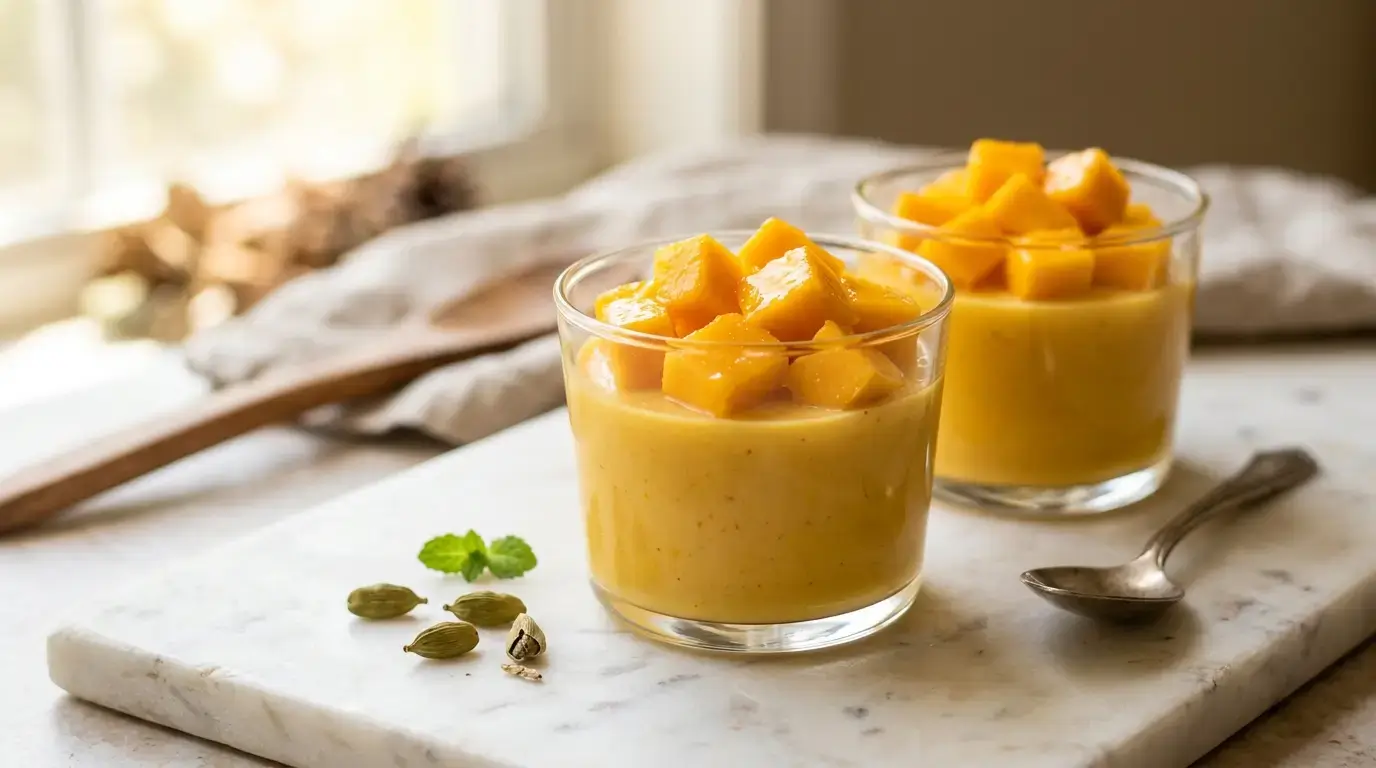
You’re scanning an ingredient list and you see it: gelatin. No source specified. No certification on the packaging. Just “gelatin.”
For Muslim consumers, this single word is one of the most common challenges in everyday grocery shopping — because gelatin shows up in hundreds of products, from gummy candy and marshmallows to yogurt, cream cheese, panna cotta, and even some soups. And the hard truth is that 60–80% of gelatin used in Western food products comes from pork.
This guide answers every question you need to navigate this confidently: what makes gelatin halal or haram, how to read labels and spot hidden gelatin, which sources are always safe, the best halal-certified alternatives, and a collection of halal gelatin recipes you can make at home right now.
What Is Gelatin and Why Does It Matter for Halal Diets?
Gelatin is a protein derived from collagen found in the skin, bones, and connective tissues of animals. When heated with water and processed, collagen breaks down into gelatin — a neutral, odorless protein that forms a gel when cooled.
Gelatin is used in food as a:
- Gelling agent (jelly, panna cotta, gummies, marshmallows, aspic)
- Stabilizer (yogurt, cream cheese, certain ice creams)
- Thickener (certain soups, sauces, glazes)
- Clarifying agent (some wines and juices)
- Capsule shell (most supplement softgels and capsules)
The halal concern is entirely about source. Gelatin itself as a substance is not inherently haram — but the animal it comes from, and how that animal was slaughtered, determines its permissibility under Islamic dietary law.
Is Gelatin Halal or Haram? The Complete Answer
The answer depends on three factors: the animal source, the slaughter method, and the production process.
Porcine Gelatin (From Pigs) — Always Haram
Pork is explicitly prohibited (haram) in Islam. Any gelatin derived from pigs — regardless of processing, transformation, or any scholarly argument about istihalah (transformation) — is considered haram by the majority of contemporary Islamic certification bodies including JAKIM (Malaysia), MUI (Indonesia), and ISNA (North America).
If a label says “gelatin” with no qualifier, assume porcine in Western countries. This is the default in most mainstream food manufacturing.
Bovine Gelatin (From Cows) — Conditionally Halal
Beef is permissible in Islam, but only when the animal is slaughtered according to zabiha (halal slaughter) requirements. Bovine gelatin from cows not slaughtered to halal standards is not permissible.
What to look for: Bovine gelatin must carry explicit halal certification from a recognized authority (JAKIM, MUI, AHF, IFANCA) to be considered halal. “Beef gelatin” alone on a label is not sufficient — it must specify halal-certified.
Fish Gelatin — Halal Across All Schools
Fish gelatin is the safest animal-derived option for Muslim consumers. In Islamic dietary law, fish does not require ritual slaughter (zabiha). Fish is permissible to consume regardless of how it was caught or processed, making fish gelatin halal across all major Islamic schools of thought without the certification complexities of bovine gelatin.
Fish gelatin is made from the skins and scales of fish — most commonly tilapia, cod, and pollock — and functions identically to pork or beef gelatin in recipes.
Plant-Based Alternatives — Always Halal
Agar agar, pectin, carrageenan, konjac, and other plant-derived gelling agents are inherently halal — they contain no animal products whatsoever. All plant-based gelatin alternatives are halal by default since they contain no animal products.
How to Identify Gelatin on Food Labels
Gelatin hides under several names. Know these terms:
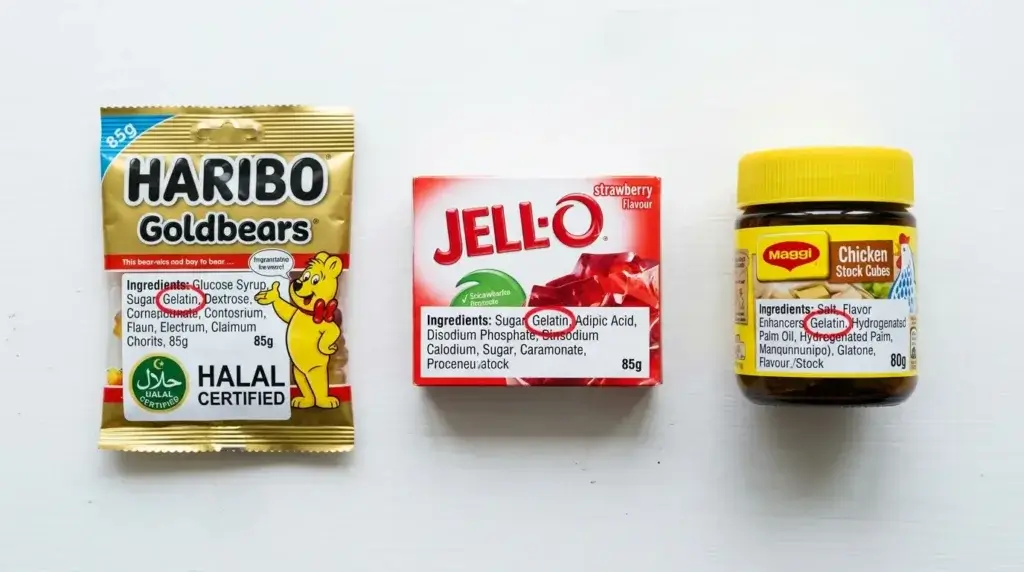
Direct names:
- Gelatin
- Gelatine (UK spelling)
- Hydrolyzed collagen
- Collagen peptides
E-code (European labels):
- E441 — this is gelatin on European ingredient lists
Associated products that almost always contain gelatin:
- Gummy candy and gummy vitamins
- Marshmallows
- Standard Jell-O and flavored gelatin desserts
- Many softgel supplement capsules
- Certain yogurts and cream cheese
- Fruit snacks and chewy candy
- Some packaged soups and broths
- Wine and juice fined with gelatin (may not appear on label)
When in doubt: Contact the manufacturer directly and ask for the gelatin source. Most major brands will tell you.
Halal Certification — What to Look For
A halal certification label from a recognized authority is the clearest signal that gelatin in a product is permissible. The most widely recognized certification bodies are:
- JAKIM — Malaysian Islamic Development Department
- MUI — Majelis Ulama Indonesia
- IFANCA — Islamic Food and Nutrition Council of America
- AHF — American Halal Foundation
- ESMA — UAE Standards Authority
Look for these symbols on packaging. A product labeled “beef gelatin” or “bovine gelatin” without one of these certifications is mushbooh (doubtful) — not safe to assume halal.
Best Halal Gelatin Options for Cooking
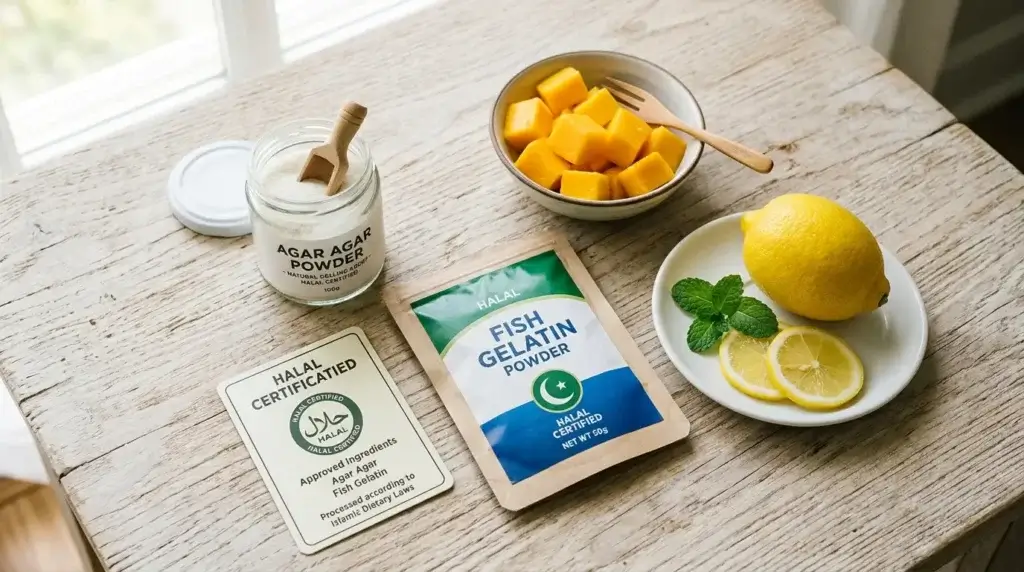
Option 1 — Fish Gelatin (Animal Gelatin — Halal Certified)
Fish gelatin is the closest functional equivalent to standard pork or beef gelatin. It:
- Works at a 1:1 ratio with any recipe calling for unflavored gelatin
- Produces the same jiggly, elastic, melt-in-your-mouth texture
- Dissolves and blooms using the same technique as standard gelatin
- Contains the same collagen amino acids (glycine, proline, hydroxyproline)
Best brands: Great Lakes Gelatin (fish version), Vital Proteins (check label for fish-derived options), specialty halal grocery brands
Slight trade-off: Fish gelatin has a marginally lower melting point than bovine gelatin, which produces a slightly more delicate set — often experienced as more luxurious and melt-in-mouth. Most home cooks find this a quality improvement rather than a drawback.
Option 2 — Halal-Certified Bovine Gelatin
Several brands produce specifically halal-certified beef gelatin with documentation from recognized halal authorities. This is a perfectly valid option — just verify the certification is from a body you trust.
Option 3 — Agar Agar (Plant-Based — Always Halal)
The most widely used halal gelatin alternative worldwide. Agar agar is derived from red seaweed, requires no certification, and is halal by nature. It sets more firmly than gelatin and at room temperature — no refrigeration required to set.
Full usage guide: vegan gelatin substitutes
Option 4 — Pectin (Plant-Based — Always Halal)
Best for jams, jellies, fruit preserves, and fruit-based desserts. Derived from apple and citrus peels. Requires sugar and acid to gel properly.
Halal Gelatin Recipes
Recipe 1 — Halal Fruit Jelly with Fish Gelatin
A classic jelly using fish gelatin — perfect texture, completely halal.
Ingredients (4 servings):
- 1 packet (7g) halal-certified fish gelatin or unflavored gelatin
- 2 cups 100% fruit juice (mango, pomegranate, or cranberry work beautifully)
- 1–2 tablespoons honey (optional)
Instructions:
- Sprinkle fish gelatin over ¼ cup cold juice. Let bloom for 5 minutes.
- Heat remaining juice until steaming (not boiling).
- Pour hot juice over bloomed gelatin. Stir 2 minutes until fully dissolved.
- Add honey if using. Stir to combine.
- Pour into a glass dish or individual molds.
- Refrigerate 3–4 hours until set. Cut into squares to serve.
Recipe 2 — Halal Mango Gelatin (Agar Agar Version)
A stunning, vibrant dessert using agar agar — no animal products required.
Print
Halal Gelatin – Complete Guide: What It Is, How to Identify It & Best Recipes
- Total Time: 10 minutes + 2 hours chilling
- Yield: 4 servings 1x
Description
A vibrant, creamy halal mango gelatin made with agar agar and coconut milk — no animal products, no certification needed. Completely permissible, stunning to serve, and ready in minutes.
Ingredients
- 1 cup fresh mango juice (or blended fresh mango, strained)
- 1 cup coconut milk
- 1 teaspoon agar agar powder
- 2 tablespoons sugar
- 1 pinch cardamom (optional)
Instructions
- Combine mango juice, coconut milk, agar agar powder, and sugar in a small saucepan
- Whisk together while cold — do not heat before combining
- Bring to a boil over medium heat, stirring constantly
- Simmer for 2 full minutes while stirring until agar is fully dissolved
- Add cardamom if using and stir to combine
- Pour into small glasses or silicone molds
- Let cool to room temperature for 20 minutes
- Refrigerate for 2 hours until fully set
- Serve chilled, optionally topped with fresh mango cubes
Notes
Always simmer agar agar for a full 2 minutes — underdissolved agar creates a grainy texture. For a firmer set, increase agar to 1¼ teaspoons. For a softer, more wobbly result, reduce to ¾ teaspoon. Agar sets at room temperature — no refrigeration required for the set itself, but chilling improves texture and flavor.
- Prep Time: 5 minutes
- Cook Time: 5 minutes
- Category: Dessert
- Method: Stovetop
- Cuisine: Halal / Middle Eastern / Asian
Nutrition
- Serving Size: 1 glass (approx. ½ cup)
- Calories: 120
- Sugar: 14g
- Sodium: 15mg
- Fat: 7g
- Saturated Fat: 6g
- Unsaturated Fat: 1g
- Trans Fat: 0g
- Carbohydrates: 16g
- Fiber: 0g
- Protein: 1g
- Cholesterol: 0mg
Keywords: halal gelatin recipe, halal mango gelatin, agar agar halal recipe, halal dessert gelatin, mango coconut agar agar
Ingredients (4 servings):
- 1 cup fresh mango juice (or blended fresh mango strained)
- 1 cup coconut milk
- 1 teaspoon agar agar powder
- 2 tablespoons sugar
- Pinch of cardamom (optional)
Instructions:
- Combine mango juice, coconut milk, agar agar, and sugar in a saucepan.
- Whisk together cold, then bring to a boil over medium heat, stirring constantly.
- Simmer for 2 full minutes, stirring continuously.
- Add cardamom if using. Stir to combine.
- Pour into small glasses or molds.
- Let cool to room temperature, then refrigerate 2 hours.
- Serve chilled — optionally topped with fresh mango cubes.
Recipe 3 — Halal Panna Cotta
A restaurant-quality dessert that’s completely halal using either fish gelatin or agar agar.
With fish gelatin: Ingredients (4 servings):
- 2 cups heavy cream
- 1 packet (7g) halal fish gelatin
- 3 tablespoons sugar
- 1 teaspoon vanilla extract
- 2 tablespoons cold water (for blooming)
Instructions:
- Bloom fish gelatin in cold water for 5 minutes.
- Heat cream and sugar over medium heat until steaming. Do not boil.
- Remove from heat. Add bloomed gelatin and stir until completely dissolved.
- Add vanilla. Stir.
- Pour into 4 ramekins or glasses.
- Cool to room temperature, then refrigerate 4 hours minimum.
- Serve with fresh berries or a fruit coulis.
Recipe 4 — Halal Gelatin Weight Loss Drink
Based on the popular gelatin trick recipe — using fish gelatin or halal-certified bovine gelatin.
Ingredients (1 serving):
- 1 packet (7g) halal fish gelatin OR halal-certified bovine gelatin
- 1 cup warm water (40°C / 104°F)
- Juice of ½ lemon
- 1 pinch pink Himalayan salt
- Stevia to taste (optional)
Instructions:
- Bloom gelatin in 2 tablespoons cold water for 5 minutes.
- Add warm water and stir until completely dissolved.
- Add lemon juice, salt, and sweetener.
- Drink warm 30 minutes before your main meal.
This is the halal version of the bariatric gelatin protocol — same mechanism, completely permissible ingredients. For the full science and variations, see our bariatric gelatin recipe guide.
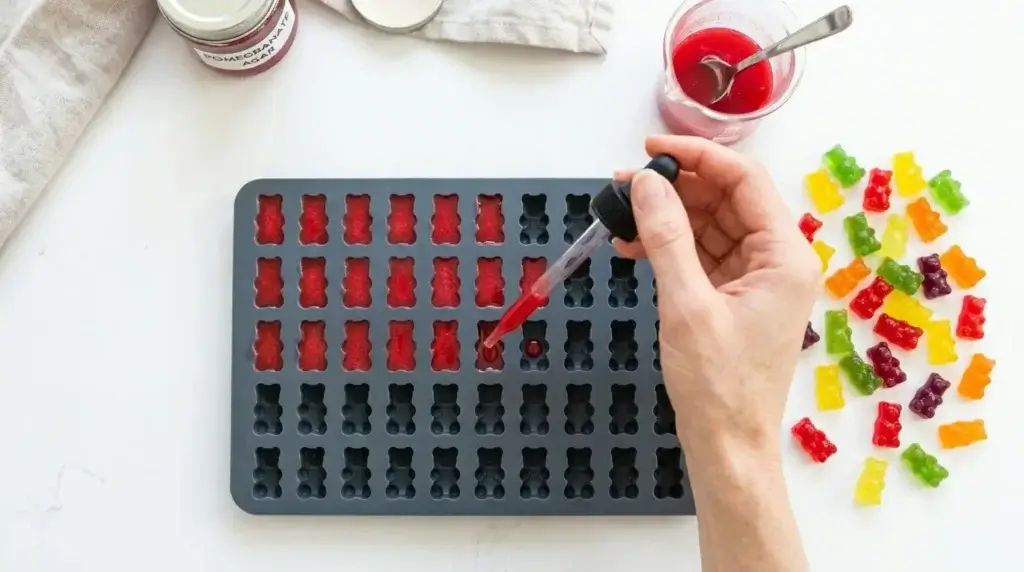
Recipe 5 — Halal Gummy Bears (Agar Agar)
Homemade halal gummies — better than store-bought and completely permissible.
Ingredients:
- 1 cup 100% fruit juice (any flavor)
- 1½ teaspoons agar agar powder
- 2 tablespoons honey or sugar
- 1 tablespoon lemon juice
Instructions:
- Combine all ingredients in a small saucepan. Whisk together.
- Bring to a boil over medium heat, stirring continuously.
- Simmer 2 minutes until fully dissolved.
- Working quickly, pour into silicone gummy bear molds using a dropper or small spoon.
- Refrigerate 30 minutes until firm.
- Pop out of molds and store in an airtight container in the fridge.
Note: Agar gummies are firmer than standard gummies. For slightly softer texture, reduce agar to 1¼ teaspoons.
Hidden Gelatin — Products to Check Every Time
These everyday products frequently contain gelatin that isn’t obvious:
Dairy products:
- Flavored yogurt (used as stabilizer)
- Cream cheese and certain soft cheeses
- Some whipped creams
To understand more about how gelatin is used therapeutically, see what is bariatric gelatin.
Candy and snacks:
- Gummy bears, worms, and rings
- Marshmallows
- Fruit snacks and chewy candy
- Certain licorice varieties
Desserts:
- Standard Jell-O and flavored gelatin mixes
- Certain pudding mixes
- Pre-made cheesecake and mousse
Supplements:
- Most softgel and gel capsules
- Many gummy vitamins
- Some protein powders
Beverages:
- Some wines (fined with gelatin — may not appear on label)
- Certain fruit juices (clarified with gelatin)
For all of the above, always check for a halal certification symbol or contact the manufacturer.
Comparing Halal Gelatin Options
| Option | Always Halal | Needs Certification | Tastes Like Gelatin | Plant-Based |
|---|---|---|---|---|
| Porcine gelatin | ❌ Haram | N/A | ✅ Yes | ❌ No |
| Bovine gelatin | ❌ Conditional | ✅ Required | ✅ Yes | ❌ No |
| Fish gelatin | ✅ Yes | Not required | ✅ Yes | ❌ No |
| Agar agar | ✅ Yes | Not required | Close (firmer) | ✅ Yes |
| Pectin | ✅ Yes | Not required | Softer set | ✅ Yes |
| Carrageenan | ✅ Yes | Not required | Creamier | ✅ Yes |
| Konjac | ✅ Yes | Not required | Chewier | ✅ Yes |
The simplest approach: Use fish gelatin when you want authentic gelatin texture, or agar agar when you want a completely plant-based option. Both are universally accepted as halal without requiring certification research.
Frequently Asked Questions
Is Knox gelatin halal?
Standard Knox unflavored gelatin is derived from pork and beef and is not halal-certified. It is not suitable for halal diets. For a halal version of any Knox recipe, substitute fish gelatin at a 1:1 ratio, or use our Knox gelatin guide recipes adapted with fish gelatin or agar agar.
Is Jell-O halal?
Standard Jell-O contains porcine gelatin and is not halal. Some halal-certified alternatives exist, such as plant-based dessert brands that use halal-friendly gelling agents.
Is bovine gelatin always halal?
No — bovine (beef) gelatin is only halal if the animal was slaughtered according to Islamic zabiha requirements and the production process avoided cross-contamination. Always look for halal certification.
Can I use agar agar in any recipe that calls for gelatin?
Almost any recipe, yes. The result will be slightly firmer and set at room temperature rather than requiring refrigeration. For most halal recipes, this is a non-issue — see the substitution guide in our vegan gelatin substitutes article.
Does fish gelatin taste fishy?
No — properly processed fish gelatin is odorless and tasteless, just like standard gelatin. It will not add any fish flavor to your recipes.
Is gelatin in medicines halal?
Most pharmaceutical capsules use porcine gelatin. Many scholars allow its use in cases of necessity when no halal alternative exists. For food products, halal alternatives are widely available.
What’s the easiest swap for gelatin in everyday cooking?
Fish gelatin for a similar texture at a 1:1 ratio, or agar agar as a plant-based option at a 1:1 ratio (powder form). Both are commonly available in halal stores and online.
The Bottom Line
Navigating gelatin in the kitchen as a Muslim consumer comes down to three clear strategies:
Option 1 — Use fish gelatin. Universally halal, works identically to standard gelatin, 1:1 ratio, no certification required. This is the simplest solution for any recipe that needs authentic gelatin texture.
Option 2 — Use agar agar. Plant-based, halal by nature, widely available, and works beautifully in the vast majority of gelatin recipes. Slightly firmer texture — often a plus.
Option 3 — Use halal-certified bovine gelatin. Valid, but requires verifying the certification is from a recognized authority. More research required, but perfectly permissible when properly certified.
For everyday cooking — jellies, desserts, mousse, panna cotta, gummies, and the gelatin weight loss recipes that have been trending — fish gelatin and agar agar cover everything you’ll ever need.
Related Articles
- Vegan Gelatin Substitutes – Complete Guide
- Knox Gelatin Guide – How to Use It & Best Recipes
- Gelatin Trick Recipe – The Viral 3-Ingredient Method
- Bariatric Gelatin Recipe – Complete Guide
- Unflavored Gelatin Recipe – How to Use It
- What Is Bariatric Gelatin?
- Gelatin vs Collagen for Weight Loss
This article is for informational and culinary purposes only. For specific religious rulings (fatawa), please consult qualified Islamic scholars or your local religious authority.