
Knox gelatin is an unflavored, animal-derived powdered gelatin used to set desserts and other foods. A typical envelope is about 7 g, and the brand gives a general starting point of one envelope for about two cups of liquid. Soften the powder in cold liquid, dissolve it thoroughly, then refrigerate according to the recipe.
Packet sizes and ratios · How to use Knox · Apple juice recipe · Why it will not set
This guide explains packet measurements, total-liquid ratios, blooming, troubleshooting and eight practical uses. It includes an apple juice gelatin recipe with measured ingredients and estimated nutrition. Results depend on the liquid, concentration, temperature and other ingredients; a general ratio does not guarantee the same texture in every dessert.
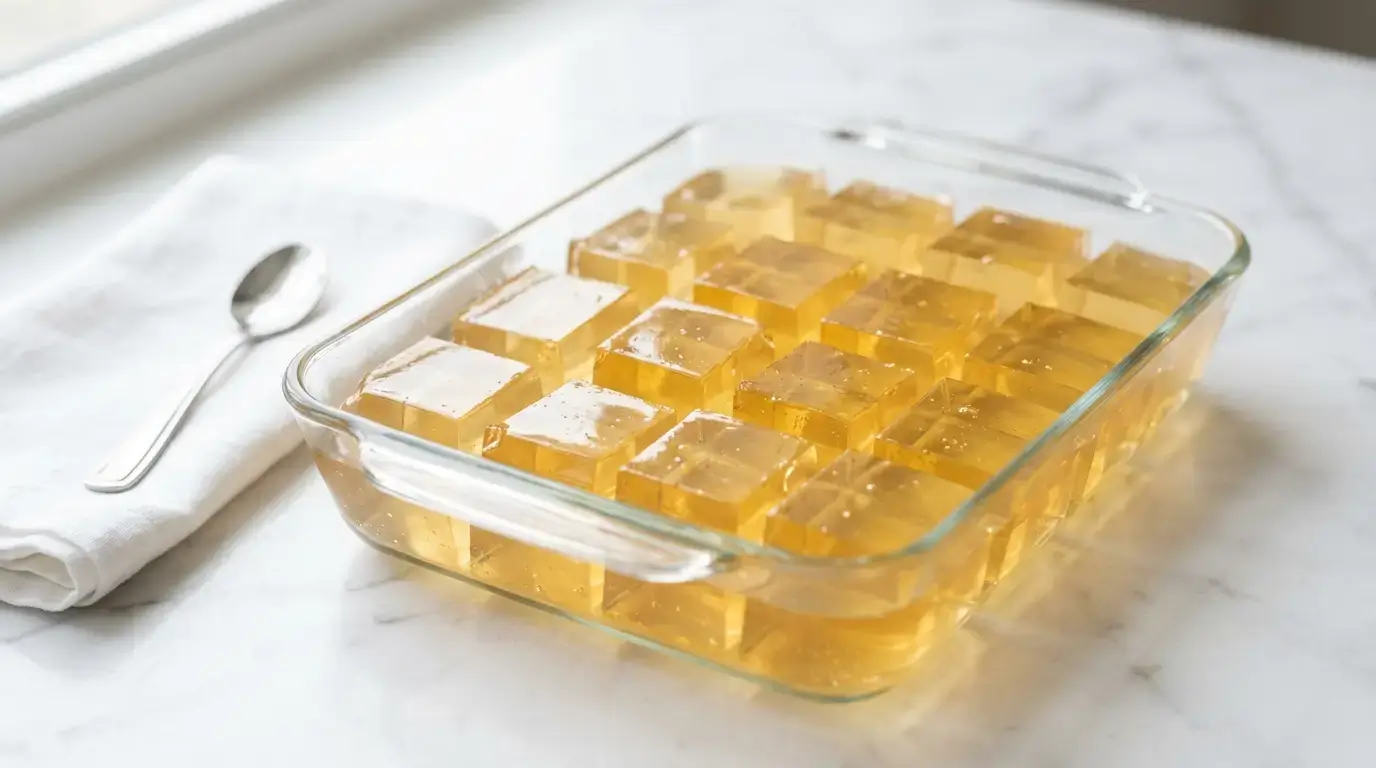
Knox Gelatin Measurements and Ratios
| Question | Useful reference | What to check |
|---|---|---|
| One envelope | About 7 g / 1/4 oz | Check the weight on your own package |
| General starting ratio | 1 envelope for about 2 cups liquid | Count cold blooming liquid within the total |
| Smaller batch | About 3.5 g for 1 cup liquid | Weigh a partial envelope rather than guessing |
| Firmer finish | Use a recipe written for molds or finger gelatin | Do not promise a clean slice from a soft-gel ratio |
| Cup conversion | 2 U.S. cups are about 475 mL | Some metric package directions use 500 mL; follow that recipe consistently |
The cold liquid used to hydrate gelatin is part of the recipe’s total liquid. If the recipe specifies two cups of juice, reserve part of those two cups for blooming instead of adding unmeasured water on top. For example, reserving 1/2 cup leaves 1 1/2 cups to heat; the total remains two cups.
A tablespoon is a volume measure, while grams measure weight. A packet is not an exact universal tablespoon conversion across all gelatin products. The Canadian E.D.SMITH Knox product page tells readers to use one packet when a recipe calls for one tablespoon of unflavored gelatine. This is that brand’s recipe guidance, rather than a precise volume measurement valid for every gelatin powder. When precision matters, follow the packet weight and the recipe’s stated product rather than treating those phrases as identical.
What Is Knox Unflavored Gelatin?
The plain product is used for its setting properties rather than a built-in fruit flavor. A flavored gelatin dessert mix can also include sweetener, colors, acids and flavorings, so its package weight cannot be swapped gram-for-gram with plain gelatin. Check the ingredient list on the product actually purchased.
Gelatin is processed from animal collagen and is different from collagen peptides sold as supplements. Both may appear as pale powders, but a collagen peptide product should not be assumed to set a dessert. The powder’s identity matters more than the appearance of the container.
An envelope gives a convenient measured amount, while a canister needs weighing or the manufacturer’s specified scoop. Do not assume every brand has the same gel strength or every market uses the same envelope size. A recipe tested with one product may need adjustment with another.
For a brand-independent preparation, see our basic unflavored gelatin recipe. This Knox guide focuses on packet measurements and product-specific checks; the general recipe explains the underlying culinary method.
Knox Gelatin vs Jell-O: Are They the Same?
“Knox jello” can mean a dessert made with plain Knox gelatin, but Knox unflavored powder and a flavored Jell-O dessert mix are different ingredients. A flavored mix supplies sweetness and flavor as well as its setting ingredient; plain gelatin lets you supply the juice, dairy or other base yourself. Do not replace an entire flavored packet with the same weight of plain Knox powder.
For the apple juice cups here, the measured juice supplies the flavor and sweetness. Use the stated envelope and total-liquid amounts rather than combining the instructions from a flavored dessert box with this plain-gelatin recipe.
How Does Gelatin Set?
After the granules hydrate and dissolve, cooling allows gelatin to form a network that holds liquid. The result depends on how much gelatin is present relative to the whole mixture. More powder can produce a firmer gel, but a very high concentration may give an unpleasantly rubbery texture.
Gelatin desserts also soften with warmth. They are not designed to hold the same shape indefinitely on a hot counter. This does not mean gelatin can never be used in a hot dish: it can contribute body to a broth or sauce, while the firm gel structure is a cooled result.
Fruit acids, alcohol, dairy, solids and other ingredients can change how a formula behaves. Use a recipe written for that combination rather than treating a two-cup starting ratio as a universal formula for cheesecake, mousse, gummies and every other dessert.
How to Bloom and Dissolve Knox Gelatin
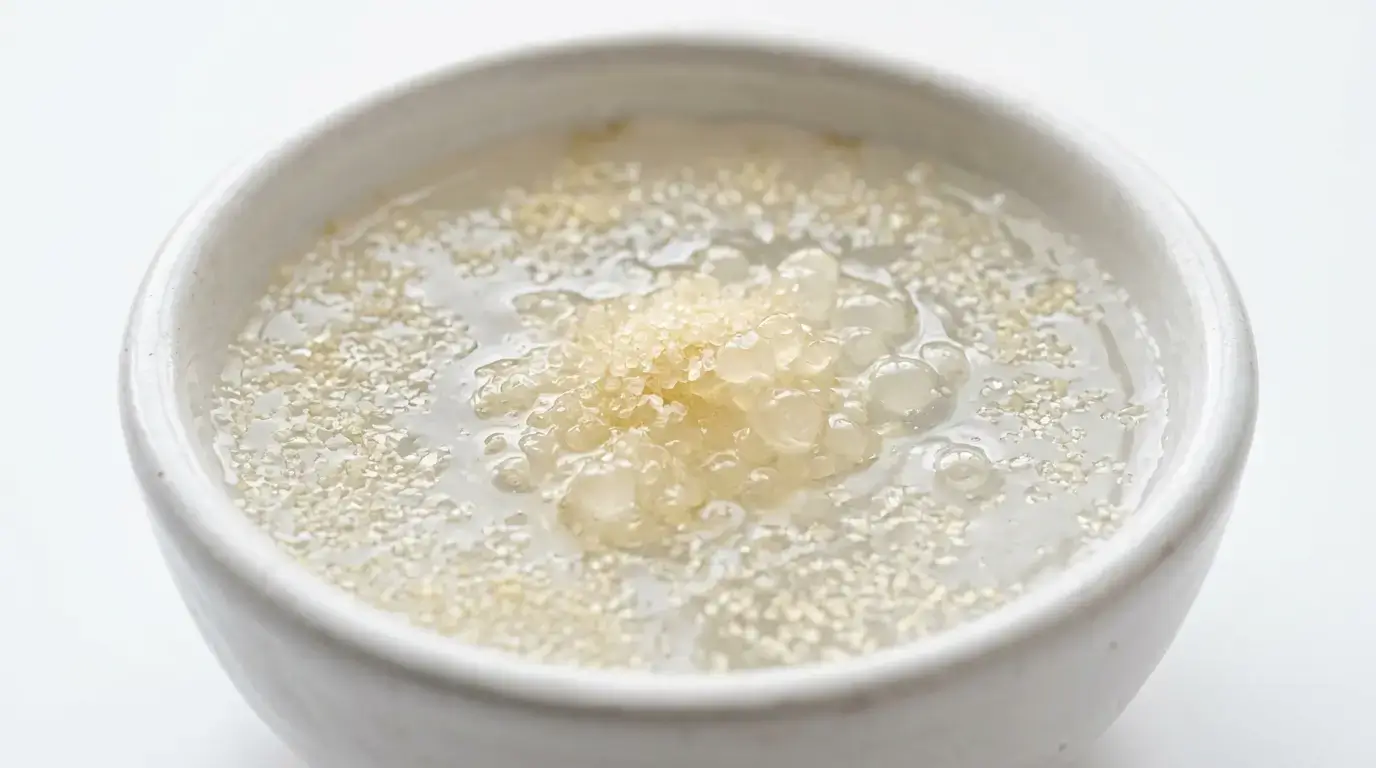
Blooming means hydrating dry gelatin before dissolving it. The amount of cold liquid and the resting time depend on the recipe. Knox’s current brand guidance describes sprinkling an envelope over 1/4 cup cold liquid; other published recipes reserve a larger amount from the total liquid.
1. Measure and Reserve the Liquid
Measure the entire liquid amount first. Put the recipe’s cold portion into a clean bowl, then set the rest aside for heating. This keeps a hydration step from accidentally changing the ratio.
2. Sprinkle the Powder Evenly
Scatter the granules over the cold liquid rather than dropping the whole packet into one mound. Give them time to absorb moisture according to the package or recipe. Look for hydrated granules rather than relying on a rigid five-minute rule for every preparation.
3. Dissolve Thoroughly
Add the hot portion or gently heat the bloomed mixture as directed. Stir until the granules dissolve. Do not assume liquid that merely feels warm will dissolve every gelatin preparation quickly. Check the mixture for remaining grains before proceeding.
4. Combine and Refrigerate
Add remaining ingredients as the recipe directs, then portion and refrigerate. Different containers and mixture volumes cool at different rates. A large mold needs a different setting plan from small cups, so use the recipe’s chilling guidance and check the result before unmolding.
For a more detailed technique walkthrough, use our step-by-step guide to blooming gelatin powder. When using Knox envelopes, use the measured packet weight discussed here rather than a generic tablespoon assumption.
Does Boiling Water Ruin Gelatin?
The old rule that boiling water always ruins gelatin is too absolute. Some manufacturer recipes use boiling liquid or a short boil as part of a specific formula. The useful distinction is between following a written method and repeatedly boiling gelatin for an extended period without a reason.
For the simple juice recipe below, heat the reserved juice until hot and steaming, then combine it with hydrated gelatin off the heat. That method does not require boiling the finished mixture. If a different recipe specifies boiling, follow its ingredient ratios and sequence rather than mixing instructions from two recipes.
A Basic Apple Juice Gelatin Recipe
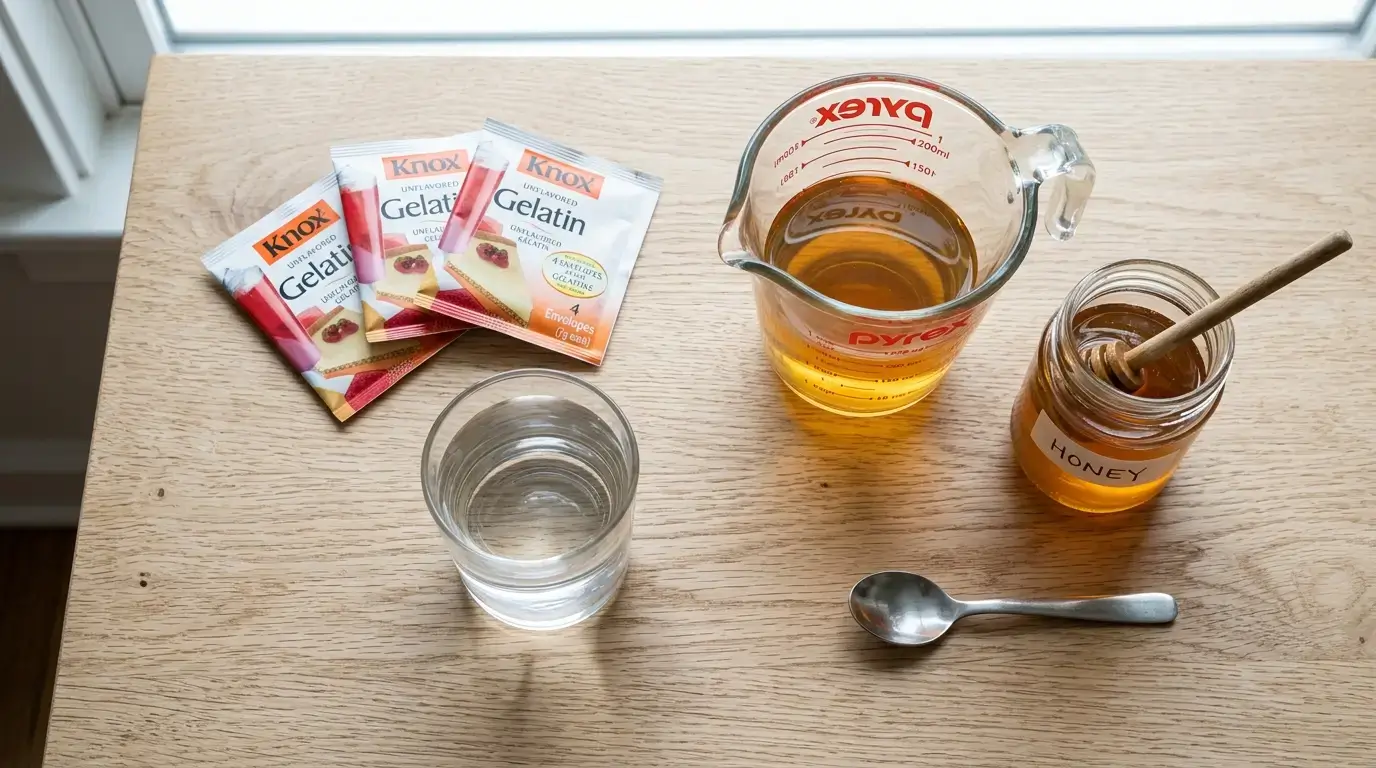
This version uses one 7 g envelope and two U.S. cups of 100% apple juice, with no extra water or sweetener. It makes four portions of approximately 1/2 cup before setting. Juice brands differ in sugar and calories, so the nutrition is an estimate for the stated version.
Reserve 1/2 cup of the juice cold and sprinkle the gelatin over it. Let it soften, then heat the remaining 1 1/2 cups juice until hot and steaming. Stir the hot juice into the hydrated mixture until dissolved. Divide between four small cups and refrigerate for about four hours, or until set.
This is a spoonable dessert starting point, not a promise of firm cubes you can pick up. For clean slicing or unmolding, use a recipe developed for that texture. Apple juice already contains sugars naturally; no added sugar does not mean sugar-free.
Print
Apple Juice Gelatin Cups with Knox
- Total Time: 4 hours 10 minutes
- Yield: 4 servings 1x
Description
Apple juice gelatin cups made with one measured envelope of unflavored gelatin and two cups of juice. Makes four spoonable dessert portions. Nutrition is estimated and depends on product labels.
Ingredients
- 1 envelope Knox unflavored gelatin, about 7 g
- 2 U.S. cups 100% apple juice (about 475 mL), divided into 1/2 cup cold juice and 1 1/2 cups juice for heating
Instructions
- Measure two cups of apple juice. Reserve 1/2 cup cold in a bowl and place the remaining 1 1/2 cups in a small saucepan.
- Sprinkle the gelatin evenly over the cold juice. Let it hydrate for about 3–5 minutes or according to the package.
- Heat the remaining juice until hot and steaming. Remove from heat.
- Stir the hot juice into the hydrated gelatin until the granules dissolve completely.
- Divide into four small dessert cups. Refrigerate for about 4 hours or until set.
- Serve chilled as a spoonable dessert. This ratio does not guarantee firm, sliceable cubes.
Notes
The cold juice counts within the total two cups; do not add extra unmeasured water. No extra sweetener is used, but apple juice contains sugars. Estimated nutrition assumes about 120 calories per cup of juice and about 25 calories per gelatin envelope. Labels vary. For a halal recipe, use certified suitable gelatin; do not assume ordinary Knox is halal. This exact formula is not vegetarian or vegan. Use a separate recipe for firm finger gelatin. Refrigerate promptly and use within about three days as a conservative home meal-prep plan.
- Prep Time: 10 minutes
- Chilling: 4 hours
- Cook Time: 0 minutes
- Category: Dessert / Snack
- Method: Heating and chilling
- Cuisine: American
Nutrition
- Serving Size: 1 dessert cup (one-quarter batch)
- Calories: 65
- Sugar: 14g
- Sodium: 5mg
- Fat: 0g
- Saturated Fat: 0g
- Unsaturated Fat: 0g
- Trans Fat: 0g
- Carbohydrates: 15g
- Fiber: 0g
- Protein: 1.5g
- Cholesterol: 0mg
Keywords: knox gelatin recipe, knox unflavored gelatin, how to use knox gelatin, knox gelatin dessert, homemade gelatin recipe
Eight Ways to Use Knox Gelatin
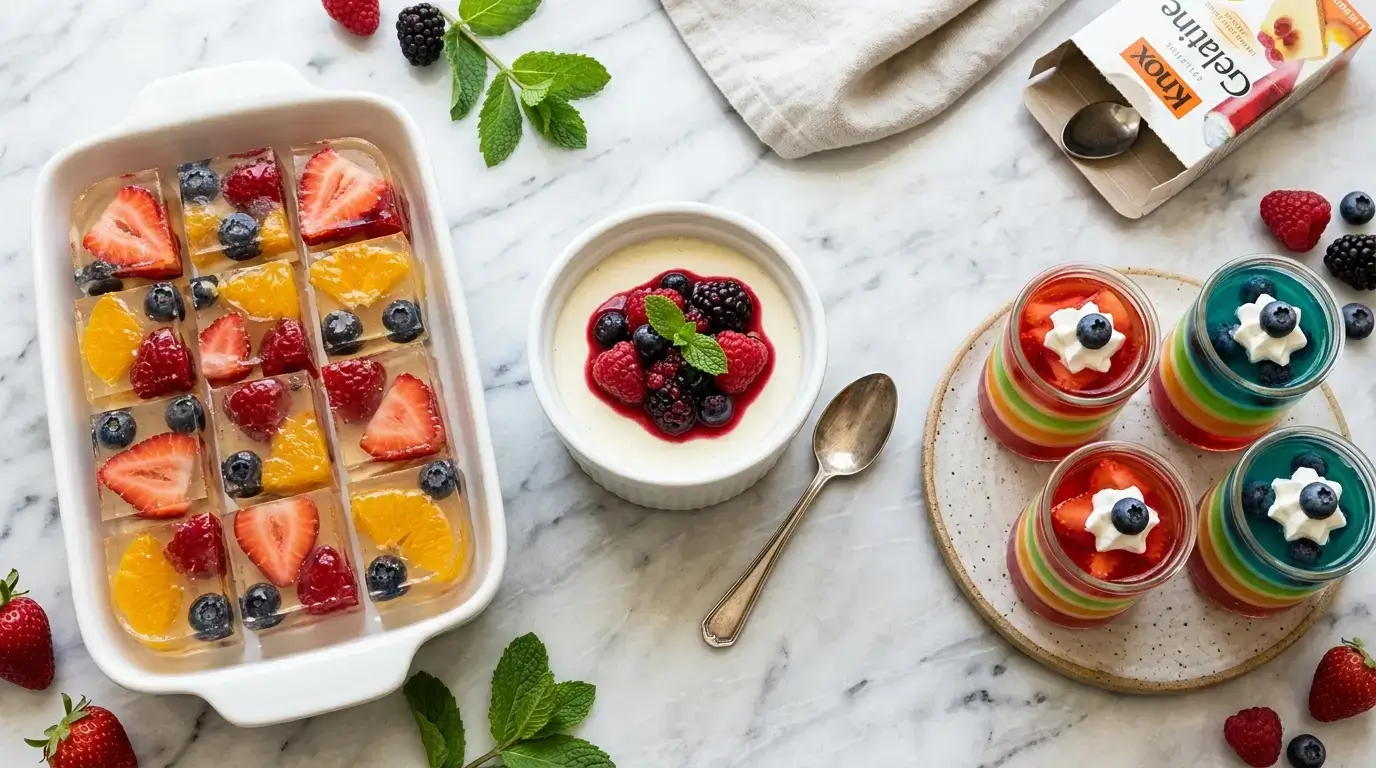
1. Fruit Juice Gelatin Cups
Start with the measured apple juice recipe above. For another juice, check its ingredients and processing, and use a formula appropriate for it. Changing the juice changes the flavor and nutrition; adding a fruit puree can also change the texture.
2. Firm Finger Gelatin
Finger-food gelatin uses a firmer formula than a spoonable dessert. Some recipes combine plain and flavored gelatin, so both contribute to the finished structure. Do not replace a flavored packet with the same weight of Knox powder. Use an established finger-gelatin recipe and keep the batch size and dish consistent.
3. Panna Cotta
Cream or milk desserts need enough gelatin to set while retaining a soft texture. Select a panna cotta recipe that states its dairy volume, powder weight and intended serving style. A dessert served in a glass can be softer than one that must unmold neatly onto a plate.
4. No-Bake Cheesecake
A cheesecake filling includes cream cheese, sugar and often cream, so its structure is not controlled by liquid volume alone. Dissolve the gelatin first and combine it using the recipe’s tempering sequence. Pouring a small hot mixture into very cold dairy can create uneven setting or strings.
5. Layered Fruit Gelatin
Allow each layer to become stable enough to hold the next one, then add the next mixture after it has cooled appropriately. A very hot second layer may melt the first. Letting a layer become excessively dry or fully separated can also make layers slide apart, so follow the particular layered recipe.
6. Milk Gelatin
A milk-based preparation offers a different flavor and texture from juice gelatin. Use pasteurized milk and a recipe written for the dairy or plant beverage chosen. Sweetened condensed milk adds sugar and changes the mixture; it is not interchangeable with plain milk.
7. Savory Broth Gelatin
Gelatin can give body or structure to a savory broth preparation. Natural gelatin already present in a broth affects the finished set, so a very concentrated stock may need a different addition from a thin packaged broth. Use cooked fillings and refrigerate the dish safely.
8. Alcohol-Free Party Gelatin Cups
Small juice-based cups can be served as a dessert without spirits or other alcohol. Use a measured juice recipe and an appropriate setting ratio instead of adding extra liquid to a finished formula. Choose alcohol-free flavorings if that is part of your dietary requirements.
Why Is My Gelatin Not Setting?
| Symptom | Possible issue | What to check first |
|---|---|---|
| Still liquid after adequate chilling | Incorrect ratio, short chilling time or interfering ingredient | Total liquid, packet weight and fruit used |
| Visible grains or lumps | Incomplete hydration or dissolution | Whether the powder hydrated and dissolved before chilling |
| Rubbery result | Too much gelatin relative to the mixture | Weighed powder and batch size |
| Layers mixing together | Next layer added too hot or too soon | Layer temperature and recipe timing |
| Dessert softens on the table | The preparation warms during serving | Serving conditions and portioning |
Diagnose before adding another packet. If the problem is an enzyme-active ingredient or a large amount of uncounted liquid, more chilling alone may not fix it. If a batch was stored unsafely, reheating and resetting it does not make it safe.
A gelatin mixture can sometimes be gently remelted and reset, but that is a texture adjustment, not a universal rescue. A recipe with dairy, fruit or other delicate ingredients may not tolerate reheating well. Start with the simplest explanation: wrong amount, undissolved powder or not enough refrigerator time.
Which Fruits Can Interfere with Gelatin?
Fresh pineapple, papaya and kiwi are familiar examples of fruits whose enzymes can interfere with a gelatin set. Other ingredients may also cause problems. Avoid the blanket claim that every other fresh fruit always works, and choose a recipe tested for the fruit being used.
Heat processing can help deactivate interfering enzymes, which is why cooked or canned fruit may behave differently from raw fruit. A frozen raw fruit is not automatically equivalent to a cooked or canned one. Processing, quantity and the recipe still matter.
Can I Substitute Gelatin Sheets, Collagen or Agar?
Sheet gelatin varies in size and strength, so counting sheets alone can be misleading. Use a weight and gel-strength conversion appropriate to the product. Our gelatin sheets versus powder guide explains what to compare before substituting.
Collagen peptides are not a direct dessert-setting substitute for gelatin. If the package says collagen peptides or hydrolyzed collagen, do not assume it will create the same chilled gel. Verify the ingredient intended by the recipe.
Agar is a different gelling ingredient with different preparation and texture. It is not a gram-for-gram substitute that follows the same blooming method. Use our agar versus gelatin comparison to choose a formula appropriate to the ingredient.
Is Knox Gelatin Vegetarian, Halal or Kosher?
Conventional gelatin is animal-derived and is not vegetarian or vegan. The word unflavored does not establish the animal source, certification or dietary suitability. Check the current package sold in your market and contact the manufacturer when the source is not clear.
Do not assume standard Knox meets a halal or kosher requirement without a relevant current certification. For a halal preparation, select certified suitable gelatin and other ingredients, with no pork or alcohol. Our halal gelatin guide explains the sourcing checks.
If the label’s animal source is your main question, read our guide to gelatin and pork sourcing. That question is separate from whether a particular packet sets a recipe well.
Storage and Serving Tips
Store dry powder according to the package in a cool, dry place, protected from moisture. Use its date and manufacturer guidance instead of claiming every gelatin packet lasts indefinitely. A damp or damaged package is a different situation from a properly stored one.
Refrigerate prepared gelatin desserts promptly, especially when they contain dairy, cooked meat or perishable fruit. Keep them covered and chilled until serving. Follow the storage advice for the most perishable ingredient in the recipe rather than applying one shelf-life claim to all gelatin dishes.
The apple juice cups are best prepared in clean individual containers and used within about three days as a conservative home meal-prep plan. Keep the refrigerator at 40°F/4°C or colder. Freezing can change a gelatin dessert’s texture, so use refrigeration for the standard version.
Does Knox Gelatin Cause Weight Loss?
Knox is a culinary setting ingredient, not a weight-loss medication. The energy content of a gelatin dessert depends on its juice, sugar, dairy and serving size. A dessert made without extra sweetener can still contain substantial sugar from fruit juice.
There is no required pre-meal timing or brand-specific slimming protocol in this guide. Use gelatin when you enjoy the food and its texture, while planning meals according to your overall nutritional needs. A homemade gelatin dessert is not automatically suitable for every postoperative or medically prescribed diet.
FAQS
How much Knox gelatin is in an envelope?
A typical envelope contains about 7 g, or 1/4 oz. Check the package in your market. For partial quantities, weighing is more reliable than assuming an exact tablespoon conversion.
How much liquid does one envelope set?
The brand gives a general starting point of one envelope for about two cups of liquid. The result depends on the recipe and ingredients, and the cold blooming liquid counts within the total.
Do I have to bloom Knox gelatin?
Use the hydration step required by the recipe or package. Sprinkling powder over cold liquid before dissolving it is a common method that helps avoid clumping.
Does boiling water always ruin gelatin?
No. Some manufacturer recipes use boiling liquid or a short boil. Follow the formula and sequence instead of applying a universal rule or boiling a mixture for a long time without a reason.
Can I replace a flavored gelatin packet with Knox?
Not gram-for-gram. A flavored dessert mix contains additional ingredients. Use a recipe written for plain gelatin and supply the required flavoring and sweetness.
Why is my gelatin still liquid?
Check the powder amount, total liquid, dissolution, chilling time and ingredients such as raw enzyme-active fruit. More chilling cannot correct every formulation problem.
Is Knox suitable for a halal or vegetarian diet?
Conventional gelatin is animal-derived and is not vegetarian. Halal suitability requires an appropriate current certification and ingredient checks; do not infer it from the word unflavored.
Are the apple juice cups sugar-free?
No. They use no extra sweetener, but apple juice contains sugars. Estimated nutrition applies only to the stated juice recipe and portion.
Is Knox gelatin the same as Jell-O?
Plain Knox gelatin is an unflavored setting ingredient. A flavored gelatin dessert mix also supplies sweetness, flavor and other ingredients. They are not interchangeable gram-for-gram; follow a recipe written for the product you are using.
Sources and Recipe Notes
Check the Knox product guidance and brand preparation notes against your package. U.S. manufacturer recipes are available through Kraft Heinz Knox. The Kraft Heinz fruit jellies recipe illustrates why a rule forbidding boiling in every gelatin formula is inaccurate. For technique, see King Arthur Baking’s gelatin guide.
Nutrition for the apple juice recipe is an ingredient-based estimate, not a laboratory measurement. It assumes about 120 calories per cup of apple juice and about 25 calories per envelope of gelatin; divided into four portions, the result is approximately 65 calories per serving. Check your own juice and gelatin labels.
1 thought on “Knox Gelatin: Packet Sizes, Ratios & How to Use It”