
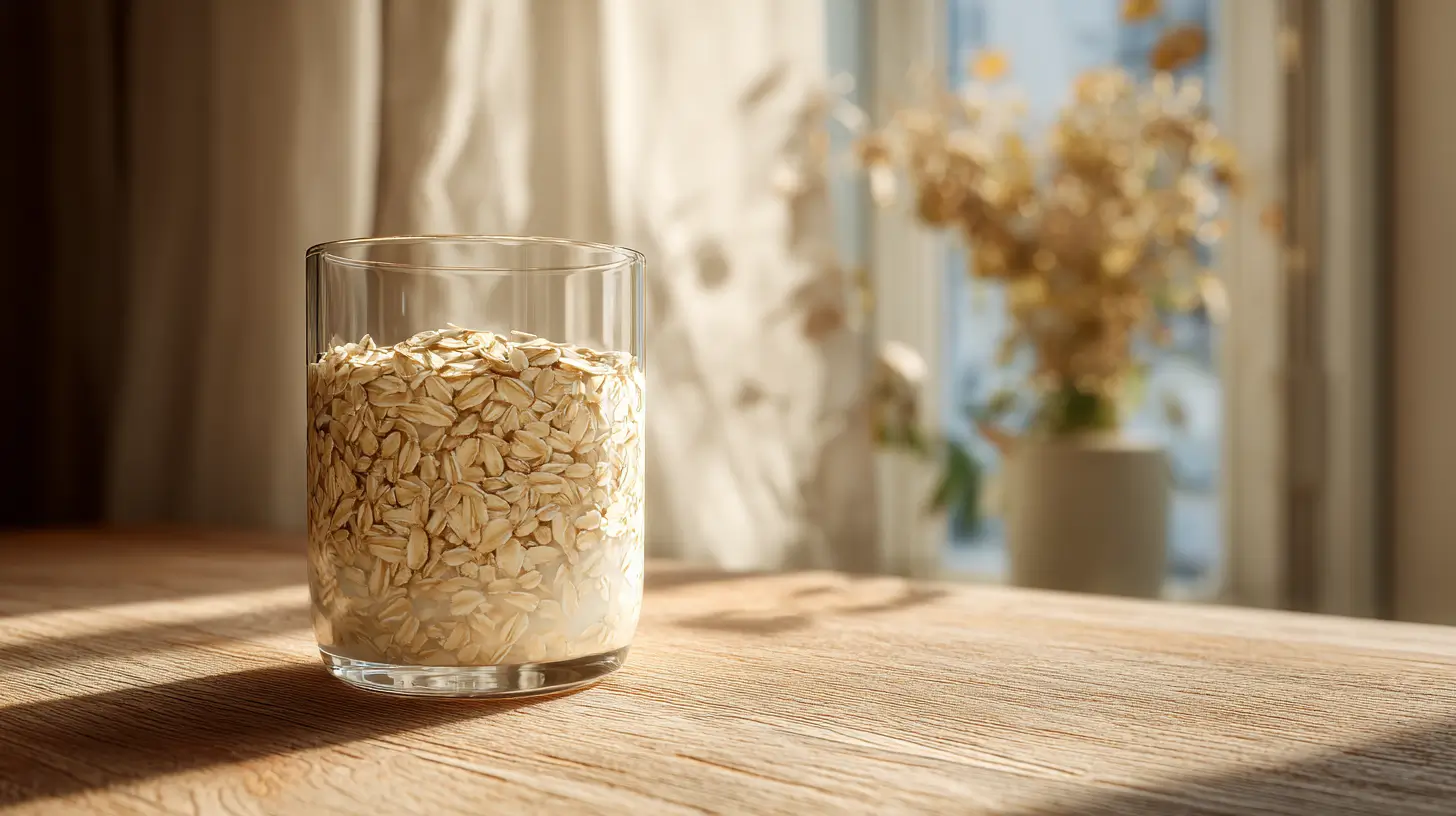
The oat trick for weight loss has quickly become one of those wellness trends that seem to appear everywhere at once. One day it’s a short video on social media, the next it’s a breakout search query with people asking what it is, how to make it, and whether it actually makes sense. At first glance, the idea looks almost too simple: oats, water, and a routine that feels more like a habit than a diet. Some users are also searching specifically for the so-called Valerie Bertinelli oat trick for weight loss, linking the trend to well-known public figures and everyday wellness discussions.
This growing interest isn’t happening in isolation. Over the past few years, fiber-based drinks and minimalist food “tricks” have gained attention because they’re easy to understand and don’t require expensive products or complicated plans. The oat trick fits perfectly into that pattern, which explains why curiosity has spread so fast from platforms like TikTok to Google searches.
In this article, we’ll break down exactly what the oat trick is, why it’s trending right now, how the basic recipe is prepared, and how people believe it may support weight-related goals. We’ll also look at what nutrition experts generally say about oats, discuss safety considerations, and compare the oat trick to other viral drinks—without hype, promises, or medical claims.
Like other fiber-based wellness drinks such as chia seed water and chia jello, the oat trick has quickly gained attention for its simplicity.
What Is the Oat Trick?
The oat trick for weight loss is a simple food habit that centers on consuming oats in a liquid or semi-liquid form, usually prepared with water. Despite the name, it’s not a secret formula or a special product. Instead, it’s a basic use of a familiar grain that many people already have in their kitchen.
At its core, the oat trick is about simplicity. People who follow it aren’t counting calories, buying supplements, or following a strict plan. They’re usually adding a small oat-based drink or mixture to their routine, often at the start of the day or before meals, because it feels easy and manageable.
Simple Definition of the Oat Trick
In plain terms, the oat trick refers to soaking or blending oats with water and consuming the mixture as a drink or soft porridge. The focus isn’t on taste or variety but on consistency. Many see it as a practical habit rather than a “diet move,” which helps explain why it’s framed as a trick instead of a program.
What the Oat Trick Actually Involves
What people actually do with the oat trick is straightforward:
- Use plain oats, usually rolled oats
- Combine them with water
- Let them soak or blend them until soft
- Drink or eat the mixture as part of a normal day
There’s no universal timing or rulebook. Some include it in the morning, others before meals, and some simply add it whenever it fits their schedule. That flexibility is a big part of its appeal, especially compared to more rigid eating plans.
What the Oat Trick Is NOT
Just as important, the oat trick is not a medication, a detox, or a weight loss cure. It’s not a prescribed diet, and it doesn’t promise rapid or guaranteed results. There’s no claim that it “melts fat” or replaces balanced meals. In reality, it’s simply one way people choose to consume oats, nothing more.
This distinction matters because much of the online confusion comes from exaggerated expectations. The oat trick is best understood as a routine choice, not a miracle solution.
Why Is the Oat Trick Trending Right Now?
The rise of the oat trick for weight loss didn’t happen overnight. Instead, it followed a familiar pattern seen with many recent wellness trends, similar to drinks like miracle weight loss drink recipe: a simple idea, easy to explain in a short video, gradually turning into a high-volume search topic. Once people started looking it up on Google, the trend moved beyond social media curiosity and into mainstream attention.
Rise of the “Oat Trick Recipe” Search Trend
One of the clearest signals of interest is the surge in searches for “oat trick recipe.” This tells us something important. People aren’t just watching videos for entertainment—they’re actively trying to understand how the oat trick is made and how it fits into everyday life. Recipes, even very basic ones, often act as the bridge between curiosity and action.
Unlike complex meal plans, the oat trick feels approachable. That simplicity lowers the barrier to entry, which helps explain why search interest has grown so quickly.
Social Media, Short Videos, and Search Demand
Platforms like TikTok, Instagram Reels, and YouTube Shorts play a major role in shaping food trends today. Short videos that show oats soaking, blending, or being poured into a glass are easy to replicate and easy to share. As more creators post their versions, viewers naturally turn to search engines to verify what they’re seeing.
This same viral pattern has been observed with other popular drink trends that move from social feeds to Google once people want more detailed explanations and context.
Contextual Mentions and Media Influence
Part of the trend’s momentum also comes from indirect media associations. Public figures like Valerie Bertinelli have been linked in online discussions about oats, balanced eating, and everyday food choices. While these mentions don’t promote the oat trick itself, they often spark renewed interest in familiar ingredients like oats.
At the same time, nutrition-focused conversations sometimes reference plant-based doctors such as Neal Barnard, especially when discussing fiber-rich foods. These references add credibility to the ingredient—oats—without making promises about the trend.
Valerie Bertinelli and the oat trick for weight loss
Valerie Bertinelli is often mentioned in online discussions related to balanced eating, weight management, and simple everyday food habits.
As a public figure who has openly spoken about her relationship with food and long-term weight changes, her name is frequently associated with search queries such as Valerie Bertinelli oat trick and Bertinelli oat trick weight loss.
It is important to clarify that Valerie Bertinelli has not created an official “oat trick” program.
However, her public interviews and lifestyle content often emphasize practical, realistic food choices and a healthier relationship with eating rather than strict diets or short-term solutions.
This is one of the reasons why her name appears in connection with oat-based trends.
Oats are widely viewed as a simple, affordable, and familiar food, and they fit naturally into the type of balanced routine that is commonly discussed in conversations about long-term weight management.
In this context, the expression Valerie Bertinelli oat trick for weight loss reflects public interest in linking well-known wellness voices with everyday habits such as increasing fiber intake through foods like oats, rather than a specific recipe or endorsed method.
Oat Trick Recipe (Simple Version)

The popularity of the oat trick for weight loss is closely tied to how easy the recipe appears online. There’s no long ingredient list, no special equipment, and no cooking skills required. That simplicity is exactly what draws people in and encourages them to try it at home. Simple grain-based drinks such as the oat trick or traditional options like buckwheat tea are often part of everyday routines rather than strict diets.
Basic Ingredients Used in the Oat Trick
Most versions of the oat trick rely on just one main ingredient: plain oats. Rolled oats are the most commonly mentioned because they soften easily and are widely available. Water is typically used as the liquid, keeping the mixture neutral and uncomplicated.
Some online variations mention optional additions like cinnamon or lemon for flavor, but the core recipe usually sticks to oats and water. This minimalism helps frame the oat trick as an everyday habit rather than a special preparation.
Simple Preparation Method
The preparation process is intentionally straightforward. In most cases, people either soak the oats in water for a period of time or blend them until the texture becomes smooth or drinkable. The goal isn’t culinary perfection but convenience.
Once prepared, the mixture is consumed as a drink or soft porridge. There’s no fixed timing rule attached to the recipe, which adds to its flexibility. People fit it into their routine in whatever way feels easiest, whether that’s in the morning or between meals.
Variations Seen Online (Without Recommendations)
As with most viral trends, variations naturally appear. Some versions use warmer water, others let the oats soak longer, and some blend the mixture completely smooth. A few even combine oats with other grains or ingredients, though these adaptations go beyond the simplest form of the oat trick.
It’s important to note that these variations are observations, not recommendations. The trend doesn’t have an official recipe, and there’s no evidence that one version is better than another. What stays consistent is the focus on oats, simplicity, and routine rather than strict rules.
Oat Trick for Weight Loss – How Is It Supposed to Work?

Unlike structured approaches such as GLP-1 recipes for weight loss, the oat trick is not presented as a medical protocol or a clinically guided method. When people talk about the oat trick for weight loss, they’re usually referring to how oats behave in the body rather than any special effect. The explanation shared online is generally simple and focuses on everyday food properties, not medical mechanisms or guaranteed outcomes.
Role of Fiber in Everyday Foods
Oats are naturally rich in fiber, especially soluble fiber. Fiber is often discussed in nutrition because it slows down digestion and adds bulk to meals. In the context of the oat trick, this fiber content is the main reason people believe it may be helpful as part of a routine.
Rather than changing what someone eats overall, the oat trick is often described as a way to add fiber early in the day or before meals, using a form that’s easy to consume.
Satiety, Texture, and Volume Explained
Another commonly mentioned idea behind the oat trick is satiety, or the feeling of fullness. When oats absorb water, they expand and create volume. That thicker texture can make the drink or mixture feel more filling than its ingredient list suggests.
This is why many people describe the oat trick as something that helps them feel satisfied for longer periods. It’s not about suppressing appetite but about how texture and volume can influence how full someone feels after consuming it.
How It Fits Into a Normal Eating Routine
Unlike structured approaches such as GLP-1–based plans or strict dietary protocols, the oat trick is not positioned as a medical or clinical method. Instead, it’s usually framed as a small, repeatable habit that fits alongside regular meals.
People who try it often do so without changing the rest of their diet dramatically. That’s part of the appeal: the oat trick doesn’t demand rules, restrictions, or tracking. It simply becomes one more element in a normal day, which is why many see it as approachable rather than intimidating.
What Doctors and Nutrition Experts Say About the Oat Trick
When the oat trick for weight loss is discussed from a professional point of view, most doctors and nutrition experts shift the focus away from trends and back to fundamentals. Instead of commenting on the “trick” itself, they usually talk about oats as a food and how fiber-rich ingredients fit into everyday eating patterns.
Why Fiber Is Often Highlighted by Nutrition Experts
Nutrition professionals frequently emphasize fiber because it plays a role in digestion and meal satisfaction. Foods that contain soluble fiber, like oats, are commonly included in general dietary advice because they help create a sense of fullness and slow digestion.
From this perspective, the oat trick isn’t viewed as something new or revolutionary. It’s simply another way people are choosing to consume a familiar, fiber-containing food in liquid or semi-liquid form.
General Medical Views on Oats
Oats have long been part of standard dietary recommendations in many cultures. Doctors and dietitians often describe them as a neutral, accessible grain that can fit into a wide range of eating styles. Whether eaten as porridge, baked goods, or soaked in water, oats are generally discussed as a food choice, not a treatment.
This is an important distinction. Medical professionals tend to evaluate oats based on their nutritional profile, not on viral claims attached to them.
What Experts Do Not Promise
What experts consistently avoid are guarantees. There are no promises of rapid weight loss, no claims that oats alone change metabolism, and no suggestions that a single drink can replace balanced meals. The oat trick is not positioned as a cure or a shortcut.
Instead, professionals usually remind people that trends come and go, while sustainable habits matter more. In that sense, the oat trick may be seen as harmless for some, but it’s not considered a standalone solution or a medical recommendation.
Is the Oat Trick Safe?
As with any food trend, questions about safety naturally come up around the oat trick for weight loss. While oats themselves are a common and familiar food, how they’re consumed—and how often—can make a difference in how the body reacts. Unlike unsafe trends discussed in topics such as the baking soda weight loss myth, oats are a familiar food that many people already consume regularly when used in moderation.
Portion Awareness and Moderation
One of the key safety points experts usually emphasize is moderation. Even simple foods can cause discomfort when consumed in large amounts. The oat trick doesn’t require oversized portions to fit into a routine, and most people who try it keep the serving relatively small.
Because the trend doesn’t come with official guidelines, portion sizes vary widely online. That’s why moderation is often mentioned as a common-sense approach rather than a strict rule.
Digestion and Common Discomforts
Oats are high in fiber, and increasing fiber intake too quickly can sometimes lead to bloating or digestive discomfort. This isn’t unique to the oat trick—it’s something people experience whenever they add more fiber to their diet in a short period of time.
For many, easing into fiber-rich foods and paying attention to how their body responds is more important than following any viral routine exactly.
Oats, Gluten, and Sensitivities
Although oats are naturally gluten-free, cross-contamination can occur during processing. People with gluten sensitivity or celiac concerns often look for certified gluten-free oats when trying any oat-based habit.
This consideration isn’t specific to the oat trick, but it becomes relevant because the trend involves consuming oats in a more concentrated or frequent way than usual.
Common Mistakes Seen Online
One issue that appears repeatedly online is treating the oat trick as a replacement for meals or as a guaranteed path to results. Skipping meals, over-consuming oats, or combining the trend with extreme restrictions are misunderstandings that can create unnecessary problems.
When viewed simply as one small food habit—not a rule or a requirement—the oat trick is generally discussed as familiar rather than risky. The key is keeping expectations realistic and habits balanced.
Oat Trick vs Other Viral Weight Loss Drinks

As interest in the oat trick for weight loss has grown, it’s often compared to other viral drinks that circulate online. These comparisons usually come from people trying to understand whether one “trick” is better than another or if they all follow the same pattern. In reality, most of these drinks are built around a single ingredient and a simple idea.
Oat Trick vs Chia Water
Chia water is frequently mentioned alongside the oat trick because both rely on fiber and texture. Chia seeds swell when mixed with water, creating a gel-like consistency that many people associate with fullness. The oat trick, by contrast, produces a thicker, grain-based texture rather than a gel.
While both are discussed in terms of satiety, the main difference lies in the ingredient itself. Oats are a grain commonly eaten in meals, whereas chia seeds are usually added in small amounts as a supplement-like ingredient.
Oat Trick vs Okra Water
Okra water is another trend that shows up in the same conversations. Like oats, okra releases soluble fiber when soaked, which changes the texture of the water. However, okra water is often described as more about texture than nourishment.
The oat trick tends to feel more like a food-based habit because oats are already part of many diets. That familiarity can make it easier for some people to try compared to soaking vegetables in water.
Compared to drinks discussed in guides about okra water benefits, the oat trick is more often framed around fiber intake rather than texture alone.
Oat Trick vs Pink Salt and Other “Tricks”
Some viral drinks focus on minerals rather than fiber, such as pink salt mixtures or lemon-salt water. These trends usually center on hydration or electrolyte claims rather than fullness.
Compared to those, the oat trick stands out because it’s built around a whole food instead of an additive. That doesn’t make it better or worse, but it does explain why it’s often grouped with fiber-based drinks rather than mineral-based ones.
Overall, these viral drinks share one thing in common: simplicity. None of them are complex systems, and none are meant to replace balanced eating. They rise and fall in popularity as curiosity shifts, not because they offer guaranteed results.
Similarly, trends like the pink salt trick for weight loss tend to focus on minerals and hydration rather than feelings of fullness.
Frequently Asked Questions About the Oat Trick
This section brings together the most common questions people ask online about the oat trick for weight loss. These answers are based on how the trend is generally explained, not on medical claims or promises.
What Is the Oat Trick for Weight Loss?
The oat trick is a simple habit that involves consuming oats mixed with water, usually as a drink or soft mixture. It’s not a diet or a product, but rather a way people choose to include oats in their routine, often because it feels easy and familiar.
How Do You Make the Oat Trick Recipe?
Most versions use plain rolled oats and water. The oats are soaked or blended until soft, then consumed directly. There’s no official recipe, and preparation methods vary depending on personal preference and convenience.
Does the Oat Trick Actually Work?
There’s no guaranteed outcome attached to the oat trick. People who talk about it usually focus on fiber, fullness, and routine rather than results. Any effect depends on the broader eating pattern and lifestyle, not the drink alone.
Is the Oat Trick Safe to Drink Every Day?
For many people, oats are a normal part of daily eating. However, consuming large amounts of fiber suddenly can cause digestive discomfort. Moderation and paying attention to how your body responds are commonly recommended.
Why Is the Oat Trick Trending Online?
The trend follows a familiar pattern: a simple idea that looks easy to copy in short videos, followed by increased search interest. Social media exposure, combined with curiosity about oats and fiber, helped push it into the spotlight.
Is the oat trick really connected to Valerie Bertinelli?
Valerie Bertinelli is often mentioned in online searches related to the oat trick and weight loss.
However, there is no official oat trick created or promoted by her.
The association mainly comes from her public discussions about balanced eating, long-term habits, and realistic approaches to weight management, which align with how oats are commonly viewed as a simple, fiber-rich food.
How Is the Oat Trick Different From Other Viral Drinks?
Unlike some viral drinks that focus on minerals or additives, the oat trick is based on a whole grain that many people already eat. That makes it feel more like a food habit than a novelty drink, even though it’s often discussed alongside other trends.
Final Thoughts – Is the Oat Trick Worth Trying?
After all the attention it’s received, the oat trick for weight loss is best understood as a reflection of how people approach wellness trends today. Simple ideas spread quickly, especially when they’re built around familiar foods and don’t require major lifestyle changes.
Why the Trend Exists
The oat trick gained traction because it checks several boxes at once: it’s inexpensive, easy to prepare, and rooted in an ingredient people already recognize. In a space often crowded with complicated plans and bold promises, that simplicity stands out. Social media amplified the idea, and search engines picked it up as curiosity grew.
Who It Might Make Sense For
For someone looking to add more fiber to their routine or experiment with a simple food habit, the oat trick may feel approachable. It doesn’t demand strict rules, tracking, or commitment to a formal program. That flexibility is often what makes people willing to try it in the first place.
At the same time, it’s not something everyone needs to adopt. People already getting enough fiber from meals may see little reason to add another routine.
Why It’s Not a Miracle Solution
What the oat trick does not offer is a shortcut. It doesn’t override overall eating patterns, activity levels, or long-term habits. Like many viral trends, it can spark interest and experimentation, but it doesn’t replace balanced meals or sustainable choices.
In the end, the oat trick works best when viewed for what it is: a simple way some people choose to consume oats. Its value lies in consistency and moderation, not hype. Understanding that distinction helps separate curiosity from expectation—and trends from reality.