

Oil of oregano is a fragrant, flavorful oil made by infusing oregano leaves into a carrier oil, most commonly olive oil. Known for its bold aroma and intense herbal taste, it has long been used in traditional kitchens, especially in Mediterranean and home-style cooking. Unlike dried oregano sprinkled over dishes, oil of oregano delivers a more concentrated flavor that can transform simple foods with just a few drops.
In everyday cooking, oil of oregano is valued for its versatility. It’s used to finish dishes, flavor bread dips, enhance salad dressings, and create infused oils that add depth to homemade recipes. Many home cooks also enjoy making their own oil of oregano as a way to preserve the herb’s natural character and experiment with traditional preparation methods.
In this article, you’ll learn exactly what oil of oregano is, how it’s traditionally used in the kitchen, and how to use it at home in simple, practical ways. We’ll also explore easy oil of oregano recipes and show you how to make your own infused version, so you can confidently incorporate this classic ingredient into your everyday cooking.
What Is Oil of Oregano?
Oil of oregano is a flavorful infused oil made by steeping oregano leaves in a carrier oil, most often olive oil. This process allows the natural aroma and taste of oregano to transfer into the oil, creating a concentrated ingredient that’s commonly used in home kitchens and traditional food preparations.
Unlike dried oregano, which is simply the herb in its dehydrated form, oil of oregano delivers a deeper and more pronounced flavor. Because the herb’s essence is absorbed into oil, even a small amount can add noticeable character to a dish. This makes oil of oregano especially useful when you want a smooth, evenly distributed oregano taste rather than visible herb flakes.
In cooking, oil of oregano is valued for both its intensity and versatility. It’s often used as a finishing oil, mixed into dressings, or blended into infused oils for dipping bread and enhancing simple recipes. Its bold, slightly peppery profile pairs well with vegetables, grains, breads, and Mediterranean-style dishes.
The aroma of oil of oregano is warm and herbaceous, with earthy notes that become more pronounced over time. When prepared and stored properly, it can serve as a reliable pantry staple for cooks who enjoy experimenting with traditional flavors and homemade ingredients.
How Oil of Oregano Is Traditionally Used
Oil of oregano has a long history in traditional kitchens, especially in regions where oregano grows abundantly and fresh herbs are a daily part of cooking. Rather than being treated as a specialty ingredient, it was often made at home and used as a practical way to preserve oregano’s flavor for year-round use.
In Mediterranean-style cooking, oil of oregano is commonly used to enhance simple foods. It’s brushed onto bread, drizzled over roasted vegetables, or stirred into warm dishes just before serving. Because the flavor is strong, it’s typically used in small amounts, allowing the herbal notes to stand out without overpowering other ingredients.
One of the most traditional uses is in infused oils. Fresh or dried oregano is combined with olive oil and left to infuse over time, creating a fragrant oil that can be used for dipping bread, seasoning grains, or finishing soups and stews. These infused oils are often kept in the kitchen and used daily, much like other flavored oils.
In everyday home use, oil of oregano is appreciated for its simplicity and versatility. It fits naturally into traditional food preparation methods where ingredients are few, flavors are bold, and recipes rely on intuition rather than strict measurements. This makes it a familiar and flexible ingredient in kitchens that value homemade and time-tested cooking practices.
How to Use Oil of Oregano at Home

Using oil of oregano at home is simple once you understand its strength and flavor profile. Because it’s more concentrated than dried oregano, a little goes a long way. Most home cooks use it as a finishing or flavor-enhancing oil rather than a primary cooking fat.
Using Oil of Oregano in Cooking
Oil of oregano works best when added toward the end of cooking or just before serving. High heat can dull its aroma, so it’s often drizzled over finished dishes like roasted vegetables, pasta, grilled bread, or warm grains. This approach keeps the flavor fresh and prevents bitterness.
When adding oil of oregano to recipes, start with a few drops or a small spoonful and adjust to taste. Its bold, slightly peppery flavor can quickly dominate a dish if overused. Mixing it with other ingredients—such as olive oil, lemon juice, or vinegar—helps balance the intensity and spread the flavor evenly.
It’s also useful in no-cook preparations. Oil of oregano can be stirred into marinades, salad dressings, or dipping sauces, where its herbal notes can shine without being altered by heat.
Using Oil of Oregano in Infused Oils
Another popular way to use oil of oregano at home is by creating a blended or infused oil. This is typically done by combining oil of oregano with a larger amount of olive oil to create a milder, more versatile version. The result is an infused oil that’s easier to use generously.
These infused oils are ideal for bread dips, finishing pizzas, or drizzling over vegetables. They’re also helpful for cooks who enjoy the flavor of oregano but prefer a softer, more balanced taste.
For best results, infused oils should be stored in a sealed glass container and kept in a cool, dark place. Proper storage helps preserve both flavor and aroma, making the oil a dependable addition to everyday cooking.
Oil of Oregano Recipes (Simple & Homemade)

Oil of oregano works especially well in quick, no-fuss recipes where its bold flavor can stand out. These simple ideas are easy to prepare at home and don’t require advanced cooking skills or special equipment. Each recipe uses oil of oregano in small amounts, allowing its herbal notes to enhance the dish without overpowering it.
Oil of oregano can be used in many simple food preparations, from dressings to infused oils. Explore easy oil of oregano recipes here.
Oil of Oregano Bread Dip
Ingredients:
- Olive oil
- A few drops of oil of oregano
- Salt (to taste)
- Optional: chili flakes or cracked black pepper
Quick Steps:
Pour olive oil into a small dish, then add a few drops of oil of oregano. Stir gently and season with salt. Serve with warm bread as a simple appetizer or side.
Simple Oregano Oil Salad Dressing
Ingredients:
- Olive oil
- Oil of oregano
- Lemon juice or vinegar
- Salt and pepper
Quick Steps:
Whisk olive oil with a small amount of oil of oregano, then add lemon juice or vinegar. Season lightly and drizzle over fresh salads just before serving.
Infused Olive Oil with Oregano
Ingredients:
- Olive oil
- Oil of oregano
Quick Steps:
Combine olive oil with oil of oregano in a clean glass bottle. Shake gently to blend. Use as a finishing oil for vegetables, pasta, or grains.
These recipes highlight how oil of oregano can be used in everyday cooking with minimal effort. By keeping the ingredients simple, the flavor of the oregano-infused oil remains the star of each dish.
How to Make Oil of Oregano at Home
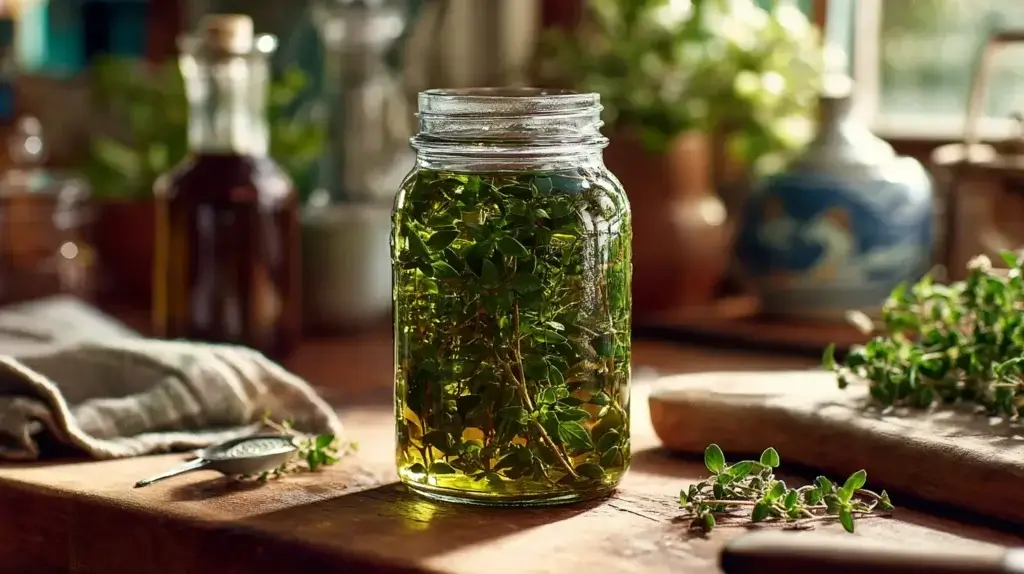
Making oil of oregano at home is a straightforward process that allows you to control the flavor strength and ingredients. This traditional method relies on simple kitchen staples and a bit of patience, resulting in a versatile infused oil you can use in everyday cooking.
If you enjoy making pantry staples at home, this homemade version shows how to prepare oil of oregano using simple ingredients and traditional infusion methods.
See the full homemade oil of oregano recipe here.
Ingredients Needed
- Fresh oregano leaves or dried oregano
- Olive oil (or another mild-flavored carrier oil)
- Clean glass jar with a lid
Fresh oregano produces a brighter, more aromatic oil, while dried oregano creates a deeper, more concentrated flavor. Both options work well, depending on what you have available.
Step-by-Step Method
Start by lightly crushing the oregano to release its natural aroma. Place the herb into a clean glass jar, then pour in enough olive oil to fully cover it. Stir gently to remove any air bubbles, then seal the jar tightly.
Set the jar in a warm spot, such as a sunny windowsill, and allow the mixture to infuse. Gently shake or stir the jar every few days to help distribute the flavor evenly throughout the oil.
Infusion Time
The infusion process typically takes two to four weeks. During this time, the oil will gradually deepen in color and aroma. Taste it occasionally to check the strength, and continue infusing until it reaches your preferred flavor level.
Storage Tips
Once the infusion is complete, strain out the oregano using a fine mesh strainer or cheesecloth. Transfer the finished oil to a clean glass bottle and store it in a cool, dark place. Proper storage helps maintain the oil’s flavor and quality over time.
How to Use It in Food
Homemade oil of oregano can be used the same way as store-bought versions. Drizzle it over finished dishes, mix it into dressings, or blend it with other oils for a milder infused option. Because it’s homemade, you can easily adjust how much you use based on taste and preference.
Oil of Oregano and Black Seed Oil in the Kitchen
Oil of oregano and black seed oil are both traditional kitchen ingredients, each known for its distinct flavor and aroma. When used together in cooking, they can create layered, complex tastes that add interest to simple dishes without requiring many additional ingredients.
Oil of oregano has a bold, herbaceous profile with peppery undertones, while black seed oil offers a deeper, slightly bitter flavor with earthy and nutty notes. Because their tastes are quite different, they’re usually combined in small amounts to avoid overpowering a dish.
In traditional kitchen use, these oils are often blended with olive oil to soften their intensity. This creates a more balanced base that works well for dressings, dips, or finishing oils. When combined thoughtfully, oil of oregano tends to lift and brighten flavors, while black seed oil adds depth and richness.
For best results, start with a mild ratio and adjust gradually. Using oil of oregano as a finishing touch and black seed oil as part of a blended oil allows both flavors to come through without competing. This approach works particularly well with roasted vegetables, grain bowls, and simple bread dips where the oils can shine.
Black Seed Oil vs Oil of Oregano (Kitchen Use)
While oil of oregano and black seed oil are sometimes used in similar traditional kitchens, they serve different roles when it comes to flavor, aroma, and recipe application. Understanding how they compare makes it easier to choose the right one—or decide when to use both.
In terms of taste, oil of oregano is sharp, herbal, and noticeably bold. Its flavor is immediate and aromatic, which is why it’s often used sparingly as a finishing oil. Black seed oil, on the other hand, has a darker, earthier profile with slightly bitter and nutty notes that develop more slowly on the palate.
Texture and appearance also set them apart. Oil of oregano is usually lighter in color when infused with olive oil and has a smooth, familiar mouthfeel. Black seed oil tends to be darker and thicker, with a more pronounced presence when mixed into dressings or dips.
When cooking, oil of oregano is best suited for recipes where a strong herbal note is desired—such as bread dips, marinades, or drizzles over vegetables. Black seed oil works well in blended oils, dressings, and recipes where deeper, more robust flavors are welcome.
Choosing between the two often comes down to the dish you’re preparing. If you want brightness and aroma, oil of oregano is the better option. If you’re aiming for richness and depth, black seed oil may be the more natural fit. In some cases, using a small amount of each can create a balanced and interesting flavor combination.
Choosing a Good Oil of Oregano for Cooking
Not all oil of oregano products are the same, especially when it comes to cooking. Choosing a good-quality option ensures better flavor, aroma, and consistency in your recipes. When selecting oil of oregano for kitchen use, it’s best to focus on ingredient quality rather than bold claims or labels.
Start by checking the ingredient list. A good oil of oregano for cooking should clearly state oregano and a carrier oil, such as olive oil. Short, simple ingredient lists are usually a good sign, as they indicate a straightforward infusion rather than a heavily processed product.
The type of oil used as the base also matters. Olive oil is commonly preferred because it complements oregano’s flavor and works well in most recipes. Neutral carrier oils can also be used, but they may slightly change how the oregano flavor comes through in finished dishes.
Flavor strength is another important factor. Some oils are very concentrated, while others are milder and easier to use generously. If possible, start with a small amount to test how strong the flavor is before adding more to your cooking.
Finally, pay attention to packaging and storage. Oil of oregano should be stored in dark glass bottles to protect it from light, which can affect flavor over time. Proper packaging helps maintain quality and ensures the oil stays fresh for everyday kitchen use.
Frequently Asked Questions About Oil of Oregano
Is oil of oregano used in cooking?
Yes, oil of oregano is commonly used in cooking, especially as a finishing or flavor-enhancing oil. Because it has a strong, concentrated taste, it’s usually added in small amounts to dishes like bread dips, dressings, marinades, and roasted foods.
Can you make oil of oregano at home?
You can make oil of oregano at home using fresh or dried oregano and a carrier oil such as olive oil. The process involves infusing the herb in oil over time, allowing the flavor and aroma to develop naturally.
Does oil of oregano have a strong taste?
Oil of oregano has a bold, herbaceous flavor that is much stronger than dried oregano. For this reason, it’s best to start with a small amount and adjust to taste, especially if you’re new to using it in recipes.
How should oil of oregano be stored?
Oil of oregano should be stored in a sealed glass container, preferably a dark bottle, and kept in a cool, dark place. Proper storage helps preserve its flavor and aroma over time.
Can oil of oregano be mixed with other oils?
Yes, oil of oregano is often mixed with other oils, such as olive oil, to create a milder infused oil. This makes it easier to use more generously in cooking while keeping the flavor balanced.
Conclusion
Oil of oregano is a simple yet flavorful ingredient that fits naturally into a home kitchen. Whether used as a finishing touch, blended into infused oils, or prepared from scratch at home, it offers a bold herbal note that can elevate everyday dishes.
By experimenting with small amounts and pairing it with familiar ingredients, home cooks can discover how oil of oregano works best for their taste and cooking style. From easy recipes to traditional preparations, it’s an ingredient that encourages creativity and a return to simple, time-tested kitchen practices.