

Sobacha tea is a traditional Japanese drink made from roasted buckwheat kernels. In recent years, it has drawn growing interest from people looking for simple, comforting beverages that fit naturally into modern wellness routines. Often considered part of the broader family of buckwheat tea, sobacha stands out for its cultural roots, gentle flavor, and everyday practicality rather than bold or exaggerated claims.
With its lightly roasted, nutty taste, sobacha tea appeals to those who want a warm drink without caffeine or unnecessary additives. It is frequently explored alongside other mild functional drinks, such as hibiscus tea, especially by readers who value balance, hydration, and enjoyment over quick fixes. This combination of simplicity and tradition makes sobacha tea particularly appealing to people seeking clarity and transparency in what they drink.
In this guide, you’ll discover what sobacha tea is, how it’s made, how it compares to other popular teas, and why it has become a popular gluten-free tea alternative. We’ll also explore its taste, its place in daily routines, and the best way to brew it properly — all from a clear, informational perspective, without exaggerated health promises.
What Is Sobacha Tea?
What is sobacha tea made from?
Sobacha tea is a traditional Japanese beverage made from roasted buckwheat kernels, not from tea leaves. This distinction matters because it explains both its flavor and its naturally caffeine-free profile. Buckwheat, despite its name, is not a type of wheat at all. It is a seed, which is why sobacha tea is often discussed among gluten free tea alternatives.
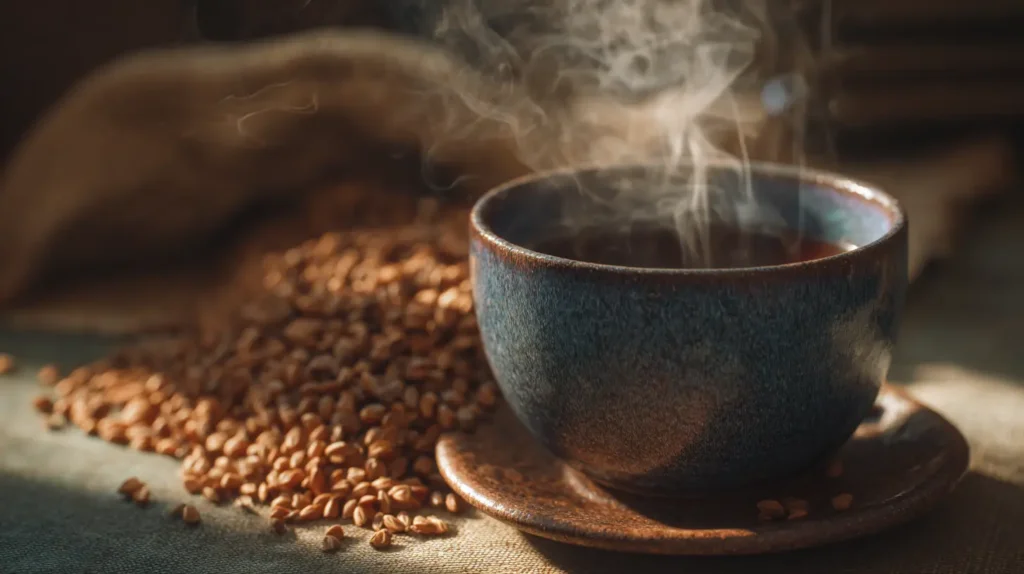
The process is simple and rooted in tradition. Whole buckwheat kernels are gently roasted until they release a warm, nutty aroma. Once roasted, they are steeped in hot water, much like loose-leaf tea. The result is a light amber drink with a toasty, comforting character that feels more like a grain infusion than a classic tea.
When people ask what is sobacha tea, they are often surprised by how minimal the ingredient list is. There are no added flavors, sweeteners, or botanicals. That simplicity is part of its appeal and one reason it fits well into functional drink routines focused on clarity and balance rather than stimulation.
If you’re new to sobacha, it helps to start with the broader topic: buckwheat tea explains what it is, how it’s made, and why roasted buckwheat has become such a popular caffeine-free alternative.
Origin and traditional use of sobacha tea
Sobacha tea has long been consumed in Japan, particularly in regions where buckwheat is a staple crop. Historically, it was enjoyed both hot and cold, depending on the season, and often served alongside meals rather than as a ceremonial drink. Its role was practical: a warm, satisfying beverage that complemented food without overpowering it.
Over time, sobacha tea became associated with everyday comfort rather than special occasions. This cultural context helps explain why it is still popular today among people who prefer drinks that feel grounding and familiar. Unlike trend-driven beverages, sobacha tea carries a sense of continuity, linking modern habits to older culinary traditions.
Today, sobacha tea is gaining attention outside Japan as more people explore non-caffeinated options and naturally simple drinks. Its traditional background gives it credibility, while its neutral, roasted taste makes it easy to adopt into contemporary lifestyles without feeling exotic or intimidating.
Taste, Aroma, and Drinking Experience
What does sobacha tea taste like?
One of the first things people notice when trying sobacha tea is its distinctive roasted flavor. The taste is often described as nutty, toasty, and gently earthy, with no bitterness. Because it’s made from roasted buckwheat rather than tea leaves, the profile feels closer to a light grain infusion than to green or black tea.
Sobacha tea has a smooth mouthfeel and a clean finish. There’s no sharp aftertaste, which makes it easy to drink on its own without sweeteners or milk. This mild flavor is one reason sobacha tea works well for people who find traditional teas too strong or astringent.
For those exploring what is sobacha tea for the first time, the flavor can be surprising in a good way. It feels familiar and comforting, similar to toasted rice or warm cereal notes, yet still light enough to enjoy throughout the day.
Aroma and texture compared to other teas
The aroma of sobacha tea plays a big role in the overall experience. When steeped, it releases a warm, roasted scent that many people associate with comfort and calm. This aroma is subtle, not overpowering, and it tends to linger just enough to enhance the drinking experience.
In terms of texture, sobacha tea is light-bodied but not watery. It has more presence than plain hot water, yet it doesn’t coat the mouth the way stronger teas sometimes do. This balance makes it appealing to those looking for a drink that feels satisfying without being heavy.
When compared informally in discussions about sobacha tea vs green tea, the difference is clear. Green tea often brings grassy notes and mild bitterness, while sobacha tea stays neutral and rounded. This contrast explains why sobacha tea is frequently chosen in the evening or alongside meals, where subtlety matters.
Is Sobacha Tea Caffeine-Free?

Why sobacha tea contains no caffeine
Sobacha tea is naturally caffeine-free because it is not made from the tea plant (Camellia sinensis). Instead, it comes from roasted buckwheat seeds, which do not contain caffeine at all. This makes sobacha tea fundamentally different from green, black, or oolong teas, even when those teas are lightly processed.
Because there is no caffeine to extract during brewing, sobacha tea keeps the same profile whether it is steeped briefly or for a longer time. This consistency is one of the reasons people interested in buckwheat tea caffeine free options often choose sobacha for regular, all-day drinking.
Its caffeine-free nature also explains why sobacha tea is commonly enjoyed in the evening. There is no need to time consumption carefully, which adds to its practicality as an everyday beverage.
For a quick, clear breakdown of both questions readers ask most—caffeine and gluten—see buckwheat tea caffeine and gluten, which explains why sobacha is naturally caffeine-free and how to think about gluten safety in simple terms.
Sobacha tea vs caffeinated teas
When comparing sobacha tea vs green tea, the biggest difference is stimulation. Green tea contains caffeine and compounds that can feel energizing, especially when consumed on an empty stomach. Sobacha tea, on the other hand, offers warmth and flavor without altering alertness levels.
This contrast is especially relevant for people reducing caffeine intake but still wanting a ritual around hot drinks. Many readers exploring caffeine alternatives naturally compare sobacha tea with drinks like matcha tea, which is known for its stronger, longer-lasting energy effect.
Rather than replacing caffeinated tea entirely, sobacha tea often complements it. Some people drink green or matcha tea earlier in the day and switch to sobacha tea later on, creating a balanced routine that fits different moments without sacrificing enjoyment.
Fermented vs Non-Fermented Drinks
Is sobacha tea a fermented drink?
Sobacha tea is a non-fermented beverage. It is made by roasting buckwheat kernels and steeping them in hot water, with no fermentation process involved at any stage. This simplicity is important because fermentation changes both the flavor and structure of a drink, often introducing acidity, carbonation, or tangy notes.
Because sobacha tea skips fermentation entirely, its taste remains stable and predictable. Each cup delivers the same roasted, nutty profile without variation caused by microbial activity. This makes it appealing to people who prefer consistency in their daily drinks.
Understanding whether sobacha tea is fermented also helps position it correctly within the broader world of functional beverages. It belongs firmly in the category of grain-based infusions rather than cultured drinks.
How sobacha compares to fermented beverages
Fermented drinks often attract attention for their bold flavors and complex production methods. A well-known example is kombucha, which is created through fermentation and typically has a tangy, slightly acidic taste. These drinks are fundamentally different from sobacha tea in both process and sensory experience.
Where fermented drinks can feel sharp or lively, sobacha tea remains mild and grounding. There is no carbonation, no sourness, and no evolving flavor profile over time. This contrast explains why some people rotate between fermented and non-fermented drinks depending on mood, meal timing, or personal preference.
Rather than competing with fermented beverages, sobacha tea often serves as a neutral alternative. It fits moments when a calm, uncomplicated drink feels more appropriate than something bold or effervescent, reinforcing its role as an everyday, low-intensity option.
Sobacha Tea and Digestion Comfort
How sobacha tea fits into daily routines
Sobacha tea is often chosen for its gentle character rather than for any dramatic effect. Its warm, roasted profile makes it easy to include in everyday routines, whether that’s a quiet morning, a mid-afternoon pause, or an evening wind-down. Because it’s caffeine-free, there’s no need to plan around energy spikes or crashes.
Many people who explore sobacha tea digestion topics are really looking for drinks that feel light and comfortable after meals. Sobacha tea is commonly consumed alongside food or shortly afterward, especially in traditional settings, because it doesn’t compete with flavors or feel heavy.
Its simplicity also makes it compatible with structured habits. Some wellness-focused routines emphasize rotating beverages throughout the day, mixing water, teas, and other mild infusions. In that context, sobacha tea is often grouped with structured wellness drinks that prioritize consistency and ease over stimulation.
Drinking sobacha tea with meals
Sobacha tea pairs naturally with food. The roasted buckwheat notes complement both savory and lightly sweet dishes without overpowering them. This is one reason it is traditionally served during or after meals rather than as a standalone ritual drink.
Unlike stronger teas, sobacha tea doesn’t leave an astringent feeling in the mouth. That quality makes it suitable for slow sipping while eating or as a gentle finish to a meal. It also works well when served warm or chilled, depending on preference and season.
Because of this flexibility, sobacha tea is often seen as a practical alternative to plain water at the table. It adds flavor and warmth while remaining neutral and easy to digest, reinforcing its role as a steady, everyday beverage rather than a specialized drink.
How to Brew Sobacha Tea Properly

Traditional and modern brewing methods
Brewing sobacha tea is straightforward, which is part of its appeal. Traditionally, roasted buckwheat kernels are steeped in hot water, much like loose-leaf tea. There’s no complex timing or precise temperature required, making it accessible even for beginners.
A common method is to add one to two teaspoons of roasted buckwheat to a cup of hot water and let it steep for about five minutes. The longer it steeps, the deeper the roasted flavor becomes, but it rarely turns bitter. This forgiving nature allows people to adjust strength based on taste without worrying about overbrewing.
Modern variations include tea bags or cold brewing. Sobacha tea can be steeped in room-temperature or cold water for several hours, producing a lighter, refreshing drink that works well in warmer weather. Both hot and cold methods preserve the same nutty profile.
Practical tips for everyday use
One advantage of sobacha tea is that the same buckwheat kernels can often be steeped more than once. A second infusion usually produces a lighter cup but still retains aroma and flavor. This makes it practical for people who drink multiple cups throughout the day.
Storage is simple as well. Keeping roasted buckwheat in an airtight container away from moisture helps preserve its aroma. Because there are no added ingredients, there’s little risk of flavor degradation beyond the natural fading of the roasted notes over time.
For people seeking gluten free tea alternatives, sobacha tea fits easily into daily habits. Since buckwheat is naturally gluten-free, the brewing process requires no special adjustments. As always, checking sourcing and processing information can help avoid cross-contamination, especially for those with strict dietary needs.
Print
Sobacha Tea: A Naturally Caffeine-Free Buckwheat Tea Explained
- Total Time: 6 minutes
- Yield: 1 cup 1x
Description
Sobacha tea is a traditional Japanese drink made from roasted buckwheat kernels. This simple preparation creates a warm, nutty, naturally caffeine-free tea that fits easily into everyday routines without added ingredients or bold claims.
Ingredients
- 1–2 teaspoons roasted buckwheat kernels (sobacha)
- 1 cup hot water
- (Optional: ice cubes for cold brew)
Instructions
- Place the roasted buckwheat kernels into a teapot, infuser, or cup.
- Pour hot water over the kernels.
- Let steep for about 5 minutes.
- Strain if needed and serve warm.
- Cold brew option: Add the roasted buckwheat to room-temperature or cold water and let steep for 3–4 hours before serving chilled.
Notes
Sobacha tea does not turn bitter, even with longer steeping times. The same roasted buckwheat kernels can often be steeped a second time for a lighter cup. Flavor strength can be adjusted by using more or less buckwheat.
- Prep Time: 1 minute
- Cook Time: 5 minutes
- Category: Beverage
- Method: Infusion
- Cuisine: Japanese
Nutrition
- Serving Size: 1 cup
- Calories: 5
- Sugar: 0 g
- Sodium: 0 mg
- Fat: 0 g
- Saturated Fat: 0 g
- Unsaturated Fat: 0 g
- Trans Fat: 0 g
- Carbohydrates: 1 g
- Fiber: 0 g
- Protein: 0 g
- Cholesterol: 0 mg
Keywords: sobacha tea, roasted buckwheat tea, caffeine free tea, gluten free tea alternative, how to make sobacha tea
Sobacha Tea vs Other Popular Teas
Sobacha tea vs green tea
The comparison between sobacha tea vs green tea often comes up when people explore alternatives to traditional teas. While both are commonly consumed hot and associated with daily routines, they differ significantly in origin, flavor, and effect.
Green tea is made from tea leaves and has a grassy, sometimes slightly bitter taste. It also contains caffeine, which can be stimulating. Sobacha tea, by contrast, is made from roasted buckwheat seeds and delivers a nutty, roasted flavor with no bitterness and no caffeine.
Because of these differences, the two drinks often serve different purposes. Green tea is typically chosen for alertness or focus, while sobacha tea is selected for moments when calm and comfort matter more than stimulation. Rather than competing directly, they often coexist in balanced routines.
How sobacha fits among herbal and grain-based teas
Sobacha tea sits somewhere between herbal teas and grain infusions. Like many herbal teas, it is caffeine-free and easy to drink at any time of day. However, its roasted grain base gives it a fuller, more grounded flavor than many floral or leafy infusions.
Compared to drinks made from chamomile, peppermint, or rooibos, sobacha tea feels warmer and more food-like. This quality makes it especially appealing to people who want a tea that feels nourishing without being heavy or sweet.
Within the broader category of gluten free tea alternatives, sobacha tea stands out for its simplicity. With a single main ingredient and a straightforward preparation method, it offers an option that feels both traditional and accessible, reinforcing its growing popularity outside Japan.
Frequently Asked Questions About Sobacha Tea
What is sobacha tea made from?
Sobacha tea is made from roasted buckwheat kernels. Despite its name, buckwheat is not a type of wheat but a seed. This is why sobacha tea does not contain tea leaves and is naturally caffeine-free. The roasted kernels are steeped in hot or cold water to create a light, nutty infusion.
Is sobacha tea caffeine-free?
Yes, sobacha tea is completely caffeine-free. Because it is not derived from the tea plant, there is no caffeine to extract during brewing. This makes it suitable for drinking at any time of day, including in the evening.
What does sobacha tea taste like?
Sobacha tea has a mild, roasted, and nutty flavor. It is smooth, with no bitterness or sharp aftertaste. Many people compare its taste to toasted grains or roasted rice, making it feel comforting and familiar.
How is sobacha tea different from green tea?
The main difference in sobacha tea vs green tea lies in both ingredients and effect. Green tea is made from tea leaves and contains caffeine, while sobacha tea is made from roasted buckwheat and contains no caffeine. Flavor-wise, green tea can be grassy or slightly bitter, whereas sobacha tea is warm and toasty.
Can sobacha tea be part of a daily wellness routine?
Sobacha tea is often included in daily routines because of its simplicity and gentle character. It can be enjoyed alongside meals, between activities, or as an evening drink. Its role is typically about comfort and hydration rather than stimulation.
Is sobacha tea a good gluten-free tea alternative?
Yes, sobacha tea is commonly considered a gluten free tea alternative because buckwheat is naturally gluten-free. As with any product, people with strict dietary requirements may want to check sourcing and processing details to avoid cross-contamination.
Conclusion — Where Sobacha Tea Fits Today
Sobacha tea stands out as a simple, grounded drink rooted in tradition rather than trends. Made from roasted buckwheat, it offers a naturally caffeine-free option with a warm, nutty flavor that fits easily into everyday life. Its appeal isn’t about bold claims or quick results, but about consistency, comfort, and ease of use.
As interest grows in functional drinks that feel approachable and transparent, sobacha tea has found its place alongside other mild, food-based beverages. It works well for people looking to reduce caffeine, explore gluten-free tea alternatives, or simply add variety to their daily routine without changing habits drastically.
In that sense, sobacha tea often sits within a broader ecosystem of gentle wellness drinks. Readers who enjoy learning about calm, ingredient-forward beverages may also be curious about options like okra water, which are explored from a similar informational and lifestyle perspective.
Ultimately, sobacha tea isn’t about doing more. It’s about choosing a drink that feels familiar, flexible, and easy to return to—one cup at a time.