
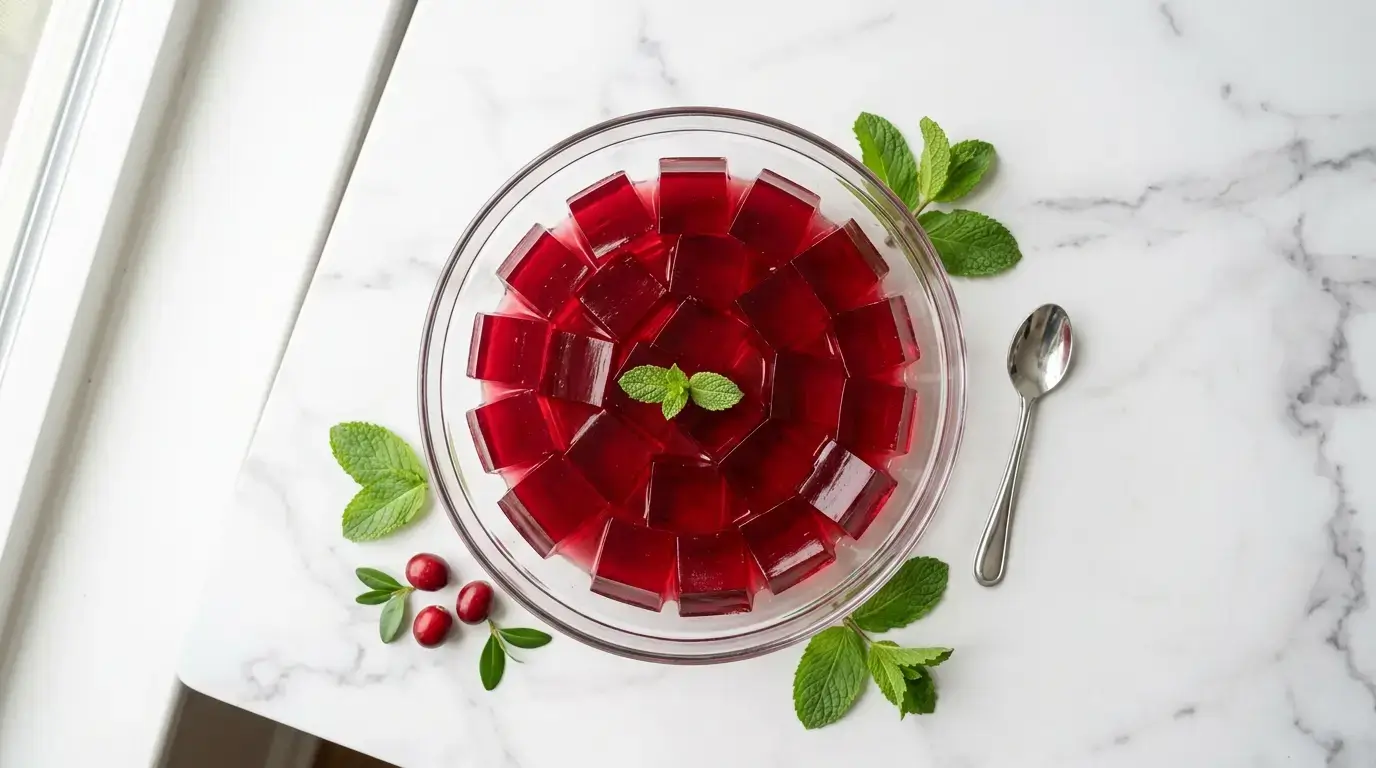
Whether you follow a vegan or vegetarian diet, keep halal or kosher, or simply want to avoid animal-derived ingredients in your kitchen — finding the right gelatin substitute is one of the most practically useful skills you can develop as a home cook.
Gelatin shows up in more recipes than most people realize: jello, panna cotta, cheesecake, mousse, gummy candy, marshmallows, fruit glazes, aspic, and certain jams. Once you know which plant-based alternatives to reach for — and crucially, which one works best for which dish — you’ll never be stuck without a solution.
This is the complete guide. Six substitutes, exact ratios, best uses for each, common mistakes, and a quick-reference chart you can bookmark.
Why Is Gelatin Not Vegan?
Standard gelatin is made by boiling the bones, skin, tendons, and connective tissue of animals — most commonly pigs and cows. The collagen in these animal parts breaks down through prolonged heating, producing the protein we know as gelatin. For a complete guide on how to use standard gelatin, see our Knox gelatin guide.
This makes it incompatible with vegan and vegetarian diets, as well as halal diets (most commercial gelatin uses porcine — pork-derived — collagen) and kosher diets (gelatin requires specific certification to be considered kosher).
The good news: every recipe that uses gelatin can be made with plant-based alternatives. You just need to know which one to use.
The 6 Best Vegan Gelatin Substitutes
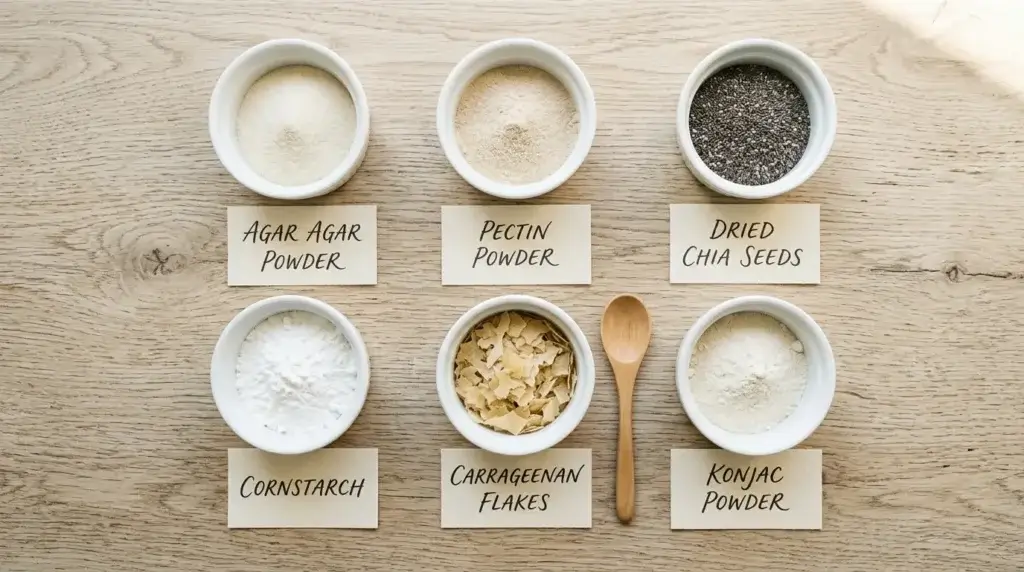
1. Agar Agar — The Best All-Purpose Substitute
What it is: A natural polysaccharide derived from the cell walls of red seaweed (algae). It has been used for centuries in Asian cooking — particularly in Japan, where it’s called kanten — and is now widely available in health food stores and online worldwide.
Texture: Firmer and less jiggly than gelatin. Agar sets more firmly and produces a slightly more brittle texture — it snaps cleanly rather than wobbling. For softer results, use slightly less than the recipe calls for.
Key advantage: Unlike gelatin, agar sets at room temperature and does not melt back to liquid at body temperature. This makes it ideal for warm-weather desserts or recipes that need to hold their shape outside the refrigerator.
How to use:
- Always dissolve agar in hot or boiling liquid — it will not activate in cold liquid
- Bring agar + liquid to a boil, then simmer for 2 minutes while stirring
- Work quickly once dissolved — agar begins setting as it cools
- Unlike gelatin, agar can be re-melted and reset without losing its gelling ability
Substitution ratio:
- Powder: 1:1 ratio with gelatin powder — use the same amount
- Flakes: Use 3x the amount (1 tsp gelatin = 1 tbsp agar flakes)
- Bar: Follow package instructions — bars vary by brand and strength
Best for: Fruit jellies, panna cotta, vegan cheesecake, custards, puddings, sliceable desserts, vegan gummy candy, vegan marshmallows (combined with aquafaba)
Avoid for: Recipes requiring a very soft, wobbly, body-temperature-melting set (like certain mousses)
Brands to look for: Telephone Brand (Thai — widely considered the gold standard), It’s Just! Agar Powder, Kate Naturals, Living Jin
2. Pectin — Best for Jams, Jellies & Fruit-Based Recipes
What it is: A naturally occurring fiber found in the cell walls of fruits — particularly apples and citrus peels. Pectin is what makes jam set, and it’s been doing that job in kitchens for centuries.
Texture: Soft, spreadable, slightly gummy. Produces a less firm set than gelatin or agar — more like a soft jam than a sliceable jelly.
Key requirement: Pectin needs both sugar AND acid to gel properly. Without sufficient sugar (typically fruit sugar or added sugar) and a small amount of citric acid or lemon juice, it simply won’t set. For low-sugar recipes, use Pomona’s Universal Pectin, which is specifically formulated to work with less or no added sugar.
How to use:
- Combine pectin with sugar before adding liquid (prevents clumping)
- Bring the mixture to a full rolling boil to activate the gelling
- Do not use as a direct 1:1 substitute for gelatin — follow pectin-specific recipes or the package directions
Best for: Jams, jellies, fruit preserves, fruit fillings, glazes, pie fillings
Not ideal for: Panna cotta, cheesecake, mousse, or any recipe where you don’t want a fruity or sweet base flavor
3. Carrageenan — Best for Creamy Desserts
What it is: A polysaccharide extracted from dried red seaweed (Irish moss). It’s already widely used commercially in ice cream, chocolate milk, and many packaged dairy alternatives — and it’s completely plant-based.
Two types:
- Iota carrageenan: Produces a soft, creamy, elastic gel — perfect for puddings, custards, and mousse
- Kappa carrageenan: Creates a firmer, more brittle gel — used in vegan cheese and firmer desserts
Texture: Smoother and creamier than agar — closer to gelatin’s texture for dairy-based recipes. Less firm than agar but more stable than pectin.
How to use:
- Dissolve in hot liquid while stirring constantly
- Use approximately 1 tablespoon per 2 cups of liquid (adjust for desired firmness)
- Measured by weight for precision — check package instructions
Best for: Vegan panna cotta, creamy puddings, custards, dairy-free mousses, vegan cheese
Note: A small number of people experience digestive sensitivity to carrageenan. If making a large batch for guests, test on yourself first.
4. Konjac (Glucomannan) — Best Zero-Calorie Option
What it is: A soluble fiber derived from the root of the konjac plant (native to Asia). Also sold as glucomannan powder.
Texture: Very firm and translucent — produces a dense, slightly chewy gel that’s quite different from standard gelatin. Think of the texture of konjac jelly drinks or shirataki noodles.
Key fact: Konjac is nearly calorie-free and has exceptionally powerful gelling strength — much more potent than gelatin or agar. Start with less than you think you need.
How to use:
- Use approximately ½ teaspoon per 2 cups liquid — far less than other substitutes
- Dissolve in hot water and stir well
- The gel sets firmer at lower temperatures
Best for: Zero-calorie jellies, vegan konjac gummy candy, diet-friendly desserts, weight loss recipes
Avoid for: Recipes where you want a light, delicate texture — konjac produces a noticeably dense, chewy result
5. Cornstarch — The Emergency Thickener
What it is: A starch derived from corn, already in most kitchens.
Important distinction: Cornstarch thickens but does not gel the same way gelatin does. It cannot produce a firm, sliceable jelly or a set dessert that holds its shape when cold. It works for sauces, fruit pie fillings, and creamy puddings — not for anything that needs to set firmly.
How to use:
- Mix equal parts cornstarch and cold water to make a slurry before adding to hot liquid
- Simmer until thickened — cornstarch must be cooked to activate
- Use 2 tablespoons cornstarch per 1 tablespoon gelatin for thickening applications only
Best for: Thickened sauces, fruit pie fillings, creamy puddings, custards, gravies
Not for: Jellies, panna cotta, cheesecake, or any recipe requiring a firm set
6. Chia Seeds & Flaxseeds — Best for Baking
What it is: Whole seeds that, when soaked in water, form a thick gel due to their soluble fiber content.
Texture: Thick, slightly granular gel — visible seeds create texture. Excellent in baked goods where the seedy texture is welcome or invisible; less suitable for clear, smooth desserts.
How to use:
- Chia gel: 1 tablespoon chia seeds + 3 tablespoons water, sit 10 minutes
- Flax gel: 1 tablespoon ground flaxseed + 3 tablespoons water, sit 5 minutes
- Use as a 1:1 substitute for gelatin in baking applications
Best for: Binding in muffins, breads, energy balls, overnight oats (chia), baked goods where a seedy texture is welcome
Not for: Smooth desserts, clear jellies, anything where texture visibility matters
Quick Reference Chart — Which Substitute for Which Recipe
| Recipe | Best Substitute | Why |
|---|---|---|
| Fruit jelly / vegan jello | Agar agar | Firm set, neutral flavor, clear result |
| Panna cotta | Agar agar or iota carrageenan | Carrageenan for creamier; agar for firmer |
| Vegan cheesecake | Agar agar | Strong set, holds shape when sliced |
| Mousse / whipped desserts | Iota carrageenan or agar | Carrageenan for creamier texture |
| Jams and fruit preserves | Pectin | Requires fruit sugar to work — perfect match |
| Vegan gummies | Agar agar or pectin | Agar for firm; pectin for softer gummies |
| Vegan marshmallows | Agar agar + aquafaba | Standard vegan marshmallow method |
| Pie fillings / sauces | Cornstarch | No firm set needed — thickening only |
| Zero-calorie diet jelly | Konjac (glucomannan) | Nearly calorie-free, strong gel |
| Baking / binding | Chia or flax gel | Adds structure without flavoring |
| Savory aspic | Agar agar | Sets at room temperature, stable |
| Layered desserts | Agar agar | Sets quickly, clean layers |
For a low-calorie gelatin recipe using standard unflavored gelatin, see the gelatin trick recipe that’s been trending across health communities.
Substitution Ratios — Complete Reference
| Substitute | Amount to replace 1 tsp gelatin powder | Notes |
|---|---|---|
| Agar agar powder | 1 tsp (1:1) | Must boil to activate |
| Agar agar flakes | 1 tablespoon | 3x the amount of powder |
| Pectin | Follow package — not a direct swap | Needs sugar + acid |
| Iota carrageenan | 1½ tsp | Softer, creamier result |
| Kappa carrageenan | 1 tsp | Firmer result |
| Konjac powder | ¼ tsp | Very potent — start with less |
| Cornstarch | 2 tbsp (thickening only) | Slurry first, cook to activate |
| Chia gel | 1 tbsp chia + 3 tbsp water | Baking applications only |
How to Make Vegan Jello with Agar Agar
This is the most commonly searched vegan gelatin recipe — and it’s genuinely simple once you understand the technique.
PrintVegan Gelatin Substitutes – Complete Guide (Best Plant-Based Alternatives for Every Recipe)
- Total Time: 8 minutes + 2–3 hours chilling
- Yield: 4 servings 1x
- Diet: Vegan
Description
A simple, completely plant-based jello made with agar agar and 100% fruit juice. No animal products, no gelatin — just a clean, firm, beautifully set vegan dessert ready in minutes.
Ingredients
- 2 cups 100% fruit juice (apple, cranberry, grape, or pomegranate)
- 1 teaspoon agar agar powder
- 1–2 tablespoons sugar or maple syrup (optional)
Instructions
- Combine fruit juice and agar agar powder in a small saucepan — do not add agar to cold liquid without heating
- Whisk together and bring to a gentle boil over medium heat, stirring constantly
- Simmer for 2 full minutes while stirring until agar is fully dissolved
- Remove from heat and add sweetener if using, stir to combine
- Pour into a glass dish or individual molds
- Leave at room temperature for 20 minutes
- Transfer to refrigerator and chill 2–3 hours until fully set
- Cut into squares or unmold to serve
Notes
Always boil agar agar for at least 2 full minutes — underdissolved agar creates a grainy texture. Avoid fresh pineapple, kiwi, and papaya — their enzymes prevent setting. Use canned or cooked versions instead. For a softer set, reduce agar to ¾ teaspoon. For firmer cubes, increase to 1¼ teaspoon.
- Prep Time: 3 minutes
- Cook Time: 5 minutes
- Category: Dessert / Snack
- Method: Stovetop
- Cuisine: Vegan / Plant-Based
Nutrition
- Serving Size: ½ cup
- Calories: 60
- Sugar: 12g
- Sodium: 5mg
- Fat: 0g
- Saturated Fat: 0g
- Unsaturated Fat: 0g
- Trans Fat: 0g
- Carbohydrates: 14g
- Fiber: 0g
- Protein: 0g
- Cholesterol: 0mg
Keywords: vegan gelatin substitute, agar agar recipe, vegan jello, plant based gelatin, gelatin substitute recipe
Ingredients (4 servings)
- 2 cups 100% fruit juice (apple, cranberry, grape, pomegranate — avoid fresh pineapple and kiwi)
- 1 teaspoon agar agar powder
- 1–2 tablespoons sugar or maple syrup (optional)
Instructions
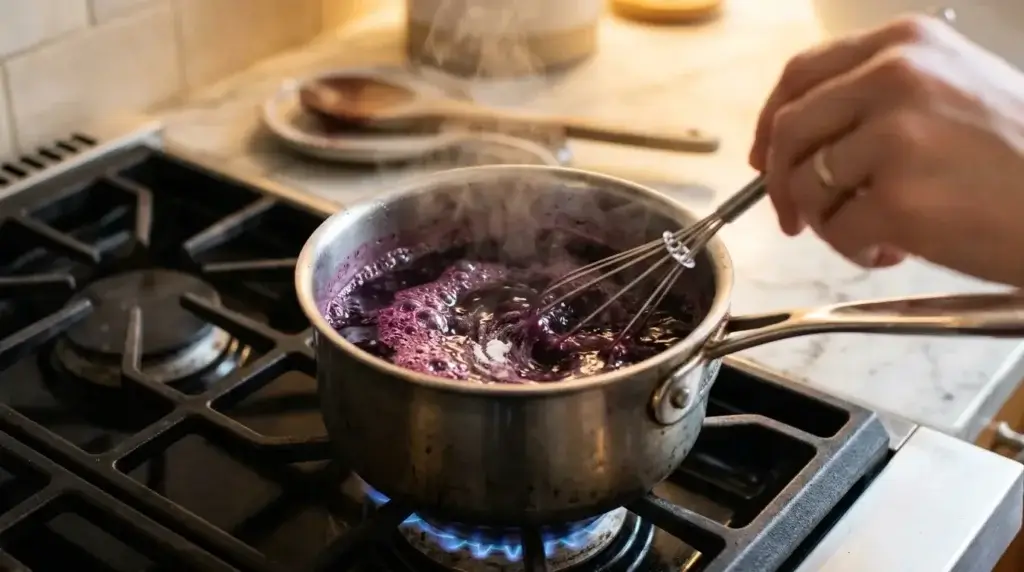
- Combine juice and agar powder in a small saucepan. Do NOT add agar to cold liquid and expect it to dissolve — it must be heated.
- Whisk together and bring to a gentle boil over medium heat, stirring constantly.
- Simmer for 2 full minutes while stirring — this ensures the agar fully activates.
- Remove from heat, add sweetener if using, stir to combine.
- Pour into a glass dish or individual molds.
- Leave at room temperature for 20 minutes, then transfer to the refrigerator.
- Refrigerate 2–3 hours until fully set. Cut into squares to serve.
Key difference from gelatin: You don’t need to bloom agar in cold water first. Just combine with liquid and heat directly. It will begin setting as it cools — work relatively quickly once it’s off the heat.
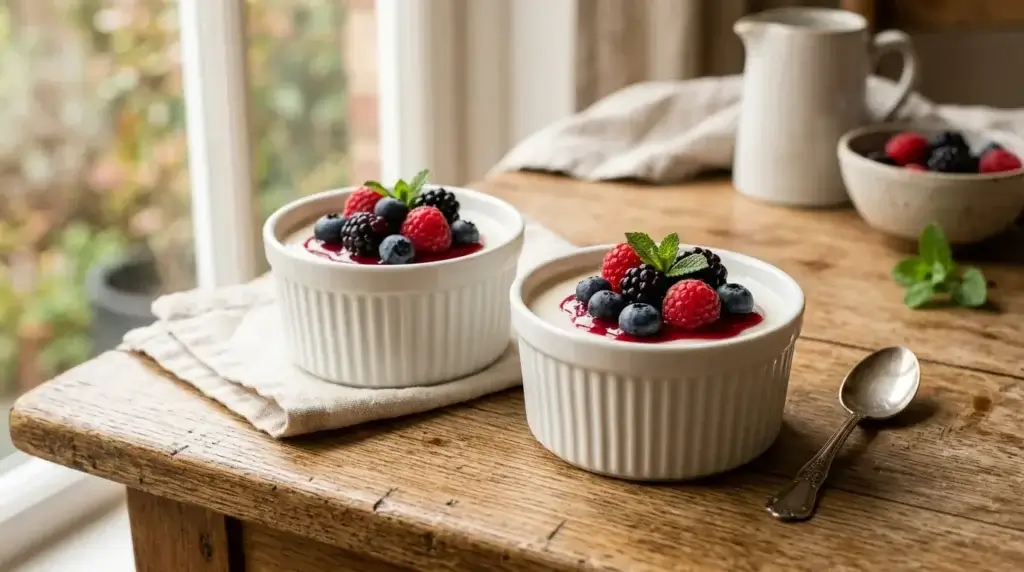
Vegan Panna Cotta with Agar Agar
A restaurant-quality dessert that’s entirely plant-based.
Ingredients (4 servings)
- 2 cups full-fat coconut milk (or oat cream for a lighter result)
- 1 teaspoon agar agar powder
- 3 tablespoons sugar or maple syrup
- 1 teaspoon vanilla extract
Instructions
- Combine coconut milk and agar powder in a saucepan. Whisk together cold.
- Bring to a simmer over medium heat, stirring constantly.
- Once simmering, cook for 2 minutes while stirring.
- Add sugar and vanilla, stir until dissolved.
- Pour into 4 ramekins or glasses.
- Cool to room temperature, then refrigerate for minimum 2 hours.
- Serve with fresh berries or fruit coulis.
Texture tip: For a softer, more wobbly result like traditional panna cotta, reduce agar to ¾ teaspoon. For firmer, increase to 1¼ teaspoon.
Common Mistakes When Using Vegan Gelatin Substitutes
Not boiling agar agar long enough: Agar must reach a full boil AND simmer for at least 2 minutes to fully activate. Underdissolved agar produces a grainy, uneven set. If your jelly has a gritty texture, this is why.
Using agar in cold liquid: Unlike gelatin, agar cannot be bloomed in cold water. Always add it directly to the liquid you’re heating.
Using pectin without enough sugar: Pectin requires sugar and acid to gel. Trying to make a low-sugar jelly with standard pectin will result in a liquid that never sets. Use Pomona’s Pectin for low-sugar applications.
Over-using konjac: Glucomannan is far more potent than other substitutes. Too much creates a rubbery, unpleasant texture. Start with half what you think you need.
Assuming all substitutes are interchangeable: Agar, pectin, carrageenan, and konjac all produce different textures through different mechanisms. You can’t freely swap one for another without adjusting your recipe.
Using fresh tropical fruits with agar: Just like gelatin, agar agar is affected by the proteolytic enzymes in fresh pineapple, kiwi, and papaya. The same fix applies: use canned or cooked versions of these fruits, as heat deactivates the enzymes.
To understand more about how gelatin is used in therapeutic nutrition, see what is bariatric gelatin.
Agar Agar vs Gelatin — The Key Differences
| Agar Agar | Standard Gelatin | |
|---|---|---|
| Source | Red seaweed | Animal bones/skin |
| Vegan | ✅ Yes | ❌ No |
| Setting temperature | Room temperature | Requires refrigeration |
| Melting temperature | ~85°C / 185°F | ~35°C / 95°F |
| Re-meltable | ✅ Yes | ✅ Yes |
| Texture | Firmer, less jiggly | Softer, more wobbly |
| Activation | Requires boiling | Blooms in cold, dissolves in warm |
| Flavor | Neutral | Neutral |
| Ratio | 1:1 with gelatin powder | — |
The one area where gelatin has a clear advantage is that signature soft, wobbly, body-temperature-melting texture. Agar produces a firmer, more structured gel that’s slightly different to the touch. For most recipes, this difference is barely noticeable in the finished dish — but for recipes where extreme wobbly softness is the point, slightly reducing the agar quantity helps.
Frequently Asked Questions
What is the best vegan substitute for gelatin overall?
Agar agar is the best all-purpose substitute. It works in the widest range of recipes, substitutes at a 1:1 ratio with gelatin powder, is affordable, and is available worldwide.
Curious how gelatin compares to collagen as a nutrient? Our gelatin vs collagen guide explains the difference.
Can I use agar agar in any recipe that calls for gelatin?
Almost any recipe — yes. The exception is recipes where the specific soft, wobbly, melts-at-body-temperature quality of gelatin is essential. For those, use slightly less agar and expect a marginally firmer result.
Does agar agar taste different from gelatin?
No — both are completely neutral in flavor when used in the correct amounts. In very high concentrations, agar can have a very faint seaweed note, but at standard recipe quantities it’s undetectable.
Where can I buy agar agar?
Asian grocery stores almost always carry it (often at a better price than health food stores). It’s also widely available online. Look for powder form — it’s easier to measure and work with than flakes or bars.
Is agar agar the same as kanten?
Yes — kanten is the Japanese name for agar. Same ingredient, different name.
Can I make vegan gummies with agar agar?
Yes — agar agar produces firm gummies. For softer gummies closer to commercial candy texture, pectin (specifically Pomona’s pectin) gives a slightly chewier, more candy-like result.
Does agar agar work in savory recipes?
Absolutely — agar agar works beautifully in savory applications like vegetable aspic, pâtés, and structured savory molds. It’s particularly useful because it holds its set at room temperature, unlike gelatin which softens quickly.
The Bottom Line
The vegan gelatin space has come a long way. Between agar agar’s versatility, pectin’s fruit-recipe excellence, carrageenan’s creamy dairy applications, and konjac’s zero-calorie strength — there’s a plant-based alternative for every single gelatin recipe in your collection.
The golden rule: agar agar first, always. It’s the most versatile, most reliable, and most widely available option. For 90% of recipes, it’s all you’ll ever need.
For the remaining 10% — jams (pectin), creamy desserts (carrageenan), zero-calorie recipes (konjac), and baked goods (chia/flax) — you now have exactly what you need to make the right call.
Related Articles
- Knox Gelatin Guide – How to Use It & Best Recipes
- Unflavored Gelatin Recipe – Complete Guide
- Gelatin Trick Recipe – The Viral 3-Ingredient Method
- What Is Bariatric Gelatin?
- Gelatin vs Collagen for Weight Loss
- Konjac Jelly for Weight Loss Recipe
This article is for informational and culinary purposes only.