
Quick Answer
| Is it a scam? | Not in the sense of being fraudulent—but the name is misleading, and several attached claims aren’t supported |
| Is real horse gelatin involved? | No—nearly all versions use ordinary bovine, pork, or fish gelatin |
| Does it help with weight loss? | Modestly, indirectly—protein increases fullness, which can reduce how much you eat |
| Does it boost testosterone or male performance? | No credible evidence supports this claim |
| Is it dangerous? | The DIY recipe itself isn’t unsafe—the real risk is with branded supplement products making unverified claims |
Is the horse gelatin trick a scam? The answer is more nuanced than a simple yes or no. Horse gelatin, as the term is commonly used in this viral trend, usually refers to ordinary food-grade gelatin rather than gelatin made from horses. The homemade trick itself isn’t necessarily a scam, but the name is misleading, and several weight-loss, testosterone, and male-performance claims associated with it aren’t supported by strong evidence.
What Is Horse Gelatin? Why the Name Is Misleading
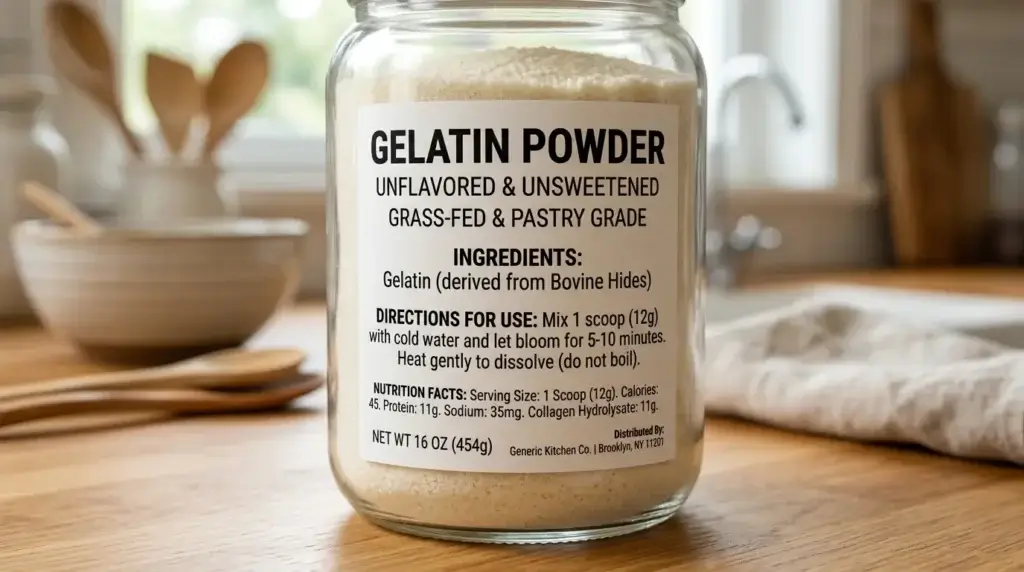
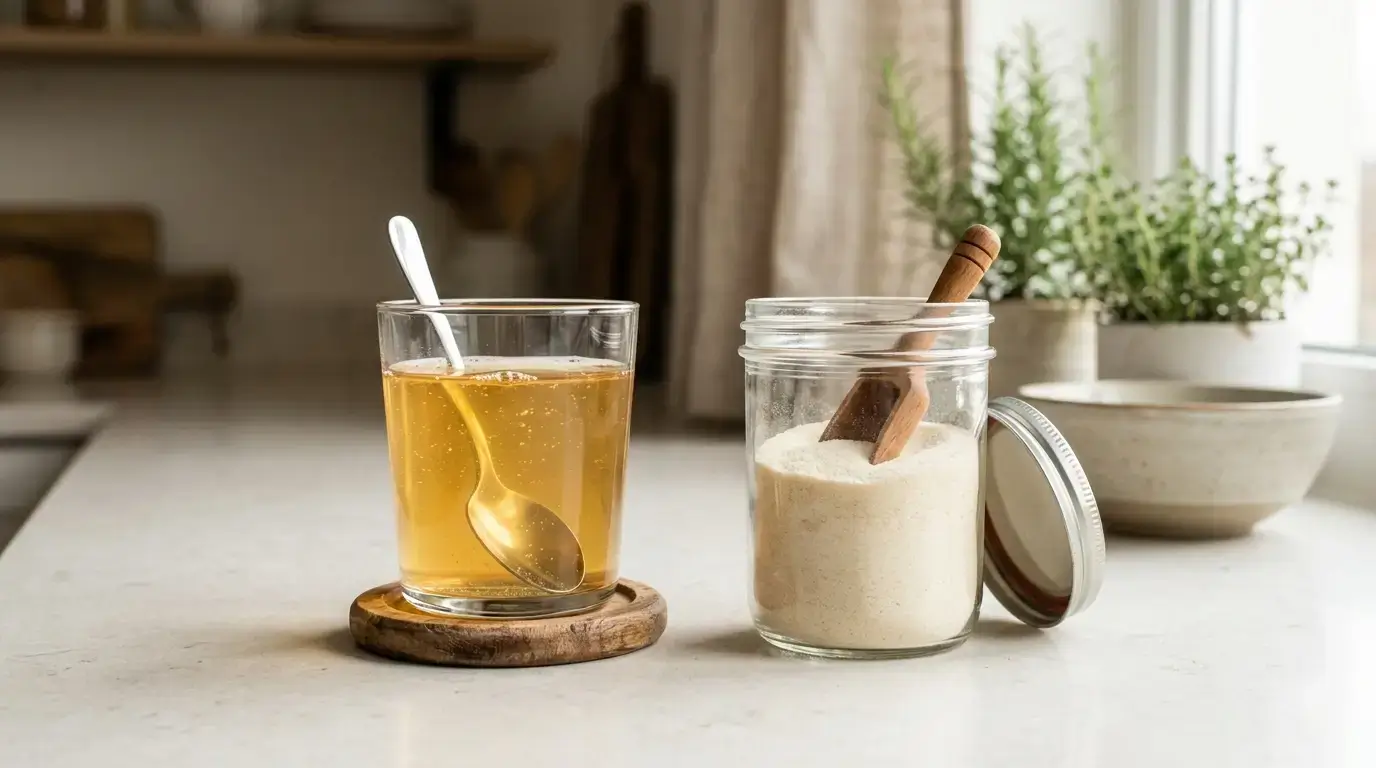
Here’s the detail that surprises most people: the vast majority of “horse gelatin trick” recipes circulating online don’t contain any horse-derived ingredient at all. What people are actually buying and using is standard unflavored gelatin—usually made from cattle hides, pig skin, or fish—the exact same product sold for making Jell-O, panna cotta, or gummies. The “horse” branding appears to have been added specifically because it sounds unusual and attention-grabbing, a naming strategy shared by other viral “trick” trends built around ordinary pantry ingredients dressed up with an unexpected animal name.
True equine-derived gelatin does exist, but it’s a niche product, primarily marketed for horses themselves (to support their joints, hooves, and coat) rather than for human consumption. If you’re using a standard tub of Knox or Great Lakes gelatin from the baking aisle, you’re not using horse gelatin, regardless of what the video that introduced you to the trend called it.
What the Claims Get Right

The core mechanism behind the trend isn’t fake. Gelatin is a source of protein, and protein is genuinely the most satiating macronutrient per calorie — meaning it helps you feel full. A registered dietitian at Hackensack Meridian Health explained that gelatin’s effect comes largely from how it physically expands with liquid in the stomach, contributing to a feeling of fullness, alongside its protein content. If drinking a gelatin mixture before a meal helps you naturally eat a bit less, that’s a real, legitimate effect—not a trick, just protein and volume doing what they normally do.
What the Claims Get Wrong
This is where the exaggeration creeps in, and it’s worth being specific:
- “Boosts testosterone” — no peer-reviewed human research supports this. Glycine (an amino acid in gelatin) plays a role in testosterone synthesis in animal studies, but that’s a long way from showing that drinking gelatin raises testosterone in people.
- “Natural GLP-1” or appetite hormone activation—this overstates the evidence. Gelatin’s satiety effect comes from ordinary protein volume, not a documented hormonal mechanism matching GLP-1 medications.
- “Burns fat” or “boosts metabolism” — there’s no support for this. Any weight change comes purely from eating less, not from gelatin doing anything metabolically special.
- “More potent because it’s from horses”—even setting aside that real horse gelatin usually isn’t what’s being used, there’s no evidence that gelatin from any particular animal source outperforms another for these purposes. The amino acid profiles are essentially the same.
Horse Gelatin Side Effects and Safety
Plain food-grade gelatin is generally well tolerated in normal food amounts, but some people may experience digestive discomfort, bloating, or a feeling of excessive fullness. Allergic reactions are also possible depending on whether the gelatin comes from bovine, pork, or fish sources.
The bigger safety concern with the viral horse gelatin trend isn’t ordinary gelatin itself, but unverified supplements sold with exaggerated weight-loss, testosterone, or male-performance claims. If you’re using a packaged supplement rather than plain food-grade gelatin, check the ingredient list and manufacturer carefully.
Where the Real Scam Risk Actually Shows Up
The DIY version — gelatin, warm water, maybe lemon — isn’t dangerous, and it isn’t really “the scam.” The genuine risk shows up with branded supplement products that claim to contain real, potent, or specially sourced “horse gelatin” and attach performance or sexual health claims to it. Products in this specific category carry a real risk of being mislabeled or, in rarer cases, spiked with undisclosed pharmaceutical ingredients — a documented problem in the broader unregulated men’s performance supplement market. If you’ve purchased a packaged product marketed this way, it’s worth verifying exactly what’s in it before continuing to use it, and stopping if anything about the labeling or sourcing seems unclear.
A Word of Caution About “Studies” Circulating Online

While researching this trend, we came across the same oddly specific statistic — a “six-month test involving 164 men,” supposedly published in June 2026 — repeated word-for-word across a large number of unrelated websites, including several using hijacked university subdomains to appear more credible. We were not able to verify this as a real, published study anywhere, and its exact wording appearing identically across so many unconnected sites is a strong sign of mass-produced, unverifiable content rather than genuine research. We’re flagging it here specifically so you know to be skeptical if you see it cited elsewhere—it shouldn’t be treated as real evidence either way.
Frequently Asked Questions
Is horse gelatin actually sold for people to eat?
Not really as a mainstream consumer product. What’s marketed as “horse gelatin” for human use online is typically standard bovine or fish gelatin with horse-themed branding attached.
Is the horse gelatin trick safe to try?
The basic DIY recipe—plain gelatin dissolved in warm water—is generally safe for most healthy adults in normal amounts, the same as using gelatin in any other recipe. As always, check with a doctor if you have a specific health condition or take regular medication.
Does the Horse Gelatin Trick Really Work?
It may help indirectly with fullness because gelatin provides protein and is consumed with liquid. That could help some people eat less at a meal, but the horse gelatin trick isn’t a proven fat burner, testosterone booster, or shortcut to weight loss.
Why is it marketed specifically “for men”?
There’s no biological reason gelatin’s effects would be limited to men—the “for men” framing appears to be a marketing choice tied to how the trend spread on social media, not a reflection of the actual science.
Should I buy a branded “horse gelatin” supplement instead of making it myself?
We’d recommend caution. Standard unflavored gelatin from a trusted grocery brand gives you the same real benefits at a fraction of the cost, without the added risk of an unverified branded product making unsupported claims.
Disclaimer: This article is for informational purposes only and does not constitute medical advice. Always consult a qualified healthcare provider before making significant changes to your diet and especially before using any supplement marketed for hormonal or sexual health claims.
If you’re curious about the recipe itself, our guide on horse gelatin for men walks through the actual preparation, and for more on gelatin’s real, evidence-backed benefits, see our guide on does gelatin help you lose weight.