
Quick Answer
| What is aspic? | A savory gelatin, traditionally made from meat stock, set in a mold around meat, seafood, vegetables, or eggs |
| How old is it? | Roots go back nearly 1,000 years, with a detailed recipe documented as early as 1375 |
| Why did it disappear? | Fell out of American favor in the 1970s as tastes shifted toward French cuisine and convenience food |
| Why is it trending again? | A mix of nostalgia, social media “shock content,” and a broader food movement toward nose-to-tail cooking and bone broth |
| Is it hard to make? | Traditional versions are labor-intensive; a simplified version using unflavored gelatin and store-bought stock is much faster |
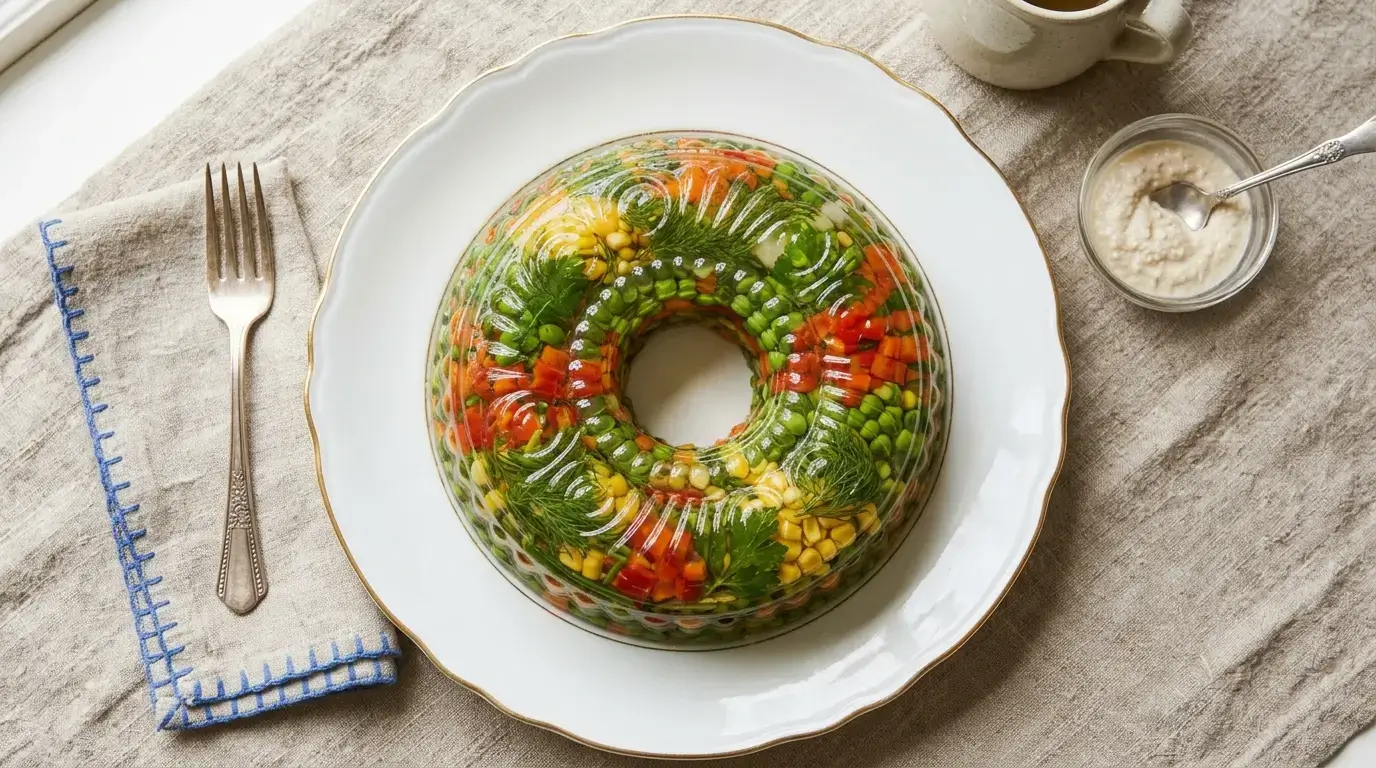
What is aspic — at its core, it’s a savory gelatin made from meat stock or broth, chilled until it sets into a clear, jiggly jelly that encases meat, seafood, vegetables, or eggs inside it. Once a fixture of elegant dinner tables, then a punchline of mid-century American kitsch, aspic is having a genuine, well-documented revival right now—both on social media and on fine dining menus.
Print
What Is Aspic? The Retro Gelatin Dish Making a Comeback
- Total Time: 4 hours 35 minutes
- Yield: 4 servings 1x
Description
A modern, simplified aspic using unflavored gelatin instead of hours of bone stock — savory gelatin encasing meat, vegetables, or eggs.
Ingredients
- 2 cups good-quality chicken or beef stock (low-sodium)
- 2 tablespoons unflavored gelatin powder
- ½ cup cold water
- Cooked, sliced meat, vegetables, or hard-boiled eggs (your choice)
- Salt, pepper, and fresh herbs, to taste
Instructions
- Sprinkle the gelatin over the cold water in a bowl and let it bloom for 5 minutes.
- Heat the stock in a saucepan until hot but not boiling, then whisk in the bloomed gelatin until fully dissolved. Season to taste.
- Pour a thin layer of the gelatin mixture into a mold or loaf pan and chill for 10–15 minutes, until just set.
- Arrange your chosen meat, vegetables, or eggs on top of the set layer.
- Pour the remaining gelatin mixture over the filling, then refrigerate for at least 4 hours, or until fully set.
- To unmold, dip the bottom of the pan briefly in warm water, then invert onto a serving plate.
Notes
Use a well-seasoned, good-quality stock — since it’s the dominant flavor of the whole dish, a weak or bland stock makes for a weak or bland aspic.
- Prep Time: 20 minutes
- Cook Time: 15 minutes
- Category: Appetizer
- Method: Stovetop
- Cuisine: American
Nutrition
- Serving Size: 1 serving
- Calories: 90
- Protein: 12g
Keywords: simple modern aspic, aspic, gelatin, savory gelatin, meat aspic, vegetable aspic
The Actual History Is Older Than You’d Think
Aspic’s roots go back almost a thousand years, tracing to a time when cooks first discovered that boiling collagen-rich bones and connective tissue produced a broth that would naturally set into a jelly once cooled. A detailed recipe appears in Le Viandier, a French cookbook written around 1375, and even earlier poetic references describe gelled fish dishes from the 9th century. For most of its history, aspic wasn’t really a novelty food at all—it was a practical preservation method. A layer of set gelatin around meat sealed out air and bacteria, extending how long food stayed safe to eat, long before refrigeration existed.
The dish spread through French haute cuisine by the 18th century, where chefs began using it as much for visual drama as for preservation—encasing lobster, foie gras, or vegetables in glassy, glossy molds for aristocratic tables.
How It Became a Mid-Century American Icon

Aspic crossed the Atlantic with European cooks and gained real momentum in the U.S. once powdered gelatin became commercially available. Knox Gelatin’s founder was reportedly approached in the 1890s by a food writer looking for an easier alternative to the tedious job of extracting gelatin from stock, and the resulting powdered product opened aspic-making to home cooks who’d never made a traditional stock-based version in their lives.
By the 1950s, gelatin molds had become a genuine status symbol—a way to show off a refrigerator, free time, and domestic skill all at once. Recipes ranged from savory combinations of tomato, olives, and hard-boiled eggs to increasingly elaborate seafood and meat versions, often built around canned or packaged convenience ingredients rather than real stock.
Why It Fell Out of Fashion
By the 1970s, aspic had largely disappeared from American tables. A few things happened at once: Julia Child’s popularization of French cooking shifted culinary taste toward simpler, fresher preparations, and gelatin salads increasingly read as dated rather than sophisticated. The rise of dieting culture also worked against sugary, processed gelatin products. What had once signaled modern convenience started to look, to a new generation, like a strange relic of the past.
Why Aspic Is Suddenly Trending Again
The current revival is happening on two fronts at once, for very different reasons.
On social media, aspic has become a genre of its own — visually strange, historically real, and unsettling enough to stop someone mid-scroll. Facebook groups dedicated to vintage gelatin photos have thousands of members, and TikTok creators regularly share both genuine attempts and deliberately over-the-top versions built for shock value.
In professional kitchens, the revival is more earnest. Chefs at serious restaurants across the country — not novelty diners — are bringing traditional aspic techniques back onto menus, often as part of a broader nose-to-tail, low-waste cooking movement that also includes bone broth and rendered animal fats. Food historian Ken Albala, author of a full book on the topic, has described gelatin as one of the few foods that swings dramatically in and out of fashion across different eras—and the current moment fits that pattern.
A Simplified Modern Aspic Recipe
Traditional aspic starts with hours of simmering bones and connective tissue to extract natural gelatin. This version uses unflavored gelatin powder instead, cutting the process down to something achievable on a weeknight.
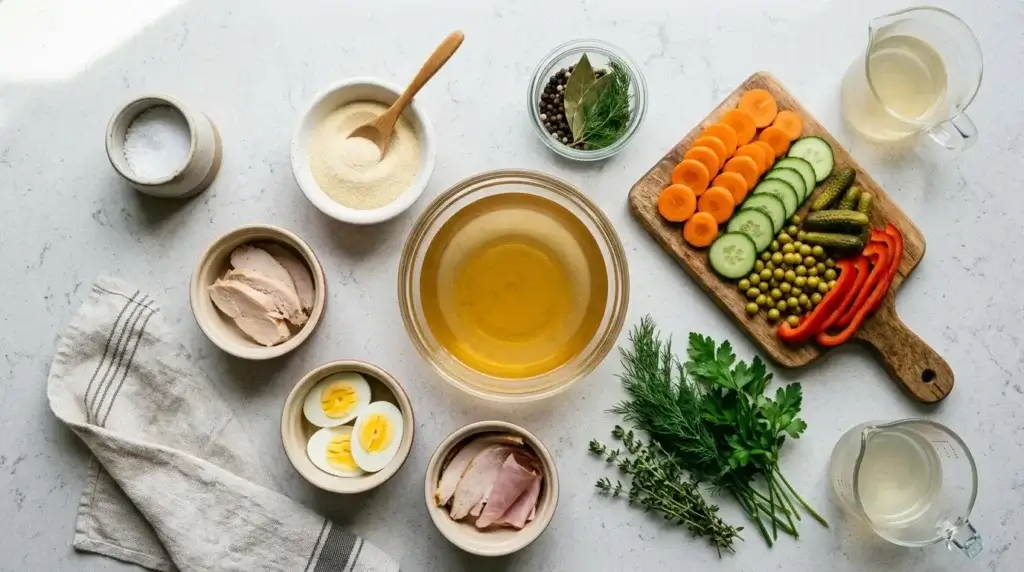
Ingredients:
- 2 cups good-quality chicken or beef stock (low-sodium, so you can control the seasoning)
- 2 tablespoons unflavored gelatin powder
- ½ cup cold water
- Cooked, sliced meat, vegetables, or hard-boiled eggs of your choice
- Salt, pepper, and fresh herbs to taste
Method:
- Sprinkle the gelatin over the cold water in a bowl and let it bloom for 5 minutes.
- Heat the stock in a saucepan until hot but not boiling, then whisk in the bloomed gelatin until fully dissolved. Season to taste.
- Pour a thin layer of the gelatin mixture into a mold or loaf pan and chill for 10-15 minutes, until just set.
- Arrange your chosen meat, vegetables, or eggs on top of the set layer.
- Pour the remaining gelatin mixture over the filling, then refrigerate for at least 4 hours, or until fully set.
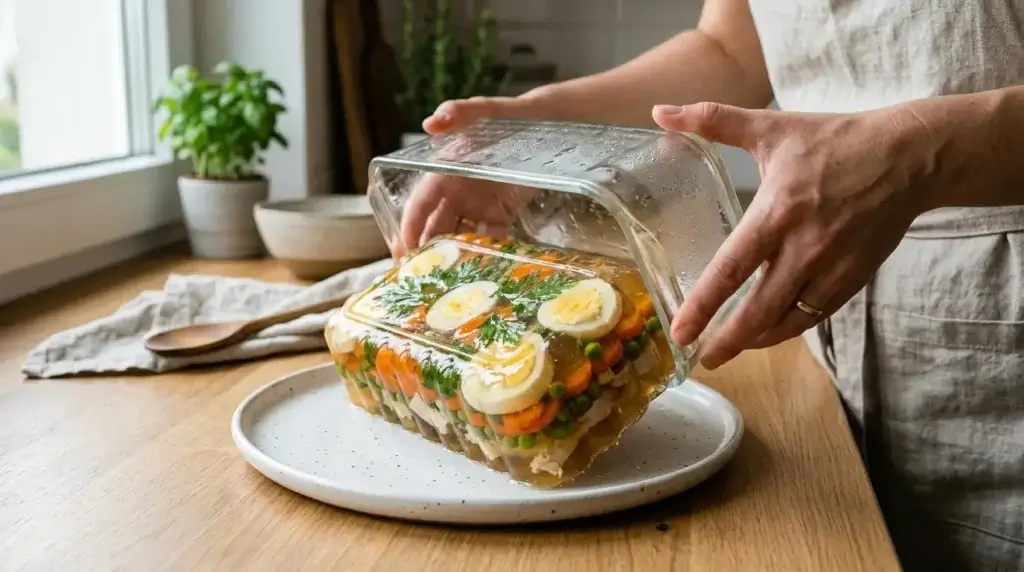
- To unmold, dip the bottom of the pan briefly in warm water, then invert onto a serving plate.
Frequently Asked Questions
Is aspic the same thing as Jell-O?
Not quite. Both use gelatin as their base, but Jell-O is a sweetened, fruit-flavored product, while aspic is traditionally savory, built around meat stock rather than sugar and fruit flavoring. Sweet gelatin molds and savory aspics developed alongside each other in American kitchens, which is part of why the two get confused.
Does aspic taste good?
It depends entirely on the recipe and your own taste. A well-made aspic built on a rich, well-seasoned stock can taste like a chilled, concentrated version of soup. Poorly made versions—especially some mid-century recipes built around canned convenience ingredients—are where aspic earned its reputation for being an acquired taste.
Is homemade aspic safe to eat?
Yes, as long as normal food safety practices are followed—cooked ingredients, proper refrigeration, and consuming it within a few days. The gelatin itself has no special safety concerns beyond standard food handling.
What’s the difference between aspic and consommé?
Consommé is a clarified, liquid broth, while aspic is that same type of stock taken a step further and set into a solid gel, typically with other ingredients suspended inside it.
Can I make a vegetarian version of aspic?
Yes — using vegetable stock and agar-agar (a plant-based gelling agent) instead of gelatin produces a similar effect, though the texture and flavor will differ somewhat from a traditional meat-stock version.
Disclaimer: Always follow standard food safety practices when preparing and storing homemade aspic, including proper refrigeration and consuming it within a few days of preparation.
If you’re interested in the technique behind aspic’s signature texture, our guide to how to bloom gelatin powder covers the basic method used here, and our vegan gelatin substitutes guide is useful if you want to try a plant-based version instead.