
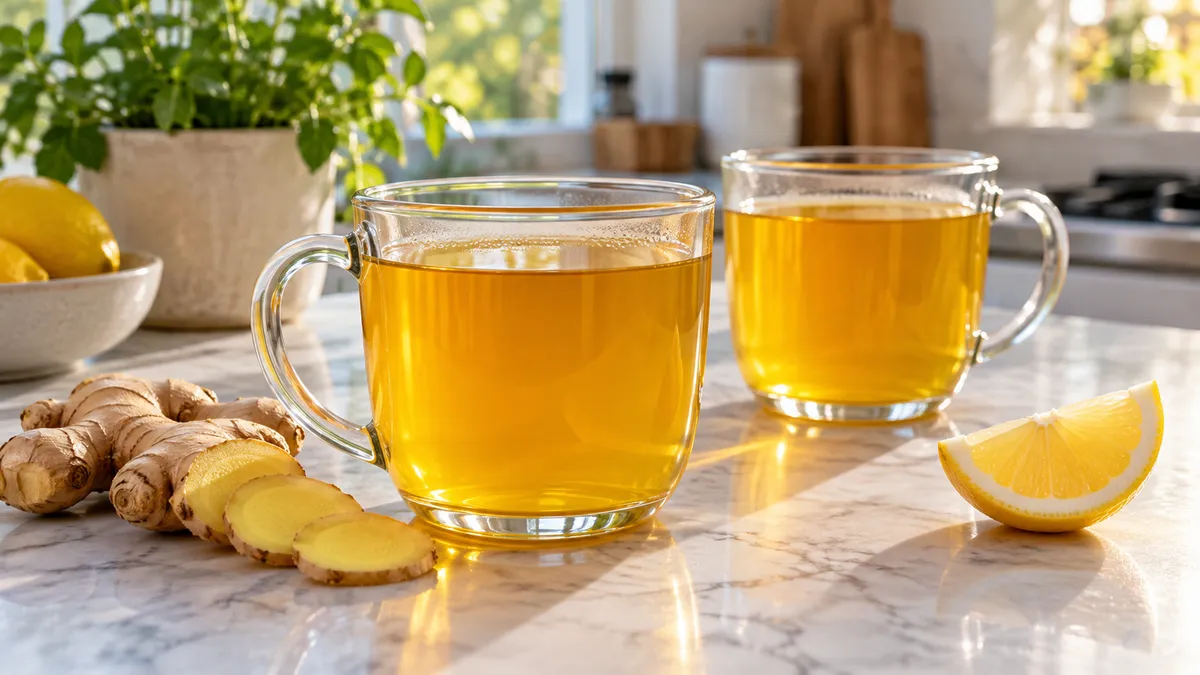
Turmeric tea is a warm drink made by simmering turmeric in water, often with ginger and lemon. This simple recipe uses ground turmeric, takes about 15 minutes, and makes two servings. You can also use fresh turmeric root or enjoy the finished drink chilled.
Expect an earthy, gently spicy cup rather than a sweet, creamy golden milk. The ginger adds warmth, while an optional squeeze of lemon brightens the flavor. Honey is optional, so you control the sweetness.
If you are wondering about turmeric tea benefits, drinking it before bed, or using it for weight loss, those questions need a separate answer from the cooking instructions. This is a beverage recipe, not a treatment or a fat-burning formula.
Jump to: Recipe overview · Make the tea · Weight-loss questions · Before bed.
What Is Turmeric Tea?
Turmeric tea is an infusion or simmered drink made with the turmeric rhizome, the underground stem sold fresh or dried and ground into a yellow-orange spice. In this recipe, water is the main liquid.
The word tea does not necessarily mean tea leaves are included. A drink made only with turmeric, ginger, water, and lemon contains no black or green tea. If you buy a blend, check the ingredients because some products combine the spices with caffeinated tea leaves.
Turmeric has a distinctive earthy flavor. Ginger brings a sharper, peppery warmth, and citrus adds brightness. You can use all three without turning the drink into an intensely spicy concentrate.
Unlike a turmeric shot, this recipe is meant to be sipped as a regular-sized drink. Unlike golden milk, it does not use milk as its base. Those are different preparations, even when their ingredients overlap.
Turmeric Tea Recipe at a Glance
| Detail | This recipe |
|---|---|
| Yield | 2 servings, approximately 1 cup each |
| Prep time | 5 minutes |
| Cook time | 10 minutes |
| Total time | 15 minutes, plus cooling as needed |
| Main ingredients | Water and ground turmeric |
| Flavor additions | Ginger, lemon, and optional honey |
| Equipment | Small saucepan, spoon or whisk, fine-mesh strainer, two mugs |
| Caffeine | None from the listed ingredients |
These are culinary quantities for flavor, not a medicinal dose. Start with the basic recipe before adding several extra spices or making it stronger.
Ingredients for Ginger Turmeric Tea
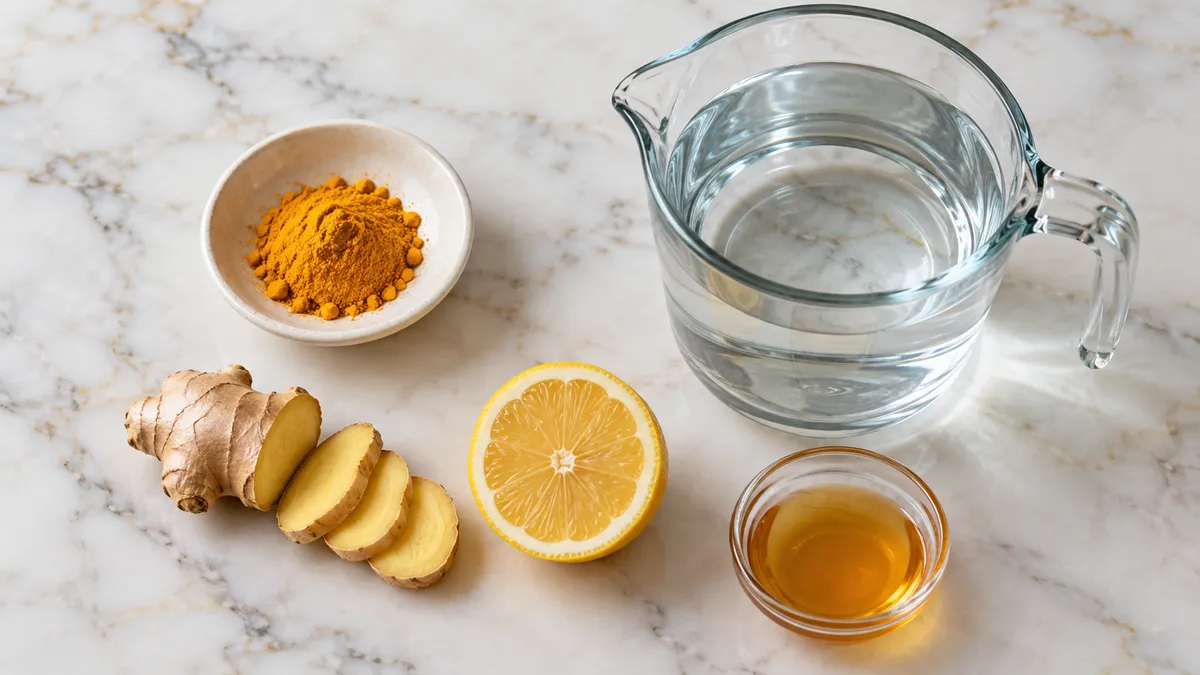
For two servings, gather:
- 2 cups water (480 mL), plus a little extra after simmering if needed. Water keeps this version light and lets you adjust the strength easily.
- 1/2 teaspoon ground turmeric. Use ordinary food-grade turmeric powder, not the contents of a curcumin supplement capsule.
- One 1-inch piece fresh ginger, approximately 10 g, scrubbed and thinly sliced, optional. Leave it out for plain turmeric tea, or use it for the ginger version.
- 2 teaspoons lemon juice, optional, plus more to taste. Add it after simmering so you can judge the balance in the finished drink.
- Up to 2 teaspoons honey for the whole batch, optional. Taste before sweetening. You may prefer none.
A tiny pinch of black pepper is an optional flavor variation, not a required ingredient. There is no need to add a large amount in pursuit of a health effect.
Check that your turmeric smells pleasantly earthy rather than stale. Keep the spice container closed between uses, and use a clean measuring spoon. Fresh ginger should be firm enough to slice easily, without mold or a spoiled smell.
Print
Turmeric Tea with Ginger and Lemon
- Total Time: 15 minutes
- Yield: 2 servings 1x
Description
A simple water-based turmeric tea with optional ginger, lemon and honey. Makes two servings in about 15 minutes, plus cooling as needed.
Ingredients
- 2 cups water (480 mL), plus extra hot water after simmering if needed
- 1/2 teaspoon ground turmeric
- 1-inch piece fresh ginger (about 10 g), scrubbed and thinly sliced, optional
- 2 teaspoons lemon juice, optional, plus more to taste
- Up to 2 teaspoons honey for the whole batch, optional
Instructions
- Measure the turmeric and slice the optional ginger. Set aside the lemon juice and honey.
- Combine the water, turmeric and optional ginger in a small saucepan. Stir or whisk to distribute the powder.
- Bring just to a boil, then reduce the heat and simmer gently for 10 minutes, stirring occasionally.
- Remove from the heat and carefully strain out the ginger. Fine turmeric particles may remain. Top up with hot water to approximately 2 cups if evaporation has reduced the volume, then divide between two mugs.
- Let cool until comfortable to sip. Add optional lemon juice and honey to taste. Stir before drinking if the powder settles.
Notes
For a fresh-root version, replace the powder with about 2 teaspoons finely grated fresh turmeric as a culinary starting point, then simmer and strain. This is not a medicinal-dose equivalence. A tiny pinch of black pepper is optional for flavor. Turmeric stains, and ground powder does not dissolve fully. Refrigerate promptly in a clean covered container and use within 3 days. This drink is not a treatment or a weight-loss formula. Images are AI-generated illustrations, not photographs of a tested batch.
- Prep Time: 5 minutes
- Cook Time: 10 minutes
- Category: Drinks
- Method: Stovetop
- Cuisine: International
Nutrition
- Serving Size: approximately 1 cup
Keywords: turmeric tea, ginger turmeric tea, turmeric tea recipe, lemon ginger turmeric tea
How to Make Turmeric Tea
1. Prepare the ingredients
Measure the ground turmeric and slice the ginger if using. Set out the lemon juice and honey separately so you can add them to taste at the end.
Turmeric can stain pale counters, clothing, and some utensils. Work carefully, wipe spills promptly, and choose a saucepan and spoon that are easy to clean.
2. Combine the water and spices
Put the water, turmeric, and optional ginger in a small saucepan. Whisk or stir before heating to distribute the powder.
Do not expect ground turmeric to dissolve completely like sugar. Some particles will remain suspended, and a little sediment can collect at the bottom of the cup.
3. Simmer gently
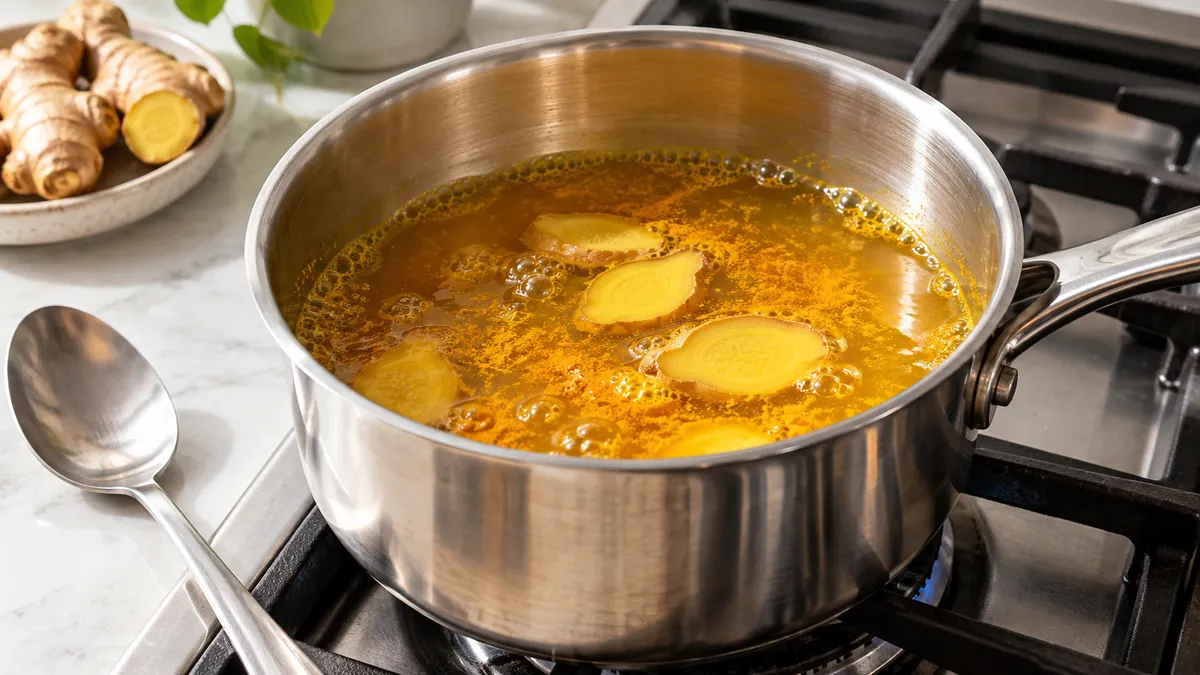
Bring the mixture just to a boil, then reduce the heat and simmer gently for 10 minutes. Stir occasionally. Avoid a vigorous boil that rapidly reduces the liquid or splashes turmeric around the stove.
If you prefer a milder ginger flavor, start with fewer slices next time. Extending the simmer is not necessary to turn this into a more effective health drink; it mainly changes flavor and concentration.
4. Strain and adjust the volume
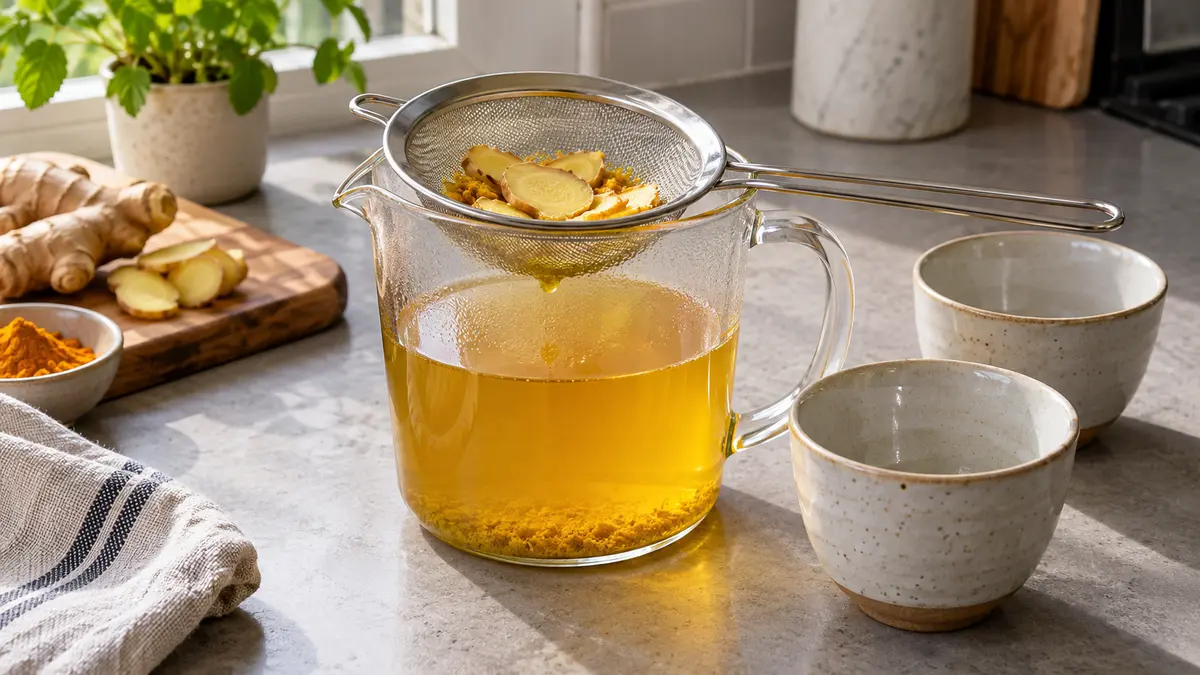
Remove the pan from the heat. Pour carefully through a fine-mesh strainer to remove the ginger pieces. Some fine turmeric particles may still pass through.
Add enough hot water to bring the finished batch back to approximately 2 cups if evaporation has reduced it noticeably. Divide between two mugs.
5. Finish to taste
Let the tea cool until comfortable to sip. Add lemon and optional honey, starting with less and tasting before adding more.
Stir before drinking if the powder settles. If you dislike the sediment, leave the last small amount in the mug rather than trying to dissolve it with more sweetener.
This method is consistent with the general simmer-and-strain approach in the Tennessee state wellness program’s ginger turmeric tea recipe. The ingredient balance above keeps the main recipe simple, with sweetness and extra spices left optional.
Fresh Turmeric vs Turmeric Powder
Ground turmeric is convenient because it is easy to measure and keeps in the spice cupboard. Fresh root gives you a different texture and preparation process, with pieces that can be strained out.
For a fresh-root variation, replace the powder with about 2 teaspoons finely grated fresh turmeric as a culinary starting point. Simmer with the water and optional ginger, then strain. Adjust future batches according to taste.
That substitution is not a laboratory equivalence for curcumin content. Root size, moisture, variety, and processing differ, so a kitchen measurement cannot guarantee a matching concentration of plant compounds.
Scrub the fresh root well and trim damaged areas. Gloves can help keep your hands from staining when grating. If the drink tastes too earthy, dilute it before deciding to add more lemon or honey.
Easy Turmeric Tea Variations
Plain turmeric tea
Use the water and ground turmeric without ginger. Finish with lemon if you enjoy it, or leave the drink unsweetened and taste its earthy flavor on its own.
Lemon ginger turmeric tea
Use the ginger in the main recipe and finish with the listed lemon juice. Add extra lemon a few drops at a time rather than trying to correct bitterness with a large amount at once.
Turmeric ginger cinnamon tea
Add a small piece of cinnamon stick while simmering, then remove it with the ginger. Keep the amount modest so cinnamon does not overwhelm the other flavors. This is a flavor variation, not a blood-sugar remedy.
Turmeric tea with black pepper
Add a tiny pinch only if you enjoy its taste. Claims about piperine and absorption do not establish that an aggressively peppery homemade tea produces better health outcomes. Avoid adding concentrated piperine products to the saucepan.
Iced turmeric tea
Prepare the recipe, cool it promptly, and refrigerate. Stir before serving because powder settles. Pour over ice and taste again before sweetening, since melting ice changes the strength.
Our iced tea guide offers more general preparation ideas. Keep in mind that adding black or green tea changes this recipe’s caffeine content.
A milk-based variation
If you want a creamy drink, choose a golden-milk-style preparation rather than expecting a splash of milk to make the water-based recipe identical. A little milk is a taste preference, not a requirement for obtaining a promised benefit.
For another spiced drink, our homemade chai tea guide explores a different flavor profile. Check its tea base if caffeine matters to you.
Turmeric Tea Benefits: What Does the Evidence Show?
The clearest immediate benefits of this recipe are practical: it offers a warm, flavorful drink, gives you control over added sweetener, and does not require caffeinated tea leaves. Broader medical claims need stronger evidence.
NCCIH’s turmeric overview says the evidence is insufficient to draw definitive conclusions about health benefits. Research often involves turmeric or curcumin products with different formulations and concentrations.
That matters because a supplement trial is not a trial of this recipe. A measured dose of an extract cannot be converted into an equivalent number of homemade mugs based on the color of the drink.
Does turmeric tea help with inflammation?
Turmeric is frequently discussed in relation to inflammation, but this recipe has not been shown to treat an inflammatory condition. Do not use the phrase anti-inflammatory tea as if it guarantees symptom relief or replaces prescribed care.
For persistent pain or swelling, identifying the cause is more useful than repeatedly strengthening a drink. The presence of a studied plant compound is a reason for research, not proof of a clinical result from every preparation.
Does turmeric lower blood pressure?
This article does not establish turmeric tea as a blood-pressure treatment. Do not reduce or stop a prescribed medicine because a drink is described online as natural.
If blood pressure is the reason you are considering a regular herbal product, ask your clinician or pharmacist about the full ingredient list and your current treatment. A homemade drink should not become a substitute for monitoring and follow-up.
Is Turmeric Tea Good for Weight Loss?
There is no established basis for promising that this homemade tea burns belly fat or produces weight loss on its own. It is not a detox, a meal replacement, or a way to compensate for an otherwise unchanged routine.
The practical question is what it replaces. Choosing an unsweetened drink instead of a heavily sweetened beverage changes your intake differently from adding a honey-sweetened tea on top of your usual food and drinks.
Honey, maple syrup, and other sweeteners still contribute to the finished drink. Their presence is not automatically a problem, but they should not disappear from the discussion because the recipe also contains turmeric.
The NIH Office of Dietary Supplements’ weight-loss overview cautions that evidence for weight-loss supplements is limited and that some products can cause harm or interact with medicines. A beverage recipe should not be used to market a supplement-style promise either.
Enjoy this tea if you like it. Keep regular meals, avoid a restrictive tea-only routine, and evaluate any weight-management plan on its own evidence rather than the drink’s yellow color or spice level.
Ginger and Turmeric Tea Before Bed
Drinking this version in the evening can be a personal preference because its listed ingredients contain no caffeine. That does not make it a proven sleep aid or demonstrate a special overnight fat-burning effect.
Check packaged blends carefully. A turmeric green tea or turmeric chai made with black tea is a different drink from a simple spice infusion.
Timing also depends on comfort. Ginger or turmeric can bother some people’s digestion, and a large drink immediately before lying down may not suit you. There is no need to force an evening habit if it causes symptoms or disrupts your night.
Choose an amount and time that fit your ordinary routine and any medical instructions you have received. Drinking it on an empty stomach, at a precise minute, or every single night is not required by this recipe.
Side Effects and Who Should Ask Before Drinking It Regularly
Turmeric can cause digestive effects such as reflux, nausea, or stomach upset. NCCIH also cautions about turmeric supplements during pregnancy and notes uncertainty about amounts beyond ordinary food use while breastfeeding.
NCCIH’s ginger guidance notes possible heartburn and digestive discomfort and advises discussing herbal products with a health professional when taking medicines.
Food use and concentrated products are different, but that distinction does not mean any homemade tea is automatically safe for everyone. Ask before introducing a regular herbal routine if you take medicines, have liver disease, are pregnant or breastfeeding, or have previously reacted to these ingredients.
LiverTox’s turmeric review describes rare liver injury, often involving enhanced-absorption products, with some reports involving powder or tea as well. If you develop dark urine, yellowing skin or eyes, or other concerning symptoms after using a turmeric product, stop using it and seek medical advice.
Do not increase the dose, add extracts, or take supplement capsules alongside several strong mugs in an attempt to accelerate a result. If a clinician has advised you to avoid turmeric, this recipe does not override that instruction.
Storage and Reheating
For a simple household approach, refrigerate the prepared drink promptly in a clean covered container and use it within 3 days. Do not leave a batch on the counter overnight to cool.
General FDA food-storage guidance recommends refrigerating perishables within two hours, or one hour above 90°F, and keeping the refrigerator at 40°F or below. Apply careful handling especially when adding fresh ingredients or milk.
Reheat only the portion you want. Stir well and heat thoroughly, then let it cool to a comfortable sipping temperature. Add fresh lemon after reheating if you prefer its flavor that way.
Discard a batch if handling has been unsafe or you are unsure about it. An attractive color or strong ginger smell is not a reliable test of safety.
Troubleshooting Your Cup
| Problem | Likely kitchen explanation | Adjustment |
|---|---|---|
| Powder at the bottom | Fine spice particles settle | Stir before sipping or leave the sediment |
| Too earthy | Turmeric flavor is stronger than you prefer | Add hot water; use less turmeric next time |
| Too sharp | More ginger or lemon than suits your taste | Dilute and reduce that ingredient next batch |
| Too sweet | Sweetener was added before tasting | Start unsweetened next time |
| Less than two servings | Evaporation during simmering | Top up the finished batch with hot water |
| A stained mug | Turmeric pigment clings to the surface | Clean promptly using a method suitable for the mug |
For another tart herbal drink, see our hibiscus tea guide. Choose based on flavor and suitability rather than assuming every colorful infusion has the same benefits.
FAQS
How do you make turmeric tea with powder?
For this recipe, simmer 1/2 teaspoon ground turmeric in 2 cups water for 10 minutes, with optional sliced ginger. Strain out the ginger, top up the water if needed, and finish with optional lemon and honey.
Can you use fresh turmeric instead of powder?
Yes. Try about 2 teaspoons finely grated fresh turmeric for the two-serving batch, then adjust future batches to taste. This is a culinary substitution, not an equivalent medicinal dose.
What are the benefits of turmeric tea?
It is a flavorful drink that can be made without caffeine or added sweetener. Medical benefits from this homemade preparation are not established, and supplement research should not be treated as proof for a cup of tea.
Is ginger turmeric tea good before bed?
The listed ingredients contain no caffeine, so an evening cup may suit your preferences. It is not a proven sleep treatment or overnight weight-loss drink. Avoid a timing or quantity that causes discomfort.
Does turmeric tea help with weight loss?
It is not established as a fat-burning treatment. An unsweetened cup can replace a sweeter beverage, but adding tea to an unchanged routine does not guarantee weight loss.
Does turmeric tea lower blood pressure?
This recipe is not an established treatment for hypertension. Continue prescribed care and ask about regular herbal use if you take blood-pressure medicine or have concerning readings.
Do you need black pepper in turmeric tea?
No. A tiny pinch is an optional flavor addition. Do not add concentrated piperine or large amounts of pepper to chase absorption claims; better absorption does not establish better outcomes from this recipe.
Can you drink turmeric tea every day?
There is no universal daily amount appropriate for everyone. Consider symptoms, medicines, medical conditions, and the full ingredient list. This recipe gives serving quantities for cooking, not a daily treatment schedule.
Why does turmeric powder settle in tea?
It does not dissolve completely in water, so fine particles can collect at the bottom. Stir before drinking, dilute to taste, or leave the sediment if you dislike it.
Is turmeric tea the same as golden milk?
No. This recipe uses water as its base, while golden milk uses milk or a milk alternative. They can share spices but differ in texture, ingredients, and nutritional profile.
1 thought on “Turmeric Tea Recipe: Easy Ginger Tea, Benefits & Bedtime Questions”