
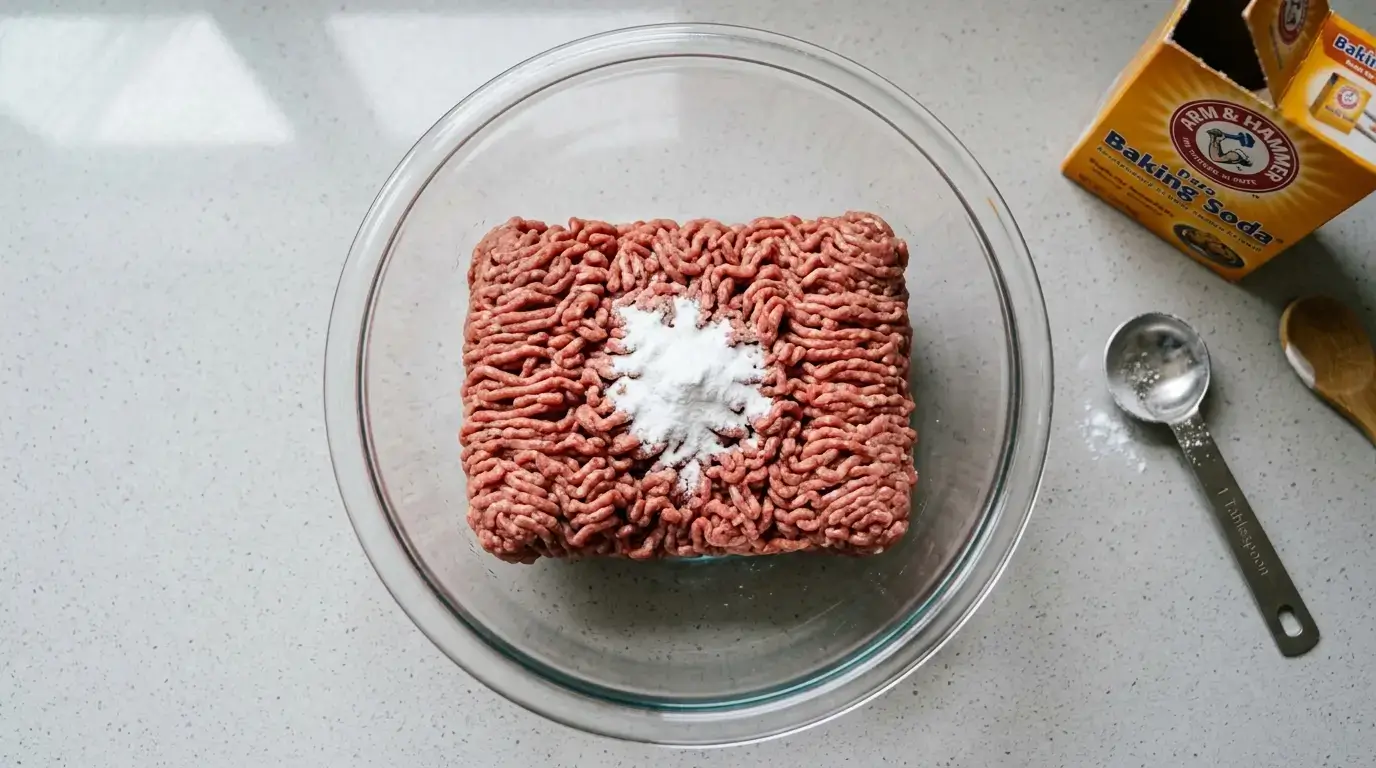
Quick Answer
| Does it work? | Yes — raises the meat’s surface pH, which keeps proteins from tightening up during cooking |
| How much to use | 1/4 to 1/2 teaspoon of baking soda per pound of ground beef |
| How long to let it sit | 15-20 minutes at room temperature is enough |
| Biggest mistake | Using too much — anything over 1 teaspoon per pound can taste soapy or turn the texture mushy |
| Do you need to rinse it off? | No — the amount used is small enough to just cook it in directly |
Adding baking soda to ground beef isn’t just a viral cooking trick — it’s a technique that’s been tested by America’s Test Kitchen and is widely used in professional kitchens, especially for stir-fry “velveting.” The short answer: yes, it genuinely tenderizes ground beef, and the effect is noticeable, not placebo. Here’s exactly how to do it right, and where people tend to get it wrong.
Why Baking Soda Tenderizes Meat
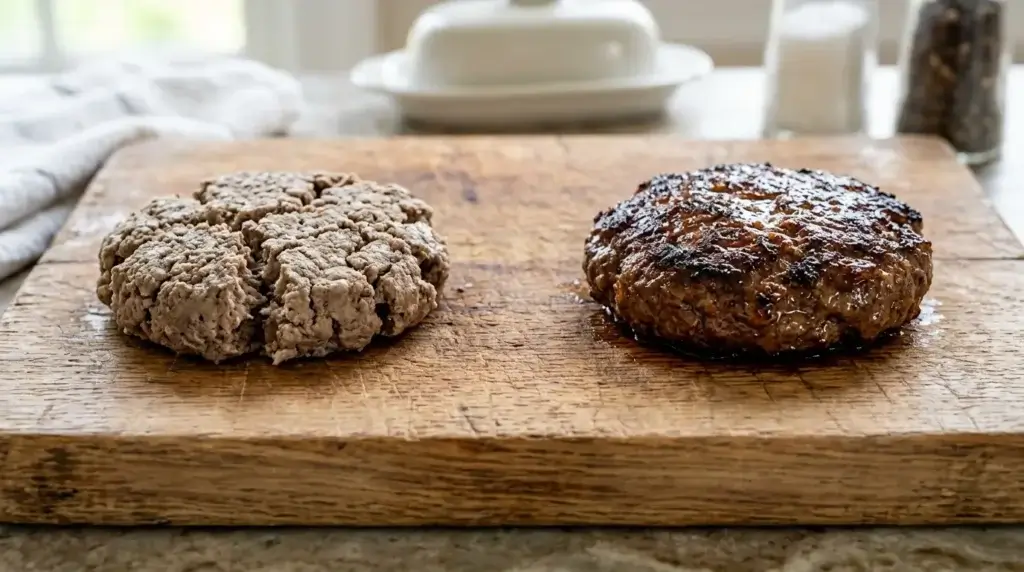
Baking soda (sodium bicarbonate) is alkaline. When you mix a small amount into raw ground beef, it raises the pH on the surface of the meat. That shift in pH makes it harder for the muscle proteins to bond tightly together as they cook — which is exactly what causes ground beef to turn tough, dry, and crumbly in the first place. Loosening that protein structure means the meat holds onto more moisture and cooks up softer, with a texture closer to what you’d get from a restaurant burger or a professional stir-fry.
It’s the same basic chemistry behind “velveting” meat in Chinese cooking, just applied more simply to ground beef instead of sliced cuts.
The Right Ratio — Don’t Eyeball This One
This is the part most people get wrong, usually by adding too much. The tested, reliable ratio is:
1/4 to 1/2 teaspoon of baking soda per 1 pound of ground beef.
Scale it up proportionally for larger batches — 1/2 to 1 teaspoon for 2 pounds, and so on. Some recipes push closer to 3/4 teaspoon per 2 pounds when combined with salt, but staying at or under 1/2 teaspoon per pound is the safer range for home cooking.
Why the amount matters so much: baking soda has a distinct alkaline, slightly soapy taste on its own. Too little and you won’t notice any tenderizing effect at all. Too much — generally anything over 1 teaspoon per pound — and that soapy taste comes through in the finished dish, along with a texture that can turn mushy instead of tender.
How to Do It, Step by Step
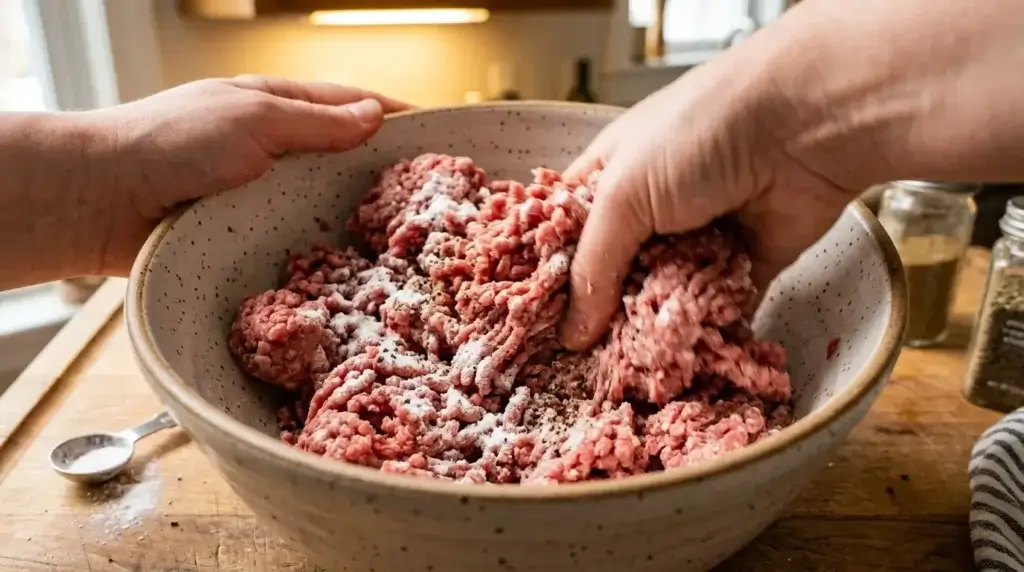
- Place your raw ground beef in a mixing bowl.
- Sprinkle 1/4 to 1/2 teaspoon of baking soda (per pound) evenly over the meat.
- Use your hands to gently mix and massage the baking soda into the meat until it’s evenly distributed — don’t overwork it, or the texture can turn dense.
- Let it rest at room temperature for 15-20 minutes. This is enough time for the reaction to take effect; testing by America’s Test Kitchen found that even letting it sit longer (up to 45 minutes) didn’t meaningfully improve results beyond that first 15-20 minute window.
- Cook as usual — brown in a skillet, form into patties, or use in any recipe that calls for ground beef.
- No rinsing needed. The amount used is small enough that it cooks in directly without leaving a residue.
Does This Work for Other Meats Too?
Yes — the same principle applies to ground turkey, chicken, and pork, which often benefit even more since they tend to be leaner and drier than beef. The ratio stays roughly the same, around 1/4 to 1/2 teaspoon per pound, though very lean poultry may need a slightly shorter resting time to avoid over-tenderizing.
When This Technique Is Most Useful
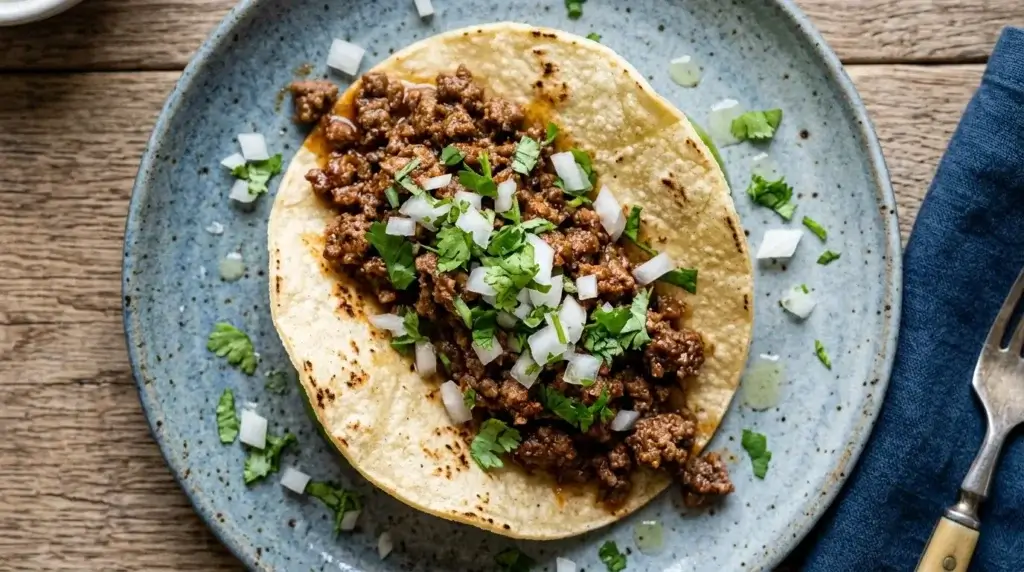
This trick makes the biggest difference in dishes where texture really shows — smash burgers, meatballs, meatloaf, taco filling, or a stir-fry crumble. If you’re already using a fattier blend of ground beef (80/20 or higher), the effect will be more subtle, since fattier meat is naturally more forgiving on texture already. Leaner blends (90/10 or higher) tend to show the biggest improvement.
Frequently Asked Questions
Can I use baking powder instead of baking soda for this?
No. Baking powder contains baking soda plus an acid and a filler starch, which changes how it reacts with the meat’s proteins. Stick to plain baking soda for this specific technique.
Will baking soda change the flavor of the meat?
Not if you stay within the recommended ratio (1/4 to 1/2 teaspoon per pound). Some people notice the meat tastes very slightly sweeter or less bitter, but it shouldn’t taste like baking soda itself unless you’ve used too much.
Is this the same as brining meat?
It’s a related idea — both work by adjusting the meat’s chemistry to retain moisture — but baking soda acts faster and more directly than a traditional salt brine, which usually needs hours to take full effect.
Does this trick actually reduce the gray liquid that comes out of ground beef while cooking?
Yes — several home cooks and recipe testers report noticeably less of the grayish liquid pooling in the pan when baking soda is used first, since the meat holds onto more of its own moisture instead of releasing it during cooking.
Is it safe to eat baking soda-treated meat regularly?
Yes, when used at the recommended small amounts (1/4 to 1/2 teaspoon per pound), baking soda is a common food-safe ingredient used in everyday cooking and baking.
Disclaimer: Always measure baking soda carefully and avoid exceeding the recommended ratio — using too much can affect both taste and texture.
If you’re interested in other everyday uses for this pantry staple, our guide to baking soda in cooking and baking covers benefits well beyond this one trick. For a recipe where texture really matters, try this technique in our smash burger tacos recipe or in a batch of birria tacos for extra-tender shredded filling.