Quick Answer
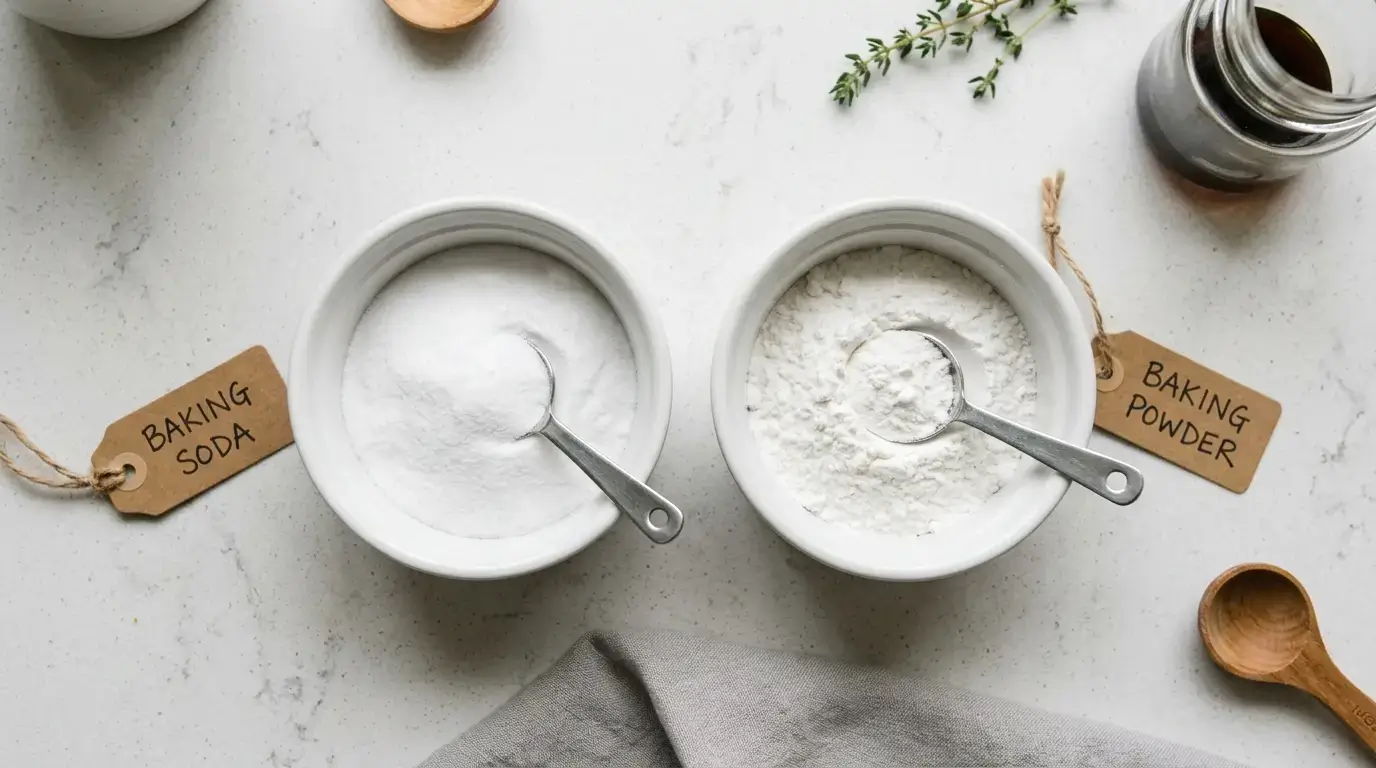
| Baking soda | Pure sodium bicarbonate — needs an acidic ingredient to activate |
| Baking powder | Baking soda + a built-in acid (cream of tartar) + cornstarch — activates on its own |
| Can you substitute one for the other? | Yes, but not 1:1 — see exact ratios below |
| Which is stronger? | Baking soda, by roughly 3-4 times |
| Common mistake | Using them interchangeably in equal amounts, which leaves baked goods flat or overly bitter |
The short answer to baking soda vs baking powder: they are not the same ingredient, even though baking powder actually contains baking soda as one of its components. The real difference comes down to what activates them — and getting that wrong is one of the most common reasons a baking recipe fails.
The Actual Chemistry, in Plain Terms
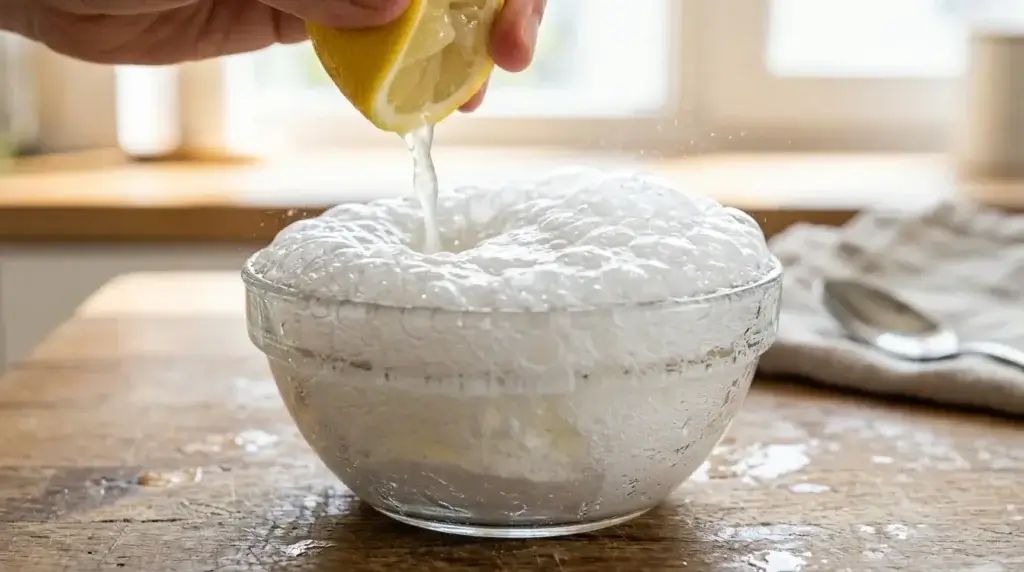
Baking soda is pure sodium bicarbonate. On its own, it does nothing in a batter. It needs to come into contact with something acidic — buttermilk, yogurt, lemon juice, honey, brown sugar, or natural cocoa powder — to trigger a chemical reaction that releases carbon dioxide gas. That gas is what creates the bubbles that make baked goods rise.
Baking powder is baking soda with the acid already built in (typically cream of tartar), plus a bit of cornstarch to keep it from clumping and reacting prematurely in the container. Because the acid is already there, baking powder doesn’t need an additional acidic ingredient in the recipe to work — it reacts with moisture and heat on its own.
Most baking powder sold today is “double-acting,” meaning it reacts twice: once when it gets wet (mixed into batter), and again when it hits the heat of the oven. This gives a more reliable, sustained rise than a single reaction alone.
Why Recipes Specify One Over the Other

This isn’t arbitrary — it depends on what else is in the recipe:
- Recipes with an acidic ingredient already in them (buttermilk pancakes, chocolate cake, honey-based quick breads) typically call for baking soda, since the acid needed to activate it is already present.
- Recipes without a strong acidic component (many cookies, biscuits, plain cakes) typically call for baking powder, since it doesn’t rely on anything else in the batter to work.
- Some recipes use both — baking soda to react with a mild acid already in the batter, and baking powder to provide the extra lift the recipe still needs.
Exact Substitution Ratios
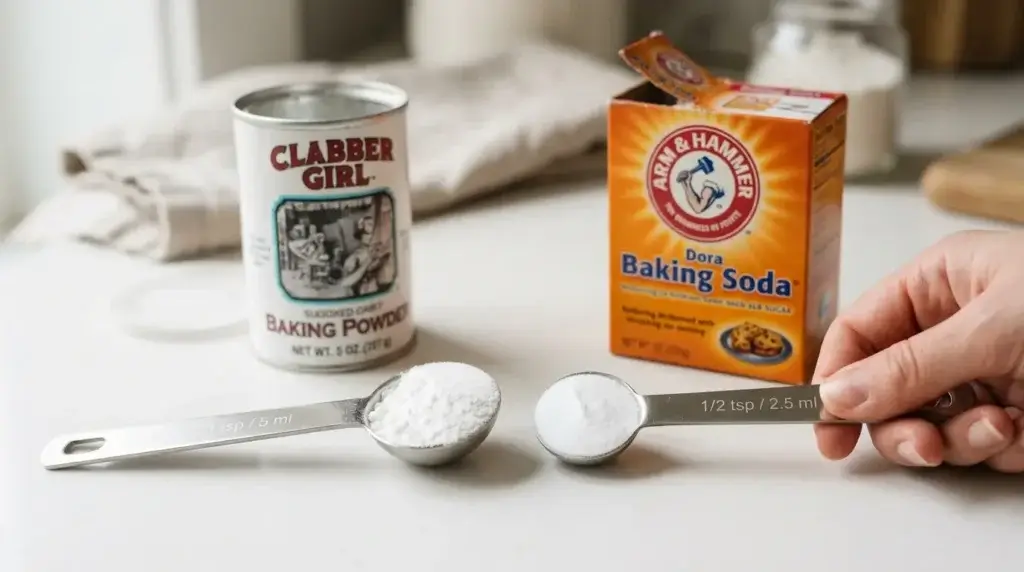
If you’re out of one and need to substitute the other, don’t do it in equal amounts — the results will be noticeably off.
Out of baking soda? Use baking powder instead: Use 3 times the amount of baking powder as the recipe calls for in baking soda. So 1/2 teaspoon of baking soda becomes 1.5 teaspoons of baking powder.
Out of baking powder? Use baking soda instead: Use about 1/4 the amount of baking soda, plus an acidic ingredient to activate it (like 1/2 teaspoon cream of tartar, or swap some liquid in the recipe for lemon juice or buttermilk). So 1 teaspoon of baking powder becomes roughly 1/4 teaspoon of baking soda plus an acid.
A word of caution either way: these substitutions are approximations, not an exact science, and can shift the final taste and texture slightly. Too much baking soda specifically can leave a metallic or soapy taste, so it’s worth erring on the lower end of the ratio if you’re unsure.
What Happens If You Get It Wrong
Using baking soda where a recipe needs baking powder (without adding an acid) usually means the batter won’t rise properly — it stays dense and flat, since there’s nothing to trigger the reaction. Using baking powder where a recipe specifically calls for baking soda can sometimes work fine in a pinch, but it may leave a slightly different texture or a faint bitter aftertaste if you use too much, since you need a larger volume of baking powder to match baking soda’s strength.
Do They Ever Go Bad?
Yes, both lose potency over time. To test baking soda, add a small spoonful to a bit of vinegar or lemon juice — if it fizzes vigorously, it’s still active. To test baking powder, stir a spoonful into hot water — if it bubbles right away, it’s good to use.
Frequently Asked Questions
Is baking soda the same as bicarbonate of soda?
Yes — “bicarbonate of soda” is simply the more common British/international term for what’s called baking soda in the US. They’re the exact same ingredient.
Can I use baking soda and baking powder together in the same recipe?
Yes, and many recipes do. This usually happens when a recipe has some acidity but not quite enough to fully activate the amount of leavening the recipe needs, so baking powder fills the gap.
Why does my recipe taste bitter or metallic after I used baking soda?
This usually means too much baking soda was used relative to the acid available to neutralize it — the excess, unreacted baking soda is what creates that off taste.
Does baking powder or baking soda make cookies spread more?
Baking soda tends to promote more spread and a crisper edge, while baking powder tends to produce more lift and a fluffier, more cake-like texture — which is part of why cookie recipes often lean toward baking soda specifically.
Is one of these healthier than the other?
Neither is meant to be consumed in meaningful quantities on its own — both are leavening agents used in small amounts for baking, not food or supplement ingredients. If you’re seeing claims about baking soda for weight loss or health “tricks,” our baking soda weight loss myth article looks at what the evidence actually supports.
Disclaimer: Substitution ratios are general guidelines and can vary slightly depending on the specific recipe and brand of leavening agent used.
For more on how this pantry staple shows up in cooking beyond leavening, see our guide to baking soda in cooking and baking, and if you’re curious about a genuinely useful kitchen trick using the same ingredient, our guide on baking soda and ground beef explains how it tenderizes meat.