
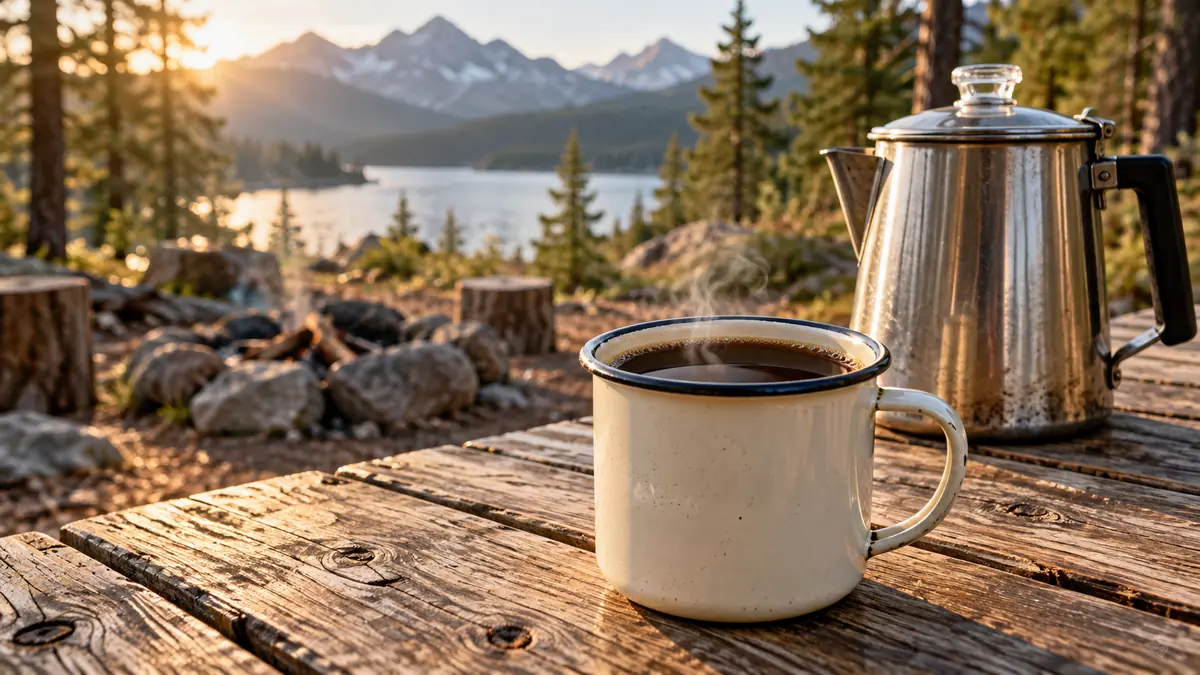
Cowboy coffee is coffee brewed directly in a pot of hot water, without a paper filter or coffee machine. Let the grounds settle, then pour carefully into your mug. For this easy cowboy coffee recipe, start with 30 g ground coffee and 500 ml water, steep off the heat, and leave the muddy last splash in the pot.
You can make it on a kitchen stove or with suitable camping equipment. The essential ingredients are coffee and water. Milk is optional, and neither eggs nor whiskey is required.
Below, you will find a practical brewing method, a scalable coffee-to-water ratio, and answers about strength, traditional preparation, eggs, cocktails, and the surprisingly common question about orange coffee.
Jump to: Recipe · Ratio chart · Milk variation · Troubleshooting.
What Is Cowboy Coffee?
Cowboy coffee is a pot-brewing method associated with camp cooking and the American West. Ground coffee goes into the water itself rather than into a filter basket. After brewing, the grounds remain in the vessel while you carefully pour off the liquid.
The equipment can be as simple as a small saucepan, a spoon, and a mug. A camping kettle is convenient if it is designed for your heat source and has a spout that allows controlled pouring. A decorative enamel coffee pot is not automatically suitable for direct flame, so check its intended use.
The appeal is its simplicity. It works when you have ground coffee and a pot but no working coffee maker. The trade-off is sediment: without a paper filter, a few fine particles may reach the cup.
That does not mean the drink has to be unpleasantly gritty. Careful measuring, patient settling, and slow pouring make a bigger difference than elaborate campfire tricks.
Why Is It Called Cowboy Coffee?
The name reflects its association with cowboys, cattle drives, and chuckwagon cooking. It describes the setting and the practical brewing style rather than a special coffee bean.
The National Park Service’s account of chuckwagon life describes coffee as an important part of meals on the trail and notes a preference for strong black coffee. The camp cook’s equipment and supplies had to serve a working crew far from a kitchen.
That history helps explain why a pot of coffee became such a lasting part of the cowboy image. It does not establish one universal historical recipe, a precise invention date, or a rule that every cowboy prepared coffee identically.
This version keeps the simple pot-and-grounds approach while using measured ingredients and a short steep for a manageable home recipe.
Cowboy Coffee Ratio
Use 30 g coffee to 500 ml water as the starting point for this recipe. That is approximately 1 part coffee to 16.7 parts water by weight, treating 500 ml water as approximately 500 g for kitchen measuring.
The ratio refers to the water you put into the pot, not the final amount you pour into your cups. Some water stays in the grounds, and a little coffee remains behind with the sediment.
| Batch size | Ground coffee | Water added to pot |
|---|---|---|
| Small batch | 15 g | 250 ml |
| Base recipe | 30 g | 500 ml |
| Larger batch | 45 g | 750 ml |
| Group batch | 60 g | 1 liter |
These quantities scale the same starting ratio. They do not guarantee a particular number of full mugs because mug sizes and pouring losses vary.
Can you measure with tablespoons?
You can, but tablespoons are less consistent than grams. Grind size, roast, and how tightly the spoon is filled change the amount of coffee it holds.
As a separate no-scale starting point, use roughly 2 level tablespoons per 250 ml water, then adjust after tasting. Glen Lyon Coffee Roasters’ cowboy brewing guide offers a similar practical volume approach. Do not assume that this spoon measure weighs exactly 15 g or produces the same strength as the weighed recipe.
If you camp regularly, weigh your preferred dose at home, then see how many level scoops it fills. That gives your own scoop a useful reference without pretending every spoon is identical.
Ingredients and Equipment
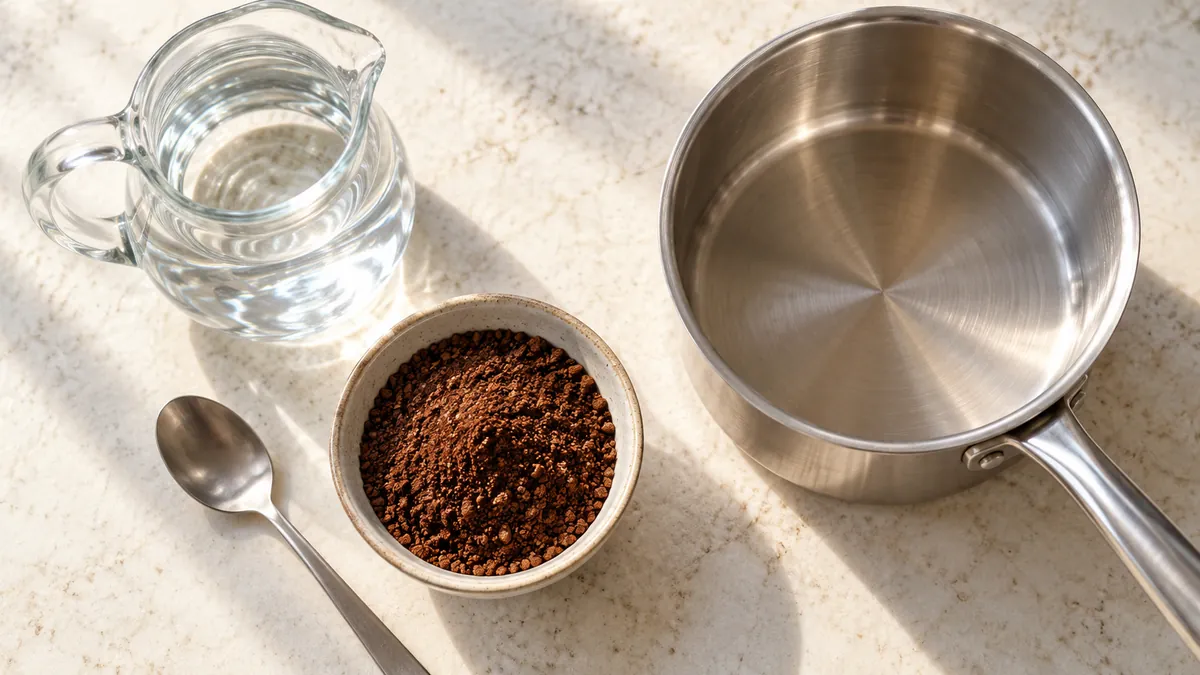
Ingredients
- 30 g medium-coarse ground coffee: Start with a coffee you already enjoy drinking.
- 500 ml fresh drinking water: Measure it before heating.
- Milk or sweetener, optional: Add to individual cups after brewing.
There is no egg, eggshell, orange juice, or alcohol in the base recipe.
Equipment
- A heat-safe saucepan or camping coffee pot with ample headroom
- A stove or suitable outdoor cooking setup
- A spoon
- A kitchen scale and measuring jug, if available
- A timer
- Two small mugs or one larger serving vessel
- A heatproof trivet and suitable protection for hot handles
A fine-mesh strainer is optional if you want help catching larger grounds. A paper filter gives a cleaner cup, although that adds a filtering step to the basic method.
Choose a pot that you can lift and pour comfortably when full. A large heavy kettle that feels manageable while empty may be awkward once it contains hot coffee.
Easy Cowboy Coffee Recipe
Prep: about 2 minutes Heating: approximately 5 minutes, depending on equipment Steeping: 4 minutes Settling: about 2 minutes Total: approximately 13 to 14 minutes Yield: 1 batch for about 2 small servings; finished volume varies
1. Measure the coffee and water
Set out 30 g ground coffee and 500 ml water. Use a medium-coarse grind as your starting point, avoiding a powdery espresso grind for this version.
Check the pot for old grounds or stale coffee residue before filling it. Freshly brewed coffee will pick up unwanted flavors from dirty equipment.
2. Heat the water
Pour the measured water into the pot and bring it to a boil. Remove the pot from the heat and let the vigorous bubbling subside, approximately 30 seconds.
That pause is a practical cue, not a promise of one exact water temperature. The pot, room conditions, altitude, and heat source affect cooling.
3. Add the grounds
Stir the ground coffee into the hot water, wetting any dry patches. Keep the pot off the heat for this recipe rather than returning it to a rolling boil.
Start your timer once the grounds have been mixed in. The four-minute brewing period starts here, not when you first put the water on the stove.
4. Steep for four minutes
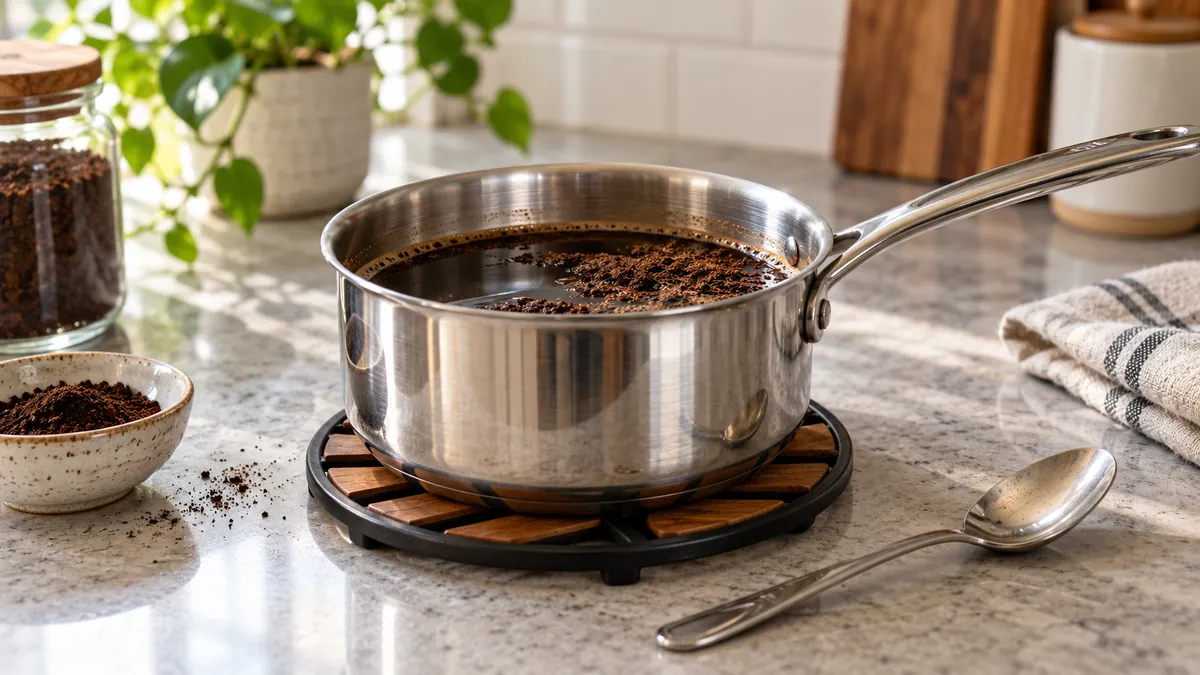
Let the coffee brew undisturbed for about four minutes. You do not need to keep stirring it or move the pot around.
The pot remains hot after removal from the stove. Keep its handle turned away from the edge of the work surface and place it on a heat-safe surface.
5. Settle the grounds
Gently stir the surface once to break up any floating crust, then leave the pot still for about two minutes. Allow the wetted grounds time to settle before pouring.
Some fine particles can remain suspended. The goal is to leave most of the grounds behind, not to promise the clarity of paper-filtered coffee.
6. Pour slowly and serve
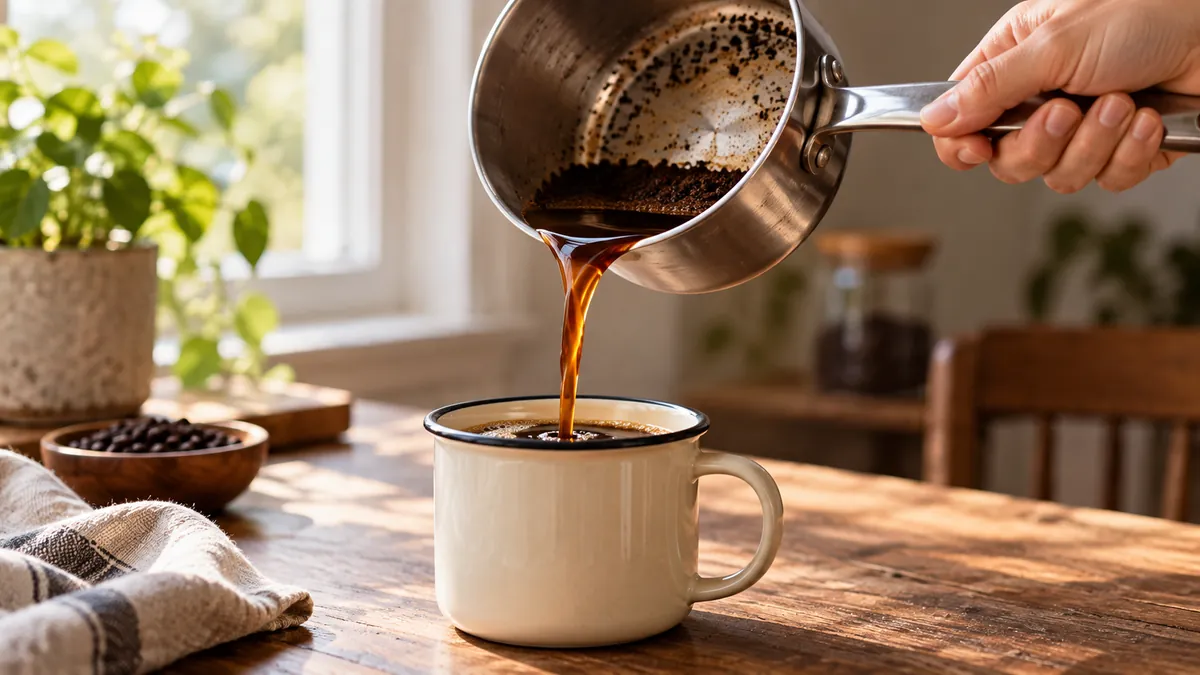
Tilt the pot gently and pour into your mugs in one controlled movement. Stop before the sediment at the bottom starts flowing out.
Leave the final muddy splash behind. Trying to recover every drop often puts the very grounds you waited to settle into the cup.
Serve promptly. If there is more coffee than you need immediately, carefully decant the drinkable portion into another suitable vessel instead of leaving it sitting on the grounds.
Print
Cowboy Coffee Recipe
- Total Time: 14 minutes
- Yield: 2 small servings 1x
Description
A simple pot-brewed cowboy coffee recipe using 30 g ground coffee and 500 ml water. Steep off the heat, let the grounds settle and pour slowly.
Ingredients
- 30 g medium-coarse ground coffee
- 500 ml fresh drinking water
- Milk or sweetener, optional, added to individual cups after brewing
Instructions
- Measure 30 g ground coffee and 500 ml water. Use a clean, heat-safe saucepan or camping coffee pot with ample headroom.
- Bring the water to a boil, then remove the pot from the heat. Let vigorous bubbling subside, about 30 seconds.
- Stir in the coffee, wetting dry patches. Start a four-minute timer and keep the pot off the heat.
- Steep undisturbed for four minutes.
- Gently stir the surface once to break the crust, then leave the pot still for about two minutes so the grounds can settle.
- Pour slowly into mugs, stopping before the bottom sediment flows out. Leave the final muddy splash behind and serve promptly.
Notes
Ratio: 30 g coffee to 500 ml water, approximately 1:16.7 by weight. Yield is about 2 small servings; some liquid stays with the grounds. Heating time varies. For a milk serving, start with 180 ml brewed coffee and 30 ml milk. No egg or alcohol is required. Use equipment suitable for the heat source and protect your hands from hot handles. This research-based recipe has not been kitchen-tested. No fixed caffeine value is assigned.
- Prep Time: 2 minutes
- Steeping and settling: 7 minutes
- Cook Time: 5 minutes
- Category: Beverage
- Method: Stovetop
- Cuisine: American
Nutrition
- Serving Size: Half the drinkable batch
Keywords: cowboy coffee recipe, easy cowboy coffee, cowboy coffee ratio, camp coffee
Do You Need to Boil Cowboy Coffee?
You need hot water, but this recipe does not continuously boil the coffee grounds. It brings water to a boil first and then uses an off-heat steep.
There are other cowboy coffee methods. Some cooks simmer or briefly boil the mixture, while others use a steep-and-settle approach. Cowboy Coffee Co.’s brewing instructions describe an off-heat method, showing that continuous boiling is not the only way people prepare it today.
For a first attempt, an off-heat method makes the process easier to repeat: you can measure a dose, set a timer, and change one variable on the next batch.
If you prefer a boiling method, use a recipe specifically written for it. Combining a long boil from one recipe with the full steep from another can create a very different result.
How Did Cowboys Make Their Coffee?
Broadly, trail coffee involved heating water and ground coffee in a pot, then separating the drink from the grounds well enough to serve it. The details depended on the cook, ingredients, and equipment available.
Historical coffee preparation also included methods that seem unusual today. A National Park Service article about early American coffee cites an 1844 household recipe that boiled coffee for an extended period and used eggshell or fish skin to clarify it.
That is evidence of an older preparation practice, not proof that every cattle-drive cook followed that exact formula. It also is not the method used in the recipe above.
You do not have to reproduce every historical detail to make a practical pot of camp coffee. Fresh drinking water, a measured dose, and careful pouring are enough for this version.
Is Cowboy Coffee Stronger Than Regular Coffee?
Not automatically. Its strength depends on the amount of coffee, the water, and how it is brewed. A cowboy coffee pot can make a light cup or a concentrated one.
It helps to separate three things people often call “strong”:
| Meaning of strong | What to consider |
|---|---|
| Concentrated flavor | The coffee-to-water ratio and extraction |
| Heavy texture | Suspended particles and the absence of paper filtration |
| More caffeine | The beans, dose, brewing, and serving size |
A dark-looking cup with a little sediment can feel more intense without establishing its caffeine content. Likewise, bitterness is not a useful caffeine measurement.
To make the next batch stronger, keep the 500 ml water and increase the coffee modestly, for example from 30 g to 33 g. Taste before changing anything else. To make an already brewed cup milder, add a little hot water.
There is no single caffeine number for every cowboy coffee recipe. This article does not assign a precise caffeine value to a cup without a measured analysis of the actual brew.
Cowboy Coffee Recipe With Milk
For a milk version, brew the coffee with water first. Pour the settled coffee into a mug, then add milk to taste.
For a starting serving, combine 180 ml brewed coffee with 30 ml milk. Use warm milk for a hotter drink or cold milk if you want it cooled slightly. Increase the milk if you prefer a softer coffee flavor.
This is a serving variation, so it does not change the base brewing ratio. Do not replace all the brewing water with milk and assume the same heating instructions apply; milk behaves differently in a hot pot.
If you enjoy a spiced coffee direction, explore our guide to clove in coffee. Try additional flavors in one cup first rather than seasoning the whole batch before you know whether you like the combination.
Cowboy Coffee Recipe With Egg: Is It Necessary?
No. Eggs are not required for the basic recipe. Searches for cowboy coffee with egg can refer to related egg-coffee preparations or older practices involving eggshells.
An eggshell and a whole beaten egg are different additions. Neither should be treated as an interchangeable ingredient casually added to the off-heat recipe above.
If your goal is simply to keep grounds out of your mug, use settling time, controlled pouring, or a filter. Those approaches work within this recipe without introducing an additional ingredient or a separate egg-cooking process.
For an egg-coffee version, follow a dedicated, fully cooked recipe designed around that method. This article does not provide an egg variation because the core recipe’s timing was not developed for cooking eggs.
Cowboy Coffee Cocktail vs Traditional Camp Coffee
“Cowboy Coffee” can also be the name of an alcoholic drink. That is a separate interpretation of the name, not an essential part of brewing coffee in a pot.
For example, Pendleton’s Cowboy Coffee cocktail combines whiskey with hot coffee and offers whipped cream as an optional garnish. Cocktail recipes using the name can differ from one another, so do not assume there is one universal formula.
The recipe on this page contains no alcohol. If you came looking for a cocktail, check the ingredients of the specific version you want rather than adding spirits to the brewing pot.
For a different warm drink without a coffee base, try our guide to how to make chai tea. It explains the tea preparation separately, keeping the brewing instructions clear for each drink.
Is Cowboy Coffee Orange? What Color Should It Be?
Traditional black cowboy coffee is generally brown to very dark brown. The appearance varies with the coffee, concentration, lighting, and depth of liquid in the cup.
A thin layer viewed in strong light may show a lighter brown or amber edge. Adding milk changes the drink toward tan. Those differences do not make orange an identifying characteristic of cowboy coffee.
Orange juice, orange peel, and orange coloring are not ingredients in the base recipe. A separately named café drink might include citrus, but the name alone is not evidence that ordinary cowboy coffee does.
If you are asking about the color of a branded product, a paint shade, or a specific café drink called Cowboy Coffee, check that item’s own description. This article covers the brewed beverage.
Troubleshooting Your Pot of Coffee
The coffee is too gritty
Check whether the grind is unusually fine, whether you stirred immediately before pouring, and whether you emptied the pot completely. Give the grounds a quiet settling period and stop pouring sooner next time.
A fine-mesh strainer can catch larger grounds, but it will not necessarily remove all fine particles. A proper coffee paper filter is the more useful option when a very clean cup is your priority.
The coffee tastes weak
Confirm the amount of coffee you used and the actual volume of water. A large mug is not the same thing as a small coffee-maker “cup.” Measure the next batch before changing the brewing time.
If you measured with a scoop, try weighing one dose. That can reveal why a spoon-based batch tastes different from a recipe written in grams.
The coffee tastes bitter or harsh
Look at the whole process: roast preference, grind, time, and whether the pot remained on the heat. Pouring the finished coffee away from the grounds prevents it from continuing to sit on them while you eat breakfast.
Change one thing at a time. If you simultaneously change beans, dose, grind, and timing, you will not know which adjustment improved the next pot.
There is less coffee than expected
Some liquid stays with the grounds, and you deliberately leave sediment behind. Start with a larger batch at the same ratio if you need to fill more mugs. Do not dilute the recipe accidentally by adding more water while keeping the coffee dose unchanged.
Campfire and Serving Tips
Make a first batch on the stove if possible. Knowing the pot’s capacity and your preferred dose at home makes outdoor brewing easier.
At camp, use a stable cooking setup and equipment intended for the heat source. Hot handles and an uneven pouring surface can make a simple recipe awkward. Follow local fire restrictions and keep used grounds with the waste you pack out.
Pair your coffee with a proper meal if you are making breakfast. Our savory breakfast ideas with no added sugar and more protein offer options beyond a sweet pastry.
If you prefer a breakfast you can prepare ahead, choose one of these overnight oats recipes and keep the coffee brewing as the only morning cooking task.
FAQS
What is a cowboy coffee?
It is coffee made by brewing ground coffee directly in a pot of hot water, then letting the grounds settle before pouring. No coffee machine or paper filter is required for the basic method.
Why is it called cowboy coffee?
The name comes from its association with cowboy camps, cattle drives, and chuckwagon cooking. It refers to the practical brewing style rather than a particular bean or roast.
Is cowboy coffee stronger than regular coffee?
It can be, but it is not inherently stronger. Dose, water, brewing, and serving size matter. A heavy texture or dark color does not establish a higher caffeine content.
How did the cowboys make their coffee?
Camp cooks prepared coffee in pots using available equipment and supplies. Historical methods varied; it is more accurate to describe a family of pot-brewing practices than one formula followed by everyone.
What is the best cowboy coffee ratio?
Start with 30 g coffee to 500 ml water, approximately 1:16.7 by weight. Adjust after tasting. Weighing is more repeatable than assuming every tablespoon or coffee scoop holds the same amount.
Can you make cowboy coffee with milk?
Yes. Brew with water, pour the settled coffee into a mug, and add milk. Start with about 30 ml milk for 180 ml brewed coffee, then adjust to taste.
Do you need an egg for cowboy coffee?
No. The base recipe uses only coffee and water. Egg-coffee preparations require their own method and should not be made by adding raw egg to this off-heat recipe.
Is cowboy coffee a cocktail?
Traditional pot-brewed cowboy coffee contains no alcohol. Some cocktails share the name and include spirits, so check the recipe ingredients to identify the version being described.
Is cowboy coffee orange?
No. The plain brewed drink is brown to very dark brown. Milk makes it tan, while light can create amber highlights. Orange ingredients are not part of the basic recipe.
How do you keep the grounds out of the cup?
Let the pot rest after brewing, pour slowly, and leave the muddy last splash behind. If you want fewer particles, strain or paper-filter the brewed coffee rather than trying to pour out every drop.