
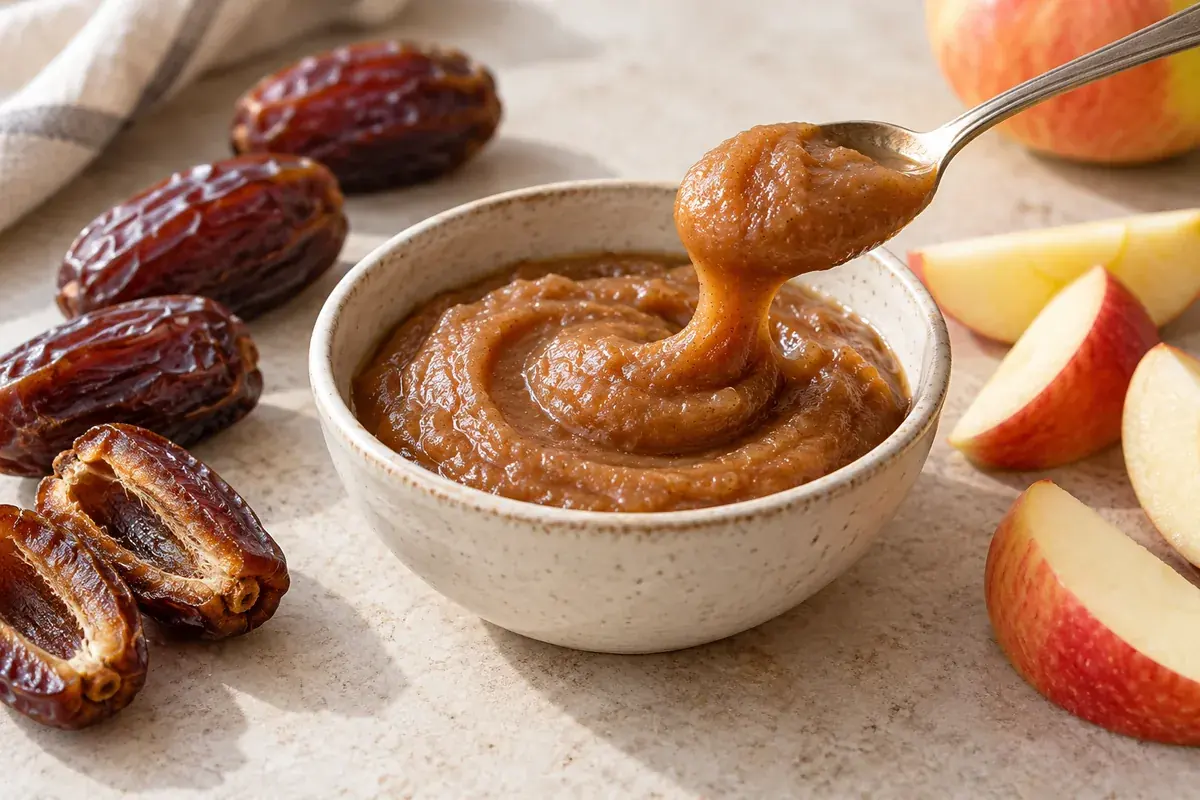
This date caramel recipe turns soft dates, water, vanilla, and a pinch of salt into a thick, spoonable sauce for apples, oatmeal, yogurt, and coffee drinks. You do not need coconut milk, a candy thermometer, or a saucepan of bubbling sugar. A blender does the work.
The flavor is sweet and rich, with the brown-sugar notes naturally found in dates. The texture is closer to a smooth fruit spread than a clear caramel syrup. You can keep it thick for dipping, blend it with milk for a creamier sauce, or thin a small portion for your morning coffee.
Below, you will find the base recipe, milk and coconut milk variations, tips for smoother blending, and an honest explanation of how date caramel compares with traditional caramel.
Jump to: Recipe · Milk variation · Syrup consistency · Coffee tips.
What Is Date Caramel?
Date caramel is a sweet sauce made by blending pitted dates with liquid until smooth. Vanilla and salt round out the flavor, while the amount of liquid determines whether you get a thick spread or a pourable topping.
Despite the name, the dates are not caramelized in this recipe. Traditional caramel gets its distinctive flavor from heating sugar until it changes color and develops new flavors, as explained in King Arthur Baking’s guide to making caramel. Blended dates take a different route: they supply their own sweetness and a naturally caramel-like flavor.
That difference matters when choosing a recipe. Use date caramel when you want a fruity, sweet topping with a short ingredient list. Choose traditional caramel when you need a clear amber syrup, a brittle candy coating, or the unmistakable flavor of cooked sugar.
Does Date Caramel Actually Taste Like Caramel?
Date caramel tastes reminiscent of caramel, especially when you use soft Medjool dates, vanilla, and a little salt. Expect a rounded sweetness with a noticeable date flavor. It does not reproduce every buttery or slightly bitter note of cooked caramel.
Natural Delights describes Medjool dates as having a rich, caramel-like taste. That makes them a useful starting point, but the finished sauce still tastes like the fruit it contains.
Milk can make the sauce taste creamier. Coconut milk brings a coconut note, and extra vanilla makes it more dessert-like. None of these additions changes the basic fact that this is a blended fruit sauce.
If you enjoy dates, the flavor is likely to make sense immediately. If you dislike dates and expect a perfect copy of bottled caramel, start with a small batch before preparing a larger one.
Ingredients for Easy Date Caramel
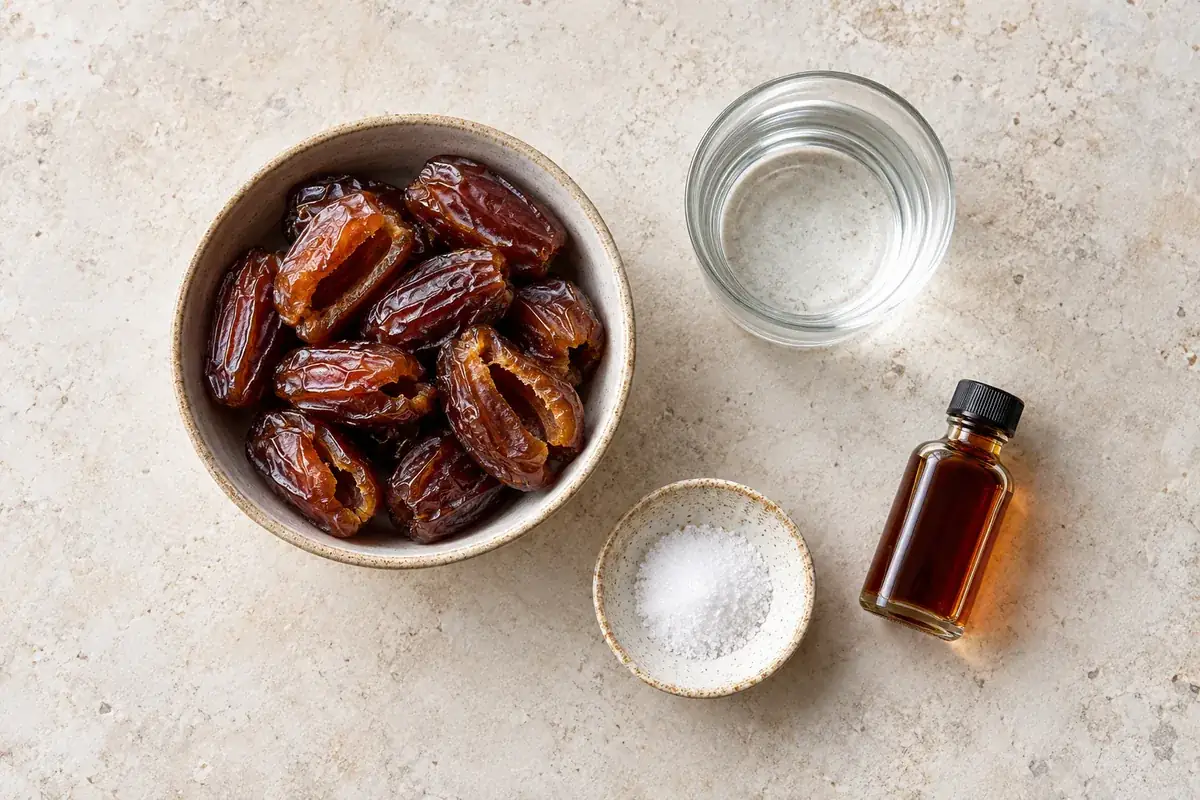
The base recipe uses four ingredients. Weigh the dates after removing their pits so the fruit-to-liquid ratio stays consistent.
| Ingredient | Amount | What it does |
|---|---|---|
| Soft Medjool dates, pitted | 200 g | Provide sweetness and body |
| Water | 120 ml, or 1/2 cup, plus more only if needed | Helps the dates blend |
| Vanilla extract | 1 teaspoon | Adds a familiar dessert aroma |
| Fine salt | 1/8 teaspoon, then adjust to taste | Balances the sweetness |
You will also need a blender or small food processor, a spatula, and a clean container with a lid. A narrow blending container can help a small batch reach the blades more easily than a very wide jug.
Which dates work best?
Choose soft, moist dates that feel pliable. Medjool dates are a practical choice because their flesh blends readily when sufficiently soft. Other varieties can work, but firmer or drier dates usually need soaking and may produce a less silky sauce.
Avoid using a fixed number of dates as your main measurement. Date sizes vary considerably, and 200 grams of pitted fruit gives you a more repeatable starting point.
Do you need extra sugar?
No. This recipe does not call for granulated sugar, honey, or maple syrup. The dates provide the sweetness. That does not make the finished sauce sugar-free: dates naturally contain sugars.
Date Caramel Recipe
Prep time: about 10 minutes Optional soaking time: about 15 minutes Total time: about 25 minutes with soaking Yield: 1 batch, divided into 16 small portions Method: blending; no cooking required for the base recipe
Ingredients
- 200 g soft Medjool dates, weighed after pitting
- 120 ml water, plus additional water by the tablespoon if needed
- 1 teaspoon vanilla extract
- 1/8 teaspoon fine salt
Instructions
- Check and pit the dates. Open each date, remove any pit or hard stem piece, and weigh out 200 grams of flesh. Even dates sold as pitted deserve a quick check before blending.
- Soften firm dates if needed. Place them in a bowl, cover with hot water, and soak for about 15 minutes, or until noticeably softer. Very dry dates may need longer. Soft, moist dates can skip this step.
- Drain thoroughly. Discard the soaking water. The 120 ml of water in the ingredient list is fresh blending liquid, measured separately. Let hot dates cool until warm before blending, and follow your appliance’s instructions for warm ingredients.
- Add the ingredients. Put the dates, measured water, vanilla, and salt into the blender or food processor. Do not seal piping-hot ingredients in a personal blender cup.
- Blend and scrape. Blend until the mixture starts to become smooth. Stop the machine, switch it off before scraping, and push any pieces down from the sides. Continue blending as needed.
- Adjust gradually. If the blades cannot move the mixture, add water one tablespoon at a time. Pause between additions so you do not accidentally turn a thick dip into a thin sauce.
- Taste and finish. Check the texture and seasoning. Add a small pinch of salt if desired, then transfer to a clean container. Refrigerate promptly if you are not serving it immediately.
The finished sauce should be thick enough to sit on a spoon. Exact volume varies with the dates, soaking, and any extra liquid. For consistent portions, divide the finished batch into 16 equal amounts rather than assuming every batch makes the same number of tablespoons.
Print
Date Caramel Recipe
- Total Time: 25 minutes
- Yield: 16 small portions 1x
Description
A thick date caramel sauce made with soft Medjool dates, water, vanilla and salt. Includes optional milk and coconut milk variations.
Ingredients
- 200 g soft Medjool dates, weighed after pitting
- 120 ml water (1/2 cup), plus extra by the tablespoon only if needed
- 1 teaspoon vanilla extract
- 1/8 teaspoon fine salt
Instructions
- Open and check each date, remove pits and hard stem pieces, then weigh 200 g of flesh.
- If firm, soak in hot water for about 15 minutes or until softened. Skip soaking for very soft dates.
- Drain thoroughly, discard soaking water and let the dates cool until warm. Measure 120 ml fresh water separately for blending. Follow your blender’s guidance for warm ingredients.
- Blend the dates, measured water, vanilla and salt. Stop and switch off the machine before scraping the sides.
- Continue blending until smooth, adding water one tablespoon at a time only if needed to keep the blades moving.
- Taste, adjust salt if desired, and transfer to a clean covered container. Refrigerate promptly. Divide the finished batch into 16 equal portions.
Notes
Timing includes optional soaking. Finished volume depends on hydration. Milk version: replace the measured water with 120 ml pasteurized milk or unsweetened plant beverage. Coconut version: use 120 ml well-stirred canned coconut milk. For a drizzle, thin a portion gradually; it retains fruit solids and is not a clear syrup. For coffee, whisk 1 to 2 teaspoons into warm coffee before adding milk or ice. Refrigerate and plan to use within 4 days; freeze surplus. This is a research-based recipe, not kitchen-tested. Nutrition depends on your ingredients and final portions.
- Prep Time: 10 minutes
- Optional soaking: 15 minutes
- Cook Time: 0 minutes
- Category: Dessert
- Method: Blending
- Cuisine: International
Nutrition
- Serving Size: 1/16 of the finished batch
Keywords: date caramel recipe, date caramel with milk, date caramel no coconut milk, date caramel for coffee
How to Make Dates Taste More Like Caramel
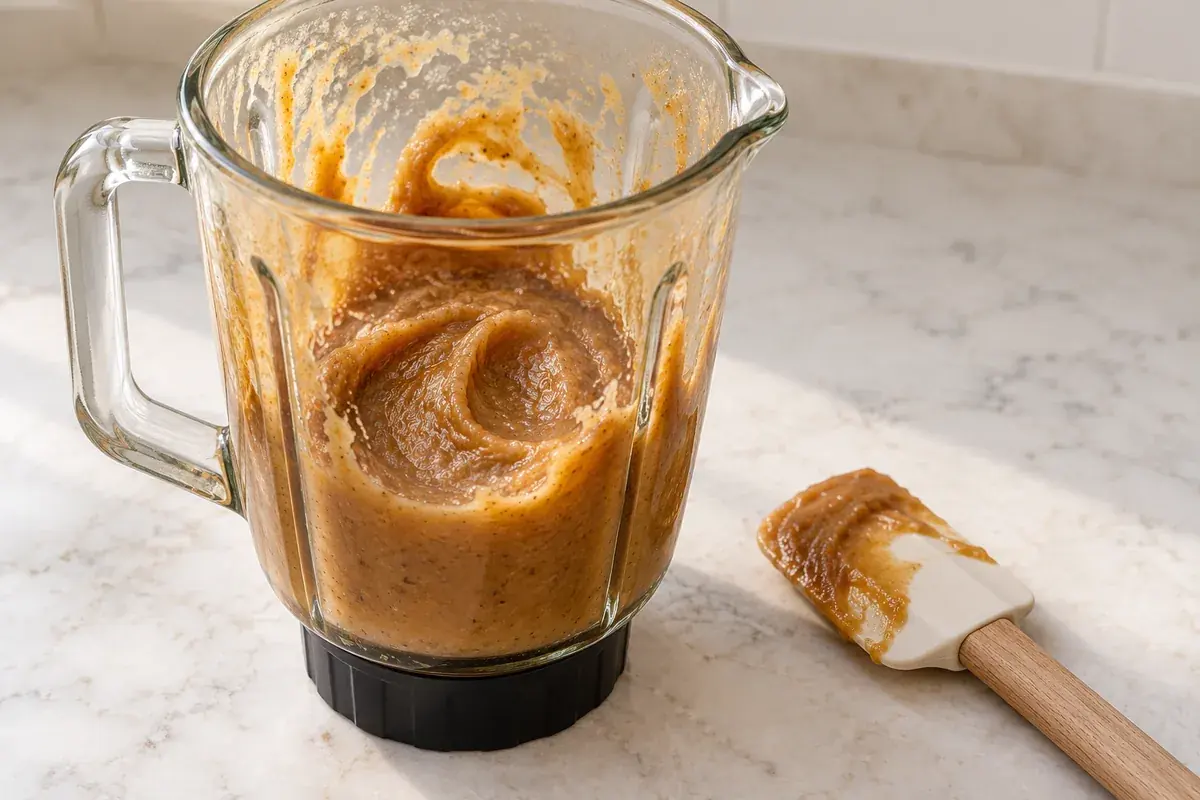
Start with the dates themselves. Soft, flavorful fruit makes a better sauce than dry dates that taste flat. Soaking improves softness, but it cannot turn stale or poor-tasting fruit into a good ingredient.
Vanilla helps connect the date flavor with familiar desserts. Salt provides balance, especially when the sauce tastes overwhelmingly sweet. Add it in small pinches because an oversalted batch is difficult to correct without making more sauce.
Texture also changes the experience. A grainy mixture reads more like mashed fruit; a smoother mixture feels more like a dessert topping. Give the blender time, scrape the container, and add only enough liquid to keep the blades moving.
For a creamier finish, try the milk variation below. If you want a stronger cooked-caramel flavor, use a traditional caramel recipe instead of trying to brown this purée in a pan. Heating a thick date mixture aggressively can make it stick and scorch.
Date Caramel Recipe With Milk
For a milk version, replace the 120 ml of water with 120 ml pasteurized milk. Use the same amount of dates, vanilla, and salt, then follow the blending instructions above.
Whole milk gives a rounder, creamier flavor than water. Lower-fat milk also works, though the result will have a different richness. An unsweetened plant-based beverage is another option; choose one whose flavor you enjoy because it will be noticeable in the sauce.
Begin with the measured amount and add more milk only if the mixture needs help blending. The goal is a sauce, not a date milkshake. Chill promptly and use the same conservative storage window given below.
If you are serving people with allergies, check the milk or plant beverage label and account for cross-contact in your equipment. A water-based batch avoids adding milk, soy, or nuts through the blending liquid.
Date Caramel Recipe With Coconut Milk
To make coconut milk date caramel, replace the water with 120 ml well-stirred canned coconut milk. Stir the can before measuring so you do not accidentally use only the thick layer at the top.
Full-fat coconut milk produces a richer sauce and can firm up when chilled. Light coconut milk gives a different consistency. Coconut cream is thicker still and is not an exact substitute for the same volume of water.
The coconut version is useful when you want that flavor in a dessert, but it is not automatically a lighter alternative. Its fat and calorie content differ from the water-based recipe.
For a date caramel recipe with no coconut milk, simply use the original water-based formula. You do not need to replace coconut milk with another rich ingredient to make the dates blend.
How to Make Date Caramel Syrup
You can make a thinner date caramel sauce by adding more liquid, but blended dates retain fruit solids. The result will not behave exactly like a clear, filtered coffee syrup.
For a pourable topping, start with the finished base recipe and blend in 2 tablespoons of water. Add more, one tablespoon at a time, until it falls from a spoon in a ribbon. Depending on the original thickness, you may need several tablespoons.
For a coffee-friendly mixture, try blending a batch with an additional 60 to 120 ml water, added gradually. This is a starting range rather than a guaranteed final consistency. Your dates and blender affect the result.
Passing a thin mixture through a fine strainer can remove some larger particles, but it may also remove a substantial amount of the sauce. It does not guarantee a perfectly clear syrup. Straining also changes the yield and the amount of fruit solids in each serving.
Label the container as a date sauce or date coffee concentrate so you know what to expect when pouring it. Shake or stir before using, and keep it refrigerated. Extra water does not make it suitable for storage at room temperature.
Date Caramel for Coffee
The easiest way to use date caramel in coffee is to mix a small amount with warm coffee before adding milk or ice.
- Put 1 to 2 teaspoons of the sauce in a mug.
- Add a small splash of warm espresso or strong coffee.
- Whisk thoroughly to disperse the sauce.
- Add the remaining coffee and milk to taste.
- For an iced drink, add ice after mixing the sauce into the warm coffee.
Start small because the sweetness builds quickly. If you add a thick spoonful directly to cold milk, it is harder to distribute evenly.
Some fine pulp may settle at the bottom of the cup. That is expected with a date-based sauce: it disperses rather than dissolving completely like sugar. Stir again as you drink if needed.
It also works as a sweetener for a warm spiced drink. Try a little in your cup after following our guide to how to make chai tea, then adjust the amount to suit the strength of the tea.
Is Date Caramel Better for You?
Date caramel can be a useful alternative when you want a sweet topping made primarily from fruit. In the unstrained version, you keep the fruit solids instead of using only dissolved sugar. The water-based recipe also does not require butter or cream.
However, “better for you” depends on the recipe, portion, and what you are comparing it with. Dates contain naturally occurring sugars and provide energy. A large helping is still a large helping of a sweet food.
The absence of added granulated sugar does not mean you should treat the sauce as unlimited, sugar-free, or a weight-loss food. Adding coconut milk, nut butter, or other ingredients changes its nutritional profile again.
For breakfast, use a modest amount as a flavoring alongside a more substantial meal. A spoonful over plain yogurt and oats serves a different role from eating several spoonfuls straight from the jar.
How to estimate nutrition accurately
Use the nutrition label on your dates and the amount you actually used. For the dates alone, calculate:
Calories per labeled serving ÷ grams per labeled serving × 200 ÷ 16
That gives the date contribution to one sixteenth of this batch. Add the contribution from vanilla and any other ingredients. If you use milk or coconut milk, include those too.
Extra water changes the volume, so a fixed tablespoon estimate can be misleading. Straining changes the mixture further. For that reason, this recipe does not present an exact calorie number for every possible variation.
Ways to Use Date Caramel
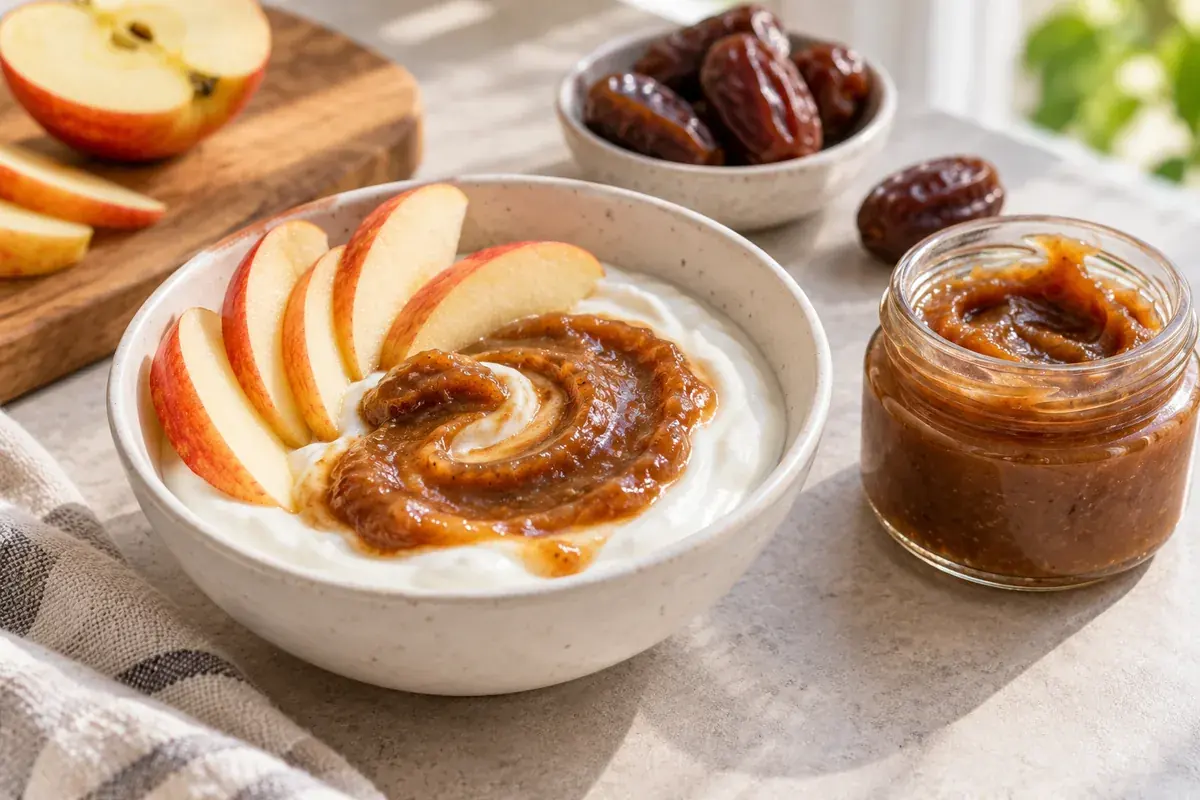
The thick version works well where you would use a sweet spread. The thinner version is easier to drizzle. Adjust a small portion for each use rather than thinning the entire jar immediately.
- Apple dip: Serve a small portion with apple slices for a sweet, chewy-fruit flavor in a smoother form.
- Oatmeal topping: Swirl it into warm oats after cooking, then taste before adding any other sweetener.
- Overnight oats: Mix a little into one of these overnight oats recipes or add it just before serving.
- Yogurt bowl: Spoon it over plain yogurt with fruit and a crunchy topping.
- Rice cake topping: Spread on a thin layer and add banana slices. See more ideas for what to put on rice cakes.
- Smoothie addition: Use a small spoonful for sweetness, accounting for any other dates or sweeteners already in the recipe.
You can also add a little to ube overnight oats. Taste the oats first so the caramel does not overpower the ube or make an already sweet breakfast too sweet.
For baking, be cautious about direct substitutions. Date caramel contains water and fruit solids, so replacing a measured amount of sugar, butter, or commercial caramel with it can change how a cake or cookie behaves.
Troubleshooting Date Caramel
Why is my date caramel grainy?
The dates may be too firm, the batch may need more blending, or the container may be too large for the quantity. Soak firm dates first, scrape the container, and add liquid gradually. Some blenders leave fine skin particles even after extended blending.
Why is it too watery?
Too much blending liquid or poorly drained soaking water can make the sauce thin. Blend in a few additional softened, pitted dates if available. Chilling may change the texture, but it will not reliably fix a very diluted water-based batch.
Why is the sauce so thick?
Date moisture varies. Add water or your chosen milk one tablespoon at a time and blend again. If you want a drizzle, test it with a spoon after each addition.
Why is it pale?
Milk and coconut milk lighten the color. Different dates also vary in color, so a pale tan sauce does not necessarily mean anything went wrong. Do not cook it aggressively just to make it darker.
Why does it taste bitter or unpleasant?
Check the dates and other ingredients before adding more sweetener. Poor-quality fruit, an overly strong vanilla flavor, or excessive salt can throw the balance off. If the dates show mold or spoilage, discard them rather than trying to cover the taste.
Storage and Freezing
Transfer the sauce to a clean, covered container and refrigerate promptly. For this homemade recipe, use a conservative four-day refrigerated storage window, and make smaller batches if you will not use it that quickly. This is not a validated shelf-life study.
Do not treat homemade date caramel as a shelf-stable preserve. The presence of sweet dates does not make a diluted fruit sauce safe to keep in a cupboard. Using milk or coconut milk does not extend its storage life.
Freeze extra sauce in small portions, then transfer the frozen portions to a suitable freezer container. Thaw in the refrigerator and stir well before using. Water-based sauce and coconut milk versions may need a little stirring or reblending after thawing.
Use a clean spoon each time. Discard sauce that shows mold or other signs of spoilage, and do not rely on appearance or smell to justify keeping a batch beyond your planned storage time.
FAQS
Does date caramel actually taste like caramel?
It has a caramel-like sweetness, especially with Medjool dates, vanilla, and salt. It also retains a date flavor and lacks the full cooked-sugar flavor of traditional caramel.
Is date caramel better for you?
It can fit your preferences if you want a topping made mainly from fruit, but it still contains sugar and calories. Ingredients and portion size determine whether it suits your needs better than another sauce.
How do I make dates taste like caramel?
Blend soft dates with a little liquid, vanilla, and a pinch of salt. Start with flavorful dates and blend thoroughly for a smoother texture. You are highlighting their existing flavor rather than caramelizing them.
How do I make date caramel syrup?
Thin the blended sauce gradually with water. It becomes more pourable but retains fruit particles, so it will not behave exactly like a clear coffee syrup. Stir before using.
Can I make date caramel with milk?
Yes. Replace the base recipe’s 120 ml water with 120 ml pasteurized dairy milk or an unsweetened plant-based beverage. Add more only as needed for blending and refrigerate promptly.
Can I make date caramel without coconut milk?
Yes. The main recipe uses water and contains no coconut milk. Soft dates supply the body, so coconut milk is an optional variation rather than a requirement.
What is an old-fashioned date caramel recipe?
The phrase can refer to different recipes. This version is a simple blended date sauce, not a historical caramel formula or a boiled date candy. Traditional caramel made from cooked sugar uses a different method.
Can I use date caramel in coffee?
Yes. Whisk 1 to 2 teaspoons into a small amount of warm coffee before adding the rest of the drink. Some pulp may settle because date sauce does not dissolve completely.
Do I have to soak the dates?
Only if they need softening. Very soft dates may blend without soaking; firm dates benefit from it. Drain soaking water thoroughly and measure the recipe’s blending liquid separately.
Is date caramel sugar-free?
No. This recipe does not call for added granulated sugar, honey, or maple syrup, but dates naturally contain sugars. “Made without added granulated sugar” and “sugar-free” are different claims.