
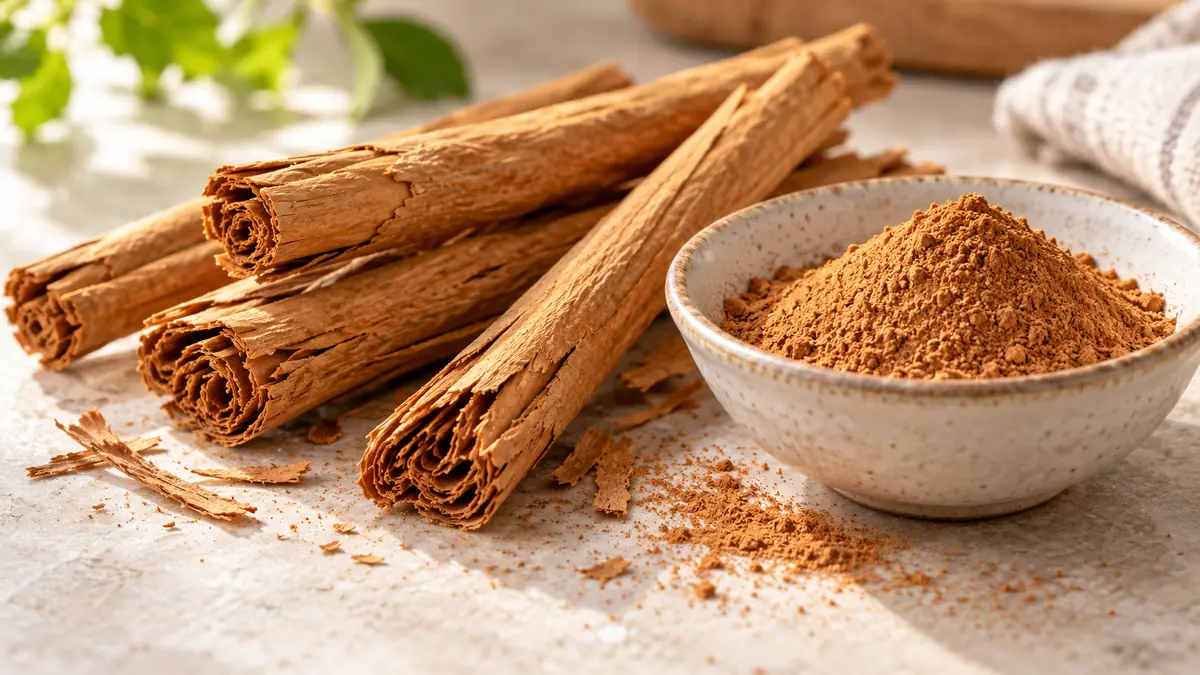
Ceylon cinnamon’s clearest advantages are its usefulness as a food flavoring and its generally lower coumarin content compared with cassia cinnamon. Researchers are studying possible blood-sugar and weight effects, but it is not an established treatment for diabetes, a proven fat burner, or a kidney cleanse. There is no standard Ceylon cinnamon dose recommended for lowering blood sugar.
If you enjoy cinnamon in oatmeal, yogurt, or tea, Ceylon cinnamon can be a practical kitchen ingredient. Taking concentrated capsules every day is a different decision from adding a little spice to breakfast.
This guide explains Ceylon cinnamon benefits, the limits of weight-loss claims, daily-use questions, side effects, and what to check before combining supplements with medicines.
Jump to: Ceylon vs cassia · Weight loss · Blood-sugar dose · Side effects.
What Is Ceylon Cinnamon?
Ceylon cinnamon is the dried bark of Cinnamomum verum, also called Cinnamomum zeylanicum. It is often sold as “true cinnamon” and is associated with Sri Lanka. Cassia is another category of cinnamon commonly sold as a kitchen spice.
Those names matter because research on “cinnamon” does not always establish which species, plant part, or preparation was studied. The National Center for Complementary and Integrative Health identifies this as one reason the findings can be difficult to interpret.
A trial using a particular extract cannot automatically tell you what will happen when you sprinkle supermarket powder into a drink. The species, preparation, quantity, and purpose all need to match before making that comparison.
Ceylon cinnamon powder vs sticks
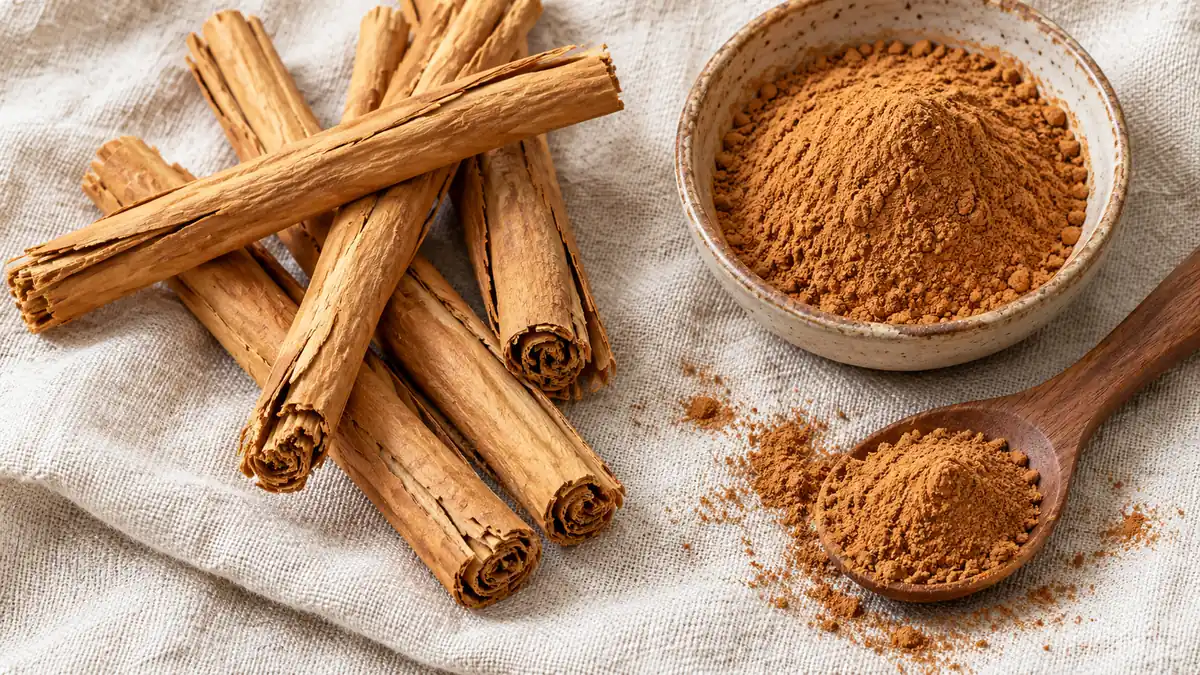
Powder is convenient for mixing into food. Sticks are convenient when you want to flavor a liquid and remove the bark afterward. Neither form creates a medically standardized dose simply because it is easy to measure at home.
A teaspoon of powder and one cinnamon stick are not equivalent units. Sticks vary in size, and an infusion does not necessarily transfer every component of the bark into the cup.
Ceylon vs Cassia Cinnamon: Why the Difference Matters
The most useful safety distinction is coumarin, a naturally occurring substance present at much higher levels in many cassia products. Ceylon cinnamon generally contains much less.
Germany’s Federal Institute for Risk Assessment guidance on coumarin recommends Ceylon for people who frequently use larger amounts of cinnamon in cooking. This is a way to reduce coumarin exposure, not a recommendation to start taking large daily doses.
| Question | Ceylon cinnamon | Cassia cinnamon |
|---|---|---|
| What should the label identify? | Ceylon, ideally with the botanical name Cinnamomum verum or Cinnamomum zeylanicum | The cinnamon type or botanical identity where available |
| Coumarin content | Generally much lower | Can be substantially higher and varies by product |
| What do sticks often look like? | Several thin, closely rolled layers | A thicker bark roll |
| Is it a proven diabetes treatment? | No | No |
| Does the name alone prove purity? | No | No |
The same BfR guidance notes that powder is difficult for consumers to identify by appearance. A light brown color, pleasant smell, or expensive-looking jar does not authenticate the species.
Saigon cinnamon should not be assumed to have the same low-coumarin profile as Ceylon. When that distinction matters to your purchase, look for clear species labeling rather than treating every cinnamon name as interchangeable.
Ceylon Cinnamon Benefits: What Is Supported?
It helps to separate an everyday food advantage from a claim that a substance treats disease.
1. It adds flavor without requiring added sugar
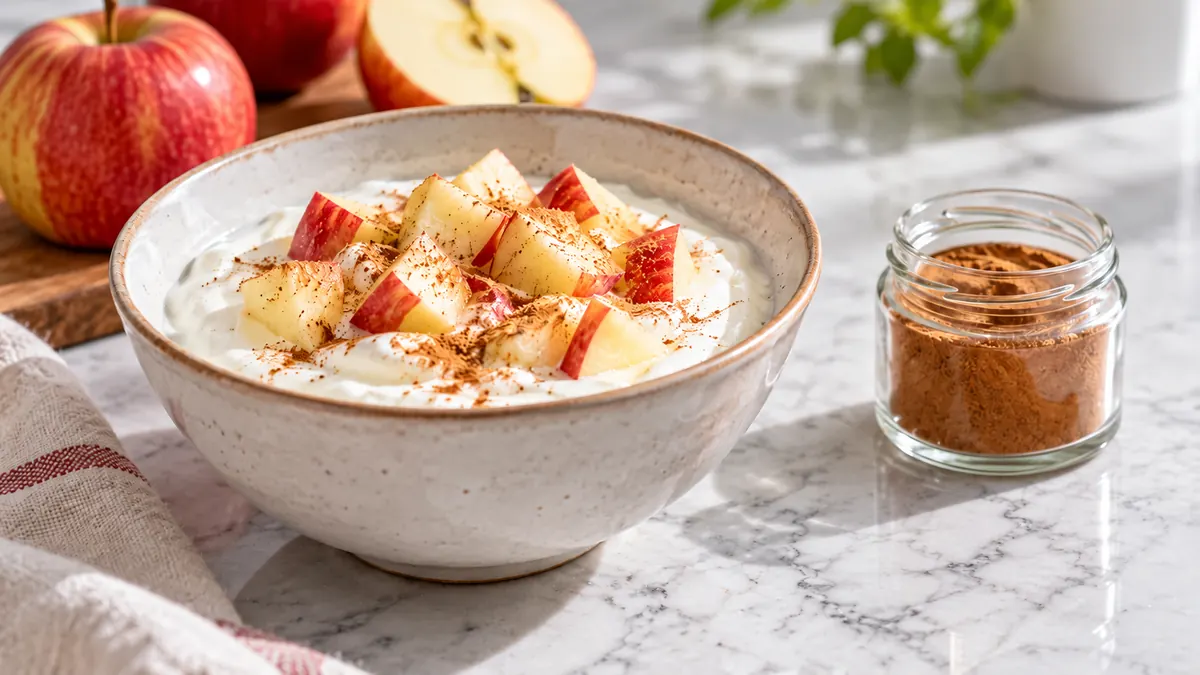
Cinnamon can add a familiar warm flavor to unsweetened foods. If that helps you enjoy plain yogurt or oats with less added sugar, the practical benefit comes from the way you changed the meal.
For example, you might flavor a bowl with cinnamon and fruit rather than automatically adding a large amount of sweetened syrup. That is a food choice, not evidence that cinnamon blocks sugar absorption or cancels the rest of the meal.
You can try that approach with one of these overnight oats recipes. Taste the finished bowl before adding more sweetener, especially if it already contains sweetened milk or flavored yogurt.
2. It can reduce coumarin exposure compared with cassia
Choosing correctly identified Ceylon cinnamon is a practical option when you regularly cook with cinnamon and want the lower-coumarin type. The advantage concerns the ingredient’s composition.
It does not mean Ceylon is free of every risk, that all capsules are equivalent, or that you need it daily. Product identity and the amount used still matter.
3. Blood-sugar research is promising but incomplete
Some clinical findings suggest that specific cinnamon preparations deserve further study. However, promising research and a treatment recommendation are different things.
The American Diabetes Association’s 2026 Standards of Care do not recommend supplements such as cinnamon for glycemic benefits. That guidance supports using established diabetes care rather than replacing medication or monitoring with an herbal product.
4. Weight-loss research does not establish a reliable result
Studies of cinnamon supplementation sometimes report small average changes in body weight. Those findings do not establish that Ceylon powder in food will produce the same change, or that taking more is better.
The useful question is not whether a supplement advertisement can mention a study. It is whether the study tested the actual product, in a comparable population, with outcomes that justify the claim being made.
Ceylon Cinnamon Benefits for Weight Loss
Ceylon cinnamon has not been established as a dependable weight-loss treatment. It should not be presented as something that melts belly fat, guarantees appetite control, or causes a predictable number of pounds to disappear.
A 2020 meta-analysis of cinnamon supplementation trials combined 21 trials involving 1,480 participants. It reported an average body-weight difference of about 0.92 kg in favor of supplementation, with substantial variation among studies. It did not find a statistically significant overall effect on body-fat mass or waist circumference.
That is an interesting research signal, but it is not a personal forecast. The review considered cinnamon interventions broadly, rather than proving that every Ceylon product, kitchen sprinkle, or cinnamon tea works identically.
There are several reasons a headline can overstate these findings:
- A pooled average can hide large differences between trials.
- Cinnamon preparations and study populations differ.
- A short trial cannot establish that a change will last.
- A supplement result is not automatically a result for an infused drink.
- A study dose is not a general recommendation for self-treatment.
For weight management, use cinnamon as an optional flavor within a meal you enjoy. Pairing flavorful food with a sustainable eating pattern is more useful than building a routine around an unproven fat-burning claim.
If you need meal ideas, these high-protein, high-fiber meals offer a food-based starting point. Cinnamon can be a seasoning within that approach; it does not replace the meal or determine the result.
Ceylon Cinnamon Benefits for Diabetes: What Do Trials Show?
Newer studies specifically investigating Ceylon cinnamon are useful because they narrow the species question. They still need to be interpreted in context.
A randomized Ceylon cinnamon extract trial published in 2025 enrolled 210 adults with type 2 diabetes, with 186 completing four months of follow-up. The investigators reported encouraging glucose-related findings with the studied extracts. The authors also disclosed a patent-related competing interest.
This was a defined extract intervention under research conditions. It did not prove that an arbitrary spoonful of powder, a retail capsule blend, or a homemade infusion delivers the same benefit. Four months of follow-up also cannot establish every long-term safety outcome.
The trial registration states that standard management continued in all groups. That is particularly relevant: the study was not an instruction for participants to abandon their existing diabetes care.
A separate 2025 trial in PLOS One enrolled 150 adults with elevated LDL cholesterol, with 127 assessed at 12 weeks. It found a fasting-glucose signal but did not demonstrate a statistically significant benefit for its primary LDL-cholesterol outcome. The study received funding from a spice company. These details help explain why a positive finding in one measure should not be turned into a broad promise of metabolic health benefits.
The fair conclusion is that Ceylon-specific research is developing. It is not a reason to describe cinnamon as a replacement for insulin, prescribed medicines, or a diabetes care plan.
How Much Ceylon Cinnamon Should I Take Daily for Blood Sugar?
There is no established daily Ceylon cinnamon dose recommended for treating high blood sugar. This article does not prescribe teaspoons or capsule milligrams for that purpose.
The ADA’s information on diabetes vitamins and supplements explains that supplements have not been proven to be an effective option for lowering blood glucose or supporting diabetes management.
Different products make dose comparisons especially difficult. A label may list ground bark, an extract, a proprietary blend, or an “equivalent” amount. Those numbers are not necessarily interchangeable.
For example, an extract’s stated bark equivalent is not the same thing as the mass of extract inside the capsule. A large equivalence number does not establish a larger benefit or a more appropriate product.
If you have diabetes and are considering a supplement, bring the exact label to your clinician or pharmacist. Keep following your prescribed treatment and glucose-monitoring plan. Do not use a general article to adjust medicines in response to a new supplement.
For ordinary cooking, use the amount needed to flavor the dish. A culinary preference should not be converted into a therapeutic dosing schedule.
Is It Okay to Take Ceylon Cinnamon Every Day?
Daily use as a food flavoring and daily use as a concentrated supplement are different situations. For many people, ordinary food use is a lower-exposure choice; it does not require turning cinnamon into a daily health ritual.
The relevant questions are what you use, how much, why you use it, and whether you take medicines or have a condition that changes the decision. A bowl of oats with a little cinnamon is different from multiple capsules plus a concentrated drink every day.
There is no need to consume cinnamon on a schedule to qualify as a healthy eater. If it causes discomfort or you do not enjoy it, there is no established benefit that requires you to push through.
If you choose a supplement, have its specific ingredients and intended use reviewed. “Ceylon,” “natural,” and “organic” do not establish that long-term high-dose use is appropriate for you.
Ceylon Cinnamon Side Effects
Potential problems are more relevant when cinnamon is used in larger amounts, in concentrated preparations, or by someone who reacts to it. The NCCIH safety information identifies digestive symptoms and allergic reactions among reported effects.
Stop using a product that causes symptoms and seek appropriate advice rather than increasing the dose to “get used to it.” Serious allergic symptoms need urgent care.
Coumarin-related liver concerns are particularly associated with cassia products and exposure levels. Ceylon’s lower content reduces that particular concern; it does not guarantee the safety of every supplement or combination.
Do not swallow spoonfuls of dry cinnamon powder. Mix culinary powder into food or liquid. The dry-powder “cinnamon challenge” has no place in a health or weight-loss routine.
What Not to Mix With Ceylon Cinnamon
There is no evidence-based list of ordinary foods that everyone must avoid combining with a small culinary amount. Milk, oats, coffee, or yogurt are not automatically prohibited pairings.
The more consequential question is whether a concentrated cinnamon product is appropriate alongside your medicines and other supplements.
| Situation | Practical approach |
|---|---|
| Diabetes medicines plus a cinnamon supplement | Ask the diabetes clinician or pharmacist to review the exact combination and monitoring plan. |
| Several products marketed for blood sugar | Review the complete ingredient list together rather than assessing each bottle in isolation. |
| Prescription treatment for a complex condition | Check the proposed supplement before starting it. Do not rely on a social-media compatibility list. |
| Several cinnamon-containing products each day | Count them together when describing your intake to a clinician. |
| A multi-ingredient product with unclear amounts | Do not assume the front-label cinnamon claim describes everything you are taking. |
This is a medication-review issue, not a claim that every listed combination has a proven harmful interaction. Interaction evidence can be incomplete, and laboratory findings do not automatically establish a clinical interaction in humans.
The NIH Office of Dietary Supplements’ consumer guidance explains why medicines and supplements should be reviewed together. Bring photographs of the full labels if that is easier than carrying the bottles.
Who Shouldn’t Take Ceylon Cinnamon Supplements Without Advice?
People with a known cinnamon allergy should avoid the ingredient. Others should distinguish food seasoning from a proposed supplement and obtain individual advice where appropriate.
This is particularly relevant for people who are pregnant or breastfeeding, take prescription medicines, or have liver or kidney disease. Do not assume that a product appropriate for someone else is appropriate for these situations.
NCCIH distinguishes ordinary food amounts during pregnancy from larger quantities: larger amounts of Ceylon cinnamon are considered unsafe during pregnancy, while safety information for larger amounts during breastfeeding is limited.
For a child, do not copy an adult capsule routine or an adult social-media “daily dose.” Discuss any intended supplement with the child’s healthcare professional.
These cautions do not mean every person in these groups must avoid every food containing cinnamon. They mean a concentrated supplement should not be treated as equivalent to a familiar spice in a meal.
Ceylon Cinnamon Benefits for Kidneys
There is not enough clinical evidence to recommend Ceylon cinnamon as a treatment for kidney disease, a way to lower creatinine, or a kidney cleanse. A study of antioxidant activity does not by itself establish improved kidney function in people.
The American Kidney Fund’s guidance on herbal supplements advises people with chronic kidney disease to be cautious and discuss new supplements with their clinician. That is general supplement guidance, not evidence that a normal cinnamon seasoning portion is inherently kidney-toxic.
If you have kidney disease, ask your kidney care team about the actual product and intended quantity. A mixed supplement can contain ingredients beyond cinnamon, and a “kidney support” label does not establish that it improves kidney function.
Ceylon Cinnamon Benefits for Women and Men
Searching for benefits “for women” or “for men” does not establish that the spice has a reliable sex-specific effect. This guide does not identify an established Ceylon cinnamon treatment for hormone balance, fertility, menopause, testosterone, or sexual performance.
Do not convert general cinnamon research, or an early study in a specific condition, into a promise for every woman or man. The preparation, diagnosis, and outcome matter more than the marketing category on the bottle.
For both women and men, the practical food role is similar: an optional seasoning that can make everyday meals more enjoyable. Supplement decisions depend on the individual medical situation, medicines, pregnancy status where relevant, and the exact product.
How to Choose Ceylon Cinnamon Powder or Sticks
Start with a clearly identified food product from a supplier that provides useful labeling. Look for “Ceylon cinnamon” and, where available, Cinnamomum verum or Cinnamomum zeylanicum.
| Check | Why it helps |
|---|---|
| Clear species identity | Reduces confusion between Ceylon and other cinnamon types. |
| Full ingredient list | Shows whether the product is plain cinnamon or a blend. |
| Lot or batch information | Lets you match the product to any relevant notice. |
| Meaningful testing information | Helps evaluate a supplier’s quality claims. |
| Food vs extract labeling | Clarifies the intended product category. |
Food quality matters independently of cinnamon species. The FDA has issued alerts for specific ground cinnamon products with elevated lead levels, including updates in 2026. Check the agency’s ground cinnamon product alert for exact products and lots rather than assuming the warning covers every cinnamon jar.
A Ceylon claim addresses species identity; it does not prove that a product has been tested for contaminants. Likewise, “organic” is not a blanket guarantee of purity.
Powder is convenient for foods you will eat whole. Sticks suit liquids when you want to remove the bark after flavoring. Choose based on the cooking task, not a promise that one form burns more fat.
Easy Ways to Use Ceylon Cinnamon in Food

Use cinnamon where its flavor fits instead of designing a treatment routine around it.
- Stir a little into plain yogurt and taste before adding sweetener.
- Add it to oatmeal or an oat-based breakfast.
- Season baked or cooked fruit as part of a meal or dessert.
- Use a stick to flavor a warm drink, then remove it before serving.
- Include it in a spice mixture that suits your preferred dish.
For a warm spiced drink, our guide to how to make chai tea keeps the preparation in a dedicated recipe. Adding Ceylon cinnamon changes the spice choice; it does not turn the tea into a diabetes treatment.
If you want a breakfast with a different flavor base, ube overnight oats are another option. Cinnamon is optional, and it should complement rather than overwhelm the rest of the bowl.
Honey, flavored creamer, coconut oil, or MCT oil added to a cinnamon drink still contribute to the complete drink. A cinnamon ingredient does not cancel their energy content or turn the combination into a proven weight-loss formula.
FAQS
What are the main Ceylon cinnamon benefits?
Its clearest practical advantages are its use as a food flavoring and generally lower coumarin content than cassia. Possible blood-sugar and weight effects remain research questions rather than established reasons to self-treat.
Is it okay to take Ceylon cinnamon every day?
Ordinary use in food differs from taking concentrated supplements daily. There is no need to consume it every day. Discuss supplements with a clinician or pharmacist if you take medicines or have a relevant medical condition.
What should you not mix with Ceylon cinnamon?
There is no universal list of forbidden food pairings. Have concentrated supplements reviewed alongside medicines and other supplements, particularly if you are combining several products marketed for blood sugar.
Who should not take Ceylon cinnamon?
People with a known cinnamon allergy should avoid it. Pregnant or breastfeeding people, children, people taking medicines, and those with liver or kidney disease should obtain advice before using concentrated supplements.
How much Ceylon cinnamon should I take daily for blood sugar?
There is no established recommended daily treatment dose. Study extracts and kitchen powder are not interchangeable. Follow your diabetes care plan and ask your clinician about the exact product rather than copying an online dose.
Does Ceylon cinnamon help with weight loss?
Some cinnamon supplement studies report small average weight changes, but they do not prove that Ceylon powder or tea reliably produces weight loss. It is not an established fat-burning treatment.
Is Ceylon cinnamon good for kidneys?
It is not an established treatment for kidney disease or a kidney cleanse. If you have kidney disease, discuss a proposed supplement with your kidney care team rather than relying on a kidney-support label.
Are there special Ceylon cinnamon benefits for women or men?
Reliable sex-specific benefits are not established in this guide. Claims about hormones, fertility, testosterone, or sexual performance require evidence for the particular condition and preparation being discussed.
Are Ceylon cinnamon sticks better than powder?
They suit different kitchen tasks. Powder mixes into foods, while sticks can be removed from flavored liquids. Neither form automatically provides a superior health benefit or a standardized medical dose.
Is Ceylon cinnamon safer than cassia?
Ceylon generally contains much less coumarin, which is a useful distinction for frequent culinary use. It does not make every Ceylon supplement risk-free, and it does not prove the product is free of contaminants.