
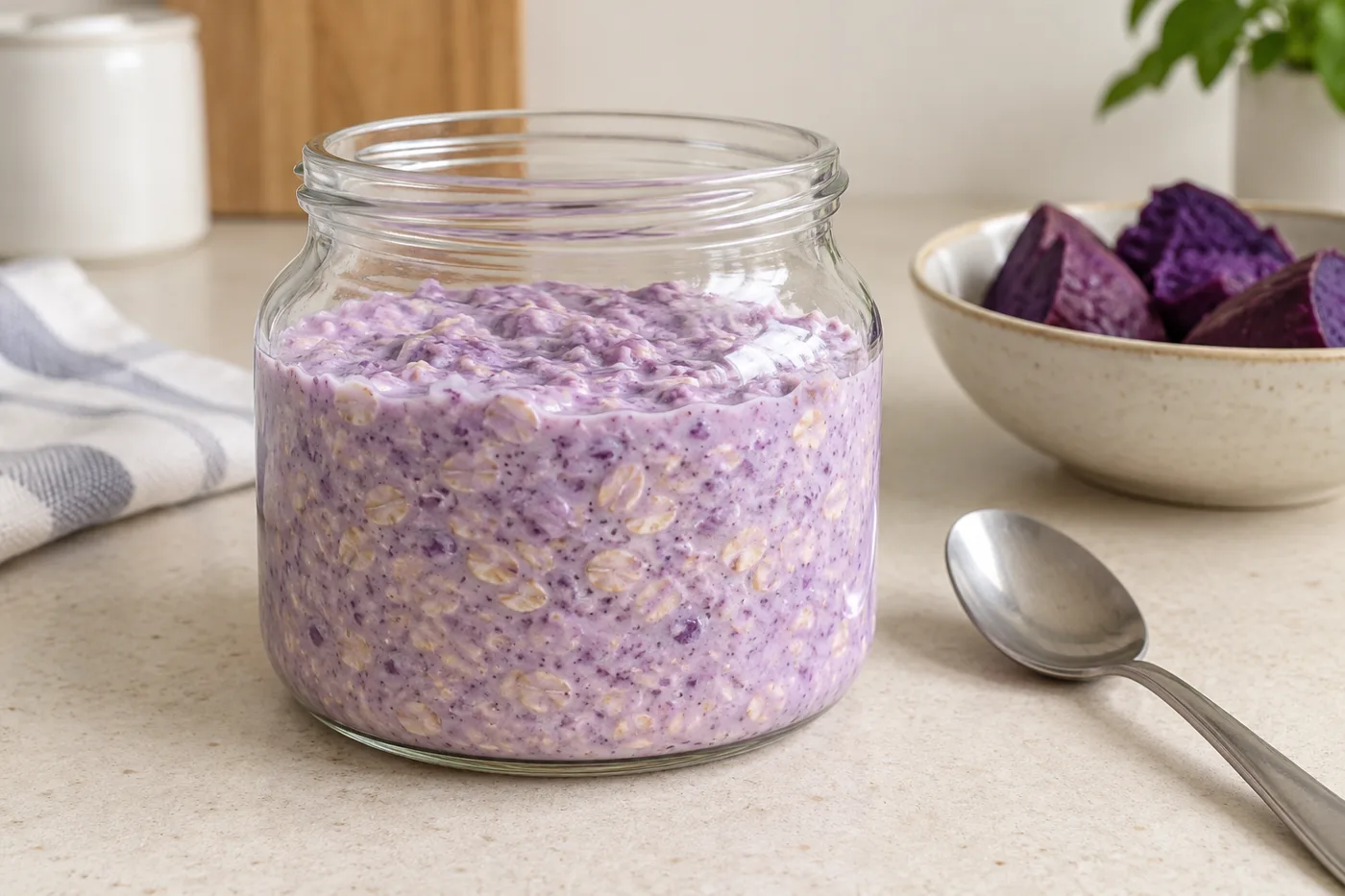
Ube overnight oats combine rolled oats, cooked purple yam, Greek yogurt, and milk into a creamy breakfast that softens in the refrigerator overnight. This version uses plain ingredients so you can control the sweetness and choose your toppings separately.
To make them, mash cooked, chilled ube with unsweetened soy milk, stir in plain Greek yogurt and rolled oats, then cover and refrigerate for about eight hours. In the morning, stir and adjust the consistency with a little additional liquid if needed.
The base recipe makes one breakfast portion with approximately 340 calories and 28 grams of protein, using the reference values explained below. Optional sweeteners and toppings are excluded.
If you are looking for ube overnight oats for weight loss, treat this as a measured breakfast option rather than a food that causes weight loss. Its usefulness depends on the portion and how it fits your overall eating pattern.
This original recipe has not been kitchen-tested. The quantities provide a starting formulation, with adjustments for different yogurt thicknesses and yam textures.
What Are Ube Overnight Oats?
Overnight oats are oats softened in liquid under refrigeration rather than cooked into hot porridge immediately before serving. In this recipe, cooked ube adds purple yam flavor and body. Greek yogurt contributes creaminess and protein, while soy milk helps hydrate the oats.
The result should be thick enough to eat with a spoon. It is a different preparation from a blended drink. If you prefer a drinkable breakfast or snack, try our ube protein shake with Greek yogurt.
Does the ube cook overnight?
No. Use fully cooked ube before assembling the oats. Refrigerator soaking softens the rolled oats, but it does not cook raw yam or replace the cooking instructions for a powder. This distinction is especially important when adapting the recipe with a product that requires heating before consumption.
Ingredients
For one serving
- 40 g plain old-fashioned rolled oats, approximately 1/2 US cup
- 75 g plain cooked ube, peeled, chilled, and mashed
- 170 g plain nonfat Greek yogurt
- 120 ml unsweetened soy milk, approximately 1/2 US cup
- 1/4 teaspoon vanilla extract, optional
- Additional cold water or milk, a small amount if needed before serving
The base recipe contains no added sweetener. Taste the finished oats before deciding whether you want one. Use a covered food container or jar large enough to leave room for stirring. A container of approximately 600 ml is more practical than packing the mixture tightly into a small glass.
Optional additions
Choose additions according to your preferences and include them in your nutrition estimate: a measured portion of fresh fruit, a small amount of chopped nuts, a measured drizzle of honey or syrup, a little cinnamon, or a small spoonful of nut butter.
These are optional variations, not ingredients included in the base nutrition calculation. Start with one addition if you want to understand how it changes the flavor and consistency.
Which Oats Work Best?
Plain old-fashioned rolled oats are the starting choice for this recipe. They provide recognizable oat texture after soaking and are easier to use consistently than switching between several oat products.
Quaker’s overnight-oats guidance recommends a full eight-hour refrigerated soak for the oats to absorb the liquid. Follow your own oat product’s suitability and instructions.
Can you use quick oats?
Quick oats may soften more and produce a smoother, less distinct texture. If you try them, make a small batch first. Do not assume that the result will match old-fashioned oats exactly. Check whether your product contains added sugar, milk powder, or flavorings before using it as a substitute.
Can you use steel-cut oats?
Do not substitute steel-cut oats directly in this recipe. Their texture and preparation needs differ. Choose a recipe specifically developed for them rather than expecting the same overnight method to produce the same result.
What about flavored oatmeal packets?
They change the formulation. A packet may contain sugar, salt, flavorings, or other ingredients. Its weight and liquid requirements may also differ from the plain rolled oats listed here. Use plain oats for the most straightforward version.
Choosing the Ube
Use plain, fully cooked purple yam, weighed after peeling and cooking. Mash it thoroughly before combining it with the other ingredients. Small soft pieces are acceptable if you enjoy texture, but large chunks will not disappear during refrigeration.
The yam should be chilled before it meets the yogurt and milk. Ube is a purple yam, not the same ingredient as purple sweet potato. If you use purple sweet potato instead, label it as a variation and update the nutrition reference.
Can you use frozen ube?
Yes, if the product is suitable for the preparation. Read the package carefully. Frozen grated yam and frozen cooked yam are not necessarily the same product. Complete any required cooking and cooling before assembly. Follow the thawing instructions rather than leaving the product on the counter for convenience.
Can you use ube halaya?
You can experiment with halaya, but it creates a different recipe. Halaya may contain sweeteners and other ingredients, so it should not be treated as an equal nutritional replacement for plain cooked yam. Its moisture and sweetness can also change the final consistency. Recalculate nutrition using the specific product or recipe.
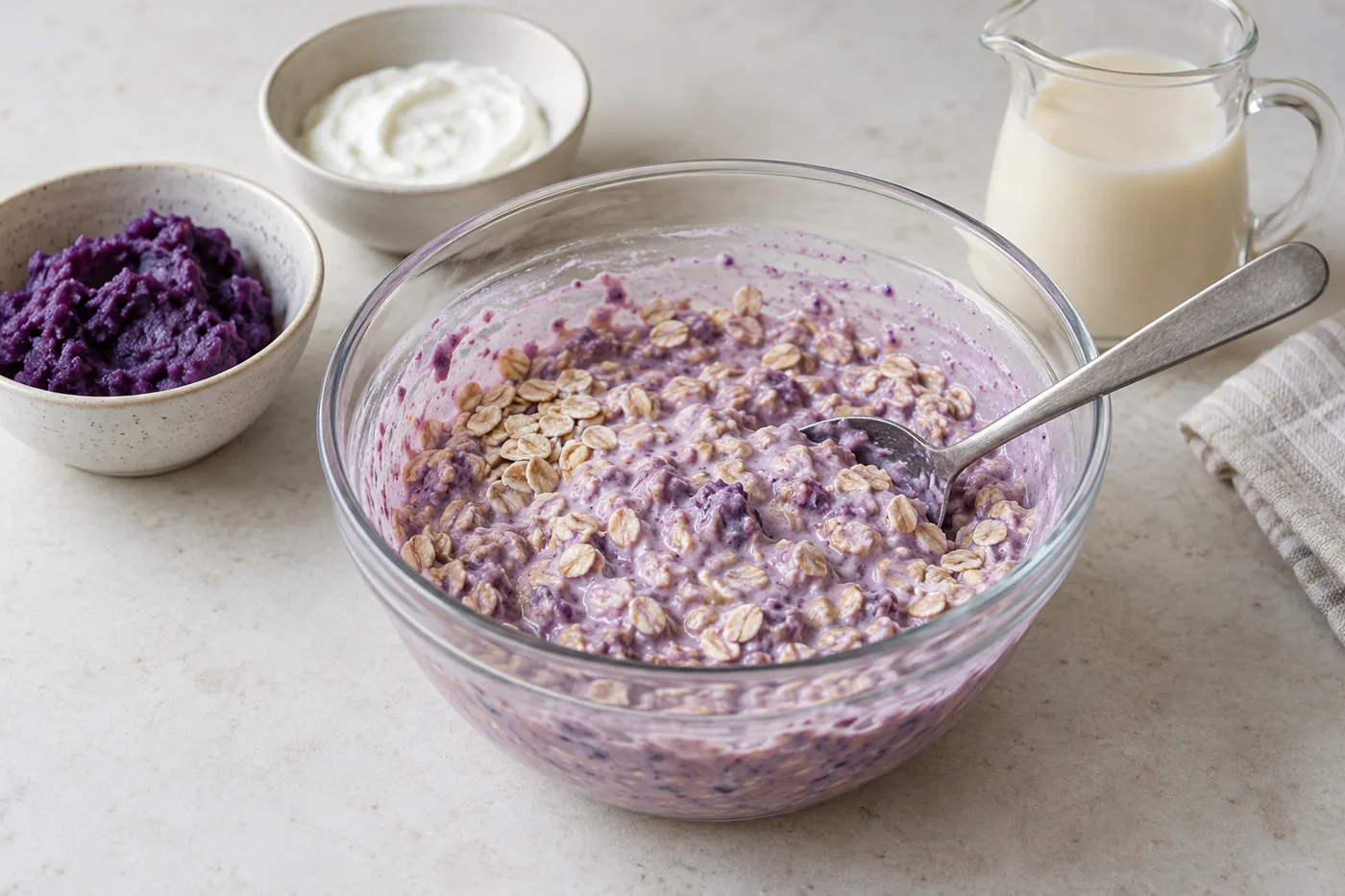
How to Make Ube Overnight Oats
1. Mash the cooked ube
Place the chilled cooked yam in a bowl. Mash with a fork until mostly smooth. Remove any tough or fibrous pieces rather than expecting the overnight soak to break them down. For a smoother breakfast, spend a little more time on this step.
2. Loosen the mash with soy milk
Add the soy milk gradually and stir. Work out large lumps before adding the oats. It is easier to distribute the yam evenly while the mixture is still relatively loose. A few small yam pieces can remain if that is your preferred texture.
3. Stir in the Greek yogurt
Add the yogurt and optional vanilla. Mix until the color is reasonably even. The yogurt will lighten the yam, so the mixture may be lavender rather than deep purple. Color varies with the ingredients and does not establish whether the recipe is nutritionally suitable.
4. Add the rolled oats
Stir in the oats, scraping around the sides and bottom of the bowl. Make sure there are no pockets of dry oats or concentrated yam mash. The mixture should look moist and stirrable. It will become thicker as the oats absorb liquid.
5. Cover and refrigerate
Transfer to a clean covered container. Refrigerate for approximately eight hours, keeping the refrigerator at 40°F/4°C or below. Commercial overnight-oats preparation guidance likewise specifies refrigerated soaking rather than leaving the mixture at room temperature. Do not leave the jar on the kitchen counter overnight.
6. Stir and adjust before serving
Stir thoroughly in the morning. If the oats are thicker than you prefer, add a little cold water or milk, one tablespoon at a time. Taste before adding sweetener. Add any chosen toppings just before eating, particularly if you want them to stay crisp.
The entire base recipe counts as one serving. A large jar makes stirring easier; it does not mean the whole container needs to be filled to its rim.
Estimated Calories and Protein
The following is a working estimate using representative plain rolled-oat values and the same yogurt, soy milk, and boiled-ube references used for the shake.
| Ingredient | Amount | Estimated calories | Estimated protein |
|---|---|---|---|
| Plain rolled oats | 40 g | 150 | 5 g |
| Plain boiled ube | 75 g | 58 | 0.5 g |
| Plain nonfat Greek yogurt | 170 g | 90 | 18 g |
| Unsweetened soy milk | 120 ml | 40 | 4 g |
| Total | One recipe | 338 | 27.5 g |
Rounded for practical use, the base provides approximately 340 calories and 28 g protein. The boiled-yam reference comes from the Philippine Food Composition Tables. The yogurt and soy milk examples use FAGE Total 0% and Silk Unsweet Soymilk. Check your actual packages, particularly the oats, before applying these numbers to your breakfast.
The estimate excludes optional vanilla, toppings, sweetener, and any extra milk added before serving. It is not a laboratory analysis of a tested finished recipe.
Why brand changes matter
A flavored yogurt, sweetened milk, or different oat product can change the total. The same applies when you replace cooked yam with halaya or prepared powder. Use the ingredient labels and actual quantities rather than assuming that every purple overnight-oats recipe has the same nutritional profile.
Can These Ube Overnight Oats Fit a Weight-Loss Plan?
They can fit when their portion and ingredients suit your needs. The recipe provides a defined breakfast serving, which makes it easier to understand what you are eating. It does not guarantee a particular weight outcome.
For the broader discussion, read our guide to ube, portions, and weight management.
Decide how the breakfast fits your routine
Eating the jar instead of your usual breakfast is different from adding it after breakfast. Similarly, a smaller portion alongside another food has a different role from the whole recipe eaten on its own. Choose deliberately rather than assuming that a recipe described as healthy can be added without considering the rest of the meal.
Review toppings as part of the serving
Granola, nut butter, coconut flakes, and syrup can change the nutrition substantially depending on their amounts. You can enjoy them, but measure them if you want a useful estimate. Start with the base recipe and one addition rather than automatically layering several toppings.
Can You Make This with Ube Powder?
A powder-based adaptation is possible, but this recipe specifies 75 g cooked yam, not 75 g dry powder. Prepare the powder according to its own instructions. Complete any required cooking, cool it, and assess whether the prepared mixture is suitable as a yam component.
Different powders can produce different concentrations and textures. Our ube powder preparation guide explains the differences between plain yam powder, instant mixes, extracts, and flavored protein products.
Does overnight soaking replace cooking the powder?
No. If the powder requires cooking, prepare it before combining it with yogurt and milk. Refrigerating it overnight does not replace the required heating process.
Will the nutrition stay the same?
Not necessarily. Calculate from the amount of dry product used and the ingredients added during preparation. Do not apply the boiled-whole-yam estimate automatically. This powder variation has not been kitchen-tested.
Variations and Substitutions
With dairy milk
Replace the soy milk with the same initial volume of dairy milk. Check the label when updating nutrition. The texture may need a small adjustment before serving. This version still contains dairy yogurt, so it does not suit someone avoiding milk ingredients.
Dairy-free version
Choose a suitable plain yogurt alternative and milk. Protein content varies considerably between products. A creamy plant-based yogurt does not necessarily provide the same protein as Greek yogurt. Recalculate the complete serving before describing the variation as equivalent.
With fruit
Add a measured portion of fruit before serving. Keeping it separate until morning lets you evaluate the base consistency first. Fruit can change flavor and sweetness, so taste before adding syrup or another sweetener.
With chia seeds
Chia seeds can change how much liquid the recipe needs. If you experiment, add a measured amount and be prepared to adjust the liquid. Include the seeds in the nutrition estimate. They are not required for this formulation.
Without yogurt
Omitting the yogurt is a substantial change because it removes a large part of the creamy base and protein contribution. Use a recipe developed without yogurt rather than simply deleting it and expecting the same result.
Troubleshooting
| Problem | Possible reason | Adjustment |
|---|---|---|
| Oats are too thick | Thick yogurt, dry yam, or extra absorbent ingredients | Stir in liquid gradually before serving |
| Oats are too loose | Additional liquid or a wetter substitution | Review quantities for the next batch |
| Yam remains in large pieces | Insufficient mashing | Mash thoroughly before adding oats |
| Mixture tastes too tangy | Yogurt dominates | Try a milder plain yogurt next time |
| Breakfast is too sweet | Sweetened yogurt, milk, halaya, or toppings | Review the complete ingredient list |
| Oats remain firmer than expected | Short soak or a different oat product | Check the oat type and allow the full refrigerated soak |
Do not keep adding ingredients to fix several problems at once. For the next batch, change one variable and record the result. That makes it easier to find the consistency you prefer without losing track of the ingredient quantities.
Make-Ahead and Storage
This recipe is designed to be assembled in the evening and eaten the following morning. Prepare the cooked ube early enough to cool and refrigerate it before mixing. Keep the finished oats covered and chilled.
For your first batch, make one portion so you can assess the texture before preparing several jars. The guidance here focuses on next-day use rather than claiming a tested multi-day shelf life for this specific formulation.
Taking the oats to work
Transport the jar chilled, using an insulated bag and cold pack when needed. Refrigerate it on arrival if you will not eat it immediately. Keeping the lid closed does not make a yogurt-based breakfast suitable for extended storage at room temperature.
Keep toppings separate
Pack crunchy toppings separately if you want to preserve their texture. Add them just before serving and remember that their nutrition is additional to the base recipe.
More Breakfast Ideas
For a broader selection of flavors and combinations, browse our overnight oats recipes. Keep this ube version as one option in your breakfast rotation. There is no need to eat the same preparation every day to make use of it. Choose the version you enjoy and can prepare consistently.
Printable Ube Overnight Oats Recipe
PrintUbe Overnight Oats with Greek Yogurt
- Total Time: 8 hours 10 minutes
- Yield: 1 serving 1x
Description
Creamy ube overnight oats made with plain cooked purple yam, nonfat Greek yogurt and unsweetened soy milk. One measured breakfast serving with estimated calories and protein.
Ingredients
- 40 g plain old-fashioned rolled oats (approximately 1/2 US cup)
- 75 g plain cooked ube, peeled, chilled and mashed
- 170 g plain nonfat Greek yogurt
- 120 ml unsweetened soy milk (approximately 1/2 US cup)
- 1/4 teaspoon vanilla extract, optional
- Additional cold water or milk, only as needed before serving
Instructions
- Mash the fully cooked, chilled ube until mostly smooth, removing tough or fibrous pieces.
- Gradually stir in the soy milk and work out large lumps.
- Add Greek yogurt and optional vanilla. Mix until reasonably even.
- Stir in the rolled oats thoroughly, scraping the bottom and sides.
- Transfer to a clean covered container of about 600 ml. Refrigerate for approximately 8 hours at 40°F (4°C) or below; never soak on the counter.
- Stir before serving. Thin with cold water or milk a tablespoon at a time if needed. Taste before adding optional sweetener or toppings. The complete batch is one serving.
Notes
This original recipe has not been kitchen-tested. Times exclude cooking, cooling and thawing the ube. Use fully cooked chilled purple yam; overnight soaking does not cook raw yam or replace required powder preparation. Use rolled oats suitable for overnight preparation. Contains milk and soy. For gluten avoidance use labeled gluten-free oats and verify all other ingredients. Designed for next-day use; keep covered and refrigerated.
Estimated base nutrition: 40 g plain rolled oats, approximately 150 kcal and 5 g protein; 75 g boiled ube, approximately 58 kcal and 0.5 g protein; 170 g FAGE Total 0% yogurt, 90 kcal and 18 g protein; 120 ml Silk Unsweet Soymilk, 40 kcal and 4 g protein. Approximately 340 kcal and 28 g protein total. Check your actual labels, especially the oats. Optional vanilla, extra milk, sweeteners and toppings are excluded. This recipe does not guarantee weight loss.
- Prep Time: 10 minutes
- Refrigerated soaking: 8 hours
- Cook Time: 0 minutes
- Category: Breakfast
- Method: Refrigerated soaking
- Cuisine: Filipino-inspired
Nutrition
- Serving Size: 1 complete recipe
- Calories: 340
- Protein: 28 g
Keywords: ube overnight oats, ube overnight oats with Greek yogurt, purple yam overnight oats
FAQS
Can I use raw ube in overnight oats?
No. This recipe requires fully cooked, chilled ube. Refrigeration and soaking do not cook raw yam.
How long should ube overnight oats soak?
Allow approximately eight hours in the refrigerator. Check that your oats are suitable for overnight preparation.
Do I need protein powder?
No. The base recipe uses Greek yogurt and soy milk, with an estimated 28 g protein per serving using the reference ingredients.
Are ube overnight oats good for weight loss?
They can fit a weight-loss eating plan when the serving suits your needs. The recipe does not cause weight loss on its own.
Can I use ube powder?
Prepare it according to the product instructions first, including any required cooking. The texture and nutrition will differ from the cooked-yam version.
Can I use ube halaya?
It creates a different variation. Check its sweeteners and other ingredients, adjust the consistency, and recalculate the nutrition.
Are these overnight oats gluten-free?
Use oats specifically labeled gluten-free and verify every other ingredient and preparation surface when gluten avoidance is necessary.
How many servings does this recipe make?
One serving. The complete batch provides approximately 340 calories before optional toppings and additions.