
Diet beverages vs water weight loss is a common question for people trying to cut calories and choose better drinks. Water contains zero calories and no sweeteners, while diet beverages can also provide very few or no calories. But which option is actually better for losing weight?
That raises an important question: Are diet beverages or water better for weight loss?
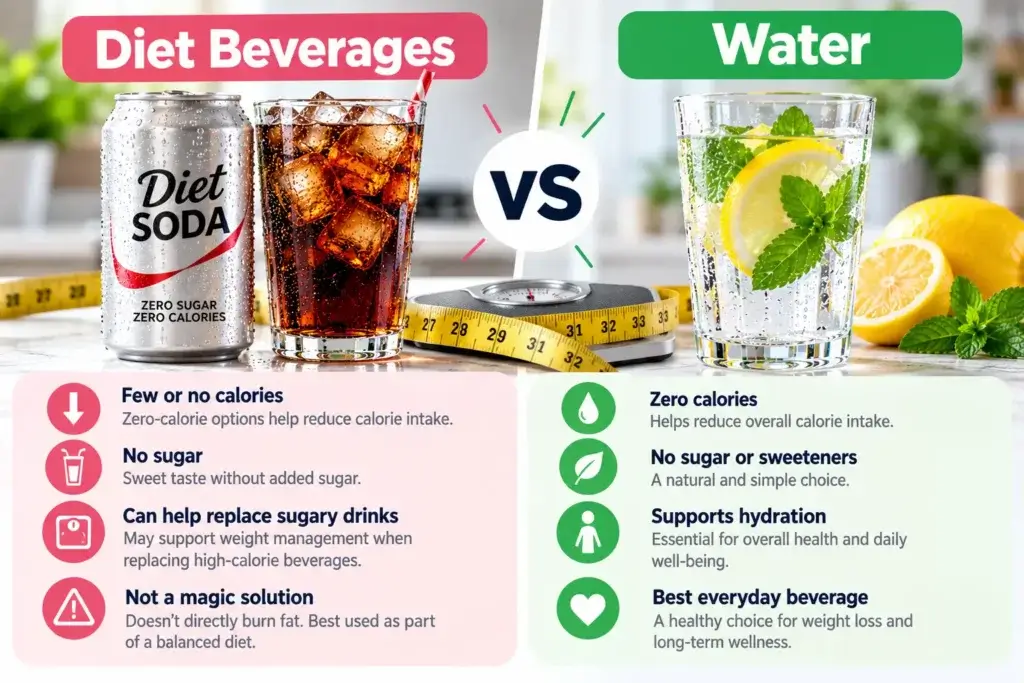
Water is usually considered the simplest and healthiest everyday drink because it contains no calories, sugar, or artificial sweeteners. However, research suggests that low- and no-calorie diet beverages can also help some people manage their calorie intake, particularly when they replace sugar-sweetened drinks.
So the answer isn’t quite as simple as “diet drinks are bad” or “water always causes more weight loss.”
Here’s what current research tells us about diet beverages vs water for weight loss, appetite, calories, hydration, and long-term weight management.
Diet Beverages vs Water for Weight Loss: Quick Answer
For most people, water should be the primary beverage for everyday hydration.
However, zero- or low-calorie diet beverages can also fit into a weight-loss diet, especially when they replace regular soda or other sugary drinks.
Research comparing diet beverages directly with water has not consistently shown that water produces greater weight loss.
In some randomized studies, people drinking non-nutritively sweetened beverages lost approximately the same amount of weight — or slightly more — than people drinking water.
That doesn’t mean diet soda causes weight loss.
Instead, diet beverages may simply make it easier for some people to reduce calories while still enjoying sweet-tasting drinks.
What Are Diet Beverages?
Diet beverages are drinks designed to provide sweetness with little or no sugar and relatively few calories.
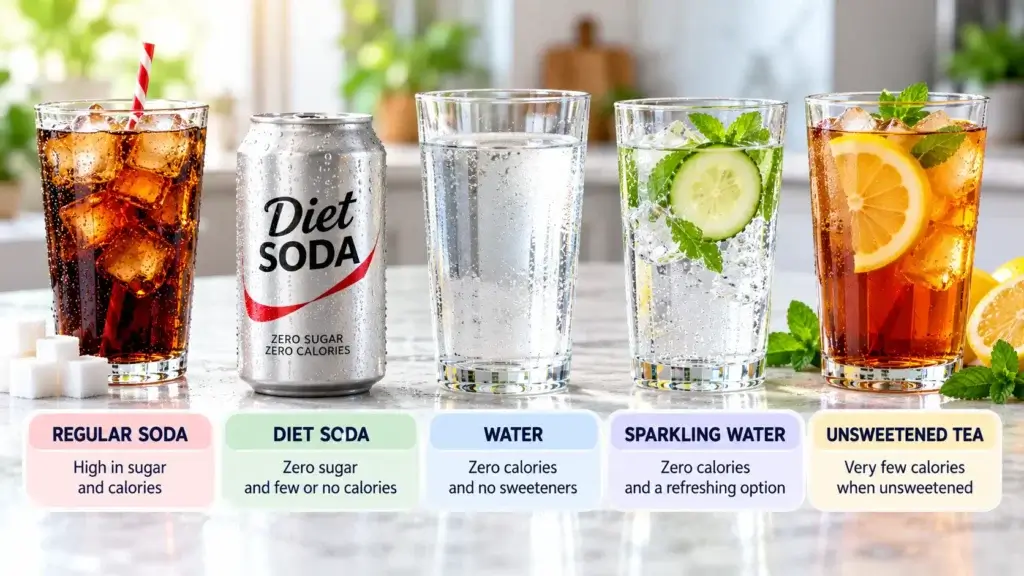
They may include:
- Diet soda
- Zero-sugar soda
- Sugar-free flavored water
- Low-calorie drink mixes
- Zero-sugar iced tea
- Some sugar-free energy drinks
- Beverages sweetened with stevia or monk fruit
- Drinks containing artificial sweeteners
Common non-sugar sweeteners include:
- Aspartame
- Sucralose
- Saccharin
- Acesulfame potassium
- Stevia
- Monk fruit extract
The exact nutritional profile varies between products, so it is always worth checking the Nutrition Facts label.
Does Drinking Water Help You Lose Weight?
Water itself does not burn body fat.
However, it can support weight management in several practical ways.
Water Has Zero Calories
Replacing a 150-calorie soda with water eliminates those calories immediately.
If you regularly consume several sugary drinks every day, switching them to water can significantly reduce your total calorie intake.
Water Can Replace Sugary Drinks
This is one of the biggest potential benefits.
Sugar-sweetened beverages provide calories but often do not create the same level of fullness as solid foods.
If you’re trying to reduce overall calorie intake, this low-calorie food list can also help you build lighter meals and snacks.
As a result, it can be easy to consume extra calories through drinks without compensating by eating less later.
Water Supports Hydration
Water is an excellent choice for maintaining hydration without adding sugar, calories, caffeine, or sweeteners.
For this reason, it makes sense for water to remain your main everyday beverage even if you occasionally consume diet drinks.
Can Diet Beverages Help With Weight Loss?
Possibly — especially when they replace beverages containing sugar.
Imagine someone who drinks two cans of regular soda every day.
Depending on the brand and serving size, that could represent several hundred calories.
Replacing those drinks with zero-calorie versions dramatically reduces beverage calories without necessarily requiring the person to give up soda completely.
You can also explore these best smoothie recipes for weight loss if you want more filling drink options made with whole-food ingredients.
That calorie reduction can contribute to weight loss if overall calorie intake remains lower.
The important distinction is this:
Diet beverages do not directly burn fat.
Their potential advantage comes from replacing higher-calorie drinks.
What Does Research Say About Diet Beverages vs Water?
Researchers have directly compared water with beverages sweetened using non-nutritive sweeteners.
In one large randomized weight-management study involving nearly 500 adults, participants followed a structured behavioral weight-loss program while drinking either water or non-nutritively sweetened beverages.
After the initial 12 weeks, weight loss was very similar between the two groups.
Participants in both groups lost around 5.5 to 6 kilograms on average.
The study continued for 52 weeks.
At that point, participants assigned to non-nutritively sweetened beverages maintained slightly greater average weight loss than those assigned to water.
However, researchers noted that the difference was small and was not considered clinically significant.
The takeaway is important:
Water was not clearly superior to diet beverages for weight loss.
But diet beverages were not a magic weight-loss tool either.
Both groups were participating in a broader weight-management program.
Diet Beverages vs Water: Calories
From a calorie perspective, the two options are often similar.
Plain Water
Calories: 0
Sugar: 0 g
Most Diet Beverages
Calories: typically 0 to very few
Sugar: typically 0 g
That means both can be dramatically lower in calories than regular soda, sweet tea, lemonade, or sweetened coffee drinks.
For weight loss, the biggest improvement often comes from replacing calorie-containing beverages, rather than worrying about small differences between water and diet drinks.
Does Diet Soda Cause Weight Gain?
This question is more complicated than it seems.
Some observational studies have found associations between frequent consumption of artificially sweetened beverages and higher body weight or certain health conditions.
However, an association does not prove that diet drinks caused the weight gain.
For example, people who already have overweight or obesity may be more likely to choose diet beverages because they are trying to reduce calories.
This is sometimes called reverse causation.
Randomized controlled trials provide a different perspective.
When diet beverages replace sugar-sweetened beverages, they generally do not appear to cause weight gain and may help reduce calorie intake in some people.
Why Does the WHO Recommend Caution With Non-Sugar Sweeteners?
The World Health Organization recommends against relying on non-sugar sweeteners as a long-term strategy for controlling body weight.
Its recommendation is based on the overall evidence suggesting that non-sugar sweeteners do not provide a clear long-term benefit for reducing body fat across populations.
This recommendation does not mean that drinking one diet soda automatically causes weight gain.
It means artificial or non-sugar sweeteners should not be treated as a weight-loss treatment.
A healthier long-term goal may be to gradually reduce dependence on very sweet foods and beverages overall.
Water vs Diet Soda: Which Is Healthier?
For everyday hydration, water wins.
Water:
- Contains no calories
- Contains no added sugar
- Contains no artificial sweeteners
- Is inexpensive
- Supports normal hydration
- Can be consumed throughout the day
Diet soda may still have a practical role.
For someone who drinks several regular sodas every day, switching immediately to plain water may be difficult.
Using diet soda temporarily can make reducing added sugar and calories easier.
Think of diet beverages as a possible replacement tool, rather than something you need to drink for health.
Can You Drink Diet Soda While Losing Weight?
Yes.
You do not necessarily need to eliminate diet soda to lose weight.
Weight loss primarily depends on maintaining an energy deficit over time.
If a zero-calorie beverage helps you avoid a 150- or 200-calorie sugary drink, it may actually make your diet easier to maintain.
However, that doesn’t mean unlimited diet soda should replace your water intake.
A practical strategy is:
Water most of the time + diet beverages occasionally when they help you avoid sugary drinks.
What Is the Best Drink for Weight Loss?
There is no beverage that magically burns body fat.
The best choices are generally drinks that help you stay hydrated without adding large amounts of calories or sugar.
Good options include:
Water
The simplest everyday choice.
Sparkling Water
Useful if you enjoy carbonation but want to avoid soda.
Choose unsweetened versions when possible.
Unsweetened Tea
Black tea, green tea, and many herbal teas can provide flavor with very few calories when consumed without added sugar.
Herbal tea can also be a low-calorie option, and this Costa Rican tea for weight loss explains another tea-based approach people often search for.
Unsweetened Coffee
Plain coffee is also low in calories.
Calories can increase quickly when sugar, flavored syrups, cream, or sweetened milk are added.
Infused Water
Try adding:
- Lemon
- Lime
- Cucumber
- Mint
- Berries
- Orange slices
This can make water more enjoyable without turning it into a high-calorie beverage.
For another popular option, see this appetite control juice and how it fits into a calorie-conscious routine.
Diet Beverages vs Sugary Drinks
This is where the nutritional difference becomes much clearer.
A regular sugar-sweetened soda can contain a substantial amount of added sugar and calories.
Diet soda generally contains little or no sugar and few or no calories.
If the choice is between:
Regular soda → Diet soda
the diet version can significantly reduce calorie and added-sugar intake.
But if the choice is:
Diet soda → Water
the weight-loss advantage becomes much less obvious because both options provide almost no calories.
Can Artificial Sweeteners Increase Appetite?
Researchers have studied whether sweeteners could increase cravings or appetite.
Results are mixed.
Some theories suggest that experiencing sweetness without calories could influence hunger or food preferences.
However, clinical studies have not consistently shown that diet beverages cause people to compensate by eating enough extra food to eliminate their calorie advantage.
Individual responses may also differ.
If drinking diet soda makes you crave sweets or snack more often, water may work better for you.
If a diet beverage helps you avoid regular soda without increasing your food intake, it may be useful.
Does Drinking Water Before Meals Help With Weight Loss?
Some people find drinking water before a meal useful because it increases fluid volume in the stomach and may help them feel more satisfied.
However, water should not be considered an appetite suppressant or weight-loss treatment.
Think of pre-meal water as a simple hydration habit rather than a fat-loss trick.
How Much Water Should You Drink for Weight Loss?
There is no universal amount of water that causes weight loss.
Fluid needs vary depending on:
- Body size
- Physical activity
- Climate
- Diet
- Pregnancy or breastfeeding
- Medical conditions
- Medications
Instead of forcing yourself to drink excessive amounts of water, focus on staying adequately hydrated throughout the day.
Urine that is generally pale yellow can be one practical indicator of hydration, although it is not a perfect measure.
Should You Replace Diet Soda With Water?
If you enjoy diet soda occasionally, there is no need to panic.
However, gradually replacing some servings with water can be a sensible habit.
For example:
Morning: Water or unsweetened coffee
Lunch: Water or sparkling water
Afternoon: Unsweetened tea
Dinner: Water
Occasional craving: Diet soda
This gives you variety while keeping water as your main source of hydration.
What About Zero-Sugar Soda?
For weight-loss purposes, zero-sugar soda and traditional diet soda are similar.
Both usually contain very few calories and use non-sugar sweeteners.
The label “zero sugar” does not automatically make a drink healthier.
Check the Nutrition Facts panel and ingredient list rather than relying only on front-of-package claims.
Is Sparkling Water Better Than Diet Soda?
Unsweetened sparkling water can be an excellent middle ground.
It provides carbonation without:
- Added sugar
- Significant calories
- Artificial sweeteners in many products
If you mainly enjoy diet soda because you like fizzy drinks, sparkling water may make switching easier.
Just check the label because some flavored sparkling waters contain sweeteners or added sugars.
Diet Beverages vs Water for Weight Loss: Which Should You Choose?
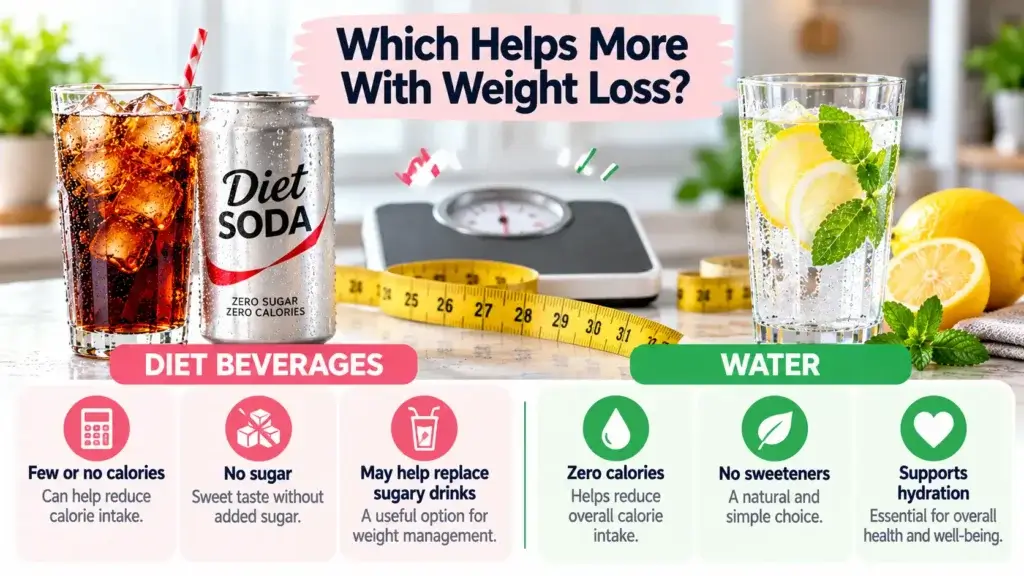
For most people, the best approach isn’t necessarily choosing one and banning the other.
Instead:
Make water your main beverage.
Then use low- or no-calorie drinks strategically when they help you replace sugary beverages.
If you currently drink regular soda every day, moving from regular soda to diet soda can be a meaningful reduction in calories.
Later, you may decide to replace some diet drinks with water, sparkling water, or unsweetened tea.
The goal is a drinking pattern you can realistically maintain.
Frequently Asked Questions
Are diet beverages better than water for weight loss?
Not necessarily. Some randomized studies have found similar weight loss with diet beverages and water, while others have found a small advantage for low- or no-calorie sweetened drinks. Water remains the preferred everyday beverage because it hydrates without calories or sweeteners.
Can diet soda help you lose weight?
Diet soda does not directly cause fat loss. However, replacing regular soda with a zero-calorie version can reduce calorie and sugar intake, which may help support weight loss.
Is water better than zero-sugar drinks?
Water is generally the best choice for routine hydration because it contains no calories, sugar, or sweeteners. Zero-sugar drinks can still be useful as an alternative to sugary beverages.
Does drinking water burn belly fat?
No. Water does not specifically burn belly fat. Losing abdominal fat generally requires overall fat loss through a sustained calorie deficit.
Does Diet Coke stop weight loss?
Diet Coke contains very few calories, so drinking it does not automatically prevent weight loss. Overall calorie intake and eating patterns matter much more.
Can I drink zero-calorie drinks while fasting for weight loss?
This depends on the type of fasting plan you follow. Water is the simplest choice during a fasting period. Some fasting approaches allow zero-calorie beverages, while stricter versions may limit them.
What should I drink instead of soda to lose weight?
Good alternatives include plain water, sparkling water, unsweetened tea, unsweetened coffee, and water flavored naturally with lemon, cucumber, berries, or mint.
Should I stop drinking artificial sweeteners to lose weight?
Not necessarily. Artificially sweetened beverages may help some people transition away from sugary drinks. However, they should not be viewed as a weight-loss treatment, and gradually reducing your preference for very sweet beverages may be useful long term.
The Bottom Line
When comparing diet beverages vs water for weight loss, the evidence does not show that simply choosing water instead of a zero-calorie diet beverage will automatically make you lose more weight.
Both options can keep beverage calories very low.
The biggest weight-management benefit usually comes from replacing sugar-sweetened beverages with low- or zero-calorie alternatives.
If you’re comparing other popular weight-loss drinks, you may also want to read this miracle weight loss drink recipe for a closer look at what these recipes actually offer.
Water remains the best everyday choice because it hydrates without sugar, calories, or sweeteners.
But if a diet beverage helps you replace regular soda and makes your eating plan easier to maintain, it can still fit into a balanced weight-loss strategy.
Rather than searching for a perfect weight-loss drink, focus on your overall eating pattern, total calorie intake, physical activity, sleep, and habits you can maintain over time.