
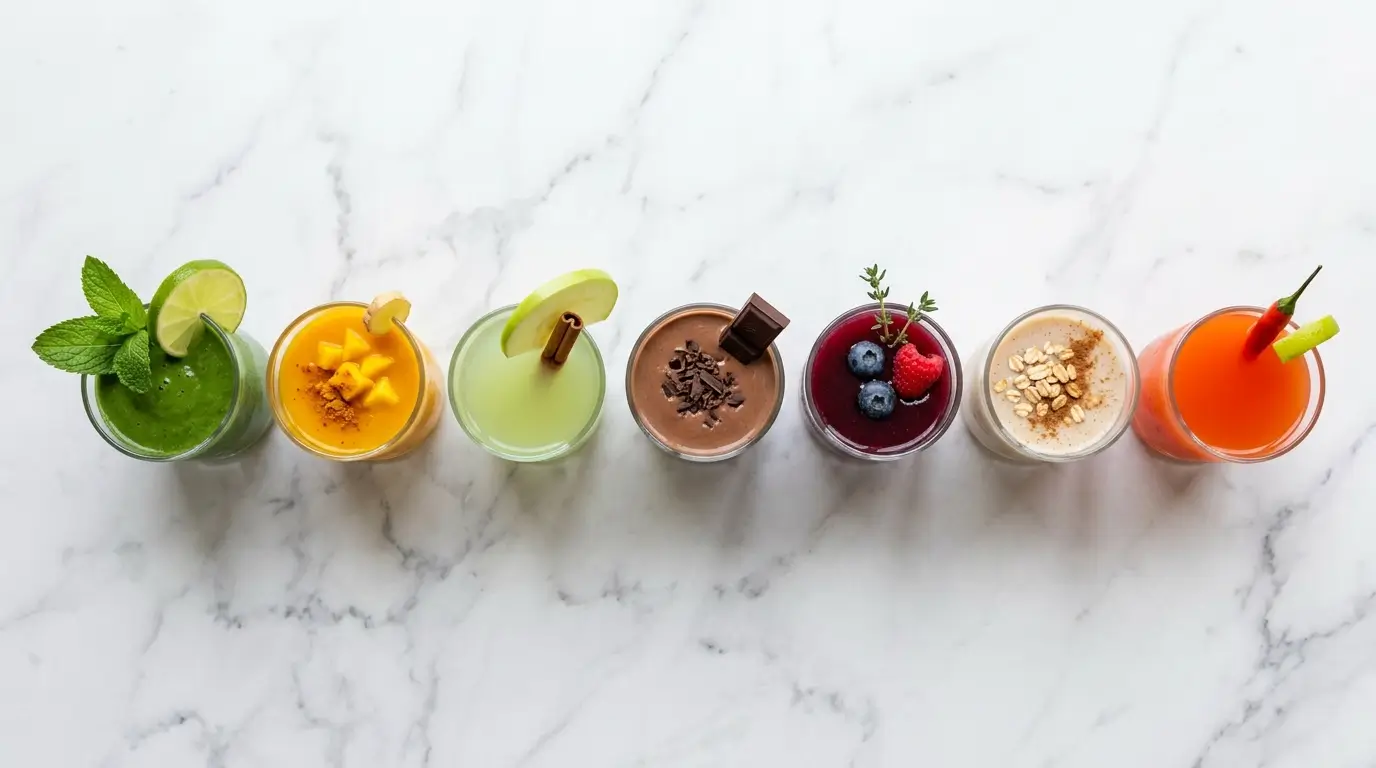
Best smoothie recipes for weight loss is one of the most searched food topics of 2026 — and one of the most misunderstood. If you’re looking for the best smoothie recipes for weight loss, the goal isn’t to find a magic combination of ingredients. A good weight-loss smoothie should be satisfying, easy to prepare, and built around ingredients that provide protein, fiber, and enough volume to keep you comfortable between meals.
The seven smoothies in this guide take different approaches. Some are higher in protein, some emphasize fiber-rich fruits and vegetables, and others use ingredients such as ginger, cinnamon, or turmeric for flavor and nutritional variety.
Keep in mind that smoothies don’t automatically cause weight loss. Your overall food intake, activity level, portion sizes, and eating pattern matter much more than any single ingredient. These recipes are designed to make it easier to build a balanced smoothie that can fit into a healthy weight-loss routine.
What Makes a Good Weight Loss Smoothie?
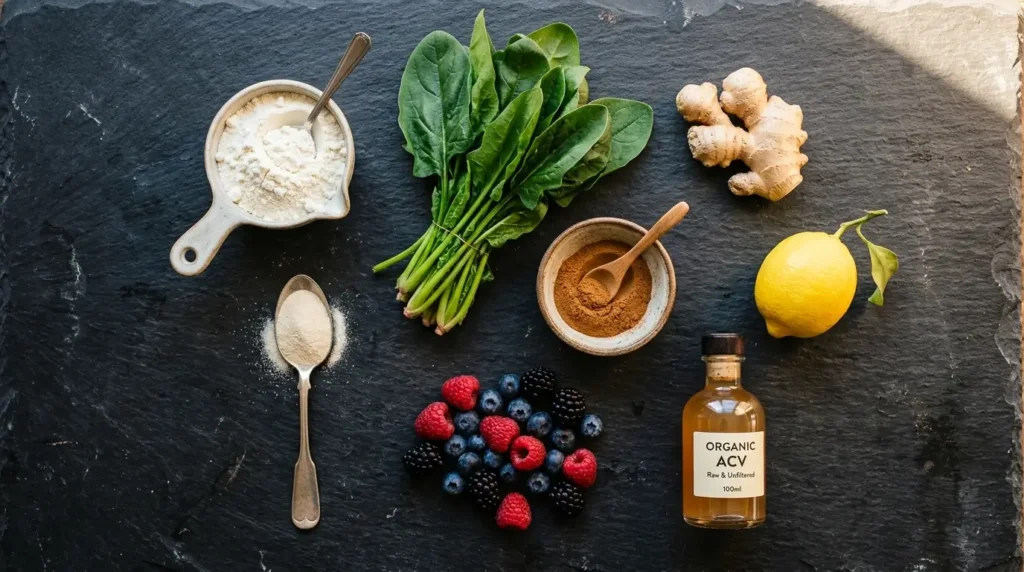
Prioritize Protein
A protein-rich smoothie can help you feel fuller and make a smoothie more satisfying as a breakfast or snack.
Add Fiber-Rich Ingredients
Berries, spinach, chia seeds, flaxseed, and oats add fiber and help make your smoothie more filling.
Keep Added Sugar and Portions in Check
Choose whole fruits instead of fruit juice and limit added sweeteners. Even healthy ingredients can add up when portions are too large.
Balance Carbohydrates With Protein and Fiber
A smoothie containing fruit can still fit into a weight-loss diet. Pairing carbohydrate-containing ingredients with protein and fiber can make the smoothie more filling and may help slow digestion compared with a drink made primarily from juice or added sugars.
Can Food Ingredients Support GLP-1 Naturally?
GLP-1 is a hormone involved in appetite regulation and blood-sugar control, and it is also the target of medications such as semaglutide and tirzepatide. Some foods and nutrients have been studied for their effects on appetite, digestion, or GLP-1 secretion, but their effects are much smaller and less predictable than prescription GLP-1 medications. A smoothie should therefore be viewed as a nutritious food choice, not a natural substitute for GLP-1 medication.
Recipe 1 — Green Protein Smoothie With Ginger & Gelatin
Why it works:
This smoothie combines protein, leafy greens, ginger, and gelatin for a filling combination with a mild, fresh flavor. Gelatin also adds protein and glycine, while spinach contributes fiber and micronutrients.
Print
Best Smoothie Recipes for Weight Loss: 7 That Actually Work
- Total Time: 5 minutes
- Yield: 1 serving 1x
- Diet: Vegetarian
Description
Gelatin, spinach, ginger, turmeric, and protein — a pre-meal green smoothie built around ingredients believed to support the body’s natural GLP-1 activity.
Ingredients
- 1 tbsp unflavored gelatin powder (bloomed first — see instructions)
- 2 large handfuls fresh spinach
- ½ cucumber
- 1 tsp fresh ginger, grated (or ¼ tsp ground)
- ¼ tsp ground turmeric
- 1 tbsp fresh lemon juice
- 1 scoop protein powder (vanilla or unflavored, ~20g protein)
- 1 cup unsweetened almond milk
- 4–5 ice cubes
- Pinch of black pepper (to boost curcumin absorption)
Instructions
- Bloom gelatin in 3 tbsp cold water for 2–3 minutes until spongy.
- Dissolve — pour ¼ cup warm water over the bloomed gelatin, whisk until clear. Let cool for 2 minutes.
- Add all ingredients, including the dissolved gelatin, to the blender.
- Blend on high for 45–60 seconds until completely smooth.
- Drink 15–20 minutes before your main meal.
Notes
Always bloom the gelatin before blending — adding dry powder directly to the blender produces clumps. The dissolved gelatin is completely tasteless in the smoothie. Glycine from gelatin is thought to support the body’s natural GLP-1 activity, the same hormone pathway targeted directly by GLP-1 medications like Ozempic — though the food-based effect is much milder and works differently than the medication. Add a pinch of black pepper with the turmeric to boost curcumin absorption by up to 2,000%.
- Prep Time: 5 minutes
- Cook Time: 0 minutes
- Category: Smoothie
- Method: Blending
- Cuisine: American
Nutrition
- Serving Size: 1 smoothie (about 16 oz)
- Calories: 180
- Sugar: 4g
- Sodium: 140mg
- Fat: 4g
- Saturated Fat: 0.5g
- Unsaturated Fat: 3g
- Trans Fat: 0g
- Carbohydrates: 8g
- Fiber: 5g
- Protein: 25g
Keywords: GLP-1 smoothie, pre-meal smoothie, high protein smoothie, gelatin smoothie
For more ideas using food-based ingredients that may support appetite management, see our natural GLP-1 recipes for weight loss
Recipe 2 — Anti-Inflammatory Turmeric Mango Smoothie
Ingredients: ½ cup frozen mango, 1 handful fresh spinach, ¼ tsp ground turmeric, ¼ tsp ground ginger, 1 tbsp fresh lemon juice, 1 pinch black pepper, ½ cup unsweetened coconut milk, ½ cup water, 4 ice cubes.
Method: Blend all ingredients on high until smooth. Drink immediately. Black pepper is commonly paired with turmeric because piperine may increase curcumin absorption.
Why it works: Mango’s fiber (2.6g per ½ cup) slows its natural sugars significantly. Coconut fat slows gastric emptying further.
Recipe 3 — Apple Cider Vinegar Green Smoothie
Apple cider vinegar contains acetic acid, which has been studied for possible effects on post-meal blood glucose and appetite. Evidence is still limited, so it should not be treated as a weight-loss treatment.
Ingredients: 1 tbsp apple cider vinegar, 1 handful kale, ½ green apple, ½ cucumber, 1 tsp fresh ginger, juice of ½ lemon, 1 tsp raw honey, 1 cup cold water, 4 ice cubes.
Method: Blend all ingredients until smooth. Enjoy this smoothie with breakfast or as part of a meal rather than requiring an empty stomach. The green apple’s fiber buffers the ACV acidity and adds pectin — a prebiotic fiber that feeds the gut bacteria responsible for producing additional satiety signals.
For the dedicated ACV protocol without the smoothie format, the apple cider vinegar weight loss routine on this site covers the full daily approach.
Recipe 4 — High-Protein Chocolate Peanut Butter Smoothie
This is the satiety-first recipe — designed for people who need to replace a calorie-dense breakfast or post-workout meal without feeling deprived.
Ingredients: 1 scoop chocolate protein powder (20g protein), 2 tbsp natural peanut butter, 1 tbsp ground flaxseed, 1 cup unsweetened almond milk, 1 frozen banana (use for creaminess), 1 tsp raw honey, 1 cup ice.
Method: Blend until completely smooth and creamy. Consume as a meal replacement. The flaxseed adds omega-3 fatty acids and additional fiber that extends satiety well past the initial fullness from protein.
Recipe 5 — Gelatin Collagen Berry Smoothie
This recipe doubles down on the gelatin mechanism — combining both unflavored gelatin and collagen peptides, layered with the antioxidant compounds in mixed berries.
Ingredients: 1 tbsp unflavored gelatin powder (bloomed and dissolved — see Recipe 1 method), 1 scoop unflavored collagen peptides, ½ cup frozen mixed berries, 1 handful fresh spinach, 1 tbsp fresh lemon juice, 1 tsp raw honey, 1 cup cold water, 4 ice cubes.
Method: Bloom and dissolve gelatin first. Add all ingredients including dissolved gelatin and collagen peptides to blender. Blend until smooth. Drink 15–20 minutes before a meal. This smoothie provides approximately 20g of combined protein from gelatin and collagen. This smoothie combines gelatin and collagen peptides with berries and spinach for a protein-rich drink with a bright berry flavor.
For another gelatin-based option, try our bariatric gelatin recipe
Recipe 6 — Cinnamon Oat Protein Smoothie
Cinnamon is one of the most studied natural blood sugar regulators — clinical trials consistently show it reduces fasting blood glucose and improves insulin sensitivity. Combined with oats (slow-release carbohydrate), almond butter (healthy fat and protein), and banana, Cinnamon, oats, almond butter, and protein powder make this smoothie more substantial than a fruit-only drink.
Ingredients: 1 tsp ground cinnamon, ¼ cup rolled oats (raw — they blend well and add fiber), 1 tbsp almond butter, ½ frozen banana, 1 cup unsweetened almond milk, 1 scoop vanilla protein powder, 1 tsp raw honey, 1 cup ice.
Method: Blend all ingredients until completely smooth — the oats need 60+ seconds of high-speed blending to fully break down. The honey trick recipe on this site uses raw honey in a similar morning ritual for combined blood sugar and satiety benefits.
Recipe 7 — Spicy Pineapple Ginger Smoothie
Cayenne gives this smoothie a warming kick, while ginger, pineapple, spinach, and lemon create a bright, refreshing combination.
Ingredients: ¼ tsp cayenne pepper (reduce to ⅛ tsp for beginners), ½ cup frozen pineapple, 1 handful spinach, 1 tsp fresh ginger or ¼ tsp ground, juice of ½ lemon, 1 tsp raw honey, 1 cup cold water, 4 ice cubes.
Method: Blend until smooth. Drink before the largest meal of the day. Note — do not use fresh gelatin in this recipe as pineapple contains bromelain which breaks down gelatin protein. The full cayenne protocol including the watermelon combination is covered in the cayenne pepper trick article.
Looking for more filling weight-loss recipes? Try our jello weight loss recipe and Dr. Gupta gelatin recipe.
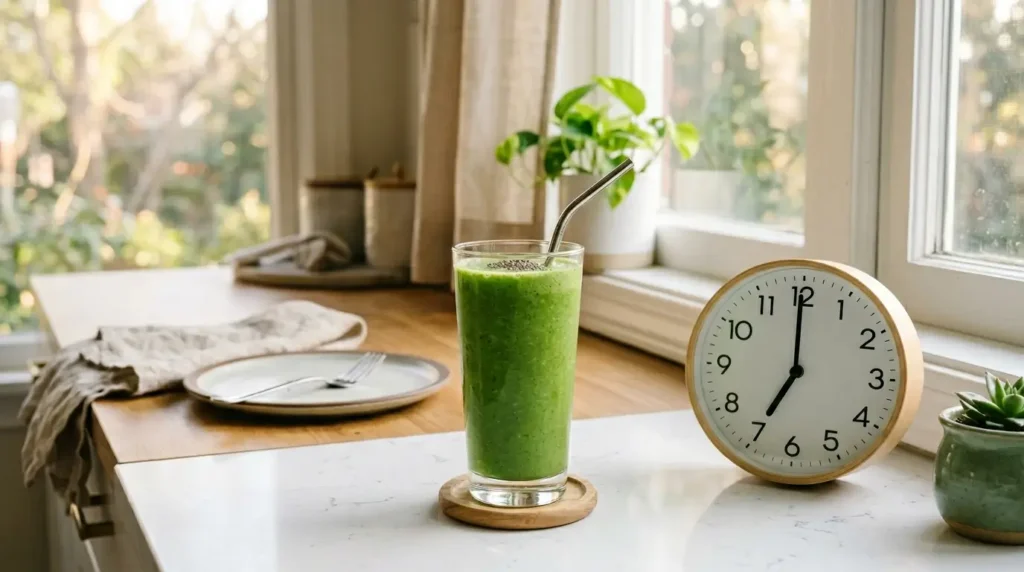
When Is the Best Time to Drink a Weight Loss Smoothie?
As Breakfast
Protein-rich smoothies can be a convenient breakfast when you want something quick and filling.
As a Snack
A smaller smoothie can work between meals, particularly when it contains protein and fiber.
As a Meal Replacement
If you’re using a smoothie instead of a meal, make sure it contains enough protein, fiber, and calories to be genuinely satisfying.
Before a Meal
Some people prefer a small smoothie before a meal, but there is no universal “best” timing for weight loss. Choose the timing that fits your hunger, schedule, and overall diet.
If you’re looking for more low-calorie meal ideas, you can also try our cabbage soup diet recipe
Frequently Asked Questions
Que mettre dans un smoothie pour perdre du poids ?
Misez sur les protéines, les ingrédients riches en fibres, des fruits ou légumes, et une portion raisonnable. Le yaourt grec, la protéine en poudre, les baies, les épinards, les graines de chia, les graines de lin et les laits végétaux non sucrés sont des options utiles.
Les smoothies sont-ils bons pour perdre du poids ?
Cela peut être le cas. Un smoothie peut s’intégrer à un régime de perte de poids si ses calories et ses ingrédients correspondent à vos besoins nutritionnels globaux. Un smoothie n’est pas intrinsèquement meilleur pour la perte de poids qu’un repas solide.
Quel est le meilleur smoothie pour perdre du poids ?
Il n’existe pas de smoothie universellement meilleur. Un smoothie riche en protéines et en fibres est généralement plus rassasiant qu’un smoothie principalement composé de jus de fruits ou de sucres ajoutés.
Quels fruits sont les meilleurs pour les smoothies minceur ?
Les baies sont une excellente option car elles apportent des fibres tout en étant relativement peu caloriques. Les pommes, le kiwi, les pêches, ainsi que des portions modérées de banane ou de mangue, peuvent aussi convenir.
Quelle quantité de protéines un smoothie minceur doit-il contenir ?
Il n’existe pas de quantité unique valable pour tout le monde. Un objectif pratique pour un smoothie faisant office de repas est souvent d’environ 20 à 30 g de protéines, selon vos besoins nutritionnels individuels.
Puis-je ajouter de la gélatine à un smoothie ?
Oui. La gélatine non aromatisée peut être ajoutée aux smoothies après avoir été correctement réhydratée et dissoute. Elle apporte des protéines, mais ne doit pas être considérée comme un traitement GLP-1 prouvé ni comme un substitut à un médicament.
Disclaimer: This article is for informational and educational purposes only and does not constitute medical advice. The mechanisms described (GLP-1 activation, blood sugar stability, thermogenesis) reflect general nutritional science and are not a substitute for prescription treatment. Always consult a qualified healthcare provider before making significant changes to your diet, especially if you are managing a medical condition or currently taking prescription medication.