
Quick Answer
| Traditional/artisan gelato | No gelatin — it’s just not part of the recipe |
| Commercial/store-bought gelato | Usually no, but some brands add it as a stabilizer — check the label |
| Vegetarian-friendly? | Yes, typically |
| Vegan-friendly? | No — gelato is dairy-based (milk, cream, sometimes egg yolks) |
| Gluten-free? | Usually yes for the base, but flavor mix-ins can add gluten |
The short answer: no, traditional gelato does not contain gelatin. The similar-sounding name is a coincidence, not a clue about the ingredients. Real gelato gets its dense, silky texture from technique — slow churning and less air — not from a gelling agent.
Why the Name Confuses People
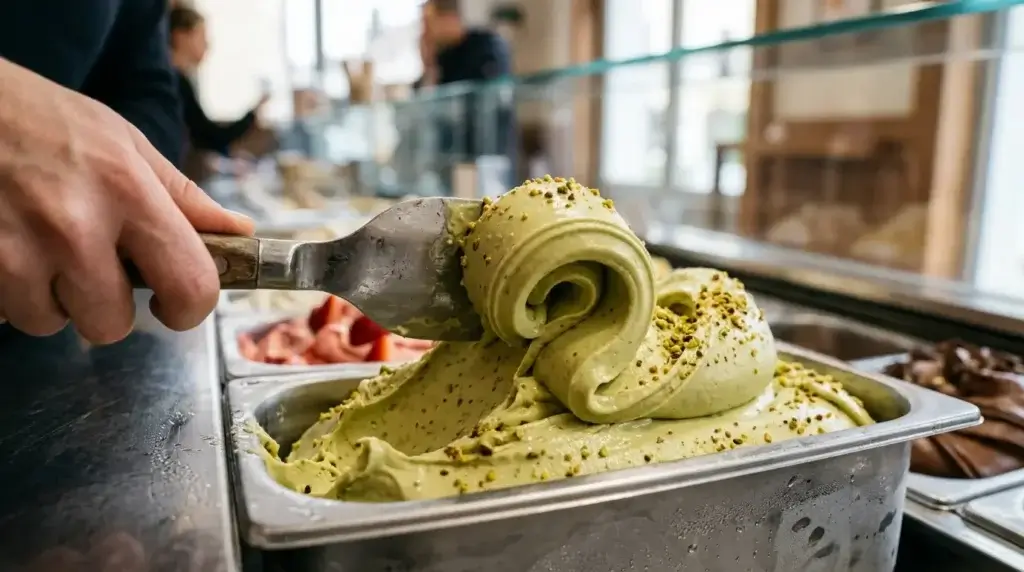
It’s an easy mix-up. “Gelato” and “gelatin” share the same first five letters, and gelatin really is used in some frozen desserts to keep them smooth and prevent ice crystals from forming. So it’s a reasonable question to ask.
But the words aren’t actually related the way they sound. “Gelato” comes from the Italian word for “frozen.” Gelatin comes from a completely different root tied to the process of boiling collagen out of animal bones and connective tissue. The overlap in spelling is just that — an overlap, not a shared origin or a shared ingredient.
What’s Actually in Traditional Gelato

Classic Italian gelato is made from a short list of ingredients:
- Whole milk (or a milk-and-cream blend)
- Sugar
- Egg yolks, in some recipes, for richness and body
- Natural flavorings (fruit, chocolate, nuts, coffee)
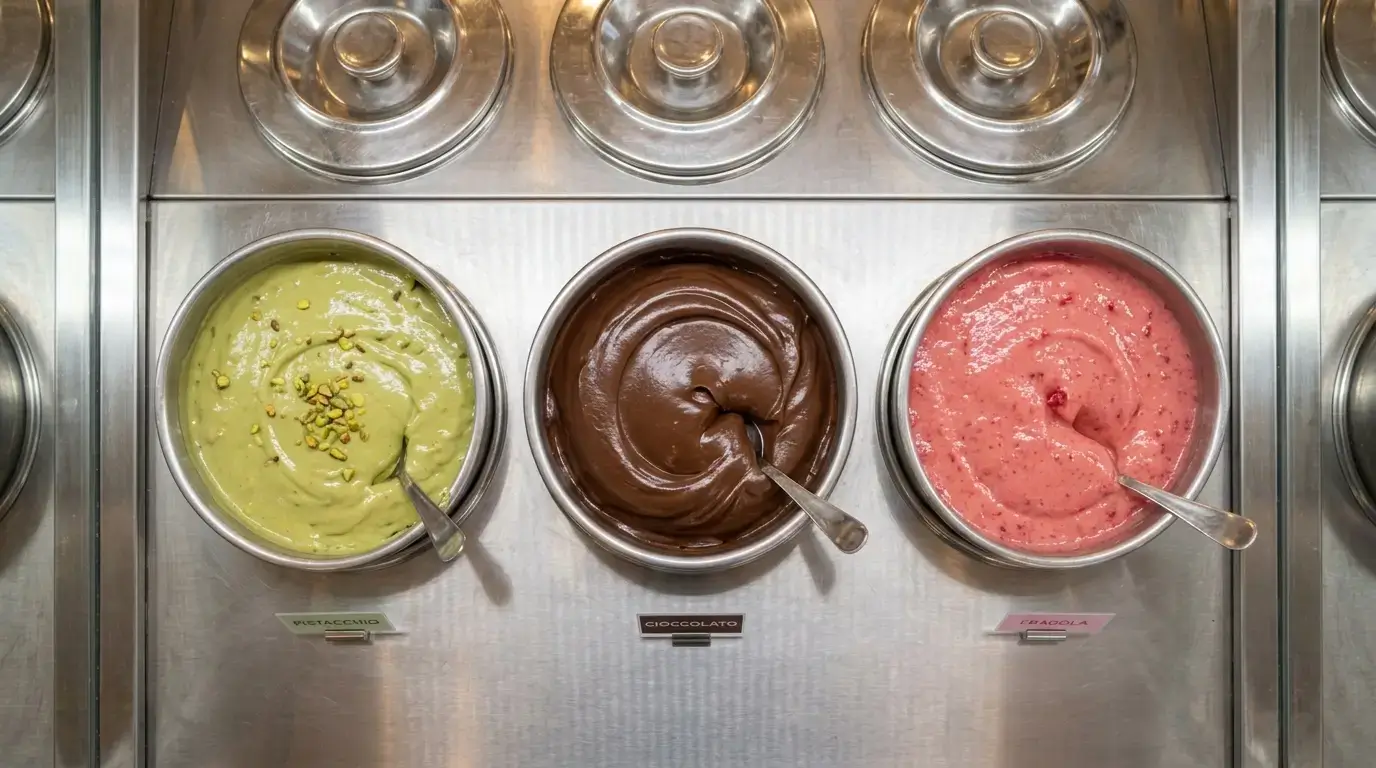
That’s it. No gelatin, no stabilizer blend. The dense, creamy texture people associate with gelato comes from churning it slowly and beating in far less air than ice cream — not from any thickening agent. Fruit-based sorbetto, a dairy-free relative of gelato, swaps the milk for water and fresh fruit, but the principle is the same: no gelatin needed.
When You Do Need to Check the Label
Authentic gelaterias — especially small, Italian-run shops that make fresh batches daily — almost never use gelatin. Their turnover is fast enough that they don’t need a shelf-stabilizer.
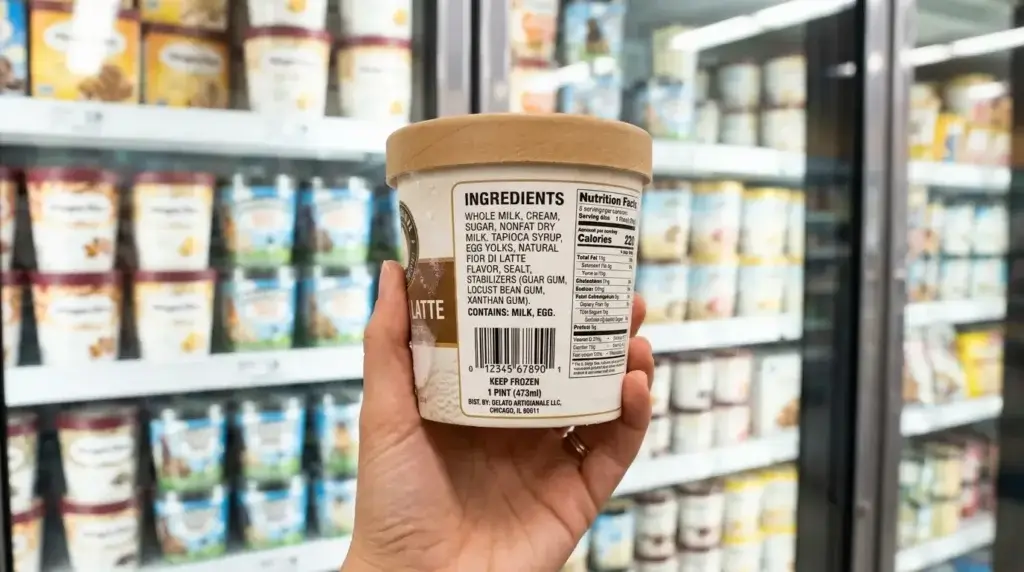
Where it gets less predictable is pre-packaged, store-bought gelato sold in supermarket freezer aisles. Because these products travel long distances and sit in freezers for weeks or months, some brands add stabilizers to keep the texture consistent over time — and gelatin is occasionally one of them, though it’s far from universal. If a specific brand uses it, it will be listed clearly on the ingredient panel; manufacturers aren’t allowed to hide it.
The simplest rule: if you’re at a real gelateria, just ask. If you’re buying a tub from the grocery store, flip it over and check the ingredients.
Is Gelato Vegetarian?
Generally, yes. Since gelato contains no meat, gelatin, or other animal-flesh-derived ingredients in its traditional form, it fits comfortably within most vegetarian diets. The one exception is strict vegetarians who avoid eggs — some gelato recipes include egg yolks, so it’s worth checking if that matters to you.
Is Gelato Vegan?
No, not in its traditional form. Gelato is built on dairy — milk and often cream — which rules it out for a vegan diet regardless of the gelatin question. Some specialty brands and gelaterias now offer plant-based, dairy-free gelato made with oat, almond, or coconut milk, so vegan options do exist — just not under the traditional recipe.
Frequently Asked Questions
Is gelato the same as ice cream?
No. Gelato has less air churned into it and typically less fat than ice cream, giving it a denser, creamier texture and a more intense flavor per bite.
Does gelato contain gluten?
The base recipe (milk, sugar, egg yolks) is naturally gluten-free. Gluten can show up in specific flavors that include cookie pieces, brownie chunks, or similar mix-ins — always check flavor-specific ingredients.
Why does gelato sound so much like gelatin?
It’s a coincidence of spelling, not a shared word origin. “Gelato” comes from the Italian word for “frozen,” unrelated to the process used to make gelatin.
Can gelato be dairy-free?
Yes — some brands and gelaterias make dairy-free versions using plant-based milk, though this isn’t the traditional recipe.
Is all commercial gelato gelatin-free?
Not guaranteed. Most is, but some mass-produced brands use gelatin or other stabilizers to extend shelf life. Always check the label if this matters to you.
Disclaimer: Ingredient formulas vary by brand, region, and specific flavor. Always check the current product label for the most accurate information, especially if you have allergies or dietary restrictions.
For more on where gelatin shows up in food you might not expect, our guide to what foods and products actually contain gelatin covers dozens of examples. If you’re checking labels for religious dietary reasons, our halal gelatin guide explains exactly what to look for, and we’ve also covered the related question of whether gelatin counts as pork. For a plant-based dessert option at home, our vegan gelatin substitutes guide walks through the best alternatives — and if you’re comparing frozen treats, our cottage cheese ice cream recipe is a high-protein option worth trying.