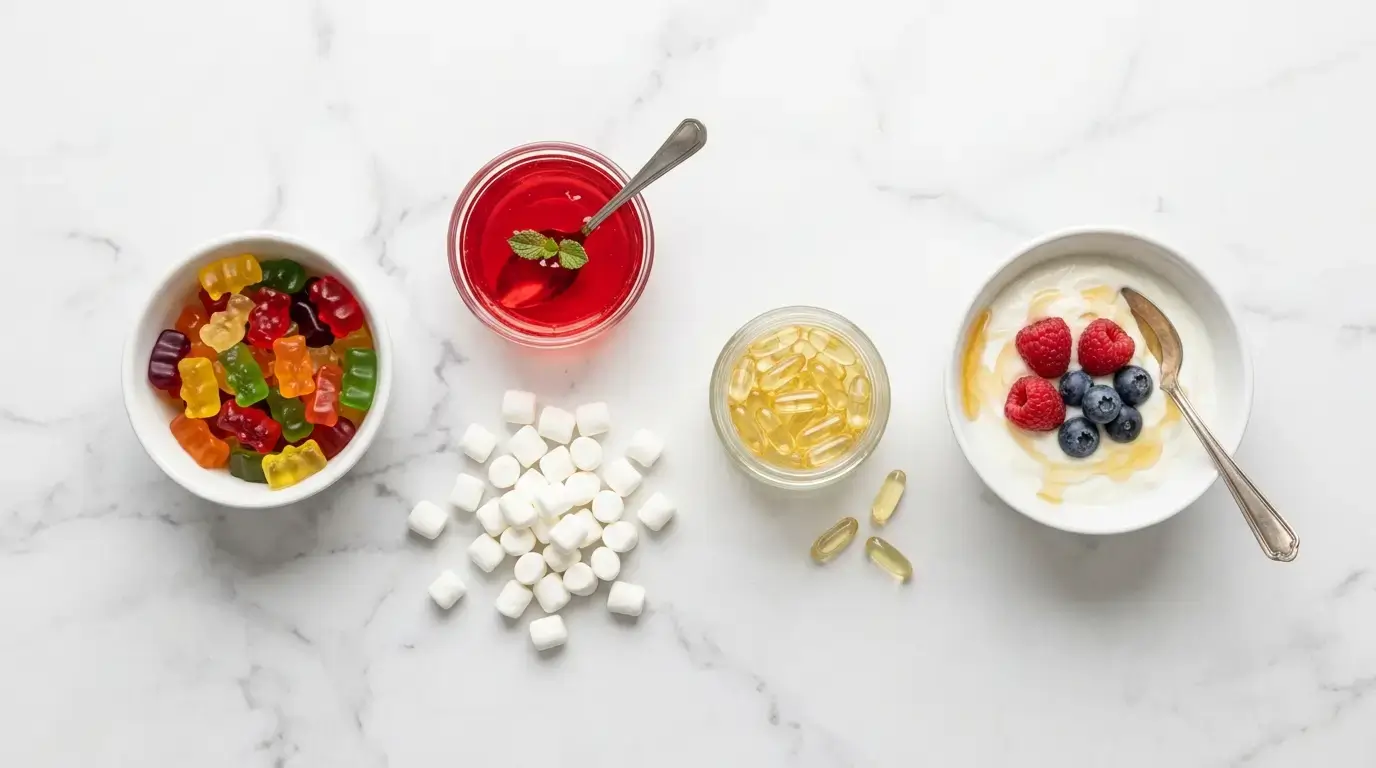
Gelatin is one of the most widely used ingredients in the food industry — and one of the least visible on labels. If you follow a halal, kosher, or vegan diet, or if you simply want to know what you’re eating, this guide covers exactly which foods and products contain gelatin, which ones don’t, and what to look for on a label.
For a deeper dive into what gelatin actually is and where it comes from, see our complete Knox gelatin guide and our breakdown of is gelatin made from pork.
What Is Gelatin and Why Is It Used?
Gelatin is a protein derived from the collagen in animal bones, skin, and connective tissue — most commonly from pigs (pork gelatin) or cows (bovine gelatin). It’s used in food manufacturing for three main reasons: it gels (thickens liquids into a set texture), it stabilizes (prevents ingredients from separating), and it gives foods a smooth, creamy mouthfeel.
It appears on ingredient labels as: gelatin, gelatine, bovine gelatin, porcine gelatin, hydrolyzed collagen, or collagen peptides.
Candy and Sweets
Does Starburst Have Gelatin?
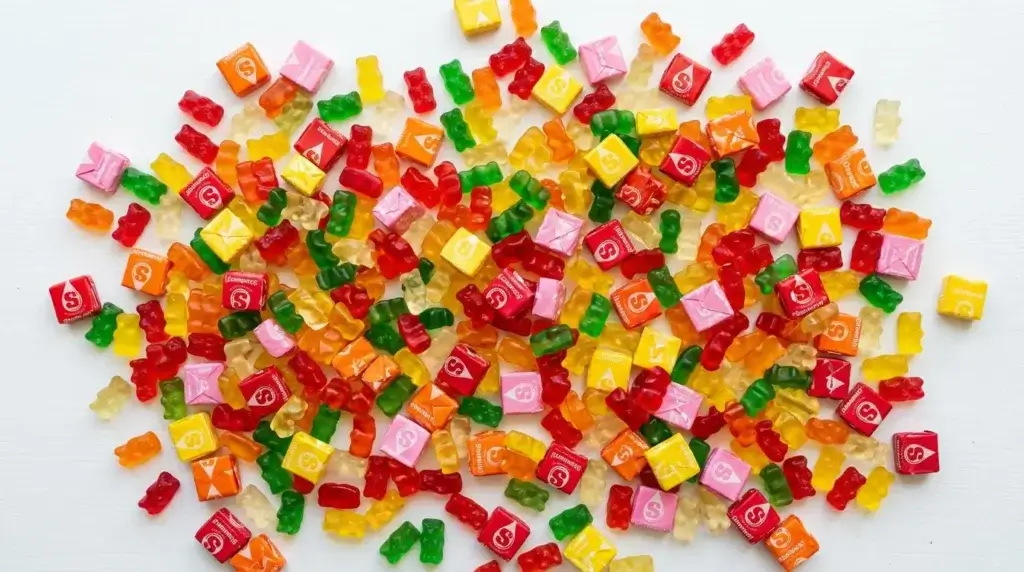
Yes — in most countries. Starburst sold in the United States and many other markets contains gelatin, which is used to give the candy its signature chewy texture. The gelatin in US Starburst is derived from beef, making it non-halal for some consumers and non-vegan.
However, Starburst sold in the UK does not contain gelatin — it uses a different formulation. Always check the label for your specific country.
Does Mochi Have Gelatin?
Traditional mochi does not contain gelatin. Authentic Japanese mochi is made from glutinous rice flour (mochigome), water, and sugar — no animal products. It gets its chewy, stretchy texture entirely from the starch structure of the rice.
However, some commercial mochi ice cream products sold in Western supermarkets may add gelatin or other stabilizers to improve texture and shelf life. Always check the ingredient list on mochi ice cream specifically — traditional mochi candy and fresh mochi are typically gelatin-free.
Does Haribo Contain Gelatin?
Yes. Haribo gummies contain pork gelatin — this is clearly stated on their packaging in most markets. Haribo does produce some halal-certified products (sold in specific markets with halal certification on the packaging), but the standard Haribo sold in most Western supermarkets uses pork-derived gelatin.
Do Skittles Have Gelatin?
It depends on the market. Skittles sold in the US were reformulated to remove gelatin in 2009 and are now considered vegan-friendly in the US. However, some Skittles products sold in other countries may still contain gelatin. Check the label for your specific product.
Does Sour Patch Kids Have Gelatin?
No — Sour Patch Kids do not contain gelatin. They are made with sugar, corn syrup, tartaric acid, and artificial flavors. Their chewy texture comes from modified starches rather than gelatin, making them suitable for vegetarians and vegans.
Do Nerds Gummy Clusters Have Pork Gelatin?
Yes. Nerds Gummy Clusters contain pork-derived gelatin. The gummy center of the candy requires gelatin to set, and Ferrara (the manufacturer) uses pork gelatin in this product. If you need a pork-free or halal option, this product is not suitable.
Does Candy Corn Have Gelatin?
Yes. Most candy corn, including the Brach’s brand, contains gelatin as a binding agent. It’s used to give candy corn its firm but slightly chewy texture.
Does Twizzlers Have Gelatin?
No — Twizzlers do not contain gelatin. They are made from enriched flour, corn syrup, sugar, and artificial flavoring. Their chewy texture comes from the flour and sugar structure, not from gelatin. This makes Twizzlers one of the few mainstream chewy candies that is suitable for vegetarians and vegans — though always check the label as formulations can vary by product line.
What Are Marshmallows Made Of? Do They Contain Gelatin?
Standard marshmallows — including Jet-Puffed and most store brands — contain pork-derived gelatin as a primary ingredient. Gelatin is what gives marshmallows their signature soft, pillowy texture and allows them to hold their shape. Without it, the sugar and corn syrup base would simply collapse.
Vegan marshmallow brands (like Dandies) use carrageenan or modified starch instead of gelatin and are widely available in health food stores. If you need gelatin-free marshmallows, look for products explicitly labeled “vegan.”
Dairy and Desserts
Does Jello Have Gelatin?
Yes — Jello (Jell-O) is one of the most gelatin-dense products in any supermarket. Standard Jell-O flavored gelatin contains pork-derived gelatin. Sugar-free versions also contain gelatin.
If you use Jell-O for the viral weight loss gelatin trick, note that the plain unflavored Knox gelatin is preferable — it has no added sugar and uses bovine rather than pork gelatin. See our jello weight loss recipe for more detail on the distinction.
Does Yogurt Contain Gelatin?
Some yogurts do, some don’t. Gelatin is used in certain yogurt formulations as a thickener and stabilizer — particularly in low-fat yogurts where it compensates for the texture lost when fat is removed. Greek yogurt typically does not contain gelatin (it’s thickened by straining), but always check the label on regular or flavored yogurts.
Does Ice Cream Have Gelatin?
Some ice cream does. Gelatin is occasionally used in commercial ice cream to prevent ice crystals from forming and to improve creaminess. Premium or artisan ice cream brands less commonly use it. Check the label — most standard ingredient lists will clearly state “gelatin” if it’s present.
Does Cream Cheese Have Gelatin?
Standard cream cheese does not. However, some flavored or whipped cream cheese products may use gelatin or other stabilizers to maintain their texture. Plain cream cheese brands like Philadelphia do not contain gelatin.
Vitamins, Supplements and Medications
Do Prenatal Vitamins Contain Gelatin?
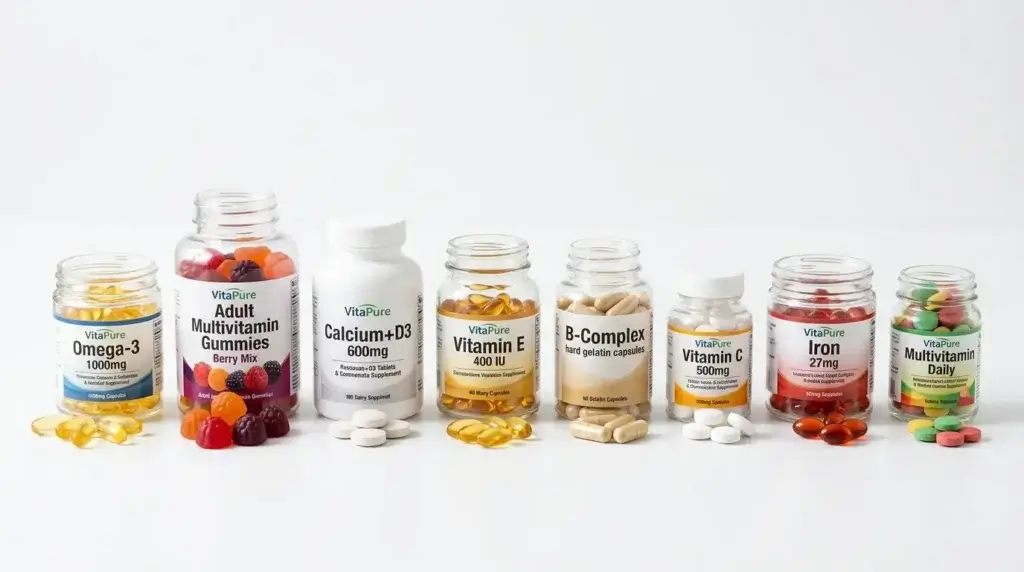
Many do — this is one of the most frequently asked questions among pregnant women following halal, kosher, or vegan diets. Gelatin is widely used in vitamin capsule shells (both hard and soft gels). If you need gelatin-free prenatal vitamins, look for:
- Vegetarian capsules (made from cellulose or HPMC)
- Gummy vitamins (though some gummies also contain gelatin — check)
- Brands that specifically label their products as vegan or gelatin-free
Popular prenatal vitamins that are gelatin-free include many garden of life and ritual formulations — but always verify, as formulas change.
What Is Kosher Gelatin?
Kosher gelatin is gelatin derived from kosher-certified animals (typically fish or beef from kosher-certified slaughter), or from plant-based sources like agar agar. The key distinction: standard bovine or pork gelatin does not meet kosher standards unless the animal was slaughtered according to Jewish dietary law and the product has been certified by a recognized kosher authority.
Fish gelatin is often used in kosher products because it is pareve (neither meat nor dairy), making it flexible in kosher cooking. Brands like Kolatin produce certified kosher gelatin specifically for this market.
Do Vitamin Capsules Contain Gelatin?
Most standard capsules do. Hard gelatin capsules and soft gel capsules (softgels) are made almost entirely from gelatin. If you need gelatin-free medications or supplements, look for products in tablet form or those specifically labeling their capsules as vegetarian (HPMC capsules).
Unexpected Sources of Gelatin
These products commonly surprise people who are trying to avoid gelatin:
Marshmallows — Standard marshmallows contain pork gelatin. Vegan marshmallow brands use carrageenan or agar as a substitute.
Frosted cereals — Some cereals with a sugar coating or added vitamins use gelatin in trace amounts. Rare but worth checking.
Wine and beer — Gelatin is used as a fining agent to clarify wine and beer, removing particles that cause cloudiness. It’s typically filtered out, but traces may remain. Not all wines use gelatin fining — many are now labeled “vegan.”
Altoids and mints — Some hard mints and breath mints contain gelatin as a binding agent.
Some soups and broths — Commercial bone broth and some canned soups contain natural gelatin from the cooking process.
Certain medications — Beyond vitamins, many prescription and OTC medications use gelatin capsules. Consult your pharmacist if this is a concern.
Gelatin-Free Alternatives
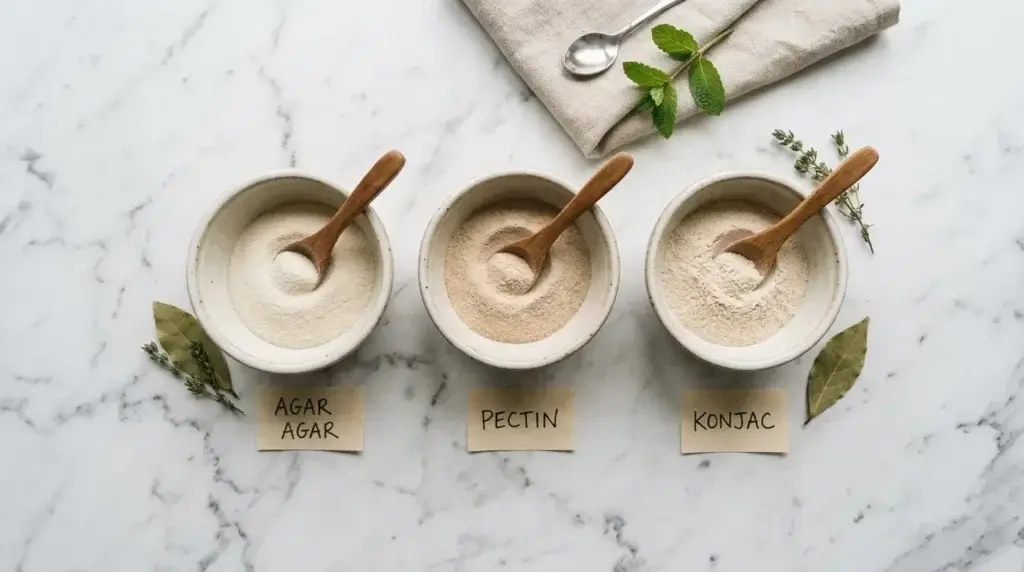
If you need to avoid gelatin for dietary, religious, or ethical reasons, these are the most commonly used substitutes:
| Substitute | Source | Best for |
|---|---|---|
| Agar agar | Red seaweed | Jellies, desserts, pre-meal drinks |
| Carrageenan | Red algae | Dairy alternatives, some gummies |
| Pectin | Fruit (citrus peel, apples) | Jams, jellies, some gummies |
| Konjac | Konjac plant | Gummies, jellies, noodles |
| HPMC (cellulose) | Plant cellulose | Capsules |
For using agar agar as a direct replacement in the viral gelatin weight loss routine, see our agar agar weight loss recipe — same pre-meal satiety mechanism, 100% plant-based.
How to Read a Label for Gelatin
The word “gelatin” will almost always appear explicitly on an ingredient label if it’s present. However, watch for these related terms:
- Gelatine (European spelling)
- Bovine gelatin (beef-derived)
- Porcine gelatin (pork-derived)
- Hydrolyzed collagen or collagen peptides — these are gelatin that has been further processed; they don’t gel but come from the same source
- E441 — the EU food additive code for gelatin
What won’t tell you about gelatin: “natural flavors,” “emulsifiers,” or general terms like “stabilizers” — these may or may not contain gelatin, so if you need certainty, contact the manufacturer directly.
FAQs
Does Velveeta contain gelatin?
Velveeta does not contain gelatin. It is a processed cheese product made from milk proteins, whey, and emulsifying salts. Its smooth, meltable texture comes from sodium citrate and other emulsifiers, not gelatin.
Is gelatin always from pork?
No. Gelatin can be derived from pork (porcine), beef (bovine), fish, or poultry. Pork-derived gelatin is the most common in Western food manufacturing because it’s inexpensive and widely available. Fish and beef gelatin are used in halal and kosher products respectively.
What does “contains gelatin” mean on a vitamin label?
It means the capsule shell is made from animal-derived gelatin — typically bovine or porcine. The supplement inside may be entirely plant-based, but the delivery format uses animal product. If you need to avoid this, look for products in tablet form or vegetarian capsule formulations (HPMC).
Are gummy vitamins gelatin-free?
Not always. Many gummy vitamins use pork-derived gelatin to give them their gummy texture. Some brands use pectin instead — these will typically be labeled “vegan” or “pectin-based.” Always check the ingredients.
Is agar agar the same as gelatin?
No. Agar agar is a plant-based gelling agent derived from red seaweed. It gels more firmly than gelatin and at room temperature (gelatin requires refrigeration to set). Agar agar is suitable for vegans, vegetarians, and those following halal or kosher diets. It does not provide the same amino acid profile as gelatin.
Does donkey hide gelatin come from real donkeys?
Yes. Donkey hide gelatin (known as ejiao in Chinese medicine) is a traditional Chinese ingredient made from boiled donkey skin. It has been used in Chinese medicine for centuries and is distinct from standard food-grade gelatin. It is not a common ingredient in Western food manufacturing.
Conclusion
Gelatin is far more widespread in processed foods than most people realize — from candy and desserts to vitamins and wine. The good news is that it always appears on ingredient labels by name, making it straightforward to identify once you know what to look for.
If you’re avoiding gelatin for dietary or religious reasons, the substitutes are well-established and widely available. And if you use gelatin intentionally — for cooking or for the viral pre-meal satiety routine — knowing exactly where it comes from helps you make better choices about which type to use.
This article reflects publicly available information as of July 2026. Always verify current formulations with manufacturers, as recipes and ingredient lists can change.