
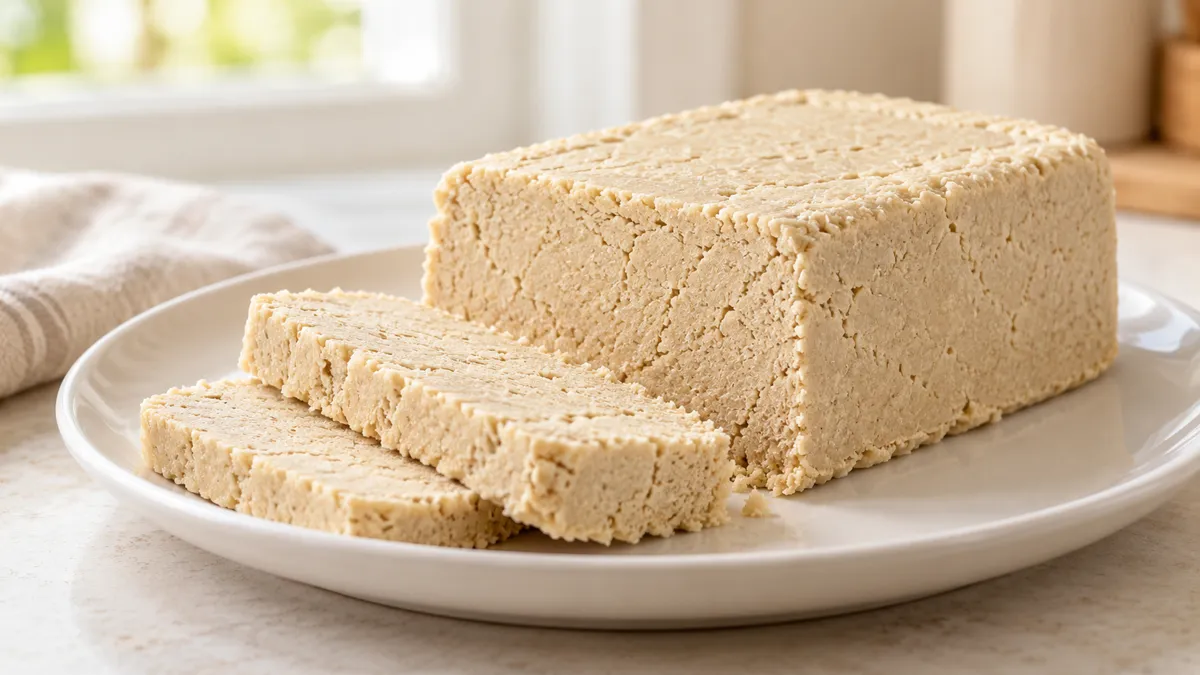
This halva recipe makes a rich sesame sweet with tahini, granulated sugar, water, vanilla, and a little salt. The method combines cooked sugar syrup with sesame paste, then gives the mixture time to cool and firm up before slicing. Serve it in small pieces with coffee, or crumble a little over a simple dessert.
The version here is tahini halva, sometimes spelled halvah. It has a dense, delicate crumb and a pronounced sesame flavor. If you are looking for Persian flour halva, Greek semolina halva, or carrot halwa, those use different ingredients and methods. A short comparison below will help you identify the dessert you want.
You do not need an oven, but you do need a reliable candy thermometer and a prepared workspace. Have the pan lined and the tahini ready before cooking the syrup, because the final mixing stage moves quickly.
Recipe note: This is a researched home-kitchen formulation that has not been kitchen-tested by Yuma Recipes. Cooking time, finished texture, and yield are estimates; the thermometer reading and mixing cues matter more than the clock.
Jump to: Recipe card · Ingredients · Instructions · Troubleshooting.
Halva Recipe at a Glance
| Detail | Recipe information |
|---|---|
| Style | Tahini sesame halva |
| Preparation | 10 minutes |
| Cooking | Approximately 20 minutes |
| Cooling | Approximately 1 hour, until no longer warm |
| Refrigeration | At least 12 hours after cooling |
| Total time | Approximately 13 hours 30 minutes |
| Yield | 16 small servings, depending on how you slice it |
| Pan | 8 1/2 x 4 1/2-inch loaf pan |
| Main equipment | Candy thermometer and large heatproof mixing bowl |
The long resting time makes this a useful dessert to prepare the day before serving. The active work is relatively short, but avoid starting the sugar syrup when you are distracted or short on time.
What Is Halva?
Halva is a name used for several kinds of sweets. In the tahini version, sesame paste supplies the flavor and richness, while cooked sugar helps create the structure. The finished confection can be cut into pieces or broken into crumbles.
For this page, “homemade halva” refers specifically to the sesame version. It is a stovetop confection rather than a baked cake. Plain tahini looks creamy and pourable; combining it with syrup and allowing the mixture to set creates a very different eating texture.
The flavor is sweet, nutty, and distinctly sesame-forward. The vanilla rounds it out without covering it. Choose a tahini you enjoy on its own, because an unpleasantly bitter or stale paste will remain noticeable in the finished dessert.
Tahini halva, Persian halva, and semolina halva
| Name or style | Typical base | General texture |
|---|---|---|
| Tahini halva or halvah | Sesame paste and sugar | Sliceable confection with a delicate crumb |
| Persian flour halva | Toasted flour, fat, and sweet syrup, often with rosewater and saffron | Soft, rich flour-based sweet |
| Greek semolina halva | Semolina, fat, and syrup | Grain-based dessert, often molded |
| Carrot halwa | Cooked grated carrots, commonly with milk and sugar | Moist cooked dessert |
These names are useful guides, rather than a claim that every country makes only one version. The Jewish Food Society’s Persian halva recipe, for example, documents a flour-based family preparation. Replacing the tahini in this recipe with flour would not produce that dessert.
Ingredients for Homemade Tahini Halva
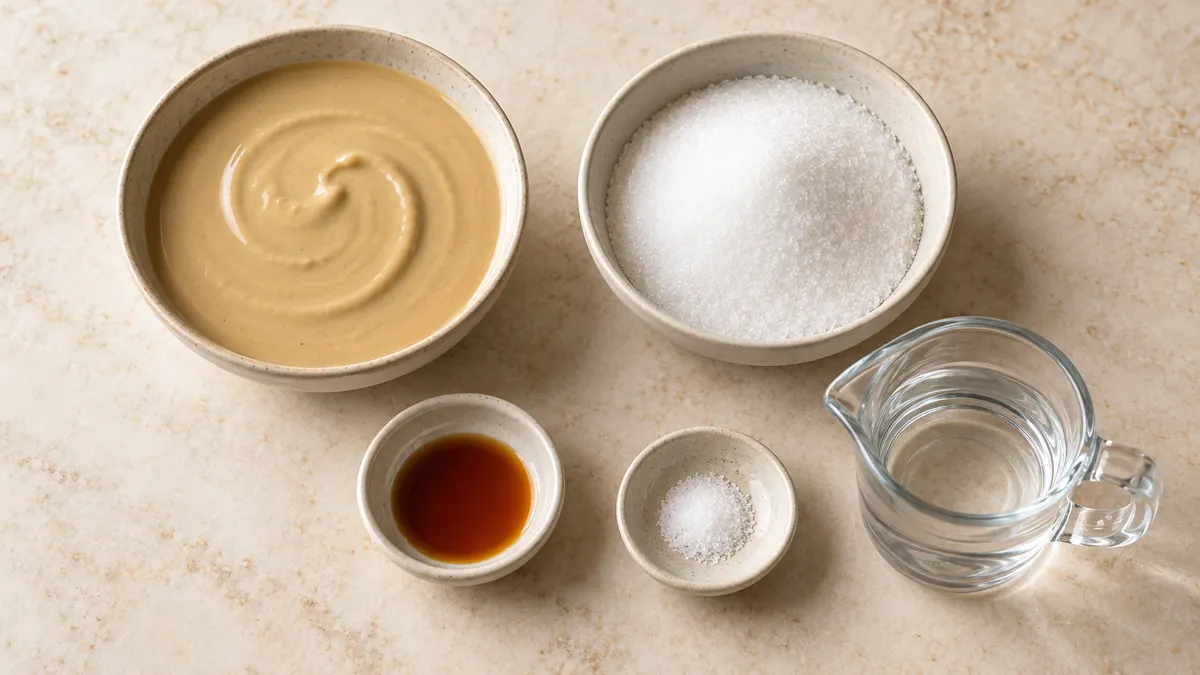
Tahini
Use 360 g smooth tahini, approximately 1 1/2 cups depending on the brand. Weight is the more consistent measurement. Choose plain sesame paste without added sweeteners or other nut butters.
Stir the entire jar thoroughly before weighing. Separated oil at the top and dense paste at the bottom need to come back together; measuring only one layer changes the ingredient balance. Bring the measured tahini to room temperature before starting.
If you are new to tahini, check that you are buying sesame paste rather than a prepared tahini sauce. Sauces may contain water, lemon juice, garlic, or other ingredients and are unsuitable for this sweet.
Granulated sugar
Use 300 g white granulated sugar, approximately 1 1/2 cups. Here, sugar contributes to the structure as well as the sweetness. A large reduction or a switch to a liquid sweetener would change the recipe.
Use ordinary white sugar for the first batch. Brown sugar, honey, maple syrup, and powdered sweeteners behave differently during cooking and can change the flavor, moisture, and final texture. They are not interchangeable in this formulation.
Water
Measure 1/2 cup water, 120 mL. It helps dissolve the sugar before the syrup becomes concentrated during cooking. The temperature target indicates progress more reliably than a fixed number of minutes.
Measure the water before turning on the heat. Avoid adding extra liquid midway through the process to compensate for uncertainty about the syrup; that changes the cooking time and can cause splattering.
Vanilla and salt
Use 1 teaspoon vanilla extract and 1/4 teaspoon fine salt. Alcohol-free vanilla is suitable if that is your preference. The salt measurement here refers to fine salt, rather than a loosely measured spoonful of large flakes.
Mix these into the tahini before cooking the syrup. That leaves fewer things to remember during the short final mixing stage. Extra liquid flavorings are not part of the base recipe.
Optional pistachios
For a pistachio variation, add 40 g unsalted shelled pistachios, roughly chopped, to the prepared tahini. This addition is optional and introduces a tree-nut allergen.
Keep the first batch plain if your main goal is learning the texture. You can add nuts to a later batch once you know what the unadorned mixture looks and feels like.
Equipment and Preparation
- An 8 1/2 x 4 1/2-inch loaf pan.
- Parchment paper with enough overhang to lift the halva.
- A small, heavy-bottomed saucepan deep enough for bubbling syrup.
- A candy thermometer rated for at least 250°F, 121°C.
- A large heatproof bowl and sturdy heatproof spatula.
- A digital scale and measuring spoons.
- A stable, heat-resistant work surface.
Check the thermometer’s instructions for minimum immersion depth. In a small batch, a probe can accidentally touch the pan bottom or sit above the syrup, giving an unhelpful reading. Choose a pan that allows the thermometer to measure the liquid properly.
Place the mixing bowl where it will not slide as you work. Keep the lined loaf pan beside it, leaving a clear place to set the hot saucepan. Hot sugar sticks to skin, so keep your hands out of the syrup and avoid tasting it until completely cool.
Print
Homemade Tahini Halva with Vanilla
- Total Time: 13 hours 30 minutes
- Yield: 16 small servings 1x
Description
Homemade sesame halva with tahini, vanilla and cooked sugar syrup. This researched formulation has not been kitchen-tested by Yuma Recipes; timing and yield are estimates.
Ingredients
- 360 g smooth plain tahini (approximately 1 1/2 cups), well stirred and at room temperature
- 300 g white granulated sugar (approximately 1 1/2 cups)
- 1/2 cup (120 mL) water
- 1 teaspoon vanilla extract
- 1/4 teaspoon fine salt
Instructions
- Line an 8 1/2 x 4 1/2-inch loaf pan with parchment, leaving overhang. Prepare a large heatproof bowl, sturdy spatula and candy thermometer.
- Stir the tahini thoroughly before weighing. Mix measured room-temperature tahini with vanilla and salt in the heatproof bowl.
- Combine sugar and water in a small heavy-bottomed saucepan. Warm over medium-low heat, stirring gently until sugar dissolves. Once boiling, stop stirring.
- Monitor with a correctly positioned candy thermometer. Cook to 250°F (121°C), a near-sea-level target, then remove from heat promptly. Use appropriate candy temperature guidance at high altitude.
- Carefully pour hot syrup into the prepared tahini while stirring with a heatproof spatula. Once evenly combined and thickening enough to hold together, transfer promptly to the lined pan. Do not continue beating once stiff. Press and level with the spatula.
- Let cool until no longer warm, approximately 1 hour. Cover and refrigerate for at least 12 hours.
- Lift out using parchment. Cut into 16 small servings; some crumbling is normal. Store covered in the refrigerator.
Notes
Contains sesame. Optional pistachio variation: fold 40 g unsalted shelled chopped pistachios into the prepared tahini before adding syrup; this adds tree nuts. Sugar substitutions or large reductions require a different formulation. Estimated active time 30 minutes, cooling 1 hour and refrigeration at least 12 hours. Plan to enjoy within 1 week refrigerated, a conservative home recommendation rather than a validated shelf life. This recipe has not been kitchen-tested by Yuma Recipes. Images are AI-generated illustrations.
- Prep Time: 10 minutes
- Cooling and Chilling:
- Cook Time: 20 minutes
- Category: Dessert
- Method: Stovetop
- Cuisine: Middle Eastern
Nutrition
- Serving Size: 1 small piece
Keywords: halva recipe,tahini halva recipe,homemade halva,sesame halva,halvah recipe
How to Make Halva
1. Line the loaf pan
Line the loaf pan with parchment, leaving an overhang on the long sides. Fold the paper into the corners so it will not spring back into the mixture. Set the pan within reach of the mixing bowl.
A small pan produces a useful depth for cutting. A much larger pan would create a thinner layer, so keep the specified size for the first batch rather than assuming the same appearance in any baking dish.
2. Prepare the tahini mixture
In the heatproof bowl, combine the well-stirred, room-temperature tahini, vanilla, and fine salt. Stir until uniform. If using pistachios, fold them in now.
Scrape the bottom and sides of the bowl so there are no dense pockets of sesame paste. Set the spatula nearby. Once the syrup is ready, you should be able to combine the two components immediately.
3. Dissolve the sugar
Put the sugar and measured water in the saucepan. Warm over medium-low heat, stirring gently while the sugar dissolves. Look for a uniform liquid before the mixture reaches a full boil.
Once it is boiling, stop stirring and monitor the temperature. Keep the heat controlled so the syrup remains in the pan rather than splashing up the sides. It should remain pale; a brown caramel flavor is not the goal here.
4. Cook the syrup to 250°F
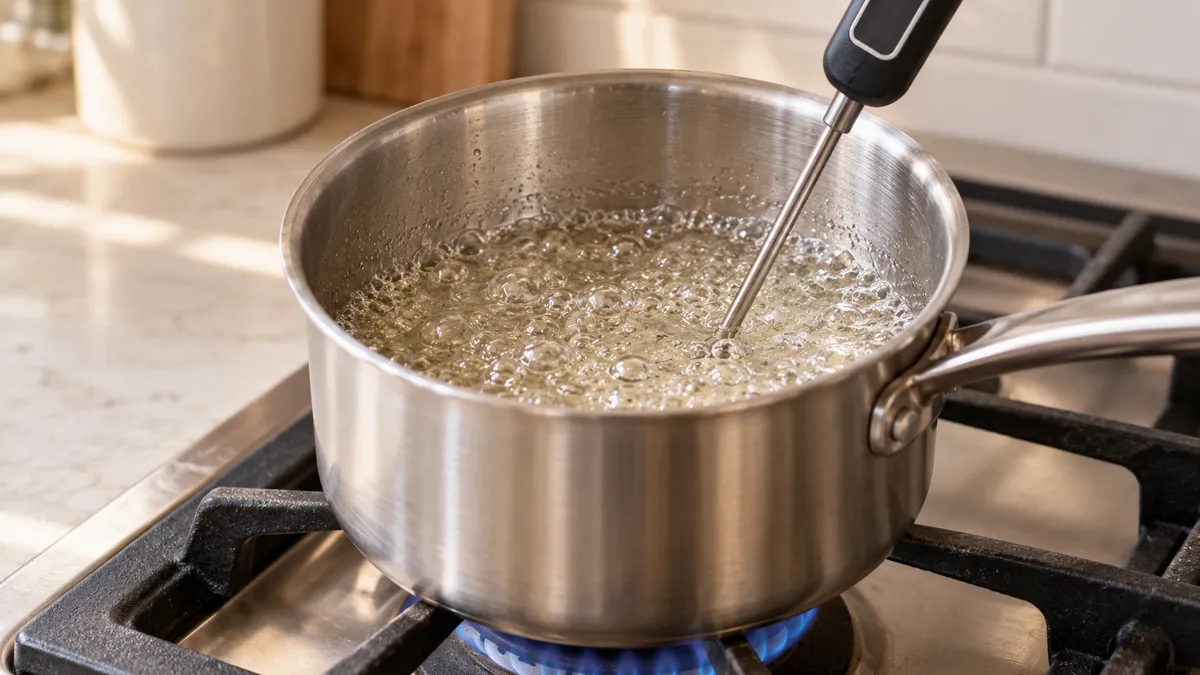
Cook until the thermometer reaches 250°F, 121°C, then remove the saucepan from the heat promptly. The target temperature is more useful than an exact cooking duration, which depends on the stove, saucepan, and starting temperature.
This target is used in published sesame-halva methods, including Miriam Szokovski’s home halva recipe. Use an accurate thermometer rather than judging only by the size of the bubbles.
The stated temperature assumes cooking near sea level. At higher elevations, use appropriate local candy-making temperature guidance; the same thermometer target should not be applied automatically at every altitude.
5. Combine and transfer promptly
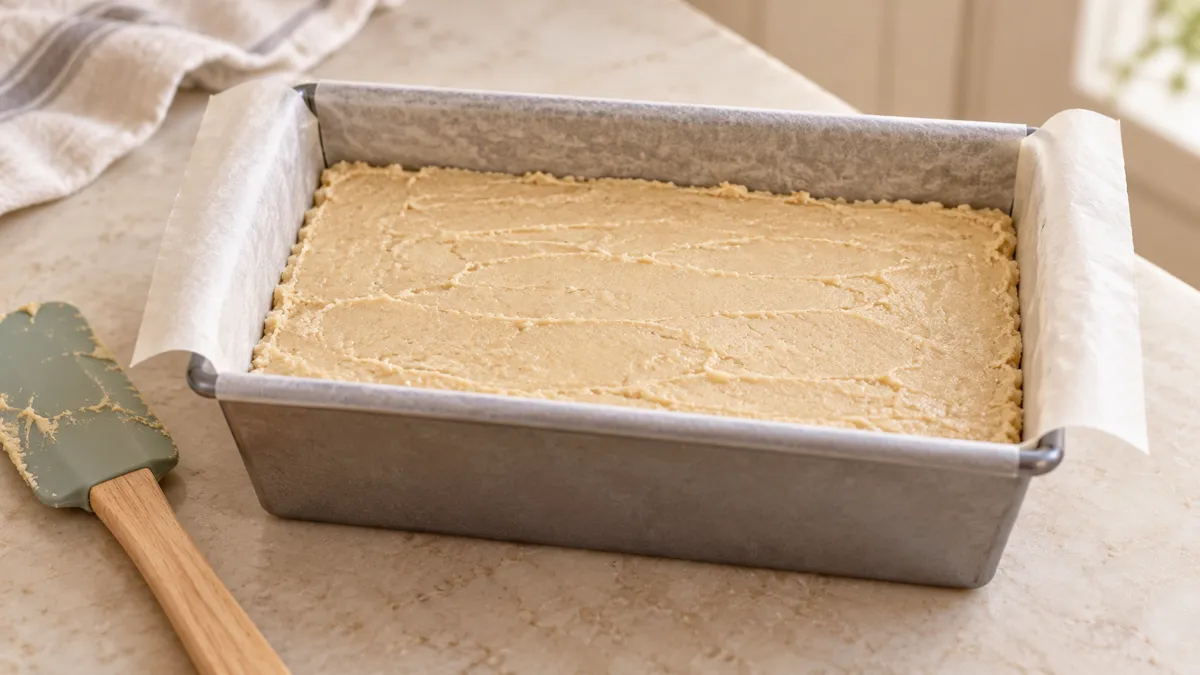
Carefully pour the hot syrup into the prepared tahini while stirring with the heatproof spatula. Keep your hands clear of the stream. Work until the mixture is evenly combined and starts thickening enough to hold together, then transfer it promptly to the lined pan.
Do not keep beating after the mixture has become stiff and crumbly. Press it gently into the corners and level the top. The mixture will be hot, so use the spatula rather than your fingers.
If a small amount of hardened syrup remains in the saucepan, leave it there instead of scraping dry fragments into the bowl. Fill the cooled pan with water later to make cleanup easier.
6. Cool, then refrigerate
Let the halva cool in its pan until it is no longer warm, approximately 1 hour depending on the room and pan. Cover it and refrigerate for at least 12 hours before assessing the final set.
Do not judge the finished texture from a warm spoonful. Cooling and resting are part of the process. The Redpath Sugar halva method also uses an extended developing period after cooking, although its almond formulation differs from this plain sesame version.
7. Slice into small servings
Lift the cold halva using the parchment overhang. Set it on a board and cut with a sharp knife into 16 small portions, or divide it into pieces that suit your serving plate.
Some crumbling is normal for this style of sweet. Save loose pieces in the storage container for toppings. If the block is very cold and difficult to cut, let it stand briefly before trying again rather than forcing a large knife through it.
Tips for a Better Tahini Halva Texture
Check the tahini before you cook
Take a moment to taste a little tahini and inspect its consistency. Stirring a dry bottom layer together with separated oil can take longer than expected. Do this before weighing and starting the syrup, rather than discovering the problem while the sugar is nearly ready.
Use the same brand for a repeat attempt if you are adjusting your technique. Changing the tahini, pan size, sugar quantity, and mixing method simultaneously makes the outcome harder to understand.
Prepare the workspace completely
Read all the steps before cooking. A thermometer, spatula, lined pan, and prepared bowl should already be in place. Searching for parchment while the syrup is hot can mean missing the point at which you need to combine the ingredients.
For a first attempt, choose a quiet moment in the kitchen. You do not need to rush the sugar-dissolving stage, but you do need to respond promptly once the syrup reaches its target.
Record what happened
Note the actual thermometer reading, the approximate mixing time, and whether the mixture was fluid or stiff when it went into the pan. Those observations are more useful than describing an unsuccessful batch only as “wrong.”
If the halva crumbles immediately during mixing, review how far the syrup cooked and how long you kept stirring. If it remains soft after its full rest, review the syrup measurement and temperature before changing the ingredient ratio.
Halva Troubleshooting
| Problem | Possible contributors | What to check next time |
|---|---|---|
| Soft or sticky after the full rest | Syrup below target, inaccurate reading, or a wetter ingredient substitution | Check the thermometer placement and written ingredient quantities |
| Dry before it reaches the pan | Syrup overshot, long mixing, or delay during transfer | Prepare the pan first and transfer as soon as the mixture comes together |
| Obvious oil pockets | Tahini was unevenly stirred or mixture did not combine uniformly | Stir the jar thoroughly before weighing |
| Unexpected bitterness | The tahini itself or overheated syrup | Taste the paste first and monitor the syrup closely |
| Very thin pieces | Pan much larger than specified | Use the stated loaf pan for a comparable depth |
| Scattered crumbs when slicing | Delicate texture or cutting while very cold | Use a sharp knife and save crumbs for toppings |
Several factors can contribute to the same problem, so this table is a starting point rather than a guaranteed diagnosis. Make one small, recorded adjustment at a time. Do not add water to a finished block and expect it to reset like gelatin.
Variations and Substitutions
Pistachio halva: Use the optional chopped pistachios in the ingredient list. Keep them unsalted so the base salt measurement remains useful. Chop larger nuts before starting the syrup.
Chocolate finish: Once plain halva is completely set, serve a piece with a little melted chocolate spooned over it. That lets you try the pairing without changing the setting behavior of the entire batch.
Sesame topping: A light scattering of sesame seeds can give a finished serving extra texture. The base already contains sesame, so the topping does not change its allergen suitability.
Honey or maple syrup: Choose a recipe developed for that sweetener. Replacing granulated sugar cup for cup changes the water content and syrup behavior.
Powdered sugar methods: Recipes based on powdered sugar and tahini use another approach. Do not combine the quantities from one method with the cooking instructions from another.
Nut butter: Peanut or almond butter would change the flavor and ingredient balance. This article covers sesame halva; it does not establish a tested substitute ratio for other pastes.
How to Serve Halva
Start with a small slice on a dessert plate. Sesame has a strong flavor, and the sweet is rich enough that a modest portion can be satisfying alongside a drink. A simple coffee pairing lets the tahini remain the main flavor.
For another coffee idea, see our Cowboy Coffee Recipe. If you prefer a spiced drink, try Turmeric Chai Tea. Choose the sweetness of your drink separately rather than assuming both parts of the pairing need extra sugar.
You can also crumble a small amount over plain yogurt, spoon it over ice cream, or add a few crumbs to a dessert plate with fruit. Introduce a new topping to one serving first so you can judge the balance.
If you enjoy pistachio and sesame combinations, our Dubai Chewy Cookie Recipe offers a separate dessert project. Halva is not a direct replacement for the filling in that recipe; use each recipe’s own instructions.
Storage and Make-Ahead Tips
After the halva has cooled and completed its initial rest, store it tightly covered in the refrigerator. For this untested home formulation, plan to enjoy it within 1 week as a conservative household recommendation, rather than treating that period as a validated shelf life.
Keep the block whole until you need portions if you want fewer exposed edges. Place parchment between cut layers if necessary, and keep the container away from strongly scented foods. Bring out only the amount you plan to serve.
The pantry-storage directions on a commercial package do not establish the shelf life of a homemade batch. Do not add cream, fresh fruit, or other moist ingredients to the storage container and assume the same handling guidance still applies.
FAQS
What is halva made of?
This tahini halva uses sesame paste, sugar, water, vanilla, and salt. Other sweets called halva or halwa may use flour, semolina, carrots, or different ingredients, so the name alone does not identify one formula.
Is halva the same as tahini?
No. Tahini is sesame paste and an ingredient in this recipe. Halva is the finished sweet made by combining that paste with cooked sugar syrup and allowing it to set.
Do I need a candy thermometer for halva?
Use one for this method. The syrup target is 250°F, 121°C, near sea level. Cooking time and bubble appearance are less reliable indicators of concentration than an accurate temperature reading.
Why is my homemade halva too soft?
Check that it completed the full cooling and refrigeration period. If it is still soft, review syrup temperature, thermometer placement, and ingredient substitutions. The symptom alone does not establish one certain cause.
Why did my halva become dry while mixing?
The syrup may have cooked too far, or the mixture may have been stirred for too long before transfer. Prepare the pan in advance and move the mixture once it has combined and started to hold together.
Can I make halva without tahini?
Yes, other halva styles use different bases. They require their own recipes. Flour or semolina cannot replace tahini in this formula while keeping the same quantities and instructions.
Is this halva vegan?
The written base contains no dairy, eggs, or gelatin. For strict dietary requirements, check the sugar, vanilla, and any optional toppings according to your standards. It contains sesame, and the pistachio variation also contains tree nuts.
Is tahini halva gluten-free?
The base ingredient list contains no wheat flour or semolina. Check product labels and cross-contact information if gluten avoidance is necessary. Flour-based versions of halva are a different dessert.
Can I reduce the sugar in this halva recipe?
Sugar contributes to the structure, so a substantial reduction changes the formulation. Use a smaller serving or choose a separately developed lower-sugar recipe rather than assuming the same method will set identically.
Is halva a weight-loss food?
This is a sweet confection made with tahini and sugar, not a weight-loss recipe. Enjoy it in portions that suit your overall eating pattern; it does not have a demonstrated fat-burning effect.
1 thought on “Halva Recipe: Homemade Tahini Halva with Vanilla”