
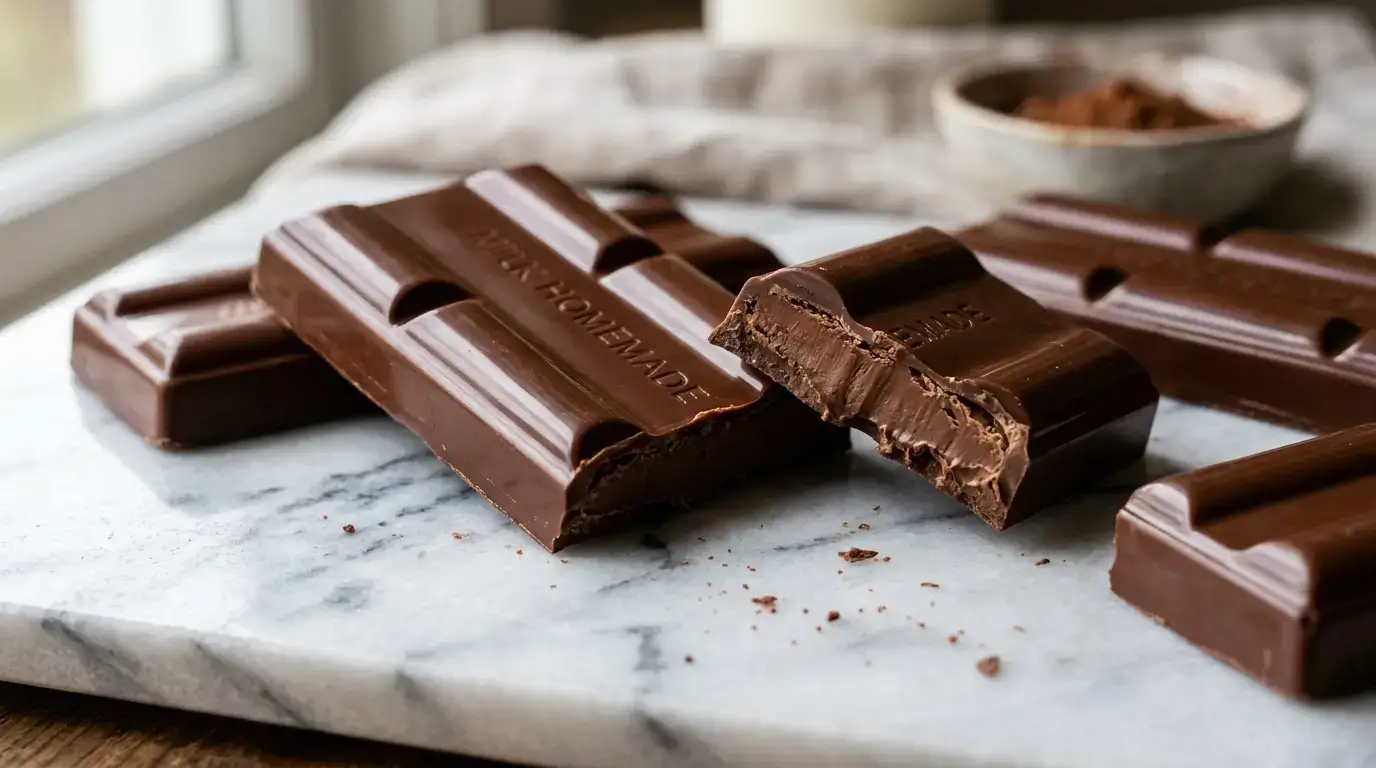
If you’ve ever bitten into a square of Cadbury Dairy Milk and wondered, ‘Could I actually make this at home?’ — the answer is a resounding yes. This guide walks you through everything: the classic milk chocolate recipe, exciting variations like dark, white, mini eggs, and even a Dubai-inspired twist. Let’s get chocolatey.
What Makes Cadbury Chocolate So Special?
Cadbury isn’t just chocolate — it’s a piece of history. Founded in 1824 by John Cadbury in Birmingham, England, the brand moved to the now-iconic Bournville factory in 1879 under Richard Cadbury. For nearly 200 years, it has been the gold standard of milk chocolate in Britain and beyond.
The real secret behind that unmistakably creamy taste? A higher ratio of milk solids compared to most other chocolate brands. Cadbury uses more milk per bar, resulting in that soft, melt-in-the-mouth texture fans around the world love.
You may have also noticed that British Cadbury tastes different from the US version. That’s because in the United States, the Cadbury brand is licensed to Hershey, which uses a slightly different recipe — including a lower milk fat content and a unique processing method that gives it a distinctly different flavour profile.
Curious about caffeine content? Find out does Cadbury milk chocolate contain caffeine?
Ingredients for Homemade Cadbury-Style Milk Chocolate
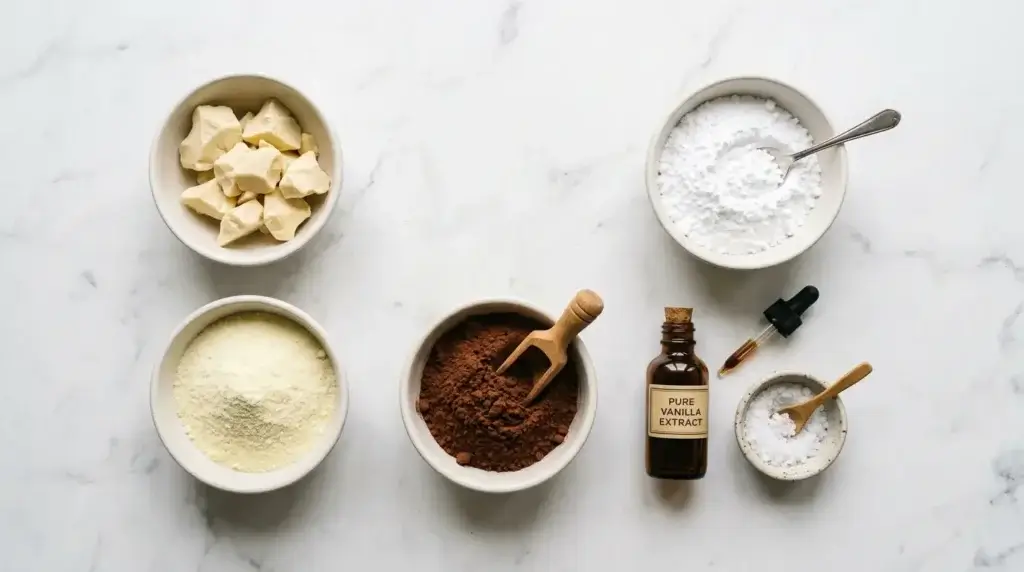
To recreate that signature Cadbury flavour at home, you’ll need a few key ingredients that replicate the brand’s higher-milk-solid formula. Here’s what you’ll need:
- 100g cocoa butter
- 50g full-fat milk powder
- 60g icing sugar (sifted)
- 30g cocoa powder
- 1 tsp pure vanilla extract
- Pinch of fine sea salt
For a Dairy Milk variation: substitute 30g of the milk powder for 2 tablespoons of sweetened condensed milk. This adds extra creaminess and a touch more sweetness that’s very true to the original.
Need the full details on ratios and technique? Check out our complete guide to homemade milk chocolate.
Equipment You’ll Need
You don’t need a professional chocolatier’s lab — just a few key tools:
- Double boiler (or a heatproof bowl set over a saucepan)
- Instant-read or chocolate thermometer
- Silicone chocolate moulds (bar or bite-sized shapes)
- Silicone or rubber spatula
- Fine-mesh sieve for sifting dry ingredients
Step-by-Step: How to Make Cadbury Chocolate
Step 1: Melt the Cocoa Butter
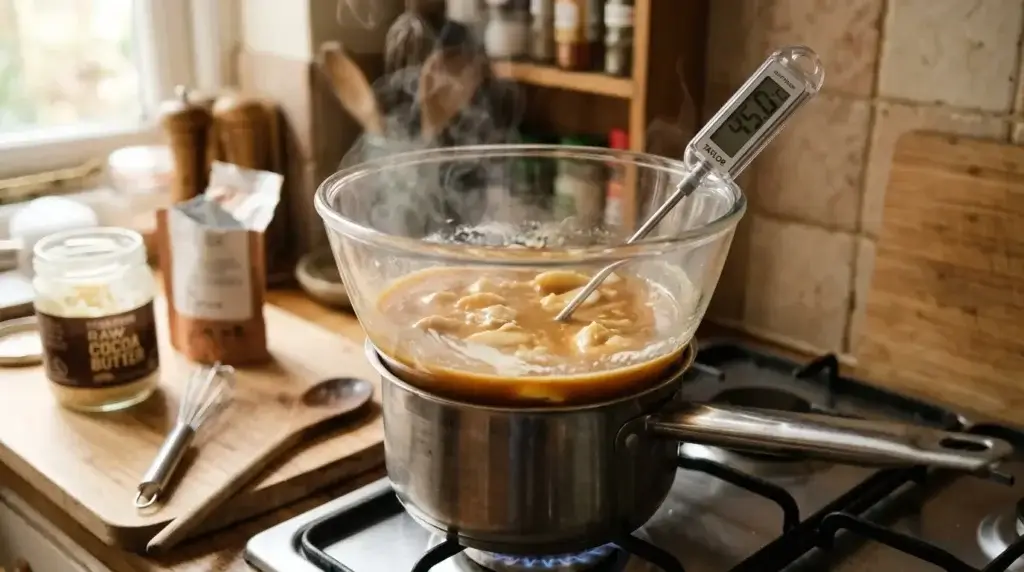
Add your cocoa butter to the top of a double boiler over gently simmering (not boiling) water. Stir occasionally until fully melted. The target temperature is around 45–50°C (113–122°F). Avoid overheating — you’re aiming to melt, not cook.
Step 2: Mix Dry Ingredients
In a separate bowl, sift together the cocoa powder, icing sugar, and milk powder. Sifting is crucial — any lumps will result in a grainy final texture. Mix until evenly combined.
Step 3: Combine & Flavour
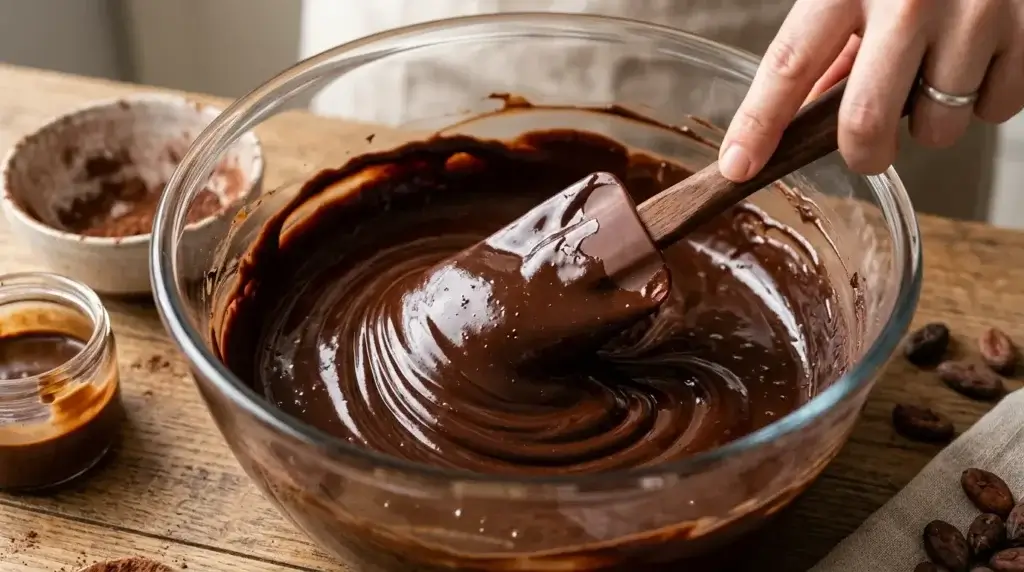
Pour the melted cocoa butter into the dry ingredients and stir continuously until smooth and glossy. Add the vanilla extract and a pinch of salt. Taste and adjust sweetness if needed.
Step 4: Temper the Chocolate (Optional but Recommended)
Tempering gives your chocolate that professional snap and glossy finish. To temper: cool the chocolate mixture to around 27°C (81°F) by spreading it on a cold marble surface or bowl of ice water, stirring constantly. Then gently reheat to 31°C (88°F). This aligns the cocoa butter crystals for a perfect set.
Short on time? Skip this step — your chocolate will still taste delicious, just with a softer, more matte appearance.
Step 5: Pour Into Moulds
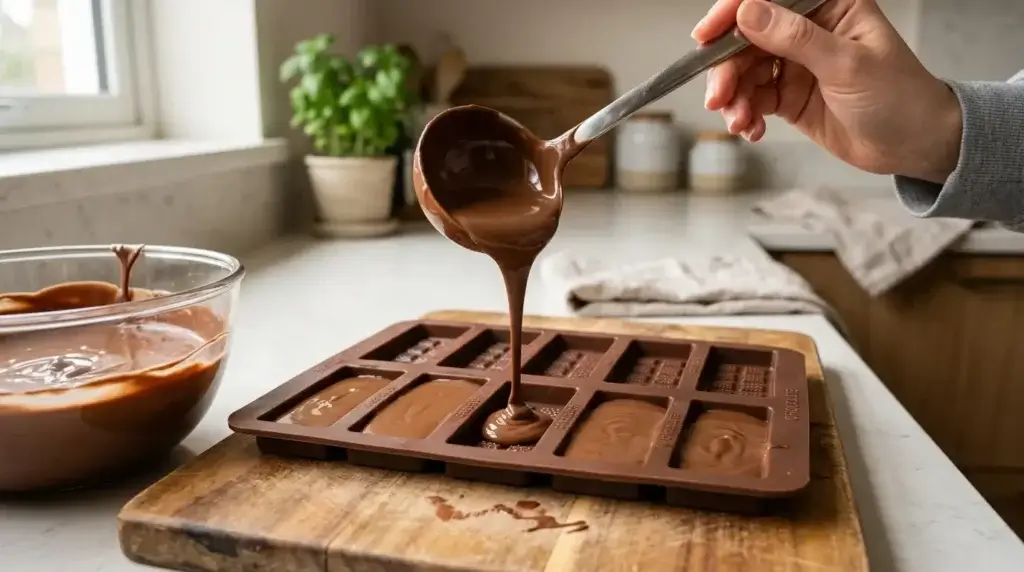
Pour the chocolate mixture into your silicone moulds. Tap the moulds gently on the counter to release any air bubbles. For a bar shape, fill to the top. For bite-sized pieces, fill to about ¾ full.
Step 6: Set & Unmould
Refrigerate for at least 1–2 hours, or until fully set and hardened. Once solid, gently flex the silicone mould to pop out your chocolate. Store in a cool, dry place or in the fridge in an airtight container.
Cadbury Chocolate Variations to Try at Home
Once you’ve nailed the base recipe, it’s time to experiment. Here are six popular Cadbury-inspired variations to try:
Cadbury Dark Chocolate Bar
Swap out the milk powder entirely and increase the cocoa powder to 60g. Use 90g of icing sugar to balance the bitterness. The result is a rich, intense dark chocolate that’s satisfying without being overpowering.
For ratios and tips on working with dark chocolate, see our dark chocolate recipe guide.
Cadbury White Chocolate
White chocolate contains no cocoa powder — it’s all about the cocoa butter, milk, and sugar. Use 120g cocoa butter, 60g full-fat milk powder, 70g icing sugar, and 1 tsp vanilla. Melt, combine, mould, and set as usual. Add a drop of yellow food colouring for that classic Cadbury white look.
Cadbury Chocolate Mini Eggs (Easter) 🐣
Mini eggs are a massive Easter favourite — and searches for ‘Cadbury mini eggs’ spike by up to +150% every spring. Make your own with egg-shaped silicone moulds using the base milk chocolate recipe, then coat with a candy shell for that signature crunch. Full technique covered below!
Cadbury Caramel Chocolate
Make a quick soft caramel (butter, brown sugar, condensed milk, golden syrup) and allow it to cool. Pour a thin layer of milk chocolate into your moulds, let it set partially, add a spoonful of caramel, then top with more chocolate and allow to set fully.
Cadbury Fruit and Nut
Stir in 30g of raisins and 30g of roughly chopped roasted almonds or hazelnuts to the chocolate mixture just before pouring into moulds. The fruit and nut version is one of Cadbury’s oldest recipes — and it’s incredibly easy to recreate at home.
Dubai-Inspired Cadbury Chocolate Bar
The Dubai chocolate trend took social media by storm — and it pairs beautifully with Cadbury-style milk chocolate. Fill your moulds halfway, add a layer of kataifi pastry mixed with pistachio cream, then top with more milk chocolate. Rich, crunchy, and completely addictive.
Get the full technique in our viral recipe — inspired by our viral Dubai chocolate recipe.
How to Make Cadbury Chocolate Mini Eggs for Easter

With searches for Cadbury mini eggs rising between +90% and +150% each spring, making your own is a fun and rewarding Easter project. Here’s how to nail the technique:
Start with the base milk chocolate recipe above and pour into egg-shaped silicone moulds. Let them set fully in the fridge (about 2 hours). Once set, prepare your candy coating:
- Dissolve 150g icing sugar in 2 tbsp water to form a thick paste.
- Add a few drops of food colouring (pastel pinks, blues, yellows, and purples are classic).
- Dip each chocolate egg into the coating and set on baking paper to dry.
- Apply a second coat once the first is dry for an opaque, even finish.
- Optional: lightly dust with edible shimmer powder for that glossy Cadbury finish.
Storage tip: Mini eggs keep well for up to 2 weeks in an airtight tin at room temperature — perfect for Easter gifting or filling baskets. Avoid storing in the fridge once coated, as condensation can cause the candy shell to weep.
Pro Tips for the Best Results
- Use high-quality full-fat milk powder: The creaminess of your chocolate depends heavily on the fat content of your milk powder. Avoid skimmed varieties.
- Don’t skip tempering if you want a snap: Tempered chocolate has a firmer bite and resists melting at room temperature — ideal if you’re gifting your creations.
- Store correctly: Homemade chocolate should be kept in an airtight container, away from light and strong odours, at around 18°C (65°F). Avoid the fridge unless necessary, as it can cause a white bloom (condensation on the surface).
- Work quickly: Once chocolate starts to set, don’t reheat it — this disrupts the crystal structure. Work with it while it’s still fluid.
Is Cadbury chocolate gluten free? The original Cadbury Dairy Milk bar is technically gluten-free by ingredients, but Cadbury does not certify it as gluten-free due to potential cross-contamination in their factories. If you or a guest has coeliac disease, making homemade Cadbury-style chocolate in a clean kitchen is actually a safer option — provided all your ingredients are certified gluten-free.
Once you’ve made your chocolate, use it in this decadent chocolate cake recipe for a truly impressive bake.

Frequently Asked Questions
Who owns Cadbury?
Cadbury is owned by Mondelez International, the global snacking giant. Mondelez acquired the brand in 2010 after a contentious takeover bid, much to the dismay of many British consumers. The brand operates independently under the Mondelez umbrella, maintaining most of its original recipes and heritage.
Is Cadbury chocolate gluten free?
Cadbury Dairy Milk contains no gluten-containing ingredients, but is produced in facilities that also handle wheat. Cadbury does not label it as ‘gluten free.’ For those with a severe gluten intolerance or coeliac disease, making it at home with certified gluten-free ingredients is the safest route.
Why does British Cadbury taste different from US Cadbury?
The US version of Cadbury is made under licence by Hershey, which uses a different recipe. The Hershey version contains less milk fat and uses a process that produces slightly different flavour compounds — some describe it as having a more tangy or sour note compared to the creamier, sweeter British original. The two products are genuinely different at a recipe level.
What is Cadbury chocolate made of?
The classic Cadbury Dairy Milk bar contains: sugar, cocoa butter, dried skimmed milk, cocoa mass, dried whey (from milk), palm oil, whey powder (from milk), emulsifiers (E442, E476), and flavourings. The higher-than-average milk content is what makes it distinctively creamy.
Where can I buy Cadbury chocolate?
Cadbury chocolate is widely available in UK supermarkets, newsagents, and convenience stores. Outside the UK, it can be found in international food sections of major supermarkets, specialist British import shops, and online — Amazon carries a wide range of Cadbury products, making it easy to source the real British version anywhere in the world.
More Chocolate Recipes to Try
If this guide got your chocolate-making appetite going, here are more recipes to explore: