
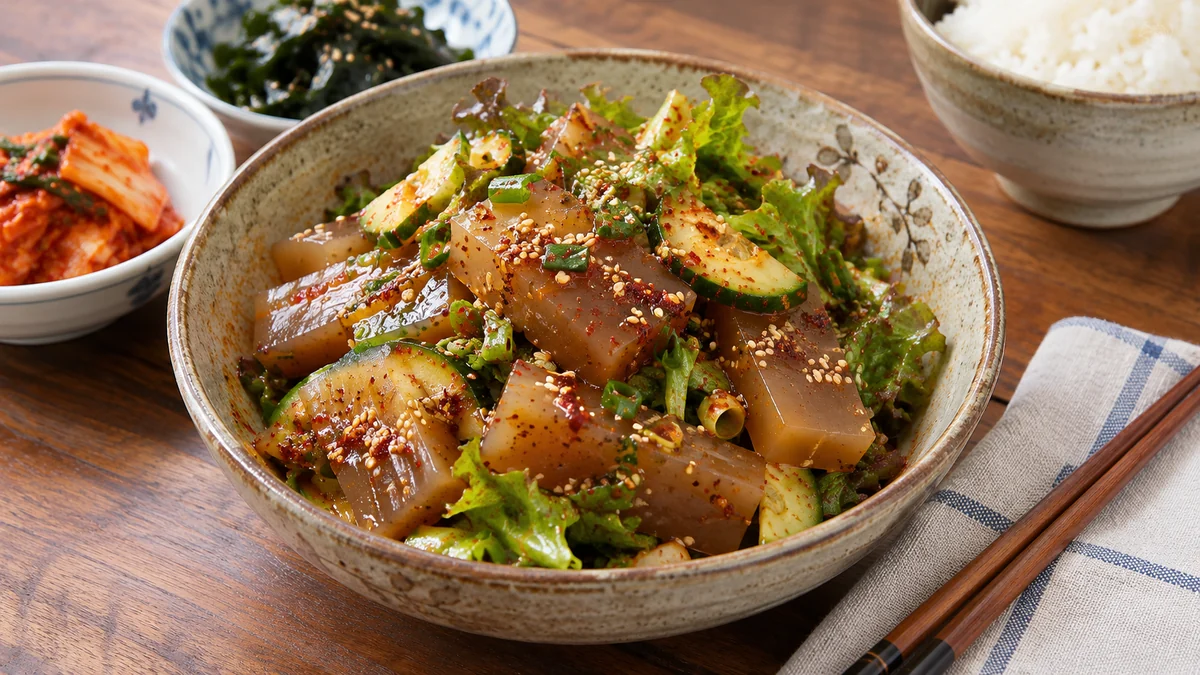
Korean acorn jelly (dotorimuk, 도토리묵) is a savory, softly set Korean dish made by cooking prepared acorn starch powder with water and salt until glossy and firm. It contains no animal gelatin and is commonly served as dotorimuk muchim, a salad of tender jelly slices, vegetables, soy-sesame dressing and Korean chili flakes. The key to a clean slice is using the ratio printed on your specific acorn jelly powder.
This guide shows the entire process, from choosing dotori mukgaru to cooking, setting and dressing the jelly, plus how to prevent a soft or grainy batch.
What Is Korean Acorn Jelly (Dotorimuk)?
Dotorimuk is a traditional Korean starch gel, not a sweet fruit gelatin dessert. Prepared acorn starch thickens in hot water and sets as it cools, giving the slices a firm but delicate, slightly springy texture. The flavor is mild, earthy and faintly nutty; most of the dish’s savory punch comes from its soy, sesame and gochugaru dressing.
The powder is usually sold as dotori mukgaru or “acorn jelly powder” at Korean grocery stores. Use prepared culinary powder, not raw wild acorns or unprocessed acorn flour. Acorns contain tannins and require appropriate processing before they are suitable for food.
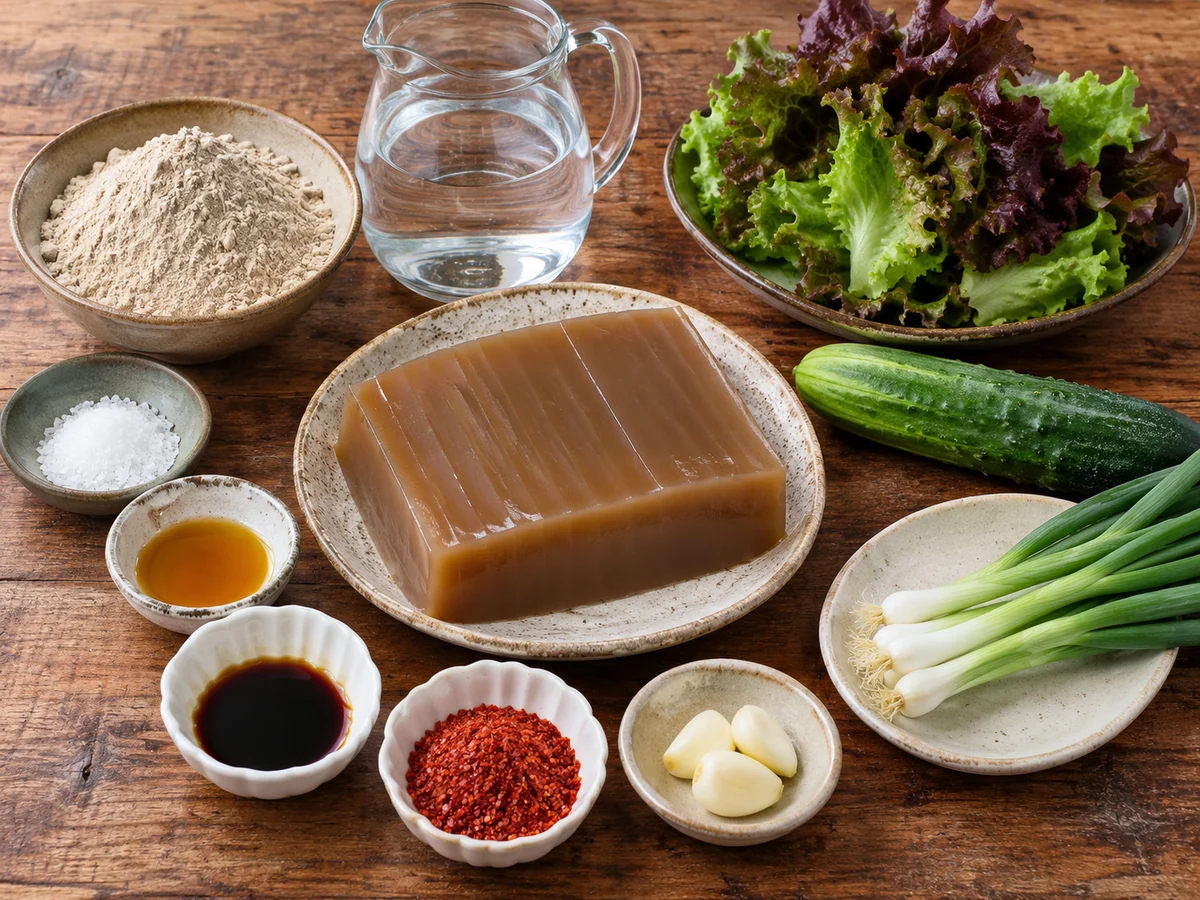
Acorn Jelly Ingredients
Choosing Dotorimuk Powder
Look for a food-grade product labeled for Korean acorn jelly. Some commercial mixtures include other starches; their required water quantity may be different. Read the ingredient list and the manufacturer’s directions before using any gram conversion from a blog.
Water-to-Powder Ratio: 1:5 vs 1:6
The widely used cup-based recipe starts with ½ cup acorn jelly powder and 3 cups (710 ml) water, a 1:6 ratio by volume. Some brands recommend 1:5. These ratios should not be treated as weight-based ratios; a cup of powder varies in weight by product and how it is packed.
| What your package says | For ½ cup powder | Expected result | Recommended action |
|---|---|---|---|
| 1 part powder : 6 parts water | 3 cups / 710 ml water | Tender set when cooked fully | Use for this guide if the label permits |
| 1 part powder : 5 parts water | 2½ cups / 590 ml water | Usually firmer | Follow the packet directions |
| Weight-based recipe, e.g. 100 g powder | Use manufacturer’s specified water weight | Depends on composition | Weigh powder and water; do not convert blindly |
| No directions and unknown blend | No safe universal gram conversion | Uncertain | Contact manufacturer or choose a labeled product |
Equipment
Use a heavy-bottomed saucepan, sturdy spatula, whisk, fine-mesh sieve, heatproof rectangular mold and a sharp or wavy-edge knife. A scale is helpful if your powder gives gram-based instructions.
How to Make Korean Acorn Jelly
Print
Basic Korean Acorn Jelly (Dotorimuk)
- Total Time: 6 hours 35 minutes
- Yield: 5 servings 1x
Description
Traditional Korean acorn jelly made from prepared acorn starch powder, water and salt.
Ingredients
½ cup Korean acorn jelly powder (dotori mukgaru), when labeled for 1:6 dilution
3 cups (710 ml) cold water, or the amount specified on the package
½ tsp salt
½ tsp toasted sesame oil or perilla oil, optional
Instructions
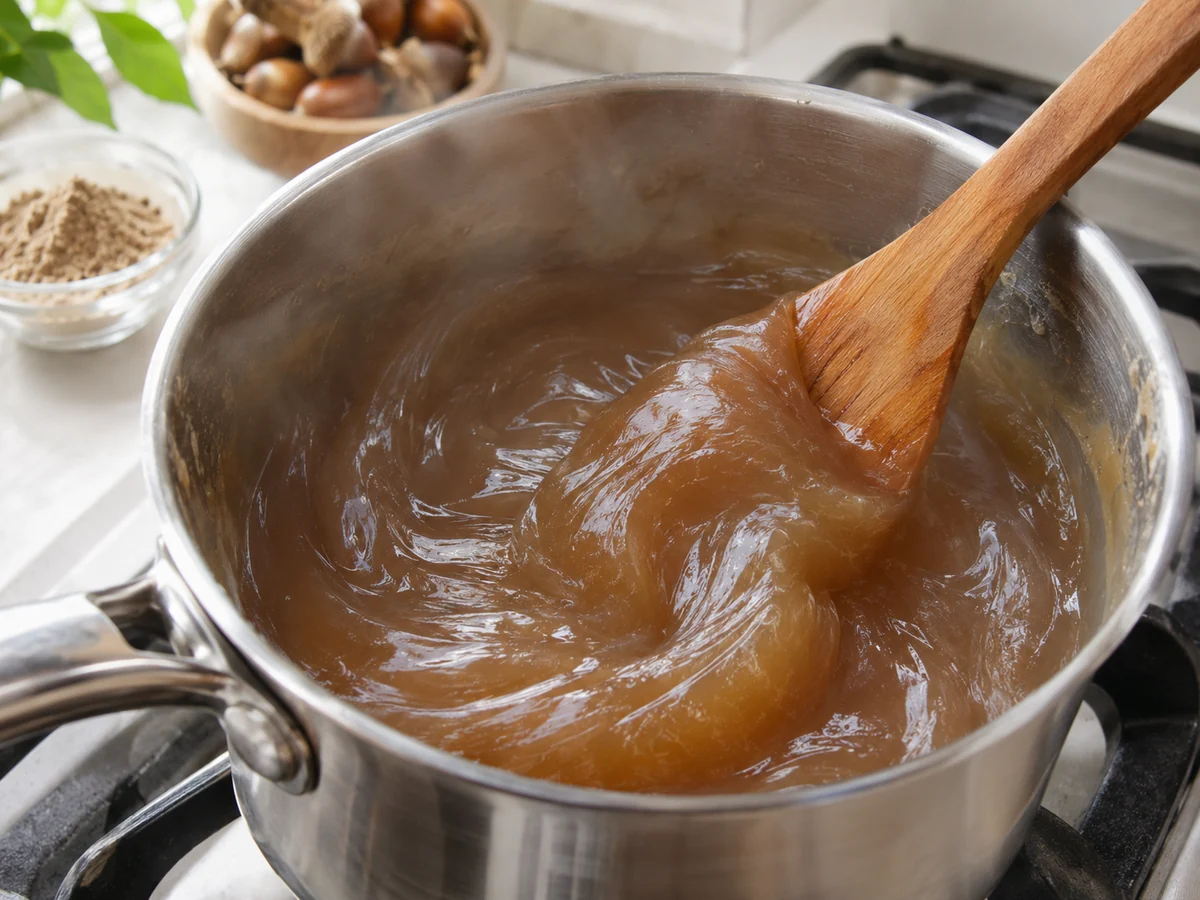
Whisk powder and cold water together in a bowl until no dry pockets remain. Strain into a heavy-bottomed pot if any lumps remain.
Add salt and heat over medium while stirring continuously, scraping the bottom and corners.
As the mixture thickens, lower the heat. Continue stirring until it changes from opaque and thin to glossy, cohesive and thick enough to fall slowly off the spatula in heavy folds. Total cooking often takes 12–25 minutes depending on the pan, quantity and heat.
Stir in optional oil. Pour immediately into a clean heatproof dish and level the surface.
Let the dish cool briefly, then refrigerate until completely set, generally 4–6 hours. Keep the food-safe cooling period short rather than leaving it unrefrigerated all afternoon.
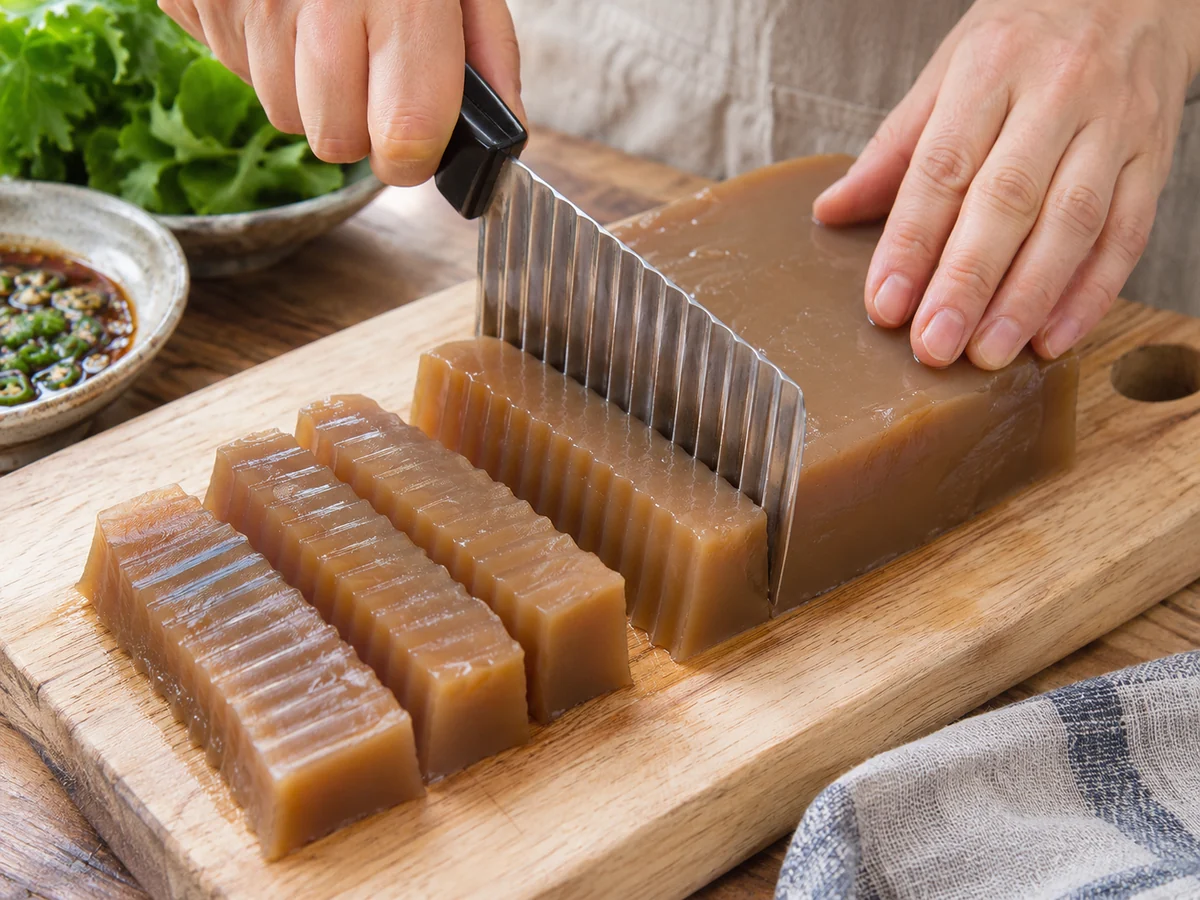
Unmold gently and cut into slices roughly ¼ inch / 6 mm thick. Serve with dressing or salad.
- Prep Time: 10 minutes
- Cook Time: 25 minutes
Mix the Powder With Cold Water
Starch disperses most evenly when stirred into cold water first. Adding dry powder directly to boiling water can form translucent lumps around a dry interior. If you see specks before cooking, sieve them out while the mixture is still liquid.
Cook and Stir Until Thick and Glossy
The mixture first feels like a thin slurry, then becomes noticeably resistant as starch granules gelatinize. Keep scraping the pot’s bottom; an unstirred patch may scorch before the rest is cooked. Once thick, reduce the heat but continue cooking and stirring until the texture looks evenly glossy.
Pour Into a Mold and Let It Set
Do not add extra water to the mold. Smooth the top, cool enough to refrigerate safely and cover after steam subsides. A shallow, broad dish cools faster than a very deep container.
Unmold and Slice
Run a thin spatula around the edges and gently invert onto a cutting board. A wavy knife creates ridges that can catch more dressing, but a plain sharp knife works well.
Dotorimuk Muchim: Korean Acorn Jelly Salad
Muchim means the jelly is gently seasoned or tossed with vegetables and a salty-spicy sesame-soy sauce. Dress it just before serving so the vegetables remain crisp and the soft jelly does not break apart.
Print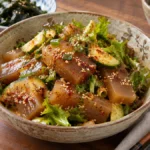
Dotorimuk Muchim (Seasoned Acorn Jelly Salad)
- Total Time: 15 minutes
- Yield: 4 servings 1x
Description
Korean dotorimuk muchim salad with fresh vegetables and sesame-soy dressing.
Ingredients
About 14–16 oz (400–450 g) prepared dotorimuk, sliced
2 cups torn lettuce
½ cup thinly sliced cucumber
¼ cup thinly sliced onion
2 tbsp grated carrot
2 scallions, sliced
3 perilla leaves or a small handful of herbs, optional
3 tbsp soy sauce or certified gluten-free tamari
1 tbsp water
1–2 tsp sugar or honey, to taste
2 tsp toasted sesame oil
1 tbsp toasted sesame seeds
1–2 tsp gochugaru, to taste
1 small garlic clove, minced
Instructions
In a small bowl, whisk soy sauce, water, sugar, sesame oil, gochugaru and garlic until the sugar is dissolved.
Wash and thoroughly drain all vegetables so excess water will not dilute the dressing.
Toss lettuce, cucumber, onion, carrot, scallion and optional herbs with about two-thirds of the dressing.
Lay the jelly slices on top, drizzle over the remaining dressing and lift gently from underneath once or twice to coat without tearing.
Sprinkle with toasted sesame seeds and serve immediately.
- Prep Time: 15 minutes
- Cook Time: 0 minutes
What Does Korean Acorn Jelly Taste Like?
Plain jelly tastes gentle, slightly earthy and faintly nutty, with a soft, wobbly bite. It is not sugary or gelatinous like an American dessert cup. If your first bite tastes bland, that is expected: the sesame dressing, green onion, garlic and gochugaru contribute most of the flavor.
Why Is My Acorn Jelly Not Setting?
| Symptom | Possible cause | Next batch prevention |
|---|---|---|
| Won’t firm up | Too much water for this powder | Follow the package ratio exactly |
| Lumpy gel | Powder added to hot water | Dissolve in cold water, sieve before heating |
| Soft or pasty middle | Not cooked long enough | Stir on low heat until fully glossy and cohesive |
| Scorched bottom | Heat too high or poor stirring | Use heavy pot; scrape corners continuously |
| Water collects after chilling | Starch gel changes during storage | Store covered and drain gently before dressing |
| Breaks while tossing | Thin slices or aggressive mixing | Dress vegetables first; add jelly last |
If the gel remains liquid after full chilling, it may be due to the product’s starch blend or an incorrect proportion. Reheating an already-failed batch is not a guaranteed fix. It is more reliable to check powder instructions before making a new batch.
Three Ways to Serve Dotorimuk
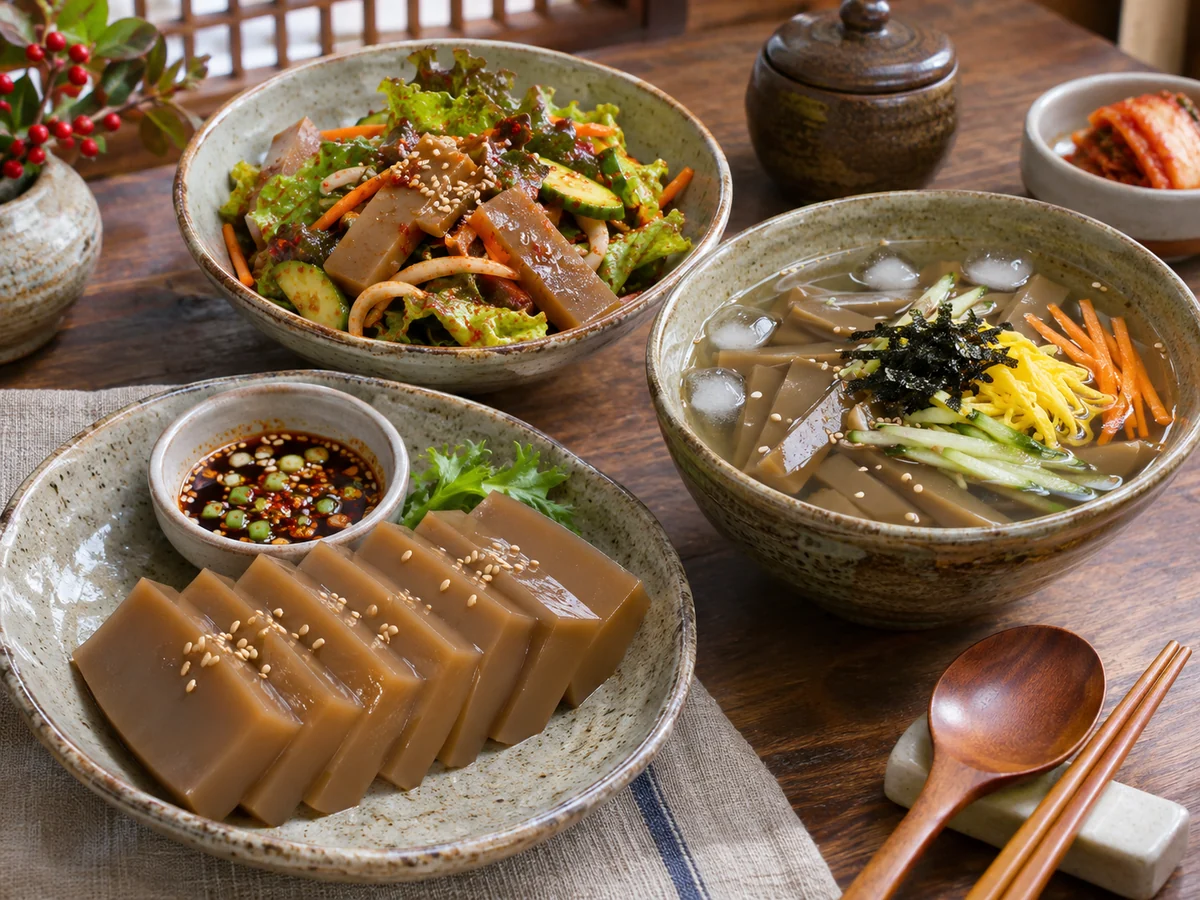
1. With Simple Soy-Sesame Dressing
Place thick jelly slices on a plate and spoon over soy sauce, sesame oil, scallions, garlic and toasted sesame. A good choice when you want the jelly’s texture to remain the focus.
2. As Dotorimuk Muchim
Use the salad above, with crisp lettuce, cucumber, onion and a gently spicy sauce. Add jelly only at the end so it stays in intact slices.
3. In Chilled Muksabal
Place thin jelly strips in a bowl with cucumber, scallions and a chilled savory broth; some versions use cold anchovy or vegetable stock seasoned with soy and vinegar. Garnish just before eating. Choose a vegetable broth if preparing a vegetarian version.
Storage, Refrigeration and Reheating
Refrigerate homemade jelly promptly in a clean covered container at 40°F/4°C or colder. For best flavor and texture, make small batches and use within 3–4 days; discard if it develops an off smell, slime or mold. Dress the salad only when serving, and store salad leftovers for a shorter time because fresh vegetables shed water. Freezing generally damages the starch-gel texture. A brief dip in hot water may soften chilled slices that feel too stiff, but it will not reliably repair a jelly made with the wrong ratio.
Is Korean Acorn Jelly Vegan, Gluten-Free or Low-Calorie?
The plain jelly made with acorn starch, water and salt is plant-based and does not use animal gelatin. It can also be gluten-free if the powder has no wheat-containing ingredients or cross-contact concerns. Standard soy sauce often contains wheat; use labeled gluten-free tamari if needed. The calories of a finished serving depend on the powder’s starch content, slice size and sauce. Do not assume a universal “under 45 calories” value without the specific product label and portion weight.
If you’re comparing gel-setting ingredients, see agar agar vs gelatin. For a completely different sweet jelly recipe, explore Korean-inspired yuja ginger gelatin jelly; it is not the same dish as dotorimuk.
FAQS
What is Korean acorn jelly made of?
Prepared Korean acorn jelly starch powder, water and a little salt. The salad adds vegetables and a sesame-soy dressing.
Does dotorimuk contain gelatin?
No. Its set comes from cooked acorn starch, not animal gelatin.
Is acorn jelly sweet or savory?
Dotorimuk is served as a savory dish, usually with soy sauce, sesame oil and vegetables.
Why won’t my dotorimuk set?
Too much water, undercooking or using a different starch blend are common causes. Follow the packet ratio and cook until thick and glossy.
Can I freeze acorn jelly?
Freezing usually damages its texture, making it watery or crumbly after thawing.
How long does homemade dotorimuk last?
For best quality, refrigerate promptly and use within 3–4 days; dress only before serving.
Traditional ratio reference: Maangchi’s dotorimuk muchim guide. Check your own product instructions before adapting it.
1 thought on “Korean Acorn Jelly Recipe (Dotorimuk Muchim): Step-by-Step Guide”