
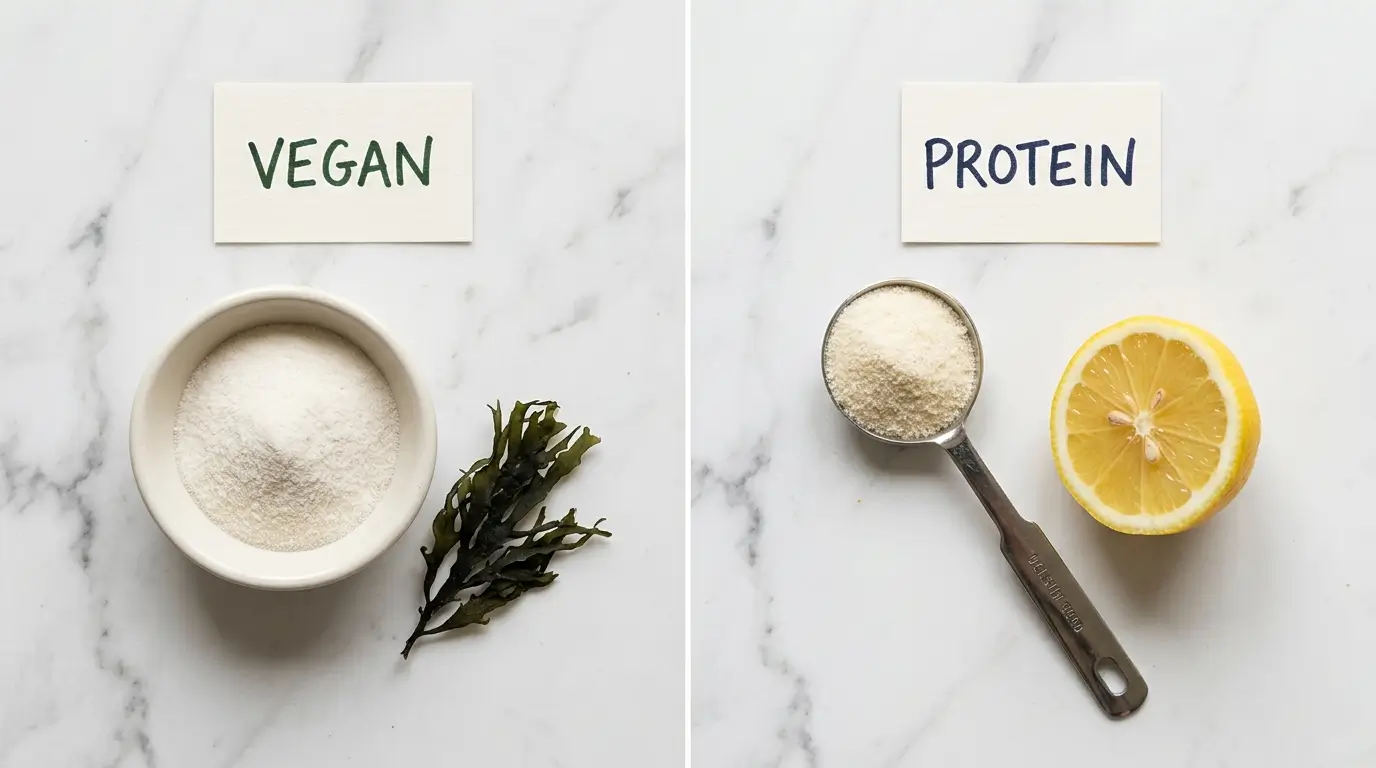
Agar agar vs gelatin is one of the most searched ingredient comparison questions in 2026 — driven by the explosive growth of both the gelatin weight loss trend and the parallel rise of plant-based cooking. Both are gelling agents. Both transform liquids into structured, set preparations. But they come from completely different biological sources, work through entirely different chemical mechanisms, require different handling techniques, produce fundamentally different textures, and have completely different nutritional profiles. Using the wrong one in a recipe produces predictable failure. This guide covers every practical difference, the exact conversion ratio, a direct comparison across every relevant application, and the critical distinction for weight loss use.
What Is Agar Agar?
Agar agar is a polysaccharide — a complex carbohydrate — extracted from the cell walls of red algae, primarily Gelidium and Gracilaria species harvested from coastal waters in Asia, South America, and the Mediterranean. It has been used in Asian cooking for over 350 years, first documented in Japan in 1658. In food production it appears as a white powder or dried flakes, and is classified as a natural thickener under the food additive code E406.
Agar agar gels through a purely physical mechanism: polysaccharide chains form hydrogen bonds with each other as temperature drops, creating a three-dimensional network that traps water. This process is temperature-sensitive in both directions — agar melts at approximately 85°C (185°F) and sets at approximately 40°C (104°F), significantly higher than gelatin in both cases. This means agar-based preparations set at room temperature without refrigeration and remain stable in warm environments — a significant practical advantage over gelatin in warm climates or applications where refrigeration is unavailable.
Agar agar is 100% vegan, halal, kosher, and plant-derived. It contains no protein, no fat, and minimal calories — it is almost entirely carbohydrate fiber.
What Is Gelatin?
Gelatin is a protein derived from collagen — the structural protein found in animal connective tissue, bones, and skin. The collagen is extracted through prolonged boiling and hydrolysis, then dried into a flavorless powder or sheets. Commercially, most gelatin is bovine (beef) or porcine (pork) derived, though fish gelatin is also available. For the full breakdown of bovine gelatin specifically, the beef gelatin powder guide covers sourcing, brands, and the weight loss protocol.
Gelatin gels through protein bonding: dissolved protein chains form hydrogen bonds when cooled below approximately 35°C (95°F). The gel melts again when reheated above this temperature — making gelatin uniquely reversible and temperature-sensitive at lower temperatures than agar. This is why gelatin desserts must be refrigerated to maintain their set, and why a gelatin-based shot taken 15–20 minutes before a meal works as a pre-meal satiety tool in a way agar agar cannot replicate.
Agar Agar vs Gelatin — Direct Comparison
Source: Agar agar comes from red seaweed. Gelatin comes from animal collagen.
Vegan/Halal/Kosher: Agar agar is fully vegan, halal, and kosher. Gelatin is not vegan; halal/kosher status depends on source and certification. For dietary compliance specifics, the halal gelatin guide covers every certification scenario.
Gelling mechanism: Agar gels through polysaccharide bonding — a carbohydrate process. Gelatin gels through protein bonding — a biochemical process.
Setting temperature: Agar sets at ~40°C (104°F) and melts at ~85°C (185°F). Gelatin sets at ~15°C (59°F) and melts at ~35°C (95°F). Agar sets faster and at higher temperatures — it will begin to gel while still warm.
Refrigeration required: Agar — no. Sets at room temperature. Gelatin — yes. Must be refrigerated to maintain set.
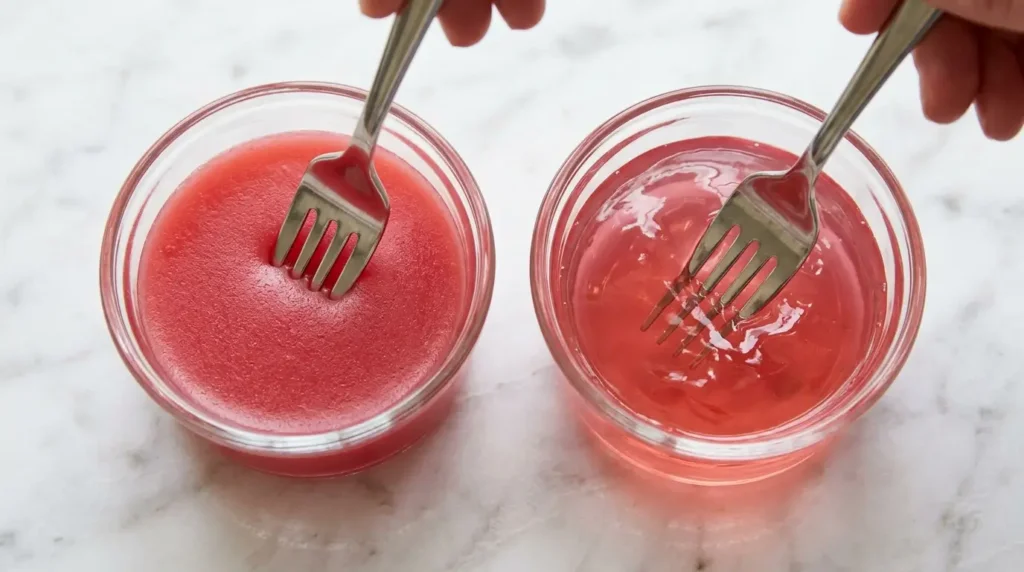
Texture: Agar produces a firm, brittle, clean-cut gel with a slightly grainy bite. Gelatin produces an elastic, jiggly, melt-in-the-mouth gel. The textural difference is dramatic — agar gels snap and break cleanly, gelatin gels bounce and stretch.
Protein content: Agar contains zero protein. Gelatin provides approximately 6–12g of protein per tablespoon. This is the most critical difference for weight loss applications.
GLP-1 mechanism: Agar has none. Gelatin activates natural GLP-1 satiety hormone release through its glycine content — the core mechanism of the gelatin trick recipe and the natural GLP-1 protocol. This mechanism cannot be replicated by agar agar.
Strength: Agar is approximately 3 times stronger than gelatin at the same weight. Less agar achieves the same gel strength.
If you want to use agar agar specifically for appetite control before meals, follow this agar agar weight loss recipe — it takes under 5 minutes and works as a plant-based pre-meal habit.
The Exact Conversion Ratio: Agar Agar to Gelatin

This is the most searched aspect of the agar vs gelatin question — and the answer is simple.
1 teaspoon agar agar powder = 1 packet (7g) unflavored gelatin powder
This is the standard substitution for most recipes. Because agar is approximately 3 times stronger than gelatin by weight, you need significantly less agar than gelatin to achieve the same gel set.
In tablespoon terms: 1 tablespoon gelatin ≈ 1 teaspoon agar agar powder (⅓ the volume).
Important caveats:
- Agar sets firmer than gelatin even at equivalent concentrations. For a soft set (panna cotta, mousse), reduce agar slightly below the 1:3 ratio.
- Agar must be fully dissolved in boiling liquid — it does not bloom like gelatin and will not dissolve below 85°C.
- Agar sets faster than gelatin — work quickly once the liquid is prepared.
For the detailed blooming technique specific to gelatin, the how to bloom gelatin powder guide covers every step. Note: agar does NOT require blooming — it dissolves directly in boiling liquid.
When to Use Agar Agar vs Gelatin
Use agar agar when:
- The recipe must be vegan, halal without certification complexity, or kosher
- The preparation will be served in a warm environment where gelatin would melt
- A firmer, cleaner-cut texture is preferred (sliceable jellies, firm molds)
- Setting at room temperature without refrigeration is required
- The application is dessert-focused with no satiety or protein goal
Use gelatin when:
- The GLP-1 pre-meal appetite control mechanism is the goal — agar cannot substitute here
- A silky, elastic, melt-in-the-mouth texture is required (panna cotta, mousse, gummy candy)
- Protein content matters — gelatin adds 6–12g per serving, agar adds zero
- Sleep support through glycine is a secondary goal
- The classic jiggly jello texture is specifically desired
The verdict for weight loss: Gelatin, every time. The glycine-triggered GLP-1 mechanism that makes the gelatin trick work does not exist in agar agar. Agar provides fiber and a small satiety benefit from volume, but it cannot replicate the hormonal satiety cascade that makes pre-meal gelatin an effective weight loss tool.
Agar Agar Weight Loss: What It Can and Cannot Do
Agar agar has some genuine weight loss relevance — but through completely different mechanisms than gelatin.
What agar can do: Agar’s soluble fiber content absorbs water and expands significantly in the stomach, creating a volumetric fullness effect. This physical satiety is similar to the konjac/glucomannan mechanism. Some Japanese research on “kanten diet” (traditional agar consumption before meals) shows modest reductions in food intake.
What agar cannot do: It cannot trigger GLP-1 release. It provides no protein. It does not support joint health, skin collagen, or sleep quality. The appetite-control effect is weaker and shorter-lasting than gelatin’s GLP-1 mechanism.
The practical conclusion: For someone following a vegan diet who cannot use gelatin, agar agar before meals provides a meaningful but secondary satiety benefit. For everyone else, gelatin is the clear choice for pre-meal weight loss application.
The Agar Agar Weight Loss Jelly (Vegan Option)
For vegans or anyone needing a plant-based alternative to the gelatin pre-meal shot, agar agar jelly cups offer the best available substitute:
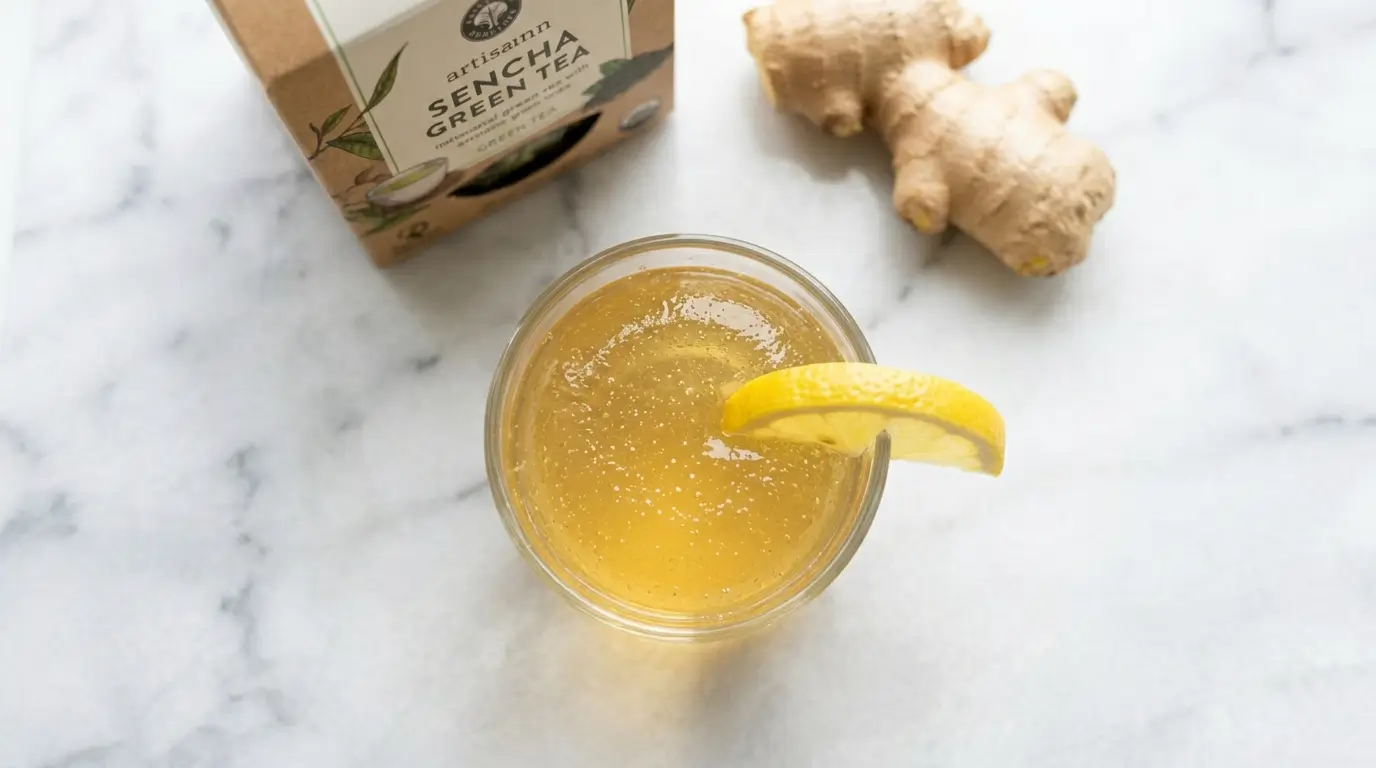 🌿 100% Vegan
- 1 tsp agar agar powder (not flakes — powder only)
- 2 cups cold water or green tea
- 1 tbsp fresh lemon juice
- 1 tsp raw honey or agave (optional)
- ¼ tsp ground ginger (optional)
- 1 pinch sea salt
Whisk agar powder into cold liquid in a saucepan. Do not heat yet.
Boil over medium-high heat, stirring constantly. Boil 2 full minutes.
Add lemon juice, honey, ginger, and salt. Stir off heat.
Pour into 4 cups or molds. Set 30 min at room temperature.
Eat 1 cup 15–20 min before your main meal.
| Feature | Agar Agar | Gelatin |
|---|---|---|
| Source | 🌿 Red seaweed | 🐄 Animal collagen |
| Vegan | ✅ Yes | ❌ No |
| Sets without fridge | ✅ Yes | ❌ No |
| Protein per serving | 0g | 6–12g |
| GLP-1 mechanism | ❌ None | ✅ Strong |
| Conversion ratio | 1 tsp agar = 1 tbsp (7g) gelatin | |
Notes: Unlike gelatin, agar does NOT need to be bloomed in cold water first. It must reach a full boil to dissolve — low heat will not activate it. These cups set firmer than gelatin versions and hold their shape at room temperature for up to 24 hours. For the gelatin version with GLP-1 appetite control, see the gelatin trick recipe. For other vegan gelatin alternatives across different applications, see the non gelatin marshmallows guide which compares agar, aquafaba, and carrageenan directly.
Can You Substitute Agar for Gelatin in the Gelatin Trick?
Yes — with realistic expectations. The agar version will produce a physical satiety effect (volume-based) rather than a hormonal satiety effect (GLP-1-based). Studies suggest the GLP-1 mechanism from gelatin glycine produces stronger and longer-lasting appetite suppression than fiber-based volume strategies. For vegans, the agar version is the best available alternative. For everyone else, gelatin produces meaningfully better weight loss results.
For a full technical comparison of gelatin alternatives by application, the pectin vs gelatin guide covers the same framework applied to pectin — another common comparison search.
Conclusion
Agar agar and gelatin are not interchangeable — they are fundamentally different ingredients that happen to share the same broad function of gelling liquids. The conversion ratio (1 tsp agar = 1 tbsp gelatin) is the practical starting point for substitution, but the texture, nutritional profile, and biological mechanisms are entirely distinct.
For vegan cooking, warm-environment applications, and firm-textured desserts: agar agar is the correct choice. For weight loss protocols, GLP-1 appetite control, protein supplementation, joint support, and any application where an elastic melt-in-mouth texture is desired: gelatin is the correct choice.
The two can coexist in a well-informed kitchen. Use gelatin for the pre-meal weight loss shot. Use agar for vegan desserts, molds that need to survive warm temperatures, and any application where animal-derived ingredients are excluded.
Frequently Asked Questions
Agar Agar vs Gelatin — Complete Comparison Guide