
The Korean gelatin recipe has become one of the most searched wellness food terms of June 2026 — and it sits at a fascinating intersection between an ancient Korean culinary tradition and the modern gelatin weight loss trend that has dominated health conversations globally. Unlike most viral “Korean” wellness recipes that are simply standard preparations with a Korean label slapped on, there is genuine depth here: Korea has centuries of jelly-based food culture, and Korean flavor combinations — particularly yuja (Korean citron), ginger, and barley tea — produce genuinely superior gelatin preparations when applied to the pre-meal appetite control protocol. This guide covers the authentic Korean jelly tradition, the exact Korean-style gelatin recipe for weight loss, the konjac jelly option, and the science connecting Korean food philosophy to the GLP-1 satiety mechanism.
The Real Korean Jelly Tradition: Not Just a Trend
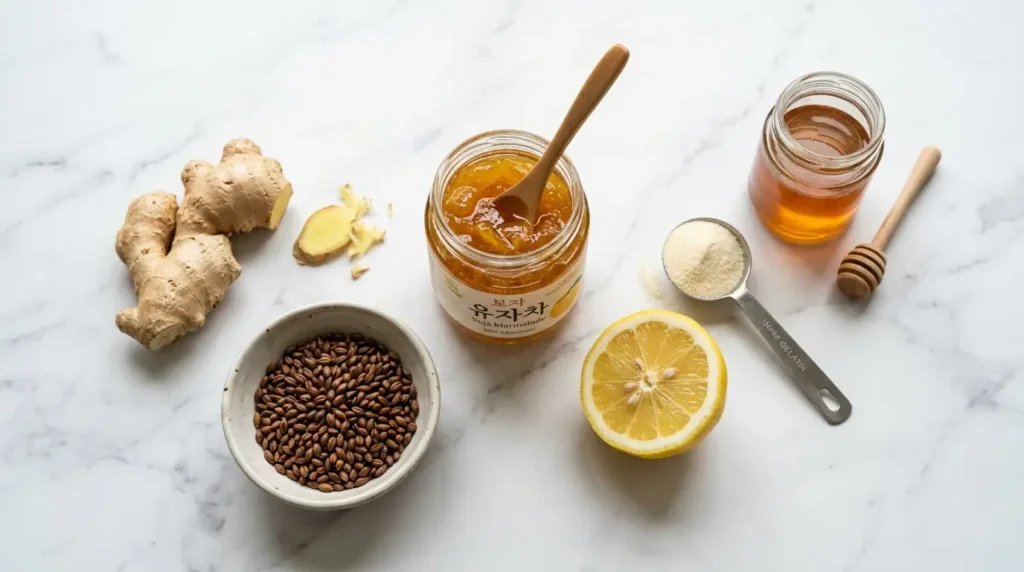
Korea’s relationship with jelly-style foods predates the Western gelatin trick by several centuries. The traditional Korean term for jelly food is muk (묵) — a broad category of set, gel-textured preparations made from plant starches, agar, or animal gelatin. The most well-known varieties include acorn jelly (dotori-muk), mung bean jelly (cheong-po-muk), and seaweed jelly — all eaten as side dishes, salads, or snacks throughout Korean history.
What makes the Korean approach distinctive is not the gelling agent itself — it is the flavor philosophy. Korean jelly preparations consistently use:
Yuja (유자): Korean citron — a fragrant citrus fruit with intense floral aroma and high vitamin C content. Yuja tea and yuja marmalade are among the most beloved wellness preparations in Korean food culture. Its combination of citric acid and aromatic compounds makes it the optimal Korean addition to any gelatin recipe — it slows gastric emptying (blood sugar stability) while delivering a flavor profile that is light, floral, and far more compelling than plain lemon.
Ginger (생강): A cornerstone of Korean cuisine and medicine. Gingerols activate thermogenesis, suppress ghrelin (the primary hunger hormone), and add natural warmth that makes pre-meal gelatin drinks genuinely pleasant to consume rather than something to endure.
Barley tea (보리차): Korea’s national everyday drink — a roasted grain tea with a mild, nutty flavor that is completely caffeine-free and naturally blood-sugar stabilizing. Using chilled barley tea as the liquid base for gelatin preparations is the most distinctly Korean variation available.
What Is the Korean Gelatin Trick Recipe?
The viral “Korean gelatin trick recipe” circulating on TikTok and wellness blogs in 2026 is essentially the standard gelatin trick recipe applied with Korean-style flavoring — and this is not a criticism. The Korean flavor additions are genuinely superior to the generic versions, and the cultural reframing has introduced the preparation to an entirely new audience.
The three base ingredients remain identical: unflavored gelatin powder, warm liquid, and a flavoring component. What changes is the flavoring component — yuja or yuzu instead of lemon, ginger instead of cayenne, barley tea instead of plain water. Glycine from gelatin is believed to support the same GLP-1 satiety pathway across all versions, though this is a modest, food-based effect rather than a confirmed equivalent to medication. The Korean version adds flavor complexity and additional bioactive compounds (gingerols from ginger, limonoids from yuja) that make the preparation both more effective and more enjoyable.
The Exact Korean Yuja Ginger Gelatin Cups Recipe
 🇰🇷 Korean Style
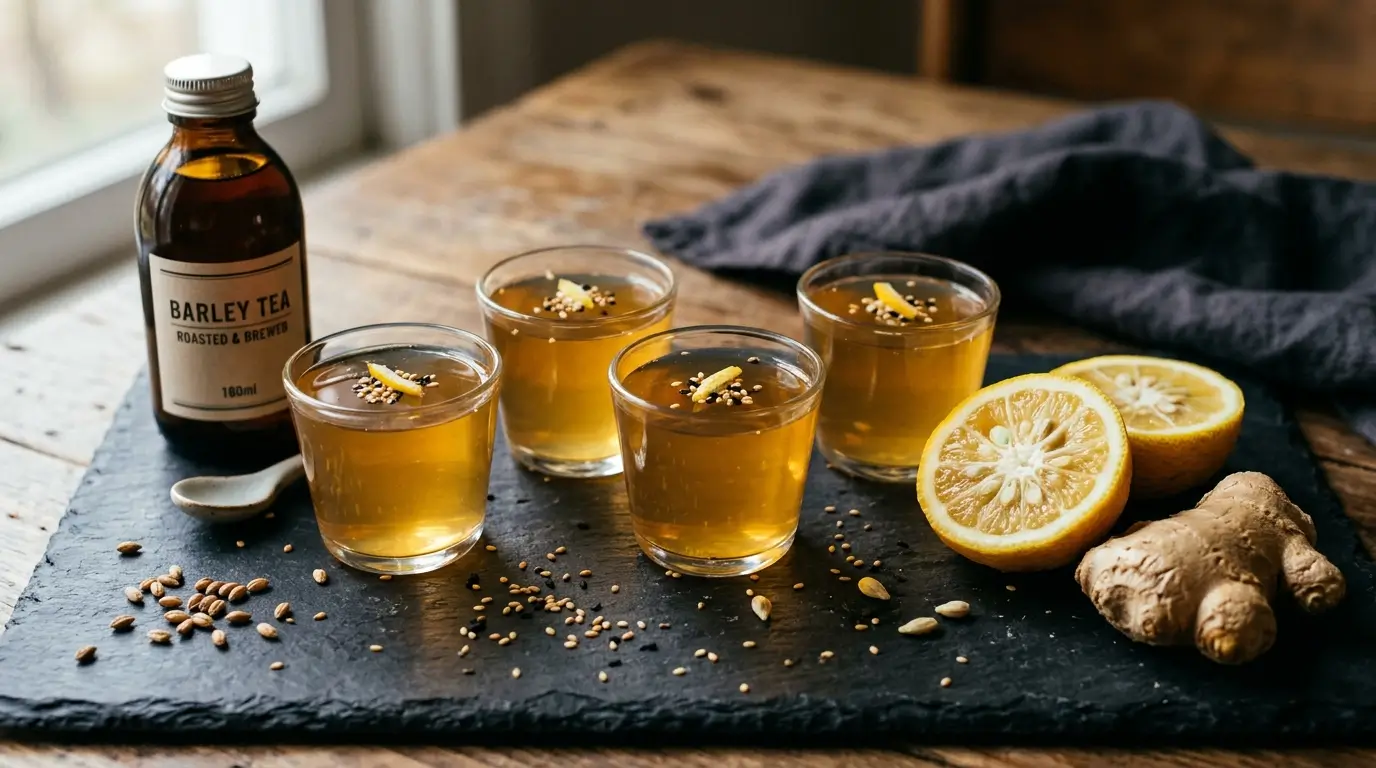
Korean Yuja Ginger Gelatin Cups
Yuja · Ginger · Barley Tea — 4 cups batch-prepped in 10 minutes, set in 2 hours.
- 4 tbsp unflavored gelatin powder (Knox or grass-fed)
- ½ cup cold water (for blooming)
- 2 cups warm barley tea (boricha — or warm water)
- 4 tbsp yuja marmalade (yujacha — or yuzu juice)
- 1 tsp fresh ginger, finely grated
- 1 tsp raw honey (optional)
- 1 pinch sea salt
Bloom gelatin in ½ cup cold water for 3 min until spongy.
Dissolve — pour warm barley tea over gelatin, whisk until clear.
Add yuja marmalade, grated ginger, honey, and sea salt. Stir well.
Strain through fine mesh sieve. Pour into 4 cups or molds.
Refrigerate 2 hrs until set. Eat 1 cup 15–20 min before meals.
The Science: Why Korean Ingredients Enhance the Gelatin Trick
Yuja and citric acid. Like lemon, yuja provides citric acid that slows gastric emptying — reducing the rate at which food leaves the stomach and flattening the post-meal blood sugar curve. Yuja also contains hesperidin, a flavonoid studied for its potential role in insulin sensitivity — though the research is still limited, and it shouldn’t be treated as a confirmed anti-obesity effect. This makes it a genuinely superior choice to plain lemon for the metabolic goals of the gelatin trick.
Ginger and appetite suppression. Gingerols and shogaols in ginger are believed to help modulate ghrelin, the hunger hormone that signals appetite, through a pathway distinct from gelatin’s GLP-1-related effect — though human evidence for this specific effect remains limited. This means ginger and gelatin work additively: gelatin activates satiety, ginger reduces hunger. The combination produces stronger pre-meal appetite suppression than either ingredient alone. The dementia prevention spice blend uses ginger for the same anti-inflammatory and metabolic reasons.
Barley tea and blood sugar. Roasted barley contains beta-glucan — a soluble fiber that slows glucose absorption and improves post-meal blood sugar response. Using barley tea as the liquid base rather than plain water adds this fiber benefit to the gelatin’s GLP-1 mechanism. The buckwheat tea guide on this site covers a similar blood-sugar-stabilizing tea protocol.
Konjac Jelly — The Genuinely Korean Plant-Based Alternative
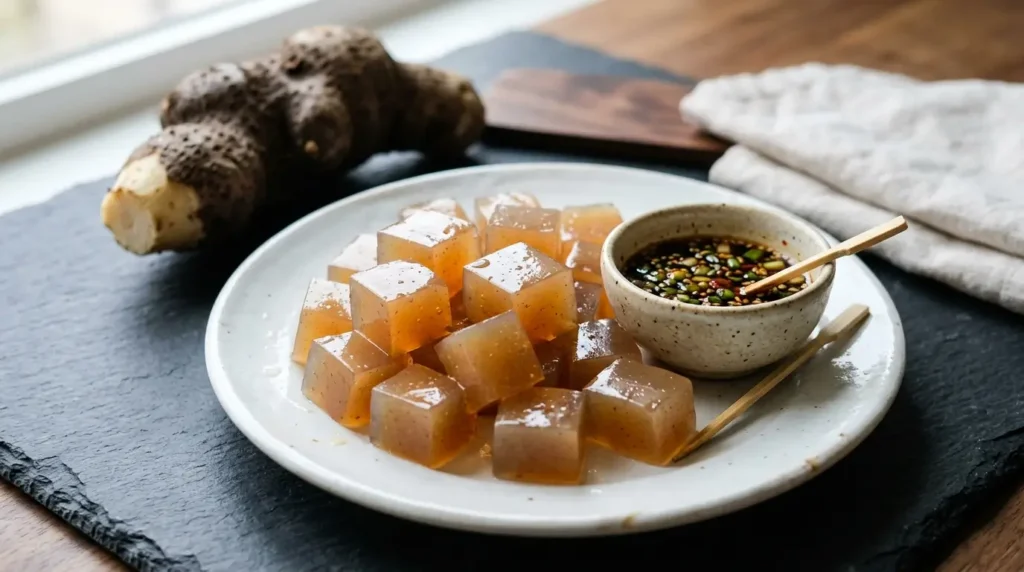
For anyone avoiding animal-derived gelatin for religious, dietary, or ethical reasons, the genuinely Korean option is konjac jelly — not agar agar, not pectin, but konjac, made from glucomannan fiber extracted from the konjac root (elephant yam). This is the ingredient behind Korea’s widely popular jelly snack pouches, and it is one of the most effective natural appetite suppressants documented in clinical research.
Glucomannan absorbs water and expands significantly in the stomach — the volumetric fullness effect is among the most powerful of any single food compound. Unlike gelatin, which works primarily through protein-based GLP-1 stimulation, konjac works through physical volume. The two mechanisms are complementary — and several protocols combine a small amount of unflavored gelatin with konjac to deliver both protein satiety and fiber volume in the same preparation.
Quick konjac jelly: Dissolve 1 tsp konjac powder in 1 cup cold water. Add ½ cup fruit juice (yuja, cranberry, or tart cherry). Heat to 90°C, stirring constantly. Pour into molds. Set at room temperature in 30 minutes. The texture is firm, chewy, and translucent — distinctly different from animal gelatin and closer to the commercial Korean jelly snacks.
For the full range of gelatin-free alternatives for different applications, the non gelatin marshmallows guide covers agar, aquafaba, and carrageenan — all of which can substitute for gelatin in the cup recipes above.
Korean Gelatin for Skin and Collagen — The Beauty Angle
The second major search intent behind korean gelatin recipe is the beauty and skin angle — and it is legitimate. Korean skincare culture has long recognized the role of collagen and gelatin in skin elasticity, hydration, and appearance. The high collagen content of traditional Korean bone broths and jelly preparations is part of this tradition.
For skin-focused use, the most effective variation adds collagen peptides to the yuja ginger cups above — one scoop (10g) of unflavored collagen peptides dissolved into the recipe before setting. This pushes the total collagen protein content to approximately 16g per cup — a meaningful daily dose for supporting skin collagen synthesis when combined with the vitamin C from yuja. The bariatric gelatin recipe uses the same collagen addition for protein-focused weight loss goals.
A Warning About ‘Korean Bariatric Gelatin’ Marketing
If you come across ads or long videos promising a “secret Korean bariatric gelatin trick” that supposedly melts fat or replicates prescription weight-loss drugs, be cautious — this exact phrase has been used as a marketing hook to sell supplements (often after 30-50 minutes of buildup) rather than to share an actual recipe. The word “Korean” is sometimes used specifically to suggest an exotic, little-known breakthrough — a common persuasion tactic, not a sign of legitimacy. The real Korean jelly tradition and the yuja ginger recipe above are genuine; a branded supplement promising dramatic results under a similar name deserves the same skepticism as any other unverified product.
Conclusion
The Korean gelatin recipe is one of the most well-constructed intersections of genuine food culture and modern wellness science in the 2026 food landscape. The authentic Korean flavor additions — yuja, ginger, barley tea — are not arbitrary. They independently contribute to the same metabolic and satiety goals as the base gelatin protocol, making the Korean version legitimately more effective than the plain western variation, not just more interesting.
Use the yuja ginger cups for the most complete flavor and function combination. Try barley tea as the base if you can find boricha — the beta-glucan benefit is worth the extra step. Add collagen peptides if skin support is a goal alongside weight management. And batch prep on Sunday — four cups takes ten minutes and gives you a full week of pre-meal preparation that is genuinely enjoyable to eat.
Frequently Asked Questions
Korean Gelatin Recipe — 2026 Guide
Disclaimer: This article is for informational and educational purposes only and does not constitute medical advice. The mechanisms described (GLP-1 activation, ghrelin suppression, insulin sensitivity) reflect general nutritional science and are not a substitute for prescription treatment. Always consult a qualified healthcare provider before making significant changes to your diet, especially if you are managing a medical condition or currently taking prescription medication.