
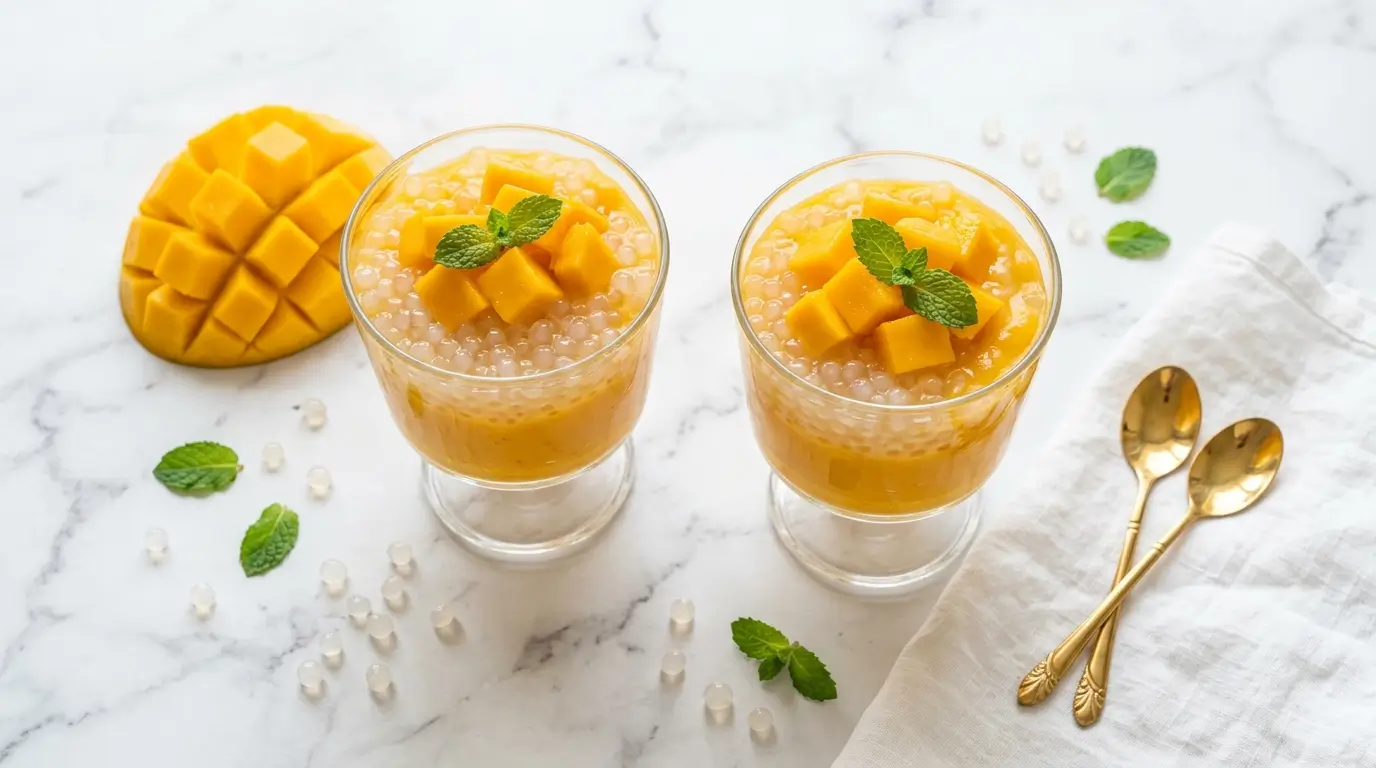
Mango sago is a beloved Asian dessert featuring tender tapioca pearls in a rich, creamy mango and coconut milk base. Originating from Hong Kong and popular throughout Southeast Asia, this chilled dessert combines the natural sweetness of ripe mangoes with the unique texture of sago pearls for a refreshing treat.
Four ingredients, 30 minutes, and a blender. That’s genuinely all it takes to make one of the most popular Asian desserts in the world at home — with results that rival what you’d find in a Hong Kong dessert shop. This recipe covers the classic version, the full mango pomelo sago variation, a drink format, and a make-ahead guide for entertaining.
What Is Mango Sago?
Mango sago is a Cantonese dessert originating from Hong Kong. It’s a type of “tong sui” — a sweet soup or custard served hot or cold at the end of a meal in Cantonese cuisine. Mango sago is made by blending together fresh mangoes, coconut milk and condensed milk and then adding tiny tapioca pearls or sago. It’s also common to add pomelo granules on top as a mango pomelo sago.
This Asian dessert was created in the 1980s by a Chinese restaurant, “Lei Garden”. The head chef created it for Singaporeans to cool off in the summer. Since its invention, it has swept Asia with its popularity.
What is the difference between sago and tapioca? Technically, sago and tapioca are different but the terms are often used interchangeably. Real sago is made from the starch of the sago palm whereas tapioca is made from the starch of the cassava root. Most desserts made with sago are actually referring to tapioca pearls, mainly because sago is difficult and expensive to produce. Tapioca has long been used as a substitute for real sago but the name “sago” has stuck over time.
Good news for anyone checking dietary restrictions: mini tapioca pearls are made from edible starch from the cassava root, shaped into tiny edible translucent spheres. They contain no gelatin, no animal products, and are fully vegan and halal by default — unlike many other dessert pearls that might be assumed to contain gelatin. For more on which foods contain hidden gelatin, the complete gelatin food guide covers this in detail.
Ingredients
For 4 servings:
- 3 large ripe mangoes (Ataulfo, Alphonso, Carabao, or Kent recommended)
- 400ml (1 can) full-fat coconut milk
- 2–3 tablespoons sweetened condensed milk (adjust to taste)
- ½ cup (80g) small tapioca pearls (2mm — NOT instant or large boba pearls)
- Optional: pomelo segments, fresh mint for garnish
Choosing the right mangoes: Use low-fiber varieties such as Carabao, Ataulfo, Alphonso, Nam Dok Mai, or Kent for the smoothest texture. Ataulfo (also called Champagne or Philippine mango) is the easiest to find in Western supermarkets and produces a silky, deeply flavored purée. Avoid fibrous varieties like Tommy Atkins for the blended base — the texture will be stringy rather than smooth.
Can I use frozen mango? Frozen mangoes may work — just be sure to let them defrost completely prior to using. The flavor is slightly less vibrant than fresh, but the result is still delicious and convenient year-round.
How to Make Mango Sago
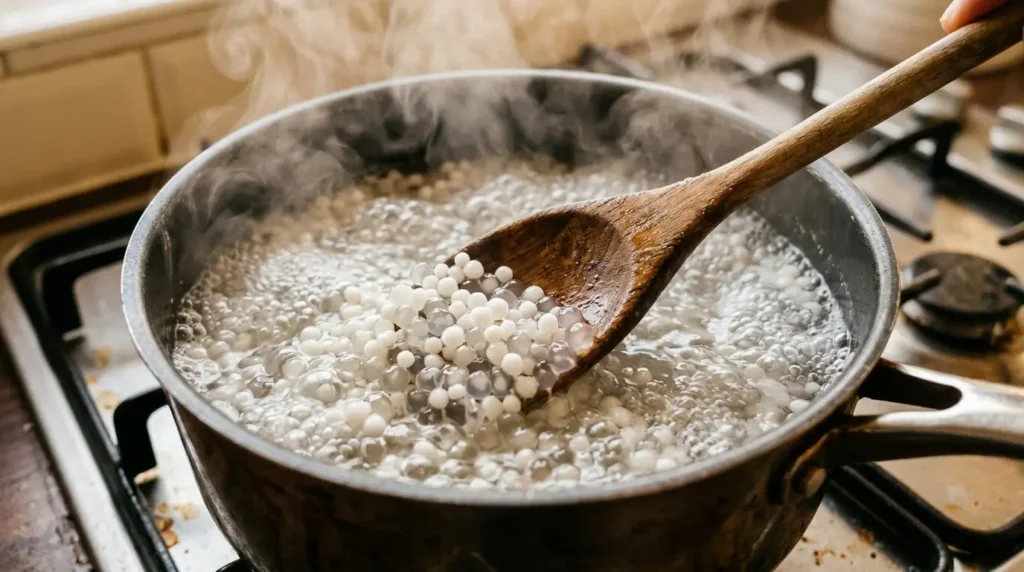
Step 1 — Cook the tapioca pearls
Boil a large pot of water. Once the water comes to a full boil, reduce to medium heat. Add sago and cook for 10 minutes. Stir frequently to prevent the sago from sticking together. Remove from heat and cover the pot lid to steep the sago for 15 minutes. This foolproof method will guarantee thoroughly cooked sago without the white center. The residual heat will continue cooking the sago.
Rinse cooked sago thoroughly with cold water to remove excess starch. This step is essential — it stops the cooking process and prevents the pearls from sticking together in a clump. Submerge the sieve with the cooked tapioca into a bowl of tap water to prevent the pearls from drying out while you prepare the rest.
Step 2 — Make the mango base
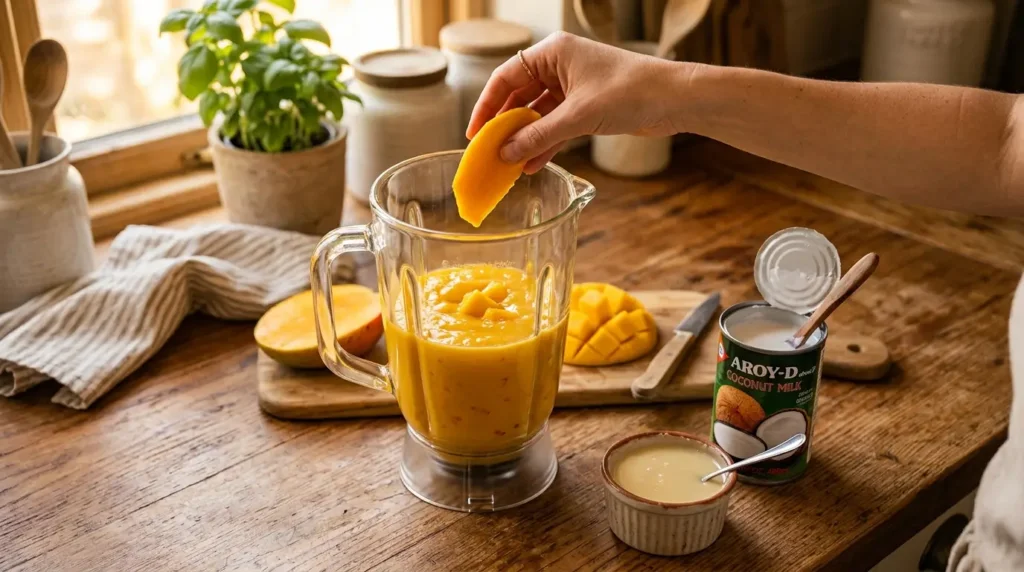
Peel and cut all three mangoes. Reserve one mango’s worth of cubes for the topping — these fresh chunks are what give the dessert its textural contrast.
Add the mango cubes to a blender along with the sweetened condensed milk and coconut milk. Blend until smooth and creamy. If the mixture is too thick, add a little more coconut milk until you reach your desired consistency.
Taste and adjust sweetness — if the mangoes are very ripe, you may not need to add any extra sugar. If you prefer a sweeter dessert, you can add sugar into your mango paste or serve the dessert with some syrup on the side.
Step 3 — Combine and chill
Drain the tapioca pearls and add them to the mango mixture. Stir gently to combine. Chill completely before serving for the most refreshing tropical experience. At least 30 minutes in the refrigerator, or up to 2 hours for best results.
Step 4 — Serve
Serve in clear glasses to showcase the beautiful orange color and sago pearls. Top with reserved fresh mango cubes and a drizzle of coconut milk. Add pomelo segments and mint if desired.
The Most Common Mistake: Overcooked or Undercooked Pearls
Sometimes package instructions are not accurate, and the sago balls are either undercooked with a white centre or overcooked and mushy.
Undercooked (white centre remains after resting): Return to simmering water for 3-5 minutes, then rest covered again. Don’t rush with high heat — it makes the outside mushy before the centre cooks.
Overcooked (mushy, falling apart): This is harder to fix. Next time, check earlier and shorten the resting time. The pearls should be just translucent with tiny white centers for perfect chewiness when you drain them — they’ll finish in the residual heat of the covered pot.
Clumping together: Rinsing the cooked tapioca in cold water and straining well before assembly keeps the pearls separate and prevents sticking. Don’t skip this step.
Mango Pomelo Sago (楊枝甘露)
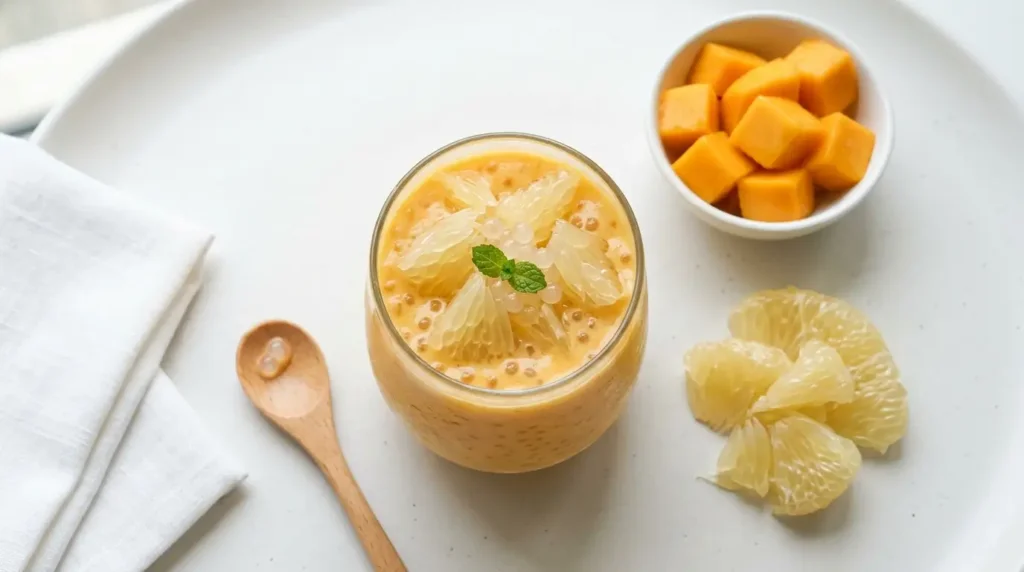
The full Hong Kong dessert shop version adds pomelo — the large citrus fruit with pale yellow or pink segments that provide a tart, refreshing counterpoint to the sweet mango base.
A lot of dessert shops also use pomelo pulp in this dessert. To prepare pomelo: peel the fruit, remove the bitter white pith from each segment, and break the flesh into individual sacs — small translucent juice-filled pockets that scatter beautifully through the dessert.
Add pomelo sacs at the assembly stage alongside the fresh mango cubes. The ratio: roughly 1 cup of pomelo sacs for a 4-serving batch. If pomelo is unavailable, grapefruit segments (peeled and broken into sacs) provide a similar citrus contrast.
Mango Sago Drink Version (+90% trending)
The drink format — thinner, more pourable, served in tall glasses — is the fastest-growing search term this week.
To make mango sago as a drink:
- Increase coconut milk to 600ml (instead of 400ml)
- Reduce tapioca pearls to ¼ cup
- Blend the mango base as normal
- Combine and pour over ice in tall glasses
- Add a wide straw for the pearls
The result is closer to a mango boba drink than a dessert — refreshing, portable, and less filling. Serve immediately since the pearls absorb liquid and soften quickly when submerged.
Mango Sticky Rice vs Mango Sago
Both trending this week (+70% for mango sticky rice) — here’s the quick distinction:
| Mango Sago | Mango Sticky Rice | |
|---|---|---|
| Origin | Hong Kong (Cantonese) | Thailand |
| Base | Coconut milk + mango purée | Glutinous rice + coconut milk |
| Texture | Creamy liquid with chewy pearls | Firm sticky rice with sliced mango |
| Served | Cold, dessert soup style | Room temperature or warm |
| Prep time | 30 minutes | 2+ hours (rice soaking) |
| Pearls | Yes | No |
Both are excellent summer desserts — mango sago is quicker and doesn’t require advance planning.
Make-Ahead and Storage
For making ahead, store the sago, coconut milk, and mango mixture in separate containers to preserve the chewy texture. Prepare up to 1 day in advance.
Leftover mango sago can keep for 2-3 days refrigerated in an airtight container. Do note that each day, the tapioca pearls tend to become less chewy over time as they sit longer in the mango mixture.
For entertaining: Prepare the mango-coconut base and the pearls separately the day before. Store the pearls submerged in cold water in the fridge. Combine just before serving — this preserves the best pearl texture for guests.
Freezer: Mango sago is not ideal for freezing because the sago will change in texture. Freeze only if necessary — thaw overnight in the fridge and stir well before serving, accepting that the pearls will be softer than fresh.
Frequently Asked Questions
What is mango sago made of?
Mango sago features tender tapioca pearls in a rich, creamy mango and coconut milk base. The four core ingredients are fresh mango, coconut milk, condensed milk, and small tapioca pearls. Pomelo, mint, and additional coconut milk are common optional additions.
Is mango sago vegan?
The base recipe with condensed milk is not vegan. To make it vegan, substitute condensed coconut milk for sweetened condensed milk and ensure the coconut milk is dairy-free (it always is). Use half coconut milk plus a quarter cup plant-based milk to replace evaporated milk if you want to make this dish vegan.
What type of tapioca pearls should I use?
Small 2mm tapioca pearls — not instant tapioca, not large boba pearls. Do not use instant or minute tapioca. Recommended brands include EFE, Cock Brand, or Bob’s Red Mill small tapioca pearls. Find them at Asian supermarkets or online.
Can I make mango sago without coconut milk?
Yes — substitute evaporated milk, whole milk, or heavy cream. Using evaporated milk gives you control of the sweetness by adding natural sweeteners instead. The coconut flavor will be absent but the creamy texture remains.
Why are my pearls clumping?
Rinsing the cooked tapioca in cold water and straining well before assembly keeps the pearls separate and prevents sticking. If they clump after mixing into the mango base, gently stir with a spoon — they’ll separate again in the liquid.
How long does mango sago last?
Store covered in the refrigerator for up to 3 days. Stir gently before serving as ingredients may separate naturally during storage. For best texture, consume within 2 days when the pearls are still pleasantly chewy.
The Bottom Line
Mango sago is one of those recipes that looks impressive but genuinely takes 30 minutes and four ingredients. The technique is almost entirely in the pearl cooking — get that right and the rest assembles in minutes.
The sweet creamy fruity base loaded with gooey tapioca pearls is a magical combination — the dessert immediately became a favorite for millions across Asia and is now making its way into home kitchens worldwide.
The peak season for this dessert is May through July, when mangoes are at their sweetest and most affordable. Make it now while the fruit is at its best — and if you want the full Hong Kong experience, add the pomelo.
Recipe adapted from traditional Hong Kong Cantonese dessert technique.