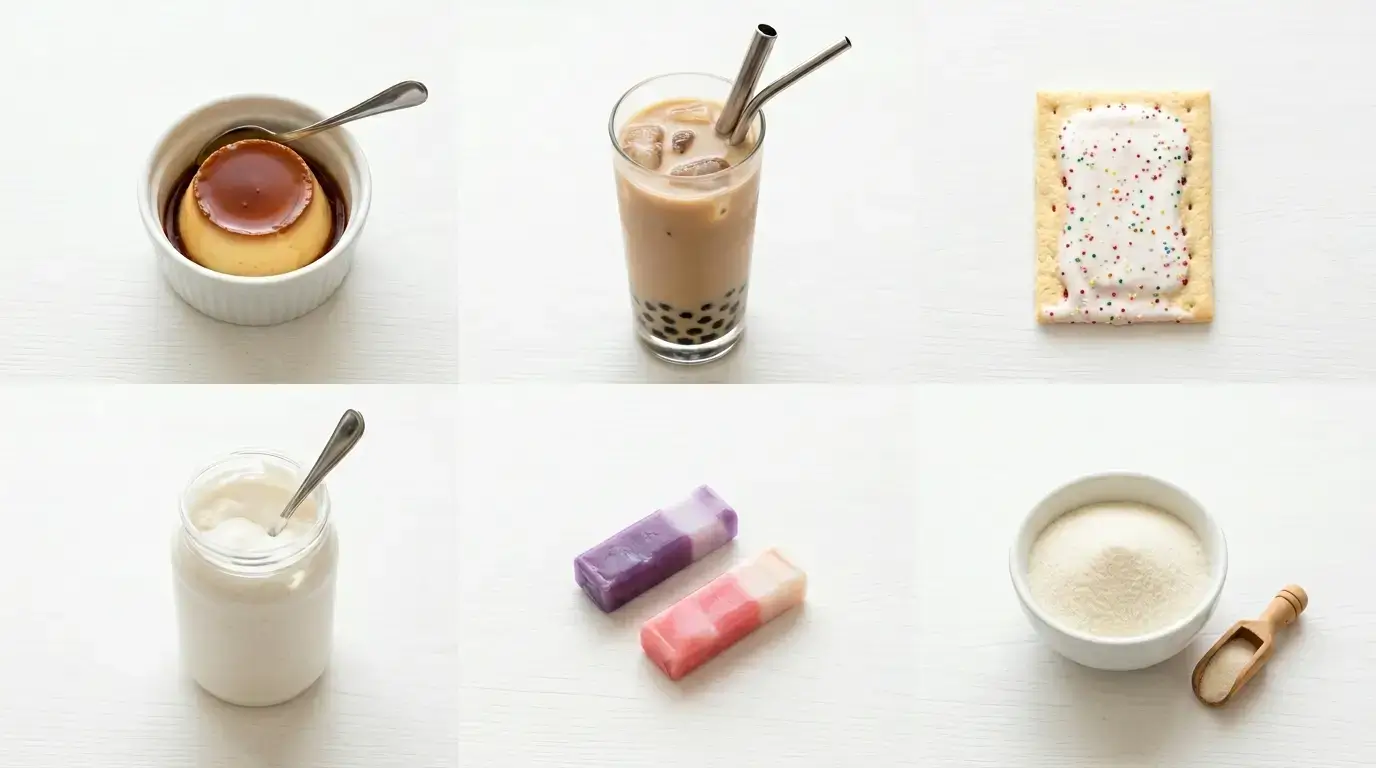
Gelatin shows up in far more foods than most people expect — and the questions have been multiplying fast. Does flan have gelatin? What about boba? Marshmallow fluff? Pop-Tarts? Hi-Chew?
These questions matter for different reasons depending on who’s asking. For Muslims following halal guidelines, gelatin sourced from pork is prohibited. For vegans and vegetarians, all animal-derived gelatin is off the table. For people with dietary restrictions or allergies, knowing what’s in everyday foods is simply a matter of informed choice.
This guide answers each question directly, with the ingredient evidence, and points you toward the best alternatives where gelatin is a concern. For candy specifically — Starburst, gummy bears, Skittles, Peeps, and others — the complete candy gelatin guide covers that territory in full.
What Is Gelatin and Where Does It Come From?
Before diving into specific foods, a quick grounding in what gelatin actually is — because it matters when evaluating ingredients lists.
Gelatin is a protein derived from the collagen found in animal bones, skin, and connective tissue. It’s extracted through a prolonged boiling process that breaks collagen down into its component proteins, which then form a gel when cooled. The result is flavorless, colorless, and odorless — which is why it hides so effectively in processed foods.
Sources of gelatin:
- Pork (porcine) — the most common source globally, used in the majority of commercial gelatin products
- Beef (bovine) — used in halal-certified and kosher products
- Fish (marine) — used in some specialty and religious dietary products
- Chicken — less common, used in some Asian food manufacturing
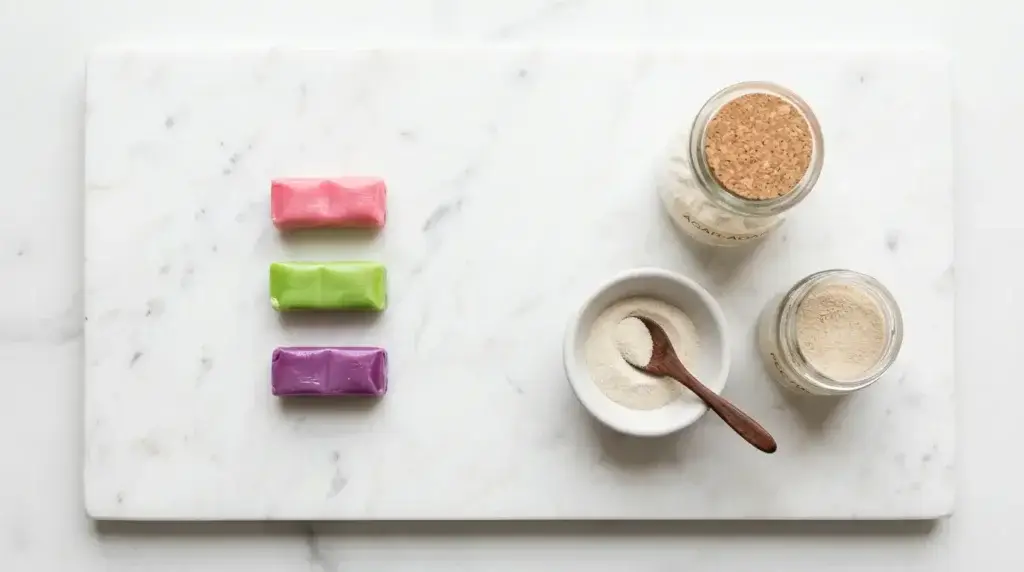
Plant-based alternatives (agar-agar, pectin, carrageenan, konjac) produce similar gelling effects without animal products. The complete halal gelatin guide covers these in detail, and vegan gelatin substitutes explains which works best for which applications.
The key question with most of the foods below is not just whether they contain gelatin, but what kind — because for religious and dietary reasons, the source matters as much as the presence.
Does Flan Have Gelatin?
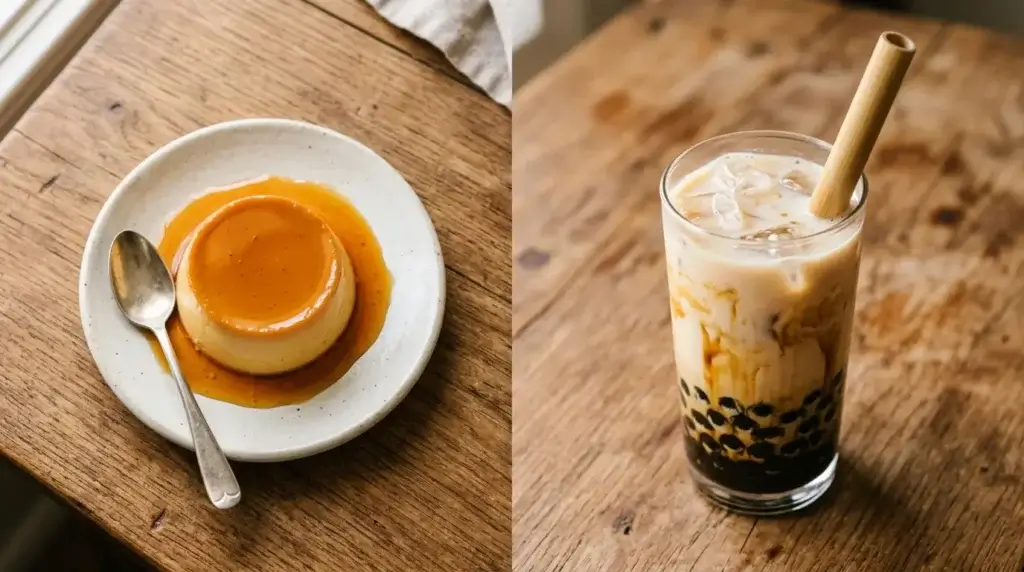
Traditional flan: No.
Classic flan — whether the Spanish flan de huevo or the Latin American flan de leche — is set with eggs, not gelatin. The custard texture comes from the protein network that forms when eggs are heated gently in a milk and sugar base. No gelatin required, and traditional recipes don’t contain any.
Gelatin-style flan variations: Sometimes yes.
Where things get complicated is in the modern variants:
- Instant flan mixes (boxed products) often use a gelatin or carrageenan base to produce a firmer, more stable texture that sets at room temperature rather than requiring baking. Always check the ingredients on boxed mixes.
- Restaurant desserts labeled as “flan” but served with a very firm, uniform, sliceable texture are often made with gelatin or agar-agar rather than traditional egg custard — particularly in Asian-influenced restaurants.
- No-bake flan recipes found online almost universally use gelatin as the setting agent.
How to tell: If flan is baked in a water bath and has a slightly wobbly, custard-like consistency, it’s likely egg-set. If it’s very firm, perfectly uniform, and served cold from a refrigerator with no indication of baking, it likely contains gelatin or a plant-based equivalent.
For halal or vegan diners: Traditional egg-based flan is both halal and suitable for lacto-ovo vegetarians. Verify with the restaurant or check packaged product labels if you’re uncertain about the setting agent.
Does Boba Have Gelatin?
Standard tapioca boba pearls: No.
The large, chewy black pearls in classic bubble tea are made from tapioca starch extracted from the cassava root. No animal products, no gelatin. They’re vegan by default, and halal by default.
Popping boba: No.
Popping boba (the liquid-filled spheres that burst in your mouth) are made through a process called spherification using sodium alginate and calcium chloride — both plant-derived compounds. No gelatin involved.
Jelly toppings: Sometimes yes.
This is where it gets nuanced. Boba shops frequently offer jelly toppings alongside the standard pearls:
- Coconut jelly — typically made with agar-agar or carrageenan. Vegan. Halal.
- Lychee jelly, strawberry jelly — usually agar-based. Usually vegan.
- Grass jelly (xiancao) — made from a Chinese herb. Vegan. Halal.
- Coffee jelly — sometimes made with gelatin, sometimes with agar. Ask or check.
- Custard pudding topping — may contain gelatin depending on the recipe.
The bottom line: Standard tapioca pearls and popping boba contain no gelatin. If you’re ordering toppings, the safest default for halal or vegan diners is coconut jelly, lychee jelly, or grass jelly — and asking specifically about coffee jelly or custard-based options.
Does Marshmallow Fluff Have Gelatin?
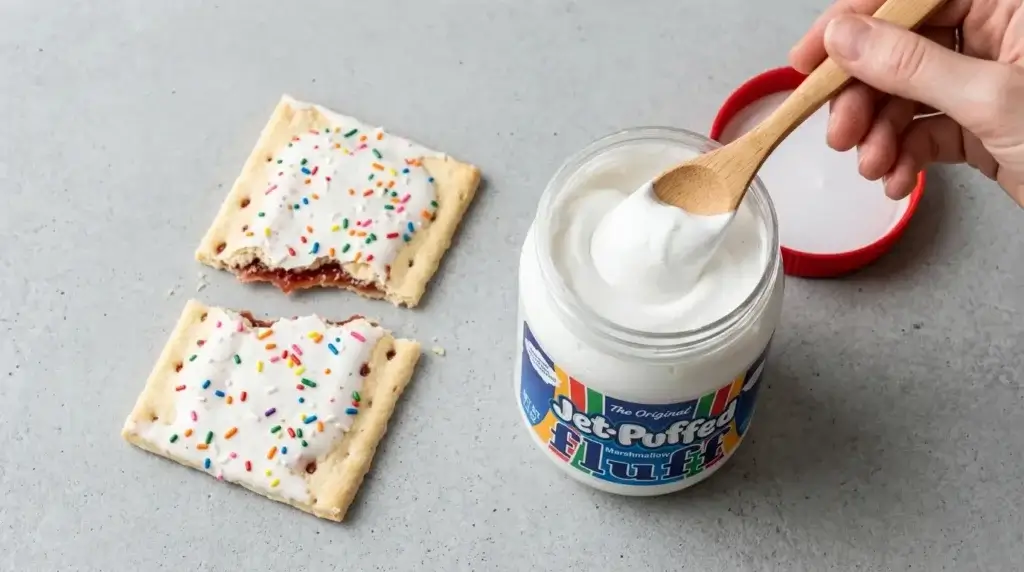
Marshmallow Fluff (the Jet-Puffed spread): No.
This surprises most people, because regular marshmallows do contain gelatin. Marshmallow Fluff — the spreadable product — uses a different formula. The classic Jet-Puffed Marshmallow Creme achieves its texture with egg whites and corn syrup rather than gelatin.
Ingredient check (Jet-Puffed Marshmallow Creme): Corn syrup, sugar, dried egg whites, cream of tartar, vanilla. No gelatin listed.
However — and this is important — this makes it unsuitable for vegans (egg whites) even though it contains no gelatin. For halal consumers, it is generally considered permissible since the egg whites used are from conventionally raised chickens, though some scholars may advise confirming the specific production facility.
Other marshmallow spreads and fluffs: Not all brands follow the same formula. Some store-brand marshmallow spreads may use gelatin. Always verify the specific product’s ingredient list.
Regular marshmallows (not fluff): Standard puffed marshmallows (Jet-Puffed, Campfire, etc.) do contain pork gelatin. This is one of the most common hidden gelatin sources — relevant for both halal dietary observance and vegan eating. The candy gelatin guide covers marshmallow products in full.
Do Pop-Tarts Have Gelatin?
Yes — in the frosting.
Pop-Tarts are one of the more surprising items on this list. The pastry itself (dough and fruit filling) does not contain gelatin. However, the frosted varieties use gelatin in the frosting as a binding and texture agent.
Kellogg’s has confirmed this across multiple consumer inquiries. The frosting on standard Pop-Tarts contains pork-derived gelatin.
Unfrosted Pop-Tarts: Gelatin-free.
The unfrosted varieties — Unfrosted Strawberry, Unfrosted Blueberry, Unfrosted Brown Sugar Cinnamon — do not contain gelatin. For halal consumers or vegetarians, unfrosted is the clear choice.
Halal and vegan Pop-Tart alternatives: Several brands produce gelatin-free frosted pastries. Bobo’s Oat Bars and some organic toaster pastry brands use plant-based ingredients throughout. Check labels for carrageenan or pectin-based frosting.
This is a meaningful distinction for Muslim consumers specifically, since Pop-Tarts are a common breakfast and snack item — and the pork gelatin source is not prominently disclosed on packaging.
Do Hi-Chews Have Gelatin?
Yes — and it’s pork-derived in most markets.
Hi-Chew, the Japanese chewy candy made by Morinaga, contains gelatin as a key ingredient in its distinctive texture. In the United States and most international markets, the gelatin used is pork-derived (porcine gelatin).
Hi-Chew’s official FAQ has confirmed this: the gelatin in Hi-Chew sold outside Japan is from pork.
This is significant for halal dietary observance, for Jewish consumers keeping kosher, and for anyone avoiding pork products. Hi-Chew has a devoted following, particularly among teens and young adults — and many consumers are unaware of the gelatin content because the product isn’t traditionally associated with gelatin in the way gummies are.
In Japan: Some Hi-Chew varieties produced for the domestic Japanese market use different gelatin sources. However, products imported to the US and other Western markets use pork gelatin unless otherwise specified.
Halal Hi-Chew alternatives: Lotte Chews (a Korean brand) and several halal-certified Asian chewy candy brands offer similar textures. Look for products with halal certification logos, or those specifying bovine or fish gelatin.
For the broader halal candy question, the halal gelatin guide covers certification standards, bovine alternatives, and how to identify compliant products.
Does Boba (Bubble Tea) Have Pork Gelatin? The Full Picture
Revisiting boba with the halal lens specifically — because the original boba pearls are fine, but the full drink experience requires a closer look.
Tapioca pearls: Halal. No animal products. Popping boba: Halal. Plant-derived spherification. Milk tea base: Generally halal — check whether non-dairy alternatives use any animal-derived additives. Jelly toppings: Variable. Agar-based jellies are halal; any gelatin-based jellies need source verification. Pudding or custard toppings: Often contain gelatin — source varies by shop.
The safest boba order for halal consumers: classic milk tea with tapioca pearls, no additional toppings, or with coconut jelly or grass jelly confirmed as agar-based.
Quick Reference: Does It Have Gelatin?
| Food | Gelatin? | Source | Notes |
|---|---|---|---|
| Traditional flan | ❌ No | — | Egg-set custard |
| Boxed/instant flan mix | ⚠️ Sometimes | Varies | Check label |
| Boba (tapioca pearls) | ❌ No | — | Cassava starch |
| Boba jelly toppings | ⚠️ Sometimes | Varies | Agar or gelatin |
| Marshmallow Fluff | ❌ No | — | Egg white based |
| Regular marshmallows | ✅ Yes | Pork | Hidden source |
| Pop-Tarts (frosted) | ✅ Yes | Pork | In frosting only |
| Pop-Tarts (unfrosted) | ❌ No | — | Safe alternative |
| Hi-Chew (US/intl) | ✅ Yes | Pork | Confirmed by brand |
What About the Gelatin Trick?
If you’ve arrived here through a search about gelatin and weight loss, the foods above are not the gelatin you’re looking for. The gelatin used in the gelatin trick for weight loss is unflavored gelatin — a pure collagen protein product used as a dietary supplement before meals to stimulate GLP-1 and support natural appetite control.
The Knox gelatin guide covers the most widely available unflavored gelatin brand in the US, including how to use it, where to buy it, and how it fits into the 7-day gelatin diet plan.
Unflavored gelatin for weight management is a completely different use case from the decorative or binding gelatin found in the foods covered in this article.
Halal and Vegan Alternatives Summary
For anyone who needs to avoid conventional pork gelatin across all these food categories:
Baking and desserts (flan, custard): Use agar-agar for firm set desserts, or simply rely on eggs for custard-style preparations. Agar sets firmer than gelatin — use about 60% of the amount called for.
Marshmallow fluff substitutes: Aquafaba (chickpea water) whipped with cream of tartar produces a vegan marshmallow-like spread. Several commercial vegan marshmallow creams are available at specialty retailers.
Pastry frosting: Look for toaster pastries made with pectin or carrageenan-based frosting. Some health food brands produce gelatin-free frosted pastries.
Chewy candy alternatives: Lotte Chews, YumEarth organic chews, and various halal-certified Asian candy brands offer similar textures without pork gelatin.
The complete vegan gelatin substitutes guide breaks down which plant-based alternative works best for each application — with ratios and substitution guidelines for cooking and baking.
Frequently Asked Questions
Does flan always have gelatin?
Traditional baked flan made with eggs does not contain gelatin. Boxed flan mixes, no-bake flan recipes, and restaurant flan with an unusually firm texture may use gelatin or agar-agar as the setting agent. Check labels or ask when uncertain.
Are boba pearls halal?
Standard tapioca boba pearls are halal — they’re made from cassava starch with no animal products. Popping boba is also halal. Some jelly toppings may contain gelatin — confirm the source if this is a concern.
Does marshmallow fluff have pork?
No. Marshmallow Fluff (Jet-Puffed brand) uses egg whites, not gelatin. However it is not vegan due to the egg content. Regular puffed marshmallows do contain pork gelatin — the two products are fundamentally different despite the similar name.
Is the gelatin in Pop-Tarts pork?
Yes. Kellogg’s has confirmed that the frosting in frosted Pop-Tarts contains pork-derived gelatin. Unfrosted varieties are gelatin-free.
Do all Hi-Chew flavors have gelatin?
All Hi-Chew products sold in the US and most international markets contain pork gelatin, regardless of flavor. This is confirmed in Morinaga’s official FAQ.
What is the easiest way to avoid hidden gelatin?
Look for products labeled halal-certified (for bovine gelatin) or vegan-certified (for plant-based alternatives). For specific ingredient concerns, the halal gelatin guide provides brand-by-brand guidance across multiple food categories.
Does boba contain pork?
Standard tapioca pearls contain no animal products at all. For pork gelatin specifically, the risk in boba drinks comes from certain jelly toppings or pudding bases — not from the pearls or the tea itself.
The Bottom Line
Gelatin appears in more everyday foods than most people realize — and the source (pork, beef, fish, or plant-based) is rarely disclosed prominently on packaging. The key takeaways:
- Traditional flan and standard boba pearls contain no gelatin
- Marshmallow Fluff is gelatin-free (but not vegan)
- Frosted Pop-Tarts contain pork gelatin — unfrosted do not
- Hi-Chew contains pork gelatin in all US/international varieties
- Boba jelly toppings vary — agar-based versions are safe for all diets
For the candy side of this question — Starburst, gummy bears, Skittles, Peeps, and more — the complete candy gelatin guide has the full breakdown.
And if you arrived here researching gelatin for weight loss rather than dietary restrictions, the gelatin trick recipe and bariatric gelatin approach are the relevant starting points — using unflavored collagen gelatin as a natural appetite-support tool before meals.
This article is for informational purposes only. Ingredient formulations change — always verify current labels before purchasing, particularly for religious dietary compliance.