
A good rhubarb crumble recipe comes down to getting two things right: a filling that’s tart but not mouth-puckering, and a topping that bakes up genuinely crisp rather than pasty or dry. This version keeps things simple — a short ingredient list, no fancy technique — and delivers the classic contrast of soft, tangy rhubarb under a buttery, golden crumble.
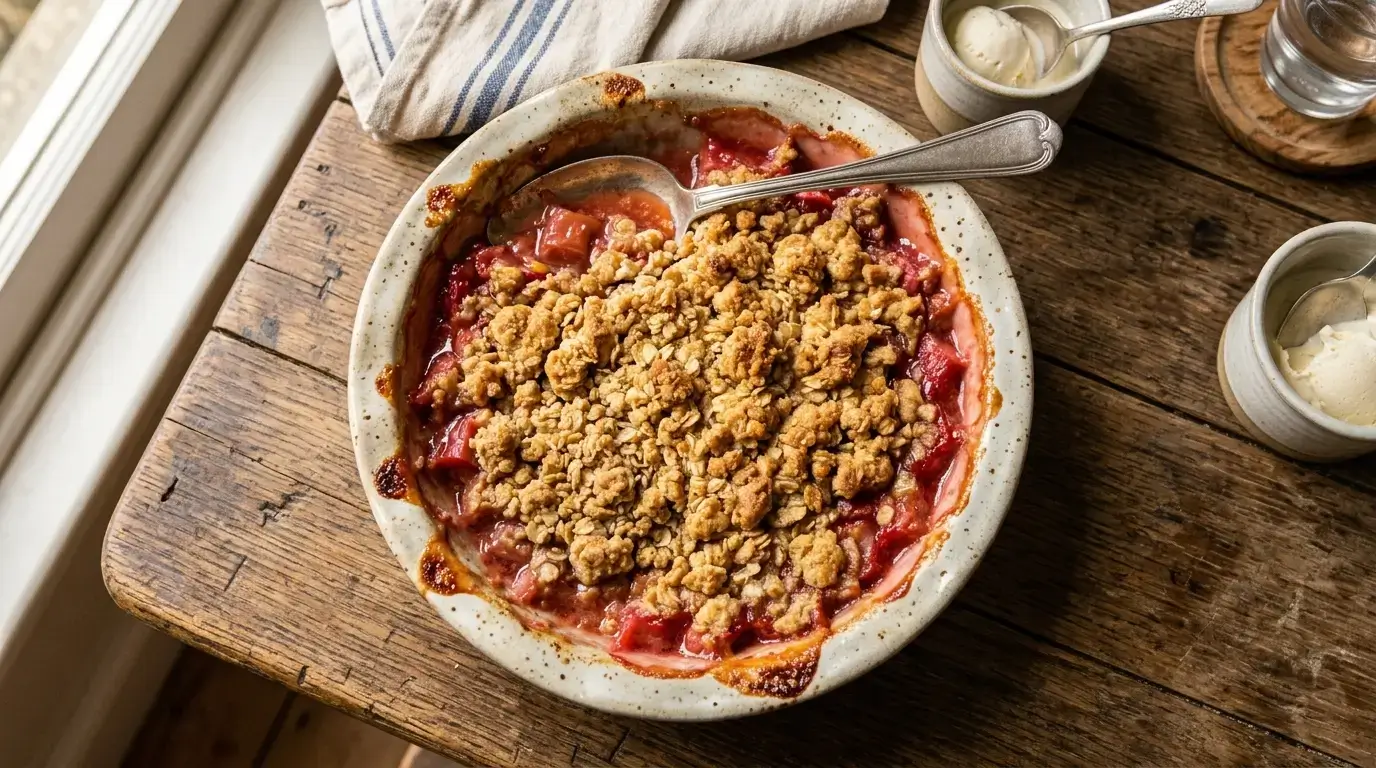
Rhubarb Crumble
A classic rhubarb crumble with a buttery, golden topping and a tart-sweet filling — simple ingredients, ready in under an hour.
Ingredients
For the filling:
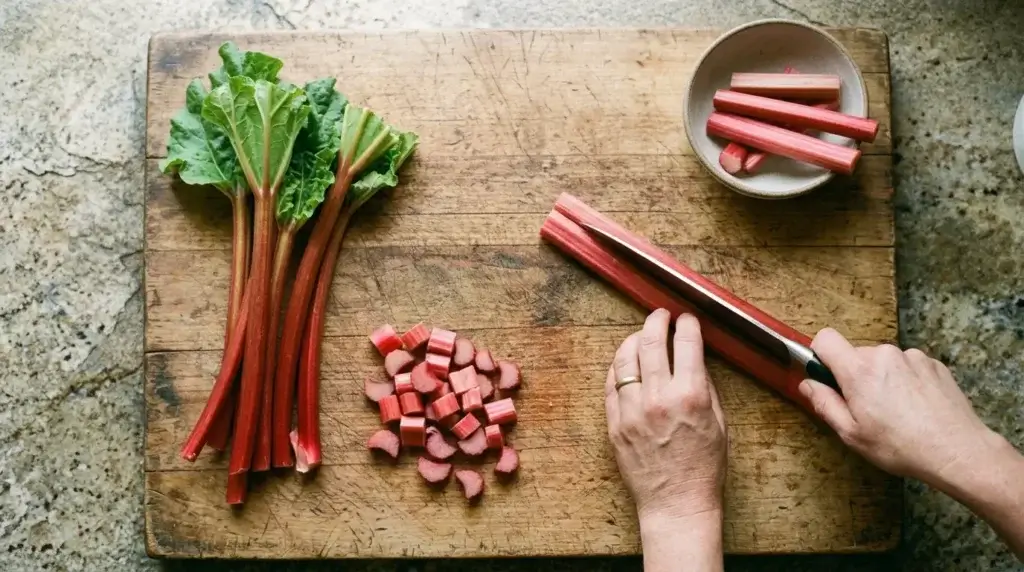
- 500g (about 4-5 cups) fresh rhubarb, trimmed and cut into 1-inch pieces
- 100g (1/2 cup) granulated sugar
- 1 tablespoon orange or lemon juice
- 1 tablespoon cornstarch
For the crumble topping:
- 200g (1 1/2 cups) all-purpose flour
- 100g (7 tablespoons) cold butter, cubed
- 100g (1/2 cup) demerara or light brown sugar
- 1/2 teaspoon ground cinnamon (optional)
- Pinch of salt
Instructions
- Preheat the oven to 180°C (350°F).
- In a baking dish, combine the chopped rhubarb, sugar, citrus juice, and cornstarch. Toss until evenly coated.
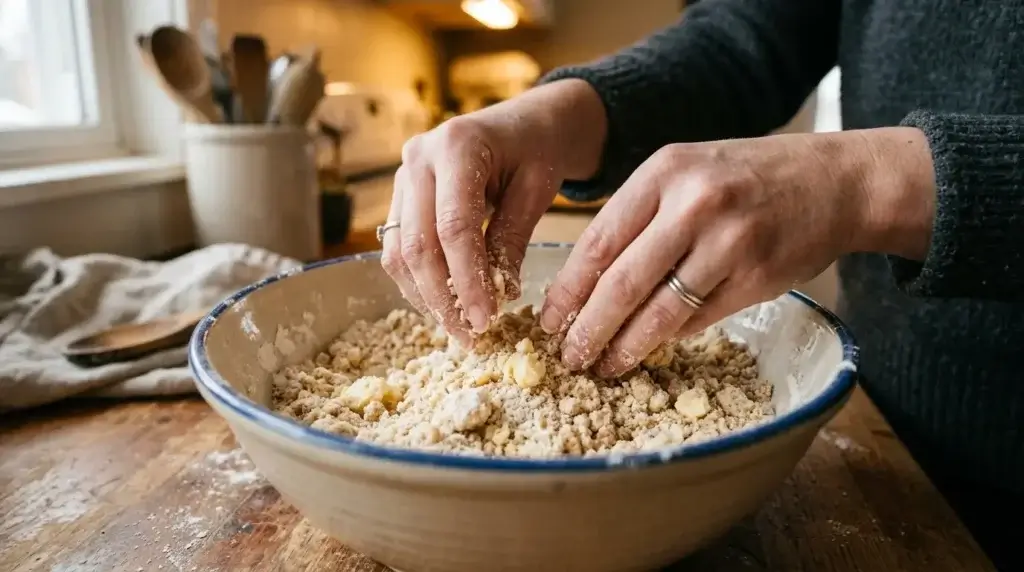
- In a separate bowl, combine the flour, salt, and cinnamon (if using). Add the cold, cubed butter and rub it into the flour with your fingertips until the mixture resembles coarse breadcrumbs.
- Stir the demerara sugar into the crumble mixture.
- Sprinkle the crumble topping evenly over the rhubarb filling, without pressing it down.
- Bake for 35-40 minutes, until the topping is deep golden brown and the filling is bubbling at the edges.
- Cool for about 10 minutes before serving warm.
Notes
Only use the pink or red rhubarb stalks — the leaves are toxic and must always be trimmed away and discarded before cooking. Keep the butter cold for the best crumble texture, and taste your rhubarb before baking, since early-season “forced” rhubarb is naturally sweeter than later-season stalks.
Nutrition (per serving, approx.)
240 calories · 2g protein
Why Rhubarb Crumble Works So Well
Rhubarb is naturally quite sour on its own, which is exactly what makes it such a good crumble filling — the tartness balances beautifully against a sweet, buttery topping in a way that milder fruits can’t quite match. A little sugar softens the edge without erasing the tang entirely, which is the balance to aim for rather than a fully sweet filling.
Ingredients
For the filling:
- 500g (about 4-5 cups) fresh rhubarb, trimmed and cut into 1-inch pieces
- 100g (1/2 cup) granulated sugar
- 1 tablespoon orange or lemon juice
- 1 tablespoon cornstarch (helps thicken the juices released during baking)
For the crumble topping:
- 200g (1 1/2 cups) all-purpose flour
- 100g (7 tablespoons) cold butter, cubed
- 100g (1/2 cup) demerara or light brown sugar
- 1/2 teaspoon ground cinnamon (optional)
- Pinch of salt
Step-by-Step Instructions
- Preheat the oven to 180°C (350°F).
- Prepare the filling. In a baking dish (roughly 9×9 inches or similar), combine the chopped rhubarb, sugar, citrus juice, and cornstarch. Toss until evenly coated.
- Make the topping. In a separate bowl, combine the flour, salt, and cinnamon (if using). Add the cold, cubed butter and rub it into the flour with your fingertips until the mixture resembles coarse breadcrumbs — some pea-sized clumps are fine and actually give a better texture than an overly fine mix.
- Add the sugar. Stir the demerara sugar into the crumble mixture.
- Assemble. Sprinkle the crumble topping evenly over the rhubarb filling — don’t press it down, just scatter it loosely so it bakes up with texture rather than compacting into a dense layer.
- Bake for 35-40 minutes, until the topping is deep golden brown and the filling is visibly bubbling up around the edges.
- Cool slightly before serving — about 10 minutes lets the filling set a bit so it doesn’t run everywhere, though it’s still meant to be served warm.
Tips for Getting It Right
- Keep the butter cold. Warm butter blends into the flour instead of creating distinct crumbly clumps, which is what gives the topping its texture. If your kitchen is warm, pop the butter-flour mixture in the fridge for 10 minutes before baking.
- Don’t skip the cornstarch. Rhubarb releases a lot of liquid as it bakes, and without a thickener, the filling can turn watery instead of jammy.
- Taste your rhubarb before deciding on sugar. Early-season “forced” rhubarb (pale pink, usually available late winter) is naturally sweeter and less acidic than the thicker, greener stalks that show up later in the season — you may want to adjust the sugar slightly either way.
- Add oats for extra texture. Swapping 30-40g of the flour for rolled oats gives the topping a heartier, slightly chewier crunch, if you prefer that over an all-flour crumble.
A Quick Safety Note: Only Use the Stalks
This is worth saying clearly: rhubarb leaves are toxic and should never be eaten. They contain a concentrated amount of oxalic acid, which can cause serious illness if consumed in any real quantity. Only the pink or red stalks are edible — always trim and discard the leaves completely before cooking, and if you’re harvesting rhubarb from a garden, make sure any leaves are kept well away from where you’re preparing food.
Is Rhubarb a Fruit or a Vegetable?
A fun fact worth knowing while you’re cooking with it: rhubarb is botanically a vegetable, not a fruit. It’s a member of the same plant family as buckwheat, and only the stalks are used, much like celery. The reason it’s almost always treated as a fruit in cooking — paired with sugar, baked into pies and crumbles — comes down to a 19th-century U.S. customs ruling that classified it as a fruit for tariff purposes, based on how it was actually used in the kitchen rather than its botanical family. Culinarily, it behaves like a fruit; botanically, it’s a vegetable.
Frequently Asked Questions
Can I use frozen rhubarb instead of fresh?
Yes — frozen rhubarb works well in this recipe. There’s no need to thaw it first; just add an extra 5-10 minutes to the baking time, since the frozen filling will take slightly longer to bubble through.
Why is my crumble topping soggy instead of crisp?
This usually means either the butter was too warm when mixed in, or the filling released too much liquid without enough cornstarch to absorb it. Make sure the butter is cold and don’t skip the thickener.
Can I make this ahead of time?
You can prepare the filling and the crumble topping separately up to a day ahead and store them covered in the fridge, then assemble and bake just before serving for the best texture.
What pairs well with rhubarb crumble?
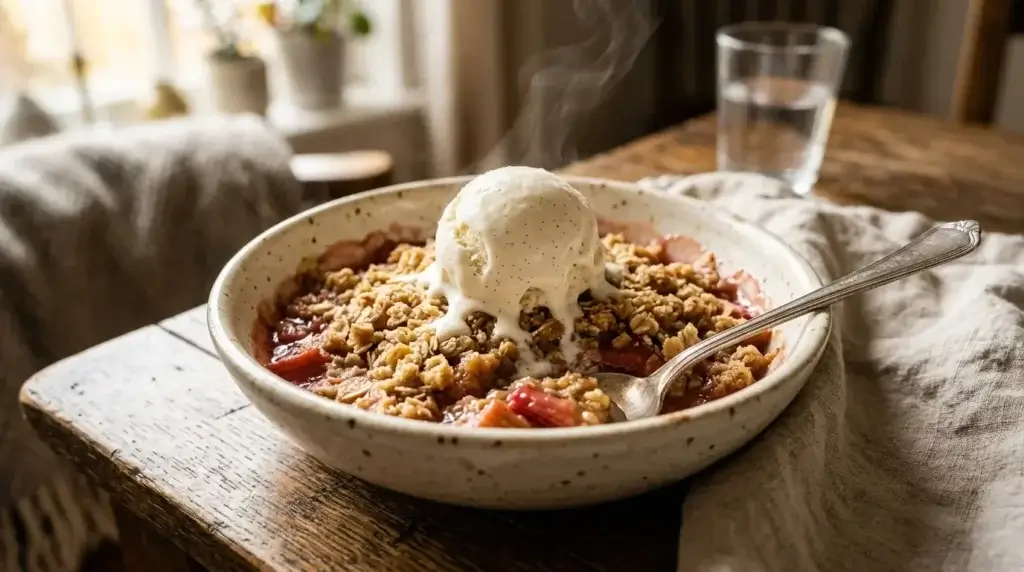
Classic options are custard, vanilla ice cream, or a spoonful of cream — all of which soften the tartness and add a rich contrast to the crumble topping.
Can I mix rhubarb with other fruit in this recipe?
Yes — strawberries and apples are the most common pairings, and both work well with the same ratios; just reduce the rhubarb slightly to make room for the added fruit.
Disclaimer: Always remove and discard rhubarb leaves before cooking — they are toxic and should never be consumed.
If you’re looking for more ways to use rhubarb, this crumble pairs nicely as a dessert alongside a full meal — for something savory to start, see our black bean soup recipe or ham bone and vegetable soup for a comforting pairing during rhubarb season.