
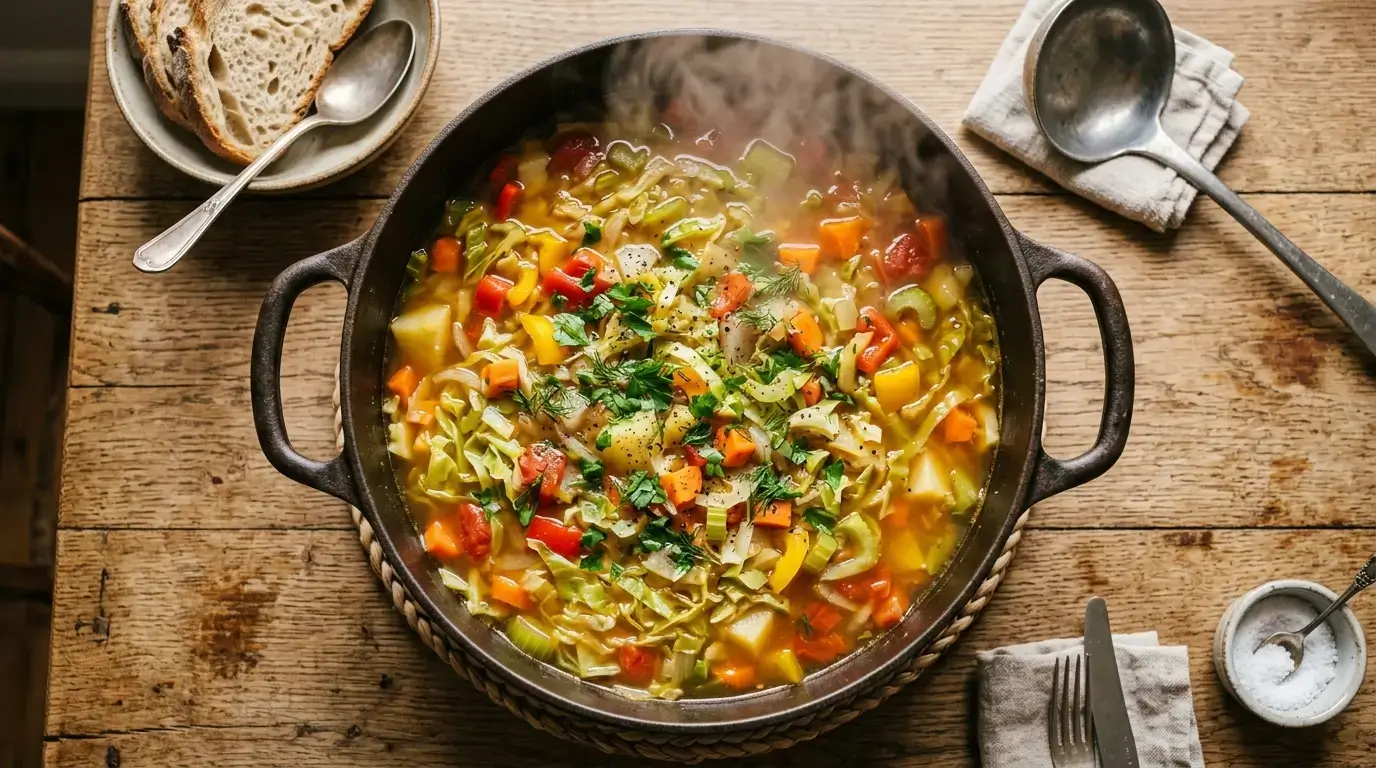
This cabbage soup diet recipe is a vegetable soup made with green cabbage, carrots, celery, onion, peppers, tomatoes, broth, and herbs. Soften the aromatics in measured olive oil, add the remaining ingredients, and simmer until the cabbage is tender. Serve it as part of a varied meal rather than following a soup-only weight-loss plan.
The recipe below makes eight portions, each defined as one-eighth of the finished pot. It includes vegetable weights to make preparation more repeatable, practical serving ideas, and storage instructions. The phrase cabbage soup diet describes the search topic; the soup does not burn fat or guarantee a particular change on the scale.
Go to the ingredient list, the cooking method, or the printable recipe. Cooking time and finished volume are estimates.
Cabbage Soup Recipe at a Glance
| Detail | This recipe |
|---|---|
| Servings | 8 equal portions |
| Main vegetable | 1 kg prepared green cabbage |
| Liquid | 8 U.S. cups low-sodium vegetable broth |
| Cooking fat | 2 tablespoons olive oil for the pot |
| Preparation | Approximately 20 minutes |
| Cooking | Approximately 35 minutes |
| Total | Approximately 55 minutes |
| Serving definition | One-eighth of the finished soup |
The total includes chopping a substantial quantity of vegetables. Heating time varies with the saucepan and stove. Use tenderness as the final cooking check rather than assuming every batch finishes at exactly the same minute.
What Makes a Good Cabbage Soup Diet Recipe?
If you are searching for the best cabbage soup diet recipe, useful features include clear quantities, a flavorful broth, tender vegetables, and a serving definition you can actually measure. A recipe does not become better because it promises unlimited portions or a dramatic seven-day result.
This version uses garlic, oregano, basil, and tomatoes for flavor. The cabbage is cut into manageable pieces so a spoonful can contain several vegetables. A measured amount of oil helps soften the aromatics before the liquid goes in.
The soup is a flexible vegetable base. Choose accompaniments according to the meal you want, and include them when assessing its nutrition. For other practical meal ideas, explore our high-protein high-fiber meals.
Cabbage Soup Ingredients
For eight portions
- 1 kg green cabbage, weighed after removing the core and damaged outer leaves, chopped
- 160 g celery, sliced
- 200 g onion, diced
- 300 g bell peppers, stems and seeds removed, diced
- 300 g carrots, trimmed and sliced
- 4 garlic cloves, minced
- 1 can diced tomatoes, approximately 400 g, including the juice
- 8 U.S. cups low-sodium vegetable broth, approximately 1.9 liters
- 2 tablespoons olive oil, approximately 30 ml
- 1 teaspoon dried oregano
- 1 teaspoon dried basil
- Black pepper, to taste
- Salt, only as needed after tasting
- Red pepper flakes, optional
- Chopped parsley, optional garnish
The weights describe prepared edible vegetables. A large head of cabbage can vary considerably in size, so use the weight rather than assuming every head contributes the same amount. Keep extra cabbage for another meal if the head exceeds the recipe quantity.
Choosing the broth
Select a vegetable broth whose flavor works with tomatoes and herbs. Low-sodium does not mean that every brand has the same sodium or calorie content. Taste the finished soup before adding salt, particularly if the broth is already well seasoned.
Chicken broth is a possible variation, but it makes a different dietary version. Use vegetable broth and check its ingredients if preparing a vegan soup. A broth containing dairy or other animal ingredients would change that designation.
Equipment
Use a large stockpot with enough headroom to stir the cabbage safely. An approximately eight-quart pot is a practical starting point for this quantity, although the shape of the pot and size of the chopped vegetables matter. Do not fill a smaller saucepan to the rim.
You will also need a sharp knife, cutting board, measuring spoons, kitchen scale, ladle, and containers for any leftovers. Prepare the vegetables before heating the oil so the garlic does not burn while you finish chopping.
How to Make Cabbage Soup
1. Prepare the vegetables
Wash the vegetables and remove damaged parts. Cut cabbage into bite-size pieces, keeping thicker sections small enough to cook with the leaves. Slice carrots to a reasonably consistent thickness. Large carrot chunks may remain firm after the cabbage becomes tender.
2. Soften the aromatics
Heat the measured oil over medium heat. Add the onion, celery, peppers, and carrots. Cook for approximately five to seven minutes, stirring, until they begin to soften. Reduce the heat if the vegetables catch. A small splash of water can loosen the base without repeatedly adding oil.
3. Add garlic
Stir in the garlic and cook briefly until aromatic. Watch it carefully: small garlic pieces can burn while the larger vegetables are still softening. If the pan is too hot, lower the heat before proceeding.
4. Add cabbage, tomatoes, and broth
Add the cabbage, tomatoes with their juice, broth, oregano, and basil. Stir carefully from the bottom of the pot. If the fresh cabbage initially occupies a lot of space, add it in manageable portions as it begins to wilt rather than forcing the lid onto an overfilled saucepan.
5. Simmer until tender
Bring to a boil, then reduce the heat to a gentle simmer. Cover partially and cook for approximately 20 to 25 minutes, checking the carrots and thicker cabbage pieces. Stir occasionally. Continue cooking if the vegetables are still firm, adding a little hot water if necessary.
6. Taste and divide
Taste a cooled spoonful and adjust pepper, salt, or optional red pepper flakes. Stir the pot thoroughly before dividing it into eight portions. Add parsley to individual bowls if using it. Serve promptly or follow the storage guidance below.
Portions and Calories: What the Numbers Mean
One serving here means one-eighth of the whole batch, including broth and vegetables. It does not mean a universal one-cup bowl. Evaporation, vegetable size, and liquid adjustments change the finished volume.
For equal portions, distribute the solids and liquid evenly between eight containers. Alternatively, weigh the completed soup using suitable equipment, excluding the pot, and divide the food weight by eight. Avoid placing a very hot, heavy stockpot directly onto a scale that is not designed for it.
Why no fixed calorie figure is given
A verified ingredient-by-ingredient calorie calculation is not available for this revised formulation. The previous per-cup figures should not be applied to it. Listing a precise-looking calorie number without a documented batch calculation would make the portion guide less reliable.
To calculate your own estimate, record the prepared vegetable weights, the broth label, the oil quantity, and any additions. Add the energy for the whole batch and divide by eight. If you need a per-cup figure, measure the finished yield first; do not use an assumed ten-cup yield for a pot that actually makes much more.
Oil, cheese, beans, noodles, meat, and bread all affect the meal total. Extra water changes concentration and volume but does not remove the energy already supplied by the ingredients. A larger bowl also contains more of the batch than the stated serving.
Can Cabbage Soup Fit a Weight-Loss Eating Plan?
It can be one vegetable-based option within an eating pattern that suits your needs. The useful cooking features are measured oil, explicit ingredients, and defined portions. Those features do not establish that eating the soup causes a particular amount of weight loss.
The NHS guidance on adult weight management emphasizes balanced eating, activity, and sustainable changes. It also explains that very low-calorie diets are not suitable or safe for everyone and may require specialist support.
This article therefore does not prescribe a restrictive seven-day menu, a daily calorie limit, or a promised result. The soup can be prepared without adopting rules about specific fruit days, unlimited portions, or avoiding whole food groups.
The soup is not a complete diet
Vegetables and broth alone are not a plan for meeting every nutritional need. Consider the rest of the meal and the rest of the day. If you follow a medically prescribed diet, use guidance appropriate to that diet rather than copying a general internet challenge.
For a different meal-prep approach, our Mediterranean diet lunches provide additional ideas. Choose meals you enjoy and can prepare consistently rather than requiring one soup at every meal.
What to Eat With Cabbage Soup
Serve a portion alongside another food that suits your appetite and eating pattern. Possibilities include cooked beans, tofu, an egg-based dish, separately cooked chicken or fish, or bread with a suitable topping. These are serving suggestions, not additions included in the base recipe.
If adding cooked beans directly to the soup, record their drained quantity and divide them across the batch. If serving a different accompaniment to each bowl, keep the base soup and accompaniment calculations separate.
For another legume-based option, try our black bean soup recipe. You do not need to add both soups to the same meal; they can be alternatives on different days.
Flavor Variations
Spicy tomato and cumin
Use cumin and a modest amount of chili powder as a variation on the herb base. Add heat gradually and taste before adding more. Fresh cilantro and lime can be offered separately. This creates a different flavor without requiring a claim that spicy soup burns more fat.
Italian-style herbs
Adjust basil and oregano to your preference. A small amount of grated cheese can be served on individual bowls, but it changes the nutrition and may affect vegetarian suitability depending on the product. Measure the amount if tracking the meal.
Ginger and soy variation
Ginger and a measured quantity of soy sauce can provide another direction. Reduce other salt until you have tasted the broth. Soy sauce changes sodium and may contain wheat; check the label for dietary requirements. Sesame oil or seeds are optional additions with their own nutrition.
With beans or lentils
Cooked legumes make a more substantial variation. Add cooked or canned drained beans near the end and heat through. Dry lentils require their own liquid and cooking-time adjustments, so do not treat a cup of dry lentils as equivalent to a cup of cooked beans.
Troubleshooting Texture and Flavor
| Problem | What to check | Practical adjustment |
|---|---|---|
| Carrots remain firm | Slice thickness and simmer time | Continue gently until tender |
| Soup tastes weak | Broth, herbs, and excess water | Adjust gradually after tasting |
| Soup is too salty | Broth and packaged seasonings | Review labels and seasoning amounts |
| Vegetables are mushy | Overcooking or repeated heating | Shorten cooking and reheat portions |
| Pot feels crowded | Pot capacity and cabbage size | Use a larger pot or smaller batch |
Do not keep reducing a salty soup to improve its body: concentrating the liquid can also concentrate the seasoning. Record successful changes so the next batch is easier to repeat.
Meal Prep, Refrigeration, and Reheating
According to USDA leftover guidance, refrigerate perishable leftovers promptly in shallow containers, use refrigerated leftovers within three to four days, and reheat to 165°F/74°C. Keep the refrigerator at 40°F/4°C or below.
Do not leave the pot on the counter overnight. Refrigerate within two hours, or within one hour when the temperature exceeds 90°F/32°C. Freeze portions you will not use within the refrigerated storage window rather than treating one batch as a seven-day refrigerated supply.
Freezing portions
Use freezer-safe containers with appropriate headspace, label them, and freeze in manageable portions. Aim to use the soup within about three months for quality. Cabbage may soften after thawing. Thaw in the refrigerator or use an appropriate direct reheating method, checking the temperature throughout.
Reheating one bowl
Reheat only the quantity needed. Stir during heating, especially in a microwave, and check for cold spots. Add a small amount of water if the soup thickens. Reheating does not restart the original refrigerated storage period.
Printable Cabbage Soup Recipe
PrintCabbage Soup with Vegetables and Herbs
- Total Time: 55 minutes
- Yield: 8 servings 1x
Description
A cabbage and vegetable soup with tomatoes, broth and herbs, divided into eight portions. This revised formulation has not been kitchen-tested. It is a soup recipe, not a restrictive seven-day diet.
Ingredients
- 1 kg prepared green cabbage, chopped
- 160 g celery, sliced
- 200 g onion, diced
- 300 g prepared bell peppers, diced
- 300 g carrots, sliced
- 4 garlic cloves, minced
- 400 g canned diced tomatoes with juice
- 8 U.S. cups low-sodium vegetable broth (approximately 1.9 liters)
- 2 tablespoons olive oil
- 1 teaspoon dried oregano
- 1 teaspoon dried basil
- Black pepper and salt to taste
- Optional red pepper flakes and parsley
Instructions
- Wash and prepare the vegetables. Cut cabbage into bite-size pieces and slice carrots evenly.
- Heat oil in a large stockpot over medium heat. Soften onion, celery, peppers and carrots for about 5 to 7 minutes, stirring.
- Add garlic and cook briefly without burning.
- Add cabbage, tomatoes with juice, broth, oregano and basil. Stir carefully, using a pot with adequate headroom.
- Bring to a boil, reduce heat and simmer partially covered for about 20 to 25 minutes, or until the vegetables are tender. Stir occasionally and add hot water if needed.
- Taste and season as needed. Stir well and divide the entire soup into eight equal portions. Serve promptly or refrigerate safely.
Notes
One serving is one-eighth of the finished soup, not a fixed cup amount. Prep and cooking times are estimates; this revised formulation has not been kitchen-tested. A verified calorie calculation is not available, so previous per-cup estimates do not apply. Use your ingredient weights and labels to calculate a batch total and divide by eight. Accompaniments and optional toppings are separate. Refrigerate promptly in shallow containers, use refrigerated leftovers within 3 to 4 days, and reheat to 165°F/74°C. Freeze portions not needed soon. The soup does not guarantee weight loss.
- Prep Time: 20 minutes
- Cook Time: 35 minutes
- Category: Soup
- Method: Stovetop
- Cuisine: American-inspired
Nutrition
- Serving Size: 1/8 of the finished recipe
Keywords: cabbage soup diet recipe,cabbage vegetable soup,cabbage soup for weight loss
FAQS
Is cabbage soup a fat-burning food?
No. This vegetable soup does not have a special fat-burning effect and does not guarantee weight loss.
How many servings does this recipe make?
Eight equal portions. One serving is one-eighth of the finished pot, not a fixed one-cup measure.
How many calories are in one serving?
A verified calorie calculation is not available for this revised formulation. Calculate using your ingredients and broth label, then divide the batch total by eight.
Do I need to follow a seven-day cabbage soup diet?
No. You can prepare and enjoy the soup as part of varied meals without following a restrictive seven-day schedule.
Can I make the soup vegan?
The stated base recipe uses vegetable broth and no meat or dairy. Check the broth and any toppings to confirm they suit your dietary requirements.
Can I add protein to the soup?
Yes. Cooked beans, tofu, or separately prepared suitable protein foods can create variations. Quantities and nutrition will change.
How long can I refrigerate cabbage soup?
Use properly handled refrigerated leftovers within three to four days. Refrigerate promptly in shallow containers and freeze portions you will not use soon.
Can I freeze cabbage soup?
Yes. Portion into suitable containers, label, and freeze. Texture may soften after thawing; reheat thoroughly and follow safe food handling.