
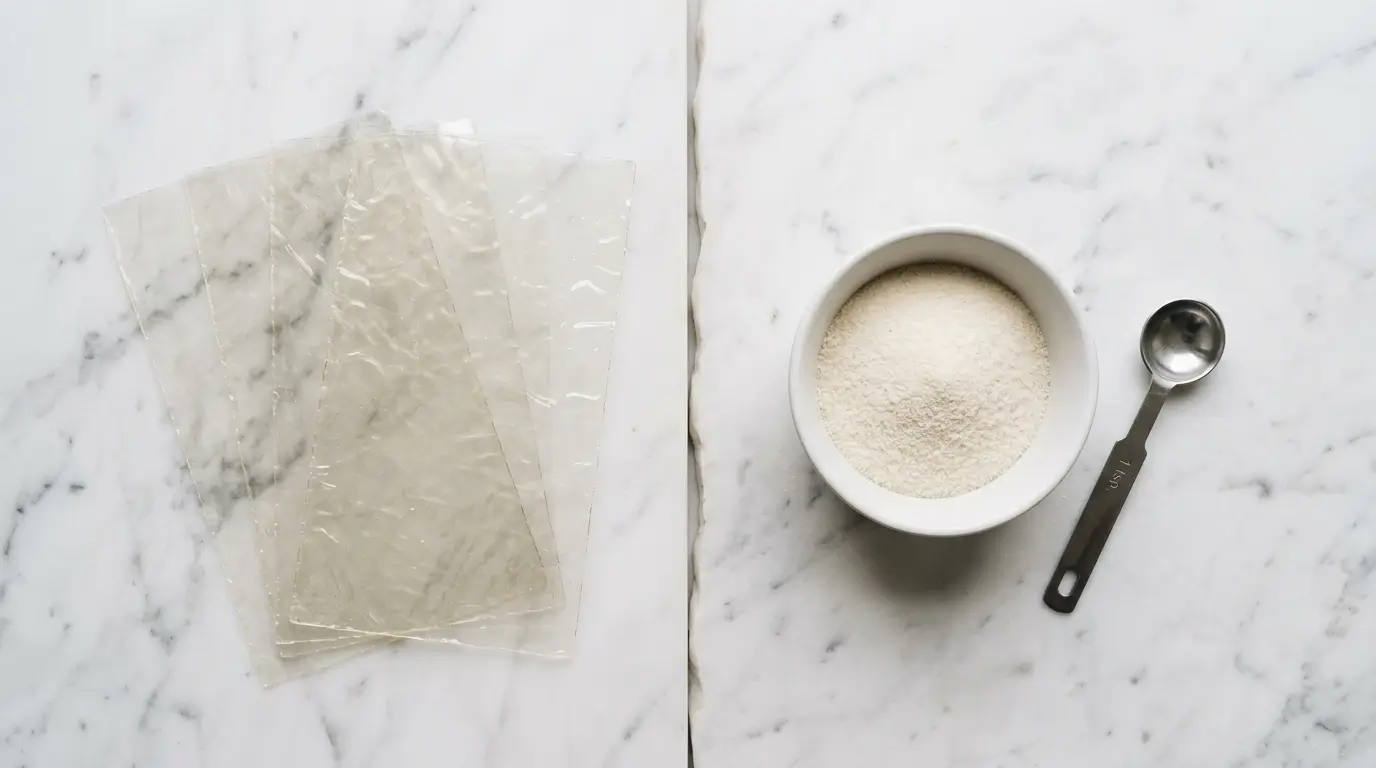
Gelatin sheets vs powder is one of the most searched gelatin questions of 2026 — and for good reason. Both forms contain the same active ingredient, but they behave differently in the kitchen, require different preparation techniques, and produce subtly different textures. Whether you are making the gelatin trick recipe for weight loss, a classic dessert, or a savory dish, choosing the wrong form can ruin the result. This guide covers every practical difference, the exact conversion formula, and which form works best for each use case.
What Is Gelatin, and Why Does the Form Matter?
Gelatin is a protein derived from collagen — extracted primarily from bovine or porcine bones and connective tissue through a controlled hydrolysis process. When dissolved in warm liquid and cooled, it forms a clear, firm gel. It is the foundation of hundreds of recipes across cultures and has been used in medical, culinary, and weight loss contexts for generations.
The form — sheets or powder — does not change the source or the protein content. What it changes is how the gelatin is prepared, how precisely it can be measured, and what texture it produces in the final result. These differences are small but they matter when precision is required.
Gelatin Sheets: What They Are and How They Work
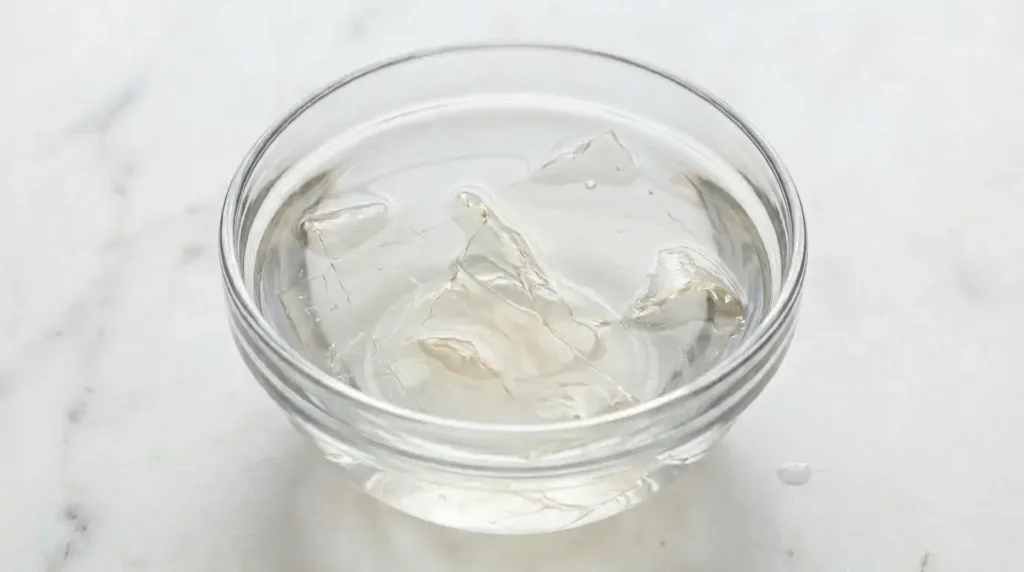
Gelatin sheets — also called leaf gelatin or gelatin leaves — are thin, transparent, dry sheets of purified gelatin. They are the standard form used in professional European kitchens and are common in France, Germany, and the UK. In the US, they are less common in grocery stores but widely available online.
Sheets are graded by bloom strength — a measure of gelatin’s setting power. The standard grades are Bronze (the weakest), Silver, Gold, and Platinum (the strongest). Most recipes calling for gelatin sheets use Gold grade as the reference point.
How to use gelatin sheets: Submerge the sheets in cold water for 5 to 10 minutes until soft and pliable. This is called blooming. Then squeeze out the excess water, add the bloomed sheets directly to warm liquid (above 140°F / 60°C), and stir until fully dissolved. The sheets melt into the liquid without lumps.
Key advantage: Sheets produce a cleaner, clearer gel with a silkier mouthfeel. Professional chefs prefer them for mirror glazes, panna cotta, and any preparation where visual clarity matters.
Key disadvantage: They require weight measurement for precision. One sheet does not equal the same amount across brands. They are also harder to find in regular supermarkets.
Gelatin Powder: What It Is and How It Works
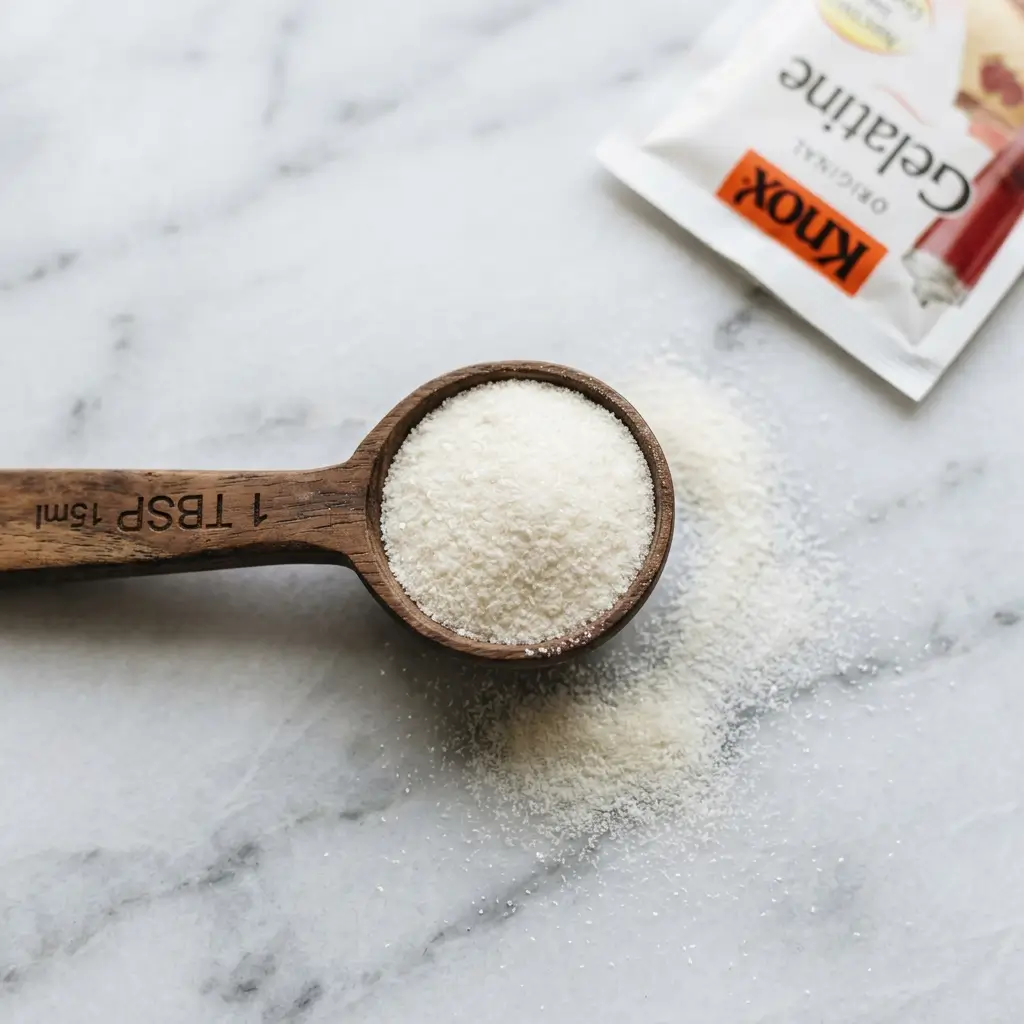
Gelatin powder is the same protein in a finely ground, granular form. In the US, it is sold in standard packets (approximately 7g per packet, equivalent to 2¼ teaspoons) by brands like Knox. Powder is the default form for home cooking in North America and is the form used in virtually every viral gelatin weight loss recipe, including the bariatric gelatin recipe and the pink gelatin for weight loss.
How to use gelatin powder: Sprinkle the powder over cold water and let it sit for 2 to 3 minutes — this is blooming. The granules absorb water and swell. Then add warm liquid (above 140°F / 60°C) or heat the mixture gently, and stir until fully dissolved. No lumps should remain.
Key advantage: Widely available, standardized packet sizes, easy to measure by volume, and ideal for the weight loss recipes the site focuses on.
Key disadvantage: Can clump if added directly to hot liquid without blooming first. Produces a slightly cloudier gel than sheets in clear preparations.
Gelatin Sheets vs Powder: Side-by-Side Comparison
Appearance in final dish: Sheets produce a clearer, more transparent gel. Powder produces a slightly cloudier result — rarely noticeable in flavored recipes but visible in clear mirror glazes or aspic.
Bloom time: Sheets require 5 to 10 minutes in cold water. Powder requires 2 to 3 minutes.
Measurement: Powder is measured by weight (grams) or volume (teaspoons). Sheets are counted by leaf — but since one sheet’s weight varies by brand and grade, weight in grams is the only reliable measurement for sheets.
Texture: Sheets produce a silkier, more delicate set. Powder produces a slightly firmer set at the same ratio.
Availability: Powder is found in virtually every grocery store. Sheets are found in specialty stores or online.
Cost: Powder is less expensive per gram. Sheets are premium priced.
Best for weight loss recipes: Powder ✅ — standardized, available everywhere, dissolves easily in warm water.
Best for professional desserts: Sheets ✅ — superior clarity, silkier texture.
The Exact Conversion: Gelatin Sheets to Powder
This is the most searched practical question when switching between forms. The standard conversion assumes Gold grade sheets, which is the most common grade in recipes.
1 teaspoon gelatin powder (3g) = 1.5 Gold grade gelatin sheets
1 standard packet gelatin powder (7g / 2¼ tsp) = 3.5 Gold grade gelatin sheets
1 Gold grade gelatin sheet (2g) = ⅔ teaspoon gelatin powder
For the gelatin trick recipe — which uses 1 tablespoon (7g) of gelatin powder — you would need approximately 3.5 Gold grade sheets if substituting. In practice, for weight loss and pre-meal protocols, powder is always the recommended form. Sheets are impractical for daily pre-meal shots because they require blooming in a separate bowl and squeezing before dissolving.
 🧪 Comparison Guide
Basic Gelatin Recipe: Powder vs Sheets
Same result — two methods. Choose your form and follow the exact steps below.
- 1 tbsp (7g) unflavored gelatin powder (Knox or grass-fed)
- 3 tbsp cold water (for blooming)
- 1 cup hot water (110–120 °F)
- 1 tbsp fresh lemon juice
Bloom — sprinkle powder over 3 tbsp cold water. Wait 2–3 min until spongy.
Dissolve — pour 1 cup hot water over bloomed gelatin. Whisk until clear.
Add lemon juice. Stir. Drink warm or refrigerate to set.
- 3.5 Gold grade gelatin sheets (≈7g)
- Cold water (enough to submerge sheets)
- 1 cup hot water (110–120 °F)
- 1 tbsp fresh lemon juice
Soak sheets in cold water for 5–10 min until soft and pliable.
Squeeze excess water from sheets. Add to 1 cup hot water.
Stir until dissolved. Add lemon juice. Drink warm or refrigerate to set.
Which Setting Power Is Stronger: Sheets or Powder?
At equal gram weight, Gold grade sheets and standard gelatin powder produce nearly identical gel firmness. The perceived difference in professional recipes comes not from setting power but from how cleanly the gelatin dissolves — sheets leave no granule residue that could create micro-cloudiness in very clear preparations.
For practical purposes: if you are making any of the weight loss recipes on this site, the setting power difference between sheets and powder is irrelevant. Both will produce the same appetite-suppressing pre-meal gel.
Can You Use Gelatin Sheets for the Gelatin Trick?
Technically yes — but there is no practical reason to. The gelatin trick recipe is designed around 1 tablespoon of powder because that is the most accessible, affordable, and fastest form to prepare. Using sheets would require a separate blooming bowl, squeezing, and measuring approximately 3.5 leaves — adding unnecessary steps to a recipe designed to take 2 minutes.
The one scenario where sheets make sense for weight loss recipes is if you are making a large batch of gelatin cubes or a structured panna cotta-style preparation where visual clarity is part of the appeal.
Agar Agar: The Vegan Alternative to Both
Agar agar is a plant-based alternative derived from seaweed that produces a firmer, less elastic set than gelatin. It is available in both sheet and powder form. The critical difference: agar agar sets at room temperature without refrigeration and produces a more rigid, breakable gel rather than the jiggly, elastic texture of animal-derived gelatin.
For the weight loss and appetite-control protocols on this site, agar agar is not a direct substitute — its protein content and GLP-1 stimulation mechanism are different from animal gelatin. For vegans or vegetarians, agar agar can work as a dessert base but should not be used in place of gelatin for the satiety protocols described in the natural GLP-1 protocol.
How to Store Both Forms
Powder: Store in a cool, dry pantry away from humidity. Properly sealed, gelatin powder lasts 2 to 3 years. Never refrigerate unused powder — moisture degrades its setting ability.
Sheets: Store flat in an airtight container, away from humidity. Sheets are more fragile and can absorb ambient moisture, which weakens their setting power. Use within 12 to 18 months of purchase.
Prepared gelatin (set): Refrigerate covered for up to 5 to 7 days. Freeze for up to 3 months — though freezing changes the texture, making it grainy when thawed.
Frequently Asked Questions
Gelatin Sheets vs Powder — Complete Guide