
These 15 protein-containing snack ideas use measured portions that can fit under 200 calories. Greek yogurt, cottage cheese, eggs, tuna, and a measured protein shake are practical starting points. The figures below are estimates, not interchangeable values for every brand. Some options provide more protein than others; the list does not claim that every snack supplies at least 8 g.
Start with the portion comparison, see the options without refrigeration, or use the protein ball recipe. Check the total for everything you eat, including crackers, fruit, milk, sauces, and extra balls.
How to Keep a Protein Snack Under 200 Calories
Use the portion size, not the food name, to decide whether a snack fits the limit. Read the calories and protein per serving on the label, multiply by the amount eaten, and add all components. A bag may contain several servings. A scoop of powder or piece of yogurt bark is not a consistent measurement across products.
The estimates use common product values and rounded produce estimates. They are planning examples, not a guarantee for every substitute. Choose products whose combined label total stays below 200 calories if that is your intended limit. Portion size also does not determine whether a snack suits your individual appetite or dietary needs.
15 Protein Snack Portions at a Glance
| Snack | Measured portion | Approx. calories | Approx. protein (g) | Storage |
|---|---|---|---|---|
| Greek yogurt with berries | 170 g nonfat plain Greek yogurt + 50 g berries | 115 | 18 | Cold |
| Two hard-boiled eggs | 2 large eggs | 160 | 13 | Cold |
| Cottage cheese with pineapple | 113 g low-fat cottage cheese + 50 g pineapple | 115 | 13 | Cold |
| Cooked shelled edamame | 80 g cooked shelled edamame | 100 | 9 | Cold |
| Turkey and cheese roll-ups | 56 g ready-to-eat turkey + 28 g cheese | 140 | 17 | Cold |
| One no-bake protein ball | 1/12 of the recipe below | 120 | 5 | Cold |
| Packaged roasted chickpeas | 28 g; select a product with matching label values | 120 | 5 | Label-dependent |
| Tuna pouch with crackers | 1 plain 74 g tuna pouch + crackers providing 60 calories | 130 | At least 17 | Shelf-stable unopened |
| String cheese with apple | 1 cheese stick providing 80 calories + 1 small apple | 160 | 7 | Cold |
| Beef or turkey jerky | 28 g commercial shelf-stable jerky | 80 to 120 | 9 to 13 | Label-dependent |
| Protein powder shaken with water | One labeled powder serving mixed with water | 120 | 24 | Mix at serving |
| Hummus, cucumber and one egg | 30 g hummus + 100 g cucumber + 1 large cooked egg | 165 | 9 | Cold |
| Savory cottage cheese | 113 g low-fat cottage cheese + a pinch of seasoning | 90 | 13 | Cold |
| Almonds with one egg | 15 g almonds + 1 large cooked egg | 165 | 9 | Cold because of egg |
| Measured Greek yogurt bark | Half of a batch made with 170 g nonfat Greek yogurt, 100 g berries and 7 g honey | 80 | About 9 | Frozen |
The 15 Snacks
1. Greek yogurt with berries
Portion: 170 g nonfat plain Greek yogurt + 50 g berries. Estimate: 115 calories and 18 g protein.
Choose plain yogurt and weigh the fruit. As a product reference, FAGE Total 0% lists 90 calories per 170 g serving; use the protein and energy values on your current package. Whole-milk and flavored versions differ.
2. Two hard-boiled eggs
Portion: 2 large eggs. Estimate: 160 calories and 13 g protein.
Use two large eggs without added mayonnaise or oil. Egg size affects the estimate. Keep cooked eggs refrigerated and pack them with a cold source; cooking does not make them shelf-stable.
3. Cottage cheese with pineapple
Portion: 113 g low-fat cottage cheese + 50 g pineapple. Estimate: 115 calories and 13 g protein.
This example assumes the cottage cheese supplies about 90 calories and 13 g protein per 113 g. Fruit packed in syrup changes the total. For a dessert variation, explore our cottage cheese ice cream rather than applying this snack estimate to that recipe.

4. Cooked shelled edamame
Portion: 80 g cooked shelled edamame. Estimate: 100 calories and 9 g protein.
Weigh the edible beans, not the pods, and follow package cooking instructions. Added oil or sauce is separate. Dry-roasted edamame is a different product with less water and must use its own label.
5. Turkey and cheese roll-ups
Portion: 56 g ready-to-eat turkey + 28 g cheese. Estimate: 140 calories and 17 g protein.
This example assumes turkey at about 60 calories per 56 g and cheese at about 80 calories per 28 g. Products vary considerably. Roll together and keep chilled; portable does not mean suitable for an unrefrigerated desk drawer.
6. One no-bake protein ball
Portion: 1/12 of the recipe below. Estimate: 120 calories and 5 g protein.
One ball fits the example; two are approximately 240 calories. This is a moderate-protein option, not the highest-protein choice. The recipe below specifies weights and shows the calculation assumptions.
No-Bake Protein Balls Recipe
This revised formulation uses 80 g oats, 132 g peanut butter, 31 g protein powder, and 84 g honey, divided into 12 equal balls. It has not been kitchen-tested. One ball is the serving; chocolate chips are excluded from the base estimate.
Calculation assumptions: oats contribute 300 calories and 10 g protein; peanut butter 760 calories and 28 g protein; powder 120 calories and 24 g protein; honey about 240 calories. The batch totals approximately 1,420 calories and 62 g protein. Divide by 12 and round to about 120 calories and 5 g protein per ball. Check your labels before using these values for a different formulation.
Print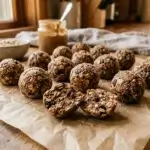
No-Bake Protein Balls with Oats and Peanut Butter
- Total Time: 45 minutes
- Yield: 12 balls 1x
Description
No-bake oat and peanut butter protein balls. Makes 12 balls. Estimated 120 calories and 5 g protein each under the stated label assumptions; not kitchen-tested.
Ingredients
- 80 g rolled oats
- 132 g creamy peanut butter
- 31 g protein powder
- 84 g honey
- 1 to 2 tablespoons water, only as needed
Instructions
- Combine oats and protein powder in a bowl.
- Add peanut butter and honey. Mix thoroughly.
- If needed, add water a teaspoon at a time until the mixture holds together. Powder formulations vary.
- Weigh or divide the mixture into 12 equal portions and roll into balls. Do not define a portion by an unmeasured tablespoon.
- Chill covered for about 30 minutes to firm up.
- Keep refrigerated and use within 3 to 4 days, or freeze portions promptly for longer storage.
Notes
Revised formulation, not kitchen-tested. Estimate assumptions: 80 g oats supply 300 calories and 10 g protein; 132 g peanut butter supplies 760 calories and 28 g protein; 31 g powder supplies 120 calories and 24 g protein; 84 g honey supplies about 240 calories. Total approximately 1,420 calories and 62 g protein, divided by 12, rounded to 120 calories and 5 g protein per ball. Use your actual labels to recalculate. Chocolate chips and other additions are excluded. Two balls are approximately 240 calories and do not fit the under-200 example. Contains peanuts; powder may contain milk or soy. Refrigerate; do not treat these as shelf-stable. Honey is not vegan.
- Prep Time: 15 minutes
- Category: Snack
- Method: No-bake
- Cuisine: American-inspired
Nutrition
- Serving Size: 1 ball (1/12 batch)
- Calories: 120
- Protein: 5 g
Keywords: no-bake protein balls,high protein snacks under 200 calories
7. Packaged roasted chickpeas
Portion: 28 g; select a product with matching label values. Estimate: 120 calories and 5 g protein.
Choose a commercially packaged product labeled for room-temperature storage if you need a desk snack. Homemade roasted chickpeas should not automatically be treated as shelf-stable. Check oil, coating, serving weight, and the package storage directions.
8. Tuna pouch with crackers
Portion: 1 plain 74 g tuna pouch + crackers providing 60 calories. Estimate: 130 calories and At least 17 g protein.
A StarKist light tuna in water pouch provides 70 calories and 17 g protein for the referenced 2.6 oz size. Add a measured cracker portion totaling 60 calories. Flavored or oil-packed tuna differs. Open when ready to eat.
9. String cheese with apple
Portion: 1 cheese stick providing 80 calories + 1 small apple. Estimate: 160 calories and 7 g protein.
A small apple and measured cheese are different from an oversized apple with several cheese sticks. This combination includes fruit as well as protein; check the cheese label and keep it cold.
10. Beef or turkey jerky
Portion: 28 g commercial shelf-stable jerky. Estimate: 80 to 120 calories and 9 to 13 g protein.
Use the package values for the specific product. Some meat snacks require refrigeration, especially after opening. Read storage directions rather than assuming all dried-looking meat is shelf-stable.
11. Protein powder shaken with water
Portion: One labeled powder serving mixed with water. Estimate: 120 calories and 24 g protein.
This example assumes a powder serving with 120 calories and 24 g protein. It does not include milk, fruit, or nut butter. Keep powder dry until use, mix in a clean shaker, and consume promptly. Use a product appropriate to your dietary requirements.
12. Hummus, cucumber and one egg
Portion: 30 g hummus + 100 g cucumber + 1 large cooked egg. Estimate: 165 calories and 9 g protein.
The example assumes hummus at about 70 calories per 30 g. Hummus and cucumber alone provide less protein; the egg changes the combination. Oil-rich hummus and a larger tub can change the calorie total substantially.
13. Savory cottage cheese
Portion: 113 g low-fat cottage cheese + a pinch of seasoning. Estimate: 90 calories and 13 g protein.
Use a cottage cheese label close to the stated reference. Check seasoning quantities if they include seeds or other ingredients. Crackers and toast are optional additions and need their own allowance.
14. Almonds with one egg
Portion: 15 g almonds + 1 large cooked egg. Estimate: 165 calories and 9 g protein.
Weigh almonds rather than measuring an unpredictable handful. Almonds alone can travel according to their package directions, but this egg combination needs cold storage. Nuts provide less protein per calorie than several other options here.
15. Measured Greek yogurt bark
Portion: Half of a batch made with 170 g nonfat Greek yogurt, 100 g berries and 7 g honey. Estimate: 80 calories and About 9 g protein.
Spread the measured mixture on a lined tray and freeze until firm. Divide the whole batch into two equal portions rather than assigning a nutrition figure to a random broken piece. The estimate assumes yogurt at 90 calories and 18 g protein per 170 g; brands and toppings change it.
High-Protein Snacks Under 200 Calories Without Refrigeration
Look for unopened tuna pouches, commercial jerky, packaged dry-roasted edamame, or a dry protein-powder serving that you mix with water when ready. A product qualifies for room-temperature storage only when its label allows it. Check the portion calories and protein instead of assuming the entire packet fits your target.
Dry-roasted edamame differs from cooked edamame: use the dry product label. Tuna can be shelf-stable while sealed but should be eaten promptly after opening or refrigerated as directed. Jerky storage varies, so read both the unopened and after-opening instructions.
Greek yogurt, cottage cheese, turkey roll-ups, cooked eggs, cooked edamame and prepared hummus need cold storage. Yogurt bark needs a freezer for its intended texture. The homemade protein balls in this article are stored refrigerated, not certified shelf-stable snacks.
Lower-Fat Protein Snack Choices
For a lower-fat option, compare nonfat plain Greek yogurt, lower-fat cottage cheese, tuna packed in water, and a powder mixed with water. Check total fat on the actual label. Peanut butter, almonds, cheese and whole eggs have different fat profiles; they can still be included in measured portions, but are not interchangeable with nonfat yogurt.
Low-fat and under 200 calories describe different things. An oversized serving of a lower-fat food can exceed the energy limit, while a small serving of nuts can remain below it. Choose based on the whole snack and your preferences rather than judging an ingredient by one number.
How to Use This List

Choose a snack according to your appetite, dietary preferences and meal timing. If combining two options, add their calories and protein rather than keeping the single-item total. A snack is optional; these portions are examples rather than a personalized prescription.
Packing and Cold Storage
The USDA recommends an insulated bag and at least two cold sources for perishable packed food. Keep cold food at 40°F/4°C or below. Perishables should not remain at room temperature beyond two hours, or one hour above 90°F/32°C.
Pack dairy, cooked eggs, hummus and turkey with appropriate cooling. A bag without a cold source is not a refrigerator. Follow package directions, prepare with clean equipment, and refrigerate promptly. Freeze homemade protein balls you will not use within three to four days.
FAQS
Which options provide more protein for their portion?
The measured tuna pouch, nonfat Greek yogurt and powder mixed with water are useful protein-focused options. Compare your actual product labels; there is no universal ranking across brands.
Can these snacks fit a weight-loss eating plan?
They can fit when the portions suit your overall intake. No individual snack guarantees weight loss, and combining snacks changes the meal total.
Which snacks can I carry without refrigeration?
Choose unopened tuna pouches, commercial jerky, or dry-roasted edamame labeled for room-temperature storage. Dry powder can be mixed with water at serving. Follow storage directions after opening.
Are all fifteen options equally high in protein?
No. They provide different amounts. A protein ball, almonds or roasted chickpeas may supply less protein per portion than yogurt, tuna or a powder serving.
How many calories are in one protein ball?
About 120 calories and 5 g protein under the stated ingredient assumptions, when the batch is divided into twelve equal balls. Two balls are approximately 240 calories.
Can I use nonfat yogurt for a lower-fat snack?
Yes. Check the yogurt label and include fruit or other additions in the total. A lower-fat label does not automatically keep every portion under 200 calories.
Can I meal-prep the snacks?
Yes, with storage appropriate to each food. Keep perishables cold, yogurt bark frozen, and follow the directions for packaged products. The protein balls here are refrigerated or frozen.
Are the nutrition figures exact?
No. These are portion-based planning estimates and specific label examples. Recalculate from your products and include every ingredient and addition.
Disclaimer: Calorie and protein values are approximate and can vary by brand, portion size, and specific ingredients used. Check product labels for exact nutrition information, especially if you’re tracking macros closely.
For larger meals rather than snacks, explore our high-protein high-fiber meal ideas. For drinks with different ingredients, compare our smoothie recipes with measured portions.
Label References and Calculation Notes
Example references include FAGE nonfat plain yogurt, StarKist plain tuna pouches, Jif creamy peanut butter, and Optimum Nutrition whey powder. Brand examples illustrate labels, not endorsements or values shared by every product. Oats and honey use the calorie assumptions shown in the protein ball calculation; check the packages you use.