

Quick Answer
| What it is | A soluble fiber from the seed husk of the Plantago ovata plant (also called isabgol) |
| Does it cause weight loss? | The evidence is genuinely mixed — the largest independent meta-analysis found no significant effect on body weight |
| What it’s better supported for | Cholesterol reduction, blood sugar control, satiety, and relieving constipation |
| Typical dosage | Around 5-10 grams, once or twice daily, with a full glass of water, before meals |
| ⚠️ Key safety warning | Always take with plenty of water — taken dry or with too little liquid, it carries a real choking and blockage risk |
Psyllium husk for weight loss shows up constantly in supplement marketing, and it’s a legitimate, well-studied fiber — but the specific claim that it causes weight loss is more contested than most articles about it let on. Here’s an honest look at what the research actually supports.
⚠️ The Safety Requirement That Comes First
Before anything else: psyllium absorbs an enormous amount of water and forms a thick gel — which is exactly why it needs to be taken with plenty of liquid. Taking it dry, or with too little water, is the single most important safety issue with this supplement; it can cause choking or blockage in the throat, esophagus, or intestines. Always mix it into at least 8 ounces (240 mL) of water or another liquid and drink it promptly, then follow up with another glass of water. If you’re taking capsules rather than powder, take them with a full glass of water too — not just a sip.
What Psyllium Husk Actually Is
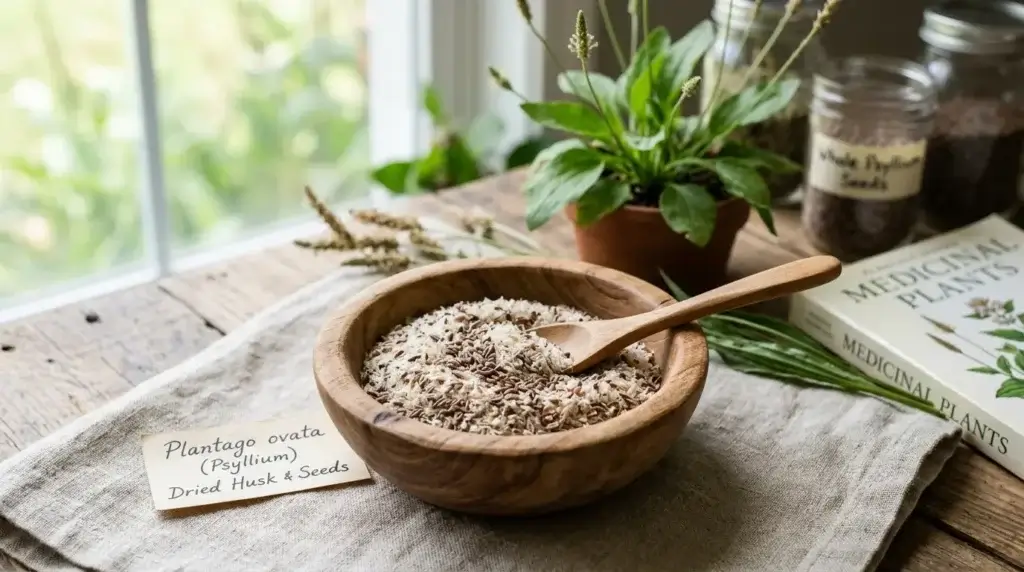
Psyllium husk comes from the seeds of Plantago ovata, an herb grown mainly in India, where it’s also known as isabgol. It’s a soluble, gel-forming fiber that passes through the small intestine largely intact, absorbing water along the way rather than being broken down and absorbed like most nutrients. It’s sold as loose husk, powder, capsules, or as the main ingredient in products like Metamucil, and manufacturers sometimes fortify cereals and baked goods with it as well.
What the Evidence Actually Shows for Weight Loss
This is the part worth being genuinely careful about. The largest independent analysis on the topic — a meta-analysis pooling 22 randomized controlled trials — found no statistically significant effect on body weight, BMI, or waist circumference. That’s a meaningfully different conclusion from some other reviews that report a positive weight-loss effect, and it’s worth knowing that at least one of the reviews reaching a more favorable conclusion was affiliated with a supplement manufacturer, which is a real conflict of interest worth factoring in when weighing which conclusion to trust.
That said, the picture isn’t entirely negative. A separate individual study found that psyllium taken before breakfast and lunch led to a real, measurable reduction in hunger and increased fullness between meals compared to placebo — which is a plausible mechanism for modest indirect weight support, even if it doesn’t show up as a large effect on the scale in pooled data across many studies.
The honest summary: if you’re expecting psyllium husk to reliably drive meaningful weight loss on its own, the strongest independent evidence doesn’t support that expectation. If you’re using it as one small piece of a broader approach — appreciating the fullness effect without expecting dramatic results — that’s a more evidence-aligned way to think about it.
What the Evidence Supports More Consistently
Psyllium’s track record is considerably stronger in a few other areas, which is part of why it remains a genuinely useful supplement even with the weight-loss claim in question:
- Cholesterol reduction — a well-documented, moderate LDL (“bad” cholesterol) lowering effect
- Blood sugar control — reasonable evidence for modest improvements in glycemic response, particularly when taken before meals
- Constipation relief — one of its best-established uses, as a gentle, bulk-forming fiber
- Satiety and fullness — even without a proven weight-loss outcome, the fullness effect itself is real and can support eating less at a given meal
How It’s Typically Taken
For exact mixing steps, water amounts, timing, and medication spacing, see our practical guide to how to make a psyllium husk drink safely. This article stays focused on the weight-loss evidence so the two pages do not compete for the same search intent.
A Note on Medication Timing
Because psyllium forms a gel that can slow how other things move through the digestive tract, it’s generally recommended to separate it from oral medications by at least 2-3 hours. Taking a prescription pill at the same time as a psyllium dose could reduce how well that medication gets absorbed.
Frequently Asked Questions
Is psyllium husk the same as Metamucil?
Metamucil is a brand-name product that uses psyllium husk as its main active ingredient, alongside other formulation ingredients. Generic psyllium husk powder or capsules contain the same core fiber.
Is psyllium husk safe to take every day?
Generally yes, for most healthy adults, as long as it’s taken with adequate water. Long-term studies haven’t raised major safety concerns at typical doses beyond the hydration requirement.
Psyllium husk vs. chia seeds — which is better for fullness?
Both are soluble fibers that absorb water and support fullness, but psyllium has a more established, larger body of clinical research behind its digestive and cholesterol effects specifically. Chia seeds offer additional nutrients (omega-3s, protein) that psyllium doesn’t provide.
Can psyllium husk help with blood sugar even if it doesn’t cause weight loss?
Yes — the blood sugar and cholesterol benefits are supported somewhat independently of the weight-loss question, and remain worthwhile reasons to consider it even with realistic expectations about weight.
What happens if I don’t drink enough water with psyllium husk?
It can worsen constipation rather than relieve it, and in more serious cases, cause choking or blockage in the digestive tract. This is the one safety rule worth taking seriously every time you use it.
Disclaimer: This article is for informational purposes only and does not constitute medical advice. Always consult a qualified healthcare provider before starting any new supplement, especially if you take medications or have a pre-existing digestive condition. Always take psyllium husk with plenty of water to reduce the risk of choking or blockage.
For a related fiber supplement with a similar evidence profile, see our guide on glucomannan for weight loss, and for food-based approaches to appetite support, our natural GLP-1 foods guide covers options that don’t involve a supplement at all.
1 thought on “Psyllium Husk for Weight Loss: What the Evidence Actually Shows”