
Quick Answer
| Psyllium Husk | Chia Seeds | |
|---|---|---|
| Fiber per 100g | ~70-80g | ~34g |
| Protein | Negligible | ~17g per 100g |
| Omega-3 fats | None | Yes (ALA) |
| Calories | Lower | Higher |
| Best for | Concentrated fiber, constipation relief | Whole-food nutrition, versatile cooking |
| Weight loss evidence | Mixed/modest | Requires a fairly high dose (30-40g/day) for modest effect |
| Taste | Mild, sometimes hard to tolerate alone | Neutral, easy to add to food |
The short version: psyllium husk is a concentrated, targeted fiber supplement, while chia seeds are a nutrient-dense whole food that happens to also be high in fiber. Neither is objectively “better” — they’re built for different purposes, and the right choice depends on what you actually want from it.
The Core Difference: Supplement vs. Whole Food
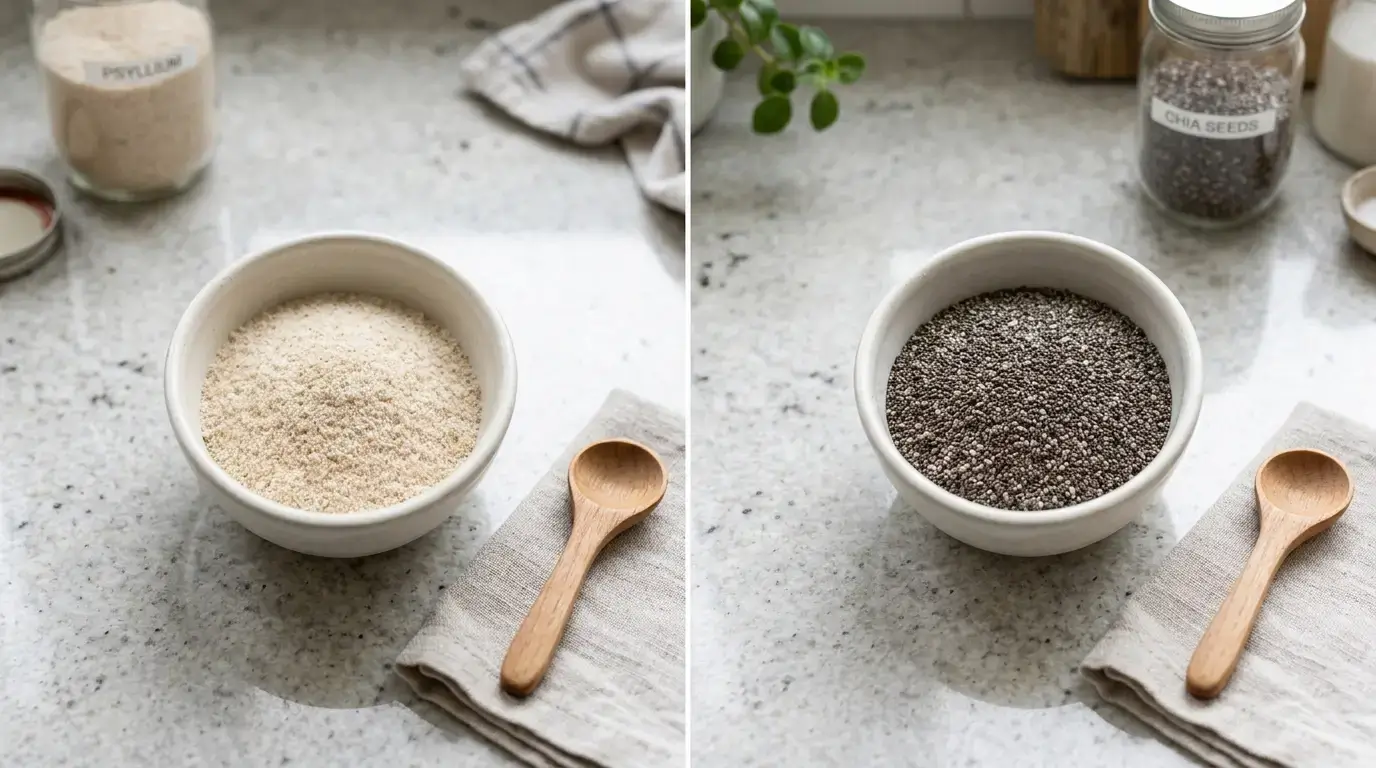
Psyllium husk comes from the seed coating of Plantago ovata, and once separated from the rest of the seed, it’s essentially pure soluble fiber — it doesn’t bring meaningful protein, fat, or micronutrients along with it. That’s exactly why it’s sold as a dedicated fiber supplement rather than eaten as a food ingredient in its own right.
Chia seeds, by contrast, are eaten whole. Along with a solid dose of fiber, they bring real protein, plant-based omega-3 fatty acids (ALA), and minerals like calcium and magnesium. That’s the fundamental trade-off: psyllium does one thing — concentrated fiber — very efficiently, while chia offers a broader, more food-like nutritional package at a lower fiber concentration per gram.
Fiber Content, Head to Head
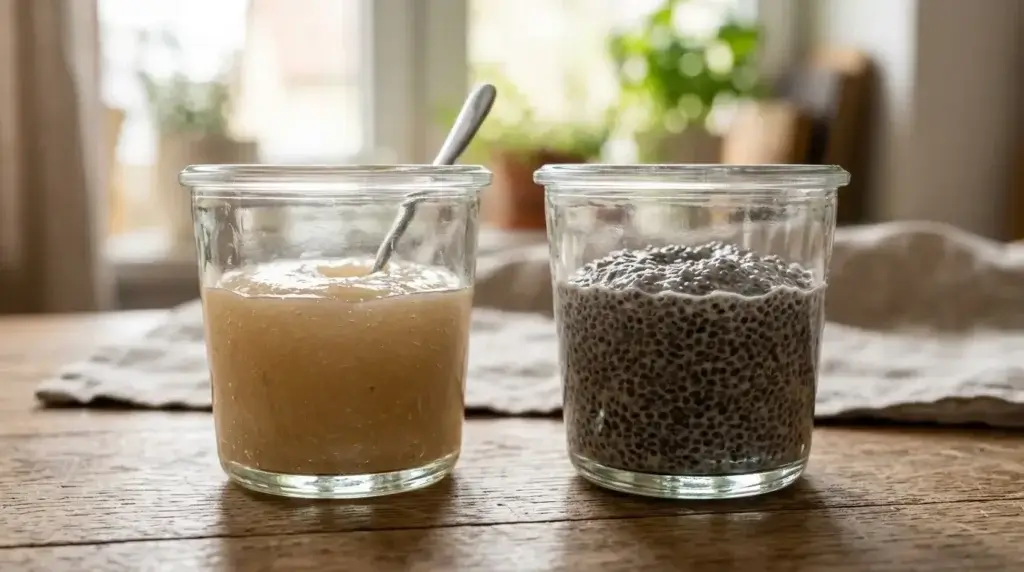
Gram for gram, psyllium husk is considerably more fiber-dense — roughly 70-80 grams of fiber per 100 grams, compared to around 34 grams per 100 grams for chia seeds. In practical terms, that means you need a much smaller amount of psyllium to hit a specific fiber target, while chia requires eating more volume to get the same fiber dose — though you’re also getting more overall nutrition along with it.
Both form a gel when mixed with liquid, though the exact water-holding capacity differs by source — chia is often cited as holding somewhat more liquid relative to its weight than psyllium, though both are well below glucomannan, which holds dramatically more water than either.
Which One Wins for Weight Loss?
Neither has strong, consistent evidence as a standalone weight-loss tool, but the details differ. Our psyllium husk for weight loss breakdown covers this in depth — the short version is that the largest independent meta-analysis found no significant effect on body weight specifically, even though the fullness/satiety effect is real.
Chia seeds have a similar story with an important dosage detail: research specifically on chia for weight loss has generally used fairly high daily amounts — around 30-40 grams per day — to see even a modest benefit (a few extra pounds lost over roughly 6 months in some studies). Amounts lower than that didn’t show much measurable effect. That’s a meaningfully large daily quantity of chia seeds to work into a diet consistently.
Bottom line: if weight loss specifically is your main goal, neither should be treated as a reliable driver on its own — the more consistent benefits for both lie elsewhere.
Which One Wins for Digestion and Constipation?
This is where psyllium has a clearer edge. Its concentrated soluble fiber and well-established clinical track record make it one of the most reliably effective options for relieving constipation and supporting regular bowel movements. Chia seeds can still help, thanks to their fiber content, but the effect tends to be milder and slower to build compared to psyllium’s more targeted, concentrated dose.
Which One Wins for Overall Nutrition?
Chia seeds, clearly. Since psyllium is essentially just fiber, it doesn’t contribute much else to your diet nutritionally. Chia brings real protein, omega-3s, and minerals — genuinely useful additions if you’re looking for a functional food rather than a single-purpose supplement. The trade-off is that chia’s plant-based omega-3s (ALA) aren’t absorbed and used by the body as efficiently as the omega-3s found in fish or algae-based sources.
Which One Is Easier to Actually Use?
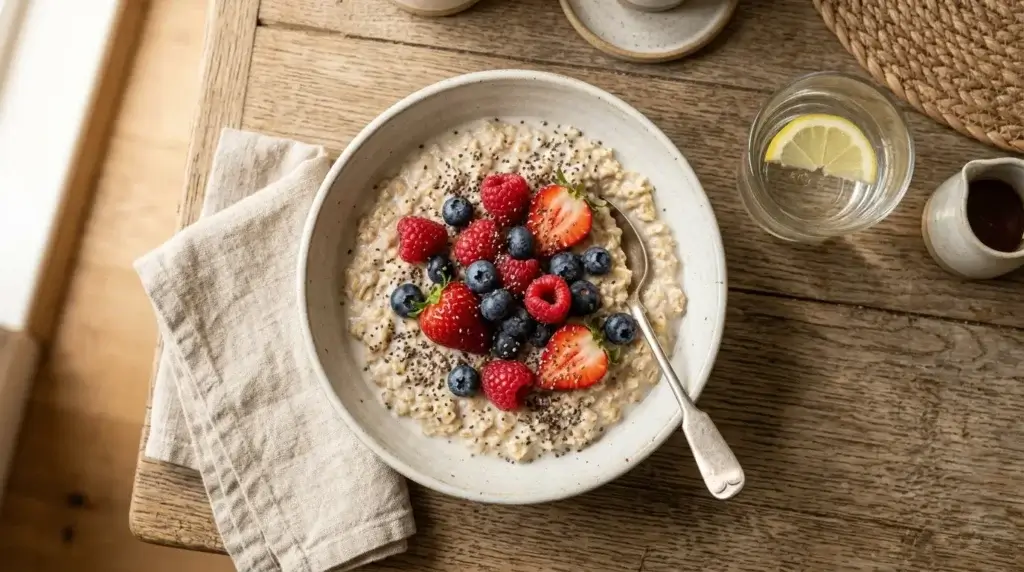
Chia seeds tend to fit more naturally into everyday eating — sprinkled over oatmeal, blended into a smoothie, soaked into a pudding, or used as an egg substitute in baking. Their mild, neutral flavor makes this easy. Psyllium husk is harder to eat as “food” in the traditional sense; most people take it as a fiber drink. For the exact preparation method, water amount, and timing, see our guide to making a psyllium husk drink safely.
Can You Use Both?
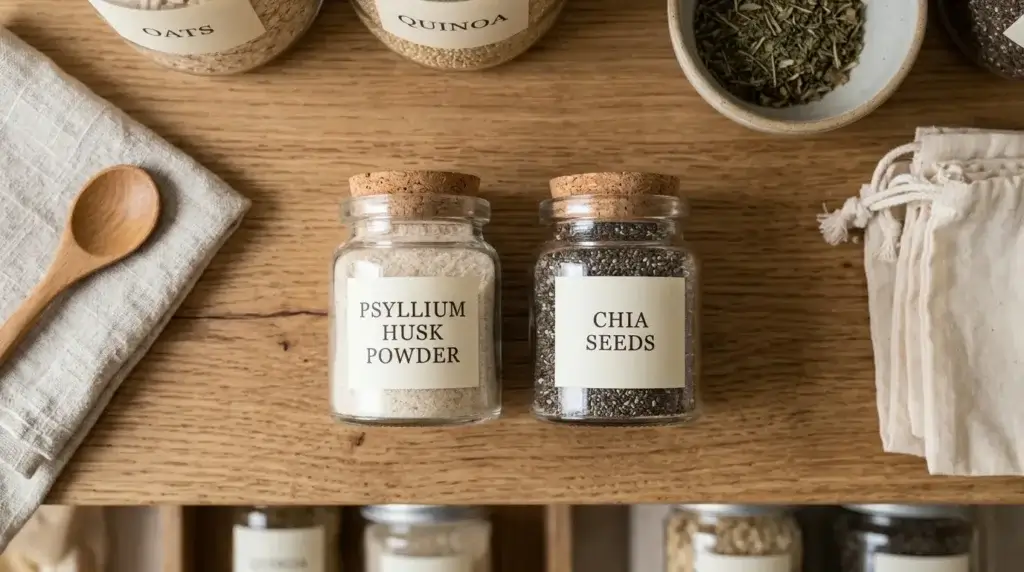
Yes — there’s no conflict in using both, since they serve somewhat different purposes. Some people use chia seeds as a regular food ingredient for its broader nutrition, while reaching for psyllium husk specifically when they need more concentrated fiber support, such as for digestive regularity. Just be mindful of your total daily fiber intake if combining significant amounts of both, and increase either gradually to avoid digestive discomfort.
Frequently Asked Questions
Which one is safer to take daily?
Both are generally considered safe for daily use in most healthy adults, as long as they’re taken with adequate water — this matters more for psyllium specifically, given its more concentrated gel-forming effect.
Can I substitute chia seeds for psyllium husk in a recipe?
Not directly in most cases — psyllium is far more concentrated, so a recipe calling for a small amount of psyllium as a binder or thickener would need a much larger amount of chia seeds to achieve a similar effect, and the texture would differ.
Which is better for lowering cholesterol?
Psyllium has a more established, well-documented body of research specifically on LDL cholesterol reduction, though chia’s omega-3 content may offer separate heart-health benefits through a different mechanism.
Is one more likely to cause bloating?
Both can cause bloating if introduced too quickly or without enough water — start with a small amount of either and increase gradually over a week or two.
Which one should I choose if I’m not sure?
If you want a broad, food-based nutrition boost, chia seeds are the more versatile choice. If you have a specific goal like relieving constipation or want a concentrated fiber supplement, psyllium husk is the more targeted option.
Disclaimer: This article is for informational purposes only and does not constitute medical advice. Always consult a qualified healthcare provider before making significant dietary changes, especially if you take medications or have a pre-existing digestive condition.
For a full breakdown of psyllium husk specifically, see our guide to psyllium husk for weight loss, and for a third fiber option with an even higher water-absorbing capacity, see our guide to glucomannan for weight loss.
1 thought on “Psyllium Husk vs Chia Seeds: Which Fiber Is Right for You?”