

Quick Answer
| Glucomannan | Psyllium Husk | Chia Seeds | |
|---|---|---|---|
| Water absorption | Very high (up to 50x its weight) | High (~10x its weight) | High (10-15x its weight) |
| Weight-loss evidence | Contested — regulatory approval vs. no significant effect in meta-analysis | Contested — largest independent meta-analysis found no significant effect | Needs a high dose (30-40g/day) for even a modest effect |
| Best supported use | Cholesterol, satiety | Cholesterol, blood sugar, constipation | Overall nutrition, omega-3s, protein |
| Key safety note | Choking risk with tablets — take with plenty of water | Choking/blockage risk — take with plenty of water | Generally lower risk, though still needs adequate liquid |
| Format | Capsules or powder | Powder, capsules, or husk | Whole seeds |
If you’re looking for the best fiber supplement for weight loss, the honest answer starts with a caveat: none of the most popular options have strong, consistent evidence that they cause meaningful weight loss on their own. What they do have — to varying degrees — is real support for appetite management, blood sugar control, and cholesterol, which can be a genuinely useful piece of a broader approach, just not a shortcut around it.
Why We’re Not Naming One “Winner”
A lot of articles on this topic pick a single “best” option and build a sales pitch around it. We’re not going to do that, because the research genuinely doesn’t support a clean winner. Glucomannan has a regulatory weight-loss claim from EFSA that a subsequent meta-analysis of nine trials didn’t confirm. Psyllium husk has a similar story — the largest independent analysis (22 pooled trials) found no significant effect on body weight, even though some other reviews (including at least one affiliated with a supplement manufacturer) report a positive effect. Chia seeds show a modest benefit, but only at fairly high daily amounts that are genuinely difficult to sustain as a normal part of eating.
The honest framework here is: these are supporting tools, not weight-loss drivers. Choosing between them comes down to which secondary benefits and practical trade-offs matter most to you.
Glucomannan: The Most Concentrated Option
Glucomannan, extracted from the konjac root, absorbs more water relative to its weight than any other fiber on this list — up to 50 times. That makes it the most concentrated choice by far, but it also carries the most serious version of the shared safety concern: tablet forms have documented case reports of choking and esophageal blockage. It’s better supported for modest cholesterol reduction and improved satiety than for weight loss specifically. Full details in our glucomannan for weight loss guide.
Psyllium Husk: The Best-Studied for Digestion
Psyllium husk has one of the longest, most consistent research track records of any fiber supplement — particularly for constipation relief and cholesterol reduction. Its weight-loss evidence specifically is mixed in the same way glucomannan’s is, but its digestive benefits are genuinely some of the best-supported of any fiber on the market. Full details in our psyllium husk for weight loss guide.
Chia Seeds: The Most Nutritionally Complete
Unlike the other two, chia seeds aren’t a purified fiber extract — they’re a whole food that happens to be high in fiber, alongside real protein, plant-based omega-3s, and minerals. That makes them the most nutritionally rounded option, though you’d need a fairly large daily amount (30-40 grams) to see even a modest weight-related effect based on the research. For a full head-to-head against psyllium specifically, see our psyllium husk vs chia seeds comparison.
The One Safety Rule That Applies to All of Them

Every fiber supplement on this list works by absorbing water and forming a gel — which means every one of them carries some version of the same core safety requirement: take it with plenty of water, and never dry or with minimal liquid. This isn’t a minor suggestion. Choking and digestive blockage from underhydrated fiber supplements is a documented, real risk, and it applies most seriously to concentrated tablet forms of glucomannan and psyllium specifically.
How to Actually Choose Between Them
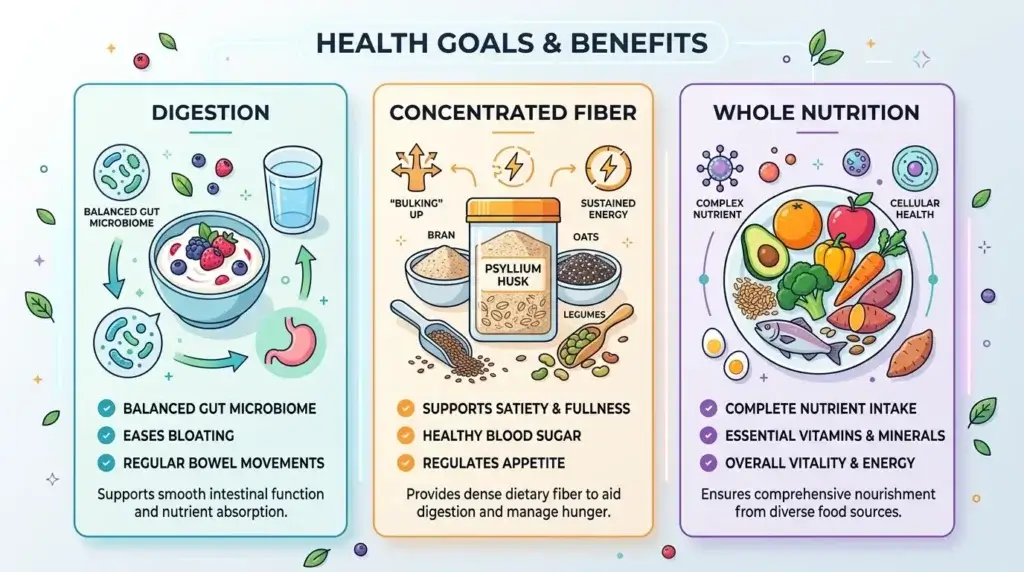
- If constipation or digestive regularity is your main concern → psyllium husk has the strongest, most specific track record here.
- If you want the most concentrated fiber option and don’t mind capsules → glucomannan absorbs the most water per gram, though take extra care with hydration.
- If you want broader nutrition alongside your fiber → chia seeds bring protein and omega-3s that the other two simply don’t offer.
- If you’re mainly chasing a weight-loss effect specifically → it’s worth resetting expectations. None of these are a substitute for an overall calorie-appropriate diet; think of them as a modest supporting tool for fullness, not a weight-loss method on their own.

Frequently Asked Questions
Can I take more than one of these fiber supplements at once?
It’s possible, but be mindful of your total daily fiber intake if combining them, and introduce any new fiber source gradually to avoid bloating or digestive discomfort.
Is any of these actually FDA-approved for weight loss?
No fiber supplement in this category carries an FDA-approved weight-loss claim in the same sense as a prescription medication. Glucomannan has a European regulatory (EFSA) claim specifically tied to an energy-restricted diet, which is a different, more limited approval than a standalone weight-loss endorsement.
Which of these has the fewest side effects?
All three can cause bloating or gas if introduced too quickly. Psyllium tends to ferment less than some other fibers, which some people find causes less gas specifically, though individual tolerance varies.
Should I just eat more high-fiber whole foods instead of taking a supplement?
That’s a completely reasonable approach, and for many people it’s the more sustainable one — fruits, vegetables, legumes, and whole grains provide fiber alongside a wider range of nutrients than an isolated supplement does.
Do any of these interact with medications?
Yes, potentially — the gel-forming effect that makes these fibers work can also slow the absorption of oral medications taken too close to the same time. A general rule of separating fiber supplements from medications by 2-3 hours is common guidance, but check with a doctor or pharmacist about your specific medications.
Disclaimer: This article is for informational purposes only and does not constitute medical advice. Always consult a qualified healthcare provider before starting any new supplement, especially if you take medications or have a pre-existing health condition. Always take fiber supplements with plenty of water to reduce the risk of choking or digestive blockage.
For food-based approaches to appetite support that don’t involve a supplement at all, see our natural GLP-1 foods guide.