
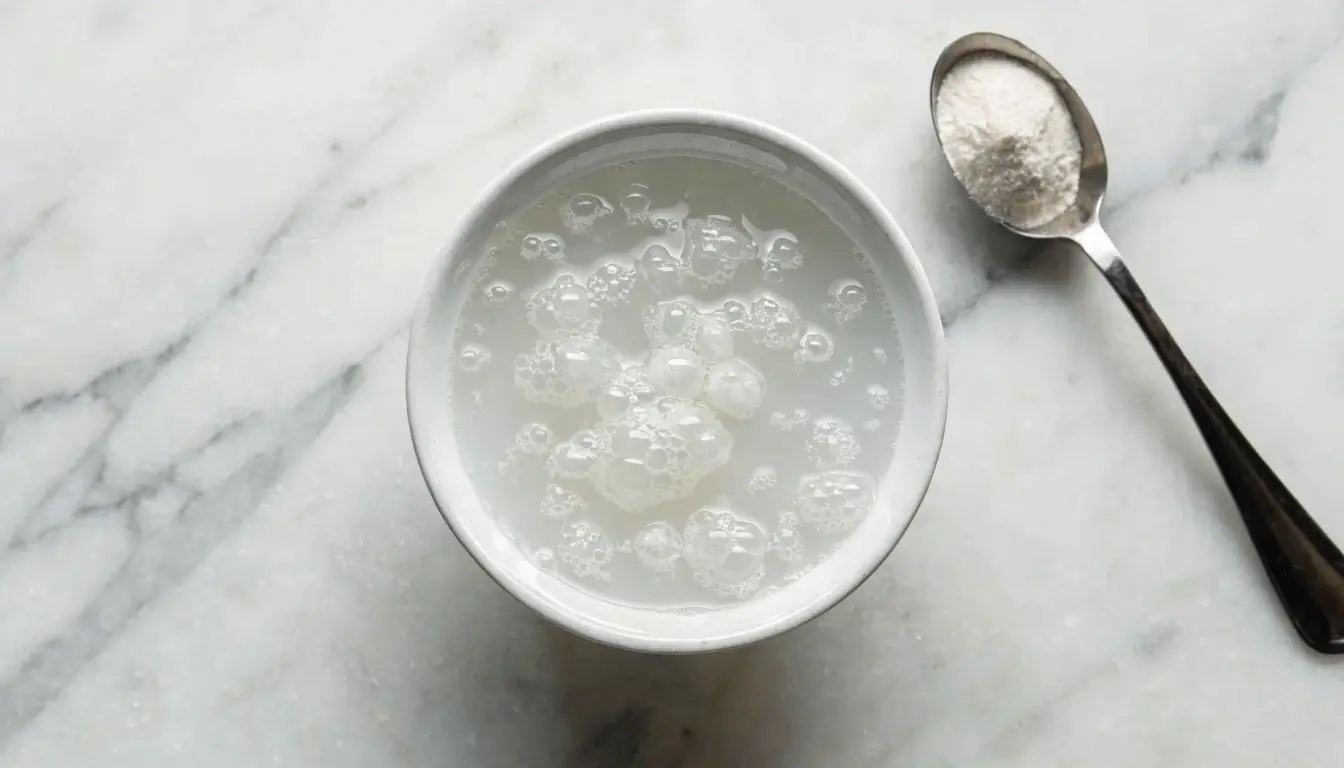
How to bloom gelatin powder is the single most important technique in working with gelatin — and the step most often skipped, rushed, or done incorrectly. Blooming is what separates smooth, lump-free gelatin from a grainy, uneven mess that never fully dissolves. Whether you are making the gelatin trick recipe for weight loss, a classic dessert, or a bariatric pre-meal preparation, this guide gives you the exact method, the correct ratio, the right water temperature, and every mistake to avoid.
What Does “Blooming” Gelatin Mean?
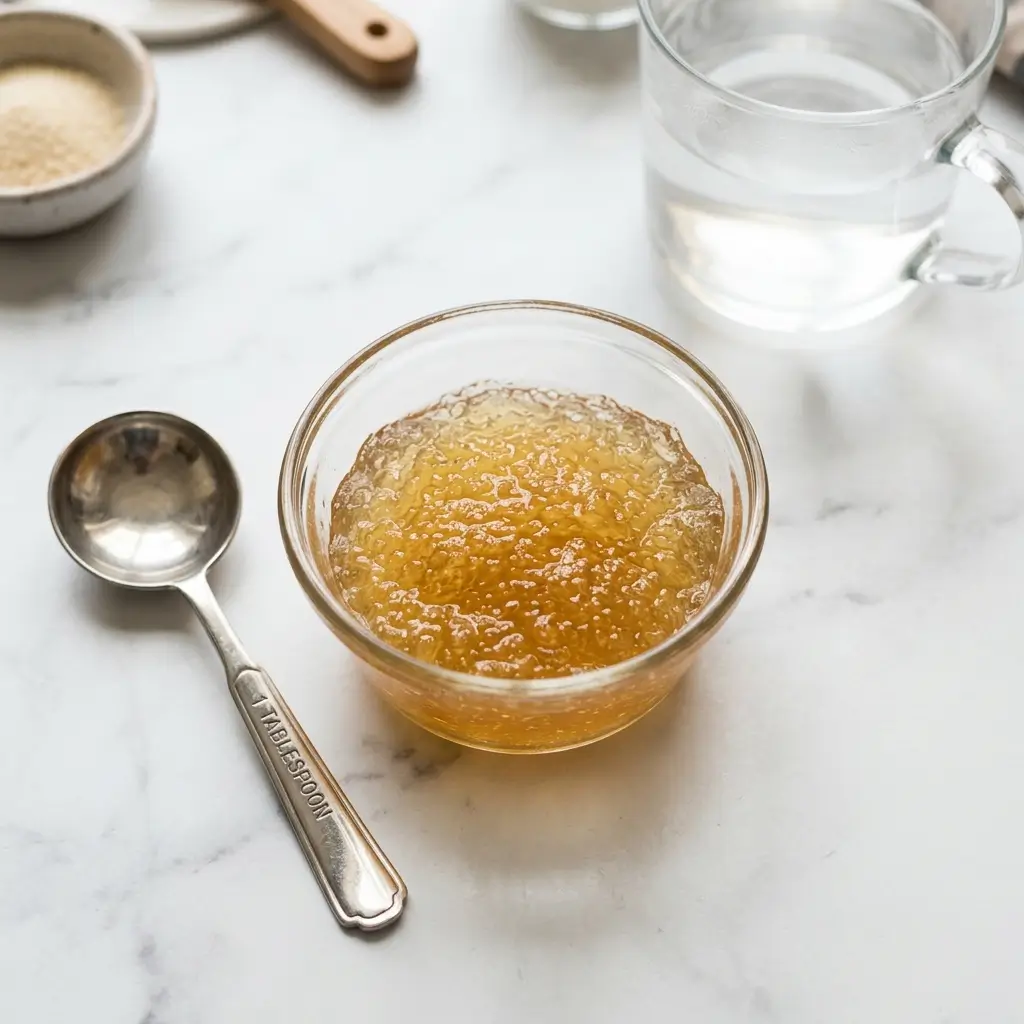
Blooming gelatin means sprinkling gelatin powder over cold liquid and letting it sit undisturbed for 2 to 5 minutes before adding heat. During this time, the dry granules absorb the cold liquid and swell — transforming from a dry powder into a soft, spongy, hydrated mass. This swollen mass dissolves instantly and evenly when warm liquid is added.
Without blooming, dry gelatin granules hit hot liquid and immediately form a protective outer layer that traps dry powder inside. The result is lumps that never fully dissolve — producing a grainy texture in desserts and cloudiness in drinks. Blooming bypasses this entirely by pre-hydrating every granule before any heat is applied.
The word “bloom” in this context has nothing to do with Bloom strength (the measurement of gelatin’s setting power) — it simply refers to the visual appearance of the granules swelling and expanding, like a flower opening.
The Exact Blooming Ratio
The ratio of cold liquid to gelatin powder determines how effectively the granules hydrate. Too little liquid leaves dry powder in the center of each granule. Too much liquid dilutes the bloom and makes the subsequent dissolution unpredictable.
Standard ratio: 1 tablespoon (7g) gelatin powder → 3 tablespoons cold water
This is the ratio used in virtually every gelatin weight loss recipe on this site, including the bariatric gelatin recipe and the pink gelatin for weight loss. It produces a firm, fully hydrated bloom that dissolves completely in 30 seconds of stirring with warm liquid.
For larger batches, scale directly: 4 tablespoons gelatin → ¾ cup cold water (12 tablespoons).
Step-by-Step: How to Bloom Gelatin Powder
 🧪 Technique Guide
Perfectly Bloomed Gelatin Base
The foundation of every gelatin recipe — 3 ingredients, 5 minutes, zero lumps.
- 1 tbsp (7g) unflavored gelatin powder (Knox or grass-fed)
- 3 tbsp cold water (for blooming — COLD only)
- 1 cup hot liquid (110–120 °F — for dissolving)
Pour 3 tbsp cold water into a small bowl.
Sprinkle gelatin evenly over the surface. Do not stir.
Wait 2–3 minutes until spongy and bumpy. This is the bloom.
Pour 1 cup hot liquid (110–120°F) over bloom.
Whisk 30–45 seconds until completely clear. Use immediately.
The Right Water Temperature for Blooming
Blooming liquid: COLD only. Room temperature or cold water (below 60°F / 15°C) is ideal. Cold water allows slow, even hydration of each granule. Warm water begins dissolving the outer layer before the center is hydrated, creating uneven swelling and potential clumps.
Dissolving liquid: HOT but not boiling. The optimal range is 110–140°F (43–60°C). Water in this range dissolves bloomed gelatin completely within 30 seconds of stirring. Water above 212°F (100°C) — a full boil — begins degrading the protein structure of gelatin, weakening its setting ability. Never add bloomed gelatin to boiling liquid.
A simple test: if the liquid feels hot but you could keep your finger in it for 3 seconds, it is in the right range. If it is at a full rolling boil, let it cool for 60 seconds first.
How Long to Bloom Gelatin
Minimum: 2 minutes for standard Knox or grocery store gelatin powder. Standard: 3 minutes — the target for most recipes. Maximum: 5 minutes — for very fine powder or grass-fed brands that absorb more slowly.
Blooming longer than 5 minutes does not improve results and can actually begin dissolving the outer layer of the bloom in room-temperature environments. Set a timer and move on after 3 minutes.
If you are using gelatin sheets instead of powder, the blooming time is longer — 5 to 10 minutes in cold water — because sheets need to fully rehydrate before being squeezed and added to warm liquid. The gelatin sheets vs powder guide on this site covers sheet blooming in detail.
The Most Common Blooming Mistakes
Mistake 1: Skipping the bloom entirely. Adding dry gelatin powder directly to hot liquid creates an impenetrable outer shell around each granule — the hot liquid dissolves the surface before the center can hydrate. The result is always lumpy. There is no shortcut around blooming for powder gelatin.
Mistake 2: Using warm water for blooming. Warm water begins partial dissolution before full hydration, producing granules that are partially dissolved on the outside and dry on the inside. Always use cold water for the bloom.
Mistake 3: Stirring during the bloom. The whole point of blooming is to let the granules absorb water undisturbed. Stirring breaks up the granules before they have fully swollen, preventing even hydration. Sprinkle, walk away, come back in 3 minutes.
Mistake 4: Dissolving in boiling water. Boiling water (212°F / 100°C) breaks down gelatin protein chains, weakening the final set. The gel will be softer than expected or may not set at all. Use hot but not boiling liquid — ideally 110–140°F.
Mistake 5: Using too little cold water for blooming. If the cold water is insufficient to cover all the gelatin powder, some granules remain dry and will not hydrate properly. Use the 3:1 ratio (3 tbsp water per 1 tbsp gelatin) as a minimum.
How to Bloom Gelatin Without Cold Water
In situations where cold water is not available — or when a recipe requires blooming in a specific liquid — you can bloom in other cold liquids:
Fruit juice (unsweetened): Works perfectly. Produces a flavored bloom. Use the same 3:1 ratio. Avoid pineapple, kiwi, mango, and papaya juices — they contain proteolytic enzymes (bromelain, actinidain, papain) that break down gelatin protein and prevent setting entirely.
Cold broth or stock: Standard in savory recipes. Produces a bloom with a slight cloudiness but dissolves cleanly.
Cold milk or cream: Works but produces a slightly cloudier result due to milk proteins. Fine for panna cotta and creamy desserts.
Cold green tea or herbal tea: Works well. Used in several of the weight loss recipes on this site — the gelatin trick recipe specifically recommends cold green tea as an option.
Does Blooming Change the Nutritional Content?
No. Blooming is a purely physical process — it pre-hydrates the gelatin granules but does not change the protein content, amino acid profile, or caloric value. One tablespoon of bloomed gelatin contains the same 6 grams of protein and approximately 25 calories as the same amount of dry powder. The GLP-1 stimulating effect of glycine is fully preserved.
For the weight loss and appetite control protocols on this site — including the natural GLP-1 protocol — the blooming step is simply a preparation technique, not a nutritional variable.
How to Fix a Failed Bloom
Problem: Lumps that won’t dissolve. Cause: Powder was added to hot water without blooming, or warm water was used for blooming. Fix: Place the lumpy mixture in a heatproof bowl set over a pot of simmering water (double boiler). Gently heat and whisk until lumps dissolve. This works if the gelatin has not been overheated. If the mixture was boiled, the gelatin protein is likely degraded — start over.
Problem: Dry powder still visible after 3 minutes of blooming. Cause: Too little cold water was used. Fix: Add ½ teaspoon more cold water to the bloom and wait 1 more minute. Do not add warm water.
Problem: Bloom looks right but won’t dissolve in warm liquid. Cause: The dissolving liquid was not hot enough (below 110°F). Fix: Heat the liquid more — aim for 110–120°F. Pour directly over the bloom and whisk immediately.
Frequently Asked Questions
How to Bloom Gelatin Powder — Complete Guide