
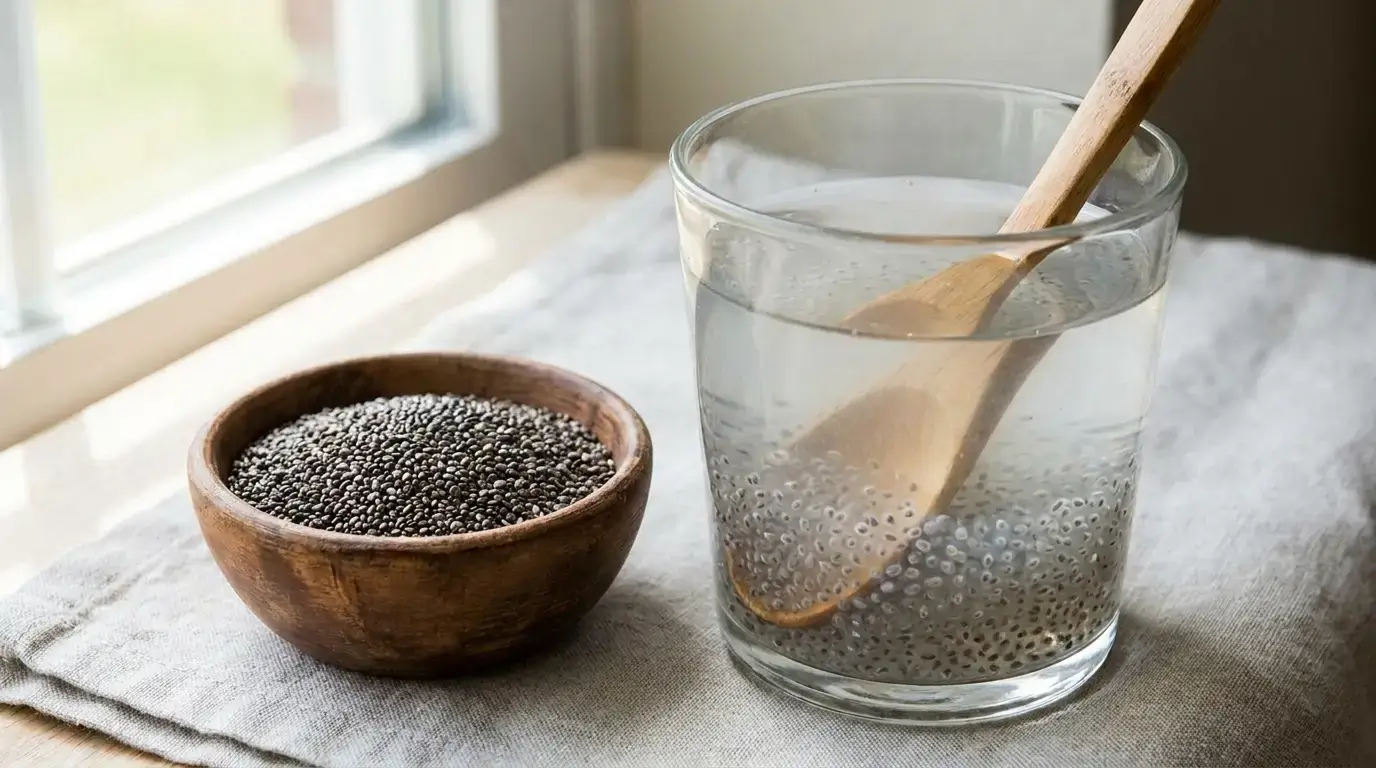
Chia seeds show up on nearly every “superfood” list, and weight loss is usually the headline claim. The honest answer is more nuanced than most articles let on: chia seeds aren’t a magic fat-burner, but the research does support a real, specific role they can play — just not the one most marketing suggests.
What Chia Seeds Actually Do
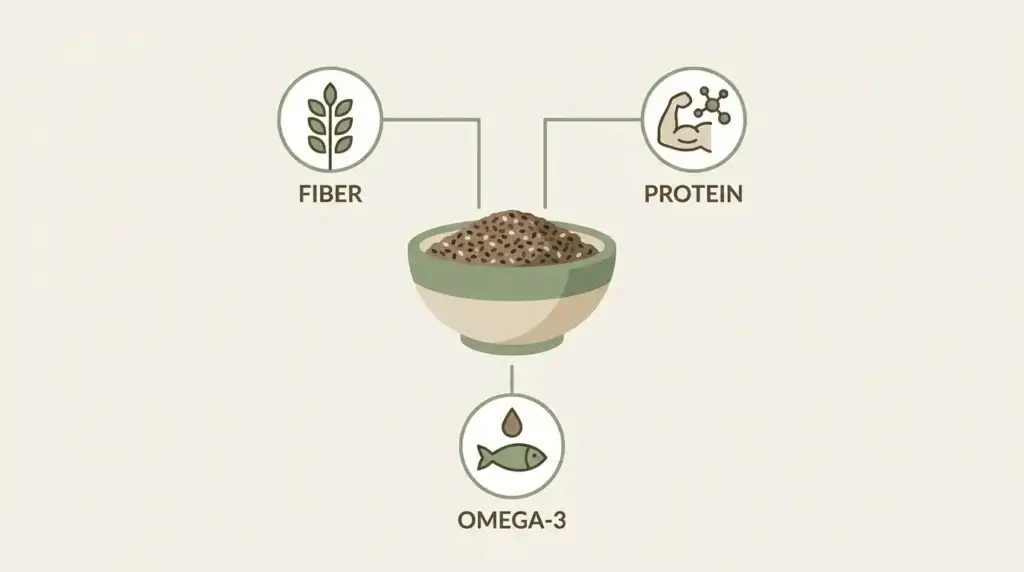
Chia seeds are tiny seeds from the Salvia hispanica plant, and they’re genuinely impressive nutritionally: about 10 grams of fiber and roughly 138 calories per 2-tablespoon serving, plus protein, omega-3 fatty acids, and minerals. When soaked in liquid, chia seeds absorb many times their weight in water and form a gel — the same property behind chia seed water and chia jello.
That gel-forming fiber is the mechanism behind most weight-related claims: it slows digestion, extends fullness, and can help reduce how much you eat at a given meal.
What the Research Actually Shows
This is the part worth being direct about. Multiple systematic reviews and meta-analyses have looked at chia seeds and weight loss, and the results are consistently mixed:
- Several studies show chia supplementation reduces waist circumference, even when overall body weight doesn’t change significantly
- One meta-analysis found chia seed supplementation had no significant effect on BMI in people with obesity, despite the waist circumference benefit
- A study in people with type 2 diabetes on a reduced-calorie diet found the chia group lost more weight than a fiber-matched comparison group, suggesting the effect may depend heavily on context and existing dietary habits
- Recent reviews describe more consistent evidence for blood pressure and metabolic markers than for scale weight specifically
The pattern across the research: chia seeds don’t cause weight loss on their own, but as part of a reduced-calorie eating pattern, their fiber and protein content can genuinely support the fullness and appetite control that make sustained calorie reduction easier.
How to Actually Use Chia Seeds for Weight Loss
The amount that matters: Most research uses somewhere between 1-2 tablespoons (about 12-25 grams) daily. Start with 1 tablespoon and work up gradually — jumping straight to a large amount can cause bloating or digestive discomfort, since you’re adding a substantial amount of fiber all at once.
Where they fit best:
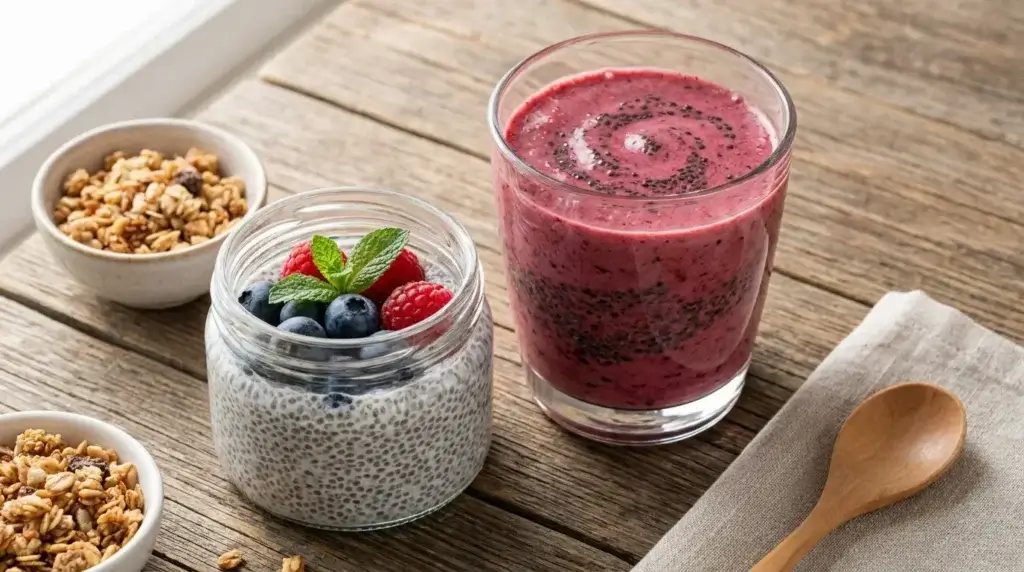
- Stirred into a natural GLP-1 foods-style breakfast for extra fiber and staying power
- Blended into one of our best weight loss smoothie recipes for a thicker, more filling texture
- Soaked overnight in milk or a milk alternative for a ready-to-eat pudding
- Sprinkled over high-protein oatmeal to boost the fiber content of an already protein-forward breakfast
What actually makes the difference: Chia seeds work as part of an overall reduced-calorie pattern, not as an addition on top of your normal eating. Adding 2 tablespoons of chia (about 140 calories) without adjusting anything else in your diet simply adds calories rather than creating the deficit needed for weight loss.
Chia Seeds vs. Other Fiber Options
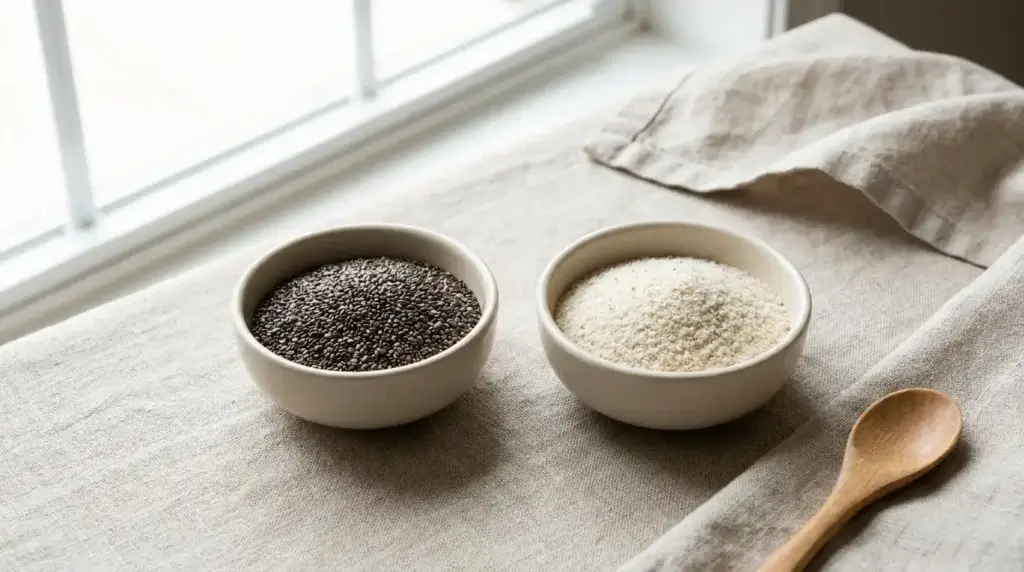
If you’re comparing fiber sources for weight loss, chia isn’t the only option worth knowing about. Our breakdown of psyllium husk vs. chia seeds covers how they differ — psyllium tends to have a stronger, more immediate fullness effect due to its higher soluble fiber concentration, while chia brings additional omega-3s and protein to the table. For a broader look at fiber-based options generally, our best GLP-1 supplement guide covers how these fiber sources compare to other appetite-support categories.
Possible Side Effects
- Bloating and gas, especially if you increase intake too quickly — build up gradually
- Choking risk if eaten dry — always soak chia seeds in liquid before eating, since they expand rapidly and can swell in the throat if consumed without enough moisture
- Interaction with blood-thinning medication — chia’s omega-3 content can have mild blood-thinning effects, so check with a doctor if you’re on anticoagulants
FAQ
Do chia seeds actually help you lose weight?
Not on their own. Research shows mixed direct effects on body weight, though more consistent benefits for waist circumference and fullness. They work best as part of a reduced-calorie eating pattern, not as a standalone fix.
How many chia seeds should I eat per day for weight loss?
Most research uses 1-2 tablespoons (about 12-25 grams) per day, built up gradually to avoid digestive discomfort.
What’s the best way to eat chia seeds for weight loss?
Soaked in liquid — smoothies, overnight oats, or chia pudding — rather than dry, both for safety and because the gel-forming texture is what drives the fullness effect.
Are chia seeds better than psyllium husk for weight loss?
They work differently. Psyllium generally has a stronger, more immediate satiety effect due to its soluble fiber concentration, while chia adds protein and omega-3s alongside its fiber. See our psyllium husk vs. chia seeds comparison for the full breakdown.
This article is for informational purposes only and is not medical advice. If you take blood-thinning medication or have a digestive condition, talk to a healthcare provider before significantly increasing your fiber intake.