
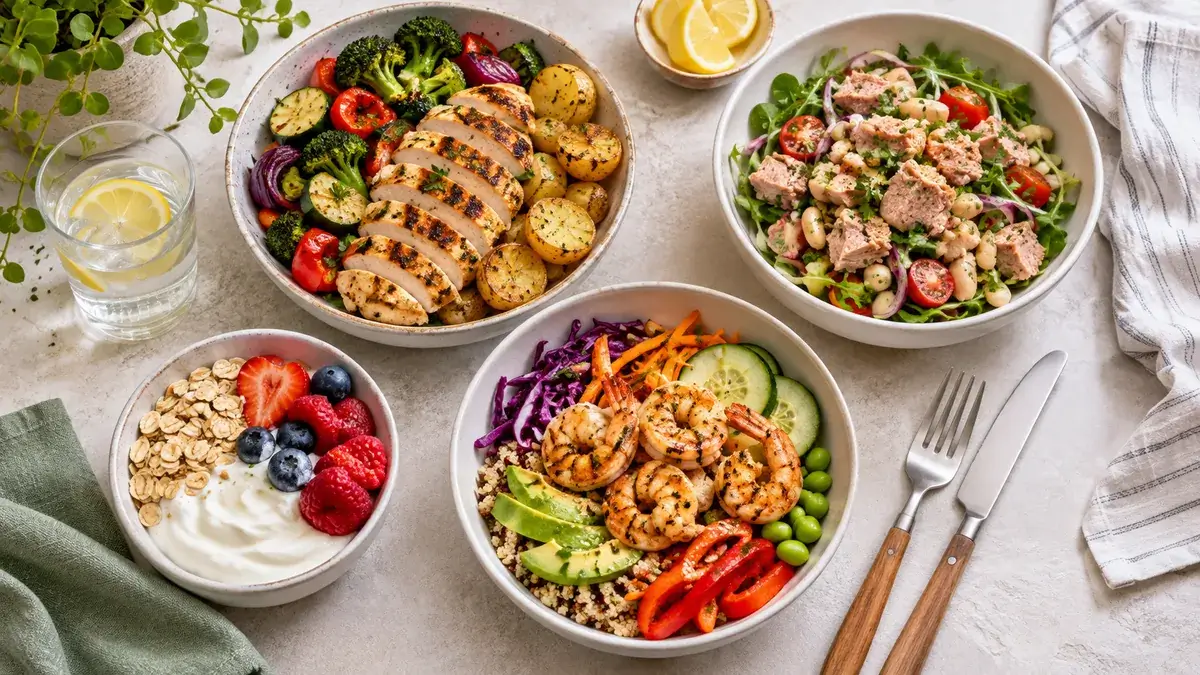
Find 10 genuinely useful high-protein, lower-calorie meals with measured ingredients, detailed cooking steps and realistic calorie-and-protein ranges, plus a vegan tofu bowl, turkey meatballs, cold office lunches and safe meal-prep guidance.
What counts as a high-protein, low-calorie meal?
A high-protein, low-calorie meal combines a meaningful serving of protein with vegetables, fiber-rich carbohydrates and a measured amount of fat. The goal is not to eliminate potatoes, rice or bread: it is to get enough food volume and protein within a calorie range that suits your day. The meals below show the exact raw or cooked weight where it matters, not a vague instruction to “add some protein.”
One useful benchmark for a substantial main meal is roughly 30–45 g of protein with about 350–550 calories, though smaller breakfasts and lighter meals can fall below that range. A meal with less than 350 calories can still be useful if the overall day is adequate for the person. Fiber targets depend on the ingredients; combining beans, vegetables and whole grains helps.
Protein helps maintain muscle and can support fullness during a calorie deficit, but it does not cause automatic weight loss without the wider energy balance. Public guidance and research reviews often discuss an adult daily protein intake around 1.2–1.6 g per kilogram in some contexts, with individual needs varying. The higher athlete-focused numbers found in the supplied report are not appropriate as a universal prescription, and neither is a fixed 1,200-calorie daily diet for everyone.
Ten high-protein, low-calorie meals at a glance
| # | Meal | Estimated calories | Estimated protein | Type |
|---|---|---|---|---|
| 1 | Vegetable, egg-white and feta omelet with toast | 380–430 kcal | 34–40 g protein | Hot breakfast / vegetarian |
| 2 | Skyr or quark power bowl with berries and oats | 310–380 kcal | 30–38 g protein | Cold, no-cook breakfast / vegetarian |
| 3 | Egg-white and turkey breakfast wrap | 220–290 kcal | 30–38 g protein | Portable breakfast or lunch |
| 4 | Tuna and white bean office salad | 350–430 kcal | 36–44 g protein | Cold lunch without a microwave |
| 5 | Shake-and-eat chicken and chickpea mason jar | 460–520 kcal | 45–55 g protein | Cold chicken lunch / meal prep |
| 6 | Sheet-pan chicken, potatoes and vegetables | 400–470 kcal | 38–45 g protein | Easy family dinner |
| 7 | Lemon cod with new potatoes and green beans | 310–370 kcal | 38–43 g protein | Very lean fish dinner |
| 8 | Shrimp pasta with zucchini noodles | 380–450 kcal | 35–42 g protein | Volume-eating pasta dinner |
| 9 | Turkey egg-roll bowl with cabbage and carrots | 280–340 kcal | 30–37 g protein | Fast stovetop dinner |
| 10 | Lean beef and kidney bean chili with yogurt | 420–490 kcal | 35–43 g protein | Hearty dinner / batch cook |
For make-ahead planning, the cold tuna-and-bean salad and chicken-and-chickpea jar do not need an office microwave. The sheet-pan chicken, egg-roll bowl and chili are better for family dinners or prepared lunches. The omelet and skyr bowl offer different hot and cold breakfasts.
Ten measured recipes with cooking instructions
The servings below are designed as practical meal examples. They are not a universal diet plan; adjust quantities for appetite, age, activity, medical advice and total dietary needs.
1. Vegetable, egg-white and feta omelet with toast
Best use: Hot breakfast / vegetarian
Estimated per serving: About 380–430 kcal; 34–40 g protein
Ingredients for one serving
- 2 large eggs
- 150 ml liquid egg whites
- 50 g spinach
- 70 g sliced mushrooms
- 30 g feta
- 1 slice whole-grain bread (about 40 g)
- 1 g cooking oil spray or a measured nonstick pan coating
- Black pepper and dried oregano
Directions
- Cook mushrooms in a nonstick skillet with the measured oil for 3–4 minutes; add spinach and wilt briefly.
- Whisk whole eggs with the liquid whites and pepper. Pour over vegetables, lower the heat and gently cook until the eggs set completely.
- Crumble feta over the omelet and fold. Serve with toasted whole-grain bread.
Nutrition and prep note: The eggs and feta make this vegetarian, not vegan. A source version without bread, feta or added oil is much lower in calories; do not attach its macro estimate to the complete plate.
2. Skyr or quark power bowl with berries and oats
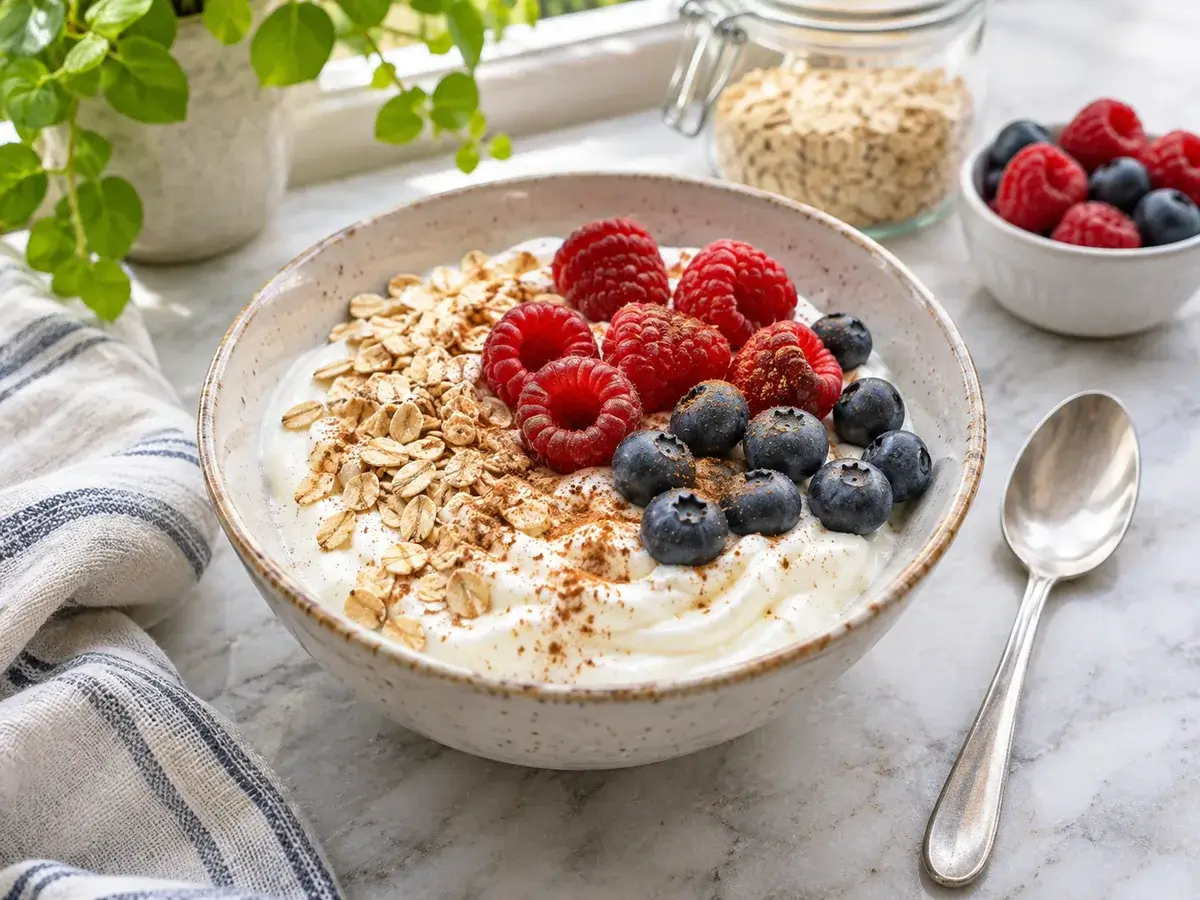
Best use: Cold, no-cook breakfast / vegetarian
Estimated per serving: About 310–380 kcal; 30–38 g protein
Ingredients for one serving
- 250 g plain low-fat quark or skyr (or strained nonfat Greek yogurt)
- 30 g dry rolled oats
- 100 g raspberries or blueberries
- Ground cinnamon to taste
- Optional: 5 g chia seeds for more fiber (adds calories)
Directions
- Place the chilled quark or skyr in a serving bowl and stir until smooth.
- Add the measured oats and berries. Sprinkle with cinnamon and optional chia.
- Eat immediately for chewy oats, or refrigerate for 20–30 minutes to soften them.
Nutrition and prep note: Avoid sweetened skyr if you are using nutrition figures for plain skyr; the brand can change the sugar, calories and protein.
3. Egg-white and turkey breakfast wrap
Best use: Portable breakfast or lunch
Estimated per serving: About 220–290 kcal; 30–38 g protein
Ingredients for one serving
- 240 ml liquid egg whites
- 40 g baby spinach
- 60 g cooked, sliced turkey breast
- 1 medium high-fiber tortilla (roughly 40–50 g)
- Black pepper, paprika and optional hot sauce
- Optional: 1 teaspoon mustard
Directions
- Scramble the egg whites with spinach in a nonstick skillet until fully set.
- Warm the tortilla briefly, arrange the already-cooked turkey breast and egg-white scramble down the center.
- Add pepper, paprika and a little hot sauce, then fold tightly and serve.
Nutrition and prep note: A tortilla marketed as low-calorie can still vary substantially by brand. If packing, cool the filling promptly and keep the wrap refrigerated.
4. Tuna and white bean office salad
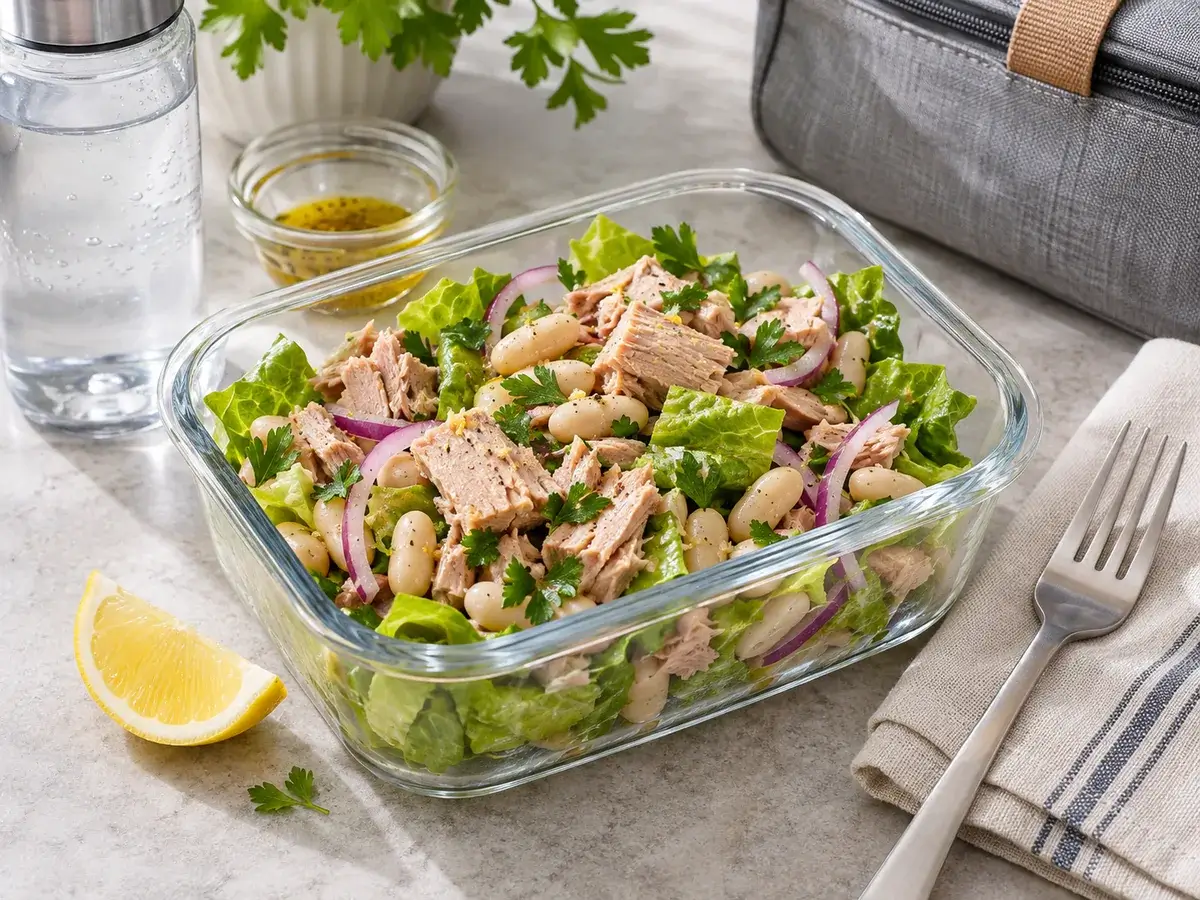
Best use: Cold lunch without a microwave
Estimated per serving: About 350–430 kcal; 36–44 g protein
Ingredients for one serving
- 120 g canned tuna in water, drained
- 120 g cooked, rinsed cannellini beans
- 80 g mixed lettuce
- 30 g finely sliced red onion
- 10 g chopped parsley
- 20 ml lemon juice
- 1 teaspoon (5 ml) olive oil
- Black pepper and optional Dijon mustard
Directions
- Drain tuna thoroughly and rinse the white beans to remove excess canning liquid.
- Toss lettuce, onion, parsley and beans in a lunch container; flake tuna over them.
- Whisk lemon juice and measured oil separately; dress only before eating for crisp greens.
Nutrition and prep note: The report compares tuna in brine/water with tuna packed in oil: for a similar 100 g drained portion, oil-packed tuna can contain considerably more calories. Compare labels rather than assuming all cans are identical.
5. Shake-and-eat chicken and chickpea mason jar
Best use: Cold chicken lunch / meal prep
Estimated per serving: About 460–520 kcal; 45–55 g protein
Ingredients for one serving
- 150 g cooked, cooled skinless chicken breast
- 100 g cooked, drained chickpeas
- 100 g diced cucumber
- 100 g chopped tomatoes
- 60 g leafy salad greens
- 1 teaspoon (5 ml) olive oil
- 20 ml lemon juice
- Optional garlic, oregano and pepper
Directions
- Whisk oil, lemon and seasonings; pour the dressing into the bottom of a large clean jar.
- Add chickpeas first, followed by cucumber and tomato; place cooked chicken on top and finish with dry lettuce.
- Keep cold until lunch. Shake the closed jar and transfer to a bowl, or toss carefully in the jar with a fork.
Nutrition and prep note: Use fully cooked and safely chilled chicken. Put wet ingredients at the bottom to keep lettuce crisp; do not store this jar unrefrigerated at the office.
6. Sheet-pan chicken, potatoes and vegetables
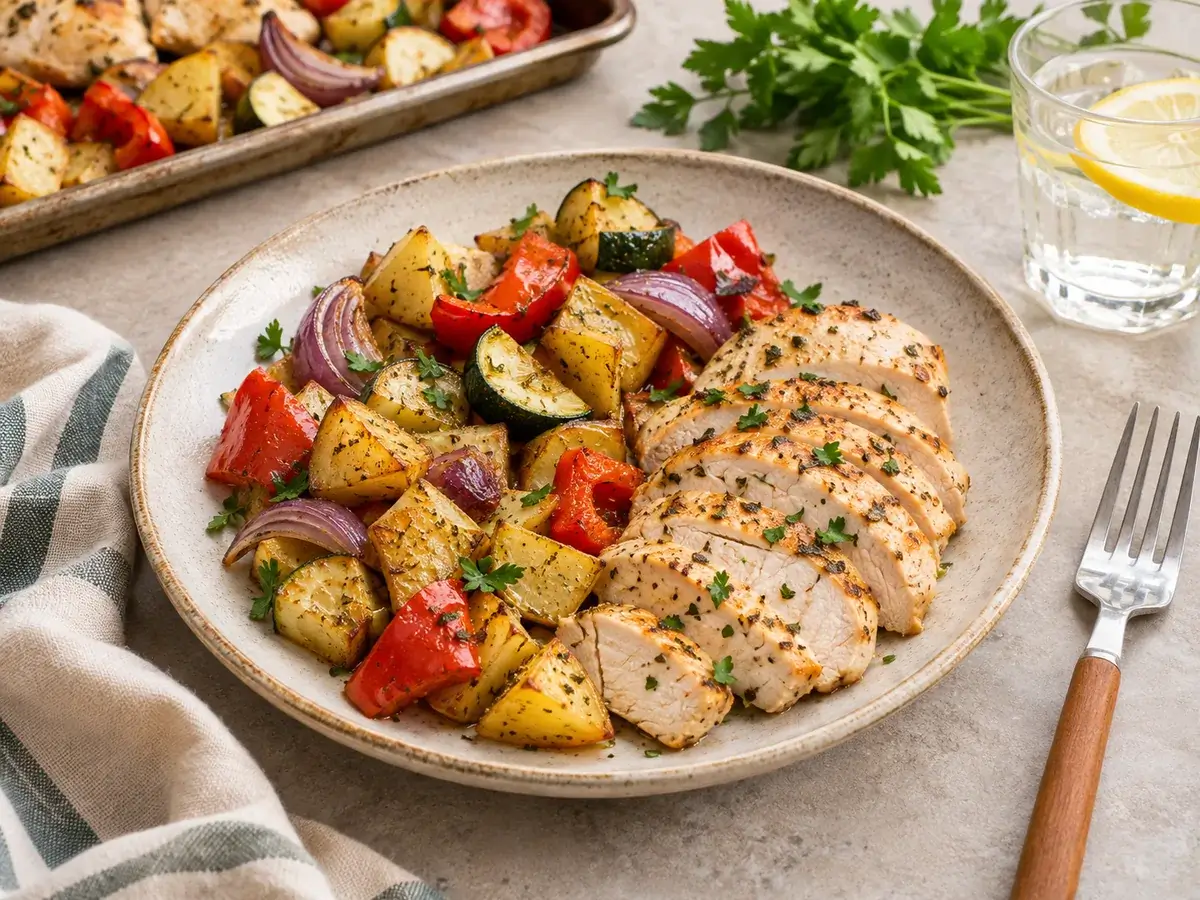
Best use: Easy family dinner
Estimated per serving: About 400–470 kcal; 38–45 g protein
Ingredients for one serving
- 150 g raw skinless chicken breast, cut into even pieces
- 150 g raw potato, cut into small cubes
- 120 g zucchini
- 100 g bell pepper
- 60 g red onion
- 1 teaspoon (5 ml) olive oil
- 1 teaspoon Italian herb mix
- Paprika, garlic powder and black pepper
Directions
- Heat oven to 425°F (220°C). Toss potato cubes with roughly half the oil and roast for 10 minutes to give them a head start.
- Add chicken, zucchini, pepper, onion, remaining oil and spices; spread in one layer rather than piling them.
- Roast another 15–20 minutes, stirring vegetables once, until potatoes are tender and the chicken reaches 165°F (74°C) in the thickest piece.
Nutrition and prep note: The single teaspoon of oil is included in the meal calculation. Pouring oil freely is a common reason a “light” traybake becomes much more calorie-dense.
7. Lemon cod with new potatoes and green beans
Best use: Very lean fish dinner
Estimated per serving: About 310–370 kcal; 38–43 g protein
Ingredients for one serving
- 150 g cod fillet
- 200 g boiled or steamed new potatoes
- 100 g green beans
- 20 ml lemon juice
- 1 garlic clove, minced
- Parsley, black pepper and optional chili flakes
- Optional 1 teaspoon olive oil (adds about 40 calories)
Directions
- Heat oven to 400°F (205°C). Place cod in a small baking dish with garlic, lemon and pepper.
- Bake about 12–15 minutes, depending on thickness, until the fish reaches 145°F (63°C) or meets safe cooking guidance and flakes easily.
- Boil or steam potatoes and green beans until tender. Finish with parsley; measure any extra butter or oil rather than assuming it is calorie-free.
Nutrition and prep note: Cod is naturally lean and protein-dense. For a more substantial dinner add a tablespoon of yogurt-lemon sauce or more vegetables, counting any additional calories.
8. Shrimp pasta with zucchini noodles
Best use: Volume-eating pasta dinner
Estimated per serving: About 380–450 kcal; 35–42 g protein
Ingredients for one serving
- 150 g peeled raw shrimp
- 50 g dry pasta
- 180 g spiralized zucchini (zoodles)
- 150 g plain tomato passata or low-sugar tomato sauce
- 1 garlic clove
- Fresh basil or parsley
- Optional 1 teaspoon olive oil, included if used
Directions
- Cook 50 g dry pasta according to the package; reserve a little pasta water.
- Simmer tomato sauce with garlic and herbs. Add shrimp and cook until pearly and opaque, about 3–5 minutes depending on size.
- Fold in zucchini noodles for 1–2 minutes only, then combine with pasta and a little reserved water. Avoid cooking zucchini until it floods the sauce.
Nutrition and prep note: The recipe deliberately mixes a measured pasta portion with zoodles; it does not eliminate carbohydrates entirely. Drain water released by zucchini if necessary.
9. Turkey egg-roll bowl with cabbage and carrots
Best use: Fast stovetop dinner
Estimated per serving: About 280–340 kcal; 30–37 g protein
Ingredients for one serving
- 150 g raw lean ground turkey or chicken
- 200 g finely shredded cabbage
- 80 g grated carrot
- 10 ml reduced-sodium soy sauce
- 1 teaspoon (5 ml) toasted sesame oil
- 1 garlic clove, minced
- 1 teaspoon ginger, grated
- Scallions and rice vinegar to finish
Directions
- Brown turkey or chicken in a large nonstick skillet, breaking it into crumbles; cook thoroughly to 165°F (74°C).
- Add garlic, ginger, cabbage and carrot. Stir-fry about 4–6 minutes until the vegetables soften but still have bite.
- Add soy sauce, sesame oil and a splash of rice vinegar. Toss, garnish with scallions and serve in a bowl.
Nutrition and prep note: A takeout-style egg-roll bowl can be high in sodium if you use regular soy plus bottled sauces. Start with reduced-sodium soy and season at the end.
10. Lean beef and kidney bean chili with yogurt
Best use: Hearty dinner / batch cook
Estimated per serving: About 420–490 kcal; 35–43 g protein
Ingredients for one serving
- 125 g raw 5%-fat ground beef
- 110 g cooked, rinsed kidney beans
- 150 g crushed tomatoes
- 100 g diced bell pepper
- 60 g chopped onion
- 1 teaspoon (5 ml) olive oil
- 30 g plain yogurt
- 1 teaspoon chili powder plus cumin, paprika and garlic
Directions
- Warm the measured oil in a saucepan. Soften onion and bell pepper for 4–5 minutes.
- Add lean beef and stir until browned, then add spices, kidney beans and tomatoes. Simmer for 15–20 minutes, adding a little water if it becomes dry.
- Ensure ground beef reaches 160°F (71°C), spoon into a bowl and top with plain yogurt.
Nutrition and prep note: Batch cooking works well for chili: cool it promptly in shallow containers and refrigerate for up to 3–4 days or freeze portions. Yogurt is included in the estimate.
Two extra options: vegan bowl and turkey meatballs
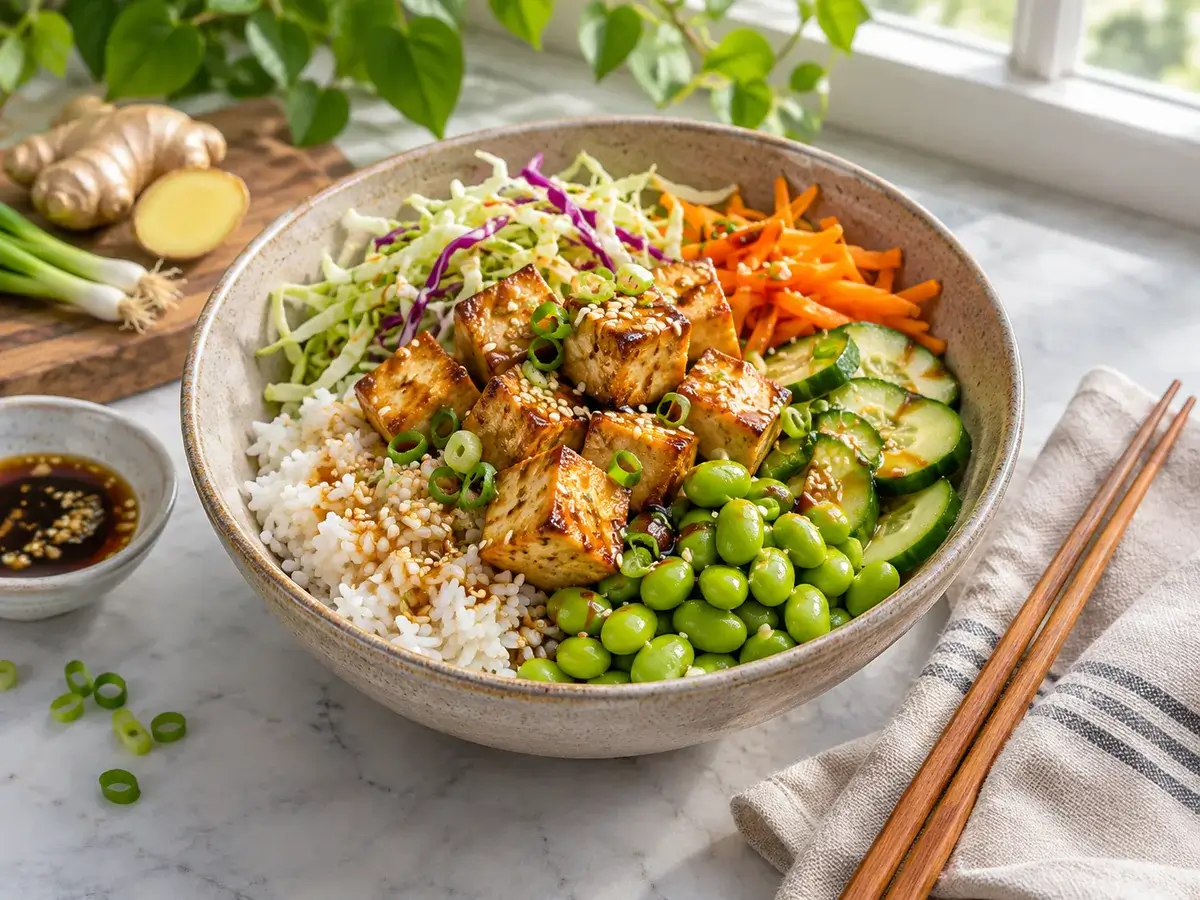
Tofu and edamame rice bowl (vegan)
Ingredients for one bowl: 200 g firm tofu (choose a protein-rich brand), 80 g cooked shelled edamame, 100 g cooked rice, 150 g cabbage-and-carrot slaw, 1 teaspoon oil, 10 ml reduced-sodium soy sauce, 1 teaspoon grated ginger and 10 ml lime juice.
- Pat tofu dry, cube and toss with a measured teaspoon of oil. Sear in a nonstick skillet until lightly browned on several sides.
- Warm the cooked edamame and rice safely; briefly soften the slaw if desired or keep it raw and crisp.
- Mix soy sauce, ginger and lime. Arrange rice, tofu, edamame and slaw; drizzle with the dressing.
Estimated nutrition: approximately 430–550 kcal and 30–42 g protein, highly dependent on tofu brand. The supplied research cites one version at about 480 kcal and 40 g protein; verify your actual tofu label before presenting that as an exact figure.
Turkey-and-spinach meatballs over zucchini noodles
Ingredients: 150 g lean ground turkey, 40 g finely chopped spinach, 1 tablespoon breadcrumbs, garlic and Italian seasoning; 200 g zucchini noodles and 150 g plain tomato sauce; 1 teaspoon olive oil.
- Mix turkey, spinach, breadcrumbs and seasonings and shape into five small meatballs.
- Cook on a lightly oiled sheet pan at 400°F (205°C) until fully cooked and the center reaches 165°F (74°C), typically about 15–20 minutes depending on size.
- Warm tomato sauce, quickly toss with zucchini noodles and serve with meatballs. Keep noodles slightly firm to avoid watery sauce.
Estimated nutrition: approximately 250–350 kcal with roughly 30–38 g protein. This version can be a lighter dinner; pair with a measured portion of rice, potatoes or bread when a more substantial meal is needed.
The simple plate formula for satisfying meals
Use this visual starting point instead of automatically eliminating food groups:
- Half the plate: vegetables or salad to add volume, color, fiber and micronutrients.
- A palm-size protein portion: roughly 120–180 g cooked or raw as specified in a recipe (skinless chicken, fish, lean meat or tofu); dairy bowls may use 200–250 g skyr or quark.
- A fist-size starch portion: measured rice, potatoes, pasta or whole-grain bread. These provide energy and can make a plan easier to sustain.
- A small measured fat portion: for example 1 teaspoon oil, or a clearly measured amount of avocado, nuts or seeds.
This is not a hard mathematical rule and does not replace individualized nutrition care. It is simply a useful way to avoid the common mistake of choosing a lean protein but forgetting vegetables, fiber and enough food for a satisfying meal.
Protein per 100 calories: a useful—but imperfect—comparison
To compare foods fairly, divide their protein grams by their calories, then multiply by 100. For example, a food with 24 g protein and 100 kcal provides 24 g per 100 calories. That ratio tells you about protein density, not food quality on its own: salmon, beans, nuts and oils can still have important nutritional roles even if the ratio is lower.
| Food (plain typical example) | Approx. protein per 100 kcal | Practical note |
|---|---|---|
| Cod, cooked | About 20–24 g | Very lean; cook gently |
| Shrimp, plain cooked | About 20–24 g | Sauces and breading change calories |
| Tuna in water, drained | About 20–24 g | Oil-packed tuna may be more calorie-dense |
| Skinless chicken breast, cooked | About 18–20 g | Good for hot and cold lunches |
| Plain skyr / nonfat Greek yogurt | About 14–18 g | Check brands and sweeteners |
| Firm tofu | Varies widely, often about 10–16 g | Water content and brand matter |
| Cheddar cheese | About 6–7 g | Useful flavor source, less lean |
| Peanut butter | About 4–5 g | Nutrient-rich but calorie-dense |
Approximate educational comparisons only. For accurate macro counts, check the purchased product’s nutrition label and use the actual serving size.
High-protein lunches you can eat cold at work
For a poultry protein you can cook ahead and chill for lunches, our slow cooker turkey breast guide explains safe temperatures and two serving styles.
If a microwave is not available, focus on foods that taste good chilled and are easy to pack safely. The tuna-and-white-bean salad combines fish and legumes; the chicken-and-chickpea jar separates dressing from greens; the egg-white-and-turkey wrap travels well when tightly wrapped and refrigerated.
Two more practical combinations are a turkey-and-hummus whole-grain wrap with measured hummus, and a savory cottage cheese box with cucumber, cherry tomatoes and whole-grain crackers. A 150 g serving of lower-fat cottage cheese can provide roughly 16–18 g protein, but it is not a complete 35–40 g protein lunch by itself; pair it with another protein if that is your goal.
Pack refrigerated food in an insulated bag with cold packs. Tuna, dairy, cooked poultry and egg dishes should not sit on a desk at room temperature for the whole day.
Five reasons a “healthy” meal may be higher in calories than expected
- Unmeasured cooking oil. One tablespoon of oil contains roughly 120 calories. A teaspoon contains roughly 40; the difference matters when you drizzle from a bottle.
- Extra sauce. Creamy dressings, pesto, mayonnaise and sweet glazes can add more energy than expected. Measure them rather than omitting them from the meal estimate.
- Protein labeling without context. Peanut butter and cheddar provide protein but also substantial fat and calories; they are not interchangeable with cod or nonfat yogurt on a gram-for-gram protein basis.
- Confusing raw and cooked weights. A 150 g raw chicken portion does not weigh 150 g after cooking. State which you are measuring whenever you calculate macros.
- Ignoring sides and toppings. Bread, rice, cooking oil, yogurt, nuts and dressings all count. The same meal can be 350 calories or much more depending on what gets added.
Efficient Sunday meal prep without sacrificing food safety
Another freezer-friendly batch option is our giant chicken cutlet recipe. Divide the baked cutlet into portions and reheat until hot throughout.
In a focused prep session, prepare a pot of chili, cook chicken for jars, wash sturdy vegetables and mix dry seasonings. Keep dressings in separate small containers. Cool cooked food promptly in shallow containers instead of leaving a large pot at room temperature for hours.
Cooked chicken and meat: Refrigerate at 40°F (4°C) or colder and eat within 3–4 days, or freeze longer-term portions. Egg dishes: cool and refrigerate promptly. Cooked rice: handle especially carefully; cool rapidly and use within 1–2 days for a cautious home meal-prep approach, or freeze single servings promptly. The supplied research uses a stricter rice guideline than the generic USDA 3–4-day leftovers range; local public health advice can differ, and rapid cooling is particularly important.
Reheat prepared poultry, meat dishes and leftovers thoroughly to 165°F (74°C). Never leave perishable foods at room temperature longer than two hours, or one hour above 90°F (32°C).
One flexible sample day—not a prescribed diet
For example, you might combine the skyr-and-oat breakfast, a tuna-and-white-bean lunch and the sheet-pan chicken dinner, then add appropriate snacks and portions based on individual energy needs. A three-meal example is a planning illustration, not a fixed 1,200–1,500-calorie diet. Calorie requirements vary, and very restrictive plans can be inappropriate without clinical supervision.
For people managing medical conditions, eating disorders, pregnancy, adolescence or kidney issues, seek individualized nutrition advice rather than following an internet macro target.
FAQS
What is a good high-protein, low-calorie dinner?
A practical dinner might pair about 150 g skinless chicken or fish with a large portion of vegetables, a measured potato or rice portion and a teaspoon of cooking oil. The exact calories and protein depend on portions and method.
How much protein should be in a weight-loss meal?
Many example meals aim for around 30–45 g of protein, but there is no single requirement for every person or meal. Total daily needs depend on body size, age, activity and health status.
Are high-protein meals automatically good for weight loss?
No. Protein may help fullness and muscle maintenance, but overall energy intake, dietary adequacy and consistency still matter. A high-protein meal can also be very high in calories if sauces and oils are not measured.
Can I make high-protein meals without meat?
Yes. Skyr or quark, eggs, tofu, edamame and beans are useful options. The tofu-and-edamame bowl and the skyr breakfast provide detailed meat-free examples.
What can I bring to work without a microwave?
Try tuna and cannellini bean salad, a chicken-chickpea jar, or a refrigerated turkey-and-egg-white wrap. Pack them cold in an insulated lunch bag.
Do I have to cut out carbs to lose weight?
No. The examples retain measured potatoes, oats, whole-grain bread, pasta, beans or rice. Fiber-rich carbohydrates can help make meals practical and satisfying.
Can I meal prep all seven days on Sunday?
Not safely for every refrigerated dish. Cooked poultry and many leftovers are generally kept refrigerated for 3–4 days; prepare a second batch midweek or freeze later portions. Rapid cooling and cold storage are essential.
How do I calculate protein per 100 calories?
Take the grams of protein in one labeled serving, divide by the calories in that serving, and multiply by 100. Compare foods as prepared, including any added oil or sauce.
What is the lowest-calorie high-protein food?
Lean seafood such as cod, shrimp and tuna in water are highly protein-dense, but the best overall food choices also depend on variety, cost, taste, dietary restrictions and nutritional needs.
Are the calorie figures in this article exact?
No. They are transparent, approximate planning ranges based on ingredient amounts and published reference examples. Use labels or a validated nutrition database for exact card-level calculations.
Sources and food-safety references
- MedlinePlus — Dietary Guidelines for Americans 2025–2030
- FoodSafety.gov — cold food storage chart
- USDA FSIS — handling leftovers safely
- FoodSafety.gov — safe internal cooking temperatures
Nutrition figures, where shown, are estimates and may vary with brands, portions and substitutions.