
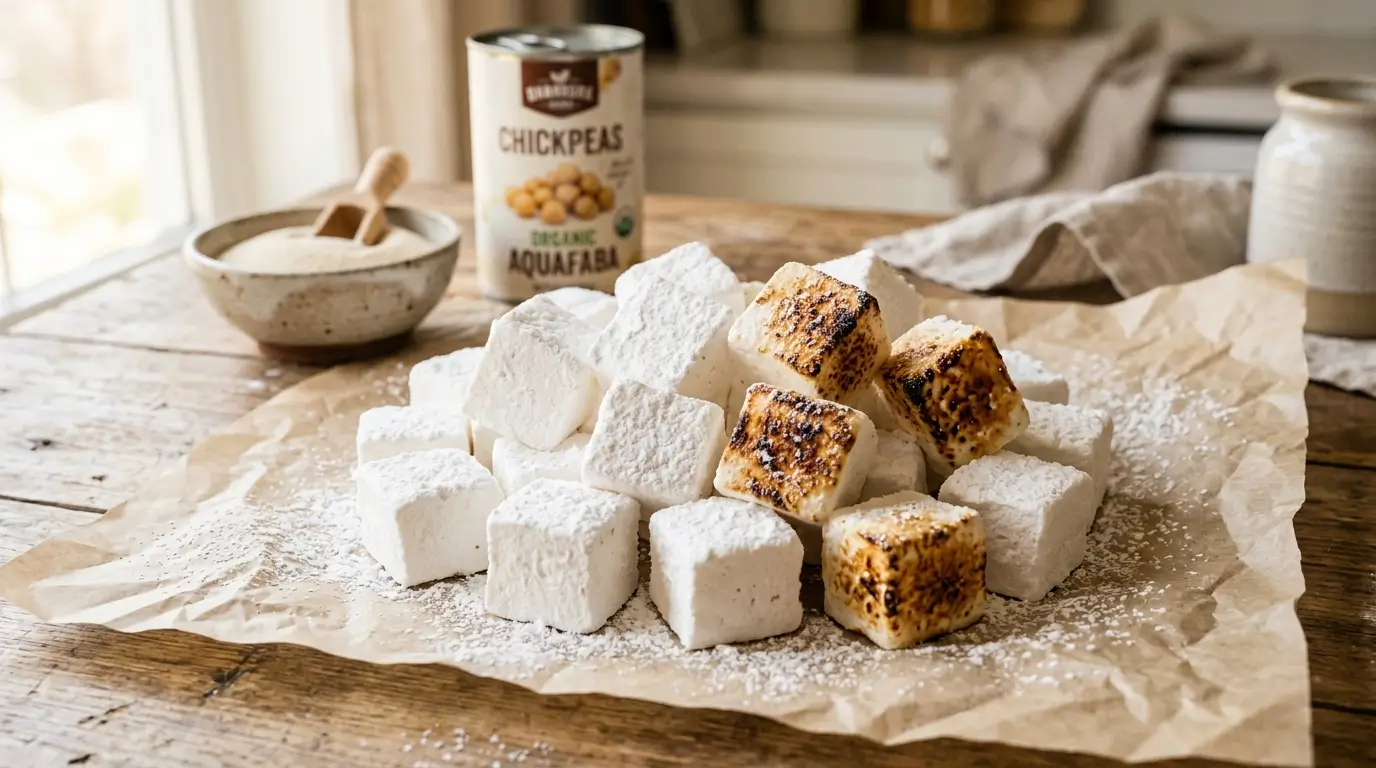
Non gelatin marshmallows have gone from a niche dietary workaround to one of the most searched food topics of 2026 — and the recipe science behind them is finally good enough to produce results that rival the original. Whether you avoid gelatin for religious reasons (halal or kosher diets), follow a vegan or vegetarian lifestyle, or simply prefer to avoid animal-derived ingredients, this guide covers three proven methods that actually produce fluffy, soft, toastable marshmallows without a single gram of gelatin. All three use ingredients available at any health food store or online.
Why Most Marshmallows Contain Gelatin
Standard marshmallows — including almost every commercial brand — are built around gelatin as their structural foundation. Gelatin is a protein derived from animal collagen (typically bovine or porcine bones and connective tissue) that, when dissolved in liquid and whipped with sugar syrup, creates the characteristic foam-like structure that gives marshmallows their bounce and chewiness.
This makes conventional marshmallows off-limits for vegans, vegetarians, people following halal or kosher dietary laws (gelatin derived from pork is not halal or kosher), and anyone with a gelatin sensitivity.
The good news: there are now three reliable non-gelatin alternatives, each producing a slightly different texture and best suited to a different use case. If you want to explore gelatin-based alternatives for other recipes, the gelatin-free gummies guide on this site covers the same concept applied to gummy candies.
The 3 Non-Gelatin Alternatives
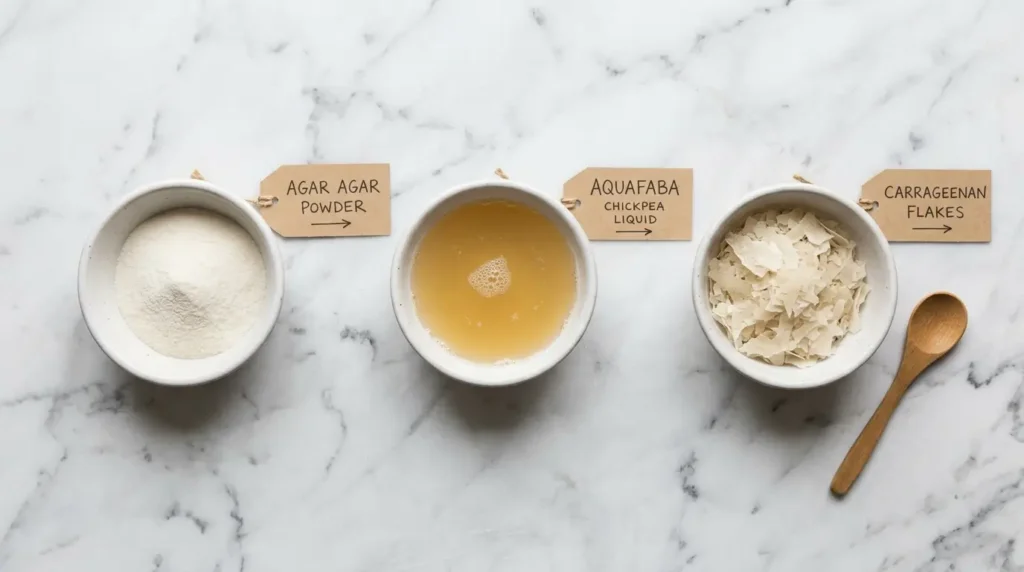
Agar agar is the most widely used gelatin substitute. Derived from red seaweed, it gels at room temperature (unlike gelatin, which requires refrigeration) and is 100% vegan. It produces a firmer, slightly less elastic marshmallow than gelatin — excellent for cutting into cubes or coating in sugar, though it toasts less dramatically than conventional marshmallows.
Aquafaba is the liquid from canned chickpeas. Its protein and starch composition makes it behave like egg white when whipped — creating stable foam that, when combined with sugar syrup, produces a light, airy marshmallow. Aquafaba marshmallows are the closest in texture to conventional ones and toast beautifully, but they require more precise technique.
Carrageenan is another seaweed-derived gelling agent, less common than agar but producing a smoother, more elastic texture than agar. It is used commercially in vegan marshmallow brands and works well for hot chocolate marshmallows that need to melt softly rather than hold their shape.
Recipe 1 — Agar Agar Marshmallows (The Most Reliable Method)
Agar agar is the best starting point for non-gelatin marshmallows because it behaves predictably, sets firmly without refrigeration, and is available at most health food stores and online. The texture is slightly more firm and less bouncy than gelatin-based marshmallows — closer to a Turkish delight than a Jet-Puffed — but absolutely delicious toasted over a fire or stirred into hot chocolate.
 🌿 100% Vegan
Agar Agar Marshmallows (Vegan)
Fluffy · Toastable · Gelatin-Free — 24 cubes, set in 2 hours at room temperature.
- 2 tsp agar agar powder (powder only — not flakes)
- ½ cup cold water (for agar)
- 1½ cups granulated sugar
- ½ cup light corn syrup (or agave for fully vegan)
- ½ cup water (for sugar syrup)
- 1 tsp vanilla extract
- ¼ tsp salt
- Powdered sugar + cornstarch (equal parts, for dusting)
Whisk agar powder into ½ cup cold water in stand mixer bowl. Let sit 5 min.
Cook sugar, corn syrup, ½ cup water and salt to 240°F (soft-ball stage).
Pour hot syrup into agar on low speed in a thin stream.
Beat on high for 10–12 min until thick, glossy, tripled in volume.
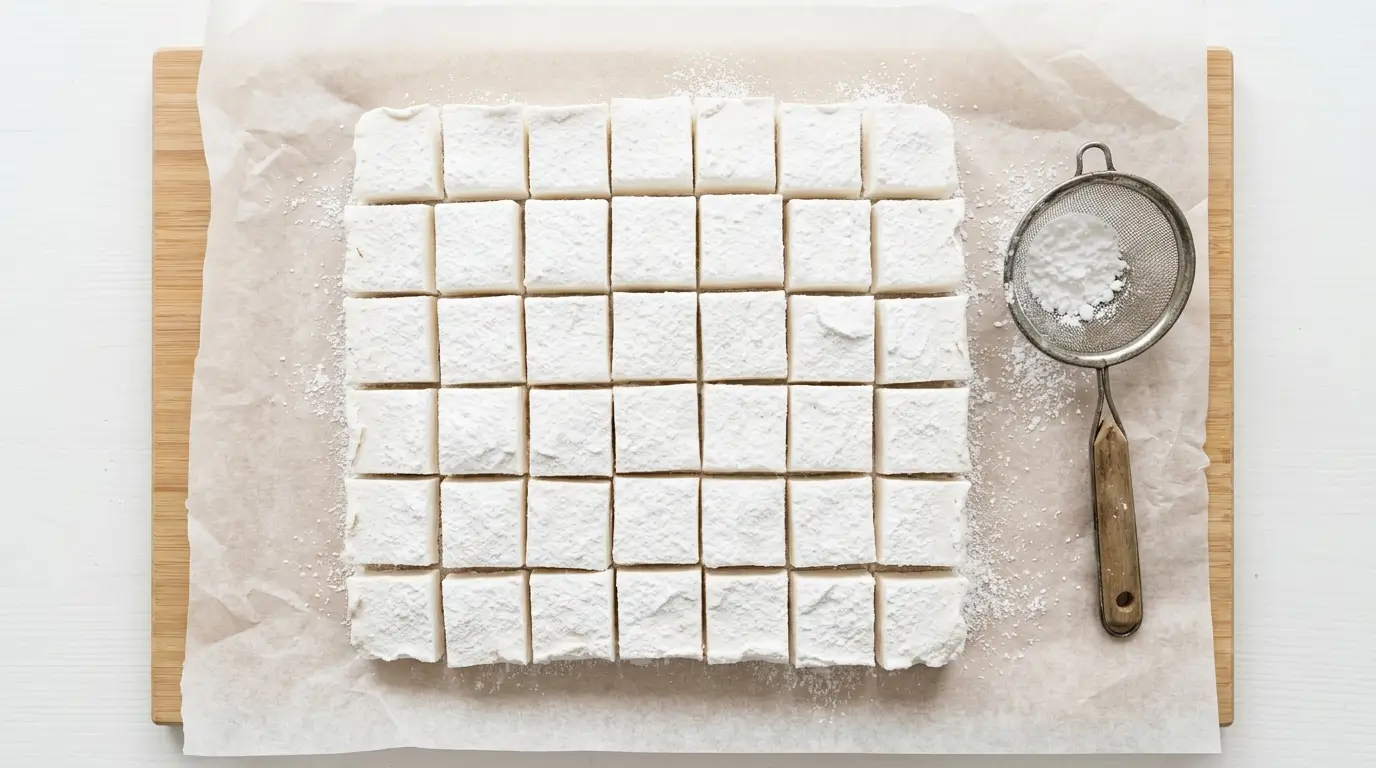
Pour into prepared pan. Dust top. Set 2 hrs at room temp — do not refrigerate.
Cut into 1-inch cubes. Toss in powdered sugar mix.
Recipe 2 — Aquafaba Marshmallows (Best Texture)
Aquafaba marshmallows produce the closest texture to conventional gelatin marshmallows — light, pillowy, with a slight chew and excellent toasting properties. The technique requires more precision than agar agar because aquafaba foam is less stable, but the result is worth it.
Ingredients: 3 tbsp aquafaba (liquid from 1 can of chickpeas), ½ tsp cream of tartar, 1 cup granulated sugar, ¼ cup water, 1 tsp vanilla, powdered sugar for coating.
Method: Whip aquafaba and cream of tartar to stiff peaks (10–12 minutes). Meanwhile heat sugar and water to 240°F (soft-ball stage). Pour hot syrup into whipped aquafaba in a thin stream while mixing continuously on high speed. Beat until cool and very stiff — about 15 minutes. Transfer to prepared pan, dust with powdered sugar, set for 4 hours. Cut and coat.
Important: Aquafaba marshmallows are more sensitive to humidity than agar or gelatin versions. Make them on a dry day and store in an airtight container — they will soften and lose structure in humid conditions.
Recipe 3 — Quick Carrageenan Marshmallows (Smoothest Texture)
Carrageenan produces the most elastic, gel-like marshmallow of the three non-gelatin options — closest to the commercial vegan brands available at health food stores. It is harder to find than agar (look online or in specialty stores) but produces a superior melt-in-hot-chocolate effect.
Method: Dissolve ½ tsp kappa carrageenan in ½ cup cold water. Heat sugar syrup to 240°F. Combine with dissolved carrageenan and whip as with agar agar. The set time is shorter (90 minutes at room temperature) and the texture is notably smoother.
Which Non-Gelatin Marshmallow Recipe Is Best for You?
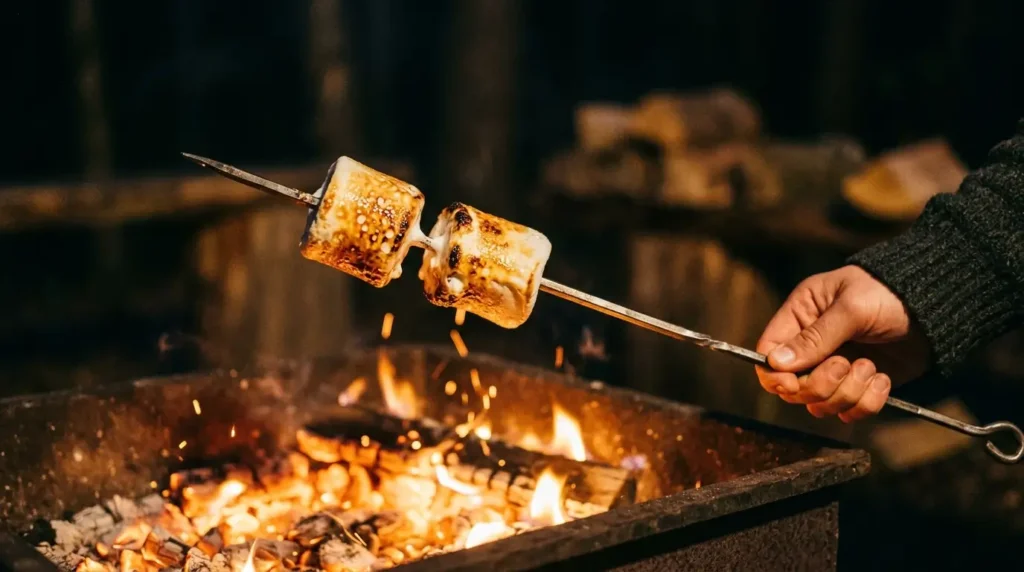
Choose agar agar if: You want reliability, room-temperature setting, and a long shelf life. Best for s’mores, hot cocoa toppings, and gifting.
Choose aquafaba if: You want the closest texture to conventional marshmallows and are comfortable with a more involved technique. Best for toasting and high-end dessert applications.
Choose carrageenan if: You want the smoothest melt — specifically for stirring into hot drinks. Best for hot chocolate marshmallows.
For other gelatin-free recipes on this site, the gelatin-free gummies recipe uses agar agar in a completely different application — worth bookmarking alongside this one. For anyone curious about the differences between gelatin and its plant-based alternatives, the gelatin sheets vs powder guide covers agar agar’s structural differences from animal gelatin in detail.
Are Store-Bought Vegan Marshmallows Worth It?
Several commercial brands now produce non-gelatin marshmallows — Dandies being the most widely available in the US. They use a carrageenan-based formula and produce a very acceptable marshmallow for most applications. The main advantage of homemade versions is control over ingredients (avoiding corn syrup, artificial flavors, or specific allergens) and significantly lower cost per serving.
For anyone following the natural GLP-1 protocol or the honey trick recipe on this site, the aquafaba version made with agave instead of corn syrup produces a lower-glycemic marshmallow that fits better into a health-focused eating pattern.
Frequently Asked Questions
Non Gelatin Marshmallows — Complete Guide