
This soya chunks protein recipe for weight loss is an Indian-inspired vegetable stir fry made with hydrated soy chunks, tomatoes, bell pepper, zucchini, spinach, and just two teaspoons of oil for the whole pan. One serving uses 40 g of dry soya chunks and provides approximately 25 g of protein and 270 calories before any rice, roti, or other sides. These are estimates, not laboratory-tested nutrition values.
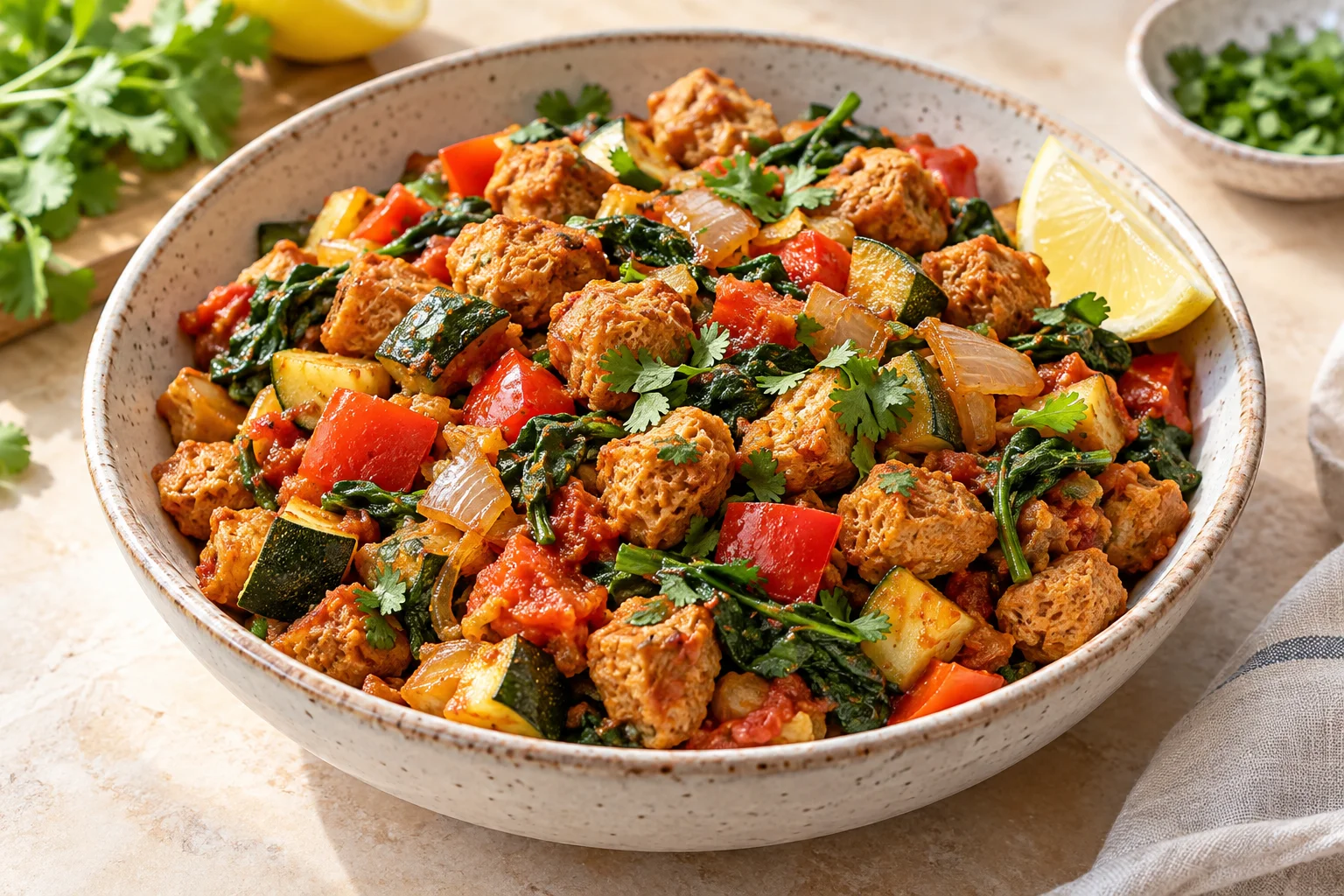
The recipe can fit a calorie-controlled eating pattern, but it does not burn fat by itself. Its practical advantage is simple: it gives you a substantial plant-protein base, plenty of vegetables, and a measured amount of cooking fat. The seasonings make a dry-style masala coating rather than a heavy, creamy sauce.
If you have been looking for a vegetarian soya chunks recipe for a gym diet, an affordable lunch, or a meatless dinner, start here. You will find the ingredient quantities, hydration method, serving ideas, and a clear explanation of dry versus cooked weight. This recipe was developed for this article and has not yet been kitchen-tested.
What Are Soya Chunks?
Soya chunks are a dried textured soy product, sometimes sold as soy nuggets, soy meat, meal maker, or textured vegetable protein. They are usually made from defatted soy flour and expand as they absorb water. Once hydrated, their porous texture takes up spices and sauces well.
They are different from fresh tofu, whole soybeans, and soy curls. Those products have different textures and nutrition, so replacing one with another changes the recipe. For this stir fry, choose plain dried chunks or mini chunks with no added sauce. Look for a package with clear nutrition information and preparation instructions.
Mini chunks work particularly well because they coat evenly and are easy to eat with vegetables. Larger chunks are also suitable, but cut them into bite-size pieces after hydration. Do not treat the dry pieces as a ready-to-eat snack unless the package specifically says they can be eaten that way.
Why This Recipe Can Fit a Weight-Loss Eating Plan
The recipe uses soya chunks as the main protein ingredient, vegetables for volume and texture, and a small, measured quantity of oil. A wide nonstick skillet lets you cook the onion and masala without repeatedly pouring in more fat. Water can loosen the mixture when it begins to stick.
That does not mean oil is unhealthy or carbohydrates should be avoided. It means quantities are easier to understand when they are measured. A tablespoon of oil, a generous rice portion, and a creamy topping can change the energy content of an otherwise light-looking meal.
Weight management depends on the overall pattern of eating, activity, and individual circumstances. A meal works best when it is enjoyable enough to repeat and appropriate for your needs. Use this stir fry as one option in a varied routine, alongside our high-protein high-fiber meals, rather than making soy your only protein source.
Soya Chunks Protein: Dry Weight vs. Cooked Weight
Always measure the chunks before hydration when using this recipe. The pan needs 80 g dry, divided between two servings. Cooked weight depends on how much water the chunks absorb and how firmly you squeeze them, so a cooked gram amount is not an interchangeable measure.
For example, a brand that provides 52 g protein per 100 g dry contains about 20.8 g protein in 40 g dry. Adding water increases weight, but it does not create extra protein. The vegetables contribute a few more grams to the finished serving. Your package label takes priority over a generic online nutrition number.
A bowl holding 200 g of cooked chunks can represent a very different dry quantity from another bowl of the same weight. That is why claims such as “200 g soya chunks gives 104 g protein” are misleading when they fail to specify dry weight. Keep the label, the scale, and the recipe on the same basis.
Ingredients for the Soya Chunks Vegetable Stir Fry
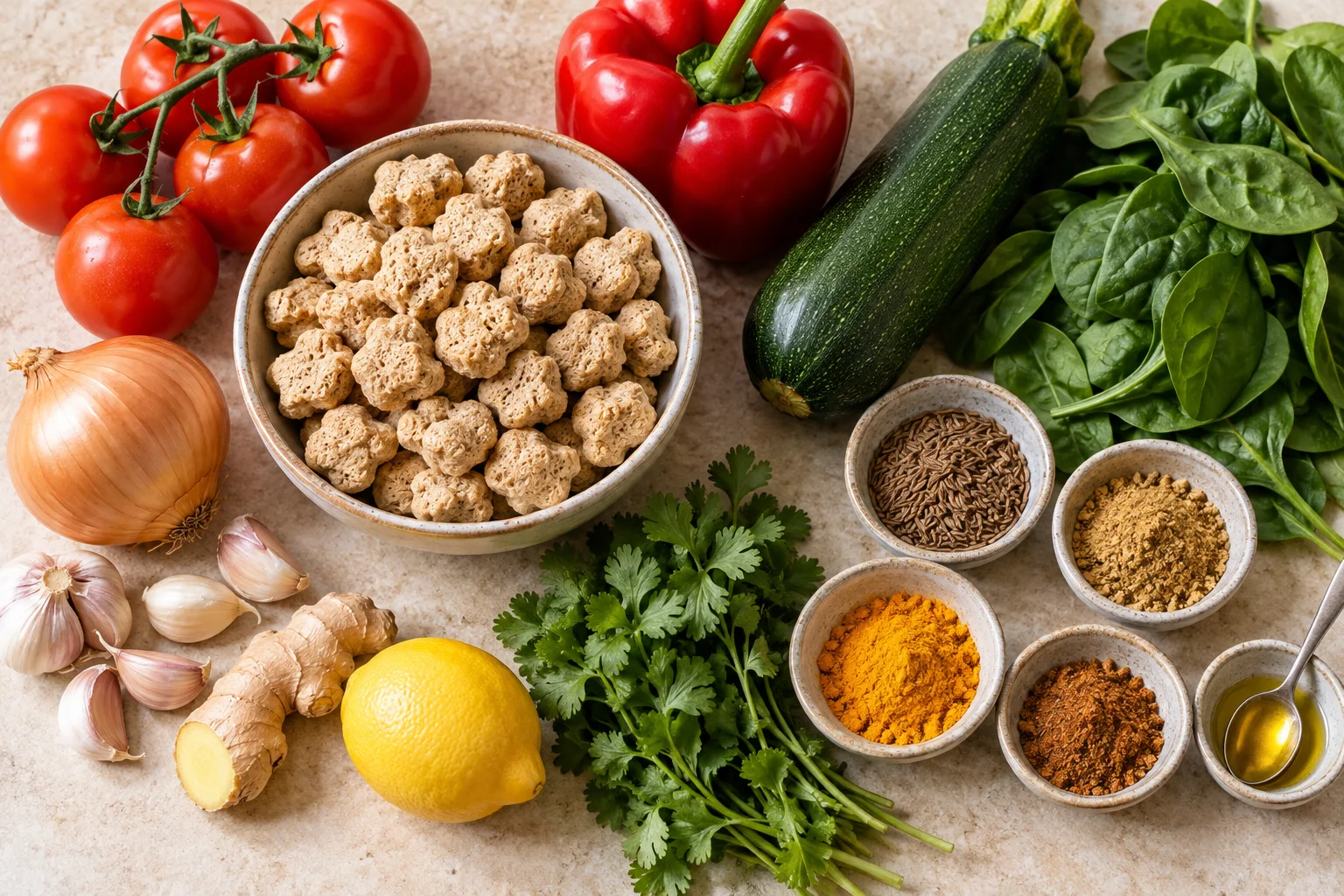
The quantities below make two servings. Have the vegetables chopped before heating the pan so the masala does not overcook while you prepare the next ingredient.
- 80 g dry soya chunks (not cooked weight)
- 2 teaspoons olive oil
- 100 g onion, finely chopped
- 2 garlic cloves, minced
- 1 teaspoon grated fresh ginger
- 200 g tomatoes, finely chopped
- 150 g red bell pepper, diced
- 150 g zucchini, diced
- 60 g spinach
- 1 teaspoon ground cumin
- 1 teaspoon ground coriander
- 1/2 teaspoon turmeric
- 1/2 teaspoon garam masala
- 1/4 teaspoon chili powder, optional
- 1/4 teaspoon salt, or to taste
- 1 tablespoon lemon juice
- 2 tablespoons chopped cilantro
- Water for hydration, plus 2–4 tablespoons for the pan
Use ripe tomatoes for a softer, more cohesive coating. If your tomatoes are unusually dry, add a little water and allow them extra time to soften. Avoid substituting sweetened ketchup because it changes both flavor and nutrition.
The spice combination gives an Indian-inspired flavor without requiring a premade sauce. Garam masala goes in near the end so its aroma remains noticeable. Chili powder is optional; if using a hot variety, begin with a small pinch. Cilantro can be replaced with parsley if you prefer, and lemon juice supplies freshness after cooking.
How to Make Soya Chunks Protein Recipe for Weight Loss
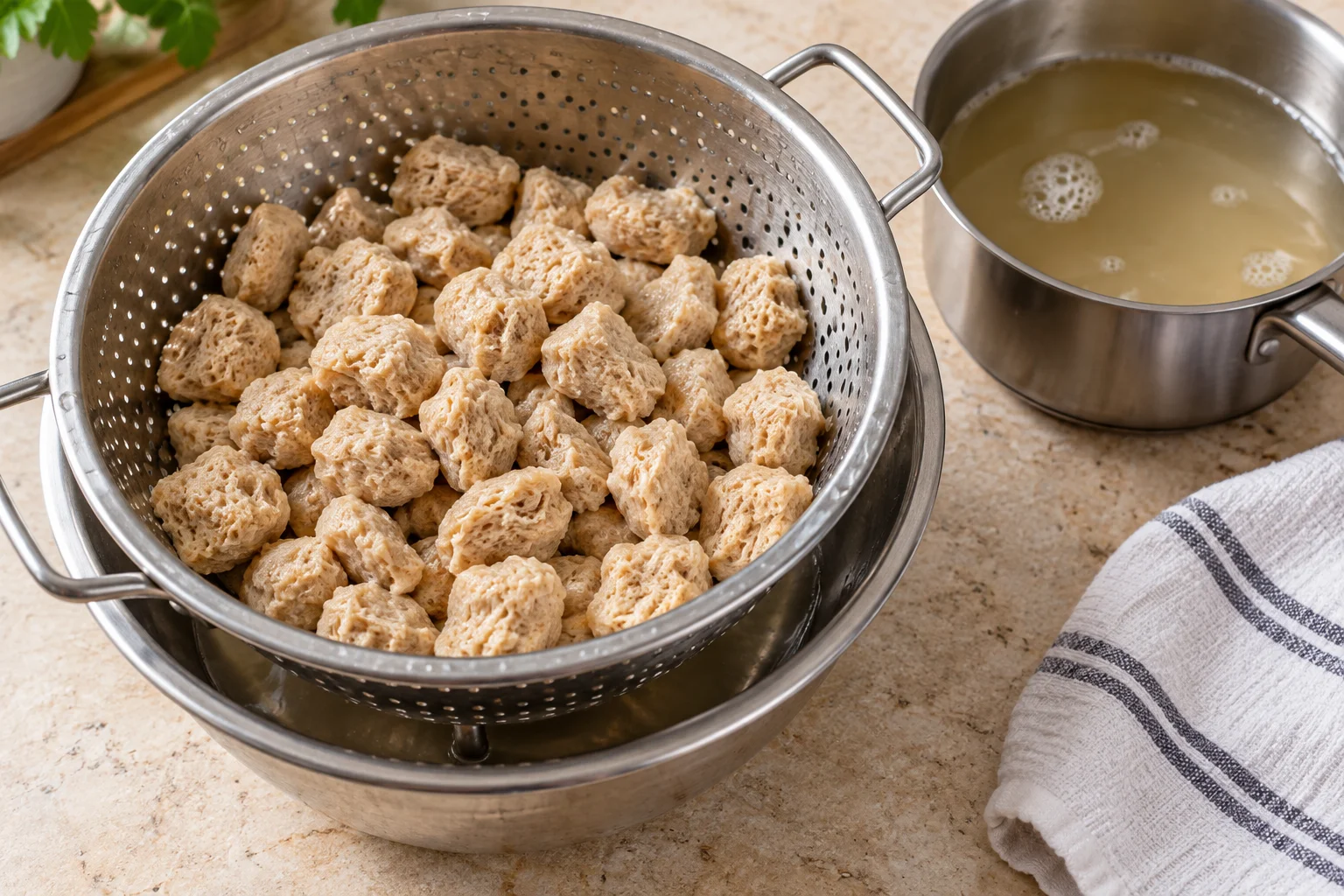
Follow the directions on your package for hydration; brands and chunk sizes differ. The cooking times below are guides, and tenderness is the useful check.
Step 1
Hydrate the soya chunks according to package directions, usually by simmering in plenty of water for 5–8 minutes until tender. Drain, rinse, cool enough to handle, and gently squeeze out excess water. Cut large chunks in half.
Step 2
Heat the oil in a wide nonstick skillet over medium heat. Cook onion for 4–5 minutes, adding a tablespoon of water if needed. Add garlic and ginger; stir for 30 seconds.
Step 3
Add tomatoes, cumin, coriander, turmeric, chili powder, and salt. Cook for 4–5 minutes until the tomatoes soften into a thick masala.
Step 4
Add bell pepper and zucchini. Cook for 4–5 minutes, stirring, until just tender.
Step 5
Add squeezed soya chunks and 2–4 tablespoons water as needed. Toss and cook for 4–5 minutes until heated through and coated with masala.
Step 6
Stir in spinach and garam masala; cook for 1–2 minutes. Remove from heat, add lemon juice and cilantro, and divide into two equal portions.
For the best texture, aim for chunks that are tender inside but still hold their shape. A thick coating should cling to them when you stir. If liquid collects in the bottom of the skillet, cook uncovered a little longer; if the masala becomes dry before the vegetables soften, add water one tablespoon at a time.
How to Remove the Strong Soy Flavor
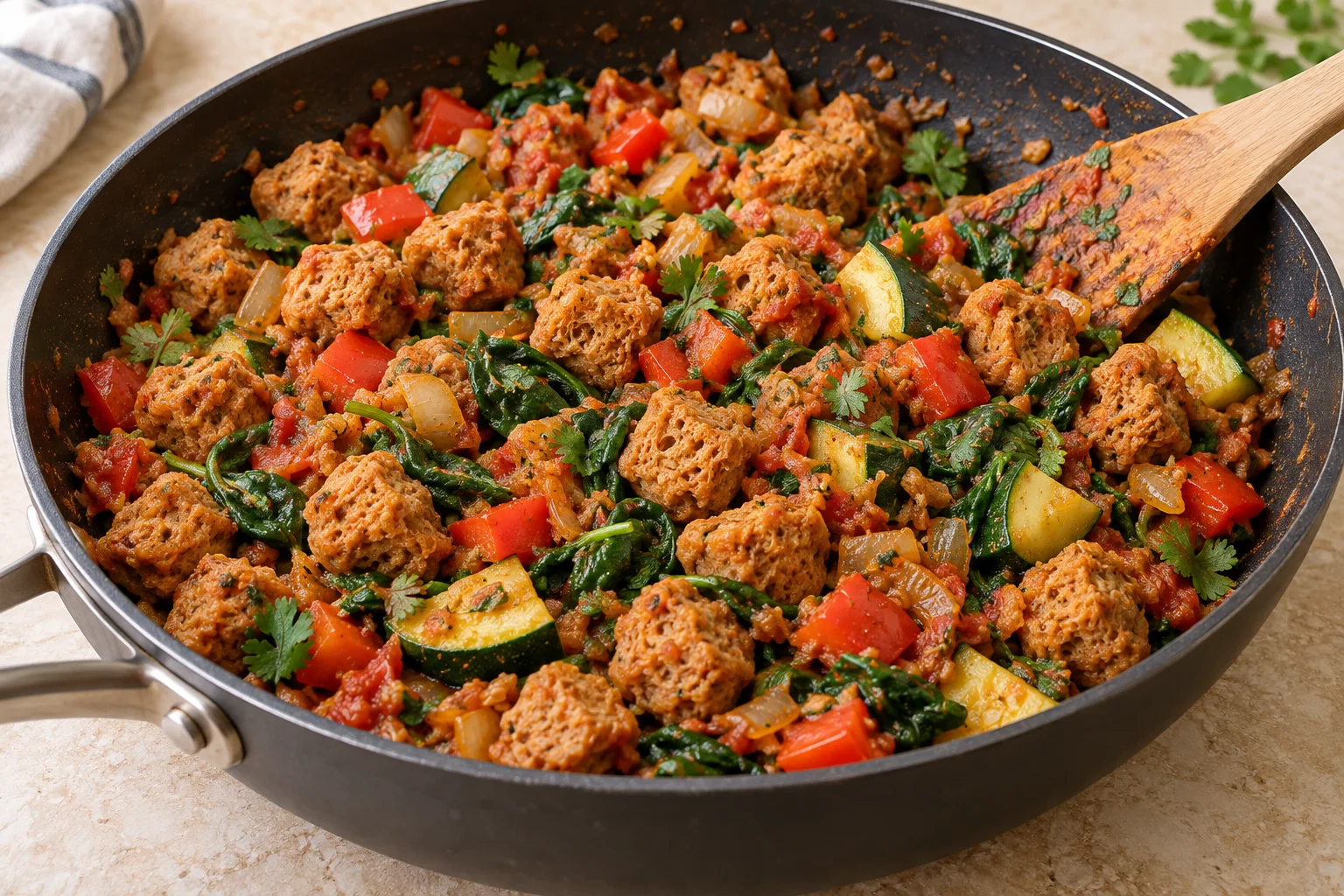
Hydration, rinsing, and squeezing are the most useful preparation steps for this style of recipe. Plain soy chunks may have a noticeable aroma straight from the package. Cooking them only briefly in a sauce can leave both that flavor and an uneven texture.
First hydrate them fully. Drain the cooking water, rinse, and allow the chunks to cool until they are comfortable to handle. Press gently between clean hands or against a colander to remove excess moisture. They should feel damp, not drip continuously. Avoid squeezing so hard that they crumble.
Then cook them in a prepared tomato masala rather than adding spices to wet chunks alone. Garlic, ginger, cumin, coriander, and a final squeeze of lemon give the dish a rounded flavor. Adding more salt or oil is not a substitute for proper hydration. If the texture stays unpleasant after following the package directions, try a different size or brand.
Estimated Calories and Protein per Serving
| Serving | Half the recipe |
| Dry soy per serving | 40 g |
| Calories | About 270 kcal |
| Protein | About 25 g |
| Carbohydrate | About 31 g |
| Fat | About 6 g |
| Fiber | About 9 g |
These rounded estimates cover half the vegetable stir fry and exclude rice, roti, yogurt, nuts, and extra oil. They assume plain dry chunks with roughly 52% protein and typical ingredient values. The approximate totals are 270 calories, 25 g protein, 31 g carbohydrate, 6 g fat, and 9 g fiber per serving. Brands differ, especially in fiber and carbohydrate labeling, so calculate from your own package if tracking closely.
The soy-only protein calculation is straightforward: 80 g multiplied by 0.52 gives 41.6 g protein for the pan, or 20.8 g before the vegetables per serving. The final estimate includes the vegetables and spices. Do not apply these figures to a different chunk product without checking its label.
Sodium is intentionally not given as a precise number because salt preferences and product formulations vary. You can begin with less salt and adjust at the end. If you add a salty packaged seasoning or sauce, include it in your calculation.
What to Serve With Soya Chunks for a Balanced Meal
Serve half the pan with a portion of rice or roti that suits your appetite and overall meal plan. A cucumber and tomato salad adds a fresh contrast. There is no requirement to remove grains to make this a useful weight-management meal.
For a lighter plate, use a smaller grain portion and add extra non-starchy vegetables. For a more substantial lunch or a meal after exercise, increase the accompaniment according to your needs. The stir fry alone is a protein-and-vegetable base, and some people will need additional food to feel satisfied.
Plain yogurt can soften the heat for a vegetarian plate. Use an unsweetened soy yogurt if you want to keep the meal vegan, checking its ingredients and protein content. Water or unsweetened tea is an easy drink choice. If you are considering juices as well, our easy juicing recipes for weight loss explain why juice belongs alongside balanced food rather than replacing every meal.
Avoid turning a simple bowl into an unmeasured collection of toppings. Nuts, seeds, dressings, and fried garnishes can all be enjoyable, but the serving estimate above does not include them.
Indian-Style Variations
For a drier soya chunks recipe, use the same ingredients and allow the final water to evaporate uncovered. Stir regularly so the tomato coating does not catch on the bottom. Dry-style means little free sauce; it does not mean the soy should be hard or dehydrated again.
For a quick curry variation, add about half a cup of water after the chunks enter the pan and simmer gently until the coating becomes a light gravy. Adjust the water to your preferred consistency. This changes the texture without requiring cream, butter, or coconut milk.
For a cabbage version, replace the zucchini with the same weight of thinly sliced cabbage. Give it time to soften before adding the spinach. For a mushroom version, cook sliced mushrooms until their released moisture reduces before proceeding. Nutrition changes slightly with substitutions.
For a lunchbox wrap, put a cooled portion into a whole-wheat wrap with lettuce and cucumber. Pack the filling separately if preparing far in advance so the wrap does not become soggy. The wrap itself adds calories and carbohydrates, which should be counted separately when relevant.
Soya Chunks for a Gym Diet
A soya chunks recipe for a gym diet can be useful when you want a plant-based protein option that is easy to portion. This version supplies protein from food without needing a protein powder. It is also suitable for batch cooking if you follow safe storage practices.
Your total daily intake and training routine matter more than calling one recipe a gym meal. Protein needs vary with body size, activity, and individual goals. Do not assume that more chunks always produce better results, and do not replace a varied diet with a large bowl of soy at every meal.
If a large, fiber-rich meal feels uncomfortable before exercise, eat it at another time or choose a smaller serving. Lunch or dinner can both work. For another convenient option, compare our protein shakes for weight loss, remembering that a shake and this vegetable stir fry have different textures, ingredients, and roles in a meal plan.
Meal Prep, Storage, and Reheating
Divide the finished food into shallow containers and refrigerate promptly rather than leaving the pan out for hours. Keep the refrigerator at 40°F/4°C or colder. As a conservative meal-prep plan, use the refrigerated stir fry within three days. Refrigerate within two hours, or one hour in temperatures above 90°F/32°C.
Reheat only the portion you plan to eat until it reaches 165°F/74°C throughout. In a skillet, add a small splash of water, cover briefly to warm the center, then uncover and stir. In a microwave, use a suitable covered container, stir midway, and check several places for cold spots.
Freezing is an option if you will not use the portions soon. Let them cool safely, pack in freezer-safe containers, and label the date. Aim to use them within about two months for quality; the vegetables may be softer after thawing. Thaw in the refrigerator rather than on the counter. Keep grain sides separate so you can portion and handle each component appropriately.
Common Mistakes and Easy Fixes
Rubbery chunks usually need a better hydration step or smaller pieces. Follow the package timing and test the center of a chunk before draining. If you begin with large nuggets, cut them after hydration so the masala reaches more of the surface.
Watery stir fry often comes from insufficient squeezing or adding too much liquid at once. Press out the hydration water and use a wide pan. If necessary, reduce extra moisture uncovered before adding the final lemon juice and herbs.
Bland chunks need a flavorful coating and adequate cooking time in it. Cook the tomatoes and spices into a masala first, then toss the soy through it. Taste at the end before adding more salt. Lemon can make the flavors clearer without extra oil.
A pan that sticks does not always need another pour of oil. Reduce excessive heat, stir, and add a little water. If doubling the recipe, use a larger skillet or two batches so the vegetables do not steam in a crowded pan. Measure the dry chunks and divide the finished recipe evenly to keep serving estimates meaningful.
Recipe Card
Print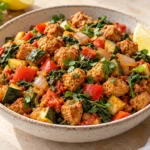
Soya Chunks Vegetable Stir Fry
- Total Time: 35 minutes
- Yield: 2 servings 1x
Description
An Indian-inspired vegan soya chunks stir fry with vegetables, tomato masala, and measured oil. Nutrition is estimated, and weight loss depends on the overall eating pattern.
Ingredients
- 80 g dry soya chunks (not cooked weight)
- 2 teaspoons olive oil
- 100 g onion, finely chopped
- 2 garlic cloves, minced
- 1 teaspoon grated fresh ginger
- 200 g tomatoes, finely chopped
- 150 g red bell pepper, diced
- 150 g zucchini, diced
- 60 g spinach
- 1 teaspoon ground cumin
- 1 teaspoon ground coriander
- 1/2 teaspoon turmeric
- 1/2 teaspoon garam masala
- 1/4 teaspoon chili powder, optional
- 1/4 teaspoon salt, or to taste
- 1 tablespoon lemon juice
- 2 tablespoons chopped cilantro
- Water for hydration, plus 2–4 tablespoons for the pan
Instructions
- Hydrate the soya chunks according to package directions, usually by simmering in plenty of water for 5–8 minutes until tender. Drain, rinse, cool enough to handle, and gently squeeze out excess water. Cut large chunks in half.
- Heat the oil in a wide nonstick skillet over medium heat. Cook onion for 4–5 minutes, adding a tablespoon of water if needed. Add garlic and ginger; stir for 30 seconds.
- Add tomatoes, cumin, coriander, turmeric, chili powder, and salt. Cook for 4–5 minutes until the tomatoes soften into a thick masala.
- Add bell pepper and zucchini. Cook for 4–5 minutes, stirring, until just tender.
- Add squeezed soya chunks and 2–4 tablespoons water as needed. Toss and cook for 4–5 minutes until heated through and coated with masala.
- Stir in spinach and garam masala; cook for 1–2 minutes. Remove from heat, add lemon juice and cilantro, and divide into two equal portions.
Notes
Use dry weight: 80 g for the entire recipe, 40 g per serving. Follow your package hydration instructions. Nutrition is an approximate ingredient-based estimate, excludes sides, and varies by brand. Contains soy. Refrigerate promptly and use within 3 days. Recipe developed for this article; not kitchen-tested. Image, when supplied, is AI-generated for illustration.
- Prep Time: 10 minutes
- Cook Time: 25 minutes
- Category: Main dish
- Method: Stovetop
- Cuisine: Indian-inspired
Nutrition
- Serving Size: 1/2 recipe, made with 40 g dry soya chunks
- Calories: 270
- Fat: 6 g
- Carbohydrates: 31 g
- Fiber: 9 g
- Protein: 25 g
Keywords: soya chunks protein recipe for weight loss, soya chunks recipe dry, vegan soya chunks stir fry
FAQs
How do you eat soya chunks for weight loss?
Hydrate them according to the package, rinse and squeeze out excess water, then cook with vegetables and measured oil. Use a portion that fits your overall meals. Soya chunks do not burn fat by themselves.
Do soybean chunks help with weight loss?
They can provide plant protein in a balanced, calorie-controlled eating pattern. The overall diet and energy intake determine weight change, so adding soy without considering portions does not guarantee weight loss.
Can I eat 40 g of soya chunks daily?
This recipe uses 40 g dry soya chunks per serving. Whether that amount suits daily use depends on your needs, tolerance, and the rest of your diet. Keep protein sources varied and avoid soy if allergic.
Can I eat 200 g of soya chunks a day?
First specify dry or cooked weight. At 52% protein, 200 g dry supplies about 104 g protein before other foods, while 200 g hydrated includes absorbed water. It is not a universal recommended daily portion.
What is the best time to eat soya chunks for weight loss?
There is no special fat-burning time. Lunch or dinner can both work; choose a time and portion that fit your routine and digestion.
Is this soya chunks recipe vegetarian and vegan?
Yes, the stated recipe uses soy, vegetables, spices, oil, and lemon without dairy or meat. Dairy yogurt served on the side would make that plate vegetarian rather than vegan.
How much protein is in one serving?
Using a brand with 52 g protein per 100 g dry, 40 g dry chunks provides about 20.8 g protein. With the vegetables, this recipe estimates about 25 g per serving. Check your own package label.
Can I make a dry soya chunks recipe without frying?
Yes. Hydrate and squeeze the chunks, then cook them in the tomato masala with vegetables and measured oil. Let excess water evaporate until the coating clings to the chunks.
Sources and Nutrition Notes
The protein example uses the manufacturer’s description of Nutrela soya chunks, which lists 52% protein. This is a brand-specific reference, not a claim that every soy product has the same composition.
General weight-management context comes from NIDDK guidance on eating and physical activity. Storage and reheating recommendations follow USDA guidance on leftovers and food safety.
Avoid this recipe if you have a soy allergy. If you have a medical condition requiring a prescribed protein intake, use the portions advised by your clinician or dietitian. Nutrition values are estimates for the stated ingredients, and the recipe has not been kitchen-tested.