Ube can fit a weight-loss eating plan, but it does not cause weight loss on its own. Plain cooked purple yam is a starchy food that you can portion and combine with other ingredients. An ube dessert or sweetened drink can have a very different nutritional profile.
The most useful questions are how the ube is prepared, how much you eat, and what the rest of your meal contains. Purple color, a “superfood” description, or an ube ingredient on a label does not establish that a product helps you lose weight.
This guide explains how to assess ube without treating it as a weight-loss supplement. You will find nutrition references, practical portion examples, preparation choices, and ways to include it in meals.
For a measured drink using plain cooked yam, try our ube protein shake with Greek yogurt.
Does Ube Help with Weight Loss?
Ube can be one food within an eating pattern that supports weight management. That is different from showing that ube itself produces weight loss.
A serving of cooked yam might replace another starch, become part of breakfast, or contribute to a snack. Its effect on your overall intake depends on that context.
For example, adding an ube drink to your usual breakfast is different from using a measured serving as one component of breakfast. Similarly, a small portion of an ube dessert and a large sweetened drink are different eating occasions.
The National Institute of Diabetes and Digestive and Kidney Diseases describes successful weight management in terms of an eating plan and habits that can be maintained over time. Its guidance does not identify a single necessary slimming food.
The practical approach is to choose an ube preparation you enjoy, measure it when useful, and consider how it fits with your other foods. There is no reason to add a food you dislike solely because a social media post presents it as a shortcut.
What Is Ube?
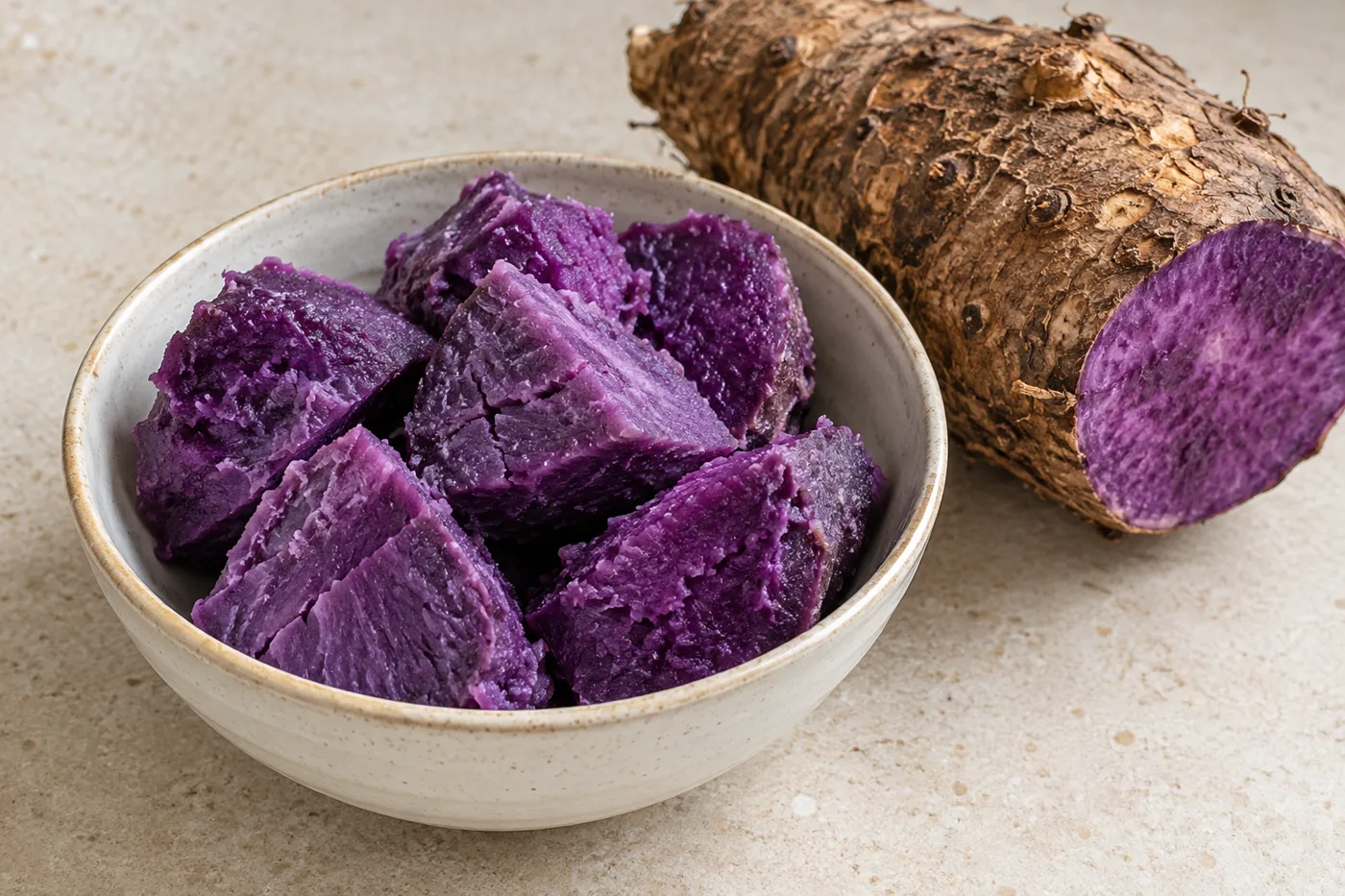
Ube is a purple yam associated with Filipino cooking. It is commonly used in desserts, but the plain tuber and a finished dessert are not nutritionally interchangeable.
The name can appear on very different products:
- Whole or frozen purple yam.
- Plain cooked ube.
- Dehydrated yam powder.
- Sweetened halaya.
- Flavored drink mixes.
- Syrups, extracts, and desserts.
Before comparing calories or choosing a recipe, identify which product you have. A package described as ube-flavored may get its flavor or color from ingredients other than a substantial quantity of yam. Read the ingredient list rather than assuming that every purple product is equivalent to cooked ube.
Is purple yam the same as purple sweet potato?
No. Ube is Dioscorea alata. Purple sweet potato belongs to Ipomoea batatas. The University of Georgia plant database distinguishes the two.
Both can be used in cooking, but their names, textures, and nutrition should not be switched without explanation. If you substitute purple sweet potato in an ube recipe, treat it as a variation. Use nutrition information for the ingredient you actually used.
Ube Nutrition: Plain Boiled Purple Yam
The Philippine Food Composition Tables list the following values for 100 grams of edible, boiled purple yam:
| Nutrient | Amount per 100 g |
|---|---|
| Energy | 77 calories |
| Total carbohydrate | 18.2 g |
| Dietary fiber | 2.6 g |
| Protein | 0.7 g |
| Total fat | 0.1 g |
| Total sugars | 0.3 g |
These are reference values for the specific boiled food entry, not universal values for every variety, powder, or recipe.
Two distinctions matter when reading food information. Plain yam is not a protein supplement. Pair it with a suitable protein source rather than assuming that an ube-based meal already provides enough. Also, naturally occurring sugar and total carbohydrate are different measurements. A food can have little listed sugar while still containing starch.
Do not apply the boiled-yam numbers to halaya, ice cream, cake, or powdered drink mixes. Use the finished product’s label or calculate the actual recipe.
How Much Ube Should You Eat?
There is no single ube portion that is correct for everyone trying to lose weight. Your appetite, activity, overall meals, and individual needs affect what is appropriate. A weighed amount can help you understand a recipe without becoming a strict daily prescription.
For learning how ube fits into your own meals, consider these serving formats:
| Eating occasion | Practical way to portion it |
|---|---|
| Breakfast | Measure the cooked yam before combining it with yogurt or another protein source |
| Lunch or dinner | Use it as one starch component alongside protein and vegetables |
| Snack | Choose a small prepared portion rather than eating from a large container |
| Dessert | Portion the finished dessert, including sweeteners and toppings |
| Drink | Measure all ingredients and define how much of the batch counts as one serving |
The NIDDK guide to food portions explains why a labeled serving and the portion someone chooses to eat are not always the same.
Weigh the preparation you are tracking
If your reference is for cooked yam, weigh the cooked edible portion. Peels, cooking water, and differences between raw and cooked weights can make comparisons confusing. Write down whether a recipe quantity means raw, peeled, cooked, or prepared from powder.
Consistency is more useful than comparing measurements that describe different forms of the food. When preparing several portions, divide the finished batch into the number of servings you actually plan to eat.
What Is the Best Way to Eat Ube for Weight Management?
There is no universally best recipe. A useful preparation is one that you enjoy, can portion, and can repeat without depending on complicated rules.
Plain cooked ube gives you control over what happens next. You can serve it with savory ingredients, combine it with plain yogurt, or use it in a measured recipe.
When assessing a preparation, ask:
- What quantity of ube does one serving contain?
- What other ingredients are included?
- Is this a snack, dessert, drink, or part of a meal?
- Am I counting the toppings and additions?
- Does this fit the rest of my day?
These questions provide more useful information than choosing whichever recipe uses the word healthy most often.
Boiled or steamed ube
Boiling or steaming can provide a plain cooked base without requiring added oil or sugar. Cook the yam until tender and follow appropriate preparation instructions for your product. Frozen and powdered products may have different requirements.
The finished serving still depends on what you add. Plain yam and yam covered with condensed milk are different preparations. Keep the base unsweetened if you want to decide separately how much sweetener a recipe needs.
Roasted ube
Roasting can also work as a preparation method. Measure any oil or other additions used in the recipe. If you track nutrition, select an appropriate reference rather than automatically applying boiled-yam values to a drier roasted portion.
No cooking method makes portion size irrelevant. The amount placed on the tray and the number of portions served still matter.
Mashed ube
A mash can be savory or sweet. For a savory version, consider the amount of oil, butter, milk, or coconut milk mixed in. For a sweet version, account for sugar and other additions.
Taste before adding several rich ingredients. You may find that a simpler preparation already provides the texture you wanted. If serving several people, keeping toppings separate can make portions easier to adjust.
What Should You Eat with Purple Yam?
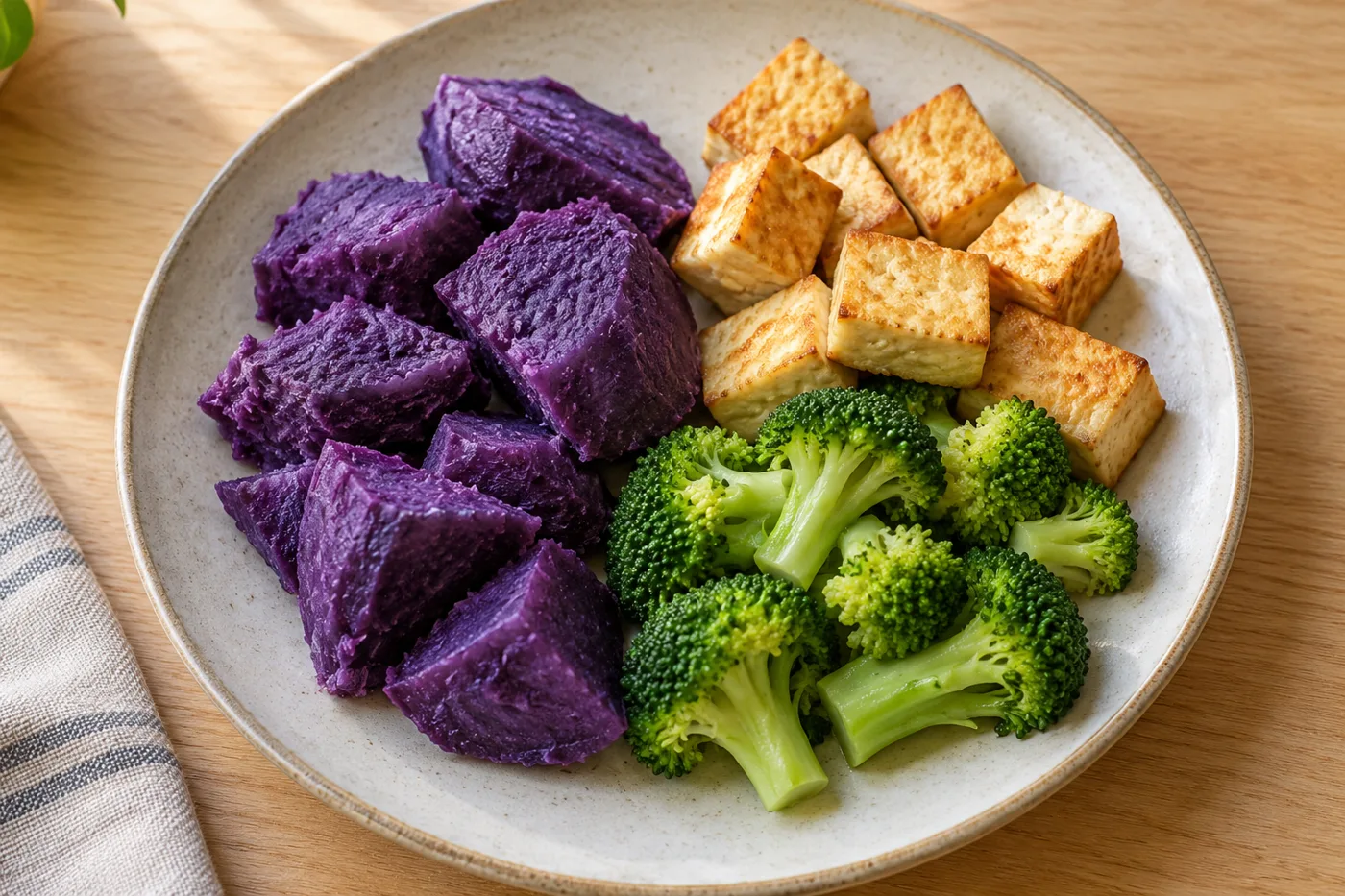
For a concrete savory meal, try our purple yam bowl with tofu and vegetables, which includes measured portions, a lime-soy dressing and an ingredient-by-ingredient nutrition estimate.
Think about the role of each component rather than expecting the yam to provide everything. For a savory meal, possible combinations include:
- Cooked ube with tofu and vegetables.
- Purple yam alongside fish and a vegetable side.
- Ube mash with chicken and greens.
- A measured portion with beans and vegetables.
These are meal ideas, not nutritionally identical alternatives. Quantities and cooking methods determine the finished meal. For more combinations, browse our high-protein, high-fiber meal ideas.
Avoid accidentally building a meal of several starch portions
Ube can appear alongside rice, bread, noodles, or other starchy foods. That combination is not automatically unsuitable, but the quantities deserve attention. Decide whether you want ube to replace part of another starch or accompany it in a smaller portion.
The same principle applies at breakfast. If you add cooked yam to a bowl already containing oats and several toppings, review the complete bowl rather than considering each ingredient separately.
Is Ube Halaya Good for Weight Loss?
Ube halaya is a finished sweet preparation, so assess its recipe or label rather than treating it as plain yam. The amount and type of sweetener, dairy, coconut products, and other ingredients vary. Two jars of halaya may not have the same nutrition.
You do not need to describe a dessert as a weight-loss food to enjoy it within an eating plan. The NIDDK discussion of nutrition myths notes that small amounts of favorite higher-calorie foods can fit a weight-loss plan when overall intake is considered.
For packaged halaya, check the labeled serving amount, measure the portion you actually eat, and include anything served with it. Compare products using equivalent quantities. For homemade halaya, calculate the whole recipe and divide it by a realistic yield.
Does less sugar automatically make it low-calorie?
No. Reducing one ingredient does not establish the nutrition of the finished dish. A variation may use less sugar while containing more of another ingredient. Evaluate the full recipe before labeling it low-calorie.
Similarly, vegan, gluten-free, or natural does not tell you how much energy a serving contains. Those descriptions answer different questions about the product.
Are Ube Drinks Suitable for Weight Loss?
An ube drink can range from a simple measured blend to a dessert-style beverage. Look at the base, sweetener, serving volume, and toppings. A small ingredient list is useful only if you also know the amounts.
Ask whether the milk is sweetened, whether the ube preparation already contains sugar, and whether the recipe includes syrup or condensed milk. Check for cream, pearls, or other toppings, and confirm whether the recipe makes one serving or several.
For homemade options, our smoothie recipes for weight loss provide measured combinations and estimated nutrition.
Does adding protein powder make a drink slimming?
No. Adding protein powder changes the drink’s ingredients and nutrition; it does not establish that the drink will cause weight loss. Check whether you need the addition, how much you use, and what it contributes.
A drink made with yogurt and a protein-containing milk may already provide a useful amount of protein for its intended role. More ingredients are not automatically an improvement.
Is Ube Powder Better Than Cooked Ube?
For practical instructions on identifying your product and using it in recipes, see our ube powder preparation and substitution guide.
Neither form is automatically better for weight management. Powder may be convenient, while cooked yam may be easier to recognize and portion as a food. The right choice depends on the product and how you use it.
A plain dehydrated powder, a sweetened instant mix, and an ube-flavored protein powder are different products. Check the ingredient list, whether preparation or cooking is required, the serving size, and nutrition for the dry product versus the prepared drink.
Do not substitute the same weight of dry powder for cooked yam. Follow the product instructions and calculate what actually goes into your recipe. Convenience does not remove the need to distinguish the ingredient from its finished preparation.
Can You Eat Purple Yam Every Day?
For a measured breakfast preparation, our ube overnight oats recipe combines cooked purple yam with oats, yogurt and soy milk, with estimated nutrition for one serving.
Ube can be included regularly if it suits your needs and dietary requirements. There is no weight-loss reason to make it compulsory every day. Consider what it replaces and whether your meals remain varied.
If you enjoy it at breakfast, you can rotate it with other foods rather than treating repetition as a requirement. Our overnight oats recipes offer another breakfast format for days when you want a change.
A daily serving of plain cooked yam and a daily large sweetened ube drink are different habits. Evaluate the preparation, not just the shared ingredient name. If you follow a medically prescribed diet, use the portion and preparation guidance appropriate to that plan.
Common Mistakes When Choosing Ube for Weight Loss
Assuming purple means slimming
Color identifies appearance, not a demonstrated weight-loss outcome. Choose a product based on its ingredients and how you plan to eat it.
Using dessert nutrition as a reference for plain yam
The reverse mistake also happens: applying plain-yam values to a dessert. Match the reference to the food and update the calculation when a recipe changes.
Ignoring the complete serving
A recipe may contain several servings even when photographed in one bowl. Conversely, one large shake may fill two glasses without becoming two full servings.
Adding ube without considering what changes
If the goal is to change overall intake, decide how the new food fits. Adding an extra snack or drink is different from replacing something.
Expecting one food to determine the result
Weight is influenced by multiple factors, including eating patterns, activity, health, and some medicines. The NIDDK overview of factors affecting weight explains this broader context. A single ingredient cannot explain or control all of it.
A Simple Way to Start
Choose one plain ube preparation and one eating occasion. Measure the amount you use, note the additions, and decide its role in the meal. Assess whether you enjoy the flavor and whether the preparation is practical enough to repeat.
Adjust the recipe based on the complete serving rather than chasing a particular purple color or an exaggerated health claim. For meals, consider ube as one component alongside other foods. For a drink, choose a measured recipe and check what its nutrition estimate includes.
FAQS
Is ube good for weight loss?
Ube can fit a weight-loss eating plan, but it does not cause weight loss by itself. Preparation, portion size, and overall intake matter.
Are purple yams good for weight loss?
Plain cooked purple yam can be included in meals. It should be assessed as a starchy food rather than a fat-burning ingredient.
How many calories are in boiled ube?
The Philippine Food Composition Tables list 77 calories per 100 g edible boiled purple yam. Use a matching reference for your actual preparation.
Is ube a good source of protein?
Do not treat plain ube as a protein-rich food. Pair it with a suitable protein source when planning a meal or protein shake.
Is ube the same as purple sweet potato?
No. They are different plants. Substituting one for the other changes the ingredient and may change texture, flavor, and nutrition.
Can I eat ube halaya while trying to lose weight?
It can fit in an eating plan as a portioned dessert. Use its label or recipe rather than applying the nutrition of plain boiled yam.
Is ube powder good for weight loss?
Powder is not inherently slimming. Check whether it is plain yam, a sweetened drink mix, or a flavored protein product, then assess the prepared serving.
What is the best ube recipe for losing weight?
There is no universally best recipe. Choose a preparation with clear quantities and a portion that fits your overall eating plan.
3 thoughts on “Is Ube Good for Weight Loss? Calories, Nutrition and Portions”