
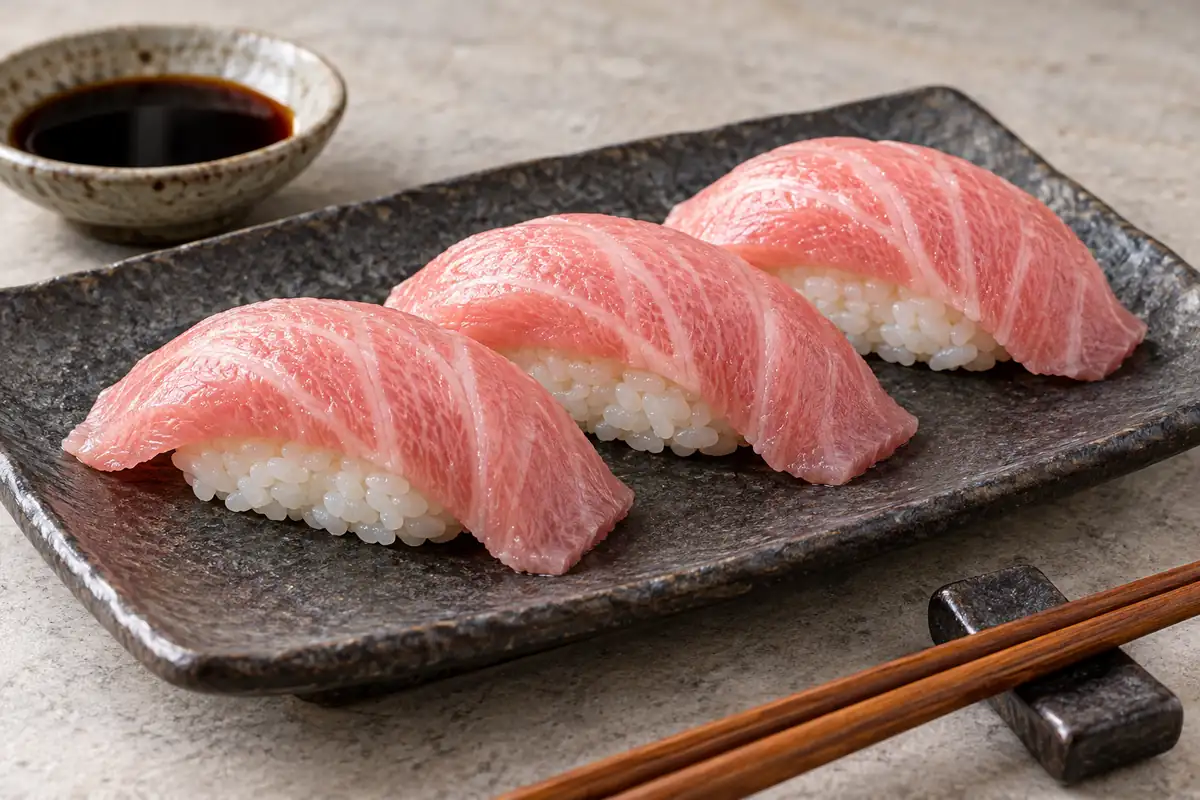
Toro is the fatty portion of tuna used in Japanese sushi and sashimi. The two best-known categories are chutoro, which has moderate fat, and otoro, which is especially fatty. Akami is the leaner red tuna meat.
These names describe different portions and characteristics of the fish. They are not three separate tuna species, and a more expensive cut is not automatically the one you will enjoy most.
If you have seen toro on a sushi menu and wondered whether it means tuna belly, a particular type of sushi, or a special grade of fish, this guide explains the distinctions.
What Is Toro?
On a sushi menu, toro generally refers to fatty tuna meat, often associated with the belly.
Its fat gives it a softer, richer texture than lean tuna. Depending on the cut, a slice may show fine pale marbling or more prominent bands of fat.
Toro is an ingredient, rather than a complete dish. It can be served over seasoned rice as nigiri or without rice as sashimi.
For the basic rice-and-topping format, see our guide to nigiri sushi.
Does toro always mean otoro?
No. Chutoro and otoro are both forms of toro.
If a menu lists only toro, ask which cut is being served. The shorter name does not tell you everything about its richness, texture, or portion.
That distinction is useful when comparing menu prices. A generic toro item and a specifically identified otoro item may not represent the same cut.
Akami vs Chutoro vs Otoro
The most practical distinction is the balance between lean meat and fat.
| Feature | Akami | Chutoro | Otoro |
|---|---|---|---|
| General description | Lean tuna meat | Medium-fatty tuna | Especially fatty tuna |
| Typical appearance | Deeper red | Pink to red with some pale marbling | Often pale pink with substantial marbling |
| Texture | More structured | Soft with some firmness | Particularly rich and tender |
| Flavor impression | More direct tuna flavor | Balance of tuna and fatty richness | Strong emphasis on richness |
| Common use | Nigiri or sashimi | Nigiri or sashimi | Nigiri or sashimi |
These descriptions are a guide, not a universal visual grading system. The chef-reviewed explanation from Sushi Tanji identifies the three as different portions of tuna, with akami leaner, chutoro moderately fatty, and otoro especially rich.
How to use the comparison
Think about your preferred texture.
If you usually enjoy lean fish with a more structured bite, akami may appeal to you. If you want some richness without making it the dominant feature, chutoro is worth considering. If a particularly soft, fatty texture is what interests you, ask about otoro.
You do not need to treat the three as a ranking from ordinary to excellent.
What Is Chutoro?
Chutoro is medium-fatty tuna. It sits between lean akami and especially fatty otoro in richness.
It contains enough fat to feel softer than lean tuna while retaining a noticeable character from the lean meat.
Chutoro is not restricted to one simple strip of belly. Sushi specialists describe it in portions of both the belly and the back. The boundary between chutoro and otoro is also not perfectly fixed across every fish and seller, as explained in Sushi University’s guide to the two cuts.
Who might enjoy chutoro?
Chutoro can be a useful choice when you want to explore fatty tuna without starting with its richest expression.
For example, if you enjoy tuna but sometimes find very fatty foods overwhelming, ordering one piece of chutoro gives you a manageable comparison.
That is a taste suggestion, not a claim that everyone should begin with the same cut.
What Is Otoro?
Otoro is especially fatty tuna, classically associated with rich belly portions of bluefin tuna.
Its appearance often includes substantial pale marbling. That fat contributes to the tender, rich texture people associate with the cut.
However, an individual slice still has its own structure. Cutting technique and connective tissue affect the experience, so fatty does not promise an identical texture in every piece.
Otoro is relatively limited within a fish and generally commands a higher price than the more plentiful cuts.
Is otoro always better than chutoro?
No. Better depends on what you want to taste.
Someone who enjoys a balance of lean meat and fat may prefer chutoro. Another diner may find one piece of otoro memorable but prefer something less rich for the next bite.
Price can describe what a restaurant charges for a cut. It cannot decide your preference.
What Is Akami?
Akami is the leaner red meat of tuna.
Compared with toro, it generally has less visible fat and a more structured texture. It also offers a way to experience tuna without the same level of fatty richness.
Akami belongs in a comparison with chutoro and otoro because it provides the lean reference point. It should not simply be dismissed as the less expensive alternative.
A diner who prefers firmer fish may find that akami is the most enjoyable choice on the plate.
Why include akami in a tasting?
If you order only fatty cuts, it can be harder to separate the flavor of the tuna from the effect of the fat.
Adding akami gives you another point of comparison.
You might discover that you prefer lean tuna, enjoy both styles for different reasons, or like a mixed selection more than several pieces of the same cut.
Is Toro the Same as Maguro?
Not exactly.
Maguro is the broader Japanese menu term for tuna. Toro identifies fatty tuna meat within that broader category.
For example, a restaurant might list lean maguro nigiri separately from chutoro and otoro. Another menu might use a more general description.
The helpful question is: Which tuna cut does this item contain?
That gives you more information than assuming every menu uses the same shorthand.
Is Toro a Type of Fish?
Toro is not a separate fish species.
The word describes fatty meat in the tuna context. It does not replace the species name.
If species matters to you, ask the restaurant or supplier directly. A menu word describing a cut does not necessarily provide the full sourcing information.
The same principle applies when shopping. A product description should help you understand both what fish you are buying and which part or preparation is being offered.
What Does Toro Taste Like?
Toro is commonly described as rich, smooth, and buttery in texture.
Buttery is a comparison of mouthfeel. Plain toro does not need butter to have that character.
Compared with lean tuna, the sensation of fat can become more prominent. The difference is often easiest to notice when comparing plain pieces rather than preparations covered with mayonnaise, crunchy toppings, or sweet sauces.
Does toro taste strongly fishy?
A strong unpleasant odor is not the defining characteristic of toro.
Descriptions of flavor also vary between diners. One person may notice richness first, while another focuses on the tuna’s savory character.
At a restaurant, explain the types of seafood you already enjoy. That can help the server recommend a preparation without promising how it will taste to you.
What Is Toro Nigiri?
Toro nigiri is fatty tuna placed over a small, hand-shaped mound of seasoned sushi rice.
The word toro identifies the topping. Nigiri identifies the format.
That is why you can have chutoro nigiri or otoro nigiri: the rice preparation may be similar while the topping differs.
If you want to understand the shaping method, our salmon nigiri recipe explains how the rice is formed. It is a different topping, but it illustrates the hand-shaped structure.
Why does the rice matter?
Rice changes the whole bite.
Its seasoning, quantity, and texture affect how you experience the topping. A large mound of rice and a small topping will feel different from a more modest mound with a generous slice.
When comparing two nigiri pieces, consider the complete preparation rather than judging the tuna name alone.
What Is Toro Sashimi?
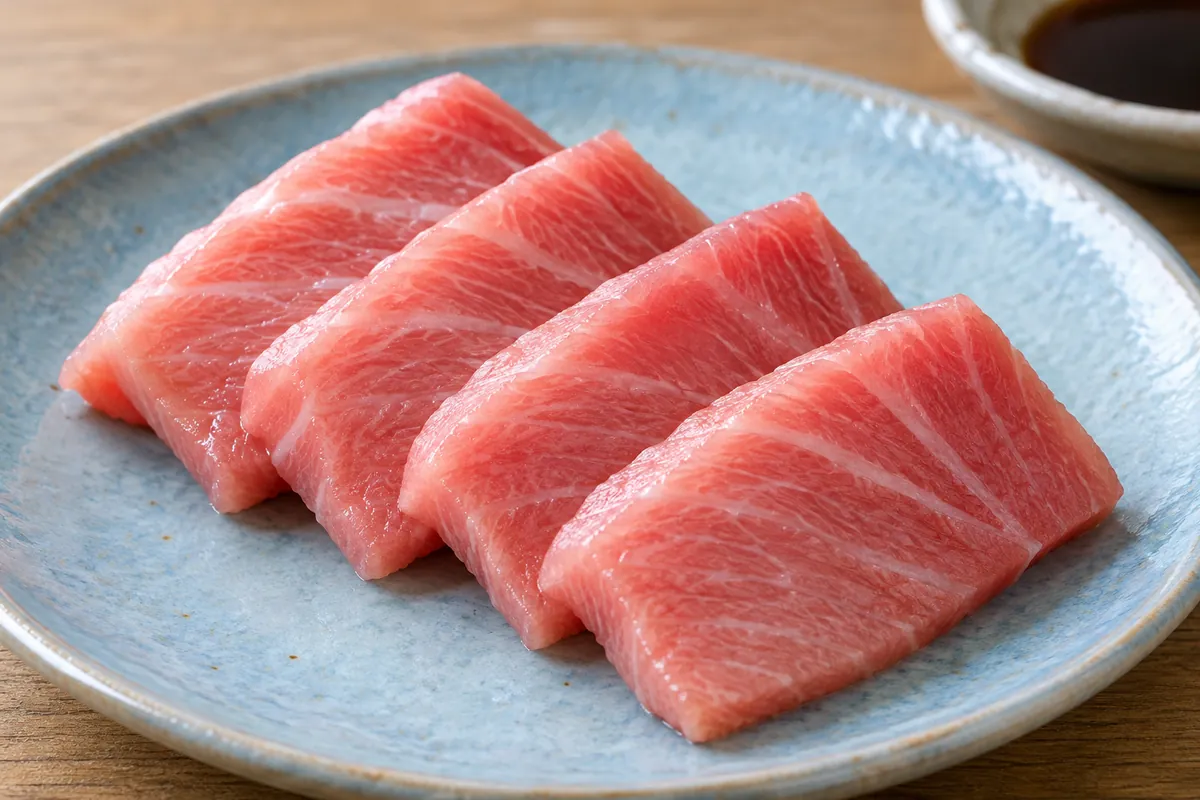
Toro sashimi is fatty tuna served as slices without the mound of sushi rice underneath.
If your goal is to compare tuna cuts directly, sashimi can make that comparison easier because the rice is absent.
However, nigiri may be more appealing if you enjoy the combination of seafood and seasoned rice.
Our nigiri vs sashimi guide explains the differences in presentation and eating style.
Does sashimi mean a different tuna cut?
No. The serving format and the cut are separate descriptions.
For example, chutoro can be presented as nigiri or sashimi. Changing the format does not automatically turn it into another tuna category.
Ask about both details when ordering: what cut is it, and how is it served?
Is Toro Raw?
Toro is often served raw in sushi and sashimi, but the word itself describes the fatty tuna meat, not a required cooking method.
A preparation may be raw, lightly seared, or cooked. Ask about the specific dish.
This is especially important when a menu uses words such as seared. Browning the surface does not necessarily cook the center.
For an explanation of that distinction in another fish, see our aburi salmon nigiri guide.
How to Order Toro for the First Time
You can learn a lot from a small order.
Rather than choosing several unfamiliar items at once, ask what the restaurant currently offers and whether a comparison is possible.
Useful questions include:
- Does toro mean chutoro or otoro here?
- Is the price for one piece, two pieces, or a sashimi portion?
- Is it served raw, seared, or fully cooked?
- Is it already seasoned?
- Can I compare it with a piece of akami?
These questions help clarify the order without requiring you to memorize a long list of Japanese terms.
A practical comparison
If available, order a small selection of akami, chutoro, and otoro in the same format.
Compare texture, richness, and which piece you would want to order again.
Keep the accompaniments similar so that different amounts of sauce do not dominate the comparison.
Treat this as an exploration of preference, rather than a test with a correct answer.
Why Is Toro Often Expensive?
A restaurant’s price reflects more than the name of the topping.
The cut, portion, sourcing, preparation, and restaurant setting all influence the bill. A comparison between two menus is meaningful only when you know what each item includes.
Before deciding whether an item is good value, check:
- The identified cut.
- The number of pieces.
- The serving format.
- Whether it belongs to a set menu.
- Any additions included in the dish.
There is no single price that applies to toro everywhere. A useful guide should not imply that a changing restaurant price is a fixed property of the fish.
Can You Identify Toro by Color Alone?
Color can offer clues, but it cannot reliably answer every question.
A photograph may show deep red tuna, pale pink tuna, or visible marbling. Lighting, camera settings, and presentation affect how those features appear.
Use the menu description and the seller’s explanation alongside what you see.
If you receive a piece that looks different from what you expected, ask about it. A photograph from another restaurant is not a definitive grading reference.
Is Toro Healthy?
No single sushi topping is automatically the best choice for everyone.
Portion size, preparation, sauces, and the rest of the meal all matter. A cut described as fatty also should not be assigned a precise calorie figure without knowing the species, weight, and preparation.
If you track nutrition, use information that matches the actual portion rather than assuming every piece of toro nigiri has the same values.
For this guide, the useful distinction is culinary: akami is leaner, while chutoro and otoro offer progressively richer experiences.
Food Safety: Fat Content Does Not Make Raw Tuna Risk-Free
A premium name or high price is not a food-safety guarantee.
The FDA advises that thorough cooking reduces seafood-related illness risk. It also explains that freezing does not eliminate every harmful germ.
People who are pregnant, young children, older adults, and people with weakened immune systems should avoid raw or undercooked seafood. Read the FDA’s seafood safety guidance when deciding whether a preparation is appropriate.
If you want a cooked sushi topping to prepare at home, our shrimp nigiri recipe uses thoroughly cooked shrimp.
Common Toro Menu Misunderstandings
| Menu term | What it tells you | What it does not establish |
|---|---|---|
| Toro | Fatty tuna meat | The exact cut in every restaurant |
| Chutoro | Medium-fatty tuna | A universal fat percentage |
| Otoro | Especially fatty tuna | That everyone will prefer it |
| Nigiri | Rice with a topping | Whether that topping is cooked |
| Sashimi | A sliced preparation without sushi rice | The exact tuna cut |
| Seared | Heat applied during preparation | That the center is fully cooked |
Keeping these descriptions separate makes a menu easier to read.
First identify the ingredient or cut, then the serving format, and finally the preparation.
FAQS
What is toro?
Toro is fatty tuna meat used in preparations such as nigiri and sashimi. Chutoro and otoro are two familiar categories.
Is toro the same as tuna belly?
Toro is commonly associated with fatty tuna belly, but the terminology is broader than one uniform belly cut. Chutoro can also come from fatty portions of the back.
What is the difference between chutoro and otoro?
Chutoro is moderately fatty tuna. Otoro is especially fatty and generally offers a richer texture. The precise boundary is not identical across every fish and seller.
Is akami a type of toro?
Akami is the leaner red tuna meat. It is usually contrasted with fatty toro rather than treated as another fatty cut.
Is toro always bluefin tuna?
Toro is strongly associated with fatty bluefin tuna, but a generic menu description may not provide complete species information. Ask the restaurant or supplier which tuna is being served.
Is toro nigiri raw?
It often is, but preparations vary. Ask whether the topping is raw, lightly seared, or fully cooked.
Is otoro better than chutoro?
Neither is universally better. Otoro is especially rich, while chutoro offers a balance of lean meat and fat. Personal preference matters more than the price ranking.
Does toro come with rice?
Toro nigiri includes seasoned sushi rice. Toro sashimi is served without that rice mound. Toro alone describes the tuna rather than the complete dish.
1 thought on “What Is Toro? Chutoro vs Otoro and Akami Explained”