
Retatrutide weight loss headlines have been impossible to miss lately, with trial numbers that top even tirzepatide and semaglutide. But before we get into what to actually do about it, here’s the one-line reality check: retatrutide isn’t approved yet, isn’t available by prescription, and can’t be legally purchased. What you can do right now is eat in a way that supports the same appetite and blood-sugar pathways these medications target — which is where this guide is actually useful.
What Is Retatrutide, Quickly
Retatrutide is an investigational injectable medication from Eli Lilly, the company behind Mounjaro and Zepbound. It’s a “triple agonist,” meaning it acts on three hormone pathways instead of one or two, which is why Phase 3 trial results have shown weight loss in the range of 24-28% of body weight over about 80 weeks — ahead of any currently approved option.
It’s still in clinical trials, is not FDA-approved, and isn’t available at any pharmacy. If you see it advertised for sale online outside of a clinical trial, that’s not early access — it’s unregulated and worth avoiding.
What to Actually Eat While This Trend Plays Out
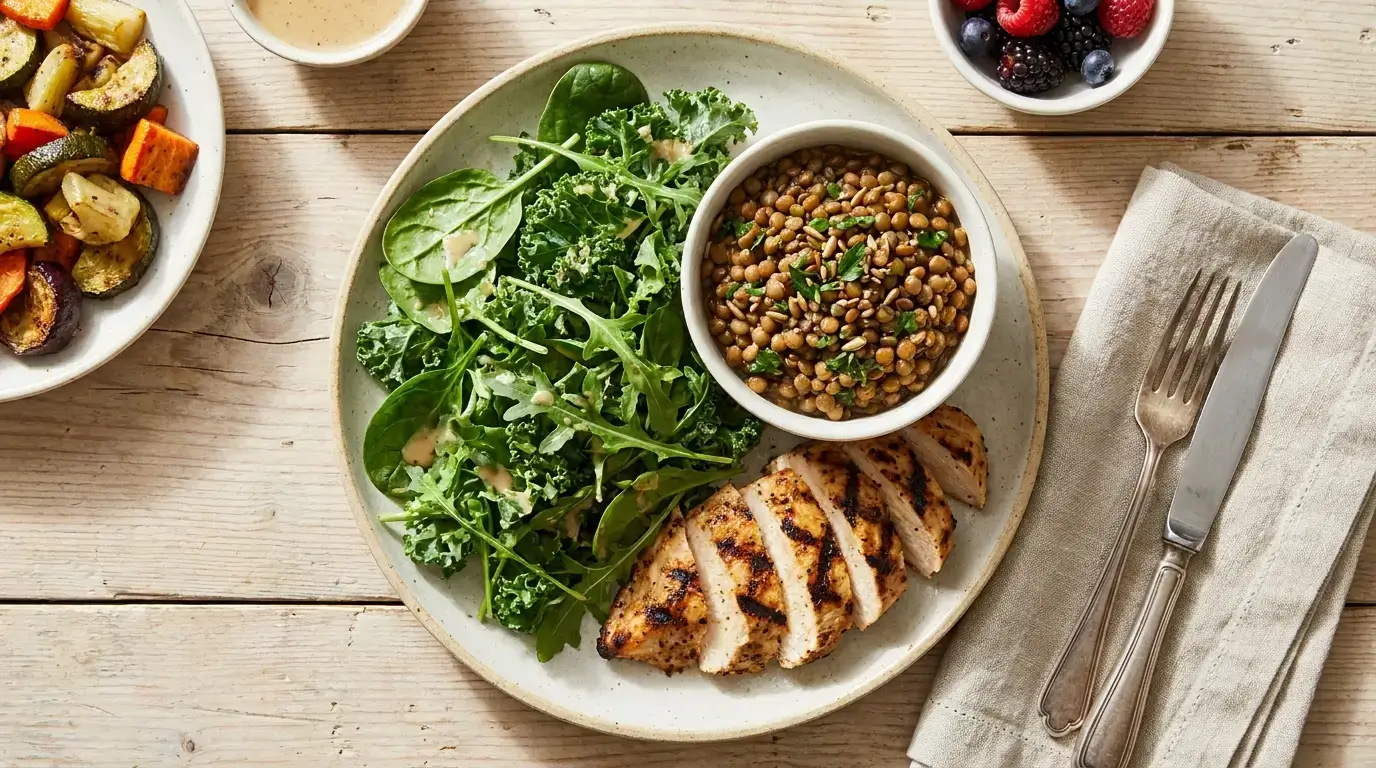
Whether you’re on an already-approved GLP-1 medication, waiting to see what happens with retatrutide, or just interested in supporting your body’s natural GLP-1 response through food, the eating pattern that helps is largely the same. Here’s what to prioritize:
1. Protein at Every Meal

Protein is one of the most direct dietary triggers for natural GLP-1 and satiety hormone release — and it matters even more if you’re managing a smaller appetite from any GLP-1-type treatment, since preserving muscle mass becomes harder as calorie intake drops. Start your day with something like high-protein oatmeal or a savory, no-sugar breakfast, and keep high-protein snacks under 200 calories on hand for smaller appetite days.
2. Fiber-Rich Foods for Fullness
Soluble fiber slows digestion and extends fullness in a way that mechanically overlaps with what GLP-1 medications do hormonally. If you want the full breakdown of which fiber sources work best, see our guide to psyllium husk for weight loss or glucomannan, both of which pair well with a lighter-appetite eating pattern.
3. Gentle, Easy-to-Digest Meals

One of the most common side effects across this entire drug category — approved or investigational — is nausea, especially at higher doses. If you’re currently on tirzepatide or semaglutide and dealing with this, our tirzepatide meal plan is built specifically around foods that are easier on digestion while still meeting protein and nutrient needs.
4. Naturally GLP-1-Supportive Foods
If retatrutide and prescription options aren’t the direction you want to go at all, whole foods can support the same pathway to a smaller degree. Our full natural GLP-1 foods list covers exactly which ingredients to build meals around, and a GLP-1 smoothie recipe is one of the easiest ways to start.
5. Hydration
Fiber-forward eating and reduced appetite both increase the importance of water intake — dehydration makes nausea and constipation worse, two of the most common complaints associated with this entire medication category.
A Simple Day of Eating for a Reduced Appetite
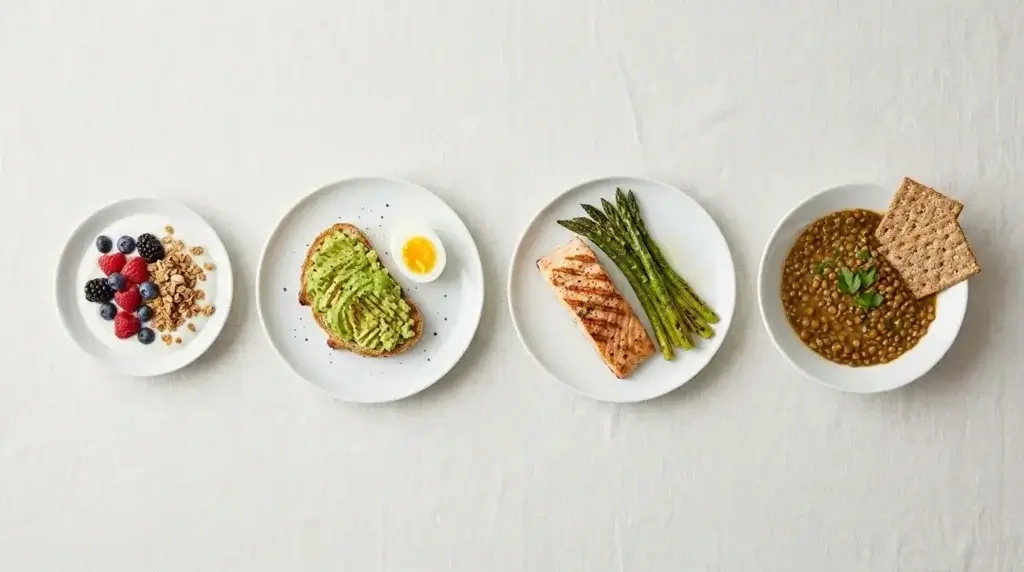
- Morning: High-protein oatmeal with a scoop of protein powder
- Midday: A light, protein-forward meal paired with a fiber source like psyllium or chia
- Afternoon: One of our high-protein snacks under 200 calories
- Evening: A GLP-1 smoothie if appetite is especially low, or a gentle meal from our tirzepatide meal plan
Should You Wait for Retatrutide, or Focus on Food Now?
If you’re specifically interested in prescription-strength options that already exist, semaglutide and tirzepatide are available today through licensed providers — we’ve broken down what that actually looks like in our Medvi and Embody reviews. If you’d rather not go the prescription route at all, our best GLP-1 supplement guide covers the non-prescription category.
Either way, the food side of the equation stays the same: protein, fiber, hydration, and gentler meals when appetite is low. That part doesn’t need FDA approval to start today.
FAQ
Is retatrutide available yet?
No. It’s still in Phase 3 clinical trials and hasn’t received FDA approval, so it isn’t available by prescription or for legal purchase.
What should I eat if my appetite is very low on a GLP-1 medication?
Prioritize protein-dense, easy-to-digest foods in smaller portions throughout the day rather than three large meals — see our tirzepatide meal plan for a full framework.
Can food alone replicate what retatrutide does?
No. Whole foods support the same general pathways (fullness, blood sugar stability) but nowhere near the same magnitude as a medication that directly activates these hormone receptors. Food is a supportive habit, not a substitute for medical treatment.
What’s the safest way to try to lose weight while retatrutide is still in trials?
Focus on what’s already proven and available: a protein-and-fiber-forward diet, and if you want medication, an already-approved option like semaglutide or tirzepatide through a licensed provider.
This article is for informational purposes only and is not medical advice. Retatrutide is an investigational drug not currently approved for prescription or sale. Talk to a healthcare provider about weight loss treatment options that are right for you.